标签: Asia

亚洲

  • The politician whose death leaves a vacuum in India’s richest state

    The politician whose death leaves a vacuum in India’s richest state

    Maharashtra’s political sphere faces profound uncertainty following the tragic demise of Deputy Chief Minister Ajit Pawar, who perished in a plane crash on Wednesday alongside four other individuals. The incident has created a significant power vacuum in India’s wealthiest state, where Pawar had established himself as a formidable political operator.

    For decades, Pawar navigated Maharashtra’s notoriously complex political environment—a constantly shifting landscape of alliances, regional loyalties, and intense rivalries. His approach combined pragmatic decision-making with shrewd political instincts, enabling his rapid ascent through the ranks of the Nationalist Congress Party (NCP), founded by his uncle Sharad Pawar.

    The relationship between uncle and nephew defined much of Ajit Pawar’s political journey. While Sharad Pawar embodied traditional, strategic authority with his measured tones and coalition-building expertise, Ajit developed a distinct political identity focused on regional governance and control of local networks. His blunt, practical style and mercurial personality garnered both devoted followers and vocal critics.

    Their political differences culminated in dramatic public ruptures, first in 2019 when Ajit briefly aligned with the rival Bharatiya Janata Party (BJP) to claim the deputy chief minister position—a move that collapsed within days due to his uncle’s intervention. The final break occurred in 2023 when Ajit formally split from his uncle’s NCP, joined a BJP-led coalition, and successfully claimed the party’s name and electoral symbol for his faction.

    This schism transformed Maharashtra’s political dynamics, dividing the once-unified Pawar political dynasty into competing camps. Recent speculation about possible reconciliation between the factions has been rendered moot by Ajit Pawar’s sudden death. Critical questions now emerge regarding the stability of the alliances he built and whether his political successors—potentially including his cousin Supriya Sule (Sharad Pawar’s daughter), his wife, or son—can maintain cohesion among his supporters.

    Pawar’s legacy remains deeply complex: to admirers, he represented political adaptability and courage; to critics, he exemplified opportunistic power maneuvering. His passing underscores how personal ambitions and familial relationships can dramatically shape political outcomes in unexpected ways.


  • Plane crashes with Maharashtra Deputy CM Ajit Pawar onboard, 6 feared dead

    Plane crashes with Maharashtra Deputy CM Ajit Pawar onboard, 6 feared dead

    A tragic aviation incident has shaken India’s political landscape after a aircraft carrying Maharashtra Deputy Chief Minister Ajit Pawar crashed on Wednesday morning. The disaster, which occurred around 8:41 AM local time on January 28, 2026, is believed to have claimed the lives of all six individuals aboard according to preliminary reports.

    The aircraft, whose specific make and model remain under investigation, was en route to an undisclosed destination when it went down under circumstances that aviation authorities have yet to fully determine. Emergency response teams were immediately dispatched to the crash site, though the severity of the impact suggests minimal chances of survival for those on board.

    Ajit Pawar, a prominent political figure and key leader within the Nationalist Congress Party, held significant influence in Maharashtra state politics. His potential demise creates immediate political ramifications for the state’s governing coalition and raises questions about succession within both the administration and his political party.

    The crash has prompted an urgent investigation by India’s Directorate General of Civil Aviation, with officials working to establish both the cause of the accident and the complete list of casualties. Aviation experts are examining multiple potential factors including weather conditions, mechanical failure, and human error.

    This incident marks one of the most significant political tragedies in recent Indian history, drawing national attention and condolences from across the political spectrum. The government has announced heightened security protocols for officials traveling by air while the investigation continues.

  • Plane carrying Maharashtra Deputy CM Ajit Pawar crashes, ‘no survivors’ yet authority says

    Plane carrying Maharashtra Deputy CM Ajit Pawar crashes, ‘no survivors’ yet authority says

    A private aircraft carrying Ajit Pawar, the Deputy Chief Minister of Maharashtra, crashed under tragic circumstances on January 28th in the Baramati region of western India. Aviation authorities confirmed the politician was traveling with four other individuals—two additional personnel and two crew members—aboard the ill-fated flight.

    According to an official statement released by India’s Directorate General of Civil Aviation (DGCA), preliminary assessments indicate no survivors from the catastrophic incident. The aircraft was reported to have been completely engulfed in flames upon impact in Pune district, with emergency response teams immediately deploying to the scene.

    Rescue operations continue intensively as firefighting crews work to extinguish the remaining blaze at the crash site. The DGCA has initiated a comprehensive investigation to determine the precise cause of the accident, though adverse weather conditions or technical malfunctions remain speculative at this early stage.

    The incident has sent shockwaves through India’s political establishment, particularly in Maharashtra state where Pawar served as a prominent political figure and key government official. The veteran politician held significant influence in regional politics and was actively involved in state governance matters at the time of the tragedy.

    Aviation safety experts emphasize that this accident represents one of the most serious incidents involving high-ranking Indian officials in recent years. The international community has begun expressing condolences while awaiting further developments in the investigation.

  • Why China views the UK visit as part of something bigger

    Why China views the UK visit as part of something bigger

    Despite Beijing’s harsh winter conditions, the Chinese capital has become an unexpected hub of diplomatic activity, welcoming a succession of Western leaders seeking to reestablish ties with the world’s second-largest economy. The most notable among these visitors is British Prime Minister Sir Keir Starmer, marking the first UK leadership visit to China in eight years.

    This diplomatic flurry comes after China secured approval for a massive new embassy in London, a precondition Beijing officials explicitly tied to announcing Starmer’s visit. The UK delegation arrives with substantial economic ambitions, hoping to secure dozens of new trade agreements to bolster Britain’s economy amid ongoing domestic challenges.

    Dr. Yu Jie, Senior Research Fellow at Chatham House, notes that even establishing a reasonable trading relationship would constitute significant progress given current circumstances. The visit represents part of China’s broader charm offensive, positioning itself as a stable, predictable alternative to the United States in global partnerships.

    This strategy appeared successful with Canadian Prime Minister Mark Carney, who recently announced a “new strategic partnership with China” during his Beijing visit. However, such overtures risk provoking Washington’s ire, as demonstrated by President Trump’s threat to impose 100% tariffs on Canada should it proceed with Chinese trade deals.

    Starmer has attempted to navigate these geopolitical tensions by declaring Britain would not choose between the US and China. Analysts suggest Beijing remains realistic about its limited ability to fracture the special relationship between Washington and London.

    The current diplomatic engagement marks a notable shift from what Prime Minister Starmer himself termed an “ice age” in UK-China relations. While a return to the “golden era” symbolized by the 2015 meeting between Xi Jinping and David Cameron remains improbable, experts view these developments as the beginning of a cautious thaw.

    Beyond high-level politics, people-to-people connections endure. The story of Bowei Wang exemplifies lasting cultural ties—after studying in Scotland during warmer diplomatic times, he now imports Glasgow-brewed ale to his Beijing pub near Tiananmen Square, creating a cross-cultural experience complete with British historical imagery.

    China’s economic leverage provides substantial negotiating power, controlling approximately one-third of global goods manufacturing, over 90% of rare earth mineral processing, and 60-80% of renewable energy components. This dominance has enabled Beijing to employ trade measures against countries that displeased it, as experienced by Australia, Canada, Japan, and South Korea in recent years.

    Business leaders like Tom Simpson of the China Britain Business Council emphasize the visit’s importance, noting China’s position as Britain’s third-largest trading partner with £45 billion in annual exports. However, Chinese analysts express concerns about Starmer’s inconsistent follow-through on engagement promises and Britain’s domestic political stability.

    The diplomatic movement has practical implications for ordinary citizens. British tour operators in China hope successful negotiations might lead to visa-free travel for UK passport holders, mirroring arrangements Beijing has already extended to 70 other countries.

    As Western leaders brave Beijing’s winter chill, they calculate that reengagement with China—despite its complexities and risks—represents a necessary strategic calculation in an increasingly multipolar world.

  • Indonesia landslide death toll rises to 34, dozens missing

    Indonesia landslide death toll rises to 34, dozens missing

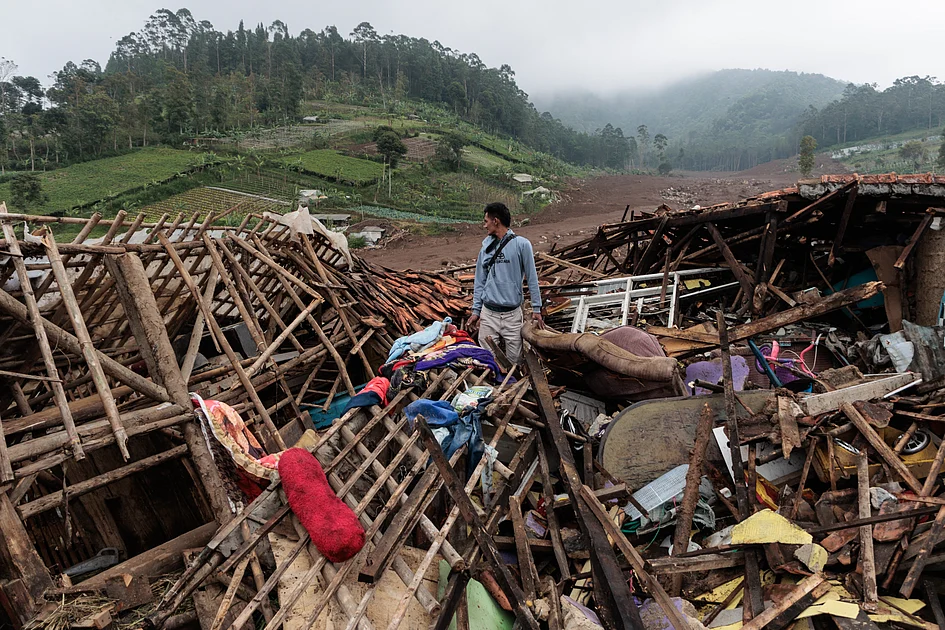
    Rescue operations continue in Indonesia’s West Java province as the confirmed death toll from Saturday’s devastating landslide has climbed to 34, with approximately 32 individuals still unaccounted for. The catastrophic event occurred in the mountainous village of Pasirlangu when torrential rains triggered a massive debris flow that engulfed the community.

    According to Abdul Muhari, spokesman for Indonesia’s national disaster mitigation agency, the identified victims have been released to their families for burial ceremonies. Despite the official missing persons count being revised downward, local authorities express concerns that the actual number of missing individuals may be substantially higher than current estimates.

    Emergency responders face extremely challenging conditions as they comb through unstable terrain in West Bandung region on Java island. Teams are employing both manual search techniques and heavy machinery while exercising extreme caution due to continuing adverse weather conditions that heighten the risk of subsequent landslides.

    The natural disaster has inflicted severe damage to more than 50 residential structures and forced the displacement of over 650 local inhabitants. West Java Governor Dedi Mulyadi has attributed the catastrophe to extensive vegetable plantations surrounding Pasirlangu, which may have compromised soil stability. The governor has committed to relocating affected residents to safer areas.

    This tragic event echoes similar environmental disasters that have plagued the Indonesian archipelago, particularly during the annual rainy season from October through March. The government has previously highlighted the critical role of deforestation in exacerbating flooding and landslide risks, referencing last year’s catastrophic events on Sumatra island that resulted in approximately 1,200 fatalities and displaced more than 240,000 people.

    Environmental experts emphasize that forest cover plays a vital role in absorbing rainfall and stabilizing soil through root systems, with vegetation loss significantly increasing regional vulnerability to landslides across Indonesia’s diverse topography.

  • Collaboration helps tap into blue wonders

    Collaboration helps tap into blue wonders

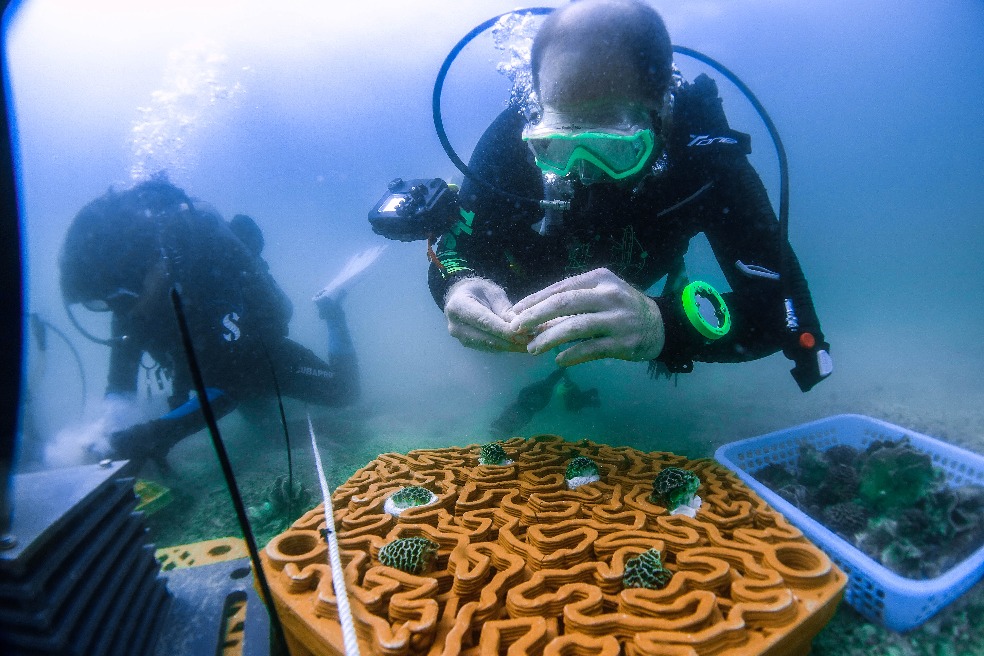
    In a groundbreaking fusion of technology and ecology, Hong Kong-based startup Archireef is revolutionizing coral restoration through innovative 3D-printed solutions. The company’s biodegradable terracotta reef tiles, designed to mimic natural brain coral structures, are demonstrating remarkable success in rebuilding degraded marine ecosystems across two continents.

    Founded in 2020 by Vriko Yu and University of Hong Kong professor David Baker, Archireef emerged from frustration with conventional restoration methods using plastic, metal, and concrete. Their patented terracotta tiles provide an optimal substrate for coral attachment, boasting a 95% survival rate for transplanted corals in Hong Kong waters where traditional approaches had failed.

    The technology’s breakthrough comes at a critical juncture. Hong Kong’s northeastern waters have witnessed an 80% decline in coral coverage since the 1980s due to urban development and pollution, despite hosting 84 hard coral species—more than the entire Caribbean Sea.

    Archireef’s expansion into the Middle East marks a significant milestone in global marine conservation. In 2022, the company partnered with Abu Dhabi Developmental Holding Company to address severe coral bleaching that devastated 73% of the emirate’s reefs in 2017. The results have been extraordinary: within six months of deployment, fish abundance increased sixfold, and biodiversity levels improved fivefold within a year.

    The collaboration represents a powerful synergy between Hong Kong’s research capabilities and Abu Dhabi’s scaling ambitions. Through Abu Dhabi’s Hub71 accelerator, Archireef established a regional eco-engineering facility at KEZAD Group, producing customized tiles for local conditions while providing comprehensive marine restoration services from consulting to monitoring.

    This transnational partnership exemplifies how scientific innovation, entrepreneurial vision, and supportive policy can converge to address environmental challenges. As climate technology becomes increasingly vital, the Hong Kong-Abu Dhabi model demonstrates how specialized expertise from Asian financial hubs can combine with Middle Eastern investment power to create tangible ecological impact.

    With the recent launch of the Abu Dhabi Coral Garden initiative aiming to deploy 40,000 artificial reef modules, Archireef’s technology is positioned to play a crucial role in engineering more resilient coastlines worldwide. The success proves that where coral takes root, international collaboration grows alongside it.

  • Global experts gather in Macao for talks in space, planetary sciences

    Global experts gather in Macao for talks in space, planetary sciences

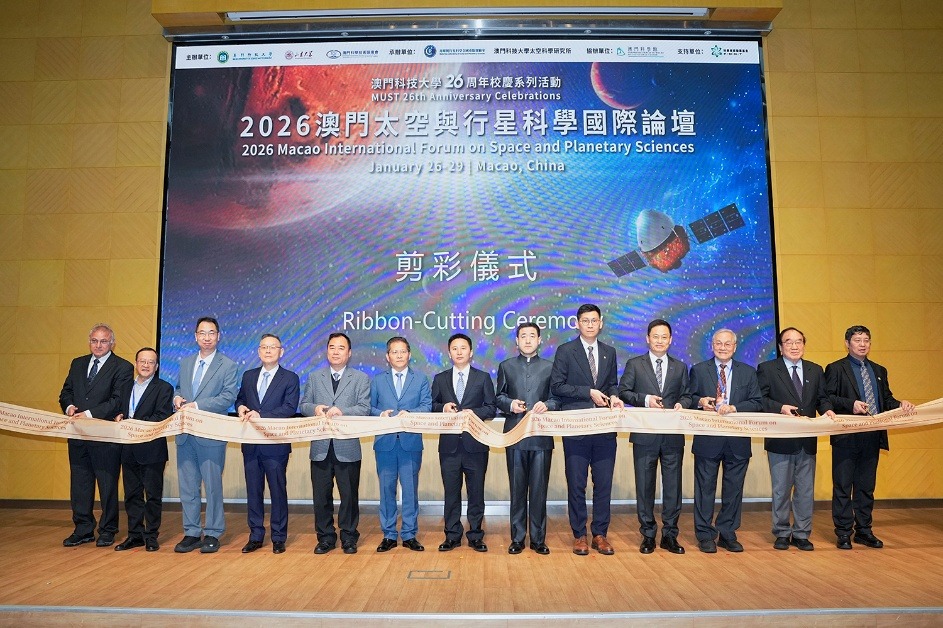
    Macao has positioned itself at the forefront of space exploration dialogue by hosting the 2026 Macao International Forum on Space and Planetary Sciences, which commenced on Tuesday. The prestigious gathering attracted over 300 distinguished scholars specializing in space and planetary sciences from more than 10 countries and regions worldwide.

    The landmark event, organized through a collaboration between Macau University of Science and Technology (MUST), Shandong University, and the Association for Promotion of Science and Technology of Macao, features an extensive program of academic presentations and specialized thematic discussions. Forum organizers designed the conference to establish an open international platform that fosters dialogue among researchers from diverse backgrounds and promotes coordinated development in future space research initiatives.

    MUST President Zhu Jian-Kang emphasized the forum’s strategic significance during his opening ceremony address. “This initiative aims to leverage Macao’s evolving role as a critical hub for China’s aerospace and deep-space research endeavors,” he stated. “By strengthening academic exchanges and cooperation between Chinese and international planetary science communities, we hope to inspire a new generation of young scholars to engage in space science research.”

    The Macao Science and Technology Development Fund (FDCT) provided additional support for the event, with committee member Cheang Kun Wai highlighting the organization’s long-term commitment to advancing scientific innovation. “The FDCT has consistently promoted interdisciplinary collaboration and local scientific advancement,” Cheang noted. “Our support facilitates Macao’s active participation in global scientific development trends, particularly within the rapidly evolving field of space science.”

    The forum represents a significant milestone in Macao’s growing influence within the international scientific community, demonstrating the special administrative region’s capacity to host major academic gatherings that bridge Chinese and global space research initiatives.

  • First national standard for disease classification and coding in Tibetan medicine released

    First national standard for disease classification and coding in Tibetan medicine released

    China has achieved a significant milestone in traditional medicine with the official release of the Tibetan Medicine Disease Classification and Code, the country’s first national standard for disease categorization within an ethnic-minority medical system. The groundbreaking standard, developed under the guidance of the National Administration of Traditional Chinese Medicine, is scheduled to take effect on April 1, 2026, according to the State Administration for Market Regulation.

    Professor Mima, President of Xizang University of Tibetan Medicine and head of the Tibetan medicine standardization working group, emphasized that the new framework remains firmly rooted in core Tibetan medical theories while addressing contemporary clinical diagnostic requirements. The comprehensive system organizes treatable conditions into 15 major categories and 97 subcategories, establishing a detailed terminology and coding table that assigns unique identifiers to more than 3,000 specific diseases.

    This development represents a transformative advancement in the formalization of traditional healing practices, providing a structured approach that will enhance the scientific development and standardization of Tibetan medical services nationwide. The establishment of this standardized classification system is expected to facilitate better integration with modern healthcare infrastructure while preserving the unique theoretical foundations of Tibetan medicine.

  • China records 697 million border crossings nationwide in 2025

    China records 697 million border crossings nationwide in 2025

    China witnessed an unprecedented surge in cross-border mobility during 2025, with official data revealing a record-breaking 697 million border crossings throughout the year. This represents a substantial 14.2% increase compared to 2024 figures, marking the highest annual tally in the nation’s history.

    The remarkable rebound in border activity signals a complete restoration of China’s international connectivity following global pandemic restrictions. The double-digit growth percentage indicates not merely recovery but accelerated transnational movement across air, land, and sea ports of entry.

    This mobility milestone reflects China’s deepening integration with global networks through business travel, tourism, and trade. The increased crossings coincide with China’s expanded visa-free policies for numerous countries and enhanced transportation infrastructure facilitating smoother international transit.

    Analysts interpret these figures as evidence of China’s reestablished position within global circulation systems, with the border statistics serving as a key indicator of economic vitality and international engagement. The data demonstrates successful implementation of policies designed to stimulate international exchange while maintaining efficient border security protocols.

    The comprehensive border management system has effectively accommodated this increased traffic through technological advancements including automated clearance gates, biometric verification, and streamlined customs procedures that balance security concerns with passenger convenience.

  • Confidence, time management biggest challenges student entrepreneurs face, says CEO

    Confidence, time management biggest challenges student entrepreneurs face, says CEO

    Young entrepreneurs embarking on business ventures while pursuing academic studies are confronting a distinct set of challenges that extend far beyond curriculum choices. According to Sara Al Nuaimi, CEO of the Sharjah Entrepreneurship Centre (Sheraa), the primary obstacles for student founders are not about choosing between education and enterprise, but rather developing the crucial skills needed to thrive in both realms simultaneously.

    Al Nuaimi identifies three fundamental hurdles: limited entrepreneurial experience, poor time management, and critically, insufficient exposure to real-world business environments. She emphasizes that early exposure plays a transformative role in shaping how students comprehend business operations and decision-making processes. “Student founders are entering entrepreneurship earlier than ever, often while still navigating their academic journeys,” Al Nuaimi told Khaleej Times. “What they need most at this stage is exposure to real founders, real decisions, and real pathways beyond the classroom.”

    Sheraa, a government-supported incubator based in Sharjah, has demonstrated remarkable success in addressing these challenges. The organization has supported over 180 startups, with more than half led by female entrepreneurs, upskilled more than 18,000 young individuals, and generated over $248 million in revenue through its initiatives.

    The upcoming Sharjah Entrepreneurship Festival serves as a prime example of the platforms addressing these needs. The event will convene investors, established entrepreneurs, and executives from prominent companies including WHOOP, Revolutionary, and Kitopi. Such gatherings provide student entrepreneurs with invaluable opportunities to move beyond theoretical concepts and gain practical insights.

    Perhaps most significantly, these experiences help combat what Al Nuaimi identifies as another major challenge: confidence building. Many capable students hesitate to fully pursue their ideas due to uncertainty about how and when to begin. Exposure to authentic entrepreneurial journeys helps reframe this uncertainty as a natural part of the learning process rather than an insurmountable barrier.

    The success of Eshara, an AI-powered Arabic sign language platform founded by students, exemplifies this approach. Through structured ecosystem support including incubation, mentorship, and live testing opportunities, the student founders transformed an academic concept into a functional startup addressing communication barriers for the hearing-impaired community.

    These experiences demonstrate that with proper guidance and access to supportive environments, students can successfully develop as entrepreneurs while continuing their education, effectively bridging the gap between classroom learning and real-world business application.