
The recent decision by US President Donald Trump to increase H-1B visa fees to $100,000 has ignited a significant debate in India about reversing the decades-long brain drain. Indian policymakers are actively encouraging skilled professionals to return home and contribute to the nation’s development. A senior bureaucrat close to Prime Minister Narendra Modi revealed that the government is intensifying efforts to attract overseas Indians back to the country. Meanwhile, a member of the PM’s economic advisory council argued that the H-1B visa fee hike could benefit India by making it a more attractive destination for global talent. The core idea is to capitalize on the current situation to lure back highly skilled professionals in technology, medicine, and innovation who left India over the past 30 years. However, experts caution that while anecdotal evidence suggests some Indians are considering returning, large-scale reverse migration remains a challenge. Nithin Hassan, a former Meta employee who gave up a $1 million job to return to Bengaluru, exemplifies this trend. He launched B2I (Back to India), a platform assisting NRIs in navigating the complexities of relocating. Hassan noted a surge in inquiries following Trump’s policy shifts, with queries tripling since his second term began. Other headhunters, like Shivani Desai of BDO Executive Search, reported a 30% increase in Ivy League graduates exploring return options. The rise of Global Capability Centres (GCCs) in India has also created viable opportunities for returning professionals. Yet, critics like Sanjaya Baru, former media adviser to PM Manmohan Singh, argue that the government must take more proactive steps to identify and incentivize top talent to return. Despite these efforts, India faces significant push factors, including poor infrastructure, bureaucratic hurdles, and a challenging business environment, which have driven many high-earning Indians to seek citizenship elsewhere. To truly reverse the brain drain, experts emphasize the need for comprehensive reforms, including simplified tax laws, targeted incentives, and improved R&D ecosystems.
标签: Asia
亚洲
-

Nearly 1,000 people trapped on Mount Everest slopes
A severe snowstorm has left nearly 1,000 individuals stranded on the eastern slopes of Mount Everest in Tibet, prompting a large-scale rescue operation. Chinese state media reported that hundreds of local villagers and rescue teams have been mobilized to clear snow obstructing access to the area, which lies at an altitude exceeding 4,900 meters (16,000 feet). The heavy snowfall, which began on Friday evening, intensified over the weekend, causing tents to collapse and leaving some hikers suffering from hypothermia. The Tibet Blue Sky Rescue team responded to distress calls, and some tourists have already been rescued. In response to the crisis, the Tingri County Tourism Company has suspended ticket sales and entry to the Everest Scenic Area. The region is currently experiencing extreme weather conditions, with neighboring Nepal also facing devastating floods and landslides that have claimed at least 47 lives. Meanwhile, Typhoon Matmo has made landfall in China, forcing the evacuation of approximately 150,000 people. Mount Everest, the world’s highest peak at over 8,849 meters, remains a perilous destination for climbers, with recent years marked by overcrowding, environmental degradation, and fatal climbing incidents.
-

‘A legacy worth millions’ – India’s former royals who draw a meagre pension
In the historic town of Hussainabad, Uttar Pradesh, 90-year-old Faiyaz Ali Khan makes his annual pilgrimage to the Picture Gallery, a 19th-century relic of the city’s royal past. His mission: to collect his wasika, a royal pension granted to descendants of the Awadh royal family. This tradition, rooted in a 200-year-old agreement, continues to link modern India to its regal heritage. The wasika, derived from the Persian word for a written agreement, was initially established when members of the Awadh royal family lent money to the East India Company in the early 1800s, stipulating that the interest be paid as pensions to their descendants. Today, around 1,200 wasikedars, including Faiyaz Ali Khan, receive these pensions, though the amounts have dwindled significantly over generations. For many, the pension, though meager—just nine rupees and 70 paise ($0.11) a month—symbolizes a cherished connection to their illustrious ancestry. The payments are now managed by the Hussainabad Trust and the Uttar Pradesh government, with some beneficiaries receiving direct bank transfers while others collect cash. Critics argue that these pensions are outdated remnants of feudal privilege, but supporters view them as a sacred honor tied to historical promises. Shahid Ali Khan, a lawyer and beneficiary, emphasizes that the wasika is more about identity than money, using it exclusively for religious expenses. Despite appeals to increase the pension amounts to reflect modern interest rates, the payments remain unchanged, leaving recipients like Faiyaz Ali Khan to spend far more on travel than they receive. The grandeur of the tradition has also faded, with the once festive atmosphere of pension collection now a distant memory. As the debate over the relevance of these pensions continues, they remain a poignant reminder of India’s royal past.
-

‘They’re not just sharing needles, they’re sharing blood’: How HIV cases soared in Fiji
Fiji, a small South Pacific nation, is grappling with one of the world’s fastest-growing HIV epidemics, driven largely by intravenous drug use. Over the past decade, the number of HIV cases has surged from fewer than 500 in 2014 to nearly 5,900 by 2024, marking an elevenfold increase. In 2024 alone, Fiji recorded 1,583 new cases, with 41 of them involving individuals aged 15 or younger. The youngest known case, a ten-year-old boy, highlights the alarming spread of the virus among youth.
-
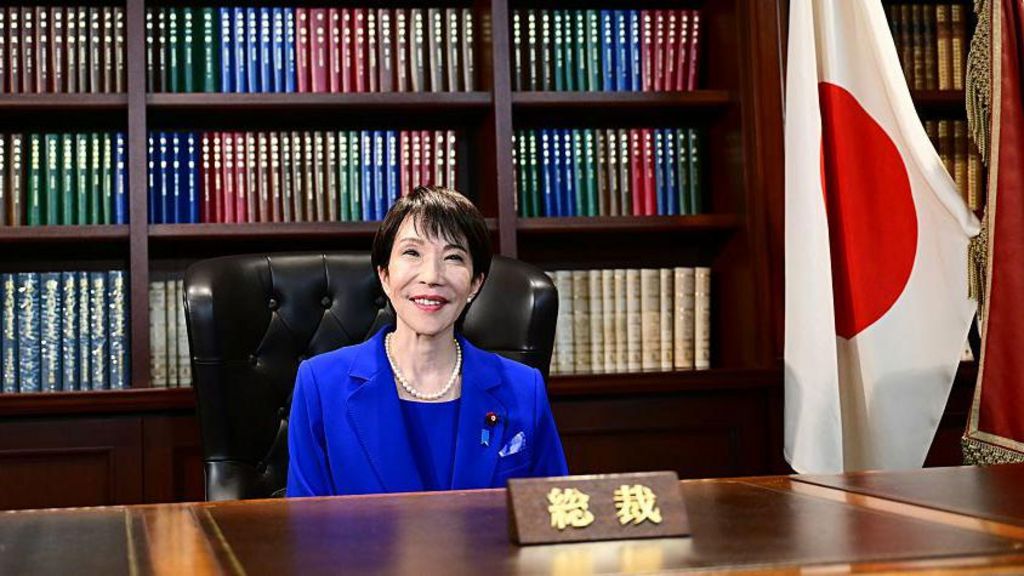
Who is Japan’s ‘Iron Lady’ Sanae Takaichi?
In a historic turn of events, Sanae Takaichi, a 64-year-old veteran politician, has been elected as the leader of Japan’s ruling Liberal Democratic Party (LDP), paving the way for her to become the nation’s first female prime minister. This milestone comes on the 70th anniversary of the LDP, a party that has long dominated Japanese politics but now faces significant challenges, including declining voter trust and a rising far-right movement. Takaichi, a former government minister and TV host, who once drummed in a heavy metal band, has overcome two previous failed attempts to secure the LDP leadership. Her victory marks a pivotal moment for Japan, as she aims to restore the party’s credibility and address pressing national issues. Born in Nara Prefecture in 1961, Takaichi’s journey into politics was unconventional. Her early career included stints as a television host and a heavy metal drummer, where she gained fame for her intense performances. Her political awakening came during the 1980s, amid US-Japan trade tensions, which shaped her determination to defend Japan’s autonomy. After losing her first parliamentary election in 1992, she persisted, eventually winning a seat in 1993 and joining the LDP in 1996. Over the years, she has held multiple senior government roles, including minister for economic security and internal affairs and communications. Takaichi’s conservative stance has been a defining feature of her political career. She has opposed legislation allowing married women to keep their maiden names and same-sex marriage, though she has recently softened her tone on some social issues. Her policy proposals focus on expanding women’s health services, improving childcare support, and addressing Japan’s aging population. A protégé of the late Shinzo Abe, she has pledged to revive his ‘Abenomics’ economic strategy. However, her leadership will be tested as she navigates the LDP’s declining majority and seeks to counter the rise of the far-right Sanseito party. Parliament is expected to confirm her as prime minister on October 15, ushering in a new chapter for Japan.
-

Chinese beverage giant to debut in US
Mixue Ice Cream and Tea, the world’s largest fast-food chain by store count, is poised to open its first U.S. location in New York City. This move underscores the Chinese beverage giant’s ambitious global expansion strategy. With 46,479 stores worldwide, including 41,584 in China and a significant presence in Southeast Asia, Mixue is now targeting the lucrative U.S. market. The new store, located at 266 Canal Street in Tribeca, spans 195 square meters and is part of a 10-year lease agreement. While the exact opening date remains undisclosed, the store was still vacant as of September 22. The brand, known for its affordable offerings like bubble tea, ice cream, and coffee, has gained popularity among budget-conscious consumers, particularly students. Mixue’s success is attributed to its value-for-money pricing, rapid innovation, and strong digital engagement. The company’s expansion follows the footsteps of other Chinese brands like HeyTea and Luckin Coffee, which have also ventured into the U.S. market. Jacob Cooke, CEO of WPIC Marketing + Technologies, highlighted Mixue’s ability to connect with digital-native consumers through social-first marketing and viral content. Founded in 1997 by Zhang Hongchao, Mixue has grown from a small shaved ice stall in Zhengzhou to a global powerhouse valued at $8.1 billion. The company’s franchising model and innovative drink offerings, such as Mango Oats Jasmine Tea and Coconut Jelly Milk Tea, have fueled its rapid growth. As Mixue enters the U.S., it aims to challenge established brands like McDonald’s and Starbucks, leveraging its affordability and digital-savvy approach.
-
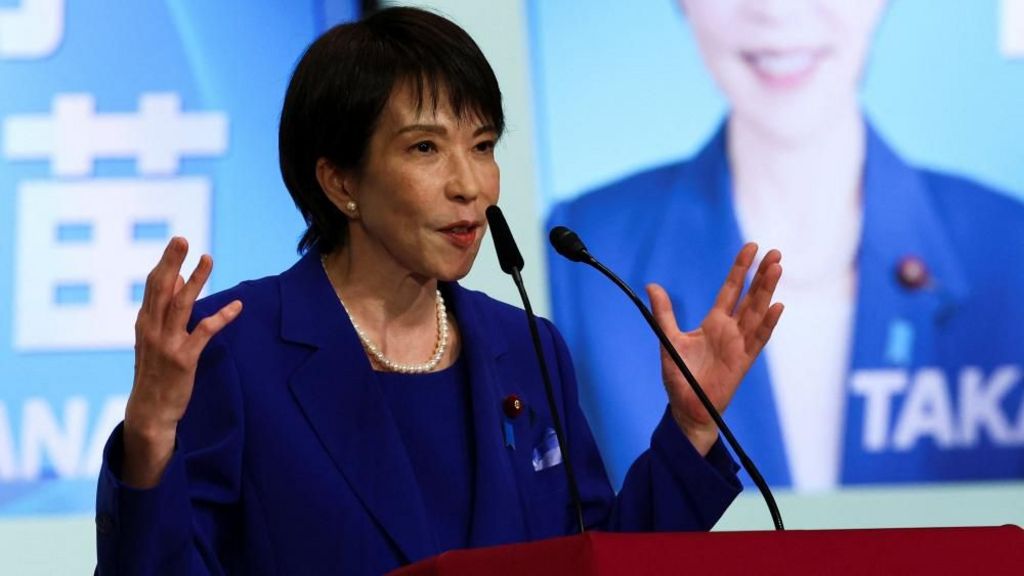
Sanae Takaichi set to become Japan’s first female prime minister
Japan’s ruling conservative party, the Liberal Democratic Party (LDP), has chosen Sanae Takaichi as its new leader, setting the stage for her to become the nation’s first female prime minister. At 64, Takaichi represents the party’s right-leaning faction and faces a daunting array of challenges, including uniting a fractured party, reviving a sluggish economy, and addressing the struggles of Japanese households grappling with inflation and stagnant wages. Her leadership will also require navigating a strained U.S.-Japan relationship and overseeing the implementation of a tariff deal negotiated with the Trump administration. Takaichi’s election follows the resignation of Prime Minister Shigeru Ishiba, whose tenure was marked by a series of electoral defeats that cost the LDP its majority in both parliamentary chambers. A staunch conservative, Takaichi has long admired Margaret Thatcher and aims to emulate her ‘Iron Lady’ legacy. However, her opposition to progressive policies, such as allowing women to retain their maiden names after marriage and her stance against same-sex marriage, has drawn criticism. As a protégé of the late Shinzo Abe, she has pledged to revive his economic policies, known as Abenomics, which emphasize fiscal spending and low borrowing costs. Takaichi is also a security hawk, advocating for revisions to Japan’s pacifist constitution, and is a frequent visitor to the controversial Yasukuni Shrine, which memorializes Japan’s war dead, including convicted war criminals. While her confirmation by parliament is likely, it will not be automatic, reflecting the LDP’s weakened position.
-
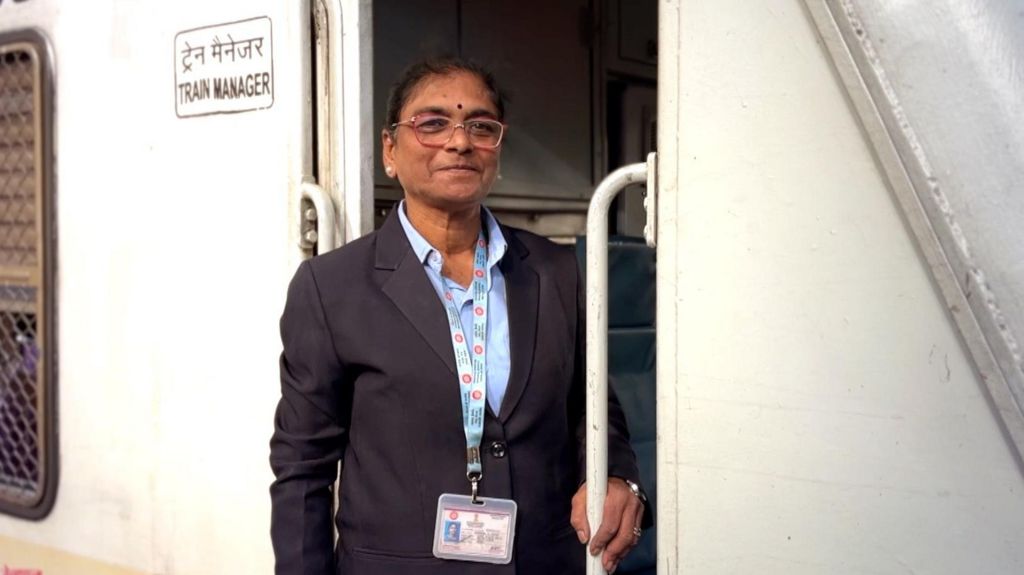
‘Machines don’t see gender’: India’s first female train driver on blazing the trail
Surekha Yadav, India’s first female train driver, recently retired after an illustrious 36-year career with the Indian Railways. Her journey began in 1989 when she joined as an assistant train driver, breaking gender barriers in a male-dominated profession. Over the decades, she navigated diverse terrains and weather conditions, operating various trains across the country. Born in 1965 in Maharashtra to a farming family, Yadav’s parents prioritized her education, enabling her to pursue a career as an electrical engineer. A newspaper advertisement for assistant train drivers sparked her interest, and she seized the opportunity, unaware that she would become a trailblazer for women in the field. Yadav’s early years were challenging, marked by grueling training and a lack of female peers. However, her determination and skill earned her promotions, including the role of locomotive pilot in 1996. Despite the demanding nature of the job—unpredictable hours, harsh conditions, and balancing motherhood—Yadav excelled, mentoring aspiring operators and inspiring countless women. On her final day, she drove the prestigious Rajdhani Express and was honored with a grand farewell by her colleagues. Reflecting on her career, Yadav emphasized the importance of focus and resilience, stating, ‘Machines don’t see gender; they see your strength.’ Her legacy continues to inspire future generations in India’s railway industry.
-
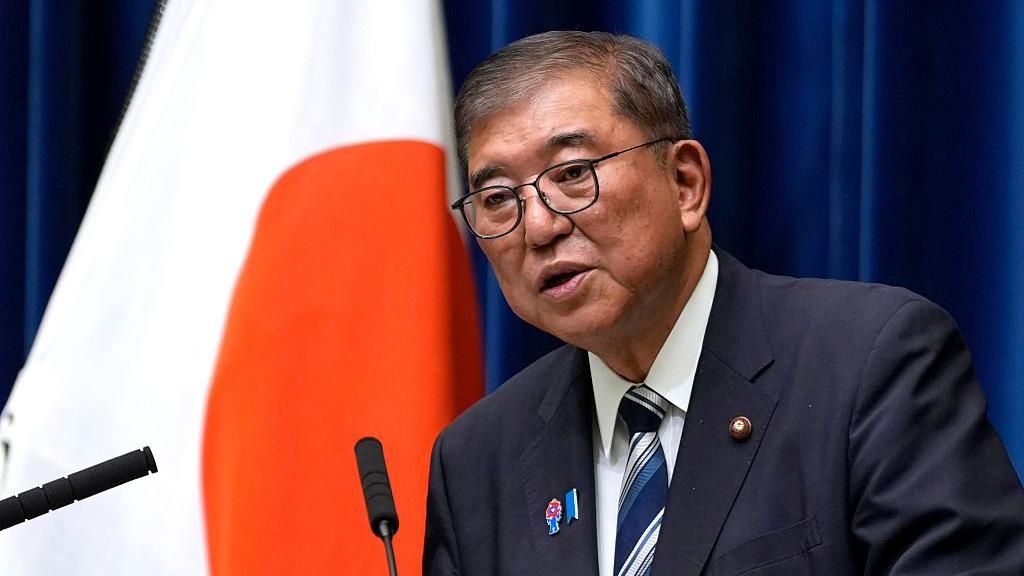
Japan’s ruling party to vote for second new leader in a year
Japan’s political landscape is poised for a historic shift as the ruling Liberal Democratic Party (LDP) prepares to elect its second new leader in just over a year. This pivotal vote could result in either the nation’s first female prime minister or its youngest-ever leader. The decision comes in the wake of Prime Minister Shigeru Ishiba’s resignation last month, following the LDP’s loss of its majority in both houses of parliament. The new leader will inherit a host of pressing challenges, including restoring voter trust after a series of financial corruption scandals, navigating strained US-Japan relations, and implementing a contentious tariff deal with the Trump administration. Domestically, the incoming prime minister must address a faltering economy, rising inflation, and a cost-of-living crisis, while also countering a growing far-right influence. The LDP’s internal vote on Saturday will determine the next leader, with a runoff scheduled if no candidate secures a majority. Among the frontrunners are Shinjiro Koizumi, the current agricultural minister; Yoshimasa Hayashi, the chief cabinet secretary; and Sanae Takaichi, a seasoned LDP member who could become Japan’s first female prime minister. Takaichi, a hardline conservative, has recently shifted her focus to women’s issues, proposing tax breaks for childcare and significant economic investments. Koizumi, known for his media-friendly persona and social media presence, has gained popularity for his efforts to reduce rice prices. Hayashi, a seasoned politician, is seen as a steady and experienced choice. The leadership contest follows a tumultuous period for the LDP, marked by scandals, voter apathy, and record-low approval ratings. The party’s loss of its parliamentary majority in 2024 and subsequent defeat in the upper house elections have further complicated its position. Ishiba’s resignation in September set the stage for this critical vote, as the LDP seeks to rebuild its credibility and chart a new course for Japan’s future.
-

Billionaires, Zionists and a UN official: Tony Blair’s proposed team for Gaza
A draft plan outlining the governance structure for Gaza under the leadership of former British Prime Minister Tony Blair has been leaked, sparking widespread debate. The proposal, known as the Gaza International Transitional Authority (Gita), envisions a hierarchical system dominated by an international board of billionaires and business leaders, with carefully vetted Palestinian administrators at the lower tiers. The plan has reportedly garnered support from Israel, Egypt, and the United States, with the White House backing the initiative, according to sources cited by Haaretz.
The proposed Gita would be governed by an international board with ‘supreme political and legal authority’ during the transitional period. Among the potential candidates for this board are Sigrid Kaag, the UN’s special coordinator for the Middle East peace process, and three prominent figures with significant financial and executive expertise: Marc Rowan, CEO of Apollo Global Management; Naguib Sawiris, an Egyptian billionaire in telecommunications and technology; and Aryeh Lightstone, CEO of the Abraham Accords Peace Institute. Notably, none of the candidates are Palestinian, raising concerns about the lack of local representation.
Critics have highlighted the controversial backgrounds of some board candidates. Lightstone, for instance, has been involved in the Gaza Humanitarian Foundation (GHF), an aid distribution mechanism criticized by Doctors Without Borders as a ‘system of institutionalized starvation and dehumanization.’ Similarly, Sawiris, a billionaire with close ties to Blair, has been involved in various international projects, including rebuilding Afghanistan post-invasion. Rowan, a Wall Street financier, has been a vocal supporter of Israel, describing the conflict in Gaza as a ‘just war.’
The leaked plan has drawn criticism for its top-down approach and the exclusion of Palestinian voices in the governance structure. Sigrid Kaag, the only non-controversial figure on the list, has expressed concerns about the humanitarian crisis in Gaza, describing it as a ‘stain on our collective conscience.’ The proposal’s alignment with Israel’s strategic interests has further fueled skepticism about its feasibility and fairness.
As the international community grapples with the complexities of Gaza’s future, Blair’s plan underscores the challenges of balancing geopolitical interests with the need for inclusive and sustainable governance. The leaked draft has ignited a broader conversation about the role of international actors in shaping the region’s future and the importance of ensuring that local voices are heard.