
With just three days remaining until a highly anticipated global event, Beijing is poised to captivate the world with its unique charm and cultural richness. The city, renowned for its blend of ancient heritage and modern innovation, is set to welcome visitors from across the globe. This event promises to highlight Beijing’s role as a cultural and economic hub, fostering international collaboration and mutual understanding. The countdown has sparked widespread excitement, with preparations in full swing to ensure a seamless and memorable experience for all participants. From showcasing its historical landmarks to highlighting contemporary achievements, Beijing aims to share its story with the world, reinforcing its position as a key player on the global stage.
标签: Asia
亚洲
-

Japanese PM Ishiba’s cabinet resigns
In a significant political development, Japanese Prime Minister Shigeru Ishiba and his cabinet officially resigned on Tuesday, October 21, 2025, bringing an end to an administration that had been in power for just over a year. The resignation took place during an extraordinary cabinet meeting held in Tokyo, where ministers submitted their formal letters of resignation. This move paves the way for the election of Japan’s next prime minister, with both chambers of the Diet set to convene later in the day. Sanae Takaichi, the president of the ruling Liberal Democratic Party (LDP), is widely anticipated to secure the position. Her candidacy is bolstered by the support of the Japan Innovation Party, which recently formed a coalition with the LDP following the withdrawal of Komeito from the alliance. Once elected, Takaichi is expected to finalize her cabinet appointments, with the chief cabinet secretary scheduled to announce the new lineup. Additionally, Takaichi plans to hold a press conference to outline her policy priorities and the rationale behind her key cabinet selections. This transition marks a pivotal moment in Japan’s political landscape, as the nation prepares for a new leadership era under Takaichi’s stewardship.
-

CityFly takes off as China’s newest travel trend in low-altitude tourism
China’s tourism landscape is soaring to new heights with the rise of ‘CityFly,’ a trend that is transforming how travelers experience the country. Moving beyond traditional sightseeing, this innovative approach embraces low-altitude activities such as paragliding, skydiving, and scenic helicopter rides, offering thrill-seekers a vertical perspective of urban and natural landscapes. Emerging as a successor to the popular ‘Citywalk’ trend, CityFly is rapidly gaining traction among young Chinese travelers, driven by the nation’s booming low-altitude economy. In Zhejiang province, for instance, paragliding has evolved from a niche adventure to a mainstream attraction. Li Duo, a Shanghai resident in her early 20s, described her first paragliding experience as ‘breathtaking,’ gliding over bamboo forests and tea gardens on Mogan Mountain. Yang Aiping, manager of the paragliding base, reported a tenfold increase in visitors since 2019, with over 100,000 participants this year. The trend is not limited to Zhejiang. In Sanya, Hainan province, skydiving has become a major draw, with a 20% year-on-year increase in customers during the first quarter of 2025. Official data reveals that Sanya’s low-altitude tourism sector served 287,000 tourists in the first half of 2024, generating 730 million yuan in revenue and creating 2,300 jobs. Zhao Yuehua, an aviation industry expert, attributes this surge to China’s rapidly developing low-altitude economy, which has reduced flight costs from 3,000 yuan per person a decade ago to around 1,000 yuan today. The sector’s growth has been further bolstered by its inclusion in the 2024 government work report, positioning it as a key economic driver. Projections indicate that the low-altitude economy will reach a market size of 1.5 trillion yuan by 2025 and expand to 3.5 trillion yuan by 2035. With 89,000 active enterprises in the sector, including 11,700 new registrations in the first five months of 2025, CityFly is reshaping China’s tourism industry, offering travelers a three-dimensional experience and injecting new vitality into the market.
-

Top court cracks down on firearms
China’s Supreme People’s Court has reinforced its commitment to stringent firearm and explosive control, highlighting the judiciary’s dedication to eradicating gun-related threats and ensuring public safety. In a recent announcement, the court unveiled six pivotal cases to underscore the necessity of combating gun-related crimes, particularly those involving modified weapons. The court has urged judges across the nation to prioritize the protection of citizens’ lives and property. The court emphasized that firearms, ammunition, and explosives can exacerbate criminal activities, potentially leading to severe violent incidents and widespread public fear. It stressed the importance of rigorous control over such items and a firm judicial stance against related offenses. The disclosed cases primarily involved nail guns, which have increasingly been modified into firearms in certain regions, resulting in serious injuries. Nail guns, commonly used in construction and renovation, are designed to drive fasteners into materials using compressed air, gas, or electricity. However, their ease of modification has led to their misuse as firearms, posing significant public safety risks. In one notable case, two hardware store operators in Qidong, Jiangsu province, knowingly modified and sold nail guns equipped with metal plates, enabling them to fire metal projectiles. The pair sold 36 such devices, earning a profit of 16,324 yuan ($2,290). The local court classified the modified nail guns as firearms under the Criminal Law, sentencing one defendant to 11 years and the other to 12 years in prison. The Supreme People’s Court affirmed that the ruling reflects the judiciary’s unwavering stance against firearm-related crimes, aiming to prevent gun violence, enhance public safety, and maintain social stability. While the court advocates severe penalties for such offenses, it also noted that individuals who collect firearms as a hobby and voluntarily surrender them may receive leniency if they have not engaged in illegal activities or caused harm. The court further encouraged public awareness and reporting of gun-related information to law enforcement.
-

Economic shockwaves
A recent report by the United Nations Development Programme (UNDP) highlights the severe economic repercussions of recent US tariff policies on Southeast Asian nations, particularly Cambodia, Vietnam, and Thailand. These export-driven economies are projected to face significant declines in their US-bound exports, with Cambodia, Vietnam, and Thailand expected to see contractions of 23.9 percent, 19.2 percent, and 12.7 percent, respectively.
-
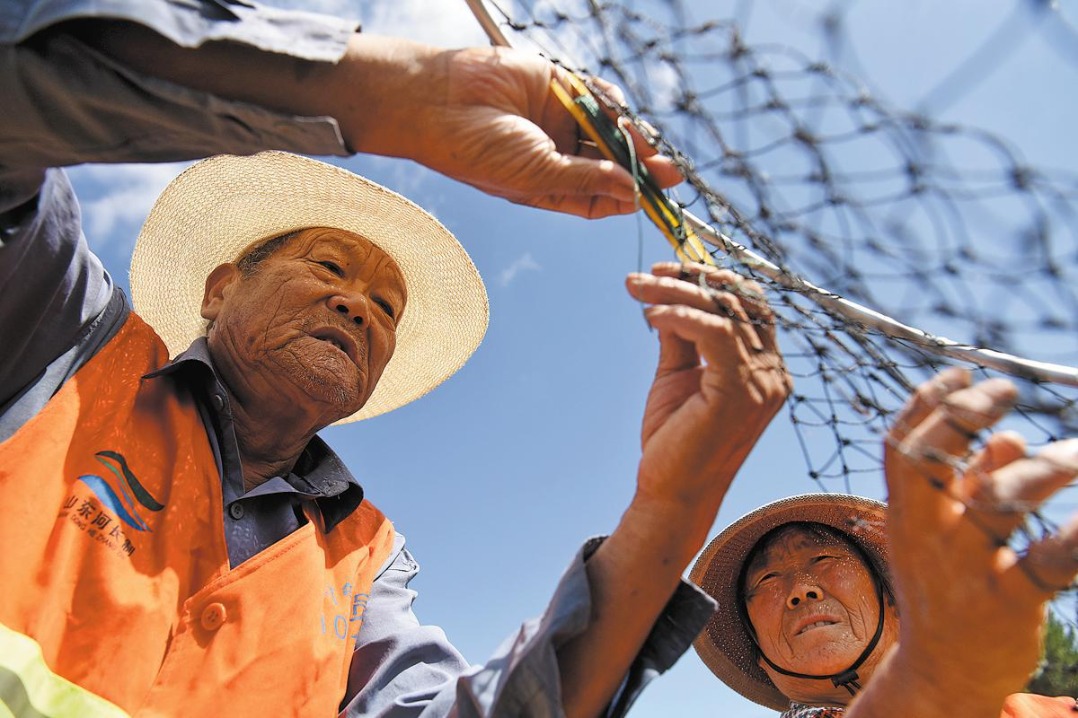
Clean river: It takes a family
For over four decades, Song Hengchun and his family have dedicated their lives to maintaining the cleanliness of the Zhaozhuang reservoir in Dongzhaozhuang village, Yiyuan county, Shandong province. The reservoir, constructed in the 1960s, plays a vital role in irrigating local farms and sustaining surrounding communities. In the 1980s, Song, then 30 years old, left his urban job to return to his hometown and take on the responsibility of safeguarding the reservoir. His commitment soon became a family affair, with his wife and later his son joining him in this noble endeavor. Together, they conduct regular inspections of the water quality and, during flood seasons, navigate the reservoir by boat to remove debris and trash. In 2014, Song was officially appointed as the river chief, a role that further solidified his dedication to the reservoir. This past June, his son succeeded him as river chief, ensuring the family’s legacy of environmental stewardship continues for generations.
-

China OKs world’s first functional cure for hepatitis B
China has made a groundbreaking advancement in the global fight against hepatitis B by approving the world’s first domestically developed drug designed to achieve a functional cure for the chronic liver infection. The drug, named Pegbing, was developed by Amoytop Biotech, a company based in Xiamen, Fujian province. According to a recent notice from the National Medical Products Administration, Pegbing is approved for use in combination with antiviral medication to achieve sustained clearance of the hepatitis B surface antigen in adults with chronic hepatitis B. This approval marks the first time a drug aimed at achieving a functional cure for hepatitis B has received market authorization globally, heralding a new era in the battle against the viral infection. Hepatitis B affects approximately 254 million people worldwide and is responsible for over 1 million deaths annually. In China alone, there are about 75 million chronic hepatitis B patients. A functional cure for hepatitis B is defined as the sustained loss of the hepatitis B surface antigen after treatment ends, contrasting with conventional therapies that suppress viral replication but do not eliminate the virus entirely. Data from the Chinese Foundation for Hepatitis Prevention and Control indicates that more than 92 percent of liver cancer cases in China are caused by hepatitis B infection. The incidence of liver cancer can be reduced to 10.7 percent among patients receiving antiviral treatment, compared with nearly 15 percent among those who do not. For those who achieve a clinical cure, the rate drops to just 1 percent. ‘Such a significant difference underscores the critical importance of achieving clinical cure for hepatitis B patients,’ the foundation stated. In a clinical trial evaluating the efficacy and safety of Pegbing combined with antiviral treatment, 31.4 percent of patients achieved a clinical cure 24 weeks after discontinuing all medications, a rate significantly higher than that observed in patients following conventional treatment regimens. According to an action plan released last month by the National Disease Control and Prevention Administration and eight other government departments, China aims to raise the antiviral treatment rate for newly reported cases to at least 80 percent by 2030. The plan also emphasized intensified efforts in innovative drug research and development and the exploration of new solutions for the functional cure of hepatitis B.
-
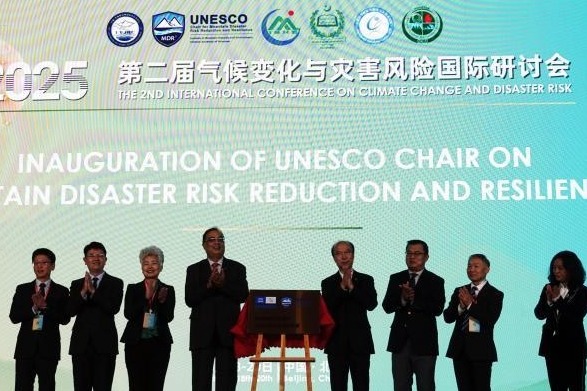
Two Chinese scientists selected to lead disaster risk reduction project
Two distinguished Chinese scientists have been appointed to lead the UNESCO Chair for Mountain Disaster Risk Reduction and Resilience, a significant initiative aimed at addressing the escalating challenges posed by natural disasters in mountainous regions. The announcement was made during the unveiling ceremony held in Beijing on Sunday, coinciding with the opening of the 2nd International Conference on Climate Change and Disaster Risk.
Cui Peng, an academician of the Chinese Academy of Sciences and chief scientist at the China-Pakistan Joint Research Center on Earth Sciences, has been named the chair of the project. Yang Saini, executive director of the Integrated Research on Disaster Risk program and a professor at Beijing Normal University, will serve as assistant chair.
The initiative comes at a critical time when global climate change is exacerbating the frequency and intensity of natural disasters, particularly in mountainous areas. Liu Weidong, director-general of the international cooperation bureau of the Chinese Academy of Sciences, highlighted the growing complexity of these disasters, which are becoming harder to predict and mitigate.
Cui Peng emphasized the vulnerability of mountainous regions, which account for 70% of China’s territory and 30% of the global land area. He stressed that these regions must not be overlooked in the pursuit of high-quality development. The UNESCO Chair aims to reduce the loss of life and property caused by disasters and explore ways to integrate disaster reduction with regional economic development.
Yang Saini noted that China will leverage global resources and share its extensive experience in disaster risk reduction through the UNESCO platform, while also adopting effective international practices. Shahbaz Khan, director of the UNESCO Beijing Office, congratulated the scientists and underscored the importance of the UNESCO Chair program in advancing the United Nations Sustainable Development Goals and building capacity in the Global South.
Wang Fawu, a professor at Tongji University and chairholder of the UNESCO Chair on Geoenvironmental Disaster Reduction, expressed confidence that the new chair would produce globally impactful deliverables, further enhancing China’s role in the global disaster risk community.
-
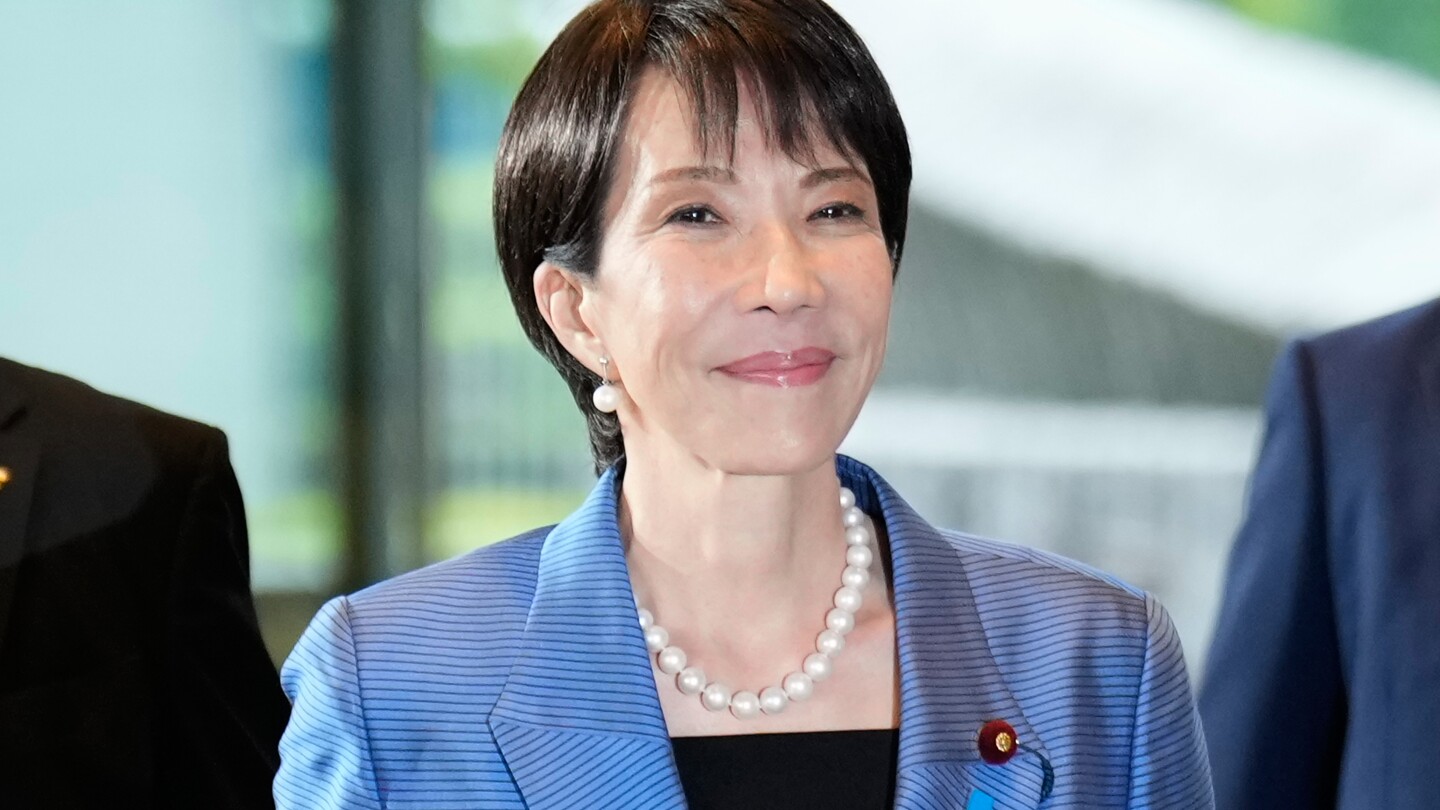
Japan’s first female leader is an ultraconservative star from a male-dominated party
In a historic milestone for Japan, Sanae Takaichi has been elected as the nation’s first female prime minister, shattering the glass ceiling in a political landscape long dominated by men. At 64, Takaichi also becomes the first woman to lead the Liberal Democratic Party (LDP), which has been the cornerstone of Japan’s postwar governance. Known for her ultraconservative stance, Takaichi is a staunch admirer of former British Prime Minister Margaret Thatcher and a proponent of Shinzo Abe’s nationalist policies. Her hardline views on China and her frequent visits to the controversial Yasukuni Shrine, which critics argue glorifies Japan’s wartime past, have drawn international scrutiny. Despite Japan’s poor global ranking in gender equality, Takaichi has rarely addressed the issue during her campaign, though she acknowledged the symbolic significance of her election by stating, ‘Now that the LDP has its first female president, its scenery will change a little.’ Takaichi, who first entered parliament in 1993, has held key ministerial roles, including economic security and internal affairs, though her diplomatic experience remains limited. She advocates for a stronger military, increased fiscal spending, nuclear fusion development, and stricter immigration policies. A self-proclaimed workaholic, Takaichi has vowed to abandon the concept of ‘work-life balance,’ emphasizing relentless dedication to her role. Her election has sparked mixed reactions, with critics questioning her commitment to diversity and gender equality. Takaichi has pledged to increase female representation in her government but supports traditionalist policies such as male-only imperial succession and opposes same-sex marriage. Her hard-right views on history and security, including her revisionist stance on Japan’s wartime actions, may strain relations with neighboring countries like China and South Korea. Despite these challenges, Takaichi’s leadership marks a significant, albeit controversial, turning point in Japanese politics.
-

Sanae Takaichi makes history as Japan’s first female prime minister
Sanae Takaichi has made history by becoming Japan’s first female prime minister, securing a decisive victory in both houses of parliament. The 64-year-old leader of the ruling Liberal Democratic Party (LDP) garnered 237 votes in the Lower House and 125 in the Upper House on Monday, marking a significant milestone in Japanese politics. Known for her staunch conservative views and admiration for former British Prime Minister Margaret Thatcher, Takaichi assumes office during a period of economic uncertainty and public discontent. Her election comes as Japan grapples with rising living costs and a series of short-lived premierships, with Takaichi being the fourth prime minister in just five years. Despite initial obstacles, including the withdrawal of support from the LDP’s coalition partner, Komeito, a last-minute deal with another opposition party secured her position. Takaichi’s leadership will be tested both domestically and internationally. Domestically, she faces the challenge of restoring public trust in the LDP, which has recently suffered significant electoral losses. Internationally, her right-wing, nationalist leanings have raised concerns in South Korea, while her hawkish stance towards China mirrors that of her predecessors. A crucial test lies ahead with an upcoming meeting with U.S. President Donald Trump, where she must navigate complex bilateral issues, including defense spending and security treaties. Takaichi’s conservative policies, such as her opposition to same-sex marriage and her stance on married women retaining their maiden surnames, have drawn mixed reactions, particularly among younger women. Despite these challenges, her election has injected a sense of optimism into the markets, offering a glimmer of hope for Japan’s economic future.