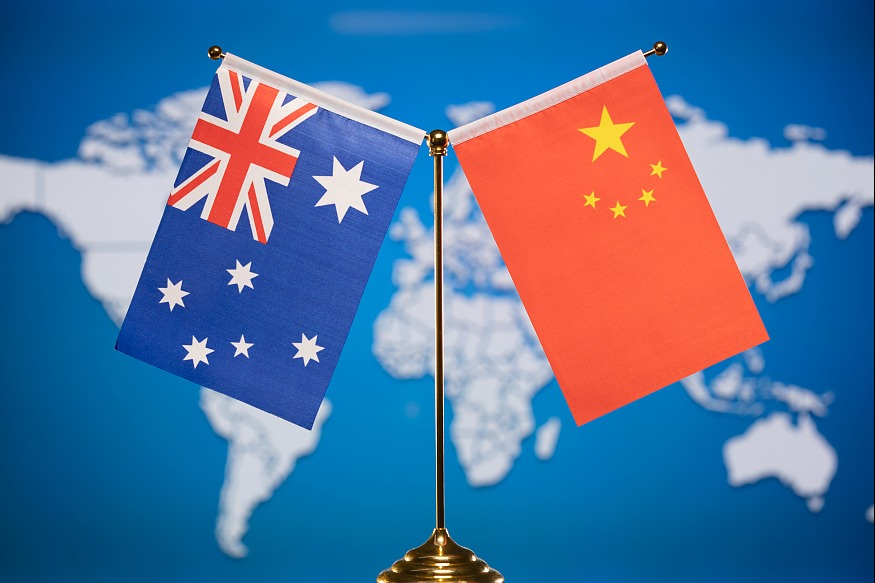
A recent seminar in Melbourne has underscored the growing momentum in economic cooperation between China and Australia, with participants emphasizing the potential for deeper collaboration in finance, clean energy, and emerging industries. The event, themed ‘Australia-China Economic Relations: Future Prospects,’ was part of the Bank of China Melbourne Branch’s 30th anniversary celebrations and the Victoria Business Confucius Institute’s Doing Business with China Workshop Series 2025. Craig Emerson, managing director of Emerson Economics and a former Australian trade minister, highlighted the renewed exchanges between the two countries, which he said are helping rebuild goodwill and restore trust. Emerson, who recently co-chaired the latest round of the China-Australia High-Level Dialogue in Beijing, noted that the talks have not only restored the good relationship but are now opening a new chapter. He also pointed out the economic complementarity between the two countries, with trade relationships evolving as China’s demands change what is bought and sold. Fang Xinwen, Chinese consul general in Melbourne, emphasized the resilience and long-term momentum of China’s economy and expressed optimism for deeper bilateral economic collaboration. He mentioned that the 20th Central Committee of the Communist Party of China is convening its fourth plenary session in Beijing to deliberate on a blueprint for China’s development over the next five years, marking the opening of a new chapter in the country’s modernization drive. Fang also highlighted that China will continue to advance reform and opening-up, develop new quality productive forces, and release the potential of its vast market, bringing more opportunities and confidence to countries including Australia. Last month, the Australian state of Victoria released a new strategy outlining its engagement with China over the next five years, envisioning ‘a new golden era’ of cooperation in areas such as agriculture, healthcare, education, and innovation. Fang said the strategy would inject renewed momentum and offer clearer direction for deepening bilateral economic engagement. Li Mang, general manager of Bank of China Sydney Branch and chairman of the China Chamber of Commerce in Australia, noted that China is developing new quality productive forces through technological innovation and green transformation, while Australia is prioritizing clean energy, critical minerals, and local manufacturing—areas that align closely with China’s development strategy. Li emphasized that by leveraging complementary strengths and promoting innovation, digital transformation, and sustainable investment, both countries can unlock new drivers of growth and enhance long-term competitiveness. He also stressed the importance of strengthening not only trade and investment ties but also cultural and educational exchanges to enhance mutual understanding and trust between the business and academic communities of both countries. Emerson added that future cooperation could expand into health services and artificial intelligence, noting that home-based rehabilitation, aged care, and AI-assisted medical diagnostics could benefit both countries and the wider region under Asia-Pacific Economic Cooperation-related mechanisms.
标签: Asia
亚洲
-
Rapid advancement in scientific literacy transforms Xizang
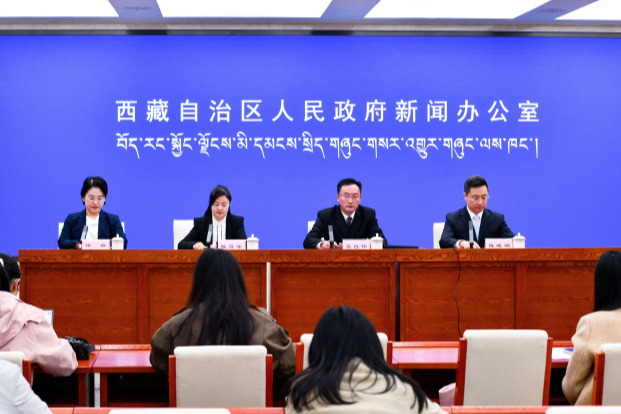
The Xizang Autonomous Region has witnessed a remarkable transformation in public scientific literacy over the past six decades, evolving from a largely uninformed population to a society where science drives social stability and high-quality development. This progress was highlighted by Zhang Hongwei, vice-chairman of the regional association for science and technology, during a recent press conference. He emphasized that the region’s efforts to promote science began shortly after Xizang’s peaceful liberation, with the establishment of basic science boards in towns. Today, the proportion of scientifically literate residents has surged from a mere 0.1% in 2010 to 7.6% in 2023, marking a 75-fold increase. This growth is particularly pronounced among young adults aged 18 to 39, as well as farmers and herders. Xizang now boasts a regional natural science museum, 14 mobile science museum exhibits, and over 300 school-based science museums, ensuring county-level coverage. Additionally, 86 science caravans traverse the region, supported by bilingual science materials and multimedia programs. The region has also extended science outreach to monks, nuns, and grassroots officials, achieving full social group coverage. Digital platforms have further bridged geographical barriers, enabling remote communities to explore advanced fields like astronomy and artificial intelligence. Science education in schools has become a cornerstone of curiosity and discovery, with students like Tsering Yudron expressing newfound fascination with scientific principles. This comprehensive approach underscores Xizang’s commitment to fostering a scientifically literate society.
-

New chip sharpens, widens views of the universe
Chinese researchers have unveiled a groundbreaking spectroscopic chip, named RAFAEL (Yuheng in Chinese), which promises to revolutionize the way we observe the universe. Developed by a team at Tsinghua University, this chip, no larger than a mobile phone SIM card, combines exceptional resolution with a panoramic view, enabling sharper, faster, and wider scans of the cosmos. The findings were published in the prestigious journal Nature on October 15, 2025.
Traditional high-resolution spectrometers are often cumbersome and heavy, but RAFAEL’s compact design allows it to be mounted on satellites or deep-space probes, opening new possibilities for mapping the universe’s spectral data. According to Fang Lu, the research leader and professor at Tsinghua University’s Department of Electrical Engineering, the chip can capture full spectral data with sub-angstrom resolution for approximately 10,000 stars per second. This capability could reduce the time needed to compile complete spectra for all stars in the Milky Way from thousands of years to under a decade.
The chip’s core innovation lies in its ability to resolve the long-standing trade-off between resolution and field breadth in spectral imaging. By employing advanced computational imaging methods and reconfigurable integrated photonics based on lithium niobate, the team achieved snapshot spectroscopy with 10-megapixel-level spatial resolution and sub-angstrom spectral resolution across visible and near-infrared wavelengths. This allows the chip to discern light wavelengths down to ten-millionths of a millimeter and detect the slightest energy variations while capturing wide-field scenes in high detail.
Fang emphasized that this new technique surpasses existing international counterparts in snapshot spectroscopy, improving spectral resolution by two orders of magnitude. The on-chip prototype measures just 2 centimeters in length and width, with a depth of 0.5 centimeters, making it highly portable and adaptable for future space and astronomical applications.
The technology’s potential extends beyond astronomy, with promising applications in material identification, plant health, autonomous driving, and atomic spectroscopy. Operations are already underway to integrate the chip into large-aperture telescopes at observatories in Xinglong County (Hebei Province), Lijiang (Yunnan Province), and the Canary Islands (Spain).
Fang concluded that this study marks the beginning of a new era in intelligent photonics, pushing the boundaries of what light can reveal about the universe.
-
Early winter flu surge predicted
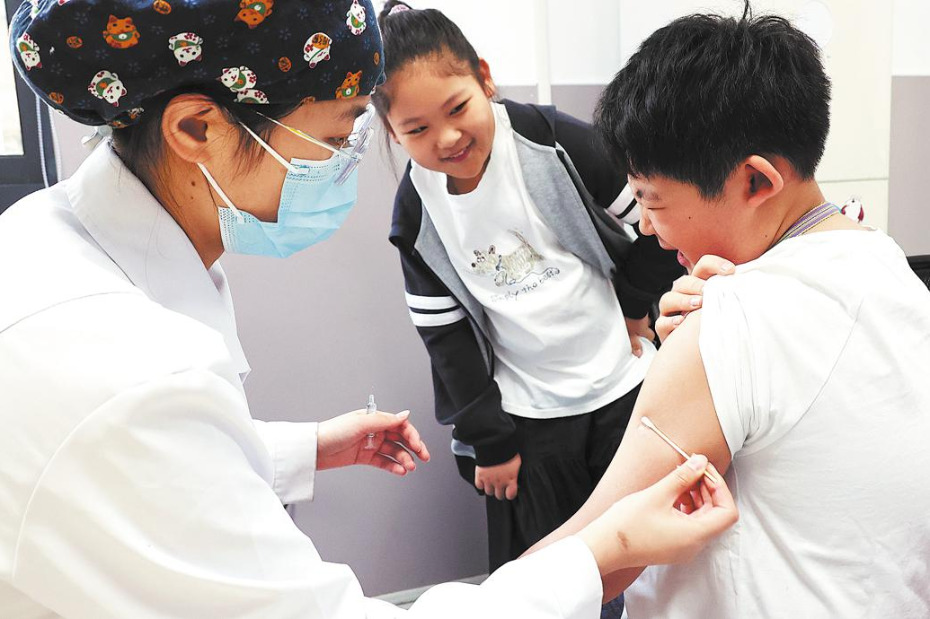
Health authorities in China are bracing for an earlier-than-usual flu season this winter, driven by a different strain from last year’s dominant virus. Experts are urging the public, particularly high-risk groups, to get vaccinated promptly to mitigate the potential impact. The Chinese Center for Disease Control and Prevention (CDC) reports a rise in flu activity in southern China, while northern regions remain relatively unaffected. Typically, flu season peaks between late November and February, but this year’s outbreak is expected to arrive sooner, mirroring trends observed in several Asian and European countries. Dr. Li Tongzeng, chief physician of the infectious disease department at Beijing You’an Hospital, highlighted that Japan declared the start of its flu season on October 3, five weeks earlier than usual. Similarly, South Korea issued a nationwide flu advisory on October 17, two months ahead of last year’s timeline. Europe is also experiencing a surge, with the UK, Italy, and Germany reporting increased flu cases. The H3N2 strain of influenza A, which dominated recent outbreaks in Australia, New Zealand, and Europe, accounts for over 90% of flu samples tested in China from October 6 to 12. Dr. Li warned that since last year’s primary strain was H1N1, the public may have reduced immunity to H3N2, necessitating heightened precautions. The H1N1, H3N2, and influenza B strains are the main culprits behind seasonal flu epidemics, causing symptoms like fever, cough, sore throat, fatigue, and headache. Dr. Li advises the public to get vaccinated promptly, stock essential medications, and seek early testing and antiviral treatment if symptoms arise. Jiang Jianmin, a researcher at the Zhejiang Provincial CDC, emphasized that individuals aged 60 and above, those with chronic illnesses, and infants over six months old are priority groups for vaccination. Healthcare workers, nursing home staff, and caregivers of infants under six months are also urged to get vaccinated. The early flu surge underscores the importance of proactive measures to curb the spread and protect vulnerable populations.
-
Professor’s work preserves script created by women
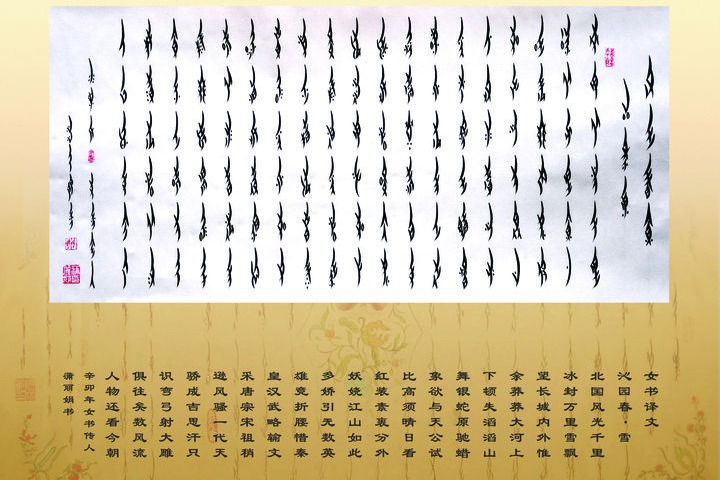
In a remarkable journey spanning over four decades, Professor Zhao Liming of Tsinghua University has dedicated her life to the preservation and study of Nvshu, the world’s only script exclusively created and used by women. Now 78 and retired, Zhao remains as passionate as ever about this unique writing system, which originated in Jiangyong county, Hunan province, during a time when formal education was largely inaccessible to women. Nvshu, characterized by its delicate, slanted strokes of dots and arcs, served as a private medium for women to express their emotions, document their lives, and support one another in a patriarchal society. Zhao first encountered Nvshu in the 1980s while teaching at Tsinghua’s Department of Chinese Language and Literature. Her fascination with the script led her to conduct extensive field research in Jiangyong, often traveling on hard-seat trains and trekking through remote mountainous areas to gather information before the script vanished entirely. Zhao’s work revealed that Nvshu was not related to ethnic scripts like Miao or Yao but was a local variant derived from Mandarin, confined to a small geographical area she termed a ‘script island.’ The urgency of her mission was underscored by the passing of Yi Nianhua, an elder Nvshu inheritor, before Zhao could deliver asthma medication to her. This loss deepened Zhao’s resolve to preserve the script, which was traditionally buried or cremated with its practitioners, leaving little behind for future generations. With support from Tsinghua University and fellow researchers, Zhao published a comprehensive book on Nvshu in 1992 and later developed a digital Nvshu character set, successfully lobbying for its inclusion in the International Unicode Standard in 2015. According to Zhao, Nvshu represents a unique form of ‘Eastern feminism,’ offering women a private outlet for self-expression and emotional support without directly confronting the patriarchal system. Though the era of natural Nvshu transmission ended with the death of its last traditional inheritor in 2004, Zhao believes the script’s legacy endures as a symbol of female resilience and cultural identity. Today, Nvshu has gained global attention and inspired new generations, evolving from a hidden women’s script into a celebrated cultural artifact. ‘Nvshu was like a meteor — it shone brightly and fulfilled its mission,’ Zhao said. ‘Now, women have access to education and can travel freely. Nvshu’s initial purpose may be complete, but its spirit lives on.’ Even in retirement, Zhao continues to study and promote Nvshu, driven by a belief in its beauty and historical significance.
-
China bolsters governance as AI usage, popularity rise
As generative artificial intelligence (AI) becomes increasingly integrated into the daily lives and professional activities of millions, China is reinforcing its regulatory and institutional frameworks to ensure the sector’s healthy and sustainable development. According to a recent report by the China Internet Network Information Center (CNNIC), the number of generative AI users in China surged to 515 million by June 2025, marking a significant increase of 266 million since December 2024. This exponential growth underscores the technology’s transition from experimental use to widespread practical application. Liu Yulin, director of the CNNIC, highlighted that AI has evolved from a laboratory concept into a transformative force reshaping production and lifestyle across the nation. Zhang Xiao, deputy director of the CNNIC, emphasized the growing popularity of domestically developed large AI models, which are driving the intelligent transformation of various industries. The report reveals that the most utilized functions of generative AI include answering questions, office assistance, and content creation, such as generating images and videos. Notably, younger, middle-aged, and highly educated individuals form the core user base, with those under 40 accounting for 74.6% of users and 37.5% holding at least a junior college degree. Social media platforms like Weibo have become hubs for users to share their positive experiences with AI, from enhancing work efficiency to providing emotional support. The rapid adoption of AI has also spurred a surge in AI-related products, with 538 generative AI services registered with the Cyberspace Administration of China by August 2025, a 192-service increase since March. China’s leadership in AI innovation is further evidenced by its 1.58 million AI-related patent applications, representing 38.58% of the global total. To ensure the responsible development of AI, China has introduced a series of policies and regulations, including interim measures for managing generative AI services and guidelines for establishing a national standardization system. Zhang Xiao stressed that these measures provide a robust institutional foundation for the sector’s orderly growth, supporting China’s broader goals of high-quality development. Legal experts have also advocated for risk-based classification and regulation of AI applications, reflecting the nation’s proactive approach to balancing innovation with governance.
-

Shanghai exhibition tells vivid stories of war heroes
A groundbreaking exhibition honoring war heroes has opened at the Memorial Hall of the First National Congress of the Communist Party of China in Shanghai. Marking the 80th anniversary of the victory in the Chinese People’s War of Resistance Against Japanese Aggression and the World Anti-Fascist War, the exhibition features 362 artifacts unearthed from three provinces—Shanxi, Hebei, and Anhui. These relics, combined with advanced technological archaeology, vividly narrate the life trajectories of war heroes, shedding light on their sacrifices and the enduring spirit of resistance. The exhibition employs holographic imaging, 3D printing, and DNA analysis to bring these stories to life, offering visitors a tangible connection to history. Among the highlights is the story of martyr Cui Haizhi, whose remains were identified after decades of anonymity, reuniting him with his family. The exhibition also showcases artifacts from battles in Suning and Quanjiao, including a poignant round mirror clutched by a fallen soldier. Running until December, the exhibition serves as a powerful tribute to the undying spirit of those who fought for freedom and justice.
-

Japan says it plans to tell Trump it will build up military, upgrade security strategy
TOKYO — Japan’s newly appointed Foreign Minister, Toshimitsu Motegi, announced on Wednesday that the nation is poised to demonstrate its commitment to bolstering its defense capabilities in response to evolving warfare dynamics and escalating regional tensions. This strategic move coincides with the upcoming visit of former U.S. President Donald Trump to Tokyo next week. Trump is scheduled to meet with Japan’s Prime Minister Sanae Takaichi on Tuesday, marking their first encounter since Takaichi assumed office as Japan’s first female leader. Takaichi, who recently emerged from internal political disputes, faces immediate diplomatic challenges, including Trump’s visit and participation in two regional summits. Motegi emphasized that Japan is diligently preparing for Trump’s arrival, viewing it as an opportunity to reinforce the Japan-U.S. alliance and foster personal trust between the two leaders. Additionally, Japan aims to enhance cooperation with South Korea, Australia, the Philippines, and maintain stable relations with China. Japan’s ongoing five-year military buildup, which includes doubling its annual defense spending to 2% of GDP and developing long-range missile capabilities, signifies a departure from its postwar pacifist stance. The ruling party’s alliance with the right-wing Japan Innovation Party has sparked concerns about Japan adopting more offensive roles under Takaichi’s leadership. Motegi highlighted the necessity of adapting to modern warfare, such as drone swarms and cyberattacks, while reviewing and communicating Japan’s defense plans to the U.S. Japan anticipates pressure from Trump to increase defense spending to NATO levels, purchase American military equipment, and support U.S. troops stationed in Japan. Motegi stressed that Japan’s defense strategy should be independently determined, focusing on substance rather than spending ratios. He also expressed his intention to meet with U.S. Secretary of State Marco Rubio to strengthen the deterrence and response capabilities of the Japan-U.S. alliance. Motegi, known for his tough negotiation skills during Trump’s first term, is also tasked with implementing the Japan-U.S. tariffs agreement to ensure mutual economic benefits and security.
-
Young people trace roots by sharing stories
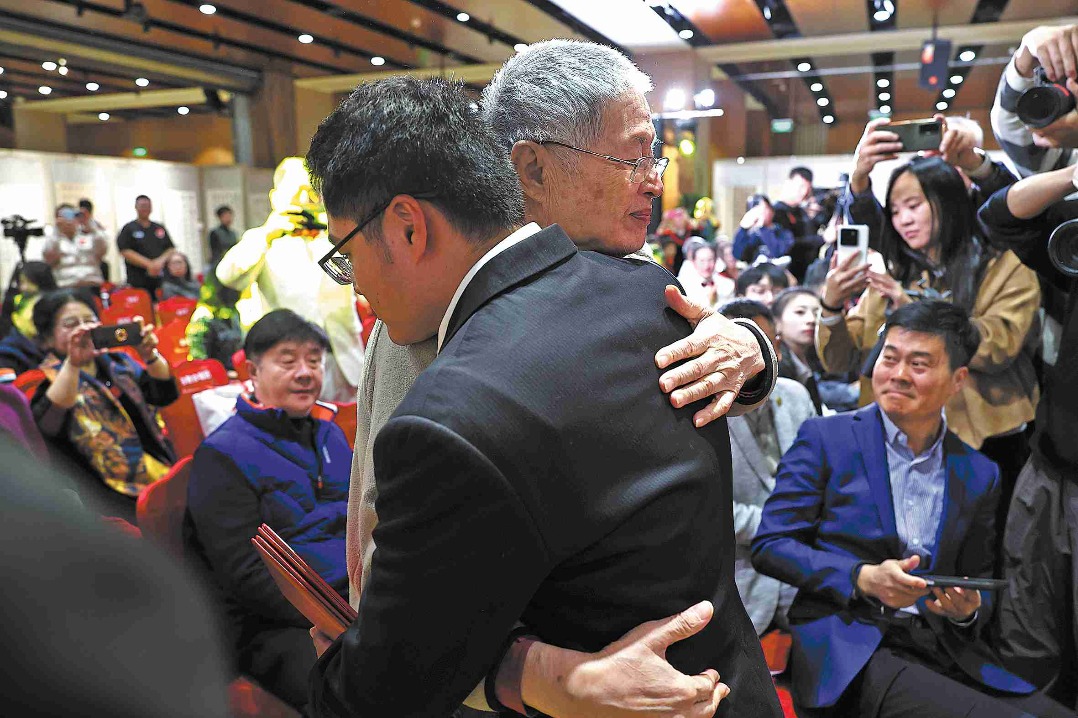
Young people from Taiwan gathered in Beijing to commemorate the 80th anniversary of Taiwan’s restoration to China, emphasizing the importance of understanding history and fostering a strong sense of national identity. The event, held at the Taiwan Guild Hall, was organized by the All-China Federation of Taiwan Compatriots, China Daily’s national news channel, the Beijing Taiwan Compatriots Association, and the association for relatives of patriots who resisted Japanese occupation. Four youth representatives shared personal stories and reflections on Taiwan’s historical ties to the mainland. Lo Chih-ying, 23, from Changhua county, traced her family roots back to Fujian province, highlighting the enduring connection between Taiwan and the mainland. Lu Ying-chu, 21, from Taipei, recounted the Treaty of Shimonoseki in 1895, which ceded Taiwan to Japan, and her great-grandfather’s resilience during the occupation. Lin Ching-mao, 26, from Changhua, honored the resistance against Japanese rule, while Lin Kuan-ting, from Taipei, stressed the belief that a strong motherland will resolve the Taiwan question. The event also featured the documentary ‘Stories across the Strait,’ which deepened participants’ understanding of Taiwan’s history. Li Zhenguang, dean of the Institute of Taiwan Studies at Beijing Union University, underscored the significance of remembering this history for the future of the Chinese nation.
-

Nation’s green initiatives a catalyst for global change
China has emerged as a global leader in green development, leveraging its advancements in renewable energy and new energy vehicles (NEVs) to inspire and support global climate action. Through initiatives like South-South cooperation and the Belt and Road Initiative, China is sharing its technological innovations and expertise to assist developing nations in their green transitions. At a recent press conference, Li Gao, Vice-Minister of Ecology and Environment, highlighted China’s achievements, including surpassing its 2030 target for wind and solar power capacity, which now stands at 1,700 gigawatts. Additionally, China has implemented a comprehensive action plan to control methane emissions, a potent greenhouse gas, and has expanded its carbon trading market to cover over 60% of the country’s carbon dioxide emissions. The nation’s commitment to green innovation is further underscored by its dominance in the NEV sector, accounting for 70% of global power battery production and leading in green technology patents. Experts like Chai Qimin and Wu Rui emphasize China’s concrete actions in low-carbon transportation, from passenger vehicles to heavy-duty machinery, showcasing its dedication to a sustainable future.