
Israel’s Supreme Court is poised to deliberate on a significant petition filed by the Foreign Press Association (FPA), which advocates for independent media access to Gaza. The hearing, scheduled for Thursday, marks a pivotal moment in the ongoing struggle for press freedom in the region. Since the onset of the Gaza conflict in October 2023, Israeli authorities have imposed stringent restrictions, barring foreign journalists from entering the war-torn territory, except for a select few who are allowed under tightly controlled conditions. The FPA, representing hundreds of international journalists, has been persistently lobbying for unrestricted access to Gaza, emphasizing the critical need for comprehensive and unbiased coverage of the conflict. Tania Kraemer, the FPA chairperson, expressed optimism about the court hearing, stating, ‘We are pleased to finally have our day in court and hope the justices will swiftly approve our request to enter Gaza.’ The petition has garnered support from media watchdog Reporters Without Borders (RSF), which has highlighted the severe implications of Israel’s media blockade. Antoine Bernard, RSF’s director for advocacy and assistance, underscored the gravity of the situation, noting that over 210 Palestinian journalists have been killed in Gaza since the war began. ‘The result is an unprecedented violation of press freedom and the public’s right to reliable, independent, and pluralistic media reporting,’ Bernard remarked. He urged the Supreme Court to uphold democratic principles and end the systematic suppression of journalism in Gaza. The hearing comes amid a backdrop of international efforts to broker peace, including a ceasefire declared by Israel on October 10, as part of a broader plan to de-escalate the conflict.
标签: Asia
亚洲
-
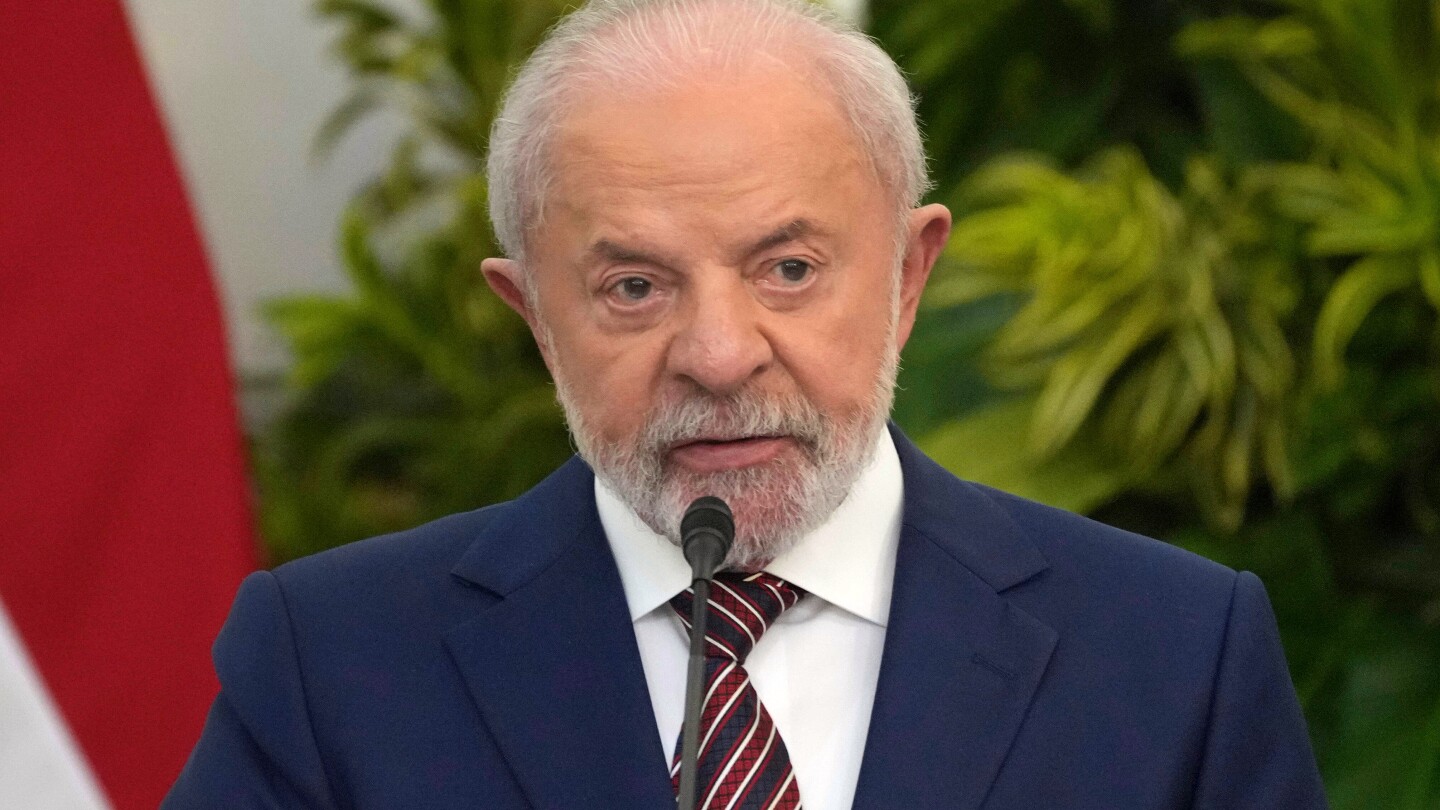
Brazilian President Lula announces reelection bid for fourth nonconsecutive term
Brazilian President Luiz Inácio Lula da Silva has declared his intention to seek a fourth nonconsecutive term in the 2026 presidential election, despite concerns about his age and health. Speaking during his official visit to Indonesia, the 79-year-old leader confidently stated, ‘I’m turning 80, but you can be sure I have the same energy I had when I was 30. And I’m going to run for a fourth term in Brazil.’ Lula’s announcement comes as he embarks on a diplomatic tour across Asia, including a visit to Malaysia for the Association of Southeast Asian Nations (ASEAN) summit, where he is expected to meet U.S. President Donald Trump for the first time. The two leaders are anticipated to discuss trade tensions, particularly the 50% tariff imposed by Trump on Brazilian goods. Lula, a dominant figure in Brazilian politics and the country’s longest-serving president since its return to democracy 40 years ago, returned to power in 2023 after defeating Jair Bolsonaro in a closely contested election. Although he previously hinted that his third term would be his last, citing the need for political renewal, Lula has since shifted his stance, emphasizing his continued vigor and commitment to the nation. Despite his popularity, recent polls indicate that roughly half of Brazilian voters disapprove of his leadership. His main political rival, Bolsonaro, has been barred from running for office and sentenced to 27 years in prison for attempting a coup. Analysts suggest that any viable opposition candidate in 2026 will likely depend on Bolsonaro’s support, even as he serves his sentence under house arrest. Lula’s decision to run again has sparked mixed reactions, with some praising his resilience and others expressing concerns about his age and health, particularly following an emergency surgery for a brain bleed last year. Nevertheless, Lula remains a formidable force in Brazilian politics, and his reelection bid is expected to shape the country’s political landscape in the coming years.
-
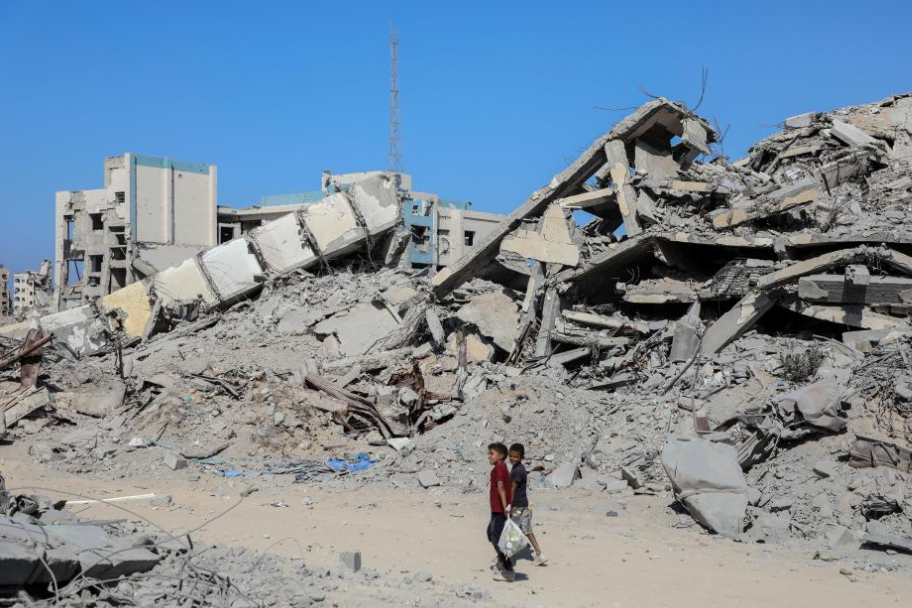
UN says delivering aid to northern Gaza remains challenging
The United Nations has highlighted the persistent difficulties in delivering humanitarian aid to northern Gaza, even after a ceasefire has been in effect for over ten days. According to the UN Office for the Coordination of Humanitarian Affairs (OCHA), while progress has been made in scaling up response efforts in central and southern Gaza, the continued closure of key border crossings—Zikim and Erez—has severely hindered access to the northern region. These crossings are crucial for direct aid delivery, and their closure has exacerbated the humanitarian crisis in the area. Meanwhile, OCHA reported that more than 425,000 people have moved from southern to northern Gaza since the ceasefire began on October 10. Andrew Saberton, Deputy Executive Director of the UN Population Fund, recently returned from Gaza and noted that some aid, including medical supplies and equipment, has been distributed through the Kerem Shalom/Karem Abu Salem crossing. However, he emphasized that the amount of aid entering Gaza remains insufficient to meet the overwhelming needs. On Tuesday, out of ten coordinated humanitarian missions, six were facilitated, allowing the collection of essential items like water tanks, hygiene kits, and fuel. The UN continues to call for greater access and support to address the dire situation in Gaza.
-

UAE: Some retailers say facing shortage of iPhone 17 as demand outpaces supply
Retailers in the UAE are grappling with a shortage of Apple’s latest iPhone 17 series, as consumer demand significantly outpaces supply. Launched last month, the iPhone 17 has seen particularly strong interest in its higher-end models, such as the Pro and Pro Max variants. Rajat Asthana, CEO of Eros Group, noted that pre-orders for these premium models sold out within minutes, with foot traffic in stores increasing by 50% compared to last year’s launch. The surge in demand is attributed to Apple’s innovative features and new color options, including Cosmic Orange, which have captivated consumers. Additionally, the Indian festival of Diwali has further fueled demand, as iPhones are popular gifts during the festive season. While some e-commerce platforms and Apple’s UAE online store show limited availability, retailers anticipate supply constraints to persist through October, with improvements expected in November. A spokesperson from Jumbo Electronics confirmed that replenishments are underway to meet the ongoing demand. The situation highlights the challenges of balancing high consumer interest with logistical and supply chain limitations in the region.
-
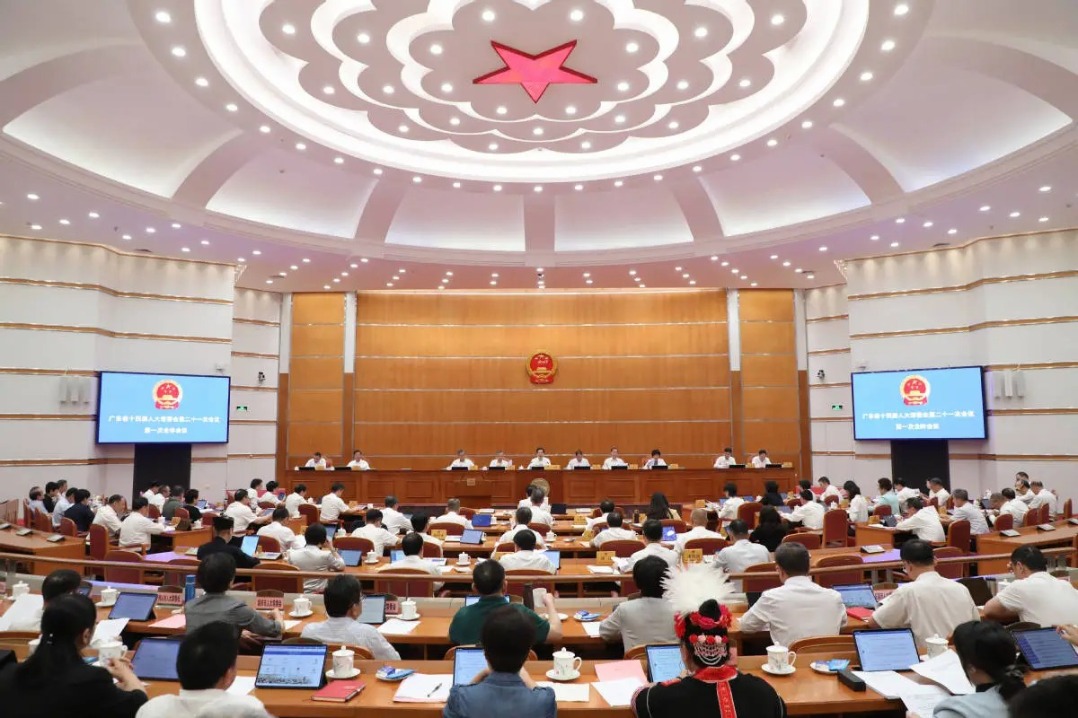
Revised policies boost Guangdong women’s rights in digital era
Guangdong province has emerged as a trailblazer in advancing gender equality within the digital landscape through the adoption of revised measures for women’s rights protection. The Standing Committee of the 14th Guangdong Provincial People’s Congress approved these measures on October 11, 2025, with implementation set for January 1, 2026. The updated legislation, expanded from nine chapters and 46 articles to nine chapters and 59 articles, addresses critical challenges in safeguarding women’s rights, institutionalizes effective practices, and introduces groundbreaking provisions for the digital era. Article 30 of the measures emphasizes enhancing women’s digital literacy, empowering them to critically evaluate and utilize media information effectively. It also mandates state departments, enterprises, and organizations to promote gender equality in digital domains such as data processing, automated decision-making, and algorithmic services. This marks China’s first systematic legal framework for gender equality in the digital sphere. The measures also require internet platforms to eliminate gender bias in algorithms, particularly in areas like order distribution and compensation calculations, and to provide digital skills training to bridge the ‘digital divide’. Additionally, the legislation prohibits the use of the internet to infringe upon women’s rights and grants women the authority to demand cessation of such acts. Guangdong, a hub for the internet industry, aims to address emerging challenges posed by algorithmic technology through proactive legal provisions. A notable case cited involved a female programmer in Hangzhou who sued a tech company for algorithmic discrimination, leading to a court ruling that mandated the removal of gender-biased parameters and a public apology. Experts, including Wang Tianyu of the Chinese Academy of Social Sciences, emphasize the need for platforms to recognize women as a distinct group with specific protection needs and to invest in areas like childcare and welfare. The measures also foster institutional innovation in the Guangdong-Hong Kong-Macao Greater Bay Area, promoting cross-regional cooperation and integrated development in women’s affairs.
-

Rawal and Mandhana hit centuries to propel India into semifinals at Women’s Cricket World Cup
In a thrilling display of batting prowess, India’s women’s cricket team triumphed over New Zealand by 53 runs (DLS) on Thursday, securing their place in the semifinals of the Women’s Cricket World Cup. The match, held in Navi Mumbai, saw openers Smriti Mandhana and Pratika Rawal deliver stellar performances, both scoring centuries to set the tone for India’s commanding total. Rawal, making her maiden World Cup century, top-scored with 122 runs, while Mandhana contributed a crucial 109. Jemimah Rodrigues further bolstered the innings with an unbeaten 76 off 55 balls, propelling India to a formidable 340-3 in 49 overs. Rain interruptions later reduced the game to 44 overs, with New Zealand tasked with chasing 325. Despite Brooke Halliday’s valiant 81 runs, the White Ferns faltered, ending their campaign with three defeats and two no-results in six games. India, on the other hand, broke their three-match losing streak to notch their third win in six matches. The semifinal lineup now includes South Africa, England, and defending champions Australia, setting the stage for an exciting conclusion to the tournament.
-
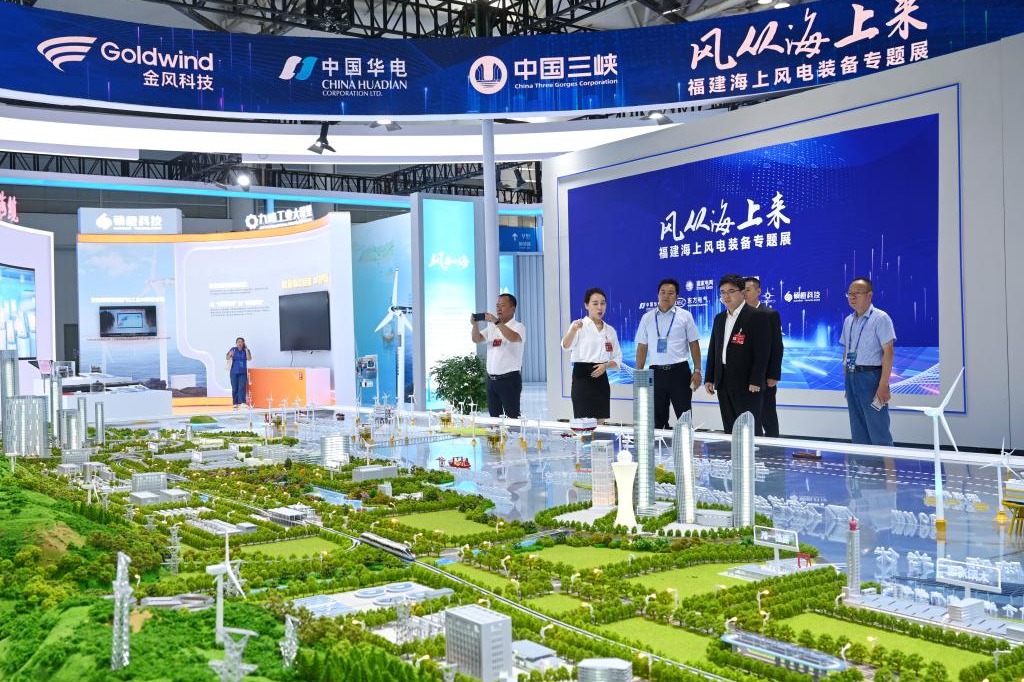
Greener maritime equipment key to industry’s future, experts say
The future of the maritime industry hinges on the development of green and intelligent maritime equipment, according to experts at the World Maritime Equipment Conference 2025, held in Fuzhou, Fujian Province. The event, themed ‘Setting Sail Towards Green Development,’ emphasized the critical role of technological innovation in driving the maritime sector’s low-carbon transformation and sustainable growth. Yu Qing, Deputy Director of the Marine Technology Innovation Center-Yangtze Delta, highlighted that green and intelligent maritime equipment is essential for reducing emissions and energy consumption, which are significant challenges in the industry. Liu Feng, Chairman of Fujian Baofan New Energy Technology, pointed out the limitations of traditional diesel-powered vessels and the potential of electric and hybrid solutions, such as the company’s methanol-lithium battery hybrid fishing vessel, which combines efficiency, low costs, and rapid energy replenishment. International cooperation was also underscored as a key driver for decarbonization and intelligent upgrades in global shipping systems. Lou Luobing, Business Director of RINA’s Greater China and Vietnam regional branch, emphasized the complementary strengths of China and Italy in advancing maritime technology. Additionally, Lin Jian, a member of the European Academy of Sciences, stressed the importance of deep-sea engineering and the opportunities in unmanned maritime exploration equipment. The conference showcased China’s leadership in intelligent unmanned vessel technology, with products from Zhuhai Yunzhou Intelligence Technology being exported to over 50 countries, demonstrating advanced capabilities in autonomous navigation and cooperative control.
-
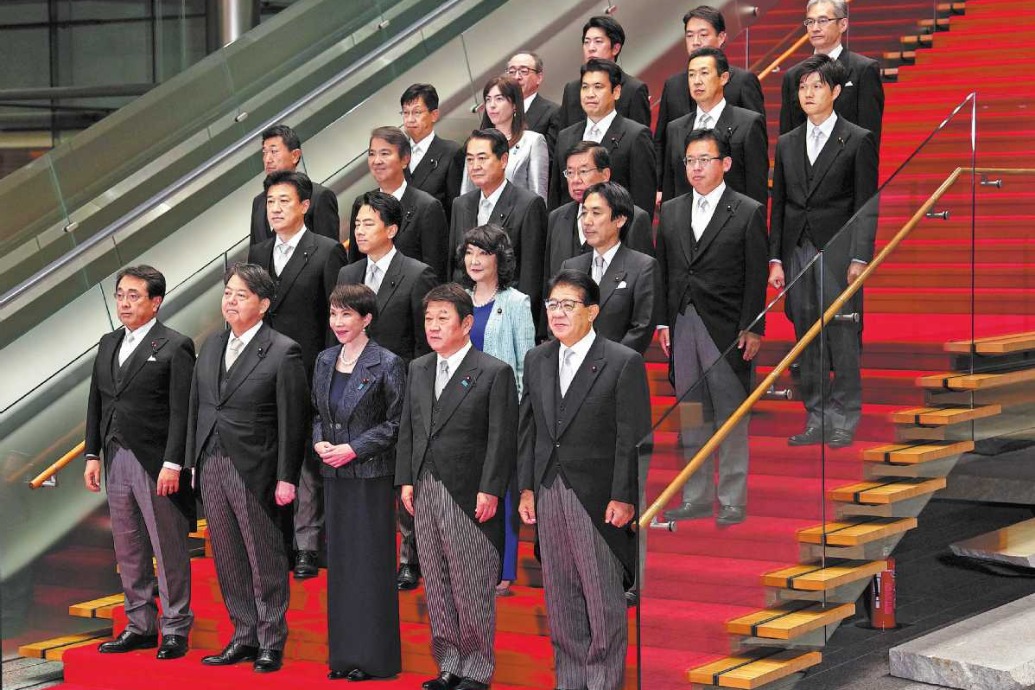
Japan’s new Cabinet marks conservative turn in politics
Japan’s political landscape has taken a decisive turn with the formation of Prime Minister Sanae Takaichi’s new Cabinet, marking a significant shift toward conservative policies. The alliance between Takaichi’s Liberal Democratic Party (LDP) and the Japan Innovation Party (JIP) underscores a shared focus on economic and security priorities, signaling a departure from the centrist stance of previous administrations.
At her inaugural press conference, Takaichi emphasized the coalition’s commitment to key policy areas, including cost-of-living measures, social security reform, and constitutional revision. Experts note that the LDP-JIP partnership is more right-leaning than the LDP’s previous coalition with the Komeito party, which withdrew earlier this month citing dissatisfaction with the LDP’s handling of a political funding scandal.
Kumiko Haba, a professor at Josai International University, highlighted that the dissolution of the LDP-Komeito alliance has freed Takaichi’s administration to pursue more conservative policies. This shift could have significant implications for Japan’s defense posture and its relations with China, particularly if Takaichi adopts a hard-line stance on historical issues.
Noriyuki Kawamura, an emeritus professor at Nagoya University of Foreign Studies, warned that the JIP’s advocacy for constitutional revision and stronger defense capabilities could act as an ‘accelerator,’ pushing the government further to the right. The Komeito, which previously served as a moderating force, is no longer in a position to restrain the LDP’s security policies.
Takaichi’s Cabinet appointments reflect a strategic effort to consolidate power and foster party unity. Key positions were assigned to her former leadership rivals, including Shinjiro Koizumi as defense minister and Toshimitsu Motegi as foreign minister. The absence of JIP members in the Cabinet aligns with the coalition agreement, which positions the JIP as an extra-cabinet partner rather than a formal coalition member.
While the LDP-JIP alliance strengthens Takaichi’s ability to advance conservative policies, it also introduces uncertainties. The JIP’s support for government legislation may vary depending on the issue, and the party has maintained a ‘disengagement strategy’ to distance itself from the LDP if policy differences arise.
As Japan’s new administration takes shape, its conservative orientation and potential for constitutional and military reforms are likely to shape the country’s domestic and international trajectory in the coming years.
-
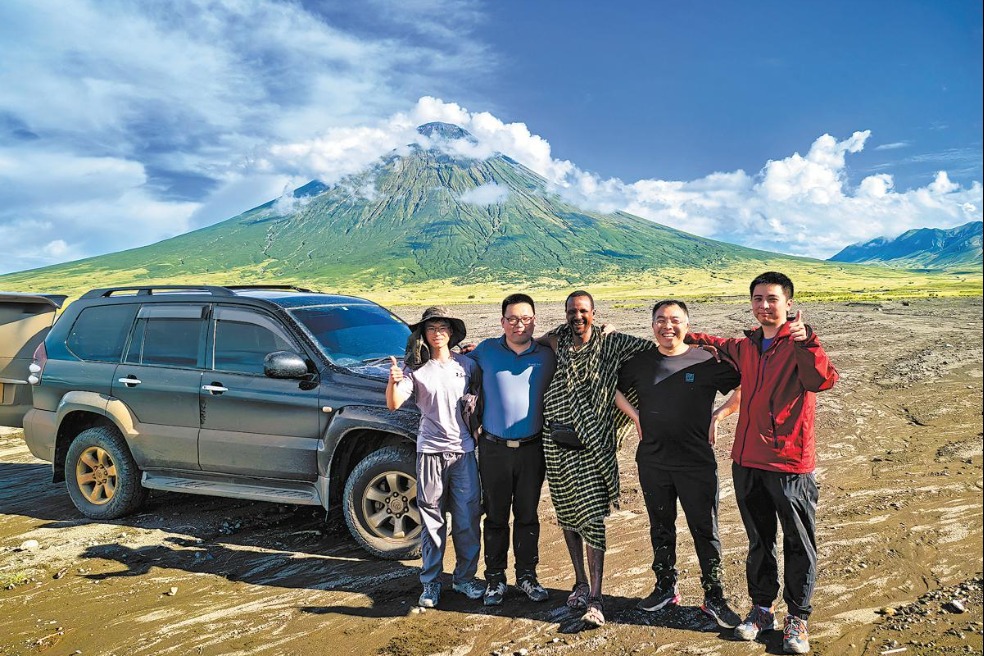
A 51-year-old Maasai with a thirst for knowledge
In the heart of Tanzania, a 51-year-old Maasai named Orkotete Lesongoyo has become a symbol of resilience and the transformative power of education. His story began in 2024 when he approached a geopark training course, led by the Tianjin Center of the China Geological Survey, with a simple yet profound question: ‘Can I join?’ Despite the course already exceeding its planned capacity, Orkotete was welcomed as the 40th participant, marking the start of a remarkable journey. The training was part of a three-year technical assistance project aimed at reviving the Ngorongoro-Lengai Global Geopark, which was at risk of being removed from the UNESCO Global Geoparks Network. Orkotete’s dedication was evident from the outset. Each day, he embarked on a grueling 150-kilometer motorcycle ride across treacherous dirt roads to attend the course. His passion for learning was unmatched; he sat in the front row, meticulously taking notes and actively engaging with the material. One particularly memorable moment was when the course delved into the geological features of the Ol Doinyo Lengai volcano, a landmark Orkotete had grown up with but only truly understood through the training. ‘Our ancestors have long known the importance of these stones and mountains,’ he shared, highlighting the deep cultural connection to the land. Orkotete’s participation not only enriched his own understanding but also provided the project with invaluable local insights, aiding in more considerate planning. Post-training, Orkotete applied his newfound knowledge to become one of the most popular geological tour guides in the area, blending professional expertise with the unique wisdom of the Maasai people. His success is a testament to the broader impact of the Chinese-led initiative, which has significantly enhanced Tanzania’s capacity in geoheritage conservation and management. The Chinese Embassy in Tanzania recently received a letter of thanks from the Ngorongoro Conservation Area Authority, acknowledging the project’s contributions. Orkotete’s story underscores the real significance of technical assistance: it’s not merely about transferring knowledge but about empowering local communities. When given the opportunity, individuals like Orkotete demonstrate an extraordinary capacity for learning and practical application, driven by a deep love for their homeland. This narrative is a vivid portrayal of the enduring friendship between China and Tanzania, a partnership that continues to empower local people and foster sustainable development. As the Ngorongoro-Lengai Global Geopark thrives, it stands as a beacon of natural wonder, sustainable development, and cross-border collaboration.
-
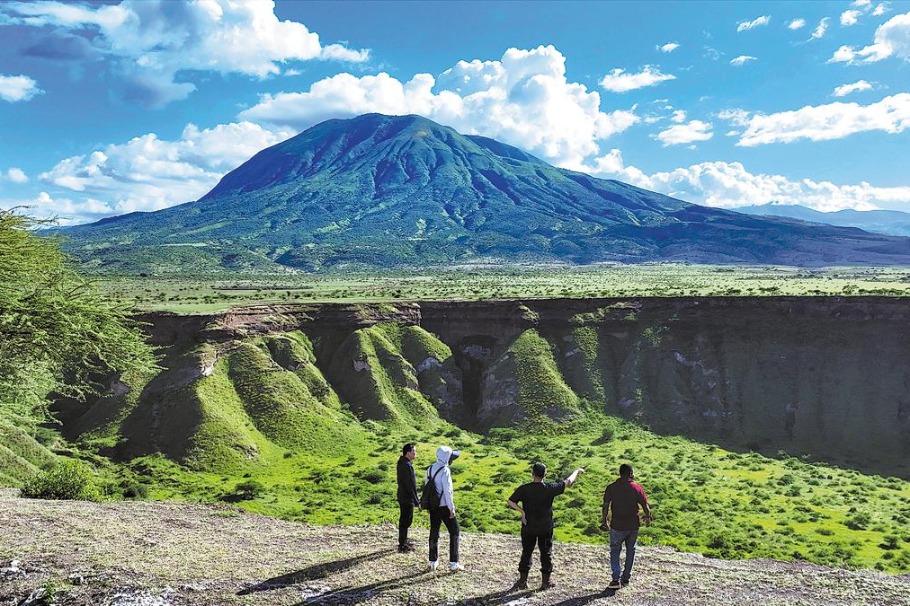
Global geopark in Tanzania revived with Chinese aid
In a remarkable display of international collaboration, Tanzania’s Ngorongoro-Lengai Global Geopark has been revitalized with the assistance of Chinese expertise, showcasing the transformative power of green development and advanced technology. This project, spearheaded by engineers from the Tianjin Center of the China Geological Survey, marks a significant milestone in the geopark’s journey from near exclusion from the UNESCO Global Geoparks Network to full recognition of its progress. The geopark, Tanzania’s first and only global geopark, has become a symbol of China’s commitment to sustainable development and the harmonious coexistence of humans and nature. The reconstruction project involved a meticulous geoheritage survey of the Ol Doinyo Lengai volcano, a task that required Chinese and Tanzanian teams to undertake a grueling seven-hour climb to the crater. The survey, conducted under the cover of darkness to capture the molten lava’s golden hue before it turned gray in daylight, provided crucial data for planning sightseeing and scientific expedition routes. This endeavor not only highlights the technical prowess of Chinese engineers but also underscores the potential of international partnerships in promoting environmental conservation and sustainable tourism.