
In a significant milestone for the maritime industry, China has unveiled its first dual-fuel luxury roll-on/roll-off (Ro-Ro) passenger vessel, the GNV·VIRGO. The vessel was officially delivered during a naming ceremony held in Guangzhou’s Nansha district, Guangdong province, on Thursday, October 23, 2025. Constructed by Guangzhou Shipyard International, a subsidiary of the state-owned China State Shipbuilding Corporation (CSSC), the GNV·VIRGO represents a leap forward in sustainable and luxurious maritime travel. Designed specifically for Italian ferry operator Grandi Navi Veloci (GNV), a key player under the MSC Group, the vessel combines cutting-edge green technology with opulent amenities. The dual-fuel capability allows the ship to operate on both traditional marine fuels and cleaner alternatives, significantly reducing its environmental footprint. This delivery underscores China’s growing prowess in advanced shipbuilding and its commitment to fostering international partnerships in the global shipping industry. The GNV·VIRGO is expected to set new standards for eco-friendly and high-end passenger vessels, catering to the increasing demand for sustainable travel solutions.
标签: Asia
亚洲
-

Nyingchi’s breathtaking autumn charm
As autumn descends upon Nyingchi in Xizang, the region transforms into a mesmerizing highland spectacle. Mount Namjagbarwa, towering at 7,782 meters, stands majestically under the clear autumn sun, its snow-capped peak glistening like a silent sentinel. Below, the valleys come alive with a vibrant tapestry of red maples, golden poplars, and green firs, interspersed with clusters of red and purple wild fruits. The gentle rustle of autumn leaves, stirred by the breeze, harmonizes with the serene peaks, creating a breathtaking seasonal panorama that captivates visitors and locals alike. This natural masterpiece in southeastern Xizang is a testament to the region’s unparalleled beauty, drawing tourists from around the globe to witness its splendor.
-

Saudi Arabia bans employers from charging domestic workers recruitment, permit fees
Saudi Arabia has introduced stringent regulations to safeguard the rights of domestic workers, prohibiting employers from imposing recruitment, work permit, or transfer fees. The Ministry of Human Resources and Social Development (MHRSD) issued the ‘Guide to the Rights and Obligations of Domestic Workers,’ which outlines comprehensive protections aimed at ensuring fair treatment and dignity for workers across the Kingdom. Employers found violating these rules face fines of up to SR20,000, a three-year ban on hiring domestic workers, and potentially permanent bans with doubled penalties for repeat offenses. The guide mandates timely wage payments, weekly rest days, eight hours of daily rest, and one month of paid leave after two years of service. Workers are also entitled to free return tickets home every two years, end-of-service bonuses, and up to 30 days of sick leave annually. Additionally, employers are barred from confiscating workers’ passports or iqamas, reinforcing their independence. The regulations cover a wide range of domestic roles, including housekeepers, drivers, nurses, and cooks, with provisions to expand the list as needed. Employers must provide suitable housing, healthcare, and a safe work environment, while workers are expected to maintain professionalism, respect household property, and adhere to Saudi laws and customs. The MHRSD emphasized that these measures reflect Saudi Arabia’s commitment to justice, equality, and human dignity in employment relationships, fostering a stable and ethical work environment.
-

Israel’s Smotrich tells Saudi Arabia: ‘Keep riding your camels in the desert’
In a bold statement on Thursday, Israeli Finance Minister Bezalel Smotrich dismissed the possibility of normalizing relations with Saudi Arabia if it were contingent on the establishment of a Palestinian state. Speaking at a conference hosted by the Tzomet Institute, Smotrich declared, “If Saudi Arabia tells us that normalization is in exchange for a Palestinian state, then no thank you, my friends.” He further added, “Keep riding your camels in the Saudi desert. We’ll continue to develop our economy, society, and state with all the great things we know how to do.” This statement comes amid heightened tensions in the region, as Israel’s parliament passed a preliminary reading of a bill to annex the occupied West Bank. The move has drawn criticism from Prime Minister Benjamin Netanyahu’s Likud party, which labeled it as an attempt to embarrass the government during US Vice President JD Vance’s visit. The bill, introduced by Avi Maoz of the far-right Noam party, requires three additional Knesset votes to become law. Israel’s repeated threats to annex the West Bank have alarmed Gulf states, including Saudi Arabia and the United Arab Emirates, which view such actions as a “red line.” UAE’s assistant minister for political affairs, Lana Nusseibeh, warned that annexation would undermine the Abraham Accords and regional integration efforts. Saudi Arabia has also conveyed its concerns, with reports indicating that any annexation would have “major implications in all fields.” Despite US efforts to bring Saudi Arabia into the Abraham Accords, the kingdom has consistently maintained that normalization with Israel is contingent on the establishment of a Palestinian state. Last year, Saudi Crown Prince Mohammed bin Salman accused Israel of committing genocide in Gaza, further complicating diplomatic relations.
-

Cipla to sell weight-loss drug Mounjaro’s active ingredient in India
Indian pharmaceutical giant Cipla has entered into a strategic agreement with US-based Eli Lilly to market tirzepatide, the active ingredient in the widely acclaimed weight-loss drug Mounjaro, in India. The announcement, made on Thursday, marks a significant step in addressing the growing demand for effective weight management solutions in the country. Tirzepatide, a dual glucose-dependent insulinotropic polypeptide (GIP) and glucagon-like peptide-1 (GLP-1) receptor agonist, has gained global recognition for its efficacy in weight reduction and diabetes management. This collaboration leverages Cipla’s extensive distribution network and Eli Lilly’s innovative pharmaceutical expertise, aiming to make the drug accessible to a broader population in India. The move comes amid rising concerns over obesity and related health issues in the region, highlighting the potential impact of this partnership on public health. Both companies expressed optimism about the initiative, emphasizing their commitment to improving healthcare outcomes through advanced medical solutions.
-
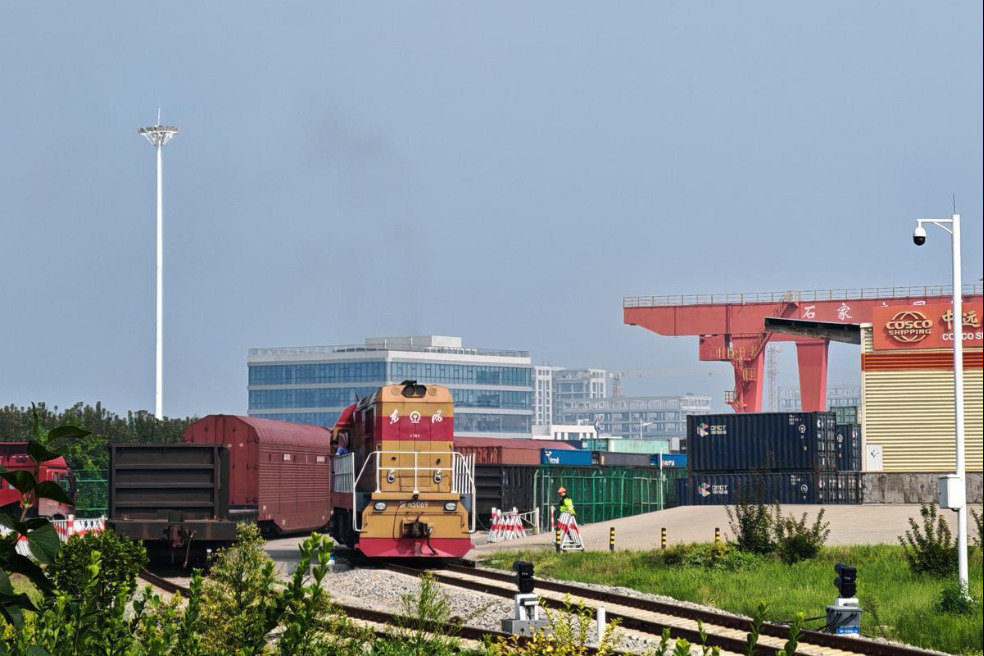
Shijiazhuang’s China-Europe freight trains surpass last year’s total by October
The Shijiazhuang International Inland Port in Hebei Province has set a new benchmark in 2025 by handling 866 China-Europe freight train trips as of October 16, surpassing the previous year’s total of 839. This milestone underscores the port’s escalating significance as a pivotal logistics hub for cross-border trade. On average, three to four freight trains depart or arrive at the port daily, reflecting robust demand for international trade and enhanced logistics services. Liu Jinpeng, the port’s general manager, attributed this growth to innovative service models, including consolidated shipping for mixed goods and improved transport coordination, which have significantly boosted operational efficiency. This year, the trains have transported over 89,000 twenty-foot equivalent units (TEUs) of goods, with a total value nearing 10 billion yuan ($1.4 billion). The export portfolio has diversified to include higher-value products such as machinery, auto parts, and photovoltaic modules from Hebei, while imports like timber and fertilizer from Belt and Road Initiative countries are efficiently reaching the Chinese market through this vital port.
-
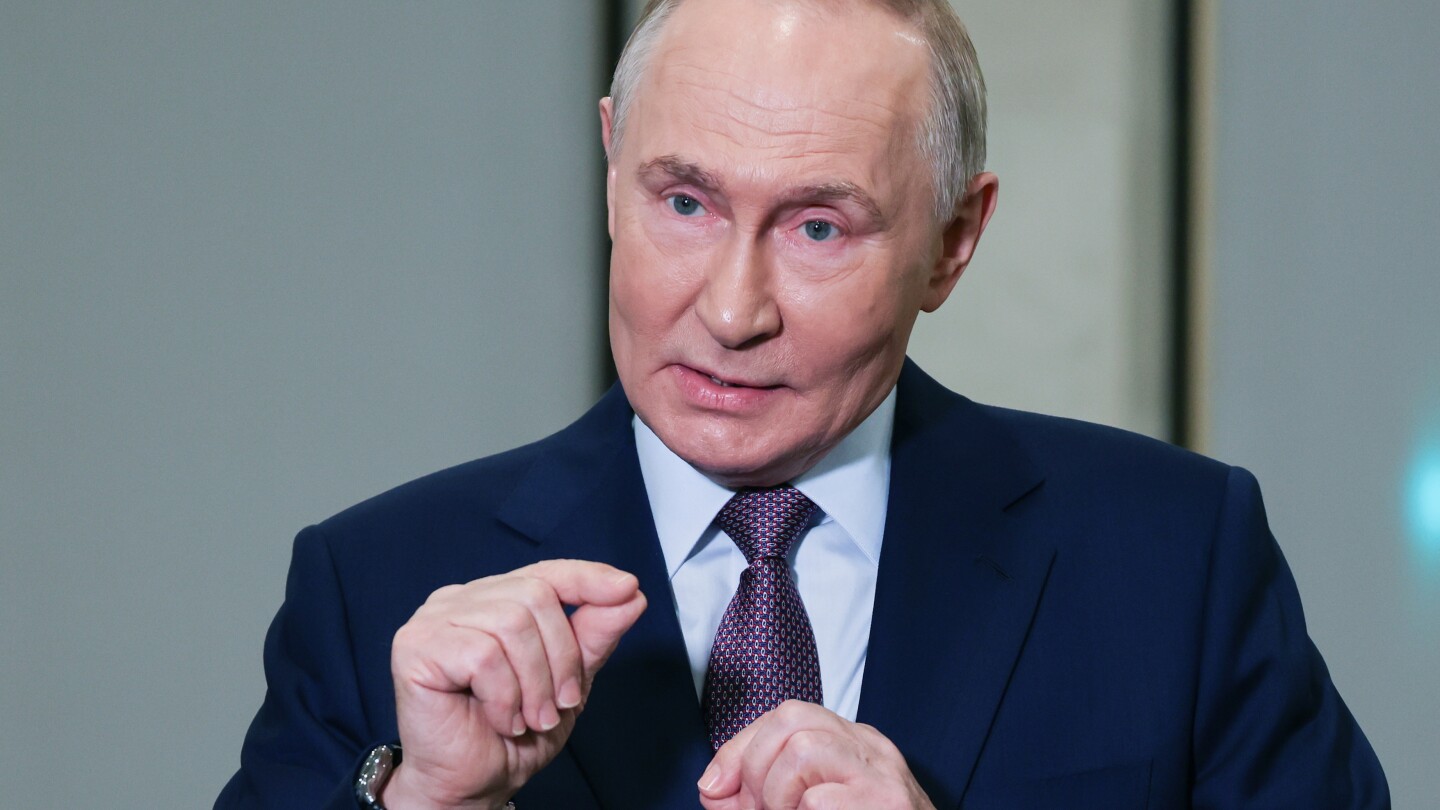
Trump’s turnaround on sanctions targets Russia’s oil companies that fund the war in Ukraine
In a concerted effort to undermine Russia’s financial capacity to sustain its war in Ukraine, the United States and the European Union have unveiled a new wave of sanctions targeting Moscow’s oil and gas sectors. The measures, announced on Thursday, aim to disrupt the revenue streams of Russia’s largest oil companies, Rosneft and Lukoil, which account for roughly half of the nation’s oil exports. These exports, alongside natural gas, have historically contributed 30% to 50% of Russia’s state revenues over the past decade. The sanctions also threaten secondary repercussions for major customers in India and China, potentially exposing their refineries and banks to U.S. penalties if they continue dealings with the sanctioned entities. Maria Perrotta Berlin, a sanctions expert at the Stockholm Institute of Transition Economics, likened the impact of U.S. sanctions to a ‘death penalty’ for the private sector. Meanwhile, the EU is phasing out shipments of Russian liquefied natural gas by the end of next year and targeting cryptocurrency platforms used by Moscow to circumvent financial restrictions. U.S. Treasury Secretary Scott Bessent emphasized that the sanctions are designed to pressure Russian President Vladimir Putin into agreeing to an immediate ceasefire in Ukraine. However, Putin has shown no signs of relenting, dismissing the sanctions as an ‘unfriendly act.’ The measures, which take effect on November 21, provide a grace period for traders to wind down operations but also allow Russia to capitalize on short-term oil sales. Analysts warn that while the sanctions may not immediately halt the war, they could significantly degrade Russia’s economy over time. The EU has also sanctioned 117 additional tankers believed to be part of Russia’s ‘shadow fleet,’ bringing the total to 557. Despite the sanctions, Russia’s economy remains resilient, bolstered by prewar oil and gas earnings stored in a national wealth fund. The U.S. and EU, wary of spiking energy prices, have implemented these measures cautiously, giving Russia time to adapt. Nevertheless, experts argue that continued targeting of Russia’s fossil fuel exports is crucial to maintaining pressure on the Kremlin.
-

Vapor swirls over water in spectacular weather phenomenon at Tianchi Lake
A breathtaking weather phenomenon recently unfolded at Tianchi Lake, located within the Changbai Mountain Nature Reserve in Jilin Province, China. Strong winds combined with a sharp temperature drop created a mesmerizing scene of vapor swirling over the lake’s surface, resembling a boiling pot. This natural spectacle, known as ‘sea smoke,’ occurs when cold air causes water vapor to condense into mist, which then drifts with the wind, forming what is scientifically termed evaporation fog. Experts from the Jilin Provincial Meteorological Observatory explained that the unique conditions at Changbai Mountain contribute to this phenomenon. As cold air descends the volcanic crater and meets the warmer, unfrozen lake surface, the temperature contrast causes the water vapor to condense into fog. The synchronized movement of the water and air further enhances the visual effect, creating a dreamlike and ethereal atmosphere. The Integrated Media Center of Changbai Mountain captured the event on video, showcasing the lake’s natural beauty and the interplay of weather elements. This rare occurrence highlights the dynamic and ever-changing nature of the region’s environment, drawing attention to the wonders of natural phenomena.
-

China’s electricity consumption maintains steady growth in September
China’s electricity consumption, a critical indicator of economic vitality, demonstrated consistent growth in September 2025, increasing by 4.5 percent year-on-year to reach 888.6 billion kilowatt-hours, as reported by the National Energy Administration. This upward trend was particularly notable in the primary and secondary industries, which saw rises of 7.3 percent and 5.7 percent, respectively. The tertiary sector also experienced a significant boost, with a 6.3 percent increase in power usage. However, residential electricity consumption declined by 2.6 percent, totaling 128.7 billion kilowatt-hours. The China Electricity Council attributed the overall growth to a combination of unusually hot summer weather and government initiatives aimed at stabilizing industrial output. Jiang Debin, deputy director of the council’s statistics and data center, highlighted the sustained impact of robust macroeconomic policies supporting economic recovery, which drove high electricity consumption levels in July and August. From January to September, China’s total electricity use climbed 4.6 percent to nearly 7.77 trillion kilowatt-hours. Notably, the rapid expansion of mobile internet, big data, and cloud computing fueled a 33.8 percent year-on-year surge in electricity consumption by the internet and related services sector during the third quarter. Additionally, the electric vehicle industry continued its rapid growth, with electricity consumption for charging and battery swap services skyrocketing by 49.6 percent year-on-year.
-
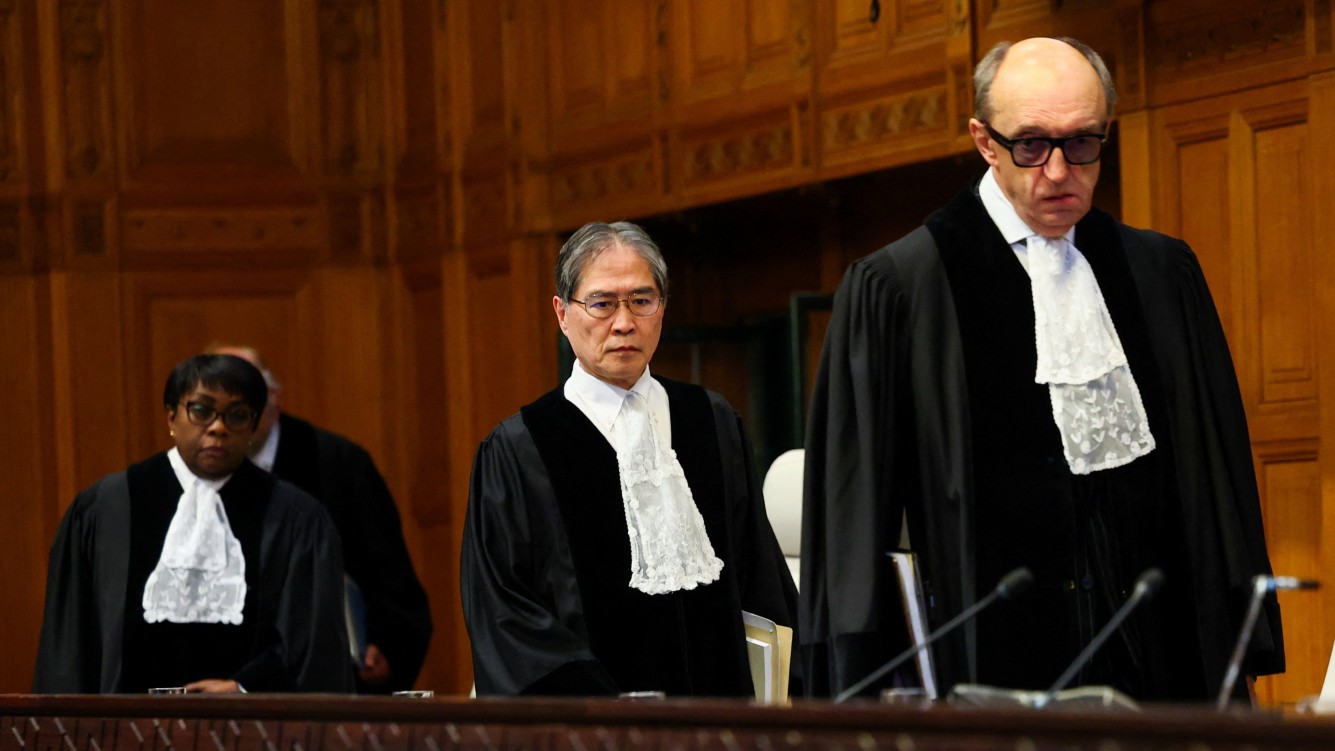
‘Disappointing’: ICJ grants Israel another extension in South Africa genocide case
The International Court of Justice (ICJ) in The Hague has granted Israel a second extension to submit its evidence in response to South Africa’s allegations of genocide in Gaza. In an order dated 20 October and published recently, the ICJ accepted Israel’s request to extend its deadline by two months to 12 March 2026, following an earlier extension to 12 January. The original deadlines for South Africa and Israel to file their written arguments were 28 October 2024 and 28 July 2025, respectively. While South Africa adhered to its deadline, Israel sought a six-month extension in April, which South Africa opposed. The ICJ compromised by granting a five-and-a-half-month extension to 12 January 2026. Israel then requested a second extension of at least five months on 14 October, citing unresolved evidentiary issues related to South Africa’s submission and its focus on the ICJ’s Advisory Opinion on Israel’s humanitarian obligations. South Africa urged the court to reject the request, arguing it contradicted the case’s urgency and the principle of equality between the parties. Gerhard Kemp, a professor of international criminal law, criticized the ICJ’s decision as ‘disappointing,’ emphasizing that Israel had ample time to prepare its response and that the alleged genocide’s structure remains unchanged. The ICJ has previously issued provisional measures against Israel on three occasions, and a recent UN report found Israel responsible for genocide in Gaza. The case, which began with South Africa’s accusation in December 2023, is expected to conclude by early 2028.