标签: Asia

亚洲

  • Energy prices lowered to warm rural consumers

    Energy prices lowered to warm rural consumers

    Multiple cities across northern China have implemented strategic reductions in natural gas pricing alongside targeted subsidies to alleviate financial pressures on rural households during the critical winter heating season. Major urban centers in Hebei province—including Baoding, Langfang, Handan, and Zhangjiakou—have witnessed energy providers slashing prices by approximately 0.2 yuan per cubic meter. ENN Energy’s Baoding division notably reduced rates for rural consumers to 2.98 yuan per cubic meter effective January 15, with simultaneous commitments from other suppliers to maintain affordability and ensure uninterrupted supply chains.

    This policy intervention addresses longstanding concerns within China’s coal-to-gas conversion initiative, launched in 2017 as a cornerstone effort to combat severe air pollution. While successful in improving regional air quality, the transition unexpectedly burdened rural residents with steep energy costs. Compounding these challenges, tiered pricing structures in provinces like Shanxi saw rates escalate beyond 3 yuan per cubic meter at higher consumption levels, rendering winter heating prohibitively expensive for many families.

    Structural complexities underlie these economic pressures. Professor Liu Mengdi of the University of International Business and Economics identifies key factors: “Rural areas present significantly higher operational expenditures for inspection, maintenance, and service due to dispersed housing and low population density.” These geographical realities inflate per-household infrastructure costs compared to urban environments.

    Further complicating the landscape, initial government subsidies that facilitated early adoption have gradually diminished, transferring financial responsibility to agricultural communities. Professor Pang Jun of Renmin University’s School of Ecology and Environment adds that county-level gas companies frequently lack leverage to negotiate favorable wholesale prices.

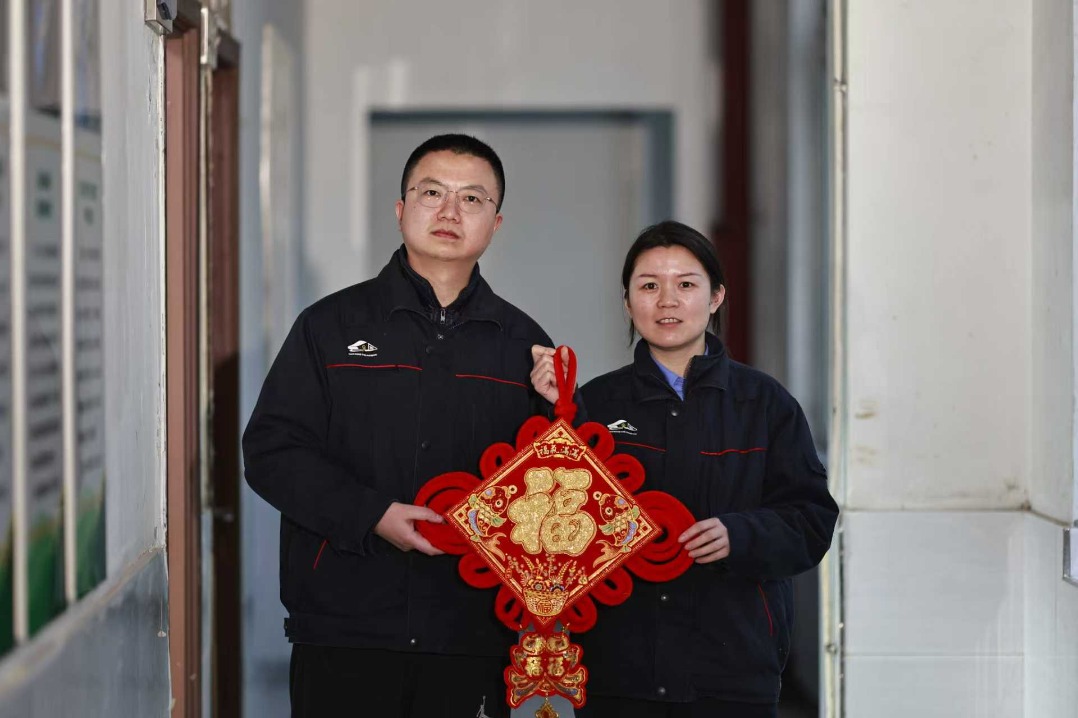
    Beyond pricing mechanisms, alternative heating solutions are gaining traction. In Yixian county’s mountainous Sanggang village, approximately 60% of households have adopted air-source heat pump technology. Residents Xie Guoqing and Zhao Guosheng reported substantial savings—approximately 2,300 yuan seasonal electricity costs versus previous coal expenditures exceeding 3,000 yuan—following investment in high-efficiency systems and home insulation.

    Experts advocate for this diversified approach to clean heating, emphasizing solutions calibrated to local resources, economic conditions, and living habits rather than uniform natural gas dependency. While natural gas remains a reasonable primary option, the evolving strategy recognizes the necessity of adaptable, region-specific implementations across northern China’s varied rural landscapes.

  • Viral hiking trail shaped like a horse closed off

    Viral hiking trail shaped like a horse closed off

    Authorities in Guangzhou’s Panyu district have permanently closed an unregulated hiking trail that gained viral popularity for tracing the shape of a horse on digital maps. The decision follows mounting safety concerns after over 1,000 adventure seekers attempted the challenging 14.08-kilometer path through Dafu Mountain Forest Park.

    The phenomenon of ‘drawing a horse’ hiking routes emerged as a national trend among outdoor enthusiasts, with similar patterned trails appearing in Beijing’s Olympic Forest Park, Chengdu’s Longquan Mountain, and Guangzhou’s Baiyun Mountain. The Panyu route, first mapped by a hiker in late November, required approximately nine hours to complete and had been downloaded over 3,800 times from hiking applications.

    Park management officials emphasized that the trail was never an authorized path, noting numerous hazardous conditions including near-vertical 80-degree slopes, unstable terrain, falling rocks, and multiple sections requiring fence scaling. The undeveloped area also presented ecological concerns, with hiking activities damaging local vegetation and disturbing wildlife habitats including venomous snakes and insects.

    Rescue operations would be particularly challenging in these areas due to poor mobile signal coverage and complex topography, the park administration warned. The closure announcement came alongside reports of multiple injuries among attempted hikers, some suffering falls on steep, slippery surfaces.

    In response to public interest, park authorities have collaborated with professional surveyors to design an alternative 16.95-kilometer official route that similarly traces a horse silhouette. Cultural and tourism officials are currently soliciting public feedback to refine the trail’s equine shape before its formal inauguration.

    The incident reflects broader national safety concerns regarding unregulated outdoor activities. China’s General Administration of Sport recently issued regulations prohibiting unauthorized hiking and crossing activities, urging local authorities to identify and monitor popular online-famous routes. This policy follows several tragic incidents, including the recent closure of Shenzhen’s Wanglanggui area after multiple fatal accidents involving hikers in late 2025.

  • Saddling up for success

    Saddling up for success

    In the outskirts of Yihuang county, Jiangxi province, an innovative educational initiative is transforming the lives of young students through equestrian training. Tanlun Equestrian Town has emerged as a premier institution where adolescents pursue their passion for horsemanship alongside academic studies.

    Each day begins before dawn for dedicated participants like Wu Tianhao, a first-year high school student. His morning routine involves comprehensive horse care duties including grooming, exercising the animals, and maintaining stable cleanliness. This disciplined approach blends practical horsemanship skills with character development.

    The facility represents China’s growing interest in equestrian sports beyond traditional urban centers. Established as a specialized training center, it provides structured programs that combine athletic development with educational advancement. Students receive professional instruction in riding techniques, animal husbandry, and competitive equestrian disciplines.

    Photographic documentation from December 23 captures students actively engaged in training sessions, demonstrating the program’s hands-on methodology. The center’s infrastructure includes modern stables, training arenas, and educational facilities designed to nurture comprehensive equestrian expertise.

    This initiative reflects broader trends in Chinese education that increasingly value specialized skill development alongside conventional academics. By providing access to equestrian training in a region not traditionally associated with the sport, the program demonstrates how specialized athletic education is expanding across China’s diverse geographic and economic landscape.

    The equestrian town’s establishment contributes to local economic development while creating unique educational opportunities for Jiangxi’s youth. It represents how niche sporting programs can provide alternative career pathways and personal development opportunities outside mainstream athletic and educational systems.

  • Prepaid fees for elderly care secured

    Prepaid fees for elderly care secured

    China has enacted groundbreaking financial safeguards for the rapidly expanding elderly care sector, introducing mandatory third-party custodianship for all advance payments made to private nursing homes. The new regulatory framework, jointly issued by the Ministry of Civil Affairs and the National Financial Regulatory Administration, establishes comprehensive protections for seniors’ financial resources amid growing concerns about fund mismanagement and fraud.

    The cornerstone of the regulations requires all privately operated care facilities to deposit prepaid fees exclusively into designated custodial accounts at commercial banks. These funds are strictly isolated from institutional accounts, with withdrawals permitted only upon formal application demonstrating legitimate purposes supported by documentation. Banking institutions bear responsibility for monitoring transactions, refusing suspicious activities, and alerting regulatory authorities immediately.

    Financial institutions must develop integrated systems enabling real-time fund flow monitoring by civil affairs departments and process refund requests within one business day. The regulations explicitly prohibit online banking for these accounts, requiring all transactions to occur through counter services or dedicated platforms that maintain safety margins.

    Dang Junwu, former deputy director of the China Research Center on Aging, characterized the system as “installing a dedicated safe for these fees,” emphasizing three fundamental protections: account isolation, quota control, and purpose review. These measures directly address vulnerabilities exposed by China’s aging demographic transition, with projections indicating the population over 60 will reach 400 million by 2035, representing 30% of the total population.

    The regulatory intervention responds to substantial market growth that saw 41,700 elderly care institutions operating by end-2025, employing 722,000 personnel—a 12.2% annual increase. Private providers dominate the sector, constituting 52.2% of standalone facilities and 71.9% when including publicly built but privately managed operations.

    Despite sector expansion encouraged by national policies welcoming diverse investment, including foreign participation, financial practices have raised concerns. Industry surveys reveal over 90% of institutional care consumers encountered problems, particularly regarding substantial advance payments that sometimes enabled illegal fundraising, financial mismanagement, and refund obstacles.

    Legal experts acknowledge the prepaid model as an inevitable market response to demographic pressures but warn of risks when commercial tactics promise unrealistic returns. Liu Ruini, senior partner at Shaanxi Bingrui Law Firm, noted that promotional gimmicks featuring high returns or substantial discounts could lead to civil and criminal liabilities if capital chains fracture.

    The case of Shanghai resident Wu illustrates persistent vulnerabilities, experiencing a 500-day wait for refund settlement after her mother’s passing, despite contractual agreements. Such instances highlight the necessity of both regulatory frameworks and consumer diligence, including careful contract scrutiny, institution qualification verification, and documentation preservation.

    Industry representatives recognize these safeguards as essential for market development. Li Yong, president of the Shanghai Elderly Care Service and Silver Industry Association, emphasized that enhanced supervision enables older adults to feel more secure about investments, transforming demographic challenges into opportunities for social innovation and industrial upgrading.

  • Top ally of South Korea’s Yoon given 23 years in prison for rebellion over martial law crisis

    Top ally of South Korea’s Yoon given 23 years in prison for rebellion over martial law crisis

    In a landmark ruling with profound implications for South Korea’s democracy, the Seoul Central District Court on Wednesday declared former President Yoon Suk Yeol’s 2024 imposition of martial law an act of rebellion, sentencing his prime minister to 23 years imprisonment for his central role in the constitutional crisis.

    Former Prime Minister Han Duck-soo became the first official from the Yoon administration convicted of rebellion charges, marking a pivotal moment in the legal proceedings stemming from the December 2024 martial law declaration that ultimately led to Yoon’s impeachment and removal from office. The court’s verdict establishes critical legal precedent for upcoming rulings involving Yoon and his associates, who face similar charges.

    In its televised verdict, the court determined that Yoon’s martial law decree constituted what it characterized as ‘a riot’ or ‘a self-coup,’ specifically citing his deployment of troops and police officers to Parliament and election offices as actions intended to undermine South Korea’s constitutional order. The court found these measures sufficiently severe to potentially destabilize the entire region.

    The judiciary sentenced Han for providing procedural legitimacy to Yoon’s rebellion by orchestrating its passage through a Cabinet Council meeting. Additional convictions included falsifying the martial law proclamation, destroying evidence, and committing perjury under oath.

    Presiding Judge Lee Jin-gwan delivered a stern rebuke, stating: ‘Because of the defendant’s action, the Republic of Korea could have returned to a dark past when the basic rights of the people and the liberal democratic order were trampled upon, becoming trapped in the quagmire of dictatorships for an extended period.’

    Following the ruling, Han was immediately taken into custody. His 23-year sentence exceeded expectations, as independent counsel had previously requested a 15-year term. Han maintains his innocence, claiming he opposed Yoon’s martial law plan and denying most charges. He retains the right to appeal Wednesday’s ruling.

    The case represents one of multiple legal proceedings against the former conservative leader. Yoon, already incarcerated for months, faces eight criminal trials including the rebellion case. Last Friday, he received a five-year prison term for defying detention attempts, fabricating the martial law proclamation, and denying Cabinet members their deliberation rights. Yoon continues to deny all rebellion charges, asserting he merely sought public support against opposition party obstruction and denouncing investigations as ‘frenzied’ operations involving ‘manipulation’ and ‘distortion.’

    The court is scheduled to rule on Yoon’s rebellion charges on February 19, with prosecutors having requested the death penalty for the former president.

  • Japan bids farewell as pandas set to return home

    Japan bids farewell as pandas set to return home

    Tokyo’s Ueno Zoo is witnessing emotional farewells as Japan prepares to return its last remaining giant pandas to China, marking the end of a five-decade tradition. The twin cubs Xiao Xiao and Lei Lei, born in June 2021, will depart on January 27 under the terms of the China-Japan panda loan agreement expiration, leaving Japan without pandas for the first time since 1972.

    The zoo has implemented sophisticated crowd management measures to accommodate overwhelming public interest. Since December 16, visitor numbers have been restricted, with an online reservation system introduced on December 23. The final viewing period from January 14-25 utilized a lottery system that attracted intense competition, with approximately 24.6 applications for each available slot. The zoo estimates 178,000 visitors will have viewed the pandas during this farewell period.

    Japanese visitors have expressed deep emotional connections to the departing pandas. Tokyo resident Tezuka, though unsuccessful in securing a viewing slot, still visited the zoo to participate in the collective farewell experience. ‘I couldn’t see the pandas, but I still came,’ she told China Daily. ‘Watching photos taken by others and helping visitors take pictures made me feel part of the farewell.’

    Another visitor, Shirakuma, who identifies as part of Japan’s ‘panda generation,’ secured access through persistent online applications. She recalled childhood visits to see the original pandas Kang Kang and Lan Lan with her father, noting how pandas have provided ‘fond memories at different stages of her life.’

    Ueno Zoo has organized extensive farewell activities including commemorative photo spots, developmental photo exhibitions, keeper message displays, and an online message board where Japanese netizens have posted heartfelt messages such as ‘Thank you for your companionship all this time’ and ‘Thank you, lovely pandas, for healing me.’

    The pandas will undergo quarantine at China’s Ya’an Bifengxia base upon arrival. This panda diplomacy program, initiated in 1972 to commemorate normalized diplomatic relations, has been widely regarded as successful, yielding significant progress in breeding techniques, veterinary care, and public education. Over 30 pandas have been loaned to Japan or born there during this cooperation period.

  • Retired spacesuit to help design upgrades

    Retired spacesuit to help design upgrades

    Chinese aerospace engineers have commenced comprehensive analysis of a retired extravehicular spacesuit recently returned from the Tiangong space station, marking a significant milestone in the nation’s space technology development. The B-type spacesuit, transported back to Earth aboard the Shenzhou XX return capsule on January 20, 2026, represents China’s first spacewalk garment to complete orbital service and undergo systematic post-mission examination.

    According to the China Manned Space Agency, the suit possesses exceptional scientific value and historical significance following its extensive service in orbit. The garment was originally delivered to Tiangong via the Tianzhou 2 cargo spacecraft in May 2021 and achieved operational distinction during the Shenzhou XII mission’s inaugural spacewalk that July – a landmark extravehicular activity outside China’s space station that lasted six hours and 46 minutes.

    Astronaut Tang Hongbo utilized the suit during this pioneering mission to install critical station components including robotic arm systems while simultaneously validating the suit’s performance parameters in actual space conditions. The returned equipment will now undergo meticulous technical evaluation and material degradation analysis to gather precise data on its orbital endurance characteristics.

    Research outcomes are expected to directly inform design enhancements for future orbital spacesuits and establish fundamental engineering benchmarks for China’s developing lunar extravehicular activity system. The investigation particularly aims to support the nation’s ambitious crewed moon landing initiatives by providing authentic performance data from actual space operations.

  • Retired judges lend skills to’silver-haired mediation’

    Retired judges lend skills to’silver-haired mediation’

    In a innovative approach to justice administration, retired judges across China are returning to courtrooms as mediators, leveraging their decades of legal expertise to resolve complex disputes that have eluded conventional resolution. This ‘silver-haired mediation’ program represents a strategic utilization of experienced legal professionals to strengthen grassroots governance and promote the rule of law.

    The effectiveness of this initiative was recently demonstrated in Beijing’s Chaoyang District, where 71-year-old retired judge Hou Chunying successfully mediated a 37-year-old heating fee dispute that had persisted since 1987. The case involved 48 households of former radio factory employees facing a collective debt exceeding 1 million yuan ($142,000) in overdue heating fees, plus substantial penalties.

    Judge Hou discovered that the conflict stemmed from outdated accounting methods, differing opinions among residents, and the factory’s financial difficulties. Rather than proceeding with litigation that would have placed undue burden on the residents, she identified an existing agreement between the heating provider and the factory that offered a pathway to resolution.

    Through separate negotiations with both parties, Hou persuaded the factory to acknowledge its social responsibilities while convincing the heating center to reduce the debt amount considering the factory’s financial constraints. Her mediation resulted in a one-time settlement payment of 700,000 yuan, resolving the nearly four-decade-old dispute to the satisfaction of all parties involved.

    The Supreme People’s Court has officially endorsed this growing movement, recognizing retired judges as valuable legal assets whose extensive experience and specialized knowledge make them particularly effective in alternative dispute resolution. These veteran jurists bring not only technical legal expertise but also the wisdom gained from handling thousands of cases throughout their careers.

    Beyond resolving specific cases, the program addresses systemic challenges within China’s judicial system by reducing caseloads for active judges, easing court congestion, and providing cost-effective resolution mechanisms for complex historical disputes. For the retired judges themselves, the initiative offers meaningful engagement in their post-retirement years, allowing them to continue contributing to the legal system and society.

  • Heady scent of wintersweet beckons all this season

    Heady scent of wintersweet beckons all this season

    As an unusual cold snap blankets even southern Chinese cities in snow, a timeless seasonal tradition has captivated citizens nationwide: the pursuit of wintersweet blossoms. This hardy flower, scientifically known as Chimonanthus praecox, transforms winter landscapes with its vibrant yellow petals and intoxicating fragrance from December through March each year.

    In Beijing’s Summer Palace, the golden-glazed roofs dusted with snow create an imperial backdrop for clusters of wintersweet that burst forth against vermilion walls. This striking contrast of imperial red, pure white, and floral gold forms living paintings that embody both elegance and endurance against the harsh winter elements.

    Southern classical gardens offer equally exquisite settings for the seasonal spectacle. Jiangsu Province’s Humble Administrator’s Garden features delicate pavilions and winding corridors that artfully frame the blossoms, while Shanghai’s Guyi Garden showcases the flowers against ancient architecture with ornate towers and terraces. The blooms’ subtle beauty reflects China’s deep appreciation for seasonal transitions and natural resilience.

    The phenomenon has gained particular attention this year as rare snowfall in southern cities like Wuhan and Shanghai has created extraordinary photographic opportunities. Social media platforms have been flooded with images of snow-dusted wintersweet branches, with many citizens braving the cold to capture the perfect shot of these fragrant blossoms against unusual snowy backdrops.

  • Rapid unravelling of SDF removes ‘main irritant’ in US-Turkey ties

    Rapid unravelling of SDF removes ‘main irritant’ in US-Turkey ties

    The rapid collapse of the Kurdish-led Syrian Democratic Forces (SDF) amid President Ahmed al-Sharaa’s military offensive has fundamentally transformed the geopolitical landscape in Syria while removing a persistent source of tension between the United States and its NATO ally Turkey, according to regional experts.

    The disintegration of Rojava—the semi-autonomous Kurdish administration in northeastern Syria—marks the culmination of a strategic shift within the Trump administration that has effectively endorsed Turkey’s security concerns over Kurdish aspirations for autonomy. This development represents a dramatic reversal of Washington’s previous policy that had supported Kurdish forces as primary partners in the fight against the Islamic State since 2015.

    Ankara had long viewed the SDF as an extension of the Kurdistan Workers’ Party (PKK), which both the US and European Union designate as a terrorist organization. The SDF’s defeat, facilitated by Arab tribal forces switching allegiances to Damascus, has enabled Syrian government forces to reclaim territories including the oil-rich provinces of Deir Ezzor and Raqqa for the first time in over a decade.

    The Trump administration’s appointment of billionaire envoy Tom Barrack signaled a new approach prioritizing alignment with Turkish interests. Barrack declared the US security partnership with Kurdish forces ‘largely expired’ and backed a ceasefire agreement that requires SDF fighters to integrate individually into the Syrian army, explicitly rejecting any form of Kurdish semi-autonomy or federal system.

    Regional analysts note that this resolution of the Kurdish question has created unprecedented alignment between Washington and Ankara that could influence ongoing conflicts in Gaza and Ukraine, where the Trump administration seeks Turkish cooperation. The absence of Israeli intervention despite Kurdish efforts to solicit support further strengthened Turkey’s position, according to experts at the Middle East Institute.

    While some US lawmakers like Senator Lindsey Graham threatened sanctions against Damascus, the administration’s support for the new Syrian government—reportedly facilitated by Turkish and Saudi diplomacy—appears to have prevailed, fundamentally reshaping America’s Middle East policy and its relationship with key regional allies.