标签: Asia

亚洲

  • New Year’s Eve 2026 in Dubai: Fireworks, road closures, metro timings, parking and safety

    New Year’s Eve 2026 in Dubai: Fireworks, road closures, metro timings, parking and safety

    As 2025 concludes, Dubai reaffirms its global status as a premier New Year’s Eve destination with meticulously orchestrated celebrations for 2026. The city will transform into a massive open-air festival featuring synchronized fireworks across 40 strategic locations, augmented by groundbreaking drone displays and immersive performances.

    The iconic Burj Khalifa will anchor festivities with its legendary midnight pyrotechnics exhibition, complemented by laser illuminations, Dubai Fountain performances, and massive LED installations throughout Downtown. Beyond the epicenter, Global Village, Expo City Dubai, Dubai Frame, and Hatta will serve as secondary celebration hubs with dedicated public viewing areas accessible without admission requirements.

    Transportation infrastructure will undergo significant adaptations to accommodate anticipated crowds. Dubai’s Roads and Transport Authority implemented a phased road closure system commencing at 4:00 PM on December 31, with partial closures along Sheikh Zayed Road. The metro system will operate continuously for 43 hours from 5:00 AM December 31 through midnight January 2, 2026, while Dubai Mall station will close early December 31.

    For motorists, Emaar district will provide over 20,000 parking spaces with complimentary shuttle services connecting designated parking to celebration venues. Security measures reach unprecedented levels with 23,000 personnel deployment—including 10,000 police officers, 1,625 patrol vehicles, 53 marine units, and 13,502 private security staff—coordinated across 55 government and private entities. Support facilities include 37 assistance tents providing police services, medical aid, and lost child support.

    Neighboring emirates mirror Dubai’s grandeur: Abu Dhabi Corniche and Yas Island will host spectacular displays, while Sheikh Zayed Festival in Al Wathba prepares a continuous 62-minute fireworks presentation. Sharjah celebrates at Al Majaz Waterfront, Al Heera Beach, and Khorfakkan Beach with family-oriented activities alongside traditional fireworks.

  • Thailand and Cambodia agreed to an immediate ceasefire after deadly border clashes

    Thailand and Cambodia agreed to an immediate ceasefire after deadly border clashes

    Thailand and Cambodia have reached a significant diplomatic breakthrough by agreeing to an immediate cessation of hostilities following three weeks of intense border conflict that resulted in substantial casualties and displacement. The neighboring Southeast Asian nations formalized their commitment through a joint statement signed by defense ministers at a border checkpoint on the Thai side on December 27, 2025.

    The agreement, which took effect at 12:00 local time on the signing date, mandates a complete weapons freeze encompassing artillery, tanks, drones, and jet attacks against both military targets and civilian infrastructure. Official records indicate the recent hostilities claimed at least 47 lives and forced over one million residents from their homes across multiple border provinces.

    Beyond the ceasefire, the comprehensive agreement includes provisions for freezing all troop movements, facilitating the safe return of displaced civilians, initiating cooperative demining operations, and enhancing cybersecurity collaboration. In a confidence-building measure, Thailand committed to repatriating 18 captured Cambodian soldiers within 72 hours of the agreement’s signing.

    Thai Defence Minister Nattaphon Narkphanit characterized the initial three-day period as an “observation phase to verify the ceasefire’s authenticity,” while simultaneously describing the truce as “a portal to peaceful conflict resolution.” Despite official assurances, displaced civilians expressed cautious optimism, with Cambodian evacuee Oeum Raksmey noting, “While delighted about potential homecomings, I remain apprehensive and distrustful of Thai intentions.”

    The diplomatic resolution emerged following intensive border negotiations convened after emergency consultations among foreign ministers of the Association of Southeast Asian Nations (ASEAN). Both nations, as ASEAN members, responded to international pressure from global powers including the United States and China. Further diplomatic engagement is scheduled for late January, when Thai and Cambodian foreign ministers will conduct trilateral talks with China’s top diplomat Wang Yi in Beijing.

    This conflict represents the most recent escalation in a longstanding territorial dispute originating from colonial-era demarcation inconsistencies along the 800-kilometer shared border. While the current agreement halts active combat, the fundamental issue of border delineation, particularly regarding ancient temple claims, remains unresolved and requires continued diplomatic attention.

  • Somaliland: How Trump, Saudi Arabia, Turkey and others reacted to Israeli recognition

    Somaliland: How Trump, Saudi Arabia, Turkey and others reacted to Israeli recognition

    In a landmark diplomatic move that has drawn widespread international criticism, Israel has become the first nation to formally recognize the breakaway territory of Somaliland as an independent sovereign state. Prime Minister Benjamin Netanyahu confirmed the signing of a mutual declaration of recognition on Friday, marking a significant shift in the geopolitical landscape of the Horn of Africa.

    The declaration has been met with swift condemnation from multiple nations and international bodies. Saudi Arabia’s foreign ministry issued a statement rejecting the recognition as a violation of international law that undermines Somalia’s territorial integrity. Turkey characterized the move as “yet another example of the Netanyahu government’s unlawful actions aimed at creating instability,” while Qatar denounced it as a “dangerous precedent.”

    Egyptian Foreign Minister Badr Abdelatty coordinated with counterparts from Somalia, Turkey, and Djibouti in a unified rejection of Israel’s decision. The African Union expressed “deep concern” over the development, reaffirming its commitment to the “intangibility of borders inherited at independence.”

    The Palestinian Authority condemned the recognition as part of “Israel’s attempts as a colonial power to undermine international peace and security,” specifically referencing previous reports of Israel considering Somaliland as a potential resettlement location for Palestinians from Gaza. Somali Defense Minister Ahmed Moalim Fiqi declared Mogadishu would “under no circumstances” accept the recognition, warning that discussions about forcibly displacing Palestinians to Somali territory were “completely unacceptable.”

    While U.S. President Donald Trump stated the matter was “under study,” he displayed limited familiarity with the region, asking reporters “Does anyone know what Somaliland is, really?” when questioned about potential strategic port access. The United Arab Emirates, which maintains close relations with Somaliland and has developed infrastructure at Berbera port, remained silent on the declaration.

    Despite overwhelming international criticism, the move received support from Ethiopian State Minister for Industry Tarekegn Bululta Godana, who called it a “notable diplomatic move,” and UK Reform leader Nigel Farage, who has long advocated for Somaliland’s recognition. Netanyahu framed the declaration as being “in the spirit” of the Abraham Accords and extended an invitation to Somaliland President Abdirahman Mohamed Abdullahi for an official visit to Israel.

  • China adopts revised Civil Aviation Law to update regulations for the sector

    China adopts revised Civil Aviation Law to update regulations for the sector

    China’s legislative body has ratified a substantially revised Civil Aviation Law, marking the most significant update to the nation’s aviation regulatory framework in recent years. The National People’s Congress Standing Committee formally approved the legislation on December 27, 2025, with implementation scheduled for July 1, 2026.

    The comprehensive revision addresses the rapidly transforming aviation landscape, particularly the exponential growth of unmanned aircraft systems and emerging business models within the sector. The updated statute comprises 16 distinct chapters containing 262 articles that establish clearer parameters for aviation safety, operational standards, and technological integration.

    A pivotal aspect of the new legislation involves stringent regulatory measures for civil drone operations. Manufacturers, importers, and operators of unmanned aircraft will now be subject to mandatory airworthiness certification requirements administered by national civil aviation authorities. The law further mandates that drone producers assign unique identification codes to each aircraft, enhancing traceability and regulatory oversight capabilities.

    Aviation safety provisions have been significantly strengthened, explicitly prohibiting laser interference with airport visual navigation systems and detailing restrictions on activities that could disrupt electromagnetic environments surrounding airport facilities. The legislation additionally empowers airlines and airport operators to implement necessary measures when safety support capacity is deemed inadequate.

    The revised framework also modernizes provisions concerning legal liability and enforcement mechanisms while supporting the development of aviation manufacturing capabilities and the emerging low-altitude economy. This legislative overhaul reflects China’s strategic approach to balancing technological innovation with robust safety protocols as domestic air travel demand continues to grow and new technologies reshape the aviation sector.

  • A magnitude 6.6 earthquake strikes off the coast of Taiwan

    A magnitude 6.6 earthquake strikes off the coast of Taiwan

    A substantial seismic event measuring 6.6 on the Richter scale struck northeastern Taiwan on Saturday evening, according to the U.S. Geological Survey. The quake originated at 11:05 p.m. local time approximately 32 kilometers (20 miles) offshore from Yilan, a coastal township renowned for its seismic activity. The tremors reverberated throughout the island nation, with noticeable shaking reported in Taipei, the capital city, where high-rise structures experienced sustained swaying for several seconds.

    The seismic activity occurred at a considerable depth of 70 kilometers (43 miles) beneath the ocean floor, which typically reduces surface impact compared to shallower quakes. Initial assessments from emergency services indicated no immediate reports of catastrophic damage or mass casualties, though comprehensive evaluations were ongoing throughout the night. The earthquake’s offshore location and significant depth likely contributed to the absence of severe infrastructure damage despite its substantial magnitude.

    Taiwan’s geographical position along the Pacific Ring of Fire makes it particularly vulnerable to seismic events, with the island experiencing frequent tectonic activity due to the complex interaction between the Philippine Sea Plate and the Eurasian Plate. This latest event serves as a reminder of the region’s persistent seismic hazards and the importance of robust earthquake preparedness measures.

  • Up to Dh20,000 fine: 16 public appearance violations to avoid in Abu Dhabi

    Up to Dh20,000 fine: 16 public appearance violations to avoid in Abu Dhabi

    Abu Dhabi authorities are implementing stringent measures to preserve urban aesthetics through a tiered fine system targeting behaviors that compromise public space appearance. Recent municipal directives outline 16 specific violations with penalties escalating for repeat offenses, reaching up to Dh20,000 for the most severe infractions.

    The Al Dhafra Municipality has categorized violations into three distinct tiers based on severity. Initial-tier offenses carry penalties of Dh500 for first occurrences, doubling to Dh1,000 for second violations, and reaching Dh2,000 for third offenses. These include hanging carpets or laundry on balconies overlooking public roads, improper maintenance of shopfront sidewalks, neglecting waste container hygiene, and unauthorized installation of parking canopies.

    Intermediate violations warrant higher fines starting at Dh1,000, increasing to Dh2,000, and peaking at Dh4,000 for subsequent offenses. This category encompasses obstructing pedestrian pathways with stored materials, neglecting public utility equipment, vandalizing municipal assets, and failing to implement proper waste transportation systems from buildings.

    The most severe penalties target comprehensive property neglect and unauthorized structural modifications. Complete property fencing that distorts public appearance incurs fines of Dh3,000, Dh5,000, and Dh10,000 for first, second, and third offenses respectively. Ultimately, property neglect constituting public safety hazards or severe aesthetic degradation reaches maximum penalties of Dh5,000, Dh10,000, and Dh20,000 for repeated violations.

    This regulatory framework reflects the UAE’s broader commitment to maintaining pristine urban environments through systematic enforcement. Municipal authorities emphasize that these measures aim to balance individual property rights with collective responsibility toward public space preservation, ensuring Abu Dhabi’s continued status as a globally recognized model of urban excellence.

  • Yemen: Saudi-led coalition says will deal with any military moves in Hadramout

    Yemen: Saudi-led coalition says will deal with any military moves in Hadramout

    The Saudi-led military coalition in Yemen has issued a stern warning to the Southern Transitional Council (STC), threatening decisive action against any military movements in Hadramout province that undermine de-escalation efforts. This declaration came through an official statement from coalition spokesperson General Turki al-Malki, disseminated by the Saudi state news agency on Saturday.

    The coalition’s position responds to direct appeals from Rashad al-Alimi, head of Yemen’s Presidential Leadership Council, who requested immediate protection for Hadramout civilians from alleged violations by STC-affiliated armed groups. This development follows the STC’s significant territorial gains throughout southern Yemen this month, including the expulsion of the internationally recognized government from its Aden headquarters.

    Despite Saudi Arabia’s mediation attempts, the STC has maintained its defiant stance, rejecting Friday’s withdrawal demands and asserting its continued control over strategic eastern provinces. Saudi Defense Minister Prince Khalid bin Salman reiterated calls for de-escalation through social media platform X, urging the separatist group to engage with Saudi and Emirati mediation efforts while repeating demands for troop withdrawal from Hadramout and Mahra regions.

    The escalating tensions highlight the fragile nature of Yemen’s political landscape, where the Saudi-backed coalition struggles to maintain stability amid competing territorial claims. The situation in Hadramout remains particularly volatile, with the coalition emphasizing its commitment to civilian protection while the STC consolidates its military presence across southern territories.

  • Philippines announces free train rides on December 30

    Philippines announces free train rides on December 30

    The Philippine Department of Transportation (DOTr) has unveiled a special initiative offering complimentary train travel on Metro Rail Transit Line 3 (MRT-3) this coming Tuesday, December 30. This gesture coincides with the nation’s observance of Rizal Day, a regular public holiday dedicated to honoring Dr. Jose Rizal, the country’s revered national hero.

    According to an official advisory released on the department’s Facebook page this Saturday, the no-fare service will be operational during two specific timeframes to accommodate the peak commuting periods: from 7:00 AM to 9:00 AM and again from 5:00 PM to 7:00 PM. This arrangement provides a total of four hours of free transit, aiming to benefit a wide range of passengers during the holiday.

    The commemoration holds profound historical significance. December 30 marks the 129th anniversary of Dr. Rizal’s execution at Bagumbayan, a site now famously known as Luneta or Rizal Park in Manila. His death during the Spanish colonial era cemented his status as a symbol of Philippine independence and national identity.

    This public transportation incentive is designed not only to facilitate ease of travel for Metro Manila residents on a public holiday but also to encourage public reflection on the legacy and sacrifices of Dr. Rizal. The initiative represents a government effort to merge public service with cultural and historical remembrance, making the anniversary more accessible to the populace.

  • Over 1 hour of fireworks: How Sheikh Zayed Festival prepares for NYE show

    Over 1 hour of fireworks: How Sheikh Zayed Festival prepares for NYE show

    As the final hours of 2025 approach, the sprawling grounds of Al Wathba’s Sheikh Zayed Festival transform into a meticulously coordinated operations center. Behind the upcoming 62-minute continuous fireworks spectacle lies an intricate fusion of cutting-edge technology, cultural heritage, and military-grade precision that has required months of intensive preparation.

    According to festival organizing committee member Mohammed Al Marzooqi, planning for this New Year’s Eve extravaganza begins long before December. Multiple specialized teams work in parallel coordination to deliver one of the festival’s most anticipated highlights. The production involves seamless integration between pyrotechnics experts, drone operators, safety personnel, and logistics coordinators to ensure both visual magnificence and visitor security.

    The technical scale of the operation is staggering: thousands of fireworks shells, extensive electronic ignition networks, and strategically positioned launch platforms will create optimal visibility while maintaining stringent safety protocols. Complementing the pyrotechnics, approximately 6,500 drones equipped with advanced lighting technology will form intricate three-dimensional formations overhead, all synchronized to create a cohesive visual narrative.

    Each element carries deliberate symbolic meaning. Color schemes reflect the UAE flag, while sequences are carefully choreographed to Emirati music blending traditional and contemporary elements. The show’s thematic journey draws inspiration from desert landscapes, pearl diving history, and the unity of the seven emirates, with intentionally placed pauses allowing moments of reflection.

    Hundreds of professionals including engineers, technicians, and emergency response teams contribute to the preparations, all connected through a central control room enabling real-time monitoring. Backup power and communication systems provide redundancy to ensure uninterrupted performance. In the weeks preceding the event, nighttime rehearsals conducted after public hours fine-tune timing, sequencing, and weather adaptation strategies.

    In the final hour before midnight, secured launch zones undergo ultimate safety verification. Every detail undergoes final review—from communication channel checks to weather reassessment—with all teams operating on minute-by-minute schedules. Once initiated, pre-programmed sequences run with continuous monitoring, allowing immediate intervention if necessary. As the final fireworks fade and applause echoes across Al Wathba, crews will already commence equipment dismantling, looking ahead to future celebrations.

  • China launches satellite to aid in early extreme weather detection

    China launches satellite to aid in early extreme weather detection

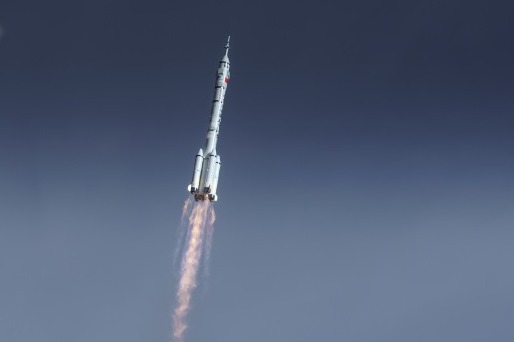
    China has significantly advanced its meteorological surveillance capabilities with the successful deployment of the Fengyun-4C satellite, launched December 27, 2025 from the Xichang Satellite Launch Center in Sichuan province. The state-of-the-art geostationary satellite ascended aboard a Long March 3B carrier rocket at 12:07 AM, marking a substantial upgrade to China’s weather monitoring infrastructure.

    As the newest addition to China’s second-generation Fengyun-4 series, the 4C model will assume the operational duties of the aging Fengyun-4A satellite while forming an enhanced observational network with the Fengyun-4B. The satellite’s advanced technological specifications represent what project chief commander Cao Xiaozhong describes as “a comprehensive leap in observational performance” that will substantially strengthen early warning systems for extreme weather events.

    The Fengyun-4C is equipped with six cutting-edge payloads meeting international advanced standards, specifically engineered to detect small and medium-scale weather systems that frequently trigger sudden severe storms. Its geostationary radiation imager can complete full scans of China and surrounding territories every five minutes, while performing targeted regional imaging at one-minute intervals—enabling meteorologists to monitor storm evolution in near real-time.

    Notable technical enhancements include the interferometric vertical atmospheric sounder, which has achieved improved spatial resolution from 12 kilometers to 8 kilometers. This instrument conducts routine hourly observations and intensified 15-minute interval monitoring, providing critical data for numerical weather prediction and typhoon forecasting. The satellite also features uninterrupted full-domain lightning monitoring to support severe convection warnings.

    Beyond terrestrial applications, the Fengyun-4C carries advanced space weather monitoring instruments capable of detecting solar proton events and other space weather disturbances. Positioned at 133 degrees east longitude, the satellite extends China’s monitoring reach into the central Pacific Ocean, particularly strengthening surveillance of typhoon genesis regions in the Western Pacific.

    China’s meteorological satellite network now comprises 23 Fengyun satellites with 10 currently operational, providing data services to 133 countries and regions. The system serves as the core infrastructure for MAZU, China’s AI-powered meteorological early warning platform launched earlier this year.