标签: Asia

亚洲

  • Voting begins in Japan’s general election

    Voting begins in Japan’s general election

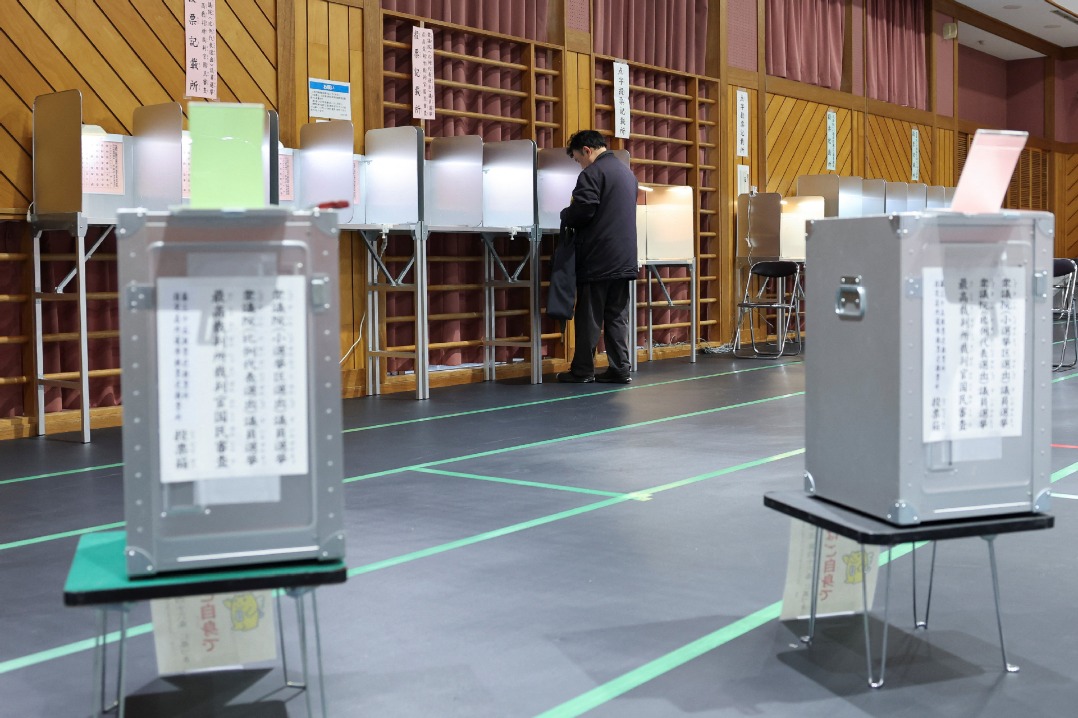
    TOKYO – Japanese voters commenced casting ballots on Sunday in a pivotal general election that will determine the political trajectory of the nation for the coming years. The electoral process, which opened nationwide this morning, features an intense competition with more than 1,200 candidates vying for all 465 seats in the House of Representatives, the dominant lower house of Japan’s parliament.

    The central question dominating this electoral contest is whether the incumbent coalition government, comprising Prime Minister Sanae Takaichi’s Liberal Democratic Party and their junior partner, the Japan Innovation Party, can maintain their legislative majority. This outcome would enable the continuation of the current administration’s policies and governance approach. Alternatively, opposition forces are positioned to potentially expand their parliamentary presence and disrupt the ruling bloc’s agenda.

    Electoral operations will continue until 8:00 PM local time, with polling stations across the archipelago remaining accessible to voters throughout the day. The ballot counting process is anticipated to extend well into the night, with preliminary results expected to emerge in the early hours of Monday.

    The electoral structure divides the 465 parliamentary seats into two distinct categories: 289 representatives will be elected through single-member district contests, while the remaining 176 seats will be allocated via proportional representation across eleven regional electoral blocs. This dual-system approach aims to balance local representation with broader proportional fairness in the composition of the legislative body.
  • Afghanistan wins toss, bats against New Zealand at T20 World Cup

    Afghanistan wins toss, bats against New Zealand at T20 World Cup

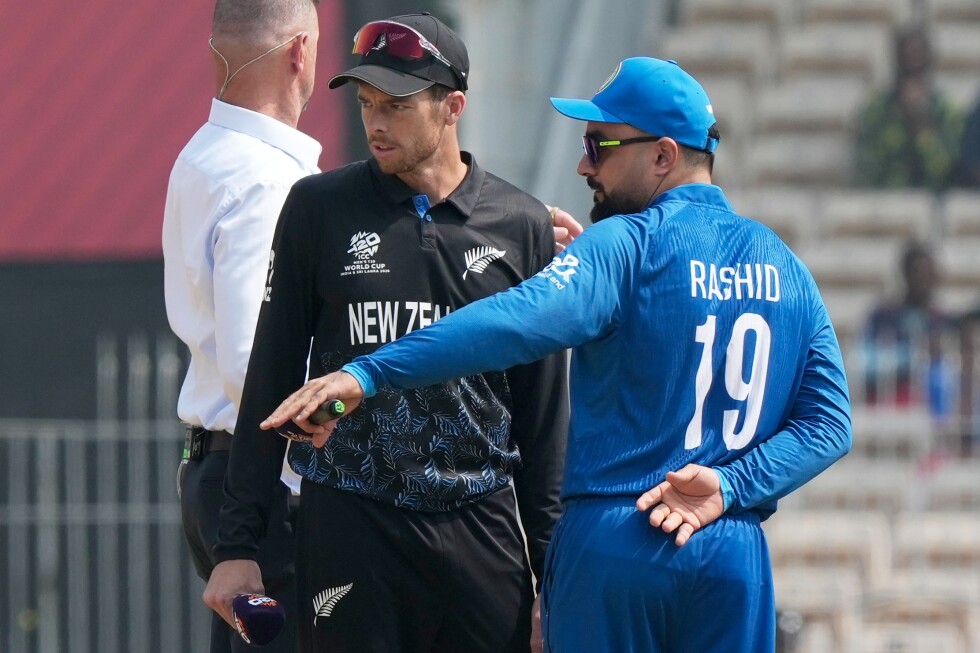
    In a highly anticipated Group D confrontation at the T20 World Cup, Afghanistan won the toss and opted to bat first against New Zealand on Sunday. This match represents the first meeting between the two squads since Afghanistan’s stunning 84-run victory over the Black Caps during the 2024 T20 World Cup in Guyana.

    Both teams find themselves in what analysts are calling the tournament’s ‘group of death,’ which includes last tournament’s finalist South Africa alongside associate nations Canada and the United Arab Emirates. Only the top two teams from this challenging group will advance to the Super 8 stage.

    New Zealand enters the competition grappling with significant challenges, having endured multiple player injuries and illnesses during their month-long preparation in India. In contrast, Afghanistan arrives at full strength, with captain Rashid Khan poised to make history—needing just four wickets to become the first bowler to reach 700 wickets in T20 matches.

    At the toss, Captain Khan expressed confidence in his team’s strategy: ‘We have a good bowling lineup and I hope it’ll help spin later on. We’ve played a lot of ICC events and it’s just about playing smart cricket and using experience.’

    New Zealand skipper Mitchell Santner countered with his own tactical approach, noting the grassy wicket conditions that might favor his three seamers—Matt Henry, Lockie Ferguson, and Jacob Duffy—during the daytime match.

    The line-ups featured Afghanistan’s Rahmanullah Gurbaz, Ibrahim Zadran, and Sediqullah Atal leading the batting order, while New Zealand countered with Finn Allen, Tim Seifert, and Rachin Ravindra. The match occurs amidst opening victories by Pakistan, India, and West Indies in the tournament co-hosted by India and Sri Lanka.

  • Suryakumar leads from front as India down US in T20 World Cup

    Suryakumar leads from front as India down US in T20 World Cup

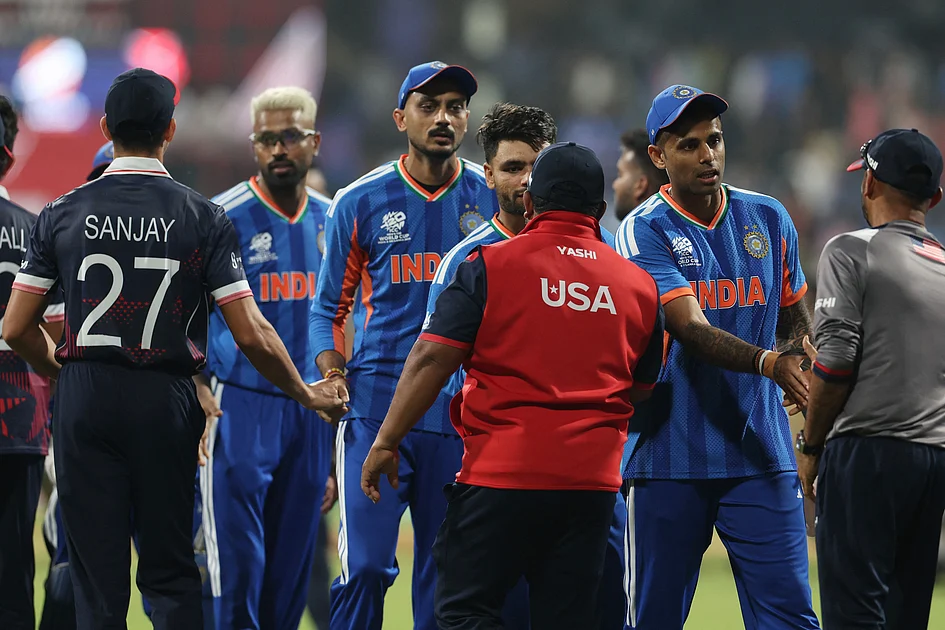
    In a dramatic opening match of the 2026 T20 World Cup, defending champions India secured a hard-fought 29-run victory against tournament co-hosts United States at Mumbai’s Wankhede Stadium on Saturday. The encounter showcased remarkable resilience from both sides, with Indian captain Suryakumar Yadav delivering a match-winning performance under immense pressure.

    The Indian innings witnessed a spectacular top-order collapse, reducing the world’s top-ranked T20 team to 77-6 within the powerplay overs. US bowler Shadley van Schalkwyk triggered the crisis with a devastating spell that included three wickets in five deliveries, sending back key batsmen including opener Abhishek Sharma for a golden duck and Shivam Dube without scoring.

    Facing this dire situation, captain Suryakumar Yadav orchestrated a remarkable recovery with an unbeaten 84 runs from just 49 deliveries. His innings, featuring four massive sixes, propelled India to a competitive 161-9, with 21 runs plundered from the final over bowled by Saurabh Netravalkar.

    The American response demonstrated significant growth in their cricketing capabilities, finishing at 132-8 while showing commendable fighting spirit. Sanjay Krishnamurthi (37) and Milind Kumar (34) established a promising 58-run partnership that briefly threatened Indian dominance before the hosts’ bowling attack reasserted control.

    Mohammed Siraj’s impressive 3-29 performance justified his selection, while Arshdeep Singh provided crucial early breakthroughs that left the Americans struggling at 31-3 during powerplay restrictions.

    Reflecting on the pressure-filled encounter, Player of the Match Suryakumar revealed: ‘Only I can truly comprehend the intensity of the situation. Maintaining belief in my ability to influence the outcome was crucial—I knew persistence until the final moments would prove decisive.’

    The captain acknowledged room for improvement, stating: ‘The pitch conditions presented unique challenges, but we cannot conceal our batting deficiencies. Significant enhancements are necessary moving forward.’

    US captain Monank Patel identified missed opportunities as decisive: ‘Our bowling unit performed admirably, but dropped chances ultimately cost us victory. At one stage, restricting them to 130 appeared achievable.’

    In other Group A action, Pakistan secured a narrow three-wicket victory against Netherlands with three balls remaining, while West Indies’ Romario Shepherd recorded a hat-trick during their 35-run triumph over Scotland in Kolkata.

  • Viral video: Yusuff Ali gifts little girl iPhone 17 at Lulu store opening in Sharjah’s Kalba

    Viral video: Yusuff Ali gifts little girl iPhone 17 at Lulu store opening in Sharjah’s Kalba

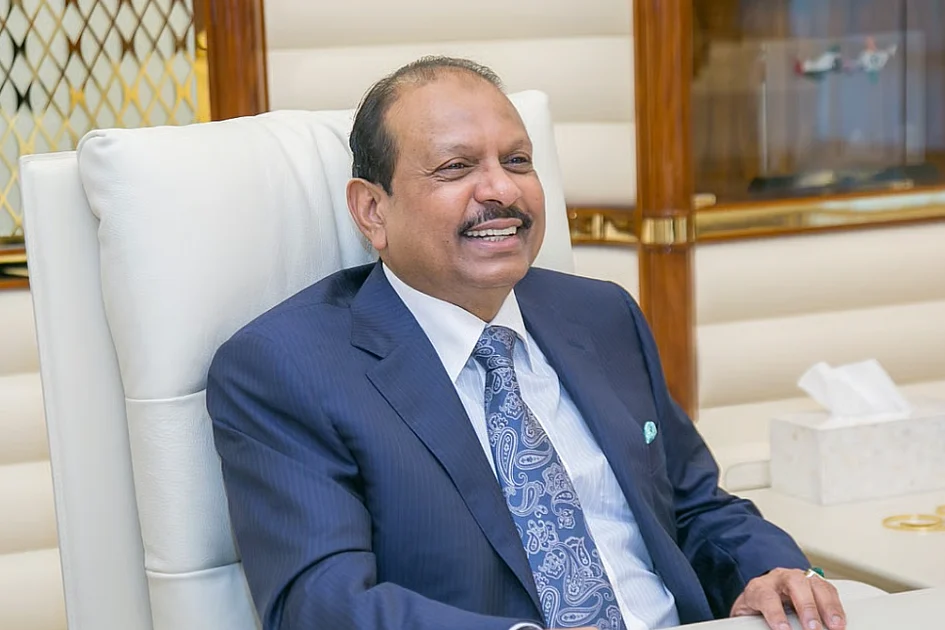
    A spontaneous act of generosity by UAE-based Indian billionaire Yusuff Ali MA created an unforgettable moment during the inauguration of a Lulu hypermarket in Kalba, Sharjah, on February 7, 2026. The chairman and managing director of Lulu Group demonstrated his compassionate nature when he encountered a restless young attendee during the store’s opening ceremony.

    The child, approximately seven or eight years old and dressed in a blue frock, had accompanied her father, Dr. Ahmed Saeed Al Mazrouei, Director at Kalba Municipality, who served as the chief guest for the event. As the official party toured the new facility, the girl grew impatient and tugged at her father’s hand, catching the attention of the business magnate.

    In a heartwarming exchange captured on video and subsequently shared across social media platforms, Yusuff Ali initially offered the child a toy robot to alleviate her restlessness. Demonstrating remarkable candor, the young girl promptly declined the toy and instead expressed her desire for the latest iPhone 17 model. The unexpected request elicited laughter from the surrounding attendees.

    Displaying remarkable generosity, the billionaire immediately instructed his staff to procure the device. Within minutes, a brand new iPhone 17 was presented to Yusuff Ali, who personally handed the coveted smartphone to the delighted child. The touching moment culminated with the businessman planting a kiss on the girl’s cheek as she proudly clutched her unexpected gift.

    Eyewitnesses described the interaction as “very pure and heartwarming,” noting how Yusuff Ali’s patient and accommodating response reflected his genuine affinity for children. The incident occurred shortly after his reappointment to the Board of Directors of the Abu Dhabi Chamber, reaffirming his significant influence in the region’s business landscape.

    With an estimated net worth of $5.8 billion, Yusuff Ali ranks among the wealthiest Indians in the UAE, presiding over an extensive retail empire that includes hypermarkets, shopping malls, and financial services companies. This spontaneous act of kindness underscores the human dimension behind his considerable business success.

  • Kim expected to issue major policy goals at North Korea party congress in late February

    Kim expected to issue major policy goals at North Korea party congress in late February

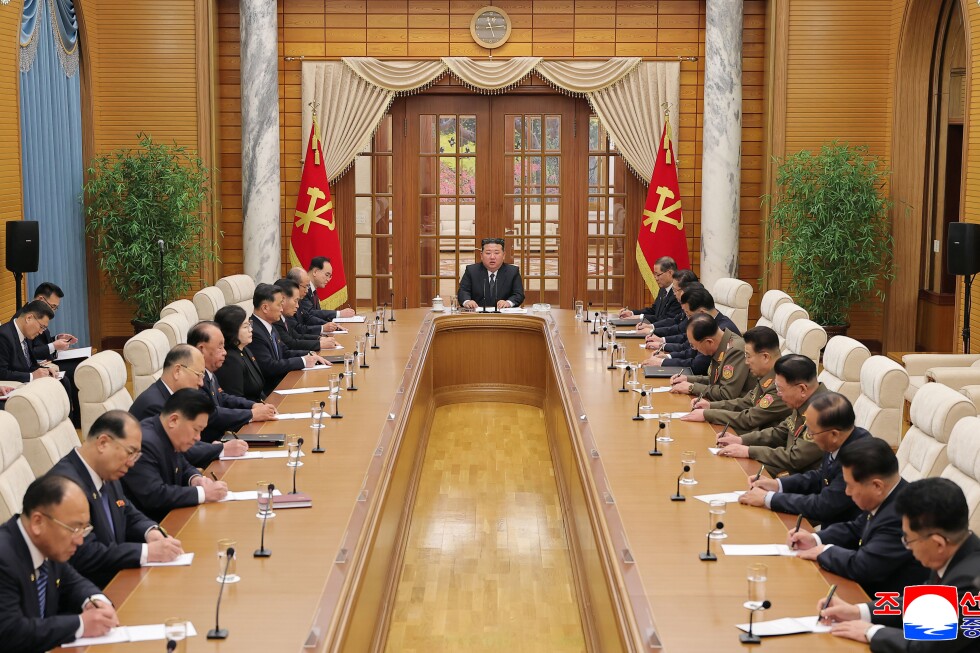
    SEOUL, South Korea — North Korea has announced plans to convene a significant Workers’ Party congress in late February, where Supreme Leader Kim Jong Un is anticipated to unveil his strategic vision for both domestic governance and international relations over the coming five-year period. This pivotal political gathering, confirmed by the Korean Central News Agency following a Politburo meeting supervised by Kim himself, marks the third such congress under his leadership since 2016.

    The upcoming congress occurs against a backdrop of dramatically heightened geopolitical tensions, characterized by Pyongyang’s accelerated nuclear weapons development and increasingly assertive military partnerships with Moscow. Observers anticipate this meticulously orchestrated event will serve as a platform for Kim to reinforce his authoritarian leadership while announcing ambitious plans to simultaneously strengthen nuclear capabilities and pursue economic development through mass mobilization strategies.

    Recent weeks have seen Kim conducting high-profile inspections of weapons testing facilities and military installations, with state media consistently attributing national advancements to his ‘immortal leadership.’ Analysts interpret these activities as preparatory moves setting the stage for congress announcements that will likely include plans to upgrade conventional weapons systems and further integrate them with nuclear forces.

    Kim’s foreign policy approach has undergone significant transformation since the 2021 congress, with Pyongyang forging deeper alliances with Russia and China while adopting increasingly adversarial stances toward South Korea and the United States. The leader has effectively leveraged global conflicts, particularly Russia’s invasion of Ukraine, to advance weapons testing programs and secure strategic partnerships—including substantial arms exports to Moscow that have reportedly provided economic benefits.

    Despite these geopolitical maneuvers, Kim has maintained a firm rejection of diplomatic overtures from the United States, insisting that Washington abandon demands for nuclear disarmament as a precondition for talks. As Kim enters his 15th year in power, he appears positioned more strongly than during the pandemic-challenged 2021 congress, with indications of economic improvement through resumed trade with China and military exports to Russia.

  • From classroom to camera: A teacher who has become a sensation in Indian cinema

    From classroom to camera: A teacher who has become a sensation in Indian cinema

    In an extraordinary late-life career transformation, Biana Watre Momin, a 70-year-old retired English literature teacher from India’s northeastern Meghalaya state, has emerged as an unexpected cinematic sensation. The former educator from the Garo Hills community, who had never acted professionally, embarked on a remarkable 3,000-kilometer journey to Kerala to star in the critically acclaimed Malayalam film “Eko,” now streaming on Netflix.

    Momin portrays Mlathi Chettathi, an enigmatic elderly woman of Malay origin who flees World War II-era Malaysia and establishes a solitary existence in India’s Western Ghats mountain range. Her character inhabits a decaying forest home surrounded by feral dogs, while navigating mysterious visitors claiming familial connections. The film’s title plays on the concept of “echo,” reflecting both the atmospheric setting and the thematic resonance of Momin’s performance.

    Director Dinjith Ayyathan and cinematographer Bahul Ramesh conducted an extensive search across India’s northeastern states to find an actor who could authentically represent Malay features. Their discovery of Momin—who had previously appeared in a short film about Garo folklore—proved fortuitous. Despite never having received formal acting training and initially hesitating due to the considerable distance from home, Momin embraced the challenge with encouragement from her daughter.

    The production presented significant obstacles, including Momin’s need to learn Malayalam dialogue phonetically with coaching assistance, daily mountain treks through unpredictable weather, and adapting to professional filmmaking rhythms. Remarkably, the production completed principal photography within 45 days on a modest budget.

    Momin’s performance has drawn widespread critical praise, with Tamil actor Dhanush describing it as “world-class.” Industry professionals have noted her intuitive understanding of emotional nuance, camera positioning, and movement, which she attributes to life experience and her background in a matrilineal society. Following the film’s success, Momin has received additional script offers from Bollywood and other regional film industries, though she remains thoughtfully cautious about future projects.

    Now returned to her family life in Meghalaya, where she cares for four dogs and participates in her local book club, Momin represents cinema’s capacity to discover authentic truth rather than manufacture it. Her journey stands as testament to the creative possibilities that can emerge when filmmakers look beyond conventional casting choices and embrace unconventional talent.

  • Famous but deadly kite flying festival returns after 19-year ban

    Famous but deadly kite flying festival returns after 19-year ban

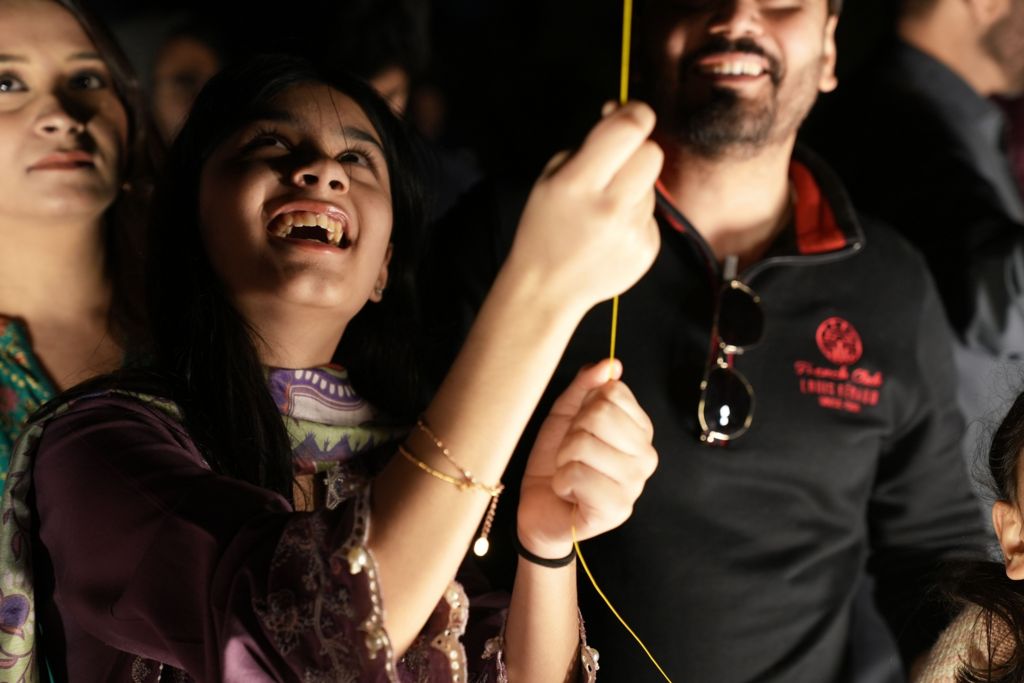
    The skies above Lahore have transformed into a vibrant tapestry of color and motion as the ancient Basant kite-flying festival returns after nearly two decades of prohibition. Across the Pakistani city’s rooftops, multigenerational gatherings celebrate the spring tradition that was banned in 2007 following safety concerns that resulted in numerous injuries and fatalities.

    The festival’s revival represents both cultural reclamation and cautious modernization. For 25-year-old tech engineer Abu Bakar Ahmad, this marks his first genuine Basant experience. ‘All our generations here are very excited,’ he explains. ‘The elders know how to fly a kite, but we Gen-Zers don’t know.’ His sentiment echoes throughout Lahore, where many younger participants are learning the art for the first time.

    Authorities have implemented comprehensive safety measures to prevent past tragedies. The festival has been limited to three days, with large kites prohibited and dangerous strings containing metal or glass coatings banned. Motorcyclists now utilize protective metal rods between handlebars, while strategic netting covers certain streets and relocated CCTV cameras monitor rooftop activities.

    Deputy Inspector General Faisal Kamran revealed extensive preparations: ‘We have seized more than 100,000 kites and 2,100 rolls of dangerous string before the festival. Our officers are monitoring through drones, physical surveillance, and repurposed surveillance systems.’

    The economic impact is already substantial. Vendor Usman reported selling over 7,000 kites within days, while advocate Yousaf Salahuddin emphasized the festival’s financial importance for local artisans, vendors, and hospitality businesses. ‘There was a lot of revenue going down to the poorest—the street vendors, old city restaurants, clothing dyers, and merchandise sellers,’ Salahuddin noted.

    For 60-year-old Miami resident Mina Sikander, the festival warranted international travel. ‘I’m very fond of this festival,’ she expressed. ‘It was worth the journey!’ Her enthusiasm reflects the deep cultural significance Basant holds for the Lahori diaspora.

    Despite the competitive aspect of kite fighting—where participants attempt to cut opponents’ strings—the prevailing atmosphere emphasizes community bonding. As 48-year-old Kanwal Amin observed, ‘It’s gathering, it’s love. Flying kites is ok, but the main thing is bonding.’

    The festival’s successful return demonstrates how cultural traditions can evolve with appropriate safety measures while maintaining their essential character and significance for community identity.

  • Thailand votes in early election with 3 main parties vying for power

    Thailand votes in early election with 3 main parties vying for power

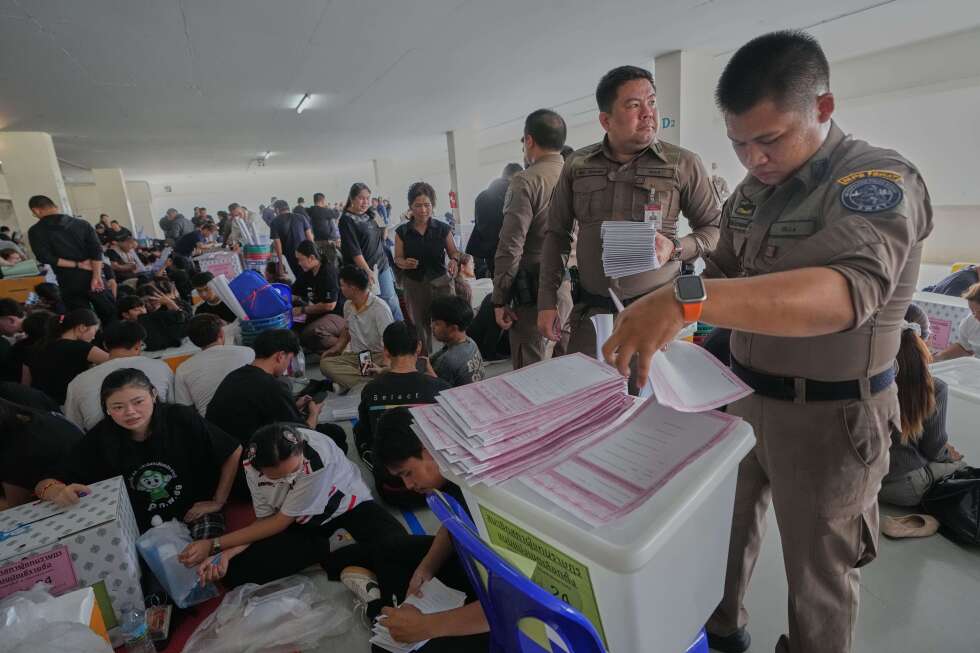
    BANGKOK — Thailand stands at a political crossroads as millions of voters participate in Sunday’s snap general election, confronting a complex electoral landscape shaped by competing ideologies and power dynamics. The electoral contest emerges as a triangular struggle between progressive reformism, establishment conservatism, and traditional patronage politics.

    The electoral battlefield presents three dominant forces with distinct visions: the reform-oriented People’s Party, the establishment-backed Bhumjaithai Party led by incumbent Prime Minister Anutin Charnvirakul, and the populist Pheu Thai Party representing the political machinery of exiled billionaire Thaksin Shinawatra. This political trifecta operates within a nation grappling with economic stagnation and rising nationalist sentiments.

    Electoral projections indicate no single party will secure an outright parliamentary majority, necessitating complex coalition negotiations. The progressive People’s Party, successor to the dissolved Move Forward Party that triumphed in the 2023 elections, faces significant governing obstacles despite potential plurality victory. Its reform agenda targeting military, police, and judicial institutions faces resistance from conservative power structures.

    Prime Minister Anutin’s Bhumjaithai Party has leveraged recent border tensions with Cambodia to bolster its national security credentials, rebranding its leadership image following earlier challenges from natural disasters and financial controversies. The party employs sophisticated grassroots mobilization techniques and traditional patronage networks, particularly in the vote-rich northeastern regions.

    Meanwhile, the Pheu Thai Party continues its political resilience campaign, utilizing populist economic policies and the enduring influence of the Shinawatra political dynasty. The party has moderated its stance to gain acceptability within Thailand’s conservative establishment, nominating Thaksin’s nephew as its premier candidate while emphasizing economic revitalization and direct cash distribution programs.

    Adding constitutional significance to the election, voters simultaneously consider a referendum authorizing parliamentary proceedings to replace the 2017 military-drafted charter. This constitutional question highlights the fundamental divide between pro-democracy advocates seeking reduced military influence and conservatives prioritizing political stability.

  • Thousands protest in Berlin in solidarity with Iranian uprisings

    Thousands protest in Berlin in solidarity with Iranian uprisings

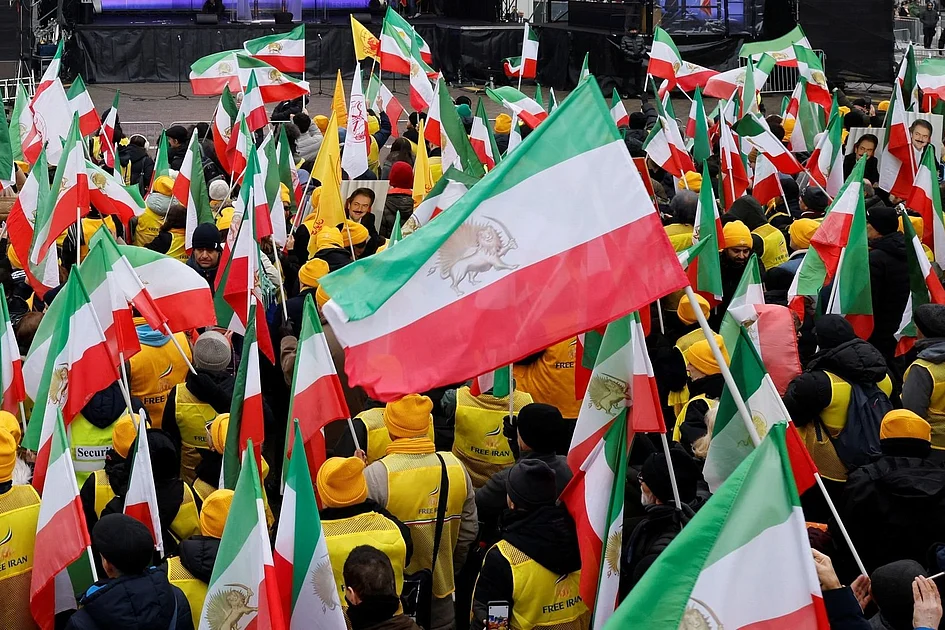
    BERLIN – Thousands of demonstrators converged upon the German capital on Saturday in a powerful display of international solidarity with ongoing anti-government protests in Iran. The gathering at Berlin’s iconic Brandenburg Gate coincided with the anniversary of Iran’s 1979 revolution, creating a symbolic counterpoint to the Islamic Republic’s official celebrations.

    Berlin police authorities confirmed approximately 8,000 participants had assembled by 1300 GMT, though organizers had anticipated up to 20,000 registered attendees. The demonstration emerged in response to Iran’s widespread civil unrest that began in December over economic grievances before evolving into political protests met with severe governmental crackdowns.

    Notable figures including former U.S. Secretary of State Mike Pompeo provided virtual addresses after weather-related flight cancellations prevented physical attendance. Event organizers reported substantial institutional backing from 344 organizations across Europe, including parliamentary groups, trade unions, and civil society organizations, alongside 312 Iranian associations operating throughout the continent.

    Maryam Rajavi, president-elect of the National Council of Resistance of Iran (NCRI), articulated the movement’s core principles during her address: ‘The message of the Iranian people and their Resistance has been and remains this: no appeasement, no war or foreign intervention, regime change and sovereignty of the republic of the people, by the people and their organised resistance.’

    The demonstration represents the latest international response to Iran’s domestic unrest, which has witnessed the most severe suppression of dissent since the 1979 revolution. European governments have previously indicated potential sanctions against Iranian officials responsible for protest suppression.

  • Minibus crash kills 15 in northeastern Afghanistan

    Minibus crash kills 15 in northeastern Afghanistan

    A tragic minibus accident in northeastern Afghanistan resulted in 15 fatalities on Saturday, according to provincial police authorities. The vehicle veered off a damaged roadway in Badakhshan province and plummeted into a valley while en route to the regional capital Faizabad.

    Police spokesperson details indicate the victims comprised six children, five women, and four men. Three individuals initially survived the crash with serious injuries but subsequently succumbed at a medical facility, contributing to the updated death toll.

    Authorities have identified severe road deterioration as the primary cause of the catastrophe. This incident highlights the persistent transportation safety crisis in Afghanistan, where inadequate infrastructure, dangerous driving practices, and minimal regulatory enforcement regularly lead to fatal outcomes.

    The Badakhshan tragedy echoes similar recent disasters, including an August collision in Herat province that killed 78 migrants returning from Iran, and an August rollover near Kabul that claimed 25 lives due to driver negligence. These recurring incidents underscore systemic transportation safety failures that continue to plague the nation following decades of conflict.