标签: Asia

亚洲

  • UAE tech evolution: From enthusiasm to investability in 2025

    UAE tech evolution: From enthusiasm to investability in 2025

    The United Arab Emirates has reached a definitive inflection point in its technological evolution, with 2025 emerging as the watershed year when the nation’s innovation ecosystem successfully transitioned from speculative enthusiasm to genuine investability. This transformation represents a fundamental shift in market dynamics rather than merely a quantitative increase in funding volumes.

    According to comprehensive data from Tracxn’s UAE Tech Funding Report, the country secured $2 billion in technology investments during the first three quarters of 2025, reflecting a moderate 6% year-on-year increase. While this growth appears numerically modest, the underlying structural changes reveal a profoundly transformed landscape. The composition of capital deployment, investor behavior patterns, and founder performance metrics all indicate a market that has developed comfort with calculated risk, accountability frameworks, and long-term scaling strategies.

    The funding architecture demonstrates remarkable maturation. Early-stage investments surged to $595 million, representing a 153% increase from the previous year, while late-stage financing reached $1.3 billion, indicating sustained appetite for companies with proven traction. Concurrently, seed funding experienced a sharp decline to $57.2 million, signaling increased investor discipline rather than market contraction. This reallocation reflects a strategic pivot from speculative bets on nascent ideas toward substantiated backing of validated business models.

    Three pivotal drivers catalyzed this transformation: Internationalization efforts attracted global investment firms including Peak XV Partners, e&, and MoreThan Capital Advisors, who now regard the UAE as a core deployment destination rather than peripheral opportunity. Founder quality improved significantly, with a new generation of technically proficient, commercially grounded entrepreneurs focusing on enterprise solutions, regulated industries, and scalable platforms. Regulatory clarity emerged through simplified establishment pathways, predictable ownership frameworks, and streamlined licensing procedures that reduced operational friction for stakeholders.

    The ecosystem’s maturation became particularly evident through the emergence of three new unicorn companies within nine months, ending a five-year drought without billion-dollar valuations. These enterprises achieved milestone status not through market euphoria but by developing technologies that address genuine problems while demonstrating transnational scalability.

    Substantial funding rounds exceeding $100 million—including Vista Global’s $600 million raise and XPANCEO’s $250 million Series A—reflected institutional conviction rather than speculative excess. These deployments stabilized the ecosystem by creating secondary founder generations, replenishing talent pools, establishing valuation benchmarks, and generating liquidity potential for future investors.

    Public market visibility increased with two IPOs recorded in 2025 compared to one the previous year, while strategic acquisitions declined by 25% as companies focused on organic growth rather than consolidation. Dubai emerged as the absolute center of gravity, capturing 98% of total funding—a concentration pattern consistent with other global innovation hubs during their acceleration phases.

    The UAE’s technological transformation now demonstrates all characteristics of a mature innovation economy: depth in early-stage funding, strength in late-stage financing, unicorn generation, conviction-backed mega-rounds, public market visibility, and disciplined merger activity. The $2 billion capital raise merely quantifies what qualitatively represents architectural maturity—the transition from an emerging ecosystem to a compounding innovation economy.

  • AI revolution: Transforming industries and cybersecurity challenges

    AI revolution: Transforming industries and cybersecurity challenges

    The rapid proliferation of artificial intelligence is fundamentally restructuring global industries while simultaneously creating unprecedented cybersecurity vulnerabilities that demand immediate attention, according to Dr. Tom Leighton, CEO and Co-founder of Akamai Technologies. In an exclusive interview, the internet infrastructure pioneer revealed that AI’s transformative potential comes with critical security gaps that could undermine its revolutionary capabilities.

    Dr. Leighton, who co-founded Akamai in 1998 and transitioned from Chief Scientist to CEO in 2013, explained that AI’s paradigm shift changes how the web operates. “Future interactions will involve users instructing AI agents or copilots to execute tasks, while behind the scenes, these applications communicate autonomously, assembling data and performing complex operations,” he stated.

    This interconnected AI ecosystem presents two monumental challenges: supporting the massive infrastructure required for computational capabilities and securing vulnerable points where malicious actors could inject harmful information into AI models. Such attacks could force models to reveal sensitive data or perform unauthorized actions, creating an urgent need for next-generation security solutions.

    “The Middle East region demonstrates particular promise for leading these capabilities,” Dr. Leighton noted, citing the concentration of prestigious financial institutions, travel and entertainment industries, and media organizations that will leverage these technologies globally.

    Addressing the technical requirements for optimal AI performance, Dr. Leighton emphasized the necessity of distributed systems. While AI training may occur in centralized data centers, daily operations require localized inference engines near users to ensure responsive, human-like interactions. Security must similarly be distributed to prevent attackers from overwhelming centralized infrastructure.

    Akamai’s global network, comprising over 4,000 points of presence across 700 cities including multiple locations throughout the Middle East, positions the company to support AI agents while providing essential security protections. The platform intercepts malicious traffic at its origin, preventing coordinated attacks from reaching their targets.

    Dr. Leighton highlighted events like GITEX Global as critical gatherings for shaping AI’s future, bringing together industry leaders, governments, and investors to address these challenges collectively. As AI continues its rapid evolution, developing robust cybersecurity frameworks becomes increasingly vital to harnessing its full potential while mitigating emerging threats.

  • China’s Xinjiang Oilfield reports CO2 storage and utilization breakthrough

    China’s Xinjiang Oilfield reports CO2 storage and utilization breakthrough

    China’s northwestern Xinjiang Oilfield has reached a significant environmental milestone by successfully storing over one million tonnes of carbon dioxide annually through advanced carbon capture, utilization and storage (CCUS) technologies. This achievement, announced by China National Petroleum Corporation (CNPC) on December 28, 2025, represents a major advancement in China’s large-scale application of emission-reduction solutions.

    Located in the Junggar Basin of Xinjiang Uygur Autonomous Region, this historic oil production facility has pioneered CO2-enhanced oil recovery (CO2 EOR) methods that capture industrial emissions and reinject them underground. This innovative approach not only reduces atmospheric carbon but also enhances oil extraction efficiency by creating concentrated oil banks, enabling sustained production through low-carbon methodologies.

    According to Shi Daohan, Executive Director and Party Secretary of Xinjiang Oilfield, the environmental impact of this achievement is substantial. ‘One million tonnes of sequestered CO2 equates to the carbon absorption capacity of nearly nine million trees,’ Shi noted, highlighting the project’s significant contribution to emissions reduction.

    The oilfield’s technological journey has been marked by rapid progress, with annual CO2 injection rates surging from 126,000 tonnes in 2022 to the current million-tonne capacity. Cumulative injections have now exceeded two million tonnes, demonstrating scalable success in CCUS implementation.

    Ding Chao, head of the development division at Xinjiang Oilfield, emphasized the dual benefits of these technologies. ‘CCUS applications are delivering a win-win scenario by simultaneously reducing emissions while enhancing oil production, supporting both China’s carbon neutrality goals and national energy security.’

    Assessment data reveals even greater potential, with estimated carbon storage capacity in suitable oil fields and saline aquifers reaching approximately two billion tonnes. This substantial capacity provides a foundation for developing a comprehensive CCUS industrial cluster in the region.

    Looking ahead, Xinjiang Oilfield plans to expand its CCUS capacity to ten million tonnes during the 15th Five-Year Plan period (2026-2030). The development strategy includes integrated power projects combining renewable energy, coal-fired power with carbon capture, and CCUS technologies to accelerate the green transformation of China’s energy sector.

    This breakthrough supports China’s broader climate commitments to peak carbon emissions by 2030 and achieve carbon neutrality by 2060, positioning low-carbon technologies as drivers of both environmental progress and economic value creation.

  • China-Cambodia-Thailand foreign ministers’ meeting held, press communique issued

    China-Cambodia-Thailand foreign ministers’ meeting held, press communique issued

    In a significant diplomatic development, the foreign ministers of China, Cambodia, and Thailand convened in Yuxi, Yunnan province on December 29, 2025, marking a crucial step toward regional stabilization. The trilateral meeting, hosted by Chinese Foreign Minister Wang Yi, resulted in a comprehensive press communique outlining a five-point roadmap for conflict resolution between Cambodia and Thailand.

    The joint communique establishes a clear framework for the neighboring nations to enhance communication channels, deepen mutual understanding, and systematically consolidate the current ceasefire arrangement. The agreement specifically addresses the gradual restoration of bilateral exchanges, the rebuilding of political trust, and ultimately achieving a fundamental turnaround in diplomatic relations.

    This diplomatic breakthrough follows the recent signing of a joint ceasefire statement between Cambodia and Thailand, with both nations’ delegations meeting in China’s Yunnan province from December 28-29 at Wang Yi’s invitation. The successful mediation effort underscores China’s growing role as a regional peace broker and demonstrates Beijing’s commitment to fostering stability in Southeast Asia.

    The meeting in Yuxi represents a concrete implementation of China’s broader foreign policy approach that emphasizes dialogue and consultation in resolving international disputes. The participation of all three foreign ministers at this high-level gathering signals strong political commitment to the peace process from each government involved.

  • New Year holiday projected to see over 2m daily trips

    New Year holiday projected to see over 2m daily trips

    China’s National Immigration Administration has projected a significant surge in cross-border travel during the upcoming New Year holiday period, forecasting more than 2.1 million daily inbound and outbound trips. This represents a substantial 22.4 percent increase compared to the same period last year, signaling a robust recovery in cross-border mobility.

    The holiday period, spanning from Thursday to Saturday, is expected to witness its passenger flow peak on Wednesday evening and throughout Thursday. This travel boom is largely attributed to the successful implementation of newly introduced immigration management measures that have enhanced customs clearance efficiency and facilitated smoother border transitions.

    Major international airports across China are preparing for heavy traffic volumes. Shanghai Pudong International Airport is anticipated to handle approximately 97,000 daily passengers, followed by Guangzhou Baiyun International Airport with 53,000, and Beijing Capital International Airport with 43,000. Chengdu Tianfu International Airport and Shenzhen Baoan International Airport are projected to process 19,000 and 18,000 passengers daily respectively.

    Additionally, the administration highlighted that numerous large-scale events scheduled throughout Guangdong, Hong Kong, and Macao will contribute to increased traffic at land ports connecting these regions. To manage the anticipated surge, border control authorities nationwide have been directed to implement enhanced measures including real-time travel flow updates, intensified guidance services, and extended operating hours at key ports. These initiatives aim to maintain waiting times for Chinese citizens within 30 minutes during peak clearance periods.

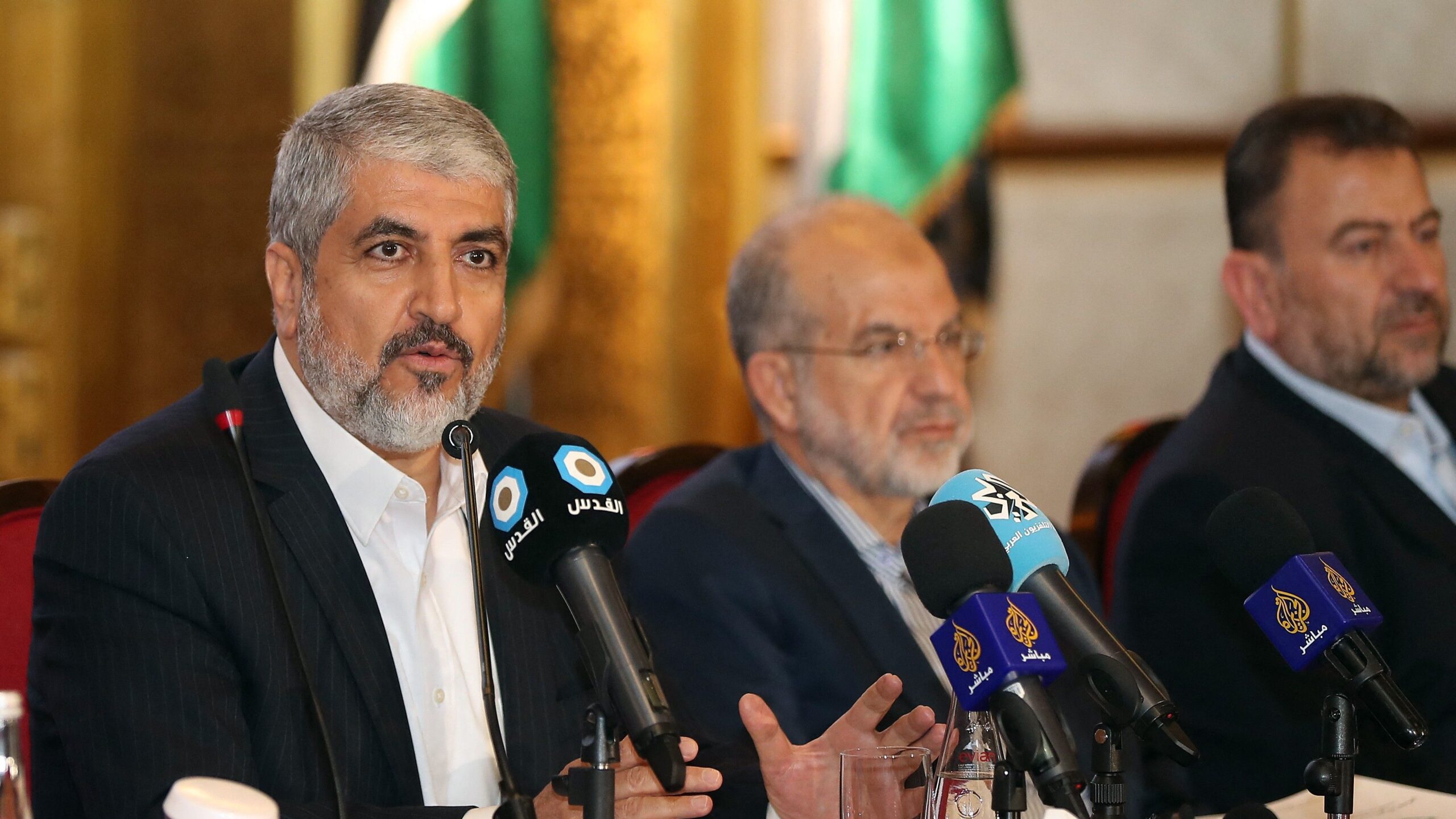
  • Trump, Netanyahu to discuss second phase of Gaza truce plan

    Trump, Netanyahu to discuss second phase of Gaza truce plan

    Israeli Prime Minister Benjamin Netanyahu and U.S. President Donald Trump are scheduled for a high-stakes meeting at the Mar-a-Lago resort in Florida on Monday, December 29th, to address the implementation challenges of the second phase of the Gaza ceasefire agreement. This diplomatic engagement occurs amid growing White House concerns that both Israeli and Hamas authorities are deliberately delaying progress.

    The Trump administration is reportedly preparing to announce by January the establishment of a technocratic Palestinian government to oversee Gaza, accompanied by an international stabilization force. This initiative aims to create transitional governance structures while ensuring regional security. Israeli government spokeswoman Shosh Bedrosian confirmed that discussions would focus on Hamas disarmament and Gaza demilitarization requirements.

    Netanyahu’s agenda extends beyond Gaza, with plans to address Iran’s nuclear program and regional influence. The Israeli leader intends to advocate for increased U.S. military strikes against Tehran’s nuclear facilities, highlighting concerns about Iran’s accelerated nuclear reconstitution since June’s joint strikes.

    This meeting concludes several days of intensive diplomacy in Palm Beach, following Trump’s Sunday discussions with Ukrainian President Volodymyr Zelensky regarding Russia’s ongoing invasion. The Gaza ceasefire remains one of the Trump administration’s significant first-year accomplishments, though implementation has encountered substantial obstacles.

    According to Middle East expert Yossi Mekelberg of Chatham House, ‘There are increasing indications of American administration frustration with Netanyahu. The fundamental question remains what actionable measures will be taken, as the second phase currently shows minimal progress.’

    The initial truce phase successfully secured the release of nearly all hostages from Hamas’s October 2023 attack, while the subsequent stage requires Israeli troop withdrawals from Gaza positions and Hamas’s complete disarmament—a persistent negotiation hurdle. Concurrently, plans advance for an interim governance authority and international security deployment.

    Political analysts suggest Netanyahu’s emphasis on Iran may represent a strategic diversion from Gaza challenges as Israel approaches election season, with Mekelberg noting ‘all decisions connect to maintaining political power.’

  • PLA drills around Taiwan a necessary response, expert says

    PLA drills around Taiwan a necessary response, expert says

    In a significant escalation of regional tensions, the People’s Liberation Army has initiated comprehensive military exercises surrounding Taiwan, which Chinese military experts characterize as an essential countermeasure to recent US-Taiwan defense collaborations. The drills come as a direct response to Washington’s unprecedented approval of over $11.1 billion in advanced weaponry to Taiwan, marking the largest arms package in the history of US-Taiwan relations.

    Fu Zhengnan, a prominent researcher at the PLA’s Academy of Military Science, emphasized that the latest American arms transfer represents a substantial escalation in both scale and strategic nature. The package notably shifts from previous defensive systems to explicitly offensive capabilities, fundamentally altering the regional security landscape.

    This development, according to Fu, constitutes a severe violation of the foundational principles established in the three China-US joint communiques, particularly the August 17 Communique. The inclusion of integrated systems such as the Taiwan Tactical Network and Team Awareness Kit effectively transforms Taiwan’s regional forces into an extension of the US combat infrastructure, dramatically increasing the potential for direct confrontation between major powers.

    Despite repeated diplomatic warnings from Beijing, the continued US-Taiwan military collaboration has compelled China to undertake these necessary and lawful defensive measures. Fu underscored that protecting national sovereignty and territorial integrity represents the unanimous will of China’s 1.4 billion citizens, including patriotic compatriots in Taiwan.

    The military scholar concluded with a stark warning to separatist elements, stating that regardless of external support, acquired weaponry, or political disguises, the pursuit of Taiwan independence remains fundamentally doomed to failure.

  • Abu Dhabi Knight Riders seal playoff spot with 32-run win over Gulf Giants

    Abu Dhabi Knight Riders seal playoff spot with 32-run win over Gulf Giants

    In a decisive final league encounter of DP World ILT20 Season 4, the Abu Dhabi Knight Riders secured their playoff qualification with a comprehensive 32-run triumph against the Gulf Giants at Dubai International Stadium on Sunday. The victory sets up an Eliminator clash with the Dubai Capitals scheduled for January 1, 2026.

    The Knight Riders’ success was built upon a spectacular batting display from openers Michael Pepper and Phil Salt, who orchestrated a dominant 131-run partnership – only the second century stand of the tournament. Pepper’s explosive 83 from 51 deliveries, featuring six boundaries and four sixes, combined with Salt’s unbeaten 72 from 56 balls to establish a formidable total of 179/1.

    Despite a valiant counter-attack from Moeen Ali, whose 79 off 49 balls provided temporary resistance, the Giants’ chase faltered due to insufficient support from other batsmen. The Knight Riders’ bowling unit maintained relentless pressure throughout the innings, with Jason Holder making early breakthroughs by dismissing Rahmanullah Gurbaz and James Vince within the powerplay.

    The match reached its turning point in the 15th over when Sunil Narine claimed two crucial wickets, followed by Andre Russell’s decisive double strike in the 18th over that removed both Moeen Ali and Aayan Khan in consecutive deliveries. The Giants ultimately finished at 147/9, concluding their campaign with six consecutive losses.

    Post-match reflections highlighted contrasting emotions between the teams. Player of the Match Michael Pepper emphasized strategic patience and matchup exploitation, while Gulf Giants captain James Vince acknowledged the challenging batting conditions and praised Moeen Ali’s solitary effort amidst the team’s bowling deficiencies.

  • South Korea president vows to reveal truth on anniversary of deadly Jeju Air crash

    South Korea president vows to reveal truth on anniversary of deadly Jeju Air crash

    On the first anniversary of South Korea’s deadliest aviation disaster, President Lee Jae Myung issued a formal apology and committed to uncovering the complete truth behind the Jeju Air tragedy that claimed 179 lives. The catastrophic incident occurred on December 29, 2024, when Flight 501 crash-landed at Muan International Airport, erupting into flames after impacting an embankment at runway’s end. Only two survivors emerged from the wreckage of the aircraft carrying 181 people.

    President Lee acknowledged systemic failures in national safety protocols, stating, ‘As president who bears the responsibility to protect lives and safety, I offer my deepest apologies. This disaster revealed the systematic problems and limitations of our society.’ He emphasized that ‘real change and action’ rather than ‘perfunctory promises or empty words’ were necessary moving forward.

    Despite a preliminary January report from the Aviation and Railway Accident Investigation Board citing bird strikes affecting both engines, critical questions remain unanswered. Investigations have been delayed regarding potential safety lapses, runway design deficiencies at Muan International, and the pilots’ final actions before impact.

    Victims’ families continue demanding accountability as parliamentary reviews advance plans to overhaul the accident investigation board to ensure greater independence and technical expertise. Memorial services are scheduled at the crash site in southwestern South Korea, where relatives will commemorate the tragedy that has prompted nationwide scrutiny of aviation safety standards.

  • Nepal’s former rapper to run for PM months after Gen Z protests against corruption

    Nepal’s former rapper to run for PM months after Gen Z protests against corruption

    In a dramatic shift within Nepal’s political landscape, two prominent youth-oriented figures have formed a strategic alliance that threatens to disrupt the country’s established political order. Balendra Shah, the 35-year-old rapper-turned-Mayor of Kathmandu popularly known as Balen, has officially joined the Rastriya Swatantra Party (RSP), led by former television host Rabi Lamichhane.

    The partnership, announced Sunday, positions Balen as the prime ministerial candidate should the RSP secure victory in the upcoming March 5 parliamentary elections, while Lamichhane will maintain his role as party chairman. This development comes just months after widespread youth-led protests against systemic corruption resulted in 77 fatalities and ultimately forced Prime Minister K.P. Sharma Oli to resign in September.

    Political analysts view this alliance as a calculated maneuver that capitalizes on the growing discontent among Nepal’s younger generation. ‘This represents an exceptionally astute strategic move by the RSP to incorporate Balen and his substantial youth following into their political framework,’ noted analyst Bipin Adhikari. ‘Traditional political parties are experiencing significant anxiety about losing their young voter base to the RSP.’

    The election commission reports that approximately 19 million of Nepal’s 30 million citizens are eligible to participate in the March elections, with nearly one million new voters—predominantly youth—added to the rolls following the recent protests. Balen emerged as an unofficial leader during the September demonstrations and subsequently played a role in establishing the interim government under former Chief Justice Sushila Karki to supervise the electoral process.

    This new political force now presents a substantial challenge to the Communist Party of Nepal (Unified Marxist-Leninist) and the centrist Nepali Congress party, which have dominated the Himalayan nation’s governance for most of the past three decades.