标签: Asia

亚洲

  • Bluefin tuna sells for record $3.2 million at year-opening auction at Tokyo fish market

    Bluefin tuna sells for record $3.2 million at year-opening auction at Tokyo fish market

    TOKYO — The first tuna auction of 2026 at Tokyo’s Toyosu fish market witnessed an extraordinary transaction as a 535-pound bluefin tuna fetched an unprecedented 510 million yen ($3.2 million), establishing a new historical record. The predawn auction on Monday saw Kiyomura Corp., led by renowned sushi chain operator Kiyoshi Kimura, emerge as the victorious bidder for the premium specimen.

    The colossal bluefin, originating from the waters off Oma in northern Japan—renowned for producing superior quality tuna—commanded approximately $13,360 per kilogram ($6,060 per pound). This staggering price substantially surpassed the previous record of 334 million yen ($2.1 million), also set by Kimura in 2019.

    While hundreds of tuna change hands daily during these early morning auctions, the New Year’s event traditionally features significantly elevated prices, particularly for premium varieties like Oma tuna. The auction represents both a commercial transaction and a cultural tradition, drawing widespread attention from wholesalers and international observers alike.

    Notably, this record-breaking sale occurs against a backdrop of conservation progress. Pacific bluefin tuna, once considered a threatened species due to overwhelming demand for sushi and sashimi, has shown stock recovery following concerted international conservation measures. The extraordinary price point reflects both the exceptional quality of the specimen and the enduring cultural significance of tuna in Japanese culinary traditions.

  • Root’s century defies Australia on Day 2 of the 5th Ashes cricket test

    Root’s century defies Australia on Day 2 of the 5th Ashes cricket test

    SYDNEY — On the second day of the decisive fifth Ashes test, English batsman Joe Root delivered a commanding performance with an unbeaten 138 runs, marking his second century of the series and providing stability for England amidst Australia’s aggressive bowling attack. At lunch, England stood at 336-6, with Root’s masterclass dominating the morning session at Sydney Cricket Ground.

    The Australian bowlers, led by Scott Boland and Mitchell Starc, managed crucial breakthroughs to disrupt England’s middle order. Boland terminated Harry Brook’s impressive innings at 84 runs, ending a formidable 169-run partnership between Brook and Root that had threatened to shift momentum decisively in England’s favor. Shortly after, Starc claimed his fifth dismissal of English captain Ben Stokes this series with a nearly unplayable delivery that resulted in a faint edge detected by TV umpire review.

    Root’s achievement carried historic significance, representing his 41st test century and placing him equal with former Australian captain Ricky Ponting on the all-time list of test centurymakers. Only cricket legends Sachin Tendulkar (51) and Jacques Kallis (45) have recorded more test centuries. This milestone marked just Root’s second Ashes century on Australian soil across four tours, replicating his unbeaten 138 in the Brisbane test earlier this series.

    The pitch conditions showed signs of variable bounce as Root approached his century, creating tense moments in the nineties before he secured the milestone with a straight drive off Michael Neser. Jamie Smith contributed a valuable 46 runs before falling to Marnus Labuschagne’s part-time medium pace just before the break, following earlier reprieves including a dismissal off a Cameron Green no-ball.

    England began Day 2 at 211-3 after weather interruptions curtailed play on Day 1. Despite already losing the series with Australia holding an insurmountable 3-1 lead, England seeks to build on their Boxing Day test victory—their first Ashes win in Australia since 2011—as they battle for pride in this final encounter.

  • Markets show mixed reaction after US capture of Venezuelan leader

    Markets show mixed reaction after US capture of Venezuelan leader

    Financial markets exhibited a divergent response early Monday following the U.S. military operation that resulted in the capture of Venezuelan President Nicolas Maduro. While Asian equity benchmarks soared to unprecedented heights, precious metals witnessed substantial gains as investors sought safe-haven assets amid geopolitical uncertainty.

    Commodity markets displayed particular sensitivity to the developments. Brent crude oil advanced by 14 cents to reach $60.89 per barrel, while U.S. benchmark crude increased 12 cents to $57.44. The petroleum sector’s attention remains focused on Venezuela’s crippled oil industry, which despite years of neglect and international sanctions, could potentially double or triple its current output of approximately 1.1 million barrels daily with sufficient investment and political stabilization.

    Precious metals demonstrated the most dramatic movement, with silver and platinum both surging 6% while gold climbed 2%. This robust performance underscores investor tendency toward traditional safe-haven assets during periods of geopolitical turmoil.

    Asian equity markets registered impressive gains, with Japan’s Nikkei 225 jumping 2.9% to 51,777.99—achieving a year-end high for 2025. South Korea’s Kospi surged 2.3% to 4,406.55, establishing another record close. More modest advances were seen in Australia’s S&P/ASX 200, which gained 0.1%, and Taiwan’s benchmark, which climbed 2.1%.

    Currency markets showed limited movement, with the dollar rising 0.2% against the yen to 157.15, while the euro slipped 0.2% to $1.1702.

    The trading week follows a mixed session on Wall Street, where U.S. stocks posted modest gains on Friday. The S&P 500 advanced 0.2% to 6,858.47, building on its 16%+ gain throughout 2025. The Dow Jones Industrial Average rose 0.7%, while the Nasdaq composite experienced a slight decline of less than 0.1%, pressured by significant losses in Microsoft (2.2%) and Tesla (2.6%) following reports of continued sales declines.

    Several furniture companies recorded substantial gains after President Trump’s decision to delay increased tariffs on upholstered furniture, with RH advancing 8% and Wayfair rising 6.1%.

    Market participants now turn their attention to the first full week of the new year, which promises critical economic updates including private reports on the services sector, consumer sentiment data, and government employment reports. These indicators are expected to provide crucial insight into the U.S. economy’s performance at the close of 2025 and its trajectory for 2026, potentially influencing Federal Reserve policy decisions at its late January meeting.

  • UAE-backed separatists withdraw from key Yemeni city after Saudi strikes

    UAE-backed separatists withdraw from key Yemeni city after Saudi strikes

    In a significant reversal of territorial control, Yemeni government forces have fully reclaimed the strategic eastern province of Hadhramaut from UAE-backed Southern Transitional Council (STC) separatists. The development follows coordinated military operations by Saudi-supported Nation’s Shield Forces (NSF), which included targeted airstrikes on STC positions throughout the region.

    Hadhramaut Governor Salem al-Khanbashi confirmed complete government control, stating: “We have regained full control of all Hadhramaut territory, expelled STC forces, and begun administering duties and normalizing life.” The NSF provided safe passage for withdrawing STC fighters toward Aden, permitting them to carry only personal weapons.

    The territorial shift represents a dramatic turnaround from December, when STC forces capitalized on Saudi troop withdrawals to seize control of Hadhramaut and al-Mahra provinces—territories comprising nearly half of Yemen’s landmass and sharing critical borders with Saudi Arabia.

    This conflict exposes deepening fractures within the anti-Houthi coalition, pitting Saudi-backed government forces against UAE-supported separatists. The STC, which advocates for reestablishing an independent South Yemen, has received substantial military and financial backing from the United Arab Emirates.

    Tensions escalated further when Saudi Arabia bombed Emirati shipments in the port of Mukalla and publicly criticized UAE involvement in pressuring STC forces to operate along Saudi Arabia’s southern border. The Saudi foreign ministry expressed disappointment with Emirati actions that threatened regional stability.

    The geopolitical implications extend beyond the Arabian Peninsula, with both the UAE and Israel establishing military presence on the strategic Socotra archipelago under STC control. Israeli monitoring systems deployed there help counter Houthi threats, while the STC has signaled willingness to normalize relations with Israel—a position contrasting with broader Arab consensus.

    The STC’s recent announcement of planning an independence referendum followed Israel’s unilateral recognition of Somaliland’s independence, another UAE-aligned territory, highlighting emerging alliances reshaping regional power dynamics.

  • Popular South Korean movie star Ahn Sung-ki, dubbed ‘The Nation’s Actor,’ dies at 74

    Popular South Korean movie star Ahn Sung-ki, dubbed ‘The Nation’s Actor,’ dies at 74

    SEOUL, South Korea – The South Korean film industry mourns the loss of its most revered acting legend, Ahn Sung-ki, who passed away on Monday at age 74 after a prolonged battle with blood cancer. His death was confirmed by his management agency, The Artist Company, and Soonchunhyang University Hospital in Seoul.

    Ahn’s extraordinary career spanned six decades, establishing him as one of the most accomplished and beloved figures in Korean cinema history. Born in 1952 in Daegu to a filmmaker father, Ahn began his acting journey at just five years old with his debut in “The Twilight Train” (1957). He would go on to appear in approximately 70 films as a child actor before temporarily leaving the industry to pursue a conventional education.

    After graduating with top honors in Vietnamese studies from Hankuk University of Foreign Studies, Ahn faced employment challenges during the post-Vietnam War era when his specialized major held limited professional value. Following a period of unemployment, he returned to his true calling in 1977.

    His breakthrough arrived in 1980 with Lee Jang-ho’s critically acclaimed coming-of-age drama “Good, Windy Days,” where his portrayal of working-class struggles during Korea’s rapid industrialization earned him the Best New Actor award at the Grand Bell Awards – Korea’s equivalent of the Oscars.

    Throughout the 1980s and 1990s, Ahn dominated Korean cinema with an unparalleled series of performances across diverse genres. His remarkable filmography includes transformative roles as a Buddhist monk in “Mandara” (1981), a destitute beggar in “Whale Hunting” (1984), a Vietnam War veteran in “White Badge” (1992), a corrupt police officer in “Two Cops” (1993), and a special forces trainer in the blockbuster “Silmido” (2003).

    Ahn’s unprecedented acting prowess earned him five Best Actor awards at the Grand Bell Awards – a record that remains unmatched in South Korean cinema. Beyond his professional achievements, he cultivated a public image as a humble, scandal-free family man who maintained a quiet personal life despite his superstar status. Numerous public surveys consistently identified him as the nation’s most beloved actor, solidifying his nickname “The Nation’s Actor.”

    In reflecting on his extensive career, Ahn often noted that his role as a dedicated manager to a fading rock star in “Radio Star” (2006) most closely mirrored his own personality and approach to his craft.

  • North Korea says latest missile tests involves hypersonic weapons system

    North Korea says latest missile tests involves hypersonic weapons system

    North Korea has conducted a significant test of its hypersonic missile capabilities, with leader Kim Jong Un personally overseeing the military exercise and emphasizing the urgent need to enhance the country’s nuclear deterrent. The official Korean Central News Agency reported Monday that Sunday’s drill examined the readiness of hypersonic weapon systems while improving missile troops’ operational proficiency.

    Kim declared the successful test marked completion of “a very important technology task for national defense” and stressed the necessity of continuously upgrading military capabilities, particularly offensive weapon systems. The launches occurred just hours before South Korean President Lee Jae Myung departed for China to meet with President Xi Jinping, where North Korea’s nuclear program was expected to feature prominently in discussions.

    The development of functional hypersonic weapons represents a strategic priority for Pyongyang, as such technology could potentially penetrate U.S. and South Korean missile defense systems. However, many foreign weapons experts remain skeptical about whether North Korea’s tested missiles have actually achieved the desired hypersonic speeds and maneuverability characteristics.

    This latest demonstration forms part of an intensified weapons display campaign ahead of North Korea’s first Workers’ Party congress in five years. Recent weeks have witnessed tests of long-range strategic cruise missiles, new anti-air missiles, and apparent progress in nuclear-powered submarine construction.

    Regional analysts suggest the timing may also connect to recent U.S. military operations against Venezuelan leader Nicolás Maduro, which North Korea condemned as demonstrating “the rogue and brutal nature of the U.S.” Kim explicitly referenced geopolitical crises and complex international events as justification for his nuclear expansion efforts, indicating these developments likely reinforce his commitment to expanding weapons capabilities as insurance against perceived U.S. hostilities.

  • South Korea’s Lee Jae Myung to meet China’s Xi in reset of relations

    South Korea’s Lee Jae Myung to meet China’s Xi in reset of relations

    South Korean President Lee Jae Myung embarked on a crucial diplomatic mission to Beijing, meeting with Chinese leader Xi Jinping in a bid to recalibrate strained relations between the two nations. The Monday summit—their second since November—addressed critical issues including regional security concerns, China’s unofficial restrictions on Korean cultural exports, and economic cooperation between Seoul and its largest trading partner.

    The timing of President Lee’s visit carries substantial geopolitical significance amid escalating tensions between China and Japan over Taiwan. This diplomatic friction places South Korea—a key U.S. ally in the region—in a delicate position. Professor Park Seung-chan of Yongin University noted that China’s eagerness to host President Lee reflects Beijing’s search for regional allies, with clear expectations for Seoul to align against Japan.

    During his three-day visit, President Lee engaged in multiple high-level meetings, including a banquet hosted by Xi Jinping and discussions with Premier Li Qiang and National People’s Congress Chairman Zhao Leji. In remarks to Korean residents in Beijing, Lee characterized his visit as “a new starting point to fill in the gaps in Korea-China relations, restore them to normal and upgrade them to a new level.”

    The relationship had deteriorated under Lee’s predecessor, Yoon Suk Yeol, making this the first visit by a South Korean leader since 2019. Current discussions extend beyond bilateral ties to include security concerns on the Korean Peninsula, where Beijing’s influence over North Korea remains crucial. Despite Lee’s diplomatic outreach to Pyongyang, progress has been limited, heightening the importance of Chinese cooperation in denuclearization efforts.

    Additional agenda items included China’s maritime construction activities in disputed waters—which Beijing describes as fish-farming equipment but Seoul views as security threats—and the longstanding unofficial restrictions on Korean cultural content in China. These entertainment industry barriers, believed to be retaliation for South Korea’s 2016 deployment of a U.S. anti-missile system, have significantly impacted one of Korea’s most successful export sectors.

    The diplomatic balancing act continues as President Lee prepares for an anticipated visit to Japan later this month, demonstrating Seoul’s careful navigation between major powers in a region increasingly marked by strategic competition.

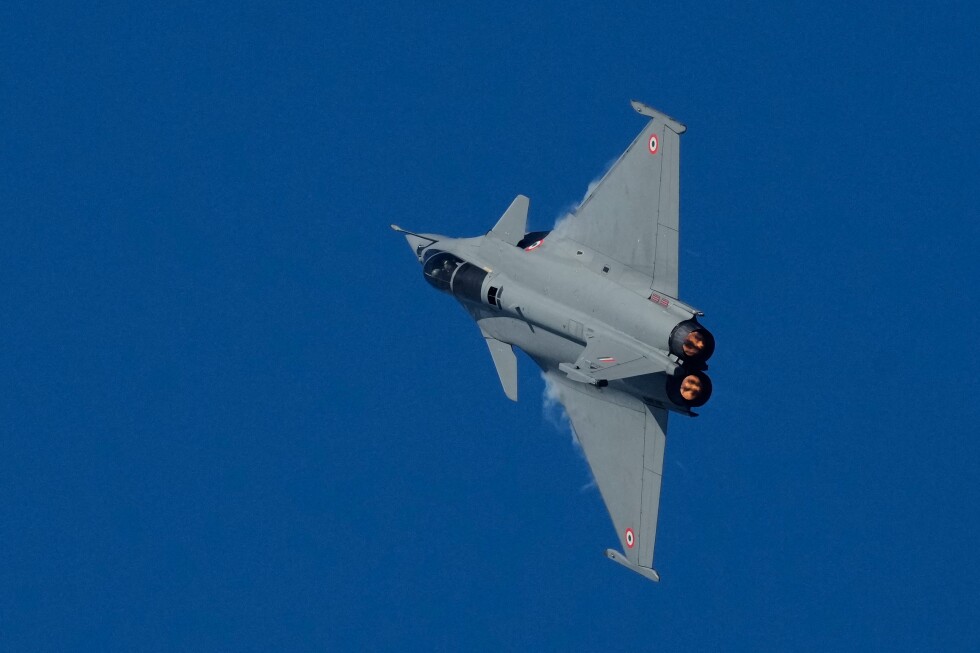
  • India wants more passenger jets. Can it also build them?

    India wants more passenger jets. Can it also build them?

    India’s rapidly expanding aviation sector faces a critical juncture as it navigates supply chain constraints and ambitious domestic production goals. With IndiGo and Air India controlling over 90% of the market and having placed orders for nearly 1,500 aircraft over the next decade, the country’s dependency on Boeing and Airbus has become increasingly problematic. Both manufacturers reported historically high delivery backlogs in 2024, creating delays that directly impact Indian carriers.

    This supply challenge has revitalized discussions about India’s long-standing aspiration to develop indigenous passenger aircraft capabilities. The recent preliminary agreement signed between Delhi and Moscow to manufacture Russian SJ-100 planes in India represents the latest attempt to address this dependency. The SJ-100, a twin-engine regional jet capable of carrying up to 103 passengers, is already operational with several Russian airlines according to manufacturer United Aircraft Corporation (UAC).

    However, aviation experts question the project’s feasibility amid multiple complexities. Western sanctions imposed after Russia’s invasion of Ukraine have fundamentally altered the aircraft’s certification and component sourcing. The European Union Aviation Safety Agency revoked its certification, effectively banning the SJ-100 from European airspace. UAC was forced to replace approximately 40 systems to create an ‘import-substituted’ version in 2023.

    India’s historical attempts at aircraft manufacturing reveal a pattern of ambitious projects with limited commercial success. Since establishing the National Aerospace Laboratories (NAL) in 1959, the country has developed small training aircraft like the two-seater Hansa but has struggled with larger passenger planes. Previous collaborations include licensed production of UK-designed Avro 748 jets in the 1960s and partnership with Germany’s Dornier for 19-seat aircraft in the 1980s.

    The most notable setback occurred with the Saras project, a 15-seater developed with Russian assistance that stalled in 2009 following a fatal prototype accident. While revived as the 19-seater Saras MK2, the program remains uncertified. Similarly, the Regional Transport Aircraft (RTA) project for a 90-seater comparable to the SJ-100 has seen minimal progress since feasibility reports were submitted in 2011.

    Dr. Abhay Pashilkar, director of NAL, identifies key structural challenges: ‘Lack of large domestic demand until recently, along with a shortage of highly skilled manpower and a small domestic manufacturing ecosystem, has held back growth in the sector.’ He emphasizes that engagement with both Indian and global manufacturers represents the most viable path forward.

    Despite these challenges, the Russia partnership offers strategic advantages for both nations. For India, it provides immediate manufacturing capability while domestic projects remain years from completion. For Russia, successful international production would demonstrate its ability to create civilian aircraft without Western technology. Gopal Sutar, former spokesperson of Hindustan Aeronautics Limited, notes that Russia’s role as a ‘steadfast supporter’ of India remains strategically significant, with both nations presumably accounting for potential sanction-related challenges.

    The agreement nevertheless involves considerable trade-offs and leaves unanswered questions about technology transfer, production timelines, and market acceptance. Meanwhile, India’s aviation expansion faces additional constraints beyond aircraft availability, including crew shortages evidenced by recent IndiGo flight cancellations that stranded thousands of passengers due to inadequate pilot roster planning.

  • South Korea’s ‘movie of the year’ is an indie story about a teen’s trauma

    South Korea’s ‘movie of the year’ is an indie story about a teen’s trauma

    South Korean indie filmmaker Yoon Ga-eun has unexpectedly captured the nation’s cinematic consciousness with her groundbreaking film ‘The World of Love,’ emerging as an unexpected box office phenomenon and cultural touchstone. The film, which has been hailed as “movie of the year” by Korean media, presents a revolutionary approach to portraying sexual violence survivors through the lens of everyday life rather than trauma recreation.

    The narrative centers on Joo-in, a high school student navigating typical adolescent experiences—school dynamics, romantic relationships, and family interactions—while carrying the secret of childhood sexual assault by a relative. The film’s tension emerges not from graphic depictions of violence but from Joo-in’s refusal to sign a petition containing the statement: “Sexual violence leaves deep wounds that never heal and completely destroys a person’s life and soul.”

    Yoon’s directorial approach deliberately avoids labeling her protagonist, instead focusing on Joo-in’s assertion that her trauma, while significant, does not define her entire identity. The filmmaker personally handwrote letters to journalists requesting they avoid mentioning sexual violence in their coverage, emphasizing her commitment to reframing the narrative around survivors.

    The film has achieved remarkable commercial success, grossing over $1.1 million since its October release and earning a 9/10 rating on Naver, South Korea’s largest search portal. It has become the highest-grossing indie film of 2025 in South Korea, with acclaim from industry luminaries including Bong Joon-ho, director of ‘Parasite,’ who declared himself the “head of the Seoul branch of Yoon Ga-eun’s fan club.”

    Beyond its artistic achievements, ‘The World of Love’ has sparked crucial conversations in South Korea’s patriarchal society about how survivors are perceived and treated. According to Cho Eunhee, director of Korea Sexual Violence Relief Center, the film arrives at an “incredibly right” cultural moment, building on the foundation of the 2017-2018 MeToo movement while creating space for discussing previously taboo subjects like familial abuse.

    Audience responses have been profoundly emotional, with viewers reporting transformative cinema experiences. One children’s book editor described leaving the theater determined to become “a good adult who can stand beside all the children and teenagers who are trying so hard to grow up.” A survivor expressed feeling empowered, as if Joo-in was telling her, “I am living well, so let’s keep living well together.”

    While some critics and survivors have noted the film may downplay the lasting damage of abuse and present idealized family support systems, film critic Min Youngjun emphasizes that the film’s true value lies in creating “a healthy space for talking about sexual violence and its victims.” The film demonstrates that meaningful dialogue emerges not from universal approval but from creating platforms for essential conversations about complex social issues.

  • New clashes erupt in Iran as protests enter second week, say rights groups

    New clashes erupt in Iran as protests enter second week, say rights groups

    Iran has entered its second consecutive week of widespread civil demonstrations, with fresh clashes erupting between security forces and protesters across multiple provinces. The unrest, initially triggered by economic grievances and rising living costs, has evolved into broader anti-government sentiment challenging the clerical establishment.

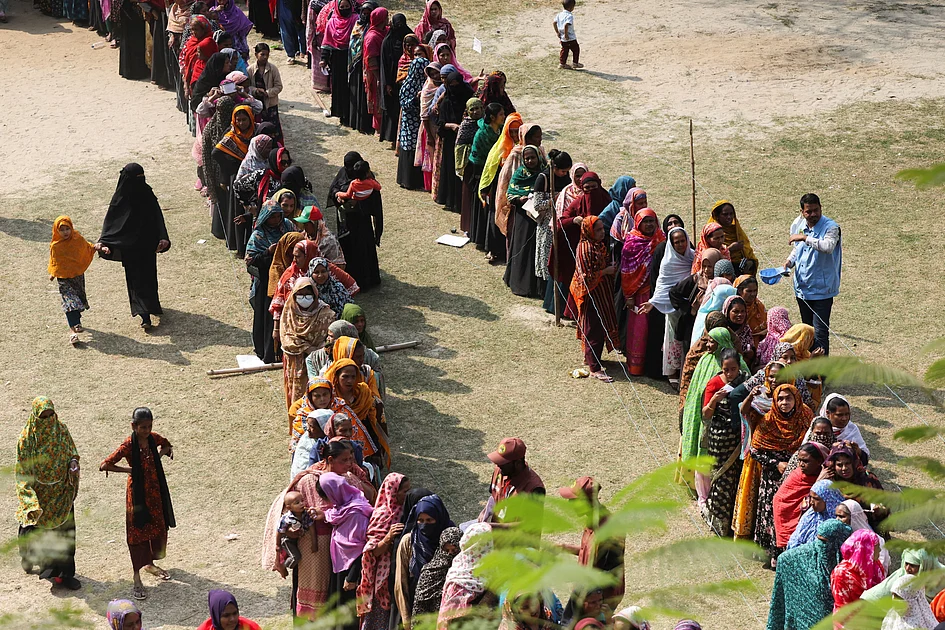
    According to documentation from international human rights organizations, at least twelve fatalities have been confirmed since protests commenced on December 28th. The initial shopkeepers’ strike in Tehran’s historic bazaar district has expanded into a nationwide movement spanning 23 of Iran’s 31 provinces, affecting approximately 40 urban centers.

    The Norway-based Hengaw Human Rights Organization reported particularly violent confrontations in western regions with significant Kurdish and Lor minority populations. In Malekshahi county of Ilam province, Revolutionary Guards allegedly opened fire on demonstrators, resulting in four confirmed fatalities and approximately thirty injuries. Verified footage shows security forces employing aggressive dispersal tactics against protesters who blocked roads with overturned containers.

    This represents the most significant challenge to Iran’s leadership since the 2022-2023 Mahsa Amini protests, though current demonstrations haven’t yet reached comparable scale. The unrest compounds existing pressures on Supreme Leader Ayatollah Ali Khamenei’s administration, following recent military confrontations with Israel that damaged nuclear infrastructure and eliminated key security figures.

    International response has intensified considerably. United Nations Special Rapporteur Mai Sato cautioned against repeating the violent suppression witnessed during previous protests. Notably, U.S. President Donald Trump declared readiness to respond if protestor fatalities continue, while Israeli Prime Minister Benjamin Netanyahu expressed solidarity with Iranian demonstrators. Iranian officials have condemned foreign statements as interference while simultaneously acknowledging legitimate economic concerns alongside warnings against destabilization.

    With over 580 documented arrests and continued security force deployments in major urban centers, the situation remains highly volatile as both protesters and authorities appear increasingly entrenched in their positions.