标签: Asia

亚洲

  • Inside Syria’s largest oilfield after the battle for control

    Inside Syria’s largest oilfield after the battle for control

    In the scarred landscapes of northeastern Syria, Abu Aicha navigates a perimeter of strategic importance. Flanked by armed guards, he patrols the apocalyptic terrain of al-Omar oilfield—Syria’s largest petroleum reserve—where rusted pipelines and bomb-cratered earth testify to years of conflict. Recently reclaimed by Syrian government forces after nearly a decade under Kurdish-led administration, this facility represents far more than energy infrastructure: it symbolizes the economic lifeline that has repeatedly shifted Syria’s balance of power.

    The transfer of control followed a January 18 agreement between Damascus and Syrian Democratic Forces (SDF) commander Mazloum Abdi, effectively ending Kurdish autonomous administration in the northeast. The fighting that preceded the agreement lasted nearly two hours, with soldiers like Abu Taim recalling the operation’s urgency. “Before, we were forced to buy oil from them. These are resources that belong to the country,” he states, reflecting the sentiment among government forces.

    For local soldiers like 23-year-old Omar, the reclaiming carries profound significance: “I felt my land had been colonised by the SDF. Everything was transported to Hasakah. Deir Ezzor suffered economically from losing access to its own resources.” Another soldier, Mohamed Othman, 25, describes the emotional impact: “It’s as if we were born again.”

    Despite the symbolic victory, operational challenges remain staggering. Engineer Raed al-Sadoun describes damage exceeding 90 percent, requiring complete rehabilitation of wells, stations, and transfer points. “Each well needs to be studied individually,” he explains, noting that production goals of 30,000 barrels daily depend entirely on reconstruction resources and timelines.

    The economic implications are monumental. According to Benjamin Fève, a Syria specialist at Karam Shaar Advisory, oil revenues constituted approximately 77% of the Kurdish administration’s total revenues—$416 million in the first half of 2025 alone. These funds supported 220,000 public employees and 85,000 fighters, making autonomy financially viable. “Oil did not trigger the Syrian conflict, but it financed its prolongation,” Fève observes, noting how control over energy resources allowed armed actors to build rival governance systems.

    While immediate budget impacts may be limited, al-Omar’s light crude compatibility with Syria’s Baniyas refinery makes it strategically vital for reducing imports and relaunching national production. With recoverable reserves estimated at 520 million barrels, the field remains a prize worth fighting for—even amidst the devastation that requires intensified patrols against looters and complex reconstruction efforts that may require years to complete.

  • AVENEW Development and Hilton announce Waldorf Astoria Dubai Islands and Waldorf Astoria Residences Dubai Islands

    AVENEW Development and Hilton announce Waldorf Astoria Dubai Islands and Waldorf Astoria Residences Dubai Islands

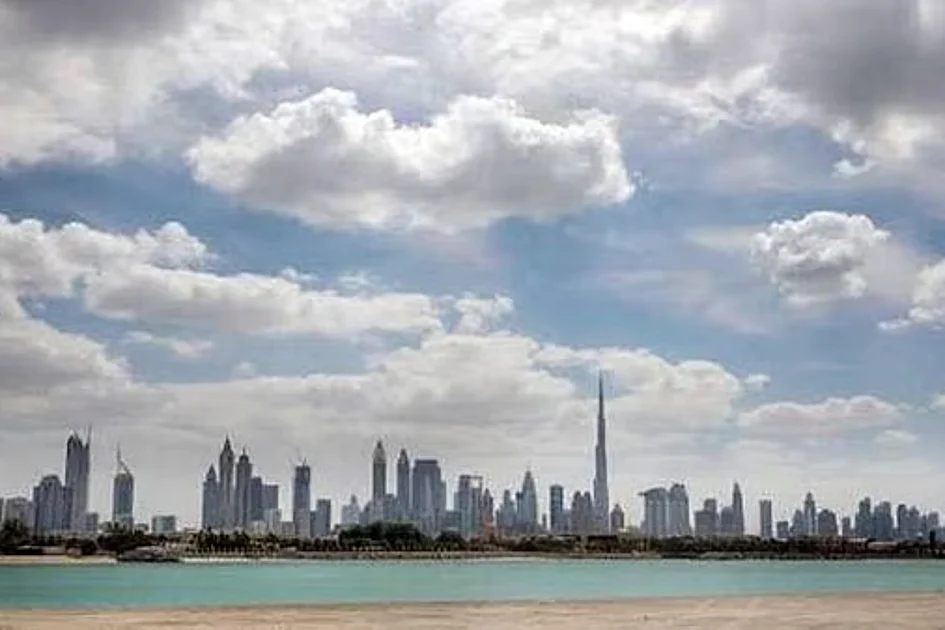
    In a strategic expansion within Dubai’s luxury real estate sector, local developer AVENEW Development has entered into a significant agreement with global hospitality leader Hilton to establish the Waldorf Astoria Dubai Islands and Waldorf Astoria Residences Dubai Islands. This collaboration introduces the iconic luxury brand to one of Dubai’s most anticipated coastal developments, marking a pivotal moment in the city’s premium hospitality landscape.

    The development will feature 150 meticulously designed guest rooms and suites alongside 120 branded residential units, creating a seamless blend of luxury accommodation and permanent living spaces. The hotel component will offer multiple dining experiences including a rooftop restaurant, all-day dining venue, specialty restaurant, signature bar, and the renowned Peacock Alley. Comprehensive lifestyle amenities will include outdoor pools, dedicated children’s facilities, fitness studio, and a luxury spa.

    This project represents AVENEW Development’s sixth venture within the master-planned waterfront community and its second branded residence on Dubai Islands. The initiative capitalizes on Dubai’s established global leadership in luxury hospitality and the growing demand for premium branded residences, which have evolved from a niche market into a leading global asset class.

    Rasha Hassan, Managing Partner of AVENEW Development, emphasized the strategic nature of the collaboration: ‘This partnership responds directly to evolving global wealth patterns and sophisticated buyer expectations. These residences represent best-in-class homes designed to deliver enduring value through globally recognized service standards.’

    Carlos Khneisser, Hilton’s Chief Development Officer for Middle East & Africa, noted: ‘Waldorf Astoria consistently sets luxury benchmarks in the world’s most desirable destinations. We’re excited to collaborate with AVENEW Development to bring this iconic property to Dubai Islands, expanding our luxury portfolio across the region.’

    The development exemplifies AVENEW’s commitment to creating celebrated living spaces that combine architectural excellence with functional elegance, designed for those seeking timeless sophistication and unmatched service reflective of Waldorf Astoria’s storied heritage.

  • Between wetlands and worlds: The story of a Bangladeshi student in China

    Between wetlands and worlds: The story of a Bangladeshi student in China

    Faysal Ahmad, a Bangladeshi PhD candidate at Beijing Forestry University’s School of Ecology and Nature Conservation, has transformed his childhood fascination with migratory birds into a transnational conservation mission. His journey from the wetlands of Bangladesh to China’s ecological research forefront represents a growing trend of global environmental collaboration.

    Growing up alongside Bangladesh’s vibrant wetland ecosystems, Ahmad developed an early understanding of nature’s interconnectedness through observing seasonal bird migrations. This childhood curiosity evolved into professional commitment through his work with conservation organizations, including the Food and Agriculture Organization of the United Nations, where he witnessed firsthand how climate change disrupts both ecosystems and human communities.

    ‘Conservation remains incomplete without considering human dimensions,’ Ahmad emphasized. ‘Science must ultimately serve those most affected by environmental changes.’

    This philosophy led him to China, where he found resonance with the country’s ecological civilization concept. Beijing Forestry University emerged as the ideal institution due to its renowned biodiversity research programs and practical approach to ecological challenges. Under Professor Liu Jinglan’s mentorship, Ahmad’s research focuses on climate change impacts on waterbird species in Beijing’s urban wetlands.

    A pivotal moment in his academic journey occurred during field training when handling migratory birds. ‘Holding that bird, I understood that nature recognizes no borders,’ he recalled. ‘Birds migrate with purpose, not passports.’ This realization fundamentally shifted his research approach from pure data collection to developing holistic ecological narratives that connect climate patterns, habitat changes, and human activity.

    His academic experience expanded through international research visits to nine countries, including ecological studies in Inner Mongolia’s grasslands, seminars at Harvard University, and coastal research in the Netherlands. These diverse experiences reinforced his belief that conservation knowledge must transcend boundaries as freely as migratory birds.

    Beyond research, Ahmad actively engages in knowledge dissemination through the ‘Eco Earth’ Lecture Group and leadership roles in the East Asian–Australasian Flyway Partnership Youth Task Force. His outreach extends to primary school education, where he organizes birdwatching activities and drawing sessions to inspire younger generations.

    ‘China demonstrated that ecological strength emerges when society embraces environmental values,’ Ahmad noted. ‘Meaningful change occurs when science, policy, and public participation align.’

    Looking forward, Ahmad aims to establish collaborative platforms between China and South Asia, transferring ecological wisdom and practical solutions for wetland protection and climate resilience. His journey exemplifies how personal passion, when coupled with academic opportunity and cross-cultural exchange, can address global environmental challenges through localized action and international cooperation.

  • Nipah virus outbreak in India: Singapore to set up temperature screening at airport

    Nipah virus outbreak in India: Singapore to set up temperature screening at airport

    Singapore has activated enhanced health security protocols in response to the emerging Nipah virus outbreak in India’s West Bengal region. The nation’s Communicable Diseases Agency announced on Wednesday, January 28, 2026, the implementation of temperature screening measures specifically for arriving passengers on flights originating from affected areas.

    The comprehensive response extends beyond airport controls. The Ministry of Manpower is intensifying surveillance protocols for newly arrived migrant workers from South Asia, while simultaneously engaging primary healthcare providers to maintain heightened clinical vigilance for potential cases.

    In a strategic move to bolster international cooperation, Singaporean health authorities are actively collaborating with their counterparts across South Asian nations to gain deeper insights into the epidemiological situation. Concurrently, work is underway to establish a global digital platform that would enable countries to rapidly share genomic sequencing data of detected cases, facilitating faster response and research coordination.

    The Nipah virus, recognized for its significant mortality rate and transmission potential, has prompted this multilayered approach to public health protection. These precautionary measures reflect Singapore’s proactive stance in mitigating cross-border health threats while maintaining essential international travel connections.

  • Dubai extends its lead as global capital of branded residences

    Dubai extends its lead as global capital of branded residences

    Dubai has significantly strengthened its position as the world’s premier destination for branded luxury residences, according to the latest analysis from property consultancy Savills. The emirate’s remarkable expansion in this exclusive real estate sector demonstrates its growing appeal among international high-net-worth investors seeking both luxury living and strategic financial opportunities.

    By the conclusion of 2025, Dubai recorded 64 completed branded residential projects with an additional 87 developments actively progressing through the pipeline. This substantial growth contributed to the global portfolio of branded schemes reaching approximately 910 properties worldwide, representing a robust 19 percent year-on-year increase. The past year alone witnessed more than 220 new projects entering development phases across global markets.

    The Middle East and North Africa region has emerged as the fastest-growing market for branded residences globally, achieving an extraordinary 187 percent expansion over the past five years. This remarkable growth trajectory has been primarily driven by ambitious development initiatives throughout Dubai and the broader Gulf Cooperation Council countries.

    In the global hierarchy of branded residential markets, Dubai maintains its leadership position, followed distantly by South Florida with 48 completed projects and 55 in development. New York secured third position with 32 operational schemes and four additional projects underway. Other notable markets include Miami, São Paulo, London, Cairo, Istanbul, Bangkok, Fort Lauderdale, Phuket, and Mexico City.

    Andrew Cummings, Head of Residential Agency at Savills Middle East, emphasized Dubai’s unique advantages: “The city’s continued appeal as a global lifestyle and investment destination places it firmly at the center of branded residential growth. International buyers are consistently drawn by Dubai’s exceptional connectivity, capital security, and diverse luxury product offerings.”

    The report highlights several key factors driving Dubai’s dominance, including its favorable tax environment, political stability, and sophisticated infrastructure supporting private aviation and international connectivity. Emerging destinations within the UAE, particularly Ras Al Khaimah and Abu Dhabi, are gaining significant momentum as developers seek to diversify beyond core urban markets.

    Industry projections indicate continued exponential growth, with real estate expert Valentina Rusu forecasting an 80 percent increase in Dubai’s branded residences portfolio, potentially reaching 250 projects by 2030. Recent major developments include Binghatti’s multi-billion dollar Mercedes-Benz Places complex and new JW Marriott Residences, adding thousands of luxury units to the market.

    The evolution of branded residences represents more than mere luxury accommodation—these developments offer comprehensive lifestyle investments where purchasers acquire not just properties but curated living experiences backed by globally recognized hospitality and luxury brands.

  • China’s 5G base stations top 4.83 million by end of 2025

    China’s 5G base stations top 4.83 million by end of 2025

    China’s telecommunications sector demonstrated remarkable growth throughout 2025, exceeding all infrastructure development targets established in its 14th Five-Year Plan (2021-2025). Official data released by the Ministry of Industry and Information Technology reveals the country achieved unprecedented milestones in next-generation network deployment and technological innovation.

    By December 2025, China had established 4.838 million operational 5G base stations nationwide, translating to an impressive density of 34.4 stations per 10,000 people. This infrastructure deployment surpassed national planning objectives by 8.4 units per capita, representing one of the most rapid large-scale 5G implementations globally.

    The telecommunications industry reported sustained financial growth with total business volume increasing 9.1% year-on-year. Revenue reached 1.75 trillion yuan (approximately $250.8 billion), marking a 0.7% increase despite global economic headwinds. Emerging technologies including cloud computing, big data, IoT applications, and data center services contributed significantly, accounting for 25.7% of total sector revenue.

    China’s technological leadership became particularly evident in patent development, with Chinese entities claiming 42% of all global 5G standard-essential patent declarations. Concurrently, researchers achieved substantial breakthroughs in next-generation connectivity, successfully verifying core 6G system architecture and related technologies.

    Infrastructure accomplishments extended to comprehensive network coverage with gigabit optical network access available in every Chinese county. The nation achieved complete 5G coverage across all townships and over 95% of administrative villages. Advanced 5G-A (5G-Advanced) services expanded to more than 330 cities, while the national optical fiber network reached 74.99 million kilometers in total length.

    User adoption metrics showed robust growth with mobile subscriptions reaching 1.827 billion, including 1.204 billion 5G subscribers. Mobile IoT terminals experienced particularly strong expansion, growing 8.7% to 2.888 billion users, with substantial increases in vehicular internet and public service applications.

    The integration of digital technologies with traditional industries reached new heights, with 5G and gigabit networks now implemented across 91 major economic categories. The industrial internet ecosystem achieved comprehensive coverage of all 41 industrial classifications, demonstrating deep digital transformation throughout China’s economic landscape.

  • Peaceful reunification to offer socio-economic benefits for Taiwan

    Peaceful reunification to offer socio-economic benefits for Taiwan

    A senior Chinese official has articulated a compelling vision for Taiwan’s future development, emphasizing the substantial socioeconomic advantages that would accompany peaceful reunification with mainland China. Zhang Han, spokeswoman for the State Council Taiwan Affairs Office, articulated these prospects during a recent briefing, highlighting how integration would transform Taiwan’s infrastructure landscape and economic potential.

    Addressing growing discussions within Taiwan about mainland China’s transportation achievements, Zhang pointed to the massive expansion of China’s high-speed rail network as a model for what could be accomplished in Taiwan. The mainland’s rail system has expanded dramatically to over 50,400 kilometers, with more than 12,000 kilometers added during the 14th Five-Year Plan period alone. This network now connects 128 counties and serves 97% of cities with populations exceeding 500,000, representing the world’s most extensive and technologically advanced high-speed rail system.

    Zhang specifically addressed geographical challenges that have long hampered Taiwan’s transportation infrastructure, noting that with mainland expertise and resources, ambitious projects like tunneling through Taiwan’s central mountain range would become feasible. Such developments would eliminate persistent travel disruptions caused by road closures and landslides, significantly enhancing transportation safety and reliability across the island.

    The economic argument for integration received substantial emphasis, with Zhang revealing that mainland China already dominates Taiwan’s import market, supplying 24.5% of all consumer goods imported by Taiwan in 2025—a total of $49.4 billion worth of products. This established economic relationship provides a foundation for deeper cooperation and shared prosperity.

    Zhang concluded by reinforcing that cross-strait economic collaboration and integrated development represent a mutually beneficial path forward, ensuring that Taiwanese compatriots would fully participate in and benefit from Chinese-style modernization across all aspects of daily life, from basic necessities to advanced infrastructure.

  • Israeli raids across West Bank leave one dead and dozens detained

    Israeli raids across West Bank leave one dead and dozens detained

    Israeli military operations across the occupied West Bank have escalated, resulting in the death of a young Palestinian man and the detention of numerous individuals during widespread overnight raids. According to Palestine’s Ministry of Health, 20-year-old Mohammed Rajih Nasrallah from al-Dhahiriya succumbed to abdominal gunshot wounds sustained during an Israeli operation south of Hebron on Tuesday evening. Medical staff at Dura Hospital reported his condition remained critical until he was pronounced dead.

    Concurrent operations unfolded across multiple regions. In the Bethlehem area, Israeli forces apprehended at least three individuals. More extensively, in the village of Amatin east of Qalqilya, troops conducted two-hour home raids, arresting ten Palestinians and allegedly causing substantial property damage according to local accounts.

    The Nablus region witnessed particularly aggressive maneuvers as Israeli forces stormed the villages of Madma and Burin, detaining dozens for interrogation and making several arrests. The security situation prompted the local Directorate of Education to transition schools in Burin, Madma, and Asira al-Qibliya to remote learning until Thursday.

    Additional incidents were reported in Tulkarm, where forces shot and wounded Khader Mohammed Shahada in the thigh before taking him into custody as he departed his residence with his sister. Hebron governorate saw twelve Palestinians arrested, including two women, during operations characterized by property searches and alleged assaults on residents. Separate raids in the Aqbat Jabr camp south of Jericho resulted in two further detentions.

    Amid these security operations, settler violence continued with Israeli settlers uprooting 200 olive trees in Turmus Ayya north of Ramallah, reflecting the ongoing expansion of attacks targeting Palestinian agricultural resources.

    The context for these developments remains deeply troubling. Israeli forces routinely detain Palestinians without specific charges, with thousands currently held in Israeli prisons under conditions described as dehumanizing. Since October 2023, documentation from Israeli rights organization B’Tselem indicates at least 84 Palestinians, including one child, have died in Israeli detention facilities, highlighting systematic concerns regarding treatment and accountability.

  • Dubai’s Al Habtoor Group announces closure of Lebanon operations, terminates all workers

    Dubai’s Al Habtoor Group announces closure of Lebanon operations, terminates all workers

    Dubai-based conglomerate Al Habtoor Group has announced the complete cessation of its operations in Lebanon, citing accumulated losses exceeding Dh6.24 billion ($1.7 billion) and deteriorating conditions in the crisis-stricken nation. The decision, announced Wednesday, will result in the termination of all employees and the closure of all Lebanese assets.

    The group, chaired by billionaire Khalaf Al Habtoor, revealed that prolonged instability, hostile campaigns, and defamatory actions against its businesses had made continued operations unsustainable. This drastic move follows the company’s earlier threat to pursue legal action against both the Lebanese government and the Banque du Liban for allegedly violating agreements that pushed operations into financial distress.

    Al Habtoor Group established its Lebanese presence in 2001 with substantial investments across multiple sectors including hospitality, retail, leisure, real estate, and banking. Despite absorbing substantial operational burdens during successive wars and crises, the group stated it had exhausted all reasonable efforts to resolve disputes amicably with Lebanese authorities.

    In a statement, the conglomerate emphasized that institutional failure and the absence of structural solutions to address fundamental deficiencies had compelled this decision. The closure represents a necessary legal and operational measure to prevent further financial drain and protect the group’s interests.

    This development follows Al Habtoor’s January 2025 announcement canceling all investment projects in Lebanon and putting existing properties up for sale, citing security concerns and operational challenges. The Emirati investor had previously expressed personal safety concerns, including death threats received in 2024.

  • First-time Taiwan applicants for mainland travel permits surge over 57%

    First-time Taiwan applicants for mainland travel permits surge over 57%

    In a significant development for cross-strait relations, Taiwan residents are applying for mainland travel permits at unprecedented rates following the implementation of a fee exemption policy. Official data from China’s National Immigration Administration reveals a remarkable 57.2% year-on-year increase in first-time applicants from Taiwan since the policy took effect on July 1, 2025.

    The comprehensive statistics demonstrate a substantial growth in cross-strait mobility. Overall permit applications from Taiwan residents increased by 11.9% during the same period, while first-time entries to the mainland surged by 40.9% in the latter half of 2025. The total number of Taiwan residents entering mainland China climbed by 24.4% year-on-year, indicating strengthened people-to-people exchanges across the strait.

    Administration spokesperson Lyu Ning emphasized the policy enhancements that have accompanied the fee waiver. “Immigration authorities have implemented refined systems to ensure equal treatment for Taiwan compatriots,” stated Lyu. These measures include issuing temporary travel documents for emergency situations involving lost or damaged permits, and establishing verification services that link travel permits with residence permits.

    The administration has maintained free real-time identity verification services to facilitate first-time visitors’ access to transportation, financial, and telecommunications services on the mainland. Looking forward, authorities plan to introduce additional innovative policies specifically targeting first-time applicants and younger demographics to further streamline cross-strait travel procedures.

    Infrastructure expansion has also played a crucial role in this increased connectivity. In 2025, the administration significantly expanded processing capabilities by adding 42 ports authorized to issue single-entry travel permits, bringing the total to 100 facilities across the mainland. Additionally, nationwide processing was implemented for mainland residents applying for exit and entry permits to visit relatives in Taiwan, creating more balanced travel opportunities across the strait.