
Egypt has escalated its diplomatic efforts to advance the Gaza peace process, engaging with European counterparts to push for the implementation of a US-backed peace plan. Egyptian Foreign Minister Badr Abdelatty held discussions with Russian Foreign Minister Sergey Lavrov and European Union foreign policy chief Kaja Kallas, emphasizing Egypt’s commitment to the Sharm el-Sheikh agreement signed last month. Abdelatty urged progress on the plan’s second phase, which focuses on political, developmental, and humanitarian dimensions, including early recovery and reconstruction in Gaza. Egypt is also preparing to host an international conference on Gaza’s reconstruction later this month. Meanwhile, Israel and Hamas continue prisoner exchanges, and the US has proposed a UN Security Council resolution to endorse its Gaza peace plan, which includes a transitional governing body and an international stabilization force. However, Arab states have expressed concerns over the US proposal, particularly regarding the potential permanence of temporary boundaries and the erosion of Palestinian sovereignty. Jordan’s Foreign Minister Ayman Safadi reiterated that Gaza is an integral part of the Palestinian Territories and called for a clear timeline for Israel’s withdrawal. The death toll in Gaza from Israel’s military operations has reached 69,000, with more bodies being recovered from the rubble. Amid these developments, Israeli Defense Minister Israel Katz announced plans to destroy all ‘terror tunnels’ in Gaza, vowing to continue military operations until all hostages are returned. Analysts suggest that Israel’s push for a UN-backed resolution aims to legitimize a framework that preserves its occupation, while Arab states remain wary of any arrangement that entrenches Israeli control.
标签: Asia
亚洲
-

Thailand will halt all actions on truce deal with Cambodia after a land mine injures troops
Thailand has announced the suspension of all actions under a U.S.-brokered ceasefire agreement with Cambodia, following a land mine explosion on the volatile border that injured two Thai soldiers. Prime Minister Anutin Charnvirakul stated that the incident demonstrates persistent threats to national security, prompting the halt until Thailand’s unspecified demands are met. The ceasefire, signed last month during the Association of Southeast Asian Nations (ASEAN) summit, aimed to de-escalate tensions after a deadly five-day conflict in July. The agreement included provisions for the release of 18 Cambodian prisoners, the removal of heavy weapons, and land mine clearance. However, Thailand has accused Cambodia of obstructing demining efforts and laying new mines, allegations Cambodia denies. The Royal Thai Army reported that one soldier lost his right foot in the explosion, while another suffered chest tightness. Both are receiving medical treatment. Defense Minister Natthaphon Narkphanit confirmed the postponement of the prisoner release and ongoing investigations into the mine’s origin. Cambodia has reiterated its commitment to the agreement and urged Thailand to release its soldiers promptly. The U.S. had previously pressured both nations to reach a truce, threatening trade privileges if they failed to comply.
-
Revolutionary’s legacy lives on in Tianjin
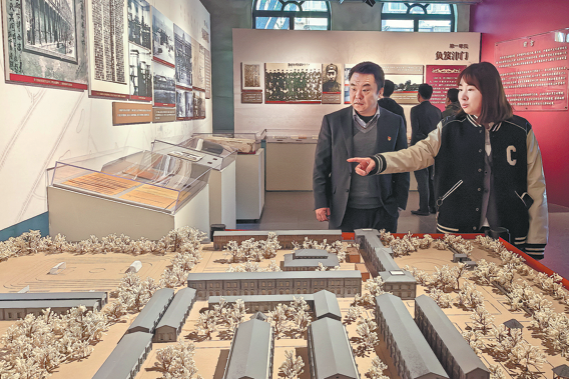
Tianjin recently commemorated the 136th anniversary of the birth of Li Dazhao, a pivotal figure in China’s communist movement and one of the founders of the Communist Party of China. Hundreds gathered on October 29 to honor his legacy, particularly his formative years in Tianjin, which played a crucial role in shaping his revolutionary ideals. Li studied at the Beiyang Institute of Law and Politics, a hub of intellectual and political activity in the early 20th century, where he was exposed to advanced ideas in politics, economics, and law. The institute, established in 1906, was a melting pot of Chinese and Western thought, fostering an environment that nurtured Li’s revolutionary spirit. During his time there, Li actively promoted democracy and civil rights through his writings, inspiring many to join the revolution. The Hebei district of Tianjin has restored the Beiyang Institute and established a free public exhibition dedicated to Li Dazhao and his connection to the city. The exhibition features historical artifacts, photographs, and recreated scenes from Li’s student life, offering visitors a glimpse into his revolutionary journey. Li Hongta, Li Dazhao’s grandson, expressed his admiration for the exhibition, emphasizing its role in inspiring younger generations. The restoration of the institute is seen as a tribute to revolutionary history and a means of preserving the Red spirit. Tianjin continues to honor Li’s legacy through various initiatives, including Red song music story sessions and lectures by the Tianjin Li Dazhao Research Society. The Beiyang Institute, now a Red education base, has welcomed over 500 groups and nearly 20,000 visitors since its reopening last year. The site stands as a testament to Li Dazhao’s enduring influence and Tianjin’s role in China’s revolutionary history.
-
Carbon Peaking and Carbon Neutrality China’s Plans and Solutions
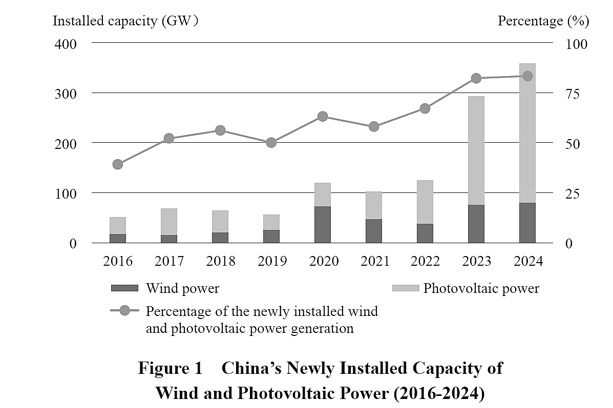
China has solidified its commitment to achieving carbon peaking by 2030 and carbon neutrality by 2060, positioning itself as a global leader in climate action. The country has implemented a robust ‘1+N’ policy framework, which includes a top-level design and sector-specific action plans to guide its green transition. This framework emphasizes the development of renewable energy, energy efficiency, and low-carbon technologies, while also addressing key sectors such as industry, transport, and urban development. China has made significant strides in renewable energy, boasting the world’s largest installed capacity of wind and solar power, and leading in the adoption of new energy vehicles. The nation has also prioritized international cooperation, actively participating in global climate governance and supporting the Paris Agreement. Through these efforts, China aims to not only reduce its carbon footprint but also contribute to global sustainability and the fight against climate change.
-
Colleges’ wartime resilience exhibited
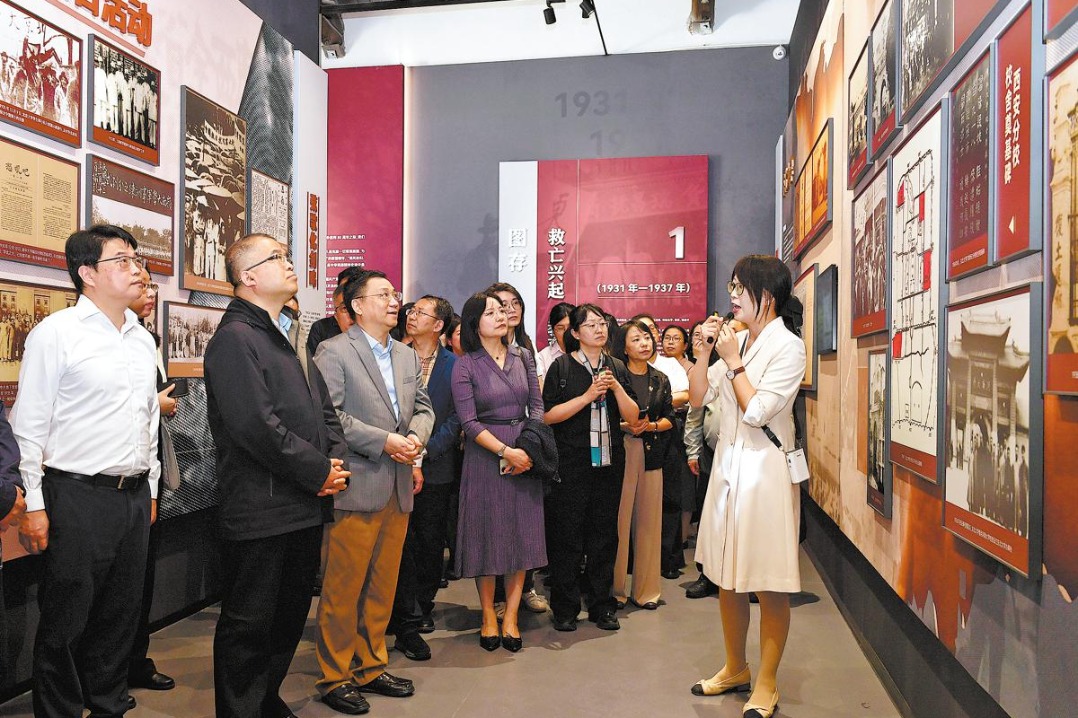
A comprehensive exhibition commemorating the relocation of Chinese universities during the War of Resistance Against Japanese Aggression (1931-45) was inaugurated at Sanming University in Fujian province. The event, organized in collaboration with over 40 universities nationwide, marks the 80th anniversary of the victory in the Chinese People’s War of Resistance Against Japanese Aggression and the World Anti-Fascist War. The exhibition vividly portrays the challenging journey of more than 150 universities that were compelled to move to safer regions, including the southwestern, northwestern, central-southern, and eastern mountainous areas, to preserve the essence of education during the war. Tang Tao, an expert from East China Normal University, emphasized the significance of this relocation in China’s educational history and the importance of educating students about this pivotal period. The exhibition also sheds light on the wartime efforts of over 20 universities established by the Communist Party of China, filling a crucial gap in historical records. It narrates the story of a military and political academy in Yan’an, Shaanxi province, which trained over 100,000 cadres amidst relentless warfare. Additionally, the exhibition explores the wartime relocation and postwar development of higher education institutions in Fujian and Taiwan, highlighting the shared destiny and blood ties between compatriots in Taiwan and the mainland. Chen Lieping, Party chief of Sanming University, stated that the exhibition hall serves as a lasting repository of wartime memory and an immersive platform for ideological and political education, ensuring the flame of civilization and the power of education are passed down through generations.
-
Foreign coaches help ‘Tennis City of China’ dream big
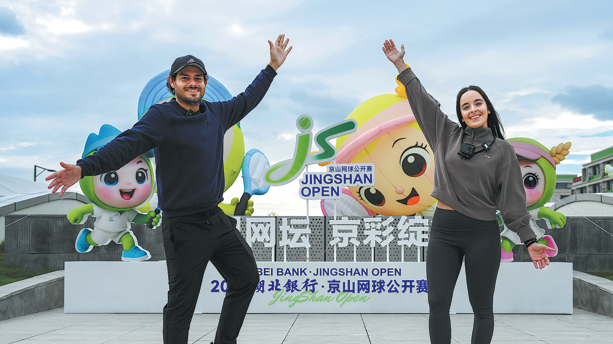
Jingshan, a county-level city in Hubei province, is making strides toward its vision of becoming the ‘Tennis City of China’ with the help of international expertise. Mexican coaches Fabricio and Grecia Gonzalez have brought their global experience to the Hubei Tennis School, enhancing the training and development of local talent. The city, already renowned for hosting prestigious tournaments like the WTA 125 and ATP 100, has embraced the couple’s contributions to its tennis ecosystem. Fabricio, a seasoned coach with experience in Mexico, the US, and Spain, focuses on technical training and strategic development, while Grecia, a respiratory therapist, introduces innovative breathing techniques to young players. Their arrival in August 2025 marked a significant step in Jingshan’s tennis journey. The city boasts over 300 high-standard courts and a thriving tennis culture, with more than 100,000 enthusiasts among its 600,000 residents. The Gonzalez duo, supported by the local government with accommodation and training facilities, has already made an impact. Fabricio’s tailored coaching methods have improved players’ skills and motivation, while Grecia’s breathing courses have enhanced physical performance. Despite initial challenges, including language barriers, the couple has adapted and is optimistic about the potential of their trainees. They aim to nurture a new generation of athletes capable of competing on the global stage, potentially reaching ATP or WTA tours. Jingshan’s commitment to tennis, combined with international expertise, positions it as a rising star in the world of sports.
-
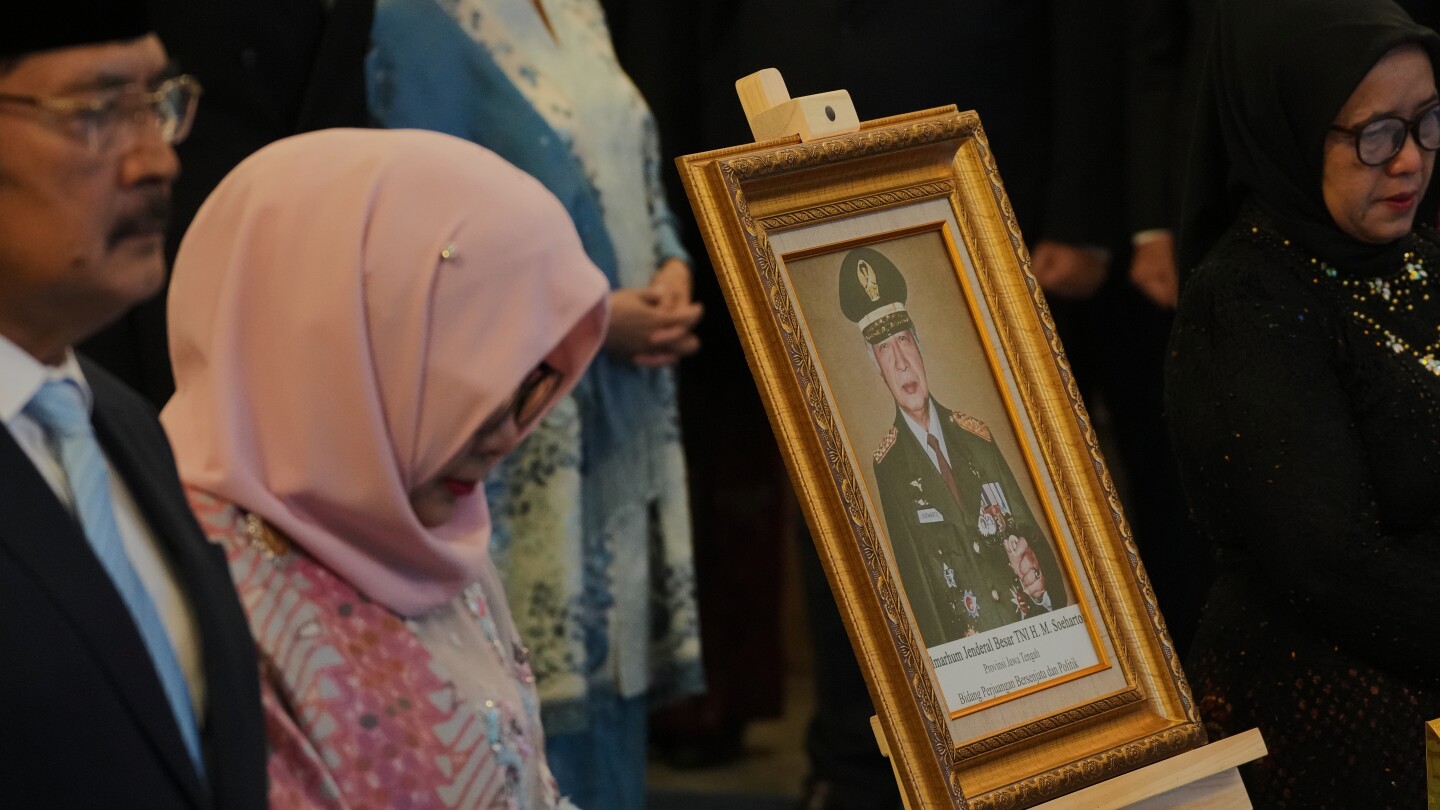
Indonesia declares late dictator Suharto a national hero, despite outrage from rights groups
Indonesia’s recent declaration of former dictator Suharto as a national hero has ignited widespread controversy and condemnation. The decision, announced by President Prabowo Subianto during a televised ceremony on National Hero Day, has been criticized by human rights groups as an attempt to whitewash the severe abuses and corruption that marked Suharto’s 32-year authoritarian rule. Suharto, a Cold War ally of the U.S., was ousted in 1998 following mass protests amid the Asian financial crisis. His regime is accused of orchestrating the deaths of up to a million political opponents, including the mass killings of alleged communists in 1965-1966 and atrocities in regions like East Timor, Aceh, and Papua. Minister of Culture Fadli Zon defended the honor, citing Suharto’s role in Indonesia’s independence struggle and his economic achievements, while dismissing allegations of human rights violations as unproven. Survivors of Suharto’s regime, such as Bedjo Untung, who endured imprisonment and torture, expressed outrage, calling the decision deeply unjust. Critics argue that the move undermines Indonesia’s commitment to transitional justice and the 1998 reform movement. The debate highlights the nation’s struggle to reconcile its past with its aspirations for justice and democracy.
-

China’s Labubu ‘la-wins’ another global accolade
Labubu, the whimsical forest monster toy from Chinese toy maker Pop Mart, has been crowned China’s most recognizable and influential pop culture intellectual property (IP) in a newly released report. The accolade was announced at the World Internet Conference Wuzhen Summit in Zhejiang province, where the Academy of Contemporary China and World Studies unveiled its annual assessment of Chinese cultural IPs’ global impact. Labubu outperformed blockbuster films like *Dead To Rights* and *Ne Zha 2*, which secured second and third places, respectively. The report, which analyzed data from over 4,000 global media outlets, social platforms, and AI models like DeepSeek and ChatGPT, highlighted the growing resonance of Chinese cultural symbols worldwide. Li Yafang, head of the academy, emphasized that these IPs no longer aim to ‘preach’ but instead use high-quality products and compelling narratives to foster global understanding of China. Experts attribute Labubu’s success to its ‘cute, odd yet healing’ design and the thrill of blind-box purchases, which resonate deeply with young audiences. Meanwhile, films like *Ne Zha 2* and *Dead To Rights* have captivated international audiences by blending universal themes with Chinese cultural roots. The report also identified Chengdu’s World Games, Chongqing’s ‘cyber city’ image, and the Shanghai Cooperation Organization Summit in Tianjin as top local-culture hotspots with international influence. These findings underscore China’s evolving cultural footprint on the global stage.
-
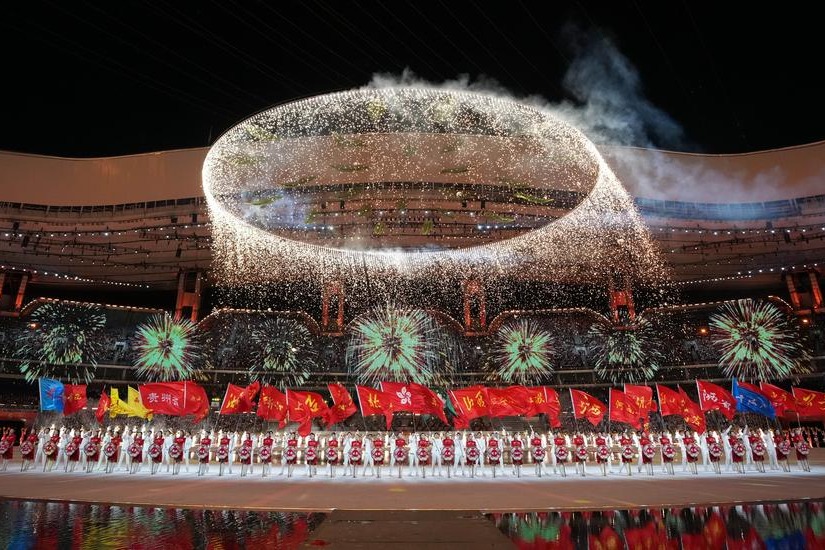
Xi Focus: Xi leads China’s drive for building sports powerhouse
In a resounding declaration at the opening ceremony of China’s 15th National Games in Guangzhou, President Xi Jinping underscored his unwavering commitment to transforming China into a global sports powerhouse. This marked his fourth consecutive appearance at the nation’s premier multi-sport event, reflecting his deep personal and national dedication to sports and public fitness. Xi, a sports enthusiast himself, emphasized the symbiotic relationship between sports and national prosperity, stating, ‘When sports thrive, China grows stronger; when the nation prospers, sports flourish in return.’ His vision extends beyond elite competition, advocating for mass participation in sports to enhance public health and well-being. Xi’s leadership has been instrumental in China’s successful hosting of major international events, including the 2008 Beijing Olympics, the 2022 Beijing Winter Olympics, and the Nanjing Youth Olympics. These events have showcased China’s modernization and openness to the world. Under Xi’s guidance, China has also made significant strides in competitive sports, consistently ranking among the top nations in Olympic medal tables. His focus on youth fitness and public sports infrastructure has led to the establishment of comprehensive policies aimed at fostering a healthier, more active population. Xi’s sports diplomacy has further strengthened China’s global ties, using sports as a bridge to foster international goodwill and cooperation. As China continues to rise as a sports powerhouse, Xi’s vision remains clear: to build a healthier, stronger nation and to promote unity and peace through the universal language of sports.
-
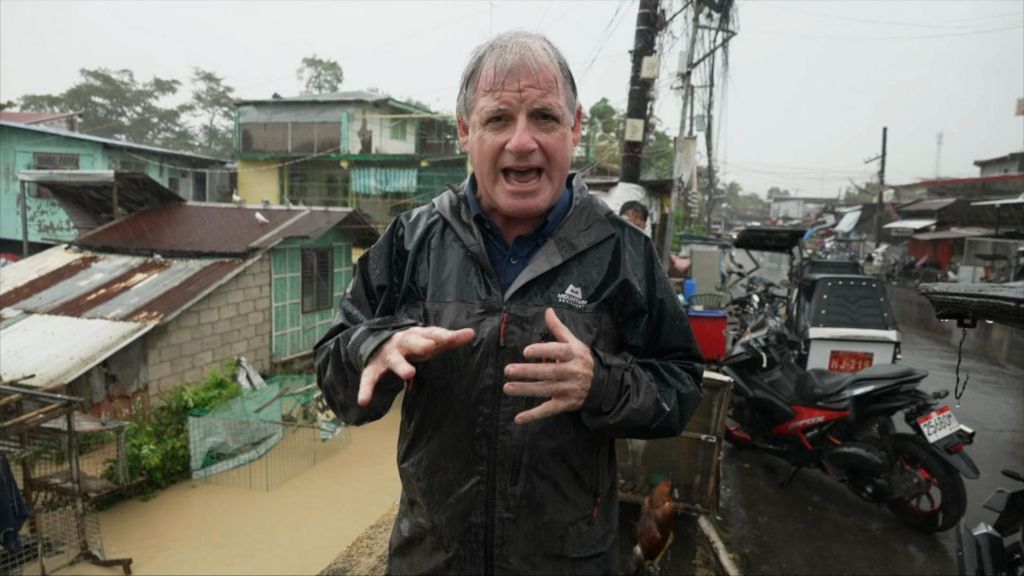
Philippines typhoon aftermath: ‘Water levels are rising fast’
As Typhoon Fung-wong moves across the South China Sea, its impact continues to be felt in the Philippines, where the storm has already claimed two lives. The typhoon, though weakened, has caused significant flooding, with water levels rising rapidly in affected areas. Local authorities are on high alert, urging residents to remain cautious and prepare for potential further damage. Emergency response teams are working tirelessly to provide aid and assess the extent of the devastation. The storm’s trajectory suggests it may still pose risks to coastal regions, even as it loses strength. The aftermath of Fung-wong highlights the ongoing challenges faced by the Philippines in coping with frequent and severe weather events, exacerbated by climate change.