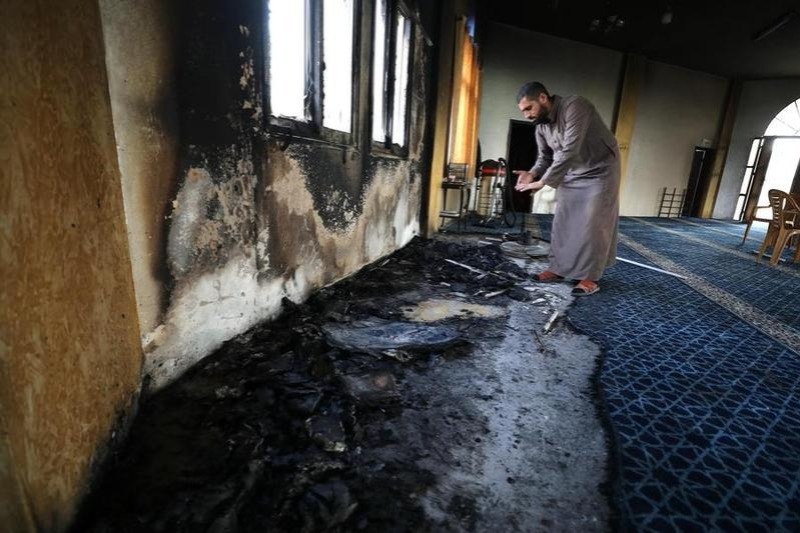
The international community, spearheaded by the United Nations, has vehemently condemned the recent arson attack on the Hajjah Hamidah mosque in the West Bank. This incident, which occurred in the early hours of Thursday, marks the latest in a series of escalating violent acts in the region. UN Secretary-General Antonio Guterres’ spokesman, Stephane Dujarric, expressed profound dismay at the actions of Israeli settlers responsible for the attack, labeling such assaults on places of worship as utterly unacceptable. The Palestinian Ministry of Foreign Affairs and Expatriates has accused the Israeli government of fostering a climate of impunity that encourages settler violence, aimed at displacing Palestinians and solidifying colonial occupation. Jordan has called for the international community to fulfill its legal and moral obligations to address these transgressions. Meanwhile, European nations, including Spain, Germany, and Switzerland, have urged Israel to halt the violence and ensure justice for the perpetrators. The intensifying unrest in the West Bank is increasingly seen as a threat to the fragile ceasefire brokered by the United States, with fears that such incidents could derail peace efforts in Gaza. Experts warn that the situation in Gaza, the West Bank, and East Jerusalem is interconnected, with violence in one area inevitably spilling over into others. The UN has also highlighted the challenges in scaling up humanitarian responses in Gaza as winter approaches, despite some progress in healthcare improvements.
标签: Asia
亚洲
-
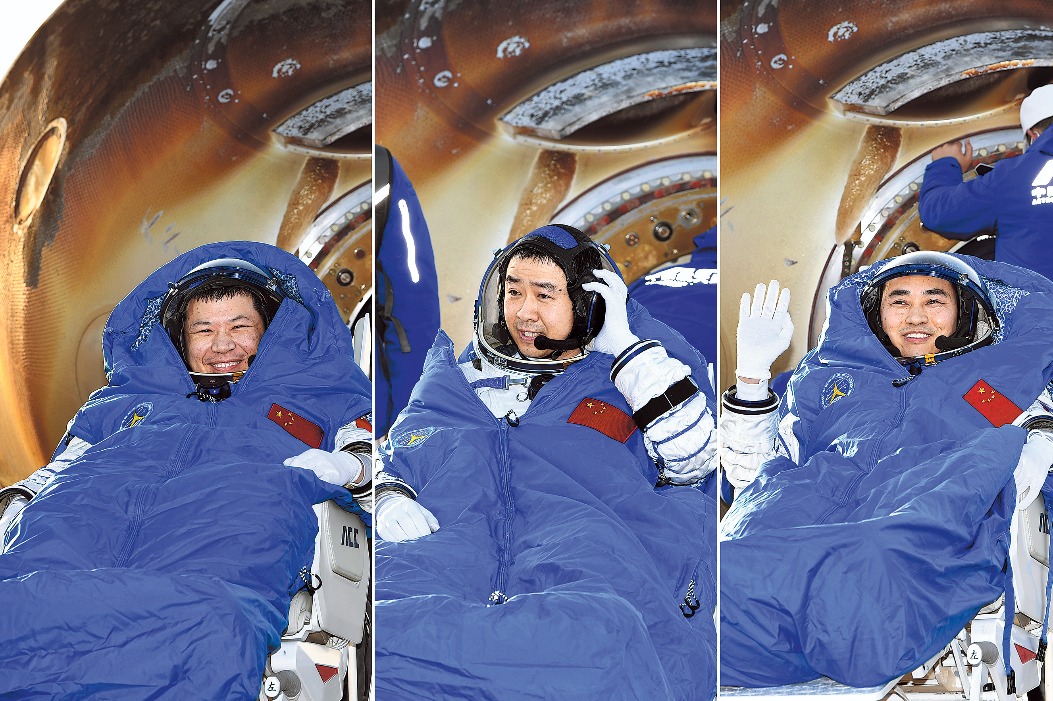
Crew of Shenzhou XX returns
The Shenzhou XX mission crew, consisting of Senior Colonel Chen Dong, Colonel Chen Zhongrui, and Colonel Wang Jie, successfully returned to Earth on Friday afternoon after an extended stay aboard the Tiangong space station. The astronauts landed at the Dongfeng Landing Site in Inner Mongolia at 4:40 pm, following a five-hour journey from space. Their return was delayed by nine days due to suspected space debris damage to the Shenzhou XX spaceship’s viewport window. Upon landing, ground recovery personnel from the Jiuquan Satellite Launch Center conducted safety checks and a preliminary health assessment before assisting the crew out of the capsule. The astronauts shared their experiences in a live broadcast with China Central Television, expressing pride in their mission and gratitude for the support that ensured their safe return. Chen Dong emphasized the challenges of space exploration, while Wang Jie highlighted the importance of continued dedication to this endeavor. The Shenzhou XX crew, representing China’s 15th manned spaceflight, spent 204 days in space, completing four spacewalks and numerous scientific tasks. Their return was rescheduled after engineers conducted thorough safety assessments, ultimately deciding to use the Shenzhou XXI spaceship’s reentry capsule for their journey back. The China Manned Space Agency announced plans to launch the Shenzhou XXII spaceship to dock with the Tiangong space station in the near future.
-

Sports fever sparks spike in tourism in Hong Kong
The 15th National Games, co-hosted by Hong Kong, Guangdong, and Macao from November 9 to 21, has ignited a tourism surge in the Hong Kong Special Administrative Region. The city is hosting elite sporting events, including basketball, track cycling, triathlon, and golf, drawing significant crowds and boosting local businesses. Industry insiders report a notable increase in hotel bookings, attraction visits, and sales of official merchandise since early November. Timothy Chui, executive director of the Travel Industry Council of Hong Kong, noted that citywide hotel occupancy reached approximately 70% by mid-November, marking a year-on-year rise. Christina Cheng, general manager of the Fullerton Ocean Park Hotel Hong Kong, highlighted that around 35% of their guests are from the Chinese mainland, expressing optimism that the tourism boost will extend beyond the event period. The Hong Kong Tourism Board estimates the games will attract over 100,000 additional visitors. Travel operators have expanded services to include transportation, non-competition itineraries, and centralized hotel reservations, with China Travel Service (Hong Kong) offering combo tickets linking events to local attractions. Secretary for Culture, Sports and Tourism Rosanna Law Shuk-pui emphasized the games’ role in deepening integration across the Greater Bay Area, with Guangdong agencies promoting multi-destination tours. Official merchandise, blending mascot designs with local cultural elements, has also seen brisk sales. Law underscored the broader economic impact, stating that the event activates the entire value chain, from staging and security to catering and retail, supporting thousands of jobs and showcasing Hong Kong’s tourism appeal through live broadcasts.
-
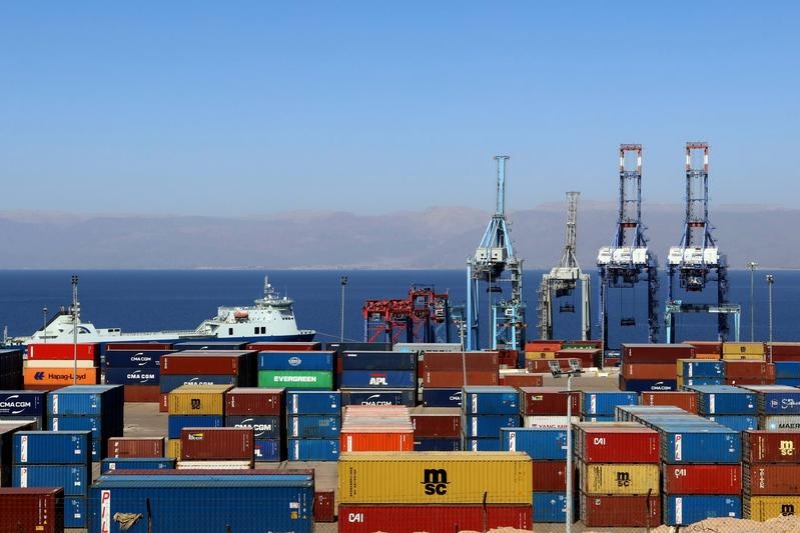
China tops trade partners in Gulf region
China has emerged as the Gulf region’s leading trading partner, surpassing Western nations for the first time in 2024, according to a report released by London-based think tank Asia House. The study reveals that trade between China and the six Gulf Cooperation Council (GCC) countries—Bahrain, Kuwait, Oman, Qatar, Saudi Arabia, and the United Arab Emirates—grew by 14.2% to reach $257 billion in 2024. This figure exceeds the combined trade volumes of the Gulf with the United States, the United Kingdom, and Eurozone countries, which declined by 4% to $256 billion during the same period. The report, titled *The Middle East Pivot to Asia*, forecasts that Gulf-China trade will expand further, reaching $375 billion by 2028, with the gap widening to $75 billion. Freddie Neve, the report’s author, emphasized that Gulf economies are deepening ties with Asia faster than with any other region amid global trade disruptions. Energy imports from the Gulf remain a cornerstone of this relationship, supported by long-term energy agreements and Gulf investments in China’s downstream refining and petrochemical sectors. The broader Gulf-Asia trade surged to $516 billion in 2024, marking a 14.4% increase and nearly doubling Gulf-West trade volumes. Asia House CEO Michael Lawrence noted that economic, diplomatic, and commercial ties have reached a pivotal inflection point. The report also highlights the growing integration of Gulf and Asian financial markets, increased cross-border capital flows, and the potential rise of renminbi-denominated trade, which could enhance the Gulf states’ geopolitical strategies and reduce trade costs.
-
Offices boost participation of public in shaping laws
In a significant move to democratize the legislative process, China has established 54 legislative outreach offices across the country, gathering over 66,000 public suggestions, with more than 3,500 incorporated into laws. These offices, initiated by the National People’s Congress (NPC) Standing Committee’s Legislative Affairs Commission, aim to bridge the gap between national legislation and the public, ensuring that laws reflect the people’s needs and concerns.
-
Leaked DIA warning of Chinese spying imperils Saudi F-35 purchase
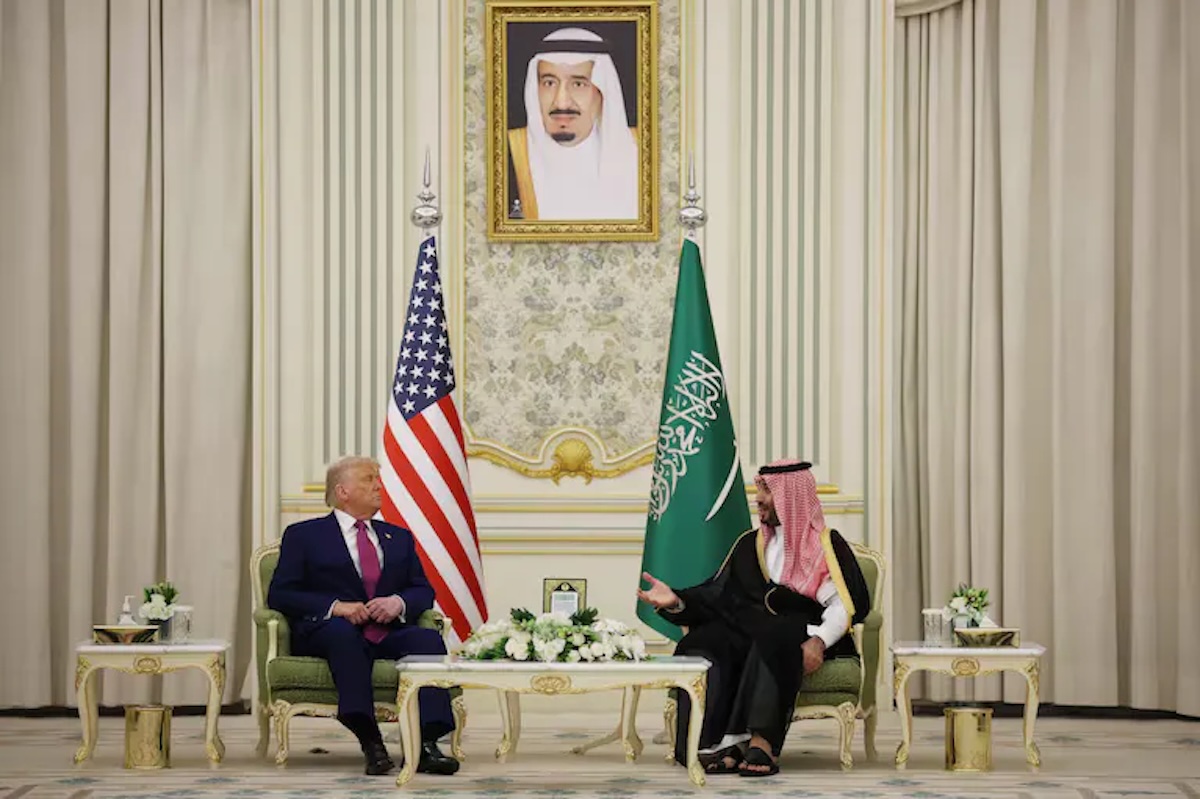
Saudi Crown Prince Mohammed Bin Sultan is set to visit Washington for pivotal discussions with US President Donald Trump, with a key focus on Saudi Arabia’s request for 48 advanced F-35 stealth fighter jets. This high-stakes deal, potentially worth billions, has ignited debates over regional power dynamics, technological security, and US-Israel relations. The Saudis, inspired by Israel’s effective use of F-35s in conflicts across Syria, Yemen, and Iran, seek to bolster their military arsenal. However, the Defense Intelligence Agency (DIA) has raised alarms, warning that the sale could lead to the leakage of critical F-35 technology to China, a concern exacerbated by Saudi Arabia’s existing defense ties with Beijing. The DIA’s classified report, leaked to the press, has stirred controversy within the Pentagon, particularly as it challenges Secretary of Defense Pete Hegseth’s stance on the deal. Meanwhile, Israel, the sole F-35 operator in the Middle East, views the potential sale as a threat to its Qualitative Military Edge (QME), a legal mandate ensuring its military superiority in the region. To address Israel’s concerns, the US may offer priority access to its Next Generation Air Dominance (NGAD) program, featuring the F-47 fighter jet. Additionally, Trump may push Saudi Arabia to join the Abraham Accords, a framework for Middle East peace. The deal’s fate remains uncertain, with Congress demanding detailed briefings from the DIA and growing opposition on Capitol Hill. Should the sale collapse, Saudi Arabia could turn to China or Russia for stealth jets, further complicating the geopolitical landscape.
-

South Africa hits back on second day of 1st test against India as hosts are 138-4 at lunch
In a gripping display of cricket, South Africa claimed three crucial wickets during the first session on the second day of the opening test against India at Kolkata’s iconic Eden Gardens. The hosts, struggling at 138-4, faced further setbacks as captain Shubman Gill retired hurt due to a neck injury. India still trails by 21 runs after South Africa was dismissed for 159 in their first innings, thanks to Jasprit Bumrah’s impressive 5-27 spell on Day 1. Ravindra Jadeja (11 not out) and Dhruv Jurel (5) held the crease at lunch, but India’s batting woes deepened. K.L. Rahul and Washington Sundar initially steadied the innings, adding 38 runs in 14 overs, but South Africa’s bowlers struck back after the drinks break. Sundar fell to Simon Harmer, caught at slip after scoring 29, while Rahul was dismissed by Keshav Maharaj for 39. Rishabh Pant’s aggressive 27 off 24 balls provided a brief spark, but India’s struggles on a challenging pitch continue. South Africa, seeking their first test win in India in 15 years, will aim to capitalize on their momentum. The second test begins on November 22 in Guwahati, marking the first men’s test at the Barsapara Stadium.
-

‘Devastated’: Previously protected Syrians in US face upheaval as legal protections lift
More than 6,000 Syrians in the United States are bracing for an uncertain future as the Department of Homeland Security (DHS) terminates their Temporary Protected Status (TPS), effective Friday. The decision, announced in September, will strip these individuals of their legal right to reside and work in the country, leaving them vulnerable to detention and deportation. Among those affected is Dahlia Doe*, a Syrian national who has lived in the US for a decade. Dahlia, who arrived as a student from a Middle Eastern country where she lacked citizenship, now faces the stark choice of deportation to Syria—a country she has never lived in—or fighting to remain in the US, where she has built a life with family and friends. She is one of seven plaintiffs in a lawsuit challenging the termination of TPS for Syrians, which was heard in the United States District Court for the Southern District of New York on Monday. The judge is expected to rule before the policy takes effect on Friday. TPS, established in 2012 following the outbreak of civil war in Syria, provides temporary legal status to nationals from countries deemed unsafe due to conflict or natural disasters. However, it does not offer a pathway to permanent residency. In a September press release, DHS Assistant Secretary Tricia McLaughlin defended the decision, stating that conditions in Syria no longer prevent nationals from returning home. She described the move as ‘restoring sanity to America’s immigration system.’ Critics, however, argue that Syria remains unstable, with cities in ruins and ongoing armed conflict. Farrah Alkhorfan, co-founder of Immigrants Act Now, warned that ending TPS for Syrians would endanger their lives. The termination of TPS is part of a broader effort by the current administration to revoke the status for nationals from several countries, including Afghanistan, Cameroon, Honduras, Nepal, Nicaragua, and Venezuela. For Dahlia and others like her, the decision has brought immense stress and uncertainty. She now struggles to sleep, worrying about her future and the care of her parents, who are permanent US residents. ‘You have to attempt to live a normal life while going through a devastating instability, not knowing what might happen tomorrow,’ she said. The lawsuit, represented by Muslim Advocates, the International Refugee Assistance Project, and Van Der Hout LLP, seeks to halt the termination of TPS for Syrians, arguing that it is inhumane and unjust. As the clock ticks down, the affected individuals and their communities await the court’s decision, hoping for a reprieve from the looming threat of deportation.
-
At least 8 killed in huge blast at a police station in Indian-controlled Kashmir
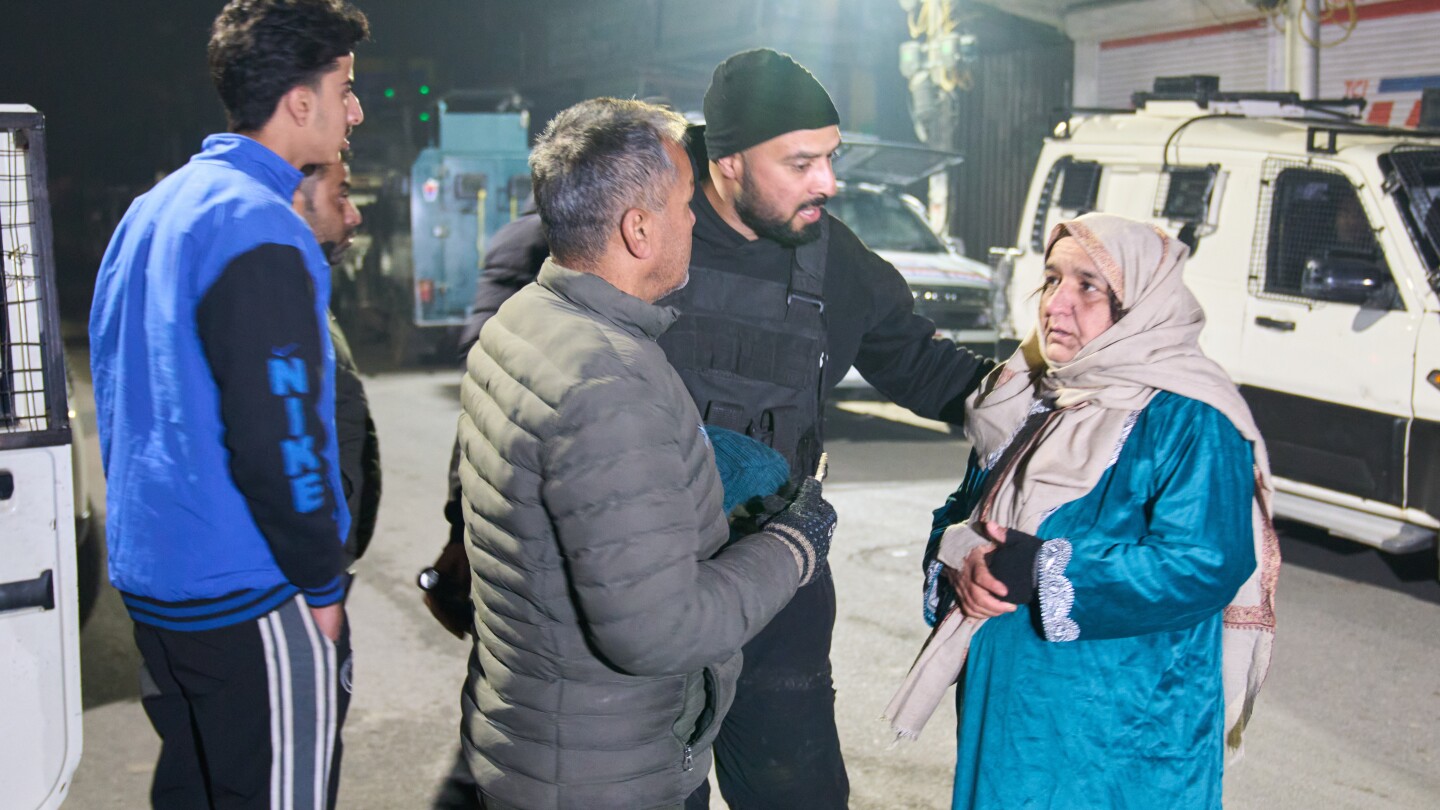
A devastating explosion at a police station in Srinagar, the main city of Indian-administered Kashmir, has resulted in at least eight fatalities and 27 injuries, according to authorities. The incident occurred late Friday in the Nowgam area when forensic experts and police officers were examining a cache of confiscated explosives. The powerful blast destroyed the police station, ignited fires across the compound, and damaged multiple vehicles. Rescue efforts were hampered by subsequent smaller explosions, delaying the bomb disposal squad’s response. Most of the victims were police and forensic personnel, with several injured individuals reported to be in critical condition. This tragedy follows a car explosion in New Delhi earlier in the week, which claimed eight lives and was labeled a terror attack by Indian officials. The Srinagar explosion is believed to be connected to an ongoing investigation into a suspected militant cell operating from Kashmir to the outskirts of New Delhi. Recent raids in Kashmir have led to arrests and the seizure of weapons and bomb-making materials. The explosive material involved in the police station blast was reportedly part of the evidence collected during these operations. The Kashmir region remains a contentious issue between India and Pakistan, with both nations claiming sovereignty over the territory. Militants in Indian-controlled Kashmir have been resisting New Delhi’s rule since 1989, with India accusing Pakistan of sponsoring terrorism, a claim Pakistan denies. Many Kashmiris view the conflict as a legitimate struggle for freedom.
-
German Baumkuchen ‘tree cake’ survived a disaster and world wars to become a Japanese favorite
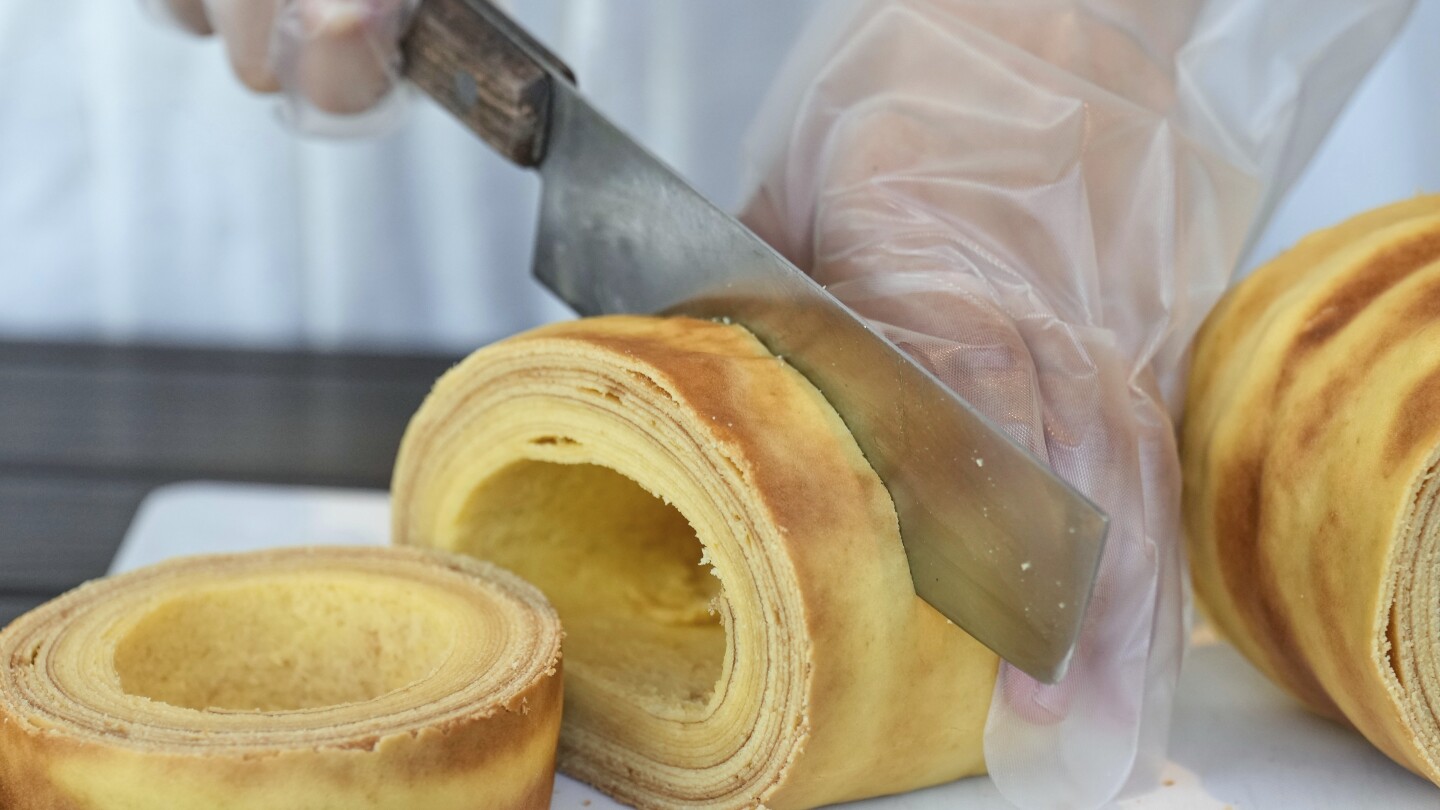
Baumkuchen, a traditional German cake, has found an unexpected home in Japan, where it has evolved into a symbol of longevity and prosperity. This culinary journey began over a century ago on the small island of Ninoshima, near Hiroshima, where Karl Juchheim, a German prisoner of war, first introduced the treat during World War I. Today, Baumkuchen is celebrated across Japan, with festivals dedicated to the cake and various Japanese adaptations, such as those incorporating matcha and sweet potatoes, becoming popular gifts for weddings and birthdays. The cake is widely available, from luxury department stores to convenience stores, reflecting its deep integration into Japanese culture. However, the origins of Baumkuchen in Japan are intertwined with the island’s wartime history. Ninoshima served as a quarantine station during Japan’s militarist expansion and later as a treatment center for victims of the Hiroshima atomic bombing. Juchheim’s resilience and dedication to his craft, despite the devastation of war, left a lasting legacy. His story, as told by Kazuaki Otani of the Juccheim Ninoshima Welcome Center, serves as a poignant reminder of the human desire for peace and the power of cultural exchange. Visitors to Ninoshima can now participate in Baumkuchen-making activities while learning about the island’s historical significance. Juchheim’s journey from prisoner to confectionery pioneer highlights the enduring impact of his work, which continues to bring joy and reflection to people across Japan.