
The recent state visit by Thailand’s King Maha Vajiralongkorn and Queen Suthida to China has marked a historic milestone in Sino-Thai relations, according to Chinese Ambassador to Thailand Zhang Jianwei. This visit, the first of its kind since the establishment of diplomatic ties between the two nations, underscores the deepening bilateral relationship and sets a robust foundation for future collaboration. During their five-day visit, the royal couple explored key institutions in Beijing, including the China Academy of Space Technology and the Beijing Aerospace City, where they engaged with cutting-edge advancements in space technology and held a groundbreaking conversation with Chinese astronauts aboard the Tiangong space station. Ambassador Zhang emphasized that this visit highlights the significant priority Thailand places on strengthening ties with China. Both nations have committed to expanding cooperation across various sectors, including the Belt and Road Initiative, digital economy, green industry, and agricultural trade. The visit has also sparked renewed enthusiasm for cultural and people-to-people exchanges, fostering mutual understanding and trust. As the two countries celebrate the 50th anniversary of their diplomatic relations, China and Thailand are poised to chart a new chapter in their partnership, aiming for a shared future of prosperity and peace.
标签: Asia
亚洲
-
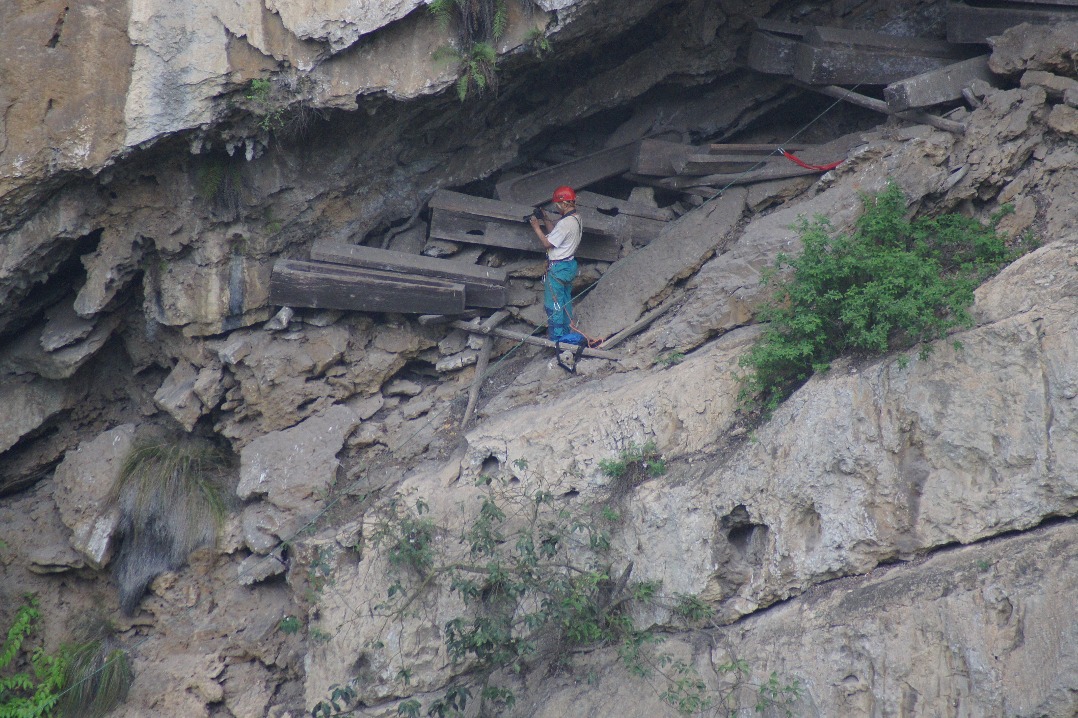
Genomic study links China’s ancient hanging coffins to modern community
A groundbreaking study led by Chinese researchers has established a genetic connection between the ancient practitioners of the hanging coffin tradition and a modern community in Southwest China. Published in the prestigious journal Nature Communications, the research marks the first time a direct genetic link has been confirmed at the nuclear genome level between these ancient individuals and their contemporary descendants. The study was conducted by the Kunming Institute of Zoology (KIZ) under the Chinese Academy of Sciences, based in Yunnan province. The hanging coffin custom, practiced for approximately 3,000 years across southern China, Southeast Asia, and the Pacific, involves placing coffins on cliffs, in caves, or rock crevices along rivers and steep mountainsides. This tradition has long been associated with the ancient Bo people, who inhabited southwest China but largely disappeared from historical records by the end of the Ming Dynasty (1368-1644). The research team identified a modern Bo community in Yunnan with similar cultural traits and conducted whole-genome sequencing on 30 of its members. They also analyzed nuclear DNA from human remains of 15 hanging-coffin individuals found in Yunnan, Guangxi Zhuang Autonomous Region, and northern Thailand. The findings revealed that 43 to 79 percent of the genomic components of modern Bo individuals can be traced directly to the hanging-coffin population from the Zhaotong site in Yunnan. Further analyses indicated a shared ancestry among hanging coffin remains in China and Thailand, suggesting a diffusion route for the culture that originated in Fujian province, East China, and spread to the Yunnan-Guizhou Plateau and Southeast Asia through human migration. The study also highlighted cultural inclusivity during the Tang Dynasty (618-907), with two genetically distinct individuals buried 1,200 years ago in Zhaotong sharing the same hanging-coffin custom. These individuals were linked to ancient farmers from the Yellow River Basin and Northeast Asia, respectively. The research team plans to expand their systematic sampling across South China and Southeast Asia to build a comprehensive database integrating burial practices, population genetics, and cultural transmission.
-

4 cheques to 12 instalments: Monthly rent payments trend in UAE
The United Arab Emirates (UAE) is witnessing a transformative shift in its rental market, as tenants increasingly demand flexible payment options and landlords embrace digital solutions. Traditionally, rent payments in the UAE have been made through post-dated cheques, often requiring large upfront sums. However, a growing trend toward monthly instalments is reshaping the landscape, driven by tenant preferences and technological advancements. Platforms like Keyper and Takeem are at the forefront of this change, offering tenants the ability to spread their annual rent across 12 monthly payments. Property Finder’s recent partnership with Keyper, set to launch in 2026, integrates this option directly into its app and website, allowing payments via card or direct debit. While traditional cheque-based contracts remain available, the convenience of digital payments is gaining traction, enabling tenants to better manage their finances. Landlords, too, benefit from reduced defaults and faster occupancy rates. Although some tenants may incur a convenience fee for monthly payments, the overall shift is seen as a win-win for all parties involved. This evolution reflects a broader move toward modernizing the rental process in the UAE, with significant implications for the real estate sector.
-

Hamas says ‘committed’ to Gaza truce
In a critical meeting with Egypt’s intelligence chief in Cairo, Hamas leadership has formally reaffirmed its commitment to implementing the initial phase of the Gaza ceasefire agreement. This diplomatic engagement occurred against a backdrop of escalating violence that threatens to derail the fragile truce brokered last month.
The Palestinian militant group emphasized the urgent need for establishing transparent monitoring mechanisms to document violations and ensure immediate corrective actions. The discussions specifically addressed the complex situation of Hamas fighters positioned within tunnel networks in Israeli-controlled sectors of Rafah, alongside detailed negotiations regarding the second phase of the peace agreement.
Despite the ceasefire officially taking effect on October 10, both conflicting parties have exchanged accusations of violations. Recent Israeli airstrikes across the Gaza Strip resulted in at least 24 Palestinian fatalities, including children, according to local reports. Israel maintains these operations targeted and eliminated five senior Hamas operatives.
The United Nations has intensified its calls for upholding the peace agreement, with Secretary-General Antonio Guterres emphasizing during the G20 summit in Johannesburg that ‘We need peace in Gaza: By upholding the ceasefire and fully implementing the commitments of the peace agreement.’
From an international legal perspective, Hadi Rahmat Purnama, Assistant Professor of International Law at Universitas Indonesia, clarified that ceasefires can be either voluntary or imposed through UN Security Council resolutions under Chapter VII of the UN Charter. He noted that violation of an agreed truce enables resumption of hostilities without constituting perfidy, provided proper warning is given according to the agreement’s terms.
Tragically, UNICEF reports indicate at least 67 children have lost their lives in conflict-related incidents since the ceasefire began, maintaining an alarming average of two daily fatalities. World Health Organization representative Richard Peeperkorn confirmed that ‘although there’s a ceasefire, people still get killed’ in the devastated enclave.
-
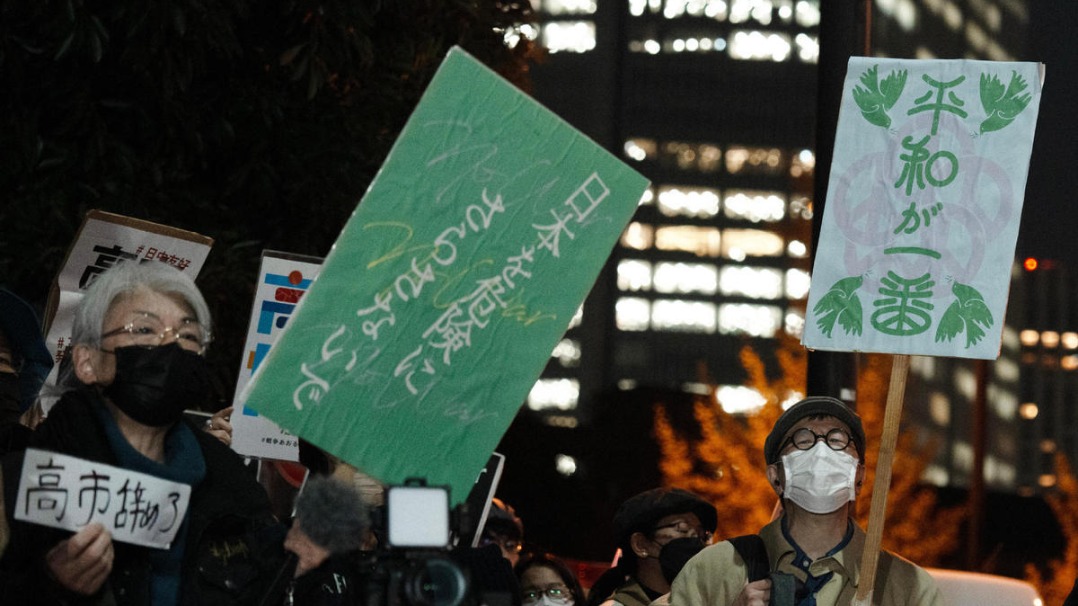
Japan PM’s Taiwan remarks draw ire
Japanese Prime Minister Sanae Takaichi’s recent remarks suggesting potential military intervention in the Taiwan Strait have ignited widespread condemnation and economic repercussions. Speaking in parliament earlier this month, Takaichi labeled any Chinese military action against Taiwan as a ‘survival-threatening situation’ for Japan, marking the first time a Japanese leader has publicly entertained such a possibility. Her comments, made during the 80th anniversary of the end of World War II, have drawn sharp criticism from U.S. peace activists and Chinese officials alike. Julie Tang, co-founder of Pivot to Peace and a retired judge, accused Takaichi of reviving militarism and fascism, stating, ‘She’s clearly not ready for the world stage.’ The backlash has already impacted Japan’s tourism sector, with major Chinese airlines offering full refunds for flights to Japan following Beijing’s advisory against travel to the country. Chinese tourists, a vital component of Japan’s tourism economy, have been urged to reconsider their plans. Economically, Japan is already grappling with a 1.8% contraction in third-quarter GDP and a staggering debt-to-GDP ratio of 230-260%, raising questions about the feasibility of Takaichi’s stance. Retired judge Lillian Sing, co-founder of the ‘Comfort Women’ Justice Coalition, criticized Takaichi’s judgment, noting Japan’s weak economic position and declining population. China’s permanent representative to the UN, Fu Cong, emphasized that any Japanese military involvement in the Taiwan Strait would be deemed an act of aggression. The timing of Takaichi’s remarks, coinciding with the 80th anniversary of the end of World War II, has intensified the backlash, with critics accusing her of ignorance about Japan’s wartime history and its implications for regional stability.
-

Aerial view of China’s Huangyan Island in South China Sea
China Daily Information Co (CDIC) holds exclusive rights to all content published on its platform, including text, photos, and multimedia materials. Unauthorized reproduction or use of this content in any form is strictly prohibited without prior written consent from CDIC. The website recommends using browsers with a resolution of 1024*768 or higher for optimal viewing. Additionally, the site provides various services such as advertising opportunities, contact information, job offers, and expatriate employment resources. Users can also follow China Daily through its social media channels for updates and news.
-
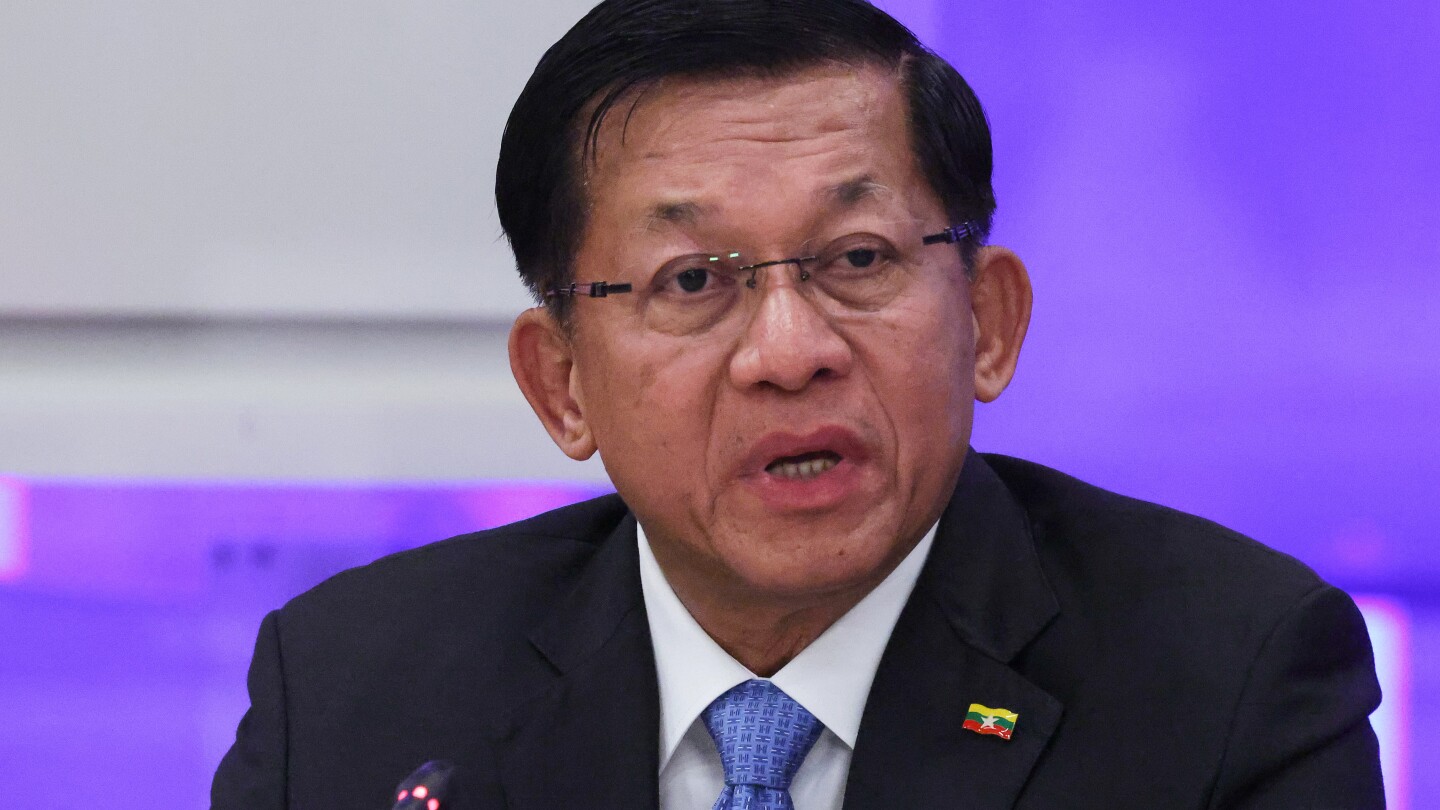
Rights groups slam Trump administration for ending Myanmar deportation protection as civil war rages
The Trump administration’s decision to revoke Temporary Protected Status (TPS) for Myanmar citizens has drawn sharp criticism from human rights groups, who argue that the move disregards the ongoing civil war and widespread human rights abuses in the country. Homeland Security Secretary Kristi Noem justified the decision by citing Myanmar’s “notable progress in governance and stability,” including plans for “free and fair elections” and “successful ceasefire agreements.” However, critics have dismissed these claims as baseless, given the military junta’s brutal crackdown on dissent and the imprisonment of democratically-elected leader Aung San Suu Kyi. Phil Robertson of Asia Human Rights and Labor Advocates likened the decision to Noem’s infamous act of shooting her family’s dog, stating that it would send Myanmar citizens back to “prisons, brutal torture, and death.” The military, led by Senior Gen. Min Aung Hlaing, seized power in 2021 and has since been accused of war crimes, including the indiscriminate use of landmines, targeting of civilians, and forced conscription. The upcoming elections, which exclude Suu Kyi’s party, have been widely condemned as a sham. The National Unity Government (NUG), formed by ousted lawmakers, expressed dismay at the decision, emphasizing that the reasons for revoking TPS do not reflect the dire reality in Myanmar. The State Department’s own human rights report and travel advisory highlight the country’s ongoing violence and instability, further undermining Noem’s claims. Human Rights Watch’s John Sifton called the decision “egregious,” noting that it could affect up to 4,000 people and is based on assertions contradicted by extensive reporting.
-

Fact box: The development of the under-forest economy in China
China’s under-forest economy is emerging as a significant driver of sustainable development and rural prosperity. According to the National Forestry and Grassland Administration, the country boasts a forest area of 231 million hectares, with economic forests covering approximately 46.67 million hectares. These forests contribute an impressive output value of around 2.2 trillion yuan ($309.43 billion). The under-forest economy, which utilizes over 40 million hectares of land, encompasses diverse industrial models such as under-forest planting, farming, product collection and processing, and forest landscape utilization. This sector employs approximately 34 million people and supports 950,000 business entities, generating an annual output value exceeding 1 trillion yuan. Notably, 14 provincial-level regions have dedicated over 1.33 million hectares to under-forest economic activities, with nine regions reporting an output value surpassing 50 billion yuan. The under-forest economy offers a unique advantage by not competing with agricultural land used for grain and other crops, thus creating new income opportunities for farmers. It also provides a sustainable pathway for achieving green development and wealth creation. The significance of this sector is underscored in the recommendations for the 15th Five-Year Plan (2026-30), adopted at the fourth plenary session of the 20th Central Committee of the Communist Party of China in October. The plan highlights the under-forest economy and forestry industries as key ‘green engines’ that can drive rural vitalization and advance the goal of common prosperity.
-
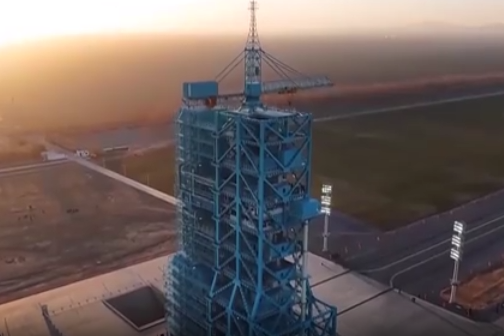
Spacecraft to launch with full cargo load
China is gearing up for the launch of the unmanned Shenzhou XXII spacecraft on Tuesday from the Jiuquan Satellite Launch Center in Northwest China, as announced by the China Manned Space Agency. The agency confirmed that the propellant injection for the Long March 2F carrier rocket, which will propel the spacecraft, has been successfully completed. The Shenzhou XXI crew aboard the Tiangong space station remains in good health, according to the agency’s statement released on Monday afternoon. Zhou Yaqiang, from the agency’s general technical bureau, revealed that Shenzhou XXII will be fully loaded with cargo, including essential provisions for astronauts and equipment necessary for the operations of the Tiangong space station. Originally slated to transport the Shenzhou XXII crew to Tiangong in April 2026, the spacecraft’s mission was adjusted due to the discovery of tiny cracks on the viewport window of the Shenzhou XX return capsule, likely caused by space debris. This rendered the capsule unsafe for use, prompting the need for Shenzhou XXII as a standby crew ship. The Shenzhou XX astronauts, who spent a record-breaking 204 days in orbit, returned safely to Earth on November 14 using the Shenzhou XXI spacecraft, nine days later than planned. Their successful return was facilitated by preplanned contingency measures, including the maintenance of a backup rocket and crew spacecraft, ensuring a rapid response in case of in-orbit emergencies.
-

Innovation crucial to agri development
China is intensifying its efforts to achieve comprehensive agricultural and rural modernization during the 15th Five-Year Plan (2026-30), addressing critical issues such as self-reliance, sustainability, and food security. The nation’s strategy emphasizes technological innovation, mechanization, and infrastructure development to transform the agricultural sector while reducing urban-rural disparities in public services, income, and governance.