
Beijing has solidified its position as the global frontrunner in the preservation of crop germplasm resources, as announced by the municipal government on Wednesday. The city boasts a germplasm bank housing an impressive 2.144 million accessions, encompassing the most diverse array of crop species worldwide. This achievement is bolstered by the presence of 29 seed enterprises designated as key national players, the highest number in China, and the annual registration of numerous new crop varieties. The Beijing Seed Ordinance, aimed at establishing the city as a ‘seed capital,’ underpins these accomplishments. Technological advancements have played a crucial role, with innovations such as AI-based plant protection models making their debut at the UN Food and Agriculture Organization. The agricultural technology contribution rate in Beijing has reached 75 percent, driven by breakthroughs in molecular breeding and other core technologies. Looking ahead, Beijing plans to intensify its efforts to enhance the seed industry over the next five years, focusing on technology-driven and reform-oriented development, according to a government official.
标签: Asia
亚洲
-

Inspired strokes
The 2025 Community of Shared Future for Humanity International Comic and Illustration Exhibition, a groundbreaking online event, recently concluded, highlighting the transformative role of technology in daily life and fostering cross-cultural connections. Organized collaboratively by China Daily and the Bank of China in Beijing, the exhibition attracted artists from 58 countries and regions, who submitted nearly 3,100 pieces, with over 1,200 entries originating from outside China. The multilingual platform ensured inclusivity and encouraged global dialogue, showcasing the boundless creativity and insight of humanity. This year, the exhibition introduced the Youth Excellence Award, which received over 600 submissions from young artists. Their works, brimming with imagination and innocence, demonstrated remarkable creativity and hope, even if their techniques were less refined compared to adult participants. The event underscored the power of art to transcend boundaries and unite diverse cultures. A selection of award-winning works is featured in this report, offering a glimpse into the vibrant and thought-provoking contributions of global artists.
-

Visa waiver policies drive inbound travel surge
China’s strategic implementation of visa waiver policies has catalyzed a remarkable upswing in international travel, fostering deeper global connections and cultural exchanges. As of November 2025, Beijing’s ports have processed 19.35 million inbound and outbound travelers, reflecting an 18% year-on-year increase. Notably, foreign nationals accounted for 5.78 million of these movements, a staggering 35% rise, with 60% benefiting from visa exemption or temporary entry permits. This trend is mirrored across the nation. In Xiamen, Fujian province, passenger numbers exceeded 5.4 million, including a record-breaking 960,000 foreign nationals. Inland cities like Datong, Shanxi province, have also seen unprecedented growth, with annual passenger volumes surpassing 50,000, supported by new international air routes to Moscow and Seoul. Shen Wenjuan, head of the Gaoqi frontier inspection station, highlighted the role of innovative travel models such as ‘visa-free + cruise’ packages in driving this growth. Additionally, the introduction of an online arrival card system on November 20 has streamlined the entry process, allowing travelers to complete formalities before departure and present a QR code for swift clearance. Marcia Raquel, a Portuguese traveler at Beijing Daxing International Airport, praised the system’s efficiency. Since December 2023, China has progressively expanded its unilateral visa-free entry trials, initially for six countries, to now include 48 nations and establish mutual visa exemption agreements with 29 countries. Furthermore, the addition of 10 airports to the 24-hour direct transit ports list since November 5 has enhanced international connectivity, with 65 entry ports now offering 240-hour visa-free transit. These measures have significantly reshaped China’s global interactions, as evidenced by the National Immigration Administration’s report of 178 million inbound and outbound passenger trips in the third quarter of 2025, with Chinese mainland residents accounting for 89.37 million. This vibrant two-way flow underscores the success of China’s visa facilitation initiatives.
-
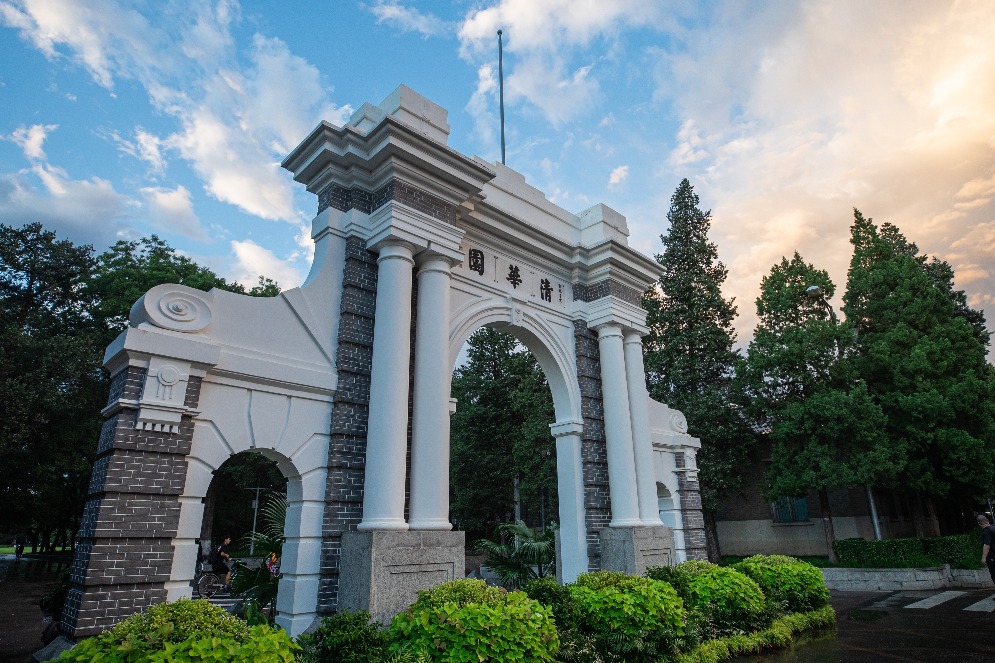
Tsinghua unveils framework for AI use in education
Tsinghua University has launched a pioneering framework to regulate the use of artificial intelligence (AI) in education, setting clear boundaries to prevent misuse while fostering innovation. The guidelines, developed after extensive research and consultation, emphasize that AI should serve as a supplementary tool rather than a replacement for human intellectual effort. Graduate students are explicitly warned against using AI for ghostwriting, plagiarism, or fabrication, with supervisors tasked to ensure academic integrity and originality. The framework mandates transparent disclosure of AI use and prohibits the incorporation of sensitive or unauthorized data in AI models. It also highlights the importance of critical thinking and multisource verification to counteract overreliance on AI. Instructors are encouraged to integrate AI into teaching materials responsibly, guiding students to develop essential competencies. The guidelines support AI integration in over 390 courses across 10 disciplines, including AI learning companions and teaching assistants. Wang Shuaiguo, director of Tsinghua’s online education center, described the framework as a ‘living system’ designed to evolve alongside technological advancements. The initiative aims to balance innovation with ethical considerations, establishing ‘red lines’ for misconduct while promoting ‘green lights’ for responsible experimentation. ‘We hope this will not become a document that restricts innovation,’ Wang stated. ‘It should be a living system — one that continues to grow as the technology evolves.’
-
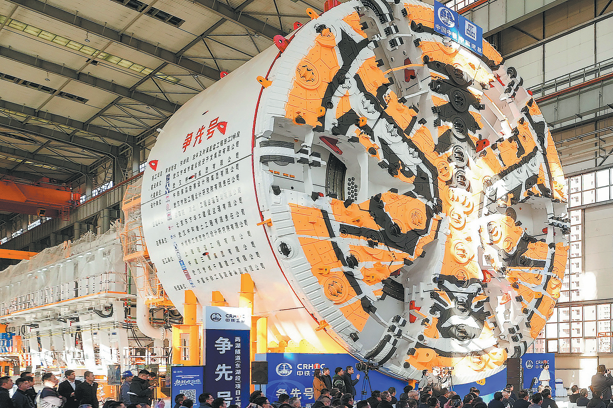
Henan sees big spurt in industrial manufacturing
Henan Province, a cornerstone of China’s industrial manufacturing sector, has demonstrated remarkable growth in 2025, particularly in specialized equipment production. Vice-Governor Li Tao highlighted this progress at a conference in Zhengzhou, the provincial capital, emphasizing the sector’s significant contributions to the region’s economic expansion. From January to October 2025, the value addition of Henan’s equipment manufacturing industry surged by 33.4% year-on-year, accounting for 13.1% of the total output from major industrial enterprises and contributing 1.7 percentage points to the province’s overall industrial growth. The event also marked the official contracting of two groundbreaking machines: the world’s largest diameter double-shield Tunnel Boring Machine (TBM) and the domestically produced largest diameter shield machine. Additionally, the ultra-large diameter slurry shield machine, Zhengxianhao, was unveiled. The double-shield TBM, with a 13.01-meter excavation diameter, will be deployed in the Yuexi Tunnel project on the Jinkouhe-Xichang Expressway in Sichuan Province, a pioneering initiative in China’s expressway engineering. Meanwhile, the domestically produced shield machine, boasting a 16.68-meter excavation diameter, will be utilized in the Hefei G4001 connecting line project under the Dongpu Reservoir in Anhui Province. Zhengxianhao, designed for the Wuhan Two Lakes Tunnel project, features a 15.09-meter excavation diameter and advanced capabilities for navigating complex geological conditions. The conference, hosted by China Railway High-tech Industry Co., also introduced the ‘Pioneer Industrial Manufacturing Large Model,’ a strategic initiative aligned with China’s digital and intelligent transformation goals. This model aims to enhance AI-driven services and support the intelligent evolution of manufacturing. Furthermore, the launch of the High-End Manufacturing Innovation Consortium underscores efforts to integrate resources and tackle technological challenges across the industrial chain. The event attracted nearly 200 participants, including government officials, industry experts, and enterprise representatives, solidifying Henan’s position as a leader in industrial innovation.
-

AI takes on rising role in healthcare
Artificial Intelligence (AI) is increasingly transforming the healthcare sector, driving efficiency and expanding resources in underserved areas. At Beijing Chest Hospital, radiologist Hou Dailun has observed remarkable improvements since the introduction of an AI system in 2020. The system assists in analyzing CT scans for lung nodules, processing hundreds of slices in seconds and providing precise data on size, shape, and density. This innovation has slashed the time required for analysis from over 20 minutes to mere seconds, enabling the department to interpret results for 600 patients daily. This advancement is part of China’s broader strategy to integrate AI into healthcare, as outlined in a recent guideline by the National Health Commission. The guideline aims to make AI-assisted diagnostic imaging widely available in secondary-level hospitals by 2030, emphasizing data quality, research, and development. AI is also being deployed at the grassroots level, such as at Beiqijia Community Health Service Center, where an online system tracks blood sugar levels for diabetic patients and offers dietary recommendations. Despite its benefits, AI remains an auxiliary tool, with human oversight essential to address its limitations and ensure patient safety. The future of AI in healthcare is promising, with potential to enhance diagnosis, treatment, and chronic disease management, while requiring robust regulation and collaboration across sectors.
-

Sydney taekwondo instructor who murdered family of three consumed by fantasies of Olympic glory
A Sydney-based taekwondo instructor, Kwang Kyung Yoo, 51, has pleaded guilty to the brutal murder of a 7-year-old student and his parents in February last year. The New South Wales Supreme Court heard on Thursday that Yoo, consumed by delusions of grandeur, had fabricated stories of Olympic glory, meetings with billionaires, and ownership of luxury cars to bolster his self-image. Forensic psychiatrist Andrew Ellis described these fabrications as “grandiose fantasies” aimed at masking his financial struggles and lack of social status. Yoo, who was behind on rent for his Lion’s Taekwondo and Martial Arts Academy, allegedly plotted the murders after becoming envious of the student’s father’s success and wealth. The court was told that Yoo strangled the mother and son at his academy, then drove to their home in the mother’s BMW, where he fatally stabbed the father. During the struggle, the father also stabbed Yoo, who later claimed he was attacked in a supermarket carpark. Police arrested him at the hospital the following day. Yoo expressed remorse to prison authorities, stating, “I feel shame, guilt, and sorrow.” His lawyer, Richard Wilson, argued against prosecutors’ claims that Yoo was driven by jealousy and hatred, suggesting envy was a factor but not the primary motivator. Yoo faces sentencing on December 16, with the maximum penalty for murder in New South Wales being life imprisonment.
-

Indonesia intensifies search for victims after floods and landslides kill 69 people
Rescue operations intensified across Indonesia’s Sumatra island Thursday as emergency teams battled challenging conditions to locate survivors of catastrophic monsoon-triggered flooding. The disaster has claimed at least 69 lives with 59 individuals still unaccounted for following torrential rains that submerged entire communities and triggered devastating landslides.
According to the National Disaster Management Agency, Tuesday’s extreme weather event caused rivers to overflow throughout North Sumatra province, sweeping away residents and submerging over 2,000 structures. The deluge forced nearly 5,000 inhabitants to evacuate to government-operated shelters as waters rapidly inundated mountainous villages.
Provincial police spokesperson Ferry Walintukan confirmed the rising death toll while highlighting significant operational challenges. ‘Mudslides, power outages, and compromised telecommunications infrastructure are severely hampering our search efforts,’ Walintukan stated, adding that the fatality count would likely increase as teams reach isolated areas.
The devastation extended across multiple regions with South Tapanuli district reporting 17 fatalities and Sibolga city documenting 8 deaths. In Central Tapanuli, landslide incidents claimed the lives of at least four family members, while Padang Sidempuan city reported one flood-related casualty.
Television footage captured rescue personnel employing jackhammers, industrial saws, and manual tools to dig through debris fields characterized by thick mud deposits, rock accumulations, and uprooted vegetation. Inflatable rescue boats navigated swollen rivers to evacuate stranded residents, including children and elderly individuals who had sought refuge on rooftops.
The crisis extended beyond North Sumatra with neighboring provinces reporting significant impacts. Central Aceh district recorded nine fatalities from Wednesday landslides, with district chief Halili Yoga requesting excavator equipment to recover at least two individuals buried under mud. The Aceh Disaster Mitigation Agency reported approximately 47,000 residents displaced by flooding, with 1,500 requiring emergency shelter.
West Sumatra province experienced particularly severe impacts with Padang Pariaman district documenting over 3,300 submerged homes and 12,000 evacuated residents. Rescue teams near Anai Valley Waterfall recovered seven bodies, including one child, from debris fields. In Agam district’s Malalak village, relief coordinator Hendri confirmed 10 fatalities with five residents still missing.
Survivor Lingga Sari described the terrifying moment floodwaters struck her community while she was attempting to soothe her restless infant. ‘A progressively intensifying rumbling sound preceded the sudden torrent that forced us to evacuate toward higher ground,’ she recounted.
Agam district chief Benny Warlis reported approximately 200 residents remain isolated in landslide-affected Jorong Taboh village, with all access routes completely blocked. ‘We face considerable difficulties verifying casualty data due to the complete isolation of this mountainous community,’ Warlis explained.
Indonesia’s geographical vulnerability to seasonal precipitation patterns between October and March regularly produces flooding and landslide incidents across its 17,000 islands, where significant populations reside in flood-prone valleys and mountainous terrain.
-
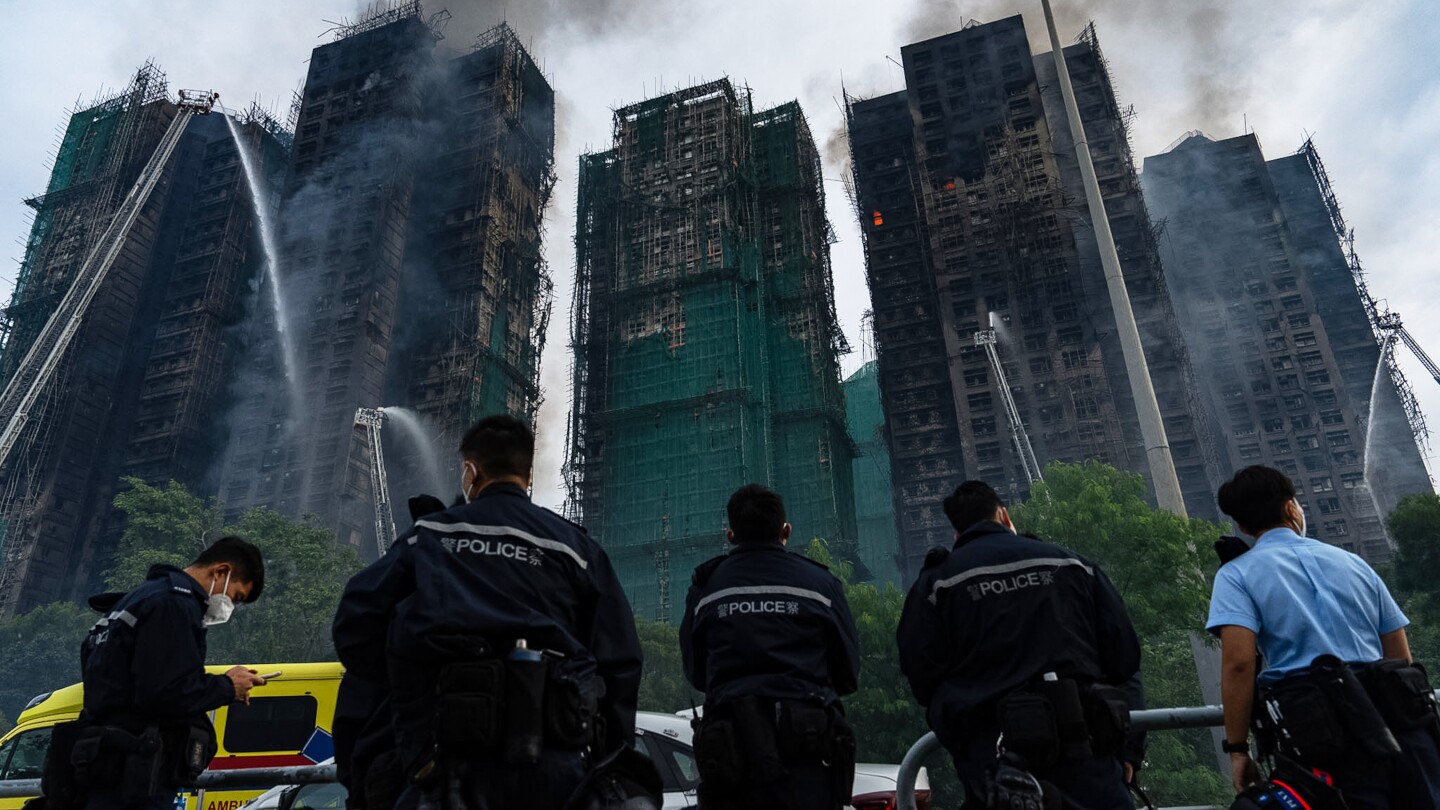
What to know about the apartment fire in Hong Kong
Hong Kong is grappling with its most devastating fire in nearly three decades, as flames continue to smolder in multiple apartment towers at Wang Fuk Court in Taipo. The blaze, which erupted on Wednesday, has claimed at least 55 lives and left dozens injured, with approximately 900 of the 4,800 residents evacuated to temporary shelters. Seven of the eight 32-story towers in the complex were engulfed in flames after construction materials and bamboo scaffolding caught fire. Extreme heat and high winds have severely hampered rescue efforts, making it the deadliest fire since 1996, when 41 people perished in a Kowloon commercial building fire. Authorities have arrested three individuals, including directors and an engineering consultant from Prestige Construction & Engineering Co., on suspicion of manslaughter. Investigations suggest that some materials, such as plastic foam panels, may not have met fire resistance standards. The buildings, constructed in the 1980s, lack modern fire safety features like smoke detectors and sprinkler systems, raising concerns about housing safety standards in Hong Kong. Chief Executive John Lee has announced the formation of a task force to investigate the disaster and inspect all housing estates undergoing major repairs. Survivors are receiving support in temporary shelters, with 17 of the 62 hospitalized victims in critical condition.
-
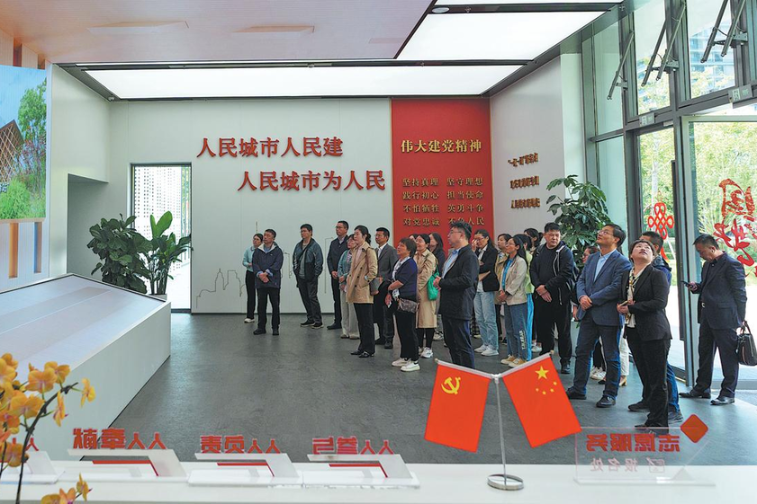
Party-mass service centers turn into ‘living rooms for all’
In Shanghai, Party-mass service centers have undergone a remarkable transformation, evolving from exclusive venues for Communist Party activities into inclusive community hubs. One such center, located in Xuhui district by the riverside, has become a bustling public space since its opening in 2021. Initially, the center’s signage was modest to avoid deterring non-Party members, but today, its prominent display reflects the public’s growing acceptance and appreciation. With over 2.6 million visits to date, including 1 million in the past year alone, the center has become a beloved destination for residents of all ages.
Xu Xinmin, a 69-year-old resident and veteran Party member, frequents the center daily for activities like calligraphy, singing, and sword dancing. He praises the center for fulfilling nearly all his needs and serving as a vital bridge between the Party and the public. Across Shanghai, similar Party-mass service facilities have emerged, offering a range of services such as community canteens, libraries, health services, senior care, and playrooms for children. These centers, once exclusive, now operate year-round, with some providing 24/7 access to essential amenities like restrooms and shower facilities for joggers.
Xia Rui, head of Party-mass service facilities in Xuhui district, emphasized the ‘people-centered’ design philosophy behind these spaces. The riverside center, spanning 2,000 square meters, operates from 7 am to 9 pm daily, with certain facilities available around the clock. Shanghai now boasts over 10,000 Party-mass service centers strategically located within 15-minute living circles, ensuring residents have easy access to essential services. This evolution aligns with President Xi Jinping’s vision of ‘people’s cities built by the people and for the people,’ fostering a stronger connection between the Party and the community.