标签: Asia

亚洲

  • ‘This was preventable’: Anger grows in Hong Kong as fire kills at least 94

    ‘This was preventable’: Anger grows in Hong Kong as fire kills at least 94

    Hong Kong is reeling from its most catastrophic fire in over six decades as a devastating blaze at Wang Fuk Court subsidized housing estate claimed at least 94 lives, with dozens more critically injured and nearly 300 residents still unaccounted for. The inferno, which raged for more than 24 hours across seven 31-story towers, has exposed critical safety failures and sparked widespread public fury.

    Authorities have identified substandard construction materials—including flammable mesh netting and plastic sheets installed during renovation—as primary factors in the rapid spread of flames. The tragedy has been labeled a ‘man-made disaster’ by outraged citizens, with three renovation supervisors already arrested on manslaughter charges and a corruption investigation underway.

    Resident testimonies reveal alarming safety oversights: fire alarms were deliberately disabled during construction to accommodate workers’ use of emergency exits, while residents repeatedly voiced concerns about workers smoking near combustible materials. Kiko Ma, a Canadian-based apartment owner, stated, ‘This was preventable… A lot of people did not do their duties,’ citing the use of poor-quality flammable materials by contractors.

    The 1980s-era complex housed approximately 4,600 residents, nearly 40% of whom were seniors aged 65 or older. Firefighters faced extreme challenges including intense heat, collapsing bamboo scaffolding, and cramped living spaces averaging just 14.1 square meters per household—characteristic of Hong Kong’s densely packed urban housing.

    In the aftermath, hundreds of survivors have been relocated to temporary shelters as emergency housing allocations proceed. The disaster has ignited scrutiny over systemic safety compromises, with residents revealing that earlier concerns about renovation costs and management transparency were systematically ignored. This incident follows a pattern of construction fires, including a recent bamboo scaffold fire in Hong Kong’s Central district, raising questions about institutional prioritization of cost efficiency over safety.

    In response, Hong Kong authorities have ordered immediate inspections of all major renovation projects, focusing on scaffolding safety and material compliance. The tragedy has become a catalyst for demanding accountability and reform in the city’s aging public housing infrastructure.

  • Palestine Action ban has made UK ‘international outlier’ warns UN rapporteurs, court told

    Palestine Action ban has made UK ‘international outlier’ warns UN rapporteurs, court told

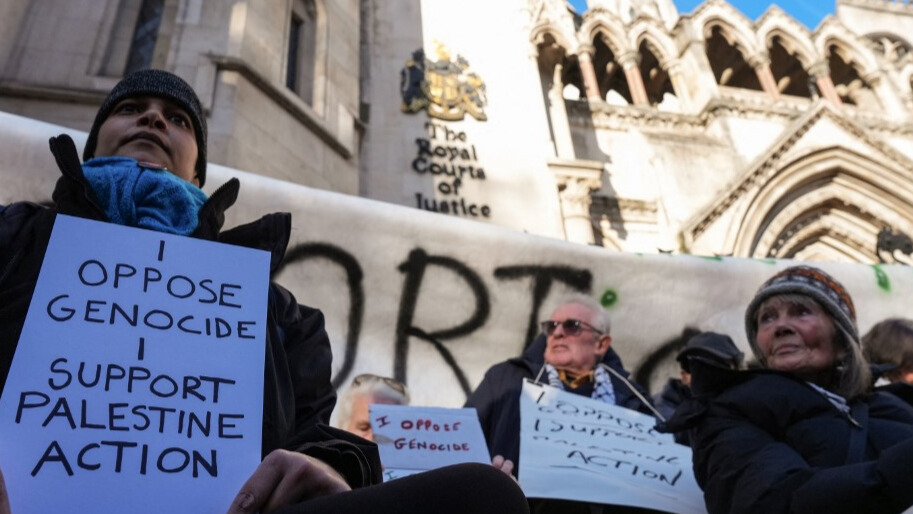
    A United Nations human rights expert has formally declared the United Kingdom an “international outlier” for its controversial decision to proscribe the direct-action network Palestine Action as a terrorist organization. The accusation was presented during a significant judicial review at London’s High Court, marking a substantial challenge to the UK’s counter-terrorism policy.

    Adam Straw KC, representing UN Special Rapporteur on Human Rights and Counter-Terrorism Ben Saul, articulated the UN’s position that the British government’s ban constitutes a “fundamental breach of human rights.” The court heard that responsible nations typically maintain narrow definitions of terrorism that exclude protest groups, placing the UK outside emerging international legal consensus.

    The UN intervention argued that defining terrorism to encompass serious property damage without violence against persons represents an unlawful overreach in international law. This perspective received endorsement from multiple UN special rapporteurs, including Francesca Albanese and Gina Romero, who warned that proscribing non-terrorist groups typically occurs in authoritarian regimes.

    In a striking development, Irish literary sensation Sally Rooney submitted a witness statement detailing potential artistic repercussions. The novelist revealed that the ban could prevent her from receiving royalties and force the withdrawal of her books from UK sales due to her support for Palestine Action. Production company Element Pictures expressed concerns that paying adaptation royalties might constitute a criminal offense, while publisher Faber & Faber faces uncertainty regarding future payments.

    The government, represented by James Eadie KC for the Home Office, defended the proscription by asserting Parliament’s sovereign authority to define terrorism. Eadie maintained that Palestine Action met the statutory threshold for proscription, emphasizing that UK law expressly includes serious property damage within its terrorism definition.

    Since the ban’s implementation, authorities have arrested over 2,000 individuals for displaying signs opposing genocide and supporting Palestine Action, with at least 100 arrests specifically related to expressions of support for the proscribed organization.

  • Man who tried to assassinate John Paul II wants to personally welcome pope in Turkey

    Man who tried to assassinate John Paul II wants to personally welcome pope in Turkey

    In a remarkable development intertwining historical violence with contemporary diplomacy, Mehmet Ali Agca—the Turkish national who attempted to assassinate Pope John Paul II in 1981—has arrived in Iznik to welcome Pope Leo XIV. The pontiff is visiting Turkey to commemorate the 1,700th anniversary of the First Council of Nicaea this Friday.

    Agca, who nearly succeeded in killing John Paul II during the 1981 shooting in Vatican City, was subsequently pardoned by the very pontiff he attempted to murder. His criminal history extends beyond this infamous act, having murdered Milliyet newspaper’s editor-in-chief Abdi Ipekci in 1979, for which he initially evaded capture.

    Through statements to the Turkish news agency DHA, Agca expressed his intention to personally greet the new pope during his inaugural foreign visit. “I say ‘welcome’ to the pope. I hope today or tomorrow in Iznik or Istanbul we can sit and talk for two or three minutes,” Agca told local media, adding, “We are happy to receive him as a guest, and we greatly value the Vatican’s contributions to world peace.”

    In a series of controversial claims, Agca described his assassination attempt as part of a “divine plan” that the world misunderstood. He vehemently rejected being labeled a terrorist, instead directing that accusation toward Israeli Prime Minister Benjamin Netanyahu, whom he called a “satanic, Zionist monster.” Agca astonishingly claimed, “The Vatican agrees with me on this,” though no evidence supports this assertion.

    Further complicating historical narratives, Agca alleged that NATO attempted to exploit his actions by falsely linking him to the Soviets, suggesting his role contributed to the downfall of the Soviet empire.

    Following his capture after the assassination attempt, Agca received a life sentence in Italy before being extradited to Turkey in 2000, where he served additional time for Ipekci’s murder and armed robberies. His release in 2010 concluded nearly three decades of imprisonment.

    Turkish intelligence agencies are reportedly monitoring Agca’s movements in Iznik as Pope Leo conducts his official visit, which began Thursday in Ankara with meetings President Recep Tayyip Erdogan. The pontiff’s itinerary includes touring the submerged remains of an ancient basilica in Lake Iznik, believed to be the site where the Council of Nicaea convened in 325 CE—a seminal event that brought together Christian bishops to resolve foundational theological disputes. Pope Leo and Ecumenical Patriarch Bartholomew of the Orthodox Church are expected to jointly commemorate this historic anniversary.

  • England legend Cook backs Dubai school’s elite sports programme

    England legend Cook backs Dubai school’s elite sports programme

    Dubai Sports City witnessed a significant development in educational athletics as Sir Alastair Cook, the legendary former England cricket captain, formally endorsed Queen Elizabeth’s School’s international expansion initiative. The knighted batsman, honored by Queen Elizabeth II in 2019, attended a special event on Thursday marking the institution’s entry into the Dubai market.

    The prestigious British K-12 institution is establishing a presence in Dubai to meet growing demand for academic excellence and exceptional student outcomes. Cook, serving as Official Education Ambassador for GEDU, expressed enthusiasm about bringing the school’s distinguished heritage to the Middle East. “Queen Elizabeth’s School, Barnet, has a remarkable heritage of excellence, ambition, and character,” Cook stated. “To see that legacy now being brought to Dubai is incredibly exciting.”

    Beyond his ambassadorial role, Cook will actively advise the school’s elite sports programmes, contributing to the development of high-performance pathways and enhancing the integration of athletics within the comprehensive educational experience. His involvement signals a commitment to fostering well-rounded development among students.

    Caroline Pendleton Nash, CEO of Queen Elizabeth’s Global Schools, emphasized the significance of Cook’s association with the institution. “Having Sir Alastair represent us as an Education Ambassador is a tremendous privilege,” she noted. “His career reflects the exacting values that we seek to instil in every Elizabethan. He exemplifies the confident, able and responsible young people we aim to develop.”

    The initiative represents a growing trend of international educational expansion combining academic rigor with elite athletic development, with Cook’s involvement providing immediate credibility to the sports programme.

  • Dh1 million fine: Dubai issues resolution to curb illegal trade of petroleum products

    Dh1 million fine: Dubai issues resolution to curb illegal trade of petroleum products

    Dubai has enacted stringent regulatory measures targeting unauthorized petroleum trading activities through a landmark resolution issued by the Crown Prince. The comprehensive framework establishes the Dubai Supreme Council of Energy as the primary regulatory authority overseeing all petroleum-related operations within the emirate.

    The resolution introduces a tiered penalty system with fines escalating to Dh1 million for repeated violations occurring within a twelve-month period. This regulatory overhaul encompasses the entire petroleum supply chain—from importation and manufacturing to storage, transportation, and retail distribution—aligning Dubai’s practices with international standards.

    Key provisions mandate that all entities engaged in petroleum trading must obtain formal authorization through a verified licensing process. The legislation requires thorough documentation proving petroleum materials originate from Council-approved sources, with maintained records for minimum five-year periods. Retail operations must display transparent pricing while adhering to strict safety protocols for storage and transportation.

    Enforcement mechanisms grant the Supreme Council of Energy extensive authority, including permit cancellation, temporary facility closures for up to six months, commercial license revocation, and seizure of non-compliant materials and vehicles. Violators bear full financial responsibility for rectifying infractions, with administrative costs adding 25% premium for council-mediated corrections.

    The regulatory framework establishes specific validity periods for permits, guidelines for inter-emirate transportation, and standards for retail fuel station establishment. All entities—including those in special development zones and free zones—must register with the Ministry of Energy and Infrastructure’s Petroleum Trading Register, with limited exemptions for federally-approved companies.

    Existing operators have a twelve-month compliance window from the resolution’s effective date, potentially extendable for an additional year with Council Chairman approval. The legislation mandates full cooperation from all government and private entities in supporting the Council’s oversight responsibilities.

    The Supreme Council’s expanded duties now include market competition regulation, technical standard approval, fuel station location planning according to urban development strategies, and designation of petroleum-trading prohibited zones in coordination with relevant authorities.

  • Shein withdraws some clothing items after Greenpeace report on unsafe products

    Shein withdraws some clothing items after Greenpeace report on unsafe products

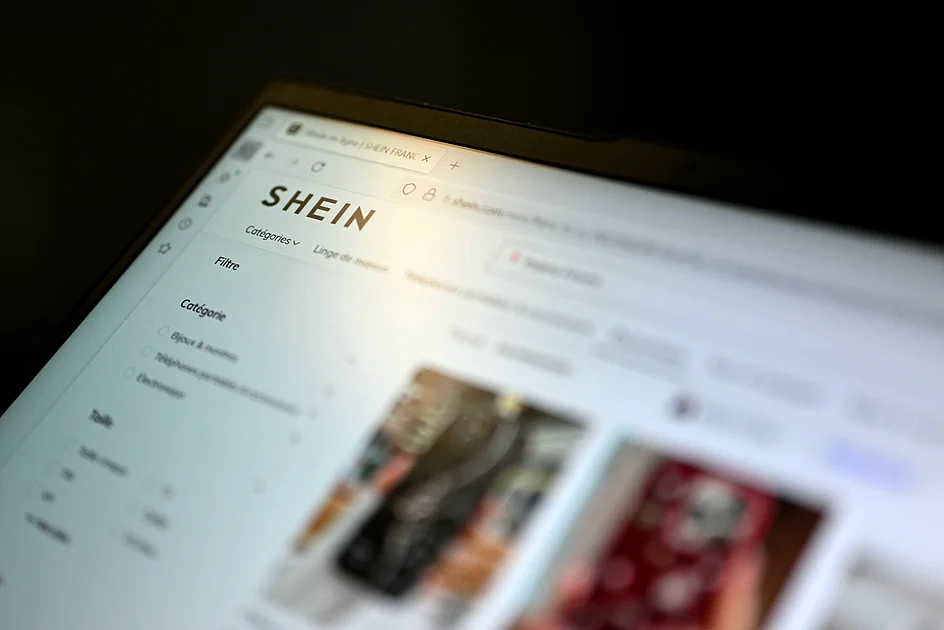
    Global fast-fashion retailer Shein has executed a worldwide withdrawal of select clothing items in response to alarming findings from Greenpeace Germany. The environmental organization’s November investigation revealed that 18 out of 56 tested Shein products contained hazardous chemicals exceeding European Union safety thresholds, with some items registering dramatically elevated levels.

    The concerning items include a children’s mermaid costume containing formaldehyde concentrations beyond EU REACH chemical regulation limits, alongside adult jackets with dangerously high phthalate content. These plasticizing chemicals have been scientifically linked to numerous health complications through skin contact and inhalation.

    Shein responded promptly to the allegations, stating: “We take product safety very seriously and remain committed to full transparency, strict safety standards, and protecting our customers at every step.” The company emphasized that Greenpeace had not shared test results beforehand, preventing preemptive evaluation. All questioned items have been temporarily removed from global platforms pending comprehensive investigation.

    This incident amplifies growing scrutiny of ultra-fast-fashion business models. European retailers increasingly criticize overseas platforms like Shein, AliExpress, and Temu for allegedly circumventing EU safety regulations, creating unfair market competition. The European Commission plans to address these concerns through proposed legislation next year, while EU states recently eliminated duty exemptions on low-value imports to combat substandard merchandise flooding markets.

    The controversy extends beyond chemical safety. Earlier this month, French authorities moved to suspend Shein’s online platform following outrage over inappropriate childlike dolls, highlighting persistent regulatory challenges. Saudi Arabia issued precautionary consumer guidance recommending avoidance of direct-shipment items most associated with harmful substances, despite previous laboratory testing confirming Shein product compliance.

    Greenpeace emphasized the broader environmental impact, noting that these chemicals eventually enter waterways and food chains through washing and disposal, disproportionately affecting manufacturing communities while posing consumer health risks.

  • OMODA&JAECOO celebrates UAE National Day with exclusive showroom offers

    OMODA&JAECOO celebrates UAE National Day with exclusive showroom offers

    In celebration of the United Arab Emirates’ National Day, automotive brand OMODA&JAECOO has launched a special nationwide campaign offering significant benefits to customers. The promotion, available for a limited time during the National Day weekend, features financial incentives and premium ownership packages designed to enhance customer value.

    The initiative, themed ‘from OMODA&JAECOO to UAE,’ provides customers with a National Day bonus of up to AED 10,500 across all vehicle models. The comprehensive package includes complimentary insurance, service packages, and an extended warranty covering 10 years or 1 million kilometers. Additional benefits comprise seven years of roadside assistance and free window tinting services.

    Shawn Xu, CEO of OMODA&JAECOO Automobile International, emphasized the significance of the occasion: ‘The UAE National Day represents a moment of collective pride for all residents. As we celebrate our first National Day as part of this dynamic nation, we want to demonstrate our commitment through substantial customer benefits that emphasize long-term value and innovation.’

    The promotional offers are accessible through the brand’s expanding network of showrooms located in Dubai, Sharjah, Ras Al Khaimah, Fujairah, and two locations in Abu Dhabi. This strategic nationwide presence ensures convenient access for customers across all Emirates.

    The National Day campaign marks an important milestone for OMODA&JAECOO as the company continues to establish its footprint in the competitive UAE automotive market. The limited-time offers reflect the brand’s dedication to combining performance-driven vehicle technology with customer-centric ownership experiences.

  • Israeli raids stoke renewed takeover fears at West Bank’s Joseph’s Tomb

    Israeli raids stoke renewed takeover fears at West Bank’s Joseph’s Tomb

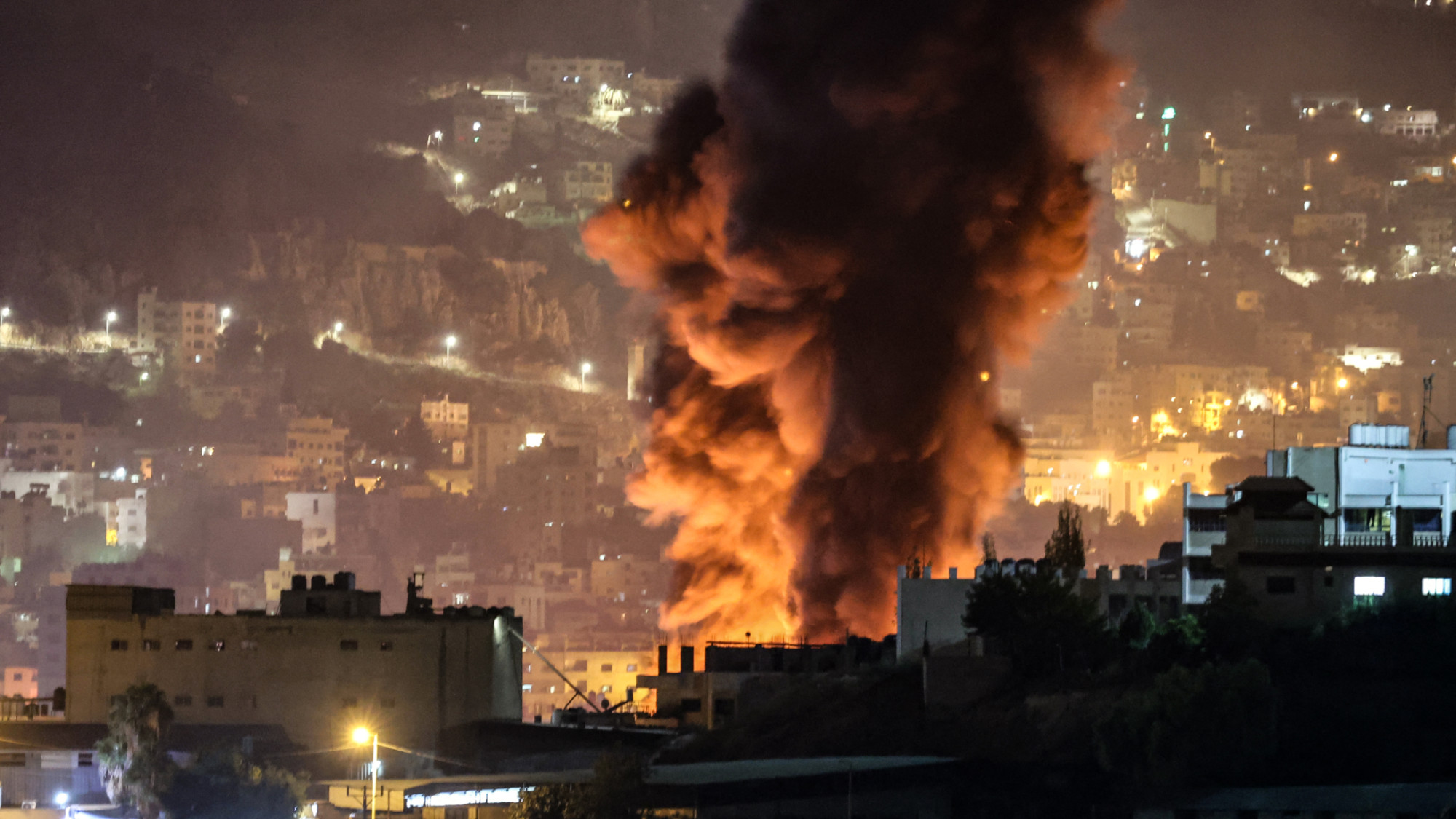
    The ancient site of Joseph’s Tomb near Nablus has become the epicenter of intensified Israeli military and settler activities since October 2023, with recent developments seeing unprecedented international political participation. Last week’s incursion marked a significant escalation when twenty US lawmakers from the National Association of Christian Lawmakers joined settlers and Israeli forces in a heavily guarded visit to the contested religious site.

    Arkansas Senator Jason Rapert, founder of NACL, explicitly endorsed Israeli sovereignty claims during the military-escorted tour, stating: ‘Israel and the Jewish people are the rightful heirs and sovereigns of all these areas.’ The delegation publicly praised the Israeli Defense Forces for their protection during the visit.

    Palestinian analysts interpret these developments as part of a systematic strategy to reassert Israeli control. Veteran journalist Nawaf al-Amer, who has extensively documented the tomb’s contentious history, told Middle East Eye: ‘Since 7 October, the situation has completely shifted. Israel has been carrying out large, scheduled incursions involving significant numbers of settlers, religious figures, political leaders and influential parliamentarians.’

    The site embodies the competing historical narratives that fuel the conflict. Palestinians identify it as the burial place of Sheikh Youssef Dweikat, a local cleric from the early 20th century, while Israelis venerate it as the tomb of the Prophet Joseph, a figure sacred to both Islamic and Jewish traditions.

    This religious significance has been weaponized for political objectives, according to al-Amer: ‘The occupation has attempted to construct a fabricated historical narrative to claim ancient roots in the land, using religious symbolism to serve political aims. Joseph’s Tomb is one example.’

    The current escalation occurs within the broader context of surging settler violence across the West Bank. United Nations data indicates that 2,200 Palestinians have been forcibly displaced from their homes due to settler activities and access restrictions over the past two years, with an additional 40,000 displaced from northern West Bank refugee camps during military operations. Tragically, settlers have killed 21 Palestinians during this period, contributing to the over 1,000 fatalities caused by Israeli forces in the West Bank.

    Historical context reveals that Israel established a yeshiva at the site in the 1980s, maintaining heavy military protection until abandoning its permanent post in 2000. However, monthly settler visits continued under military escort, frequently sparking confrontations with Palestinian residents who view these incursions as pretexts for extending Israeli control.

    The current push to reintroduce the yeshiva, coupled with increased settler activism and international political support, signals a potentially permanent transformation of the status quo at one of the region’s most symbolically charged locations.

  • Israeli press review: Rebuilding challenges persist months after Iran war

    Israeli press review: Rebuilding challenges persist months after Iran war

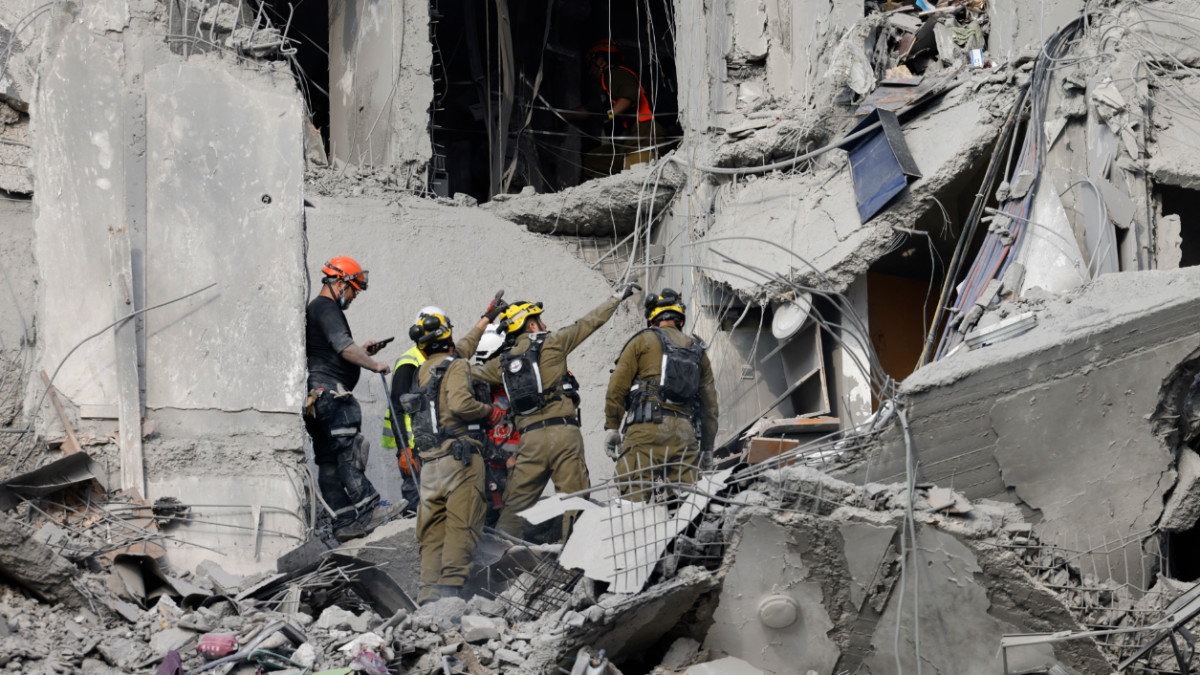
    Five months following the cessation of hostilities with Iran, Israel continues to confront the severe aftermath of a 12-day conflict that left substantial destruction in its wake. Current reports indicate approximately 700 Israeli citizens have been rendered homeless due to structural damage from Iranian missile strikes, with governmental authorities experiencing significant challenges in formulating effective restoration strategies for devastated properties.

    In early June, the Israeli government proposed a comprehensive initiative mandating the demolition and subsequent reconstruction of impaired residential buildings. This program would enable affected inhabitants to either occupy newly constructed apartments or divest their properties at current market valuations. Nevertheless, the plan’s ratification remains precarious due to intense political friction between the governing coalition and ultra-Orthodox factions. These groups exited the coalition earlier this year amid contentious debates regarding the conscription of Haredi youth into national service.

    Affected residents report deteriorating conditions in damaged zones. A Haifa local, whose residence suffered a direct missile impact, disclosed to economic publication Calcalist that reconstruction efforts have stagnated, with incidents of looting exacerbating the situation. He emphasized that the detrimental effects extend beyond the initial attack, creating ongoing hardship. Similarly, occupants of partially damaged dwellings face paralysing uncertainty; a Ramat Gan resident noted that while the Property Tax Authority classifies their building as habitable, practical living conditions remain untenable, forcing families into a prolonged state of limbo.

    Official statistics reveal that nearly 50,000 damage claims have been submitted to the Property Tax Authority, with 39,000 pertaining specifically to residential property damage. Israeli media assessments estimate the total economic impact of Iranian missile assaults to approach five billion shekels (approximately $1.53 billion).

    Concurrently, a separate political controversy has emerged surrounding Israeli Social Equality Minister May Golan’s proposition to reallocate funds originally designated for Palestinian communities within Israel. During a parliamentary session held Wednesday, Minister Golan, a prominent member of Prime Minister Benjamin Netanyahu’s party and ally of National Security Minister Itamar Ben Gvir, announced intentions to cancel a three billion shekel ($918 million) program aimed at mitigating social disparities between Palestinian citizens and the broader Jewish population.

    Instead, the revised strategy proposes diverting the majority of these resources to law enforcement agencies, ostensibly to address escalating crime rates in Palestinian localities. This reallocation would redirect hundreds of millions of shekels initially committed to educational facilities, public transportation, infrastructure development, housing projects, and vocational training toward the establishment of new police stations and related security operations within Palestinian towns.

    The Association for Civil Rights in Israel has vehemently condemned this initiative, labelling it a direct violation of equality principles and fundamental rights for Arab citizens. The organization contends that pitting welfare programs against crime prevention creates a false dichotomy destined to ensure the failure of both objectives.

    Further compounding Israel’s challenges, recent demographic studies conducted by Tel Aviv University researchers reveal an accelerating emigration trend. Since the outbreak of the Gaza conflict in October 2023, nearly 200,000 individuals have departed the country, with a disproportionate number representing young, highly educated professionals from upper socio-economic tiers. Over the past year, this exodus includes nearly 900 medical doctors, over 19,000 degree holders, and more than 3,000 engineers, with 75% of emigrants being under age 40.

    Calcalist reports that this trend signifies a worrying drain of human capital, particularly noting the departure of hi-tech specialists, corporate managers, and other high-income professionals. The study calculates that the state has forfeited approximately 1.5 billion shekels ($459 million) in personal tax revenue within the past year due to this emigration, excluding additional economic losses. A specialized analysis of Israel’s technology sector corroborates these findings, indicating that over 8,000 tech workers have relocated abroad in the last year alone, primarily to the United States, Canada, and Germany. Experts warn that continuation of this trajectory could precipitate severe macroeconomic consequences for the nation, jeopardizing its position as a global innovation hub.

  • China warns Japan on rising militarism

    China warns Japan on rising militarism

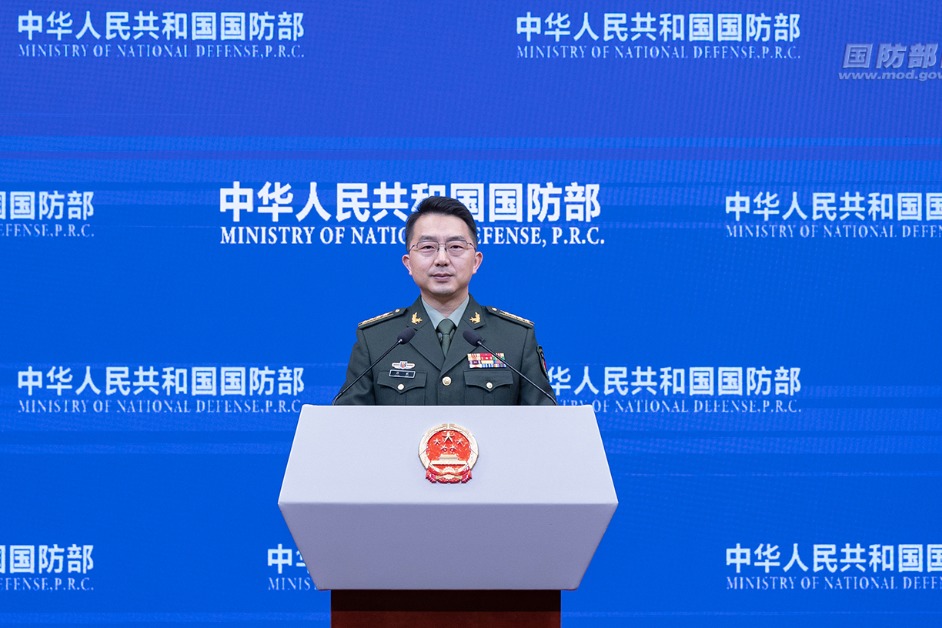
    In a strongly worded statement during Thursday’s regular press briefing in Beijing, Chinese Defense Ministry spokesman Jiang Bin confronted Japan over what Beijing characterizes as dangerous militaristic resurgence. The official demanded Japan demonstrate genuine repentance for historical wartime atrocities while immediately ceasing efforts to modify its pacifist Constitution and expand military capabilities.

    The remarks came in response to recent Japanese security developments, including last week’s landmark export of domestically manufactured Patriot missile interceptors to the United States—marking Tokyo’s first transfer of lethal weapons since relaxing arms export restrictions. Additionally, Japan’s ruling Liberal Democratic Party has initiated discussions about potentially revising the National Security Strategy and associated documents, which may include reconsidering the longstanding Three Non-Nuclear Principles and increasing defense expenditure.

    Jiang emphasized the immutable historical reality of Japan’s WWII defeat, citing international instruments including the Cairo Declaration, Potsdam Proclamation, and Japanese Instrument of Surrender that explicitly prohibit Japanese rearmament. “Any attempt to repeat the evil path of aggression and expansion and undermine the post-WWII international order will not succeed,” the spokesman declared.

    The defense official expressed particular concern about Japan’s alleged military interference in Taiwan affairs, characterizing such moves as serious threats to regional stability. Jiang’s statements coincided with the 80th anniversary commemorations of victory in both the Chinese People’s War of Resistance Against Japanese Aggression and the World Anti-Fascist War.

    Concluding with a powerful historical warning, Jiang stated: “People around the world, especially those from China and other victimized countries in Asia, will never forget the catastrophe brought by Japanese fascists. The specter of Japanese militarism must never be allowed to haunt the world again.”