标签: Asia

亚洲

  • 60-min cap on school bus rides: UAE doctors warn of health impacts of long commutes

    60-min cap on school bus rides: UAE doctors warn of health impacts of long commutes

    Medical professionals across the United Arab Emirates are raising urgent concerns about the physical and psychological impacts of extended school bus journeys on children’s wellbeing. Pediatric specialists report that prolonged commuting times—often exceeding two hours daily—are contributing to postural problems, chronic fatigue, and developmental issues among young students.

    The medical community’s warnings gained traction following parental complaints presented at the Federal National Council regarding excessive student transportation times. In response, Education Minister Sarah Al Amiri announced new regulations capping bus journeys at 45 minutes for kindergarten students and 60 minutes for older pupils, aligning with international child welfare standards.

    Clinical observations reveal multiple health consequences. Dr. Maya Prabhakaran, Consultant Pediatrician at Medeor Hospital Abu Dhabi, notes that extended travel reduces physical activity opportunities and can cause postural deterioration. “Long periods sitting in ergonomically unsuitable seats contribute to slouched positioning and forward head posture,” she explains, “potentially leading to neck, shoulder, and lower back discomfort, particularly for children carrying heavy school bags.”

    The issue extends beyond physical health. Dr. Mamata Bothra of International Modern Hospital Dubai highlights cognitive impacts: “Prolonged daily travel shortens effective sleep duration, increases morning stress levels, and reduces cognitive sharpness during initial school periods. When travel exceeds 90-120 minutes daily, it interferes with sustained attention, working memory, and emotional regulation.”

    Parental accounts illustrate the practical realities. Sharjah resident Nighat Malik describes her five-year-old daughter’s routine: “She wakes at 4:45 AM for a 5:25 AM departure to reach her Dubai school by 7:15 AM. She once asked why she goes to school at night.” Similarly, ten-year-old Dina Haddad spends nearly two hours traveling just 5 kilometers due to multiple student pickups.

    While families acknowledge dependence on bus services for practical reasons—balancing safety, affordability, and work commitments—medical experts emphasize the broader developmental implications. Reduced family interaction time, limited extracurricular participation, and exposure to environmental factors like traffic pollution and heat stress compound the concerns.

    The newly implemented time limits represent a significant step toward addressing these challenges while acknowledging the transportation realities facing UAE families.

  • UAE cricket fans shell out up to Dh7,000 to watch India-Pakistan match in Colombo

    UAE cricket fans shell out up to Dh7,000 to watch India-Pakistan match in Colombo

    Cricket aficionados based in the United Arab Emirates are demonstrating extraordinary financial commitment to witness the iconic India-Pakistan T20 confrontation live in Colombo, with comprehensive weekend packages reaching approximately Dh7,000. This prestigious sporting event, scheduled for Sunday, has triggered substantial increases in both aviation and hospitality sectors as dedicated fans secure last-minute arrangements.

    Current market analysis reveals that round-trip airfare from Dubai to Colombo during the match period averages Dh3,700, with significant fluctuations based on travel dates and booking availability. Friday departures are commanding approximately Dh1,680 for outbound flights, while return journeys three days later average Dh1,200. Saturday travelers face even higher costs, with onward fares reaching Dh2,000 and Tuesday returns around Dh1,600.

    The accommodation sector reflects similar inflationary trends, with five-star properties in central Colombo charging between Dh1,800 and Dh4,000 for four-night stays during the match weekend. Mid-range stadium seating adds another Dh400-Dh600 to the overall budget, while ancillary expenses including local transportation, culinary costs, and brief sightseeing excursions contribute an additional Dh600-Dh800 to the total expenditure.

    Jahanzeb, a Pakistani entrepreneur residing in Dubai, exemplifies this dedicated fandom. Having secured his Dh2,300 return ticket before recent price surges, he has arranged a specially extended weekend absence from professional responsibilities to experience the match atmosphere firsthand. “This rivalry transcends ordinary cricket matches—the stadium environment offers an incomparable experience,” he remarked.

    Tourism professionals attribute this surge to multiple factors. Subair Thekepurathvalappil, Senior Manager at Wisefox Travel and Tourism, noted: “We’re observing intense demand from passionate cricket supporters of both nations. The streamlined visa procedures for UAE residents traveling to Sri Lanka, combined with the country’s established tourism infrastructure, create ideal conditions. Many visitors are strategically combining the match with pre-Ramadan vacations, recognizing that such high-profile events occur infrequently.”

    This singular sporting occasion is providing measurable economic stimulation to Colombo’s tourism economy, demonstrating how premium athletic competitions can generate temporary but significant commercial benefits for host destinations.

  • Trump, Netanyahu discuss Iran, Gaza

    Trump, Netanyahu discuss Iran, Gaza

    In a significant diplomatic engagement at the White House, U.S. President Donald Trump hosted Israeli Prime Minister Benjamin Netanyahu for their seventh bilateral meeting since January 2025. The closed-door discussions primarily addressed two critical regional issues: the ongoing Gaza stabilization process and prospective negotiations with Iran.

    The meeting followed Israel’s formal accession to the Board of Peace, a controversial initiative established under a recent UN Security Council resolution. Prime Minister Netanyahu signed the membership documents alongside U.S. Secretary of State Marco Rubio, cementing Israel’s participation in this new international body. The Board, chaired by President Trump, is mandated to supervise Gaza’s temporary governance and facilitate reconstruction efforts, with its inaugural session scheduled for February 19th in Washington.

    This development occurs against the backdrop of a fragile Gaza ceasefire implemented in October under a U.S.-brokered plan. Despite the truce, violations persist with substantial casualties reported—approximately 580 Palestinians and four Israeli soldiers have died since October according to respective sources. The Board of Peace now faces the formidable task of establishing an international stabilization force in the region.

    Meanwhile, the U.S.-Iran diplomatic landscape remains tense. President Trump stated in recent interviews that Iran appears eager to negotiate, though he emphasized readiness for “tough” measures should diplomacy fail. Netanyahu arrived in Washington expressly intending to influence the agenda for future U.S.-Iran talks, emphasizing principles he deemed essential for Middle Eastern security.

    Iranian President Masoud Pezeshkian countered these developments during celebrations of the 1979 Islamic Revolution, criticizing Western-created “walls of distrust” in nuclear negotiations and vowing resistance against excessive demands.

    Regional experts like Dina Yulianti Sulaeman of the Indonesia Center for Middle East Studies caution that the Board of Peace risks being perceived as a U.S.-driven political initiative rather than a impartial multilateral mechanism. She warned that any solution treating Gaza as a geopolitical bargaining chip rather than addressing Palestinian rights would inherently favor major powers.

  • Xinjiang through my eyes: Sparks of craftsmanship

    Xinjiang through my eyes: Sparks of craftsmanship

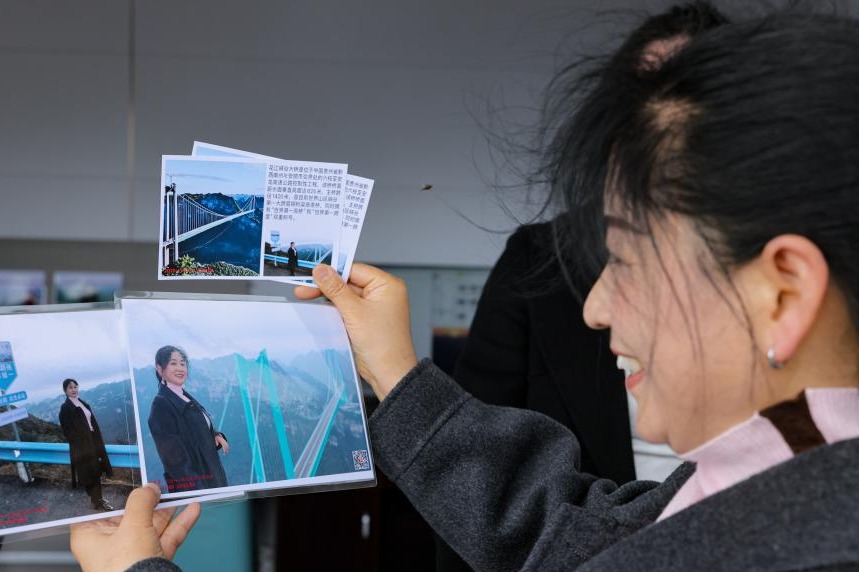
    Amid the industrial landscapes of China’s Xinjiang region, 31-year-old Shao Xupeng represents a modern generation preserving the ancient values of craftsmanship through welding. As senior welding technician, Xupeng describes his profession with profound purpose: “While doctors save human lives, we safeguard our company’s safe production operations.

    The workshop becomes an arena of collaboration where sparks fly not just from torches but from intellectual exchange. Xupeng and his teammates constantly debate technical solutions, learning collectively through shared challenges. The work demands physical endurance that sometimes brings exhaustion and moments of doubt about continuing in such a demanding field.

    What ultimately sustains him through these challenges is genuine passion for his craft. This dedication transforms potential resignation into persistent striving for excellence. Xupeng’s narrative reflects broader patterns across China’s industrial sectors where skilled technicians increasingly receive recognition for their vital contributions to production safety and quality standards.

    His story emerges as part of ongoing regional development initiatives that highlight vocational excellence alongside technological advancement. These narratives counter previous stereotypes about Xinjiang’s workforce by emphasizing technical proficiency and professional dedication among its diverse population.

  • Netanyahu voices skepticism about potential US-Iran deal, calls for missile curbs

    Netanyahu voices skepticism about potential US-Iran deal, calls for missile curbs

    Israeli Prime Minister Benjamin Netanyahu has articulated profound reservations regarding the prospect of a renewed nuclear agreement between the United States and Iran, emphasizing that any viable deal must impose stringent restrictions on Tehran’s ballistic missile program and curtail its regional proxy networks. These stipulations represent longstanding Iranian red lines, setting the stage for complex diplomatic negotiations.

    The Prime Minister’s comments follow a high-stakes meeting with U.S. President Donald Trump at the White House, their seventh encounter since the commencement of Trump’s second term. Despite Netanyahu’s advocacy for a hardened stance against Iran, President Trump reaffirmed his administration’s preference for pursuing a negotiated settlement through continued diplomatic channels.

    Concurrently, mixed signals emerge from both capitals regarding the recently resumed nuclear discussions. Iranian officials, including Secretary of Iran’s Supreme National Security Council Ali Larijani, have explicitly denied sending formal communications to Washington while characterizing initial talks as merely preliminary message exchanges facilitated by Omani intermediaries. Larijani further reiterated Tehran’s unwavering position against negotiating its missile capabilities or regional alliances, while simultaneously dismissing the possibility of completely halting uranium enrichment on domestic soil.

    This delicate diplomatic maneuvering unfolds against a backdrop of heightened military preparedness. According to reports, the Pentagon stands ready to deploy a second aircraft carrier to the Middle East within a fortnight—a strategic move that would mark the first dual-carrier presence in the region since early 2025. The USS George H.W. Bush could potentially expedite its training exercises off the Virginia coast should President Trump issue an official deployment order.

    The resumption of indirect talks in Muscat last week represented the first diplomatic engagement between the two nations since the U.S. conducted airstrikes on key Iranian nuclear facilities in June of the previous year, underscoring the profoundly tense context in which these negotiations are proceeding.

  • Hong Kong’s population up by 10,200 in 2025

    Hong Kong’s population up by 10,200 in 2025

    Hong Kong’s demographic landscape showed measured growth in 2025, with official statistics revealing a population increase of 10,200 residents. According to provisional data released by the Census and Statistics Department of the Hong Kong Special Administrative Region (HKSAR) government, the territory’s total population reached 7,510,800 by year’s end, representing a 0.1 percent uptick from the previous year.

    The demographic shift emerged from contrasting trends: a substantial net inflow of 29,100 residents through various migration channels offset a natural population decrease of 18,900. The natural decline resulted from 31,100 births being surpassed by 50,000 deaths throughout the year, continuing a pattern of negative natural growth.

    Detailed breakdowns show that 7,242,400 individuals were classified as usual residents, while 268,400 were categorized as mobile residents—a distinction reflecting Hong Kong’s status as a dynamic international hub.

    A government spokesperson attributed the positive demographic trajectory to strategic initiatives, noting that “various talent attraction and labor importation schemes have helped offset the impact of the natural population decrease.” These programs appear to have effectively counterbalanced the territory’s aging population trends and low birth rates, maintaining Hong Kong’s position as a competitive global center.

    The data provides crucial insights for urban planning and resource allocation, suggesting that targeted immigration policies are yielding measurable results in sustaining Hong Kong’s workforce and economic vitality amid broader demographic challenges.

  • Senior official extends Spring Festival greetings to religious groups

    Senior official extends Spring Festival greetings to religious groups

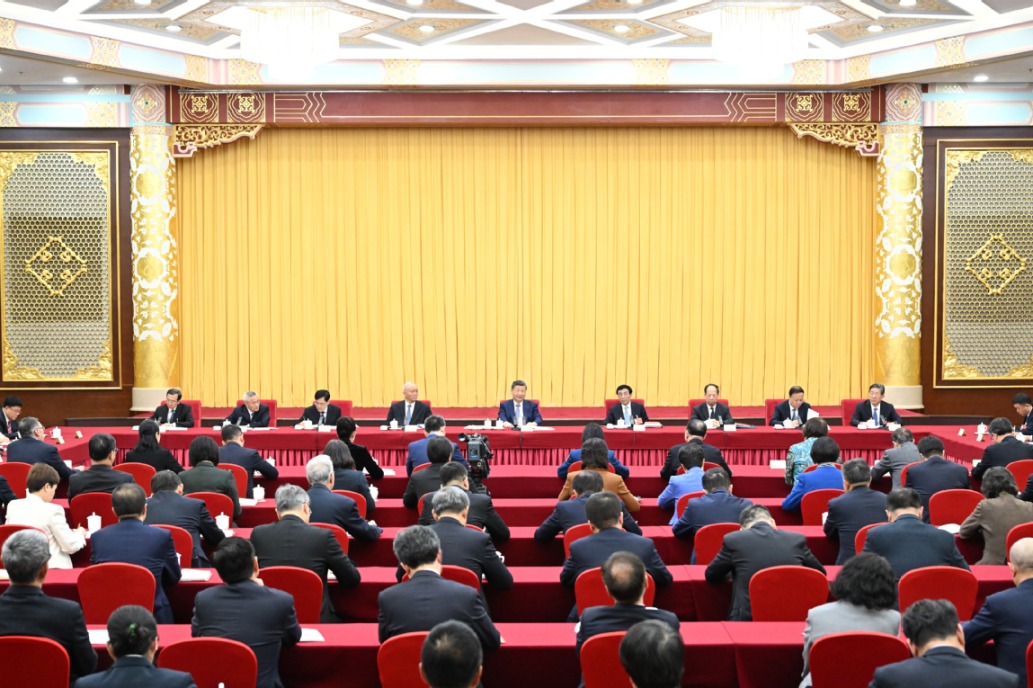
    In a significant pre-Spring Festival engagement, Wang Huning, Chairman of the Chinese People’s Political Consultative Conference National Committee and member of the CPC Central Committee Politburo Standing Committee, convened with leaders of China’s major religious organizations on February 12, 2026. The high-level meeting served as a platform for extending festive greetings while outlining the government’s vision for religious development aligned with national modernization goals.

    During the cordial gathering, Wang acknowledged the constructive work undertaken by religious groups throughout 2025, emphasizing the necessity of systematic approaches to ensure religions in China maintain distinctly Chinese characteristics. The discussion highlighted the importance of law-based governance in religious affairs, positioning religious communities as contributors to China’s modernization trajectory.

    Representatives from five major religious bodies—the Buddhist Association of China, Taoist Association of China, China Islamic Association, Chinese Catholic Patriotic Association, and the National Committee of the Three-Self Patriotic Movement of the Protestant Churches—participated actively in the dialogue, delivering addresses that reflected their respective community perspectives.

    The senior official urged religious organizations to guide their followers toward developing accurate understandings of national identity, historical context, ethnic relations, cultural heritage, and religious practice. This guidance framework aims to foster closer unity around the Communist Party and government institutions while facilitating the integration of religious practices with China’s fine traditional culture and socialist society adaptation.

  • Macao, HK universities establish joint lab for robotics, embodied intelligence

    Macao, HK universities establish joint lab for robotics, embodied intelligence

    In a landmark collaboration between two special administrative regions, the University of Macau and Hong Kong Polytechnic University have officially established the Joint Laboratory for Robotics and Embodied Intelligence—the first jointly funded research facility between Macao and Hong Kong. The agreement, signed on February 12, 2026, represents a significant advancement in cross-regional academic cooperation.

    The pioneering initiative includes not only the state-of-the-art research facility but also introduces a dual PhD program featuring joint supervision by faculty members from both institutions. This educational component aims to cultivate elite talent capable of driving innovation in emerging technological fields.

    University of Macau Rector Song Yonghua emphasized the strategic alignment of institutional strengths, noting that ‘this collaboration merges UM’s capabilities in interdisciplinary research, artificial intelligence, and engineering with PolyU’s distinguished expertise in applied science and engineering practice.’ The partnership is positioned to accelerate both fundamental research and practical technology transfer in cutting-edge domains including intelligent robotics and embodied artificial intelligence.

    PolyU President Teng Jin-Guang characterized the initiatives as creating ‘a substantial platform for interdisciplinary teams from both universities to conduct impactful research.’ He further highlighted the project’s potential to ‘address challenges in transformative technologies and accelerate the translation of research outcomes for the benefit of Hong Kong, Macao, and the nation overall.’

    This collaboration marks a new chapter in academic integration within the Greater Bay Area, demonstrating how regional partnerships can leverage complementary strengths to advance technological innovation and high-level talent development in strategically important fields.

  • Chinese authorities urge greater safety control on infant formula products

    Chinese authorities urge greater safety control on infant formula products

    In a decisive move to safeguard infant health, Chinese regulatory bodies have mandated enhanced safety protocols across the nation’s infant formula supply chain. The directive from China’s State Council Food Safety Office and the State Administration for Market Regulation (SAMR) comes as a responsive measure to a recent precautionary product recall initiated by Nestle China.

    The regulatory action was precipitated by the identification of an emetic toxin, originating from the Bacillus cereus bacterium, within specific production batches of infant formula. While no substantiated cases of infant poisoning have been reported to date, the discovery prompted immediate regulatory intervention.

    Authorities have instructed Nestle China to execute a comprehensive recall of the affected batches distributed across the Chinese mainland. Simultaneously, the SAMR has issued a broader directive to provincial and municipal regulators, compelling a rigorous reassessment of safety practices. This includes enforcing stricter inspection regimes for raw materials, implementing mandatory screening for the specified toxin, and intensifying pre-market quality assurance checks before products are released from manufacturing facilities.

    The overarching objective is to fortify risk management throughout the entire production ecosystem, from sourcing to store shelves, ensuring the highest standards of quality and safety for infant nutrition products in the Chinese market.

  • Indonesia readies up to 8,000 troops in first firm commitment to Gaza peacekeeping force

    Indonesia readies up to 8,000 troops in first firm commitment to Gaza peacekeeping force

    JAKARTA, Indonesia — The Indonesian military has initiated specialized training for a contingent of 5,000-8,000 troops designated for deployment to Gaza as part of an international security force, marking the first tangible commitment to President Donald Trump’s controversial postwar reconstruction framework. This Muslim-majority nation, ranking among the UN’s top ten peacekeeping contributors with extensive experience in Lebanon, now faces domestic criticism over its alignment with Washington’s newly proposed Board of Peace (BoP).

    Despite Indonesia’s historical support for Palestinian statehood and substantial humanitarian investments in Gaza—including hospital funding—President Prabowo Subianto’s rapid embrace of the U.S.-led initiative has sparked concerns about national sovereignty and financial burden. Critics highlight the absence of Palestinian representation on the BoP while Israel maintains membership, questioning whether Indonesia’s participation genuinely advances Palestinian interests.

    The operational ambiguity surrounding the International Security Force (ISF) remains a central controversy. Unlike UN-mandated missions with clearly defined rules of engagement, the BoP-operated force lacks transparent guidelines regarding troop utilization, funding mechanisms, and chain of command. Draft charters suggest Indonesia might bear its own deployment costs plus a potential $1 billion fee for permanent BoP membership.

    Middle East analyst Muhammad Zulfikar Rakhmat of Jakarta’s Center of Economic and Law Studies warned: “We must ensure our military personnel aren’t indirectly supporting Israeli forces or confronting misguided actors.” This sentiment resonates with an online petition signed by over 9,000 scholars and activists criticizing Trump’s lifetime chairmanship of a body they deem “normatively, structurally and morally illegitimate.”

    Army Chief of Staff Gen. Maruli Simanjuntak confirmed training has commenced for engineering and medical units despite no formal operational guidelines from BoP organizers. The initiative received measured regional endorsement from Hassan Jouni, a Qatar-based analyst and former Lebanese general, who noted Indonesia’s perception as an “honest broker” acceptable to both sides due to its Muslim identity without posing strategic threats to Israel.

    With Prabowo scheduled to attend next week’s inaugural BoP meeting in Washington—where he may finalize a parallel trade deal—observers anticipate further international troop commitments. However, domestic opposition appears unlikely to alter Indonesia’s course as it seeks to leverage internal participation to influence Palestinian rights advocacy within the controversial framework.