标签: Asia

亚洲

  • Multiple-entry, 2-month visit visa: Qatar to extend permits for GCC residents

    Multiple-entry, 2-month visit visa: Qatar to extend permits for GCC residents

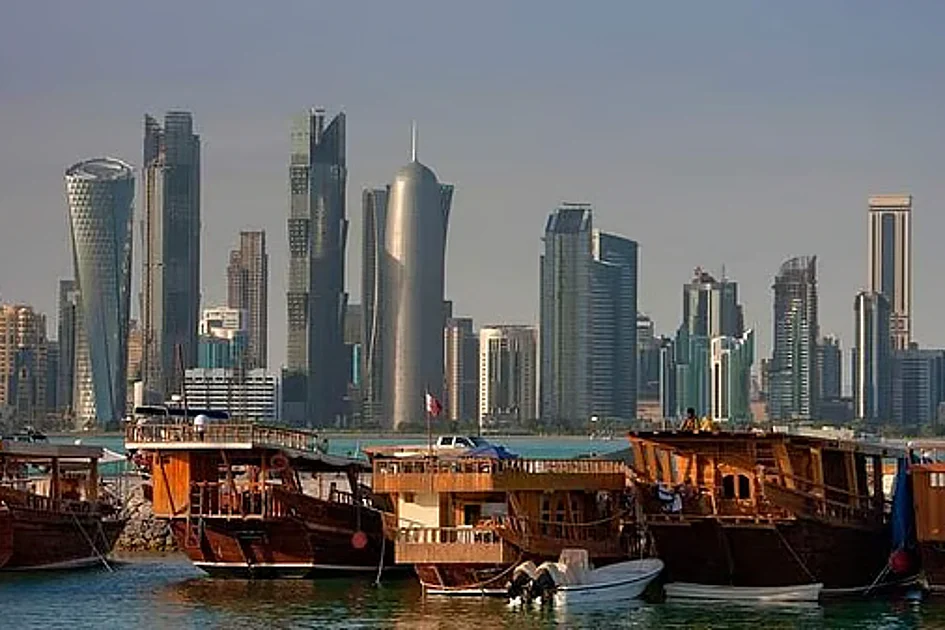
    Qatar has unveiled a significant expansion of its visa facilitation program for Gulf Cooperation Council (GCC) residents, announcing the extension of visit permits from one month to two months with multiple-entry privileges. The new regulations, set to take effect on November 30, 2025, through the Haya digital platform, represent a strategic move to enhance regional tourism integration.

    The initiative, announced by Qatar Tourism, aims to capitalize on the nation’s post-FIFA World Cup 2025 infrastructure and event hosting capabilities. The enhanced visa scheme will enable GCC residents to more conveniently attend Qatar’s growing calendar of sports tournaments, cultural exhibitions, and entertainment events. This policy adjustment particularly supports the upcoming Arab Cup 2025 tournament, facilitating smoother entry procedures for regional spectators.

    The Haya platform serves as a comprehensive digital ecosystem for visa processing and event management, offering five distinct electronic visa categories: standard tourist visas (A1), GCC resident visas (A2), electronic travel notification visas (A3), companion visas for GCC citizen guests (A4), and visa waivers for US citizens (F1). This streamlined approach significantly simplifies trip planning for international visitors while maintaining robust security protocols.

    Tourism analysts view this development as part of Qatar’s broader strategy to position itself as a regional hub for major international events. The extended visa duration and multiple-entry feature address previous limitations that potentially constrained visitor mobility within the GCC region, particularly affecting those wishing to combine Qatari events with visits to neighboring countries.


  • Cambridge union approves motion saying world ‘failed Palestine’

    Cambridge union approves motion saying world ‘failed Palestine’

    In a decisive move reflecting growing campus activism, the Cambridge University Student Union has passed a motion declaring that the international community has failed Palestine. The resolution received overwhelming support during a Thursday debate featuring prominent voices from both sides of the conflict.

    The contentious debate featured Palestinian journalist and campaigner Yara Eid advocating for the motion, while Israeli speaker Hen Mazzig, a former army liaison officer, argued against it. Mazzig later characterized the reception to his arguments as ‘hostile’ in a Jewish News article reproducing his speech.

    This development follows last month’s significant decision by Cambridge Student Union to disaffiliate from the National Union of Students (NUS), citing the organization’s failure to adequately campaign for Palestine and support pro-Palestine protesters. The disaffiliation was further justified by citing poor value for money, with annual fees estimated at £20,000 ($26,000).

    The Cambridge vote aligns with broader student activism across the United Kingdom, where student groups and union officers from 55 universities signed an open letter demanding the NUS take a stronger stance on Gaza or face mass disaffiliation. In response, the NUS controversially demanded that union officers remove their signatures from the letter or face bans from NUS events.

    Concurrently, Cambridge University announced last month its decision to divest from companies involved in producing ‘controversial weapons,’ following a year of pro-Palestine protests on campus. This move mirrors similar action taken by King’s College, one of Cambridge’s largest colleges, which committed to divesting from arms industry companies complicit in ‘the occupation of Ukraine and Palestinian territories.’

  • Former Dubai waiter arrested over attack on Kapil Sharma’s cafe: Indian media

    Former Dubai waiter arrested over attack on Kapil Sharma’s cafe: Indian media

    Indian authorities have apprehended a suspect with connections to Dubai in connection with a series of targeted shootings at a Canadian restaurant owned by renowned Indian comedian Kapil Sharma. The arrest marks a significant development in an international investigation spanning multiple continents.

    According to reports from The Indian Express, Delhi Police Crime Branch officers took 28-year-old Bandhu Man Singh Sekhon into custody on November 25th in his hometown of Ludhiana, Punjab. Sekhon stands accused of conspiring with criminal elements to orchestrate attacks on Kap’s Café, located in Ontario, Canada, which occurred in July and August of this year.

    The investigation reveals a complex transnational narrative. Sekhon reportedly completed his Master’s in Computer Applications in Punjab before briefly relocating to Dubai in 2018, where he worked in the hospitality sector as a waiter. After returning to India within months, he subsequently moved to Canada in 2023, working variously as a pharmacist and ride-hailing driver before allegedly becoming involved with criminal networks.

    Law enforcement officials identified Sekhon as a close associate of Goldy Dhillon, a gangster who has claimed responsibility for three separate shootings at the comedian’s establishment. The attacks are believed to be part of an organized extortion attempt targeting the high-profile business venture.

    During the arrest operation, authorities recovered significant evidence including a pistol and eight live cartridges from Sekhon’s possession. The suspect’s criminal involvement reportedly extended to previous legal troubles in Canada, where he was arrested in March in a separate extortion case and subsequently released with a GPS monitoring device.

    Kapil Sharma, one of India’s most prominent comic entertainers and host of The Kapil Sharma Show, maintains strong connections to the UAE, regularly performing to capacity crowds in Dubai and Abu Dhabi. His international profile has made his business ventures potential targets for criminal elements seeking extortion opportunities.

    The ongoing investigation involves coordination between Indian, Canadian, and potentially UAE authorities as they work to dismantle the transnational criminal network believed responsible for the attacks.

  • Cheapest gold rate in UAE: 14K gold price revealed for first time in Dubai

    Cheapest gold rate in UAE: 14K gold price revealed for first time in Dubai

    In a significant market development, the Dubai Jewellery Group has for the first time published official pricing for 14-carat gold, setting the rate at Dh301.75 per gram. This establishes 14K as the most economically accessible gold variant available in the emirate’s jewelry market.

    The pricing initiative emerges against the backdrop of unprecedented gold valuations, with the precious metal reaching historic peaks in October 2025. During that period, gold surpassed Dh500 per gram in Dubai markets and achieved the remarkable threshold of $4,300 per ounce in global trading platforms.

    Market analysts observe a pronounced shift in consumer behavior, with Dubai and UAE shoppers increasingly favoring more affordable 18K and 21K gold jewelry amidst sustained price elevations. The newly introduced 14K gold price reflects this evolving market dynamic and addresses growing demand for budget-conscious options.

    The official pricing structure reveals substantial differentials between gold variants: 24K gold traded at Dh508.5 per gram during the weekend, positioning 14K gold more than Dh200 below the premium variant. Meanwhile, 14K maintains an Dh85 premium over its closest alternative, 18K gold, which was priced at Dh387 per gram.

    Globally, spot gold concluded the trading week at $4,219.23 per ounce, registering a 1.51 percent increase. Dubai’s gold pricing mechanism remains synchronized with international market fluctuations, ensuring local rates reflect global trends.

    Despite the formal pricing announcement, market availability of 14K jewelry remains limited. Industry representatives indicate that major jewelry retailers are actively evaluating the introduction of 14K collections specifically designed for lightweight daily wear, responding to evolving consumer preferences toward practical affordability without compromising aesthetic standards.

    Vinay Jethwani of Meena Jewellers confirmed the industry’s adaptation to changing consumption patterns, noting efforts to cater to broader consumer segments through diversified product offerings. Similarly, Malabar Gold and Diamonds’ Shamlal Ahamed observed that the trend toward lightweight jewelry is increasingly driven by evolving design preferences alongside economic considerations.

  • Kunming Dry Port train further enhances regional connectivity

    Kunming Dry Port train further enhances regional connectivity

    A significant advancement in regional connectivity was achieved on Friday with the official launch of the Kunming Dry Port train service, a crucial component of the China-Laos-Thailand-Malaysia Railway network. The inauguration ceremony took place in Anning, Yunnan province, marking a new chapter in transnational logistics.

  • Spinners lift Pakistan to 6-wicket win over Sri Lanka to clinch T20 tri-series title

    Spinners lift Pakistan to 6-wicket win over Sri Lanka to clinch T20 tri-series title

    Pakistan’s spin trio orchestrated a dramatic collapse of Sri Lanka’s batting lineup, securing a comprehensive six-wicket victory in the T20 tri-series final on Saturday in Rawalpindi. After winning the toss and electing to field, Pakistan captain Salman Ali Agha watched his bowlers dismantle the visitors, who lost eight wickets for a mere 16 runs before being bowled out for 114 in 19.1 overs.

    The spin partnership of Mohammad Nawaz (3-17), Abrar Ahmed (2-18), and part-time spinner Saim Ayub (1-17) proved devastating despite Sri Lanka’s promising start at 81-1 at the halfway mark. Left-handed opener Kamil Mishara provided the lone resistance with a 47-ball 59, showcasing his potential for next year’s T20 World Cup with a 64-run partnership with Kusal Mendis (14).

    Pakistan’s chase was clinical, reaching 118-4 with eight balls to spare. Openers Saim Ayub (36) and Sahibzada Farhan (23) established a solid 46-run foundation before captain Babar Azam sealed the victory with an unbeaten 37 off 34 balls. Azam also excelled in the field, taking two spectacular catches that turned the match’s momentum.

    Sri Lanka, who entered the final with consecutive wins over Zimbabwe and Pakistan, completely unraveled against quality spin bowling, managing just one six during the 12 overs of slow bowling. The collapse began when Azam took a spectacular overhead catch at long-off to dismiss Mendis in the 11th over, triggering a catastrophic batting failure.

    Nawaz finished as the tournament’s leading wicket-taker with 10 scalps, while Shaheen Shah Afridi contributed with 3-18 in his return spell to clean up the tail. Despite late wickets from Pavan Rathnayake (2-11), Pakistan’s victory was never in serious doubt as Azam guided his team to the target with ease.

  • Airbus A320 recall: Why pilots could’ve lost control mid-air without upgrade

    Airbus A320 recall: Why pilots could’ve lost control mid-air without upgrade

    A sweeping global aviation alert has triggered widespread flight cancellations and delays after Airbus issued an unprecedented recall affecting approximately 6,000 A320 family aircraft. The emergency directive, prompted by a potentially catastrophic software vulnerability, represents one of the largest safety actions in the manufacturer’s 55-year history.

    The urgent recall stems from an October incident involving JetBlue Flight 1230, which experienced an uncommanded altitude drop and emergency landing in Tampa, Florida. Subsequent investigation revealed that intense solar radiation could corrupt critical flight control data in certain software configurations, potentially causing unexpected elevator movements that might push aircraft to their structural limits.

    Regulatory agencies worldwide, including the European Union Aviation Safety Agency and US Federal Aviation Administration, have mandated carriers to complete software upgrades before returning affected aircraft to service. The remediation process varies significantly—while most planes require just hours for software replacement, approximately 1,000 aircraft need weeks-long hardware modifications.

    The impact has been particularly severe in Asia, where the A320 family forms the backbone of short-haul aviation. Major carriers including Wizz Air and Air India have confirmed operational disruptions, with Air Arabia stating it’s working to minimize passenger impact. Etihad Airways has already completed necessary updates across its 39 A320-family aircraft and resumed normal operations.

    According to Cirium data, 376 A320-family aircraft currently operate across the Middle East, with UAE carriers operating 106 affected planes. The recall affects more than half of Airbus’ global A320 fleet, which totals approximately 11,300 aircraft worldwide, recently surpassing Boeing’s 737 as the most-delivered commercial aircraft model.

  • Flooding in southern Asia leaves hundreds dead

    Flooding in southern Asia leaves hundreds dead

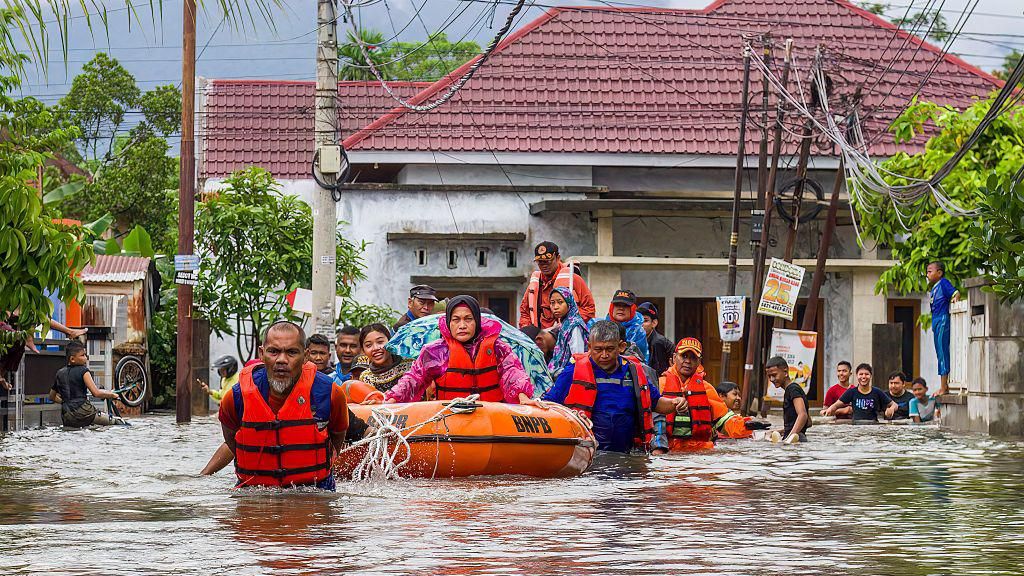
    Southeast Asia confronts one of its most devastating natural disasters in years as catastrophic flooding and landslides have claimed approximately 700 lives across Indonesia, Thailand, Malaysia, and Sri Lanka. Triggered by torrential monsoon rains intensified by rare tropical cyclones, the calamity has left hundreds missing and millions affected throughout the region.

    The crisis began Wednesday when unprecedented rainfall struck Indonesia’s Sumatra island, with the tropical cyclone Senyar generating catastrophic conditions. In Aceh Province’s Pidie Jaya Regency, resident Arini Amalia described how ‘the current was very fast, in a matter of seconds it reached the streets, entered the houses.’ She returned the following day to find her home completely submerged. Another survivor, Meri Osman, recounted being swept away by currents and clinging to a clothesline until rescue arrived.

    Indonesia reports the highest death toll with over 300 confirmed fatalities and nearly 300 individuals still missing. Rescue operations face significant challenges due to persistent adverse weather conditions, leaving thousands stranded and awaiting evacuation.

    Thailand experiences its worst flooding in a decade, particularly in southern Songkhla province where waters rose 3 meters (10 feet). The city of Hat Yai recorded 335mm of rainfall within 24 hours—the heaviest deluge in three centuries. With over 160 fatalities nationwide, the disaster has affected 3.8 million people. Emergency services have been overwhelmed, with hospitals resorting to refrigerated trucks for body storage as morgues reached capacity.

    In Sri Lanka, Cyclone Ditwah exacerbated already severe conditions, causing landslides that have killed at least 132 people with hundreds more missing. The government has declared a state of emergency as approximately one-third of the nation faces electricity and water shortages. Over 15,000 homes have been destroyed, forcing 78,000 residents into temporary shelters.

    Malaysia’s northern Perlis state has been severely impacted with two confirmed deaths and tens of thousands displaced. Meteorological experts attribute the extreme weather to an unusual interaction between Typhoon Koto in the Philippines and Cyclone Senyar in the Malacca Strait, compounded by climate change altering traditional monsoon patterns through increased rainfall intensity and duration.

  • China launches nationwide fire safety inspection following Hong Kong’s deadly blaze

    China launches nationwide fire safety inspection following Hong Kong’s deadly blaze

    In response to Hong Kong’s most catastrophic fire incident in decades, Chinese authorities have launched an unprecedented nationwide safety inspection targeting high-rise buildings. The Ministry of Emergency Management announced the comprehensive campaign on Saturday, November 29, 2025, following Wednesday’s devastating blaze that claimed 128 lives with approximately 200 individuals still unaccounted for and 79 injured.

    The inspection initiative will concentrate on structures undergoing external renovations and interior modifications, with particular emphasis on four critical safety domains: combustible materials within external wall insulation systems, prohibited construction materials including bamboo scaffolding, functionality of fire safety equipment, and accessibility of emergency evacuation pathways.

    The tragedy unfolded on November 26th at an eight-tower residential complex housing over 4,600 occupants. The inferno propagated rapidly through buildings encased in bamboo scaffolding and protective mesh, creating a perfect storm of fire hazards. Firefighting operations have concluded after extensive efforts, with twelve firefighters sustaining injuries during the rescue mission, one critically.

    Hong Kong law enforcement has taken three individuals into custody—two directors and one engineering consultant from the construction firm—on suspicion of manslaughter related to the incident. Superintendent Eileen Chung of the Hong Kong Police confirmed the arrests as investigations continue into the circumstances that led to one of the territory’s worst civilian disasters.

    The nationwide safety drive represents a proactive measure to prevent similar tragedies across China’s urban landscapes, where rapid construction and renovation projects have sometimes outpaced safety protocol implementation. The initiative underscores the government’s commitment to addressing systemic safety vulnerabilities in densely populated residential structures.

  • Governments endorse greater protections for sharks amid concerns about overfishing

    Governments endorse greater protections for sharks amid concerns about overfishing

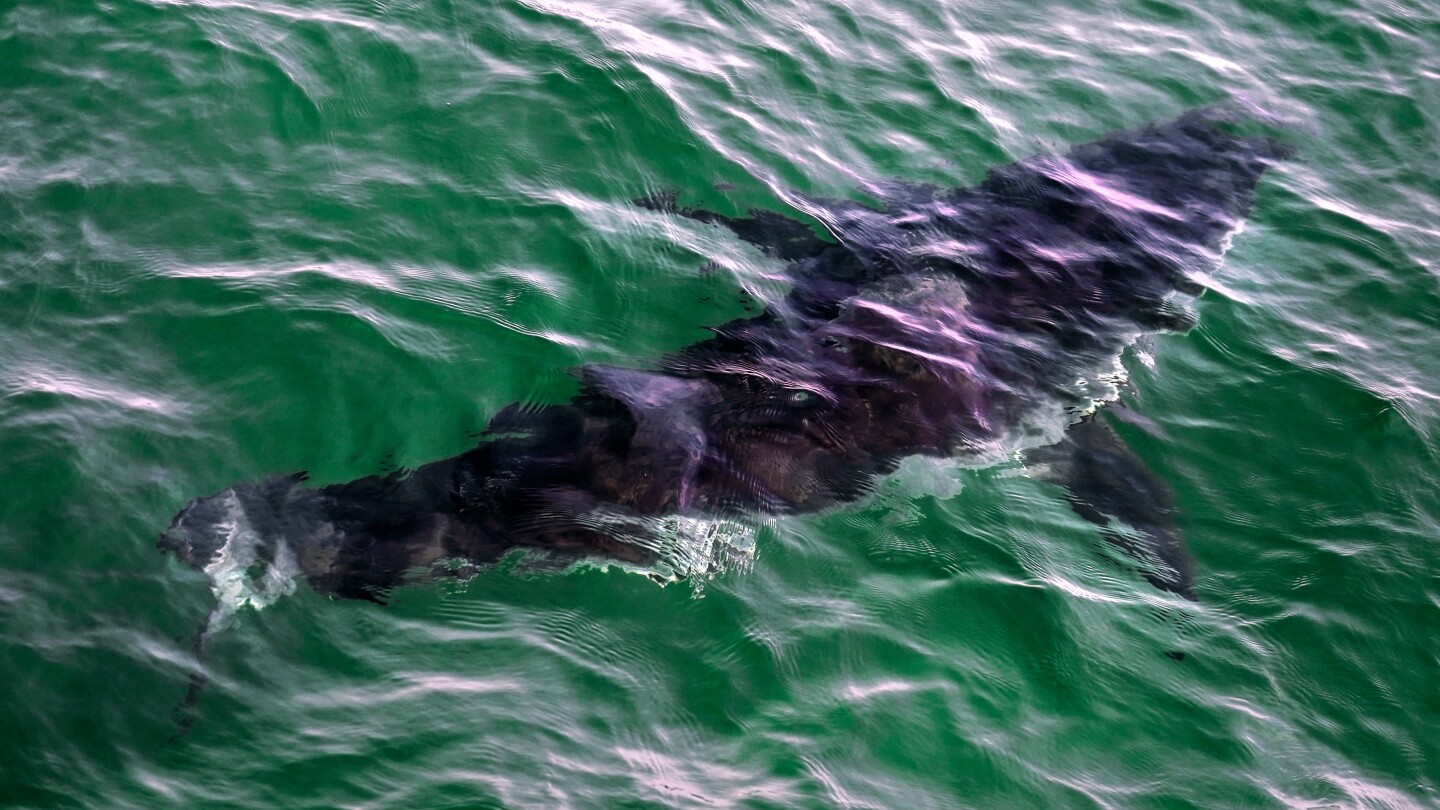
    In a historic conservation decision, international governments have enacted sweeping trade protections for more than 70 species of sharks and rays at the ongoing Convention on International Trade in Endangered Species (CITES) summit in Uzbekistan. The landmark measures, ratified on Friday, represent one of the most significant marine conservation victories in recent years.

    The newly adopted protections establish complete trade bans for several critically endangered species including oceanic whitetip sharks, manta rays, devil rays, and whale sharks. Additionally, the conference implemented strengthened regulatory frameworks for gulper sharks, smoothhound sharks, and tope sharks, mandating that any trade must demonstrate legal sourcing, sustainability, and full traceability.

    Perhaps most significantly, delegates agreed to implement zero-annual export quotas for multiple species of guitarfishes and wedgefishes, effectively halting international commercial trade for these vulnerable species.

    Conservation leaders hailed the decisions as transformative. Luke Warwick, Director of Shark and Ray Conservation at the Wildlife Conservation Society, characterized the outcome as “a landmark victory that belongs to the Parties who championed these protections.” He noted unprecedented cooperation across Latin American, African, Pacific, and Asian nations in passing every proposed shark and ray protection measure.

    The urgent need for these protections stems from severe overfishing pressures driven by global demand for shark fins, meat, oil, and gills—a billion-dollar industry that has pushed more than 37% of shark and ray species toward extinction. Annually, over 100 million sharks are killed, far outpacing their reproductive capabilities.

    Barbara Slee, Senior Program Manager at the International Fund for Animal Welfare, emphasized the significance of this policy shift: “For too long, sharks that have roamed our oceans for millions of years have been slaughtered. These new protections will help shift that balance and recognize these sharks as more than just fishery commodities.”

    This achievement continues CITES’ recent success in shark conservation, building upon protections established for over 90 shark species at the 2022 Panama conference. While the treaty has faced criticism regarding implementation challenges in developing nations, this decision demonstrates growing international consensus on marine conservation priorities.

    The conference also addressed other conservation matters, maintaining existing protections for elephants and rhinos while approving regulated trade of saiga horn from Kazakhstan—a controversial decision following the antelope’s reclassification from critically endangered to near threatened status due to successful recovery efforts.