标签: Asia

亚洲

  • Operations restart at Iraq’s Khor Mor field, days after drone attack halts production

    Operations restart at Iraq’s Khor Mor field, days after drone attack halts production

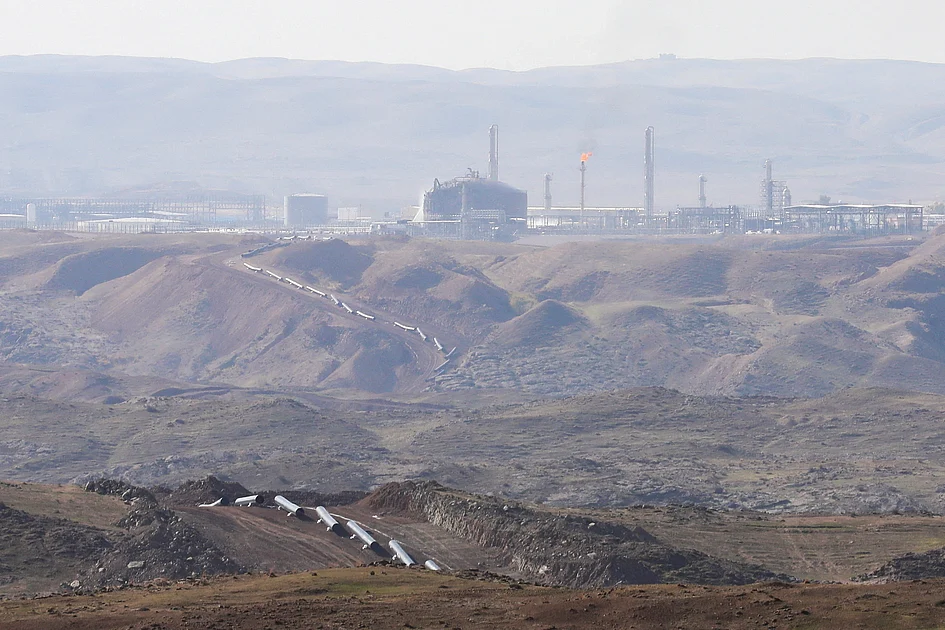
    Operations have fully resumed at Iraq’s critical Khor Mor gas field following a destructive drone attack that temporarily halted production and caused widespread power outages across the region. The Kurdish regional government’s electricity ministry confirmed that gas transmission to power stations recommenced at 2 a.m. local time on Sunday (11 p.m. GMT Saturday), marking a significant recovery for the energy infrastructure.

    The attack occurred on Thursday when an unidentified rocket struck a storage tank at the facility, operated jointly by Dana Gas. The assault forced an immediate shutdown of production capabilities, leading to extensive electricity disruptions throughout the Kurdistan region. No group has claimed responsibility for the attack, and authorities continue investigations to determine the perpetrators.

    This incident represents the most severe security breach since July’s series of drone attacks that targeted oilfields and reduced regional production by approximately 150,000 barrels per day. The Khor Mor field stands as one of the largest natural gas facilities in the Kurdistan region, playing a crucial role in power generation and energy stability.

    The Kurdistan Regional Government maintains autonomous control over northern Iraq’s territories, where American energy companies maintain substantial investment portfolios. The rapid restoration of operations demonstrates the region’s resilience in maintaining critical energy infrastructure despite security challenges.
  • Saudi Arabia announces major revamp of King Khalid International Airport terminals

    Saudi Arabia announces major revamp of King Khalid International Airport terminals

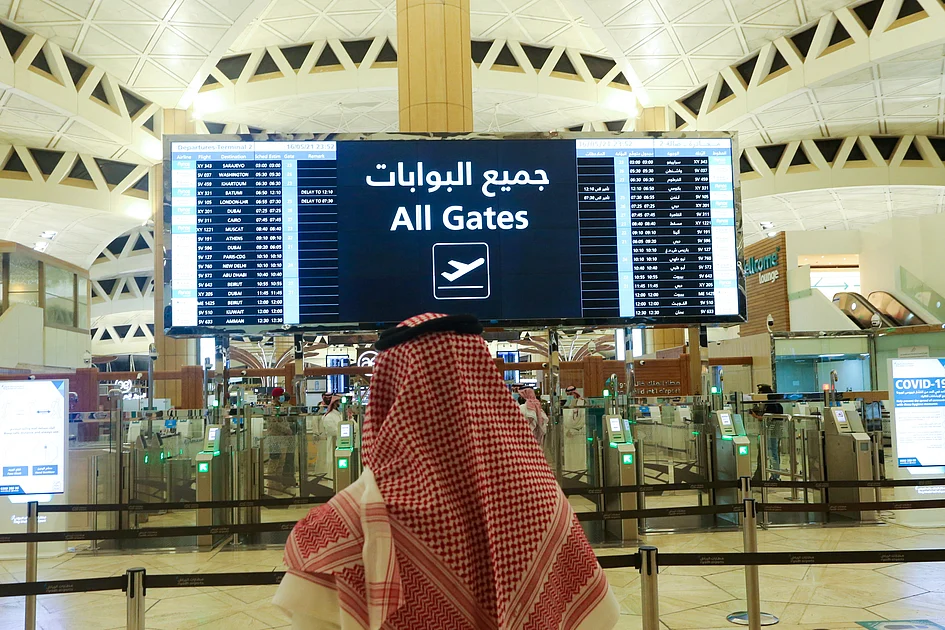
    Saudi Arabia has unveiled ambitious plans for a sweeping operational overhaul of King Khalid International Airport (KKIA) terminals, marking the facility’s first comprehensive modernization since its inauguration over four decades ago. The transformation initiative, scheduled for implementation during the first quarter of 2026, represents one of the airport’s most significant development projects to date.

    Operated by Riyadh Airports Company (RAC), the airport will undergo substantial terminal reconfiguration following completed redesigns that preserve the facility’s original architectural identity. Under the new operational structure, Terminal 5 will exclusively serve international flights operated by foreign carriers, while Terminals 3 and 4 will be dedicated to domestic operations. Terminals 1 and 2 will continue handling international flights operated by Saudi national airlines.

    The strategic reorganization is projected to deliver substantial operational benefits, including increased terminal capacity, enhanced passenger flow between terminals, and reduced inter-flight waiting periods. Aviation authorities emphasize that the exact commencement date will be announced following confirmation of full operational readiness across all airport sectors and partnering airlines.

    This development forms part of a broader strategic vision coordinated between Riyadh Airports Company, the General Authority of Civil Aviation, and MATARAT Holding. The initiative aligns with Saudi Vision 2030 objectives, aiming to elevate the kingdom’s aviation sector to international leadership standards while establishing the nation as a global logistics hub connecting three continents through advanced infrastructure and world-class traveler experiences.

  • SW China’s Chongqing launches fixed-schedule freight train service to Budapest

    SW China’s Chongqing launches fixed-schedule freight train service to Budapest

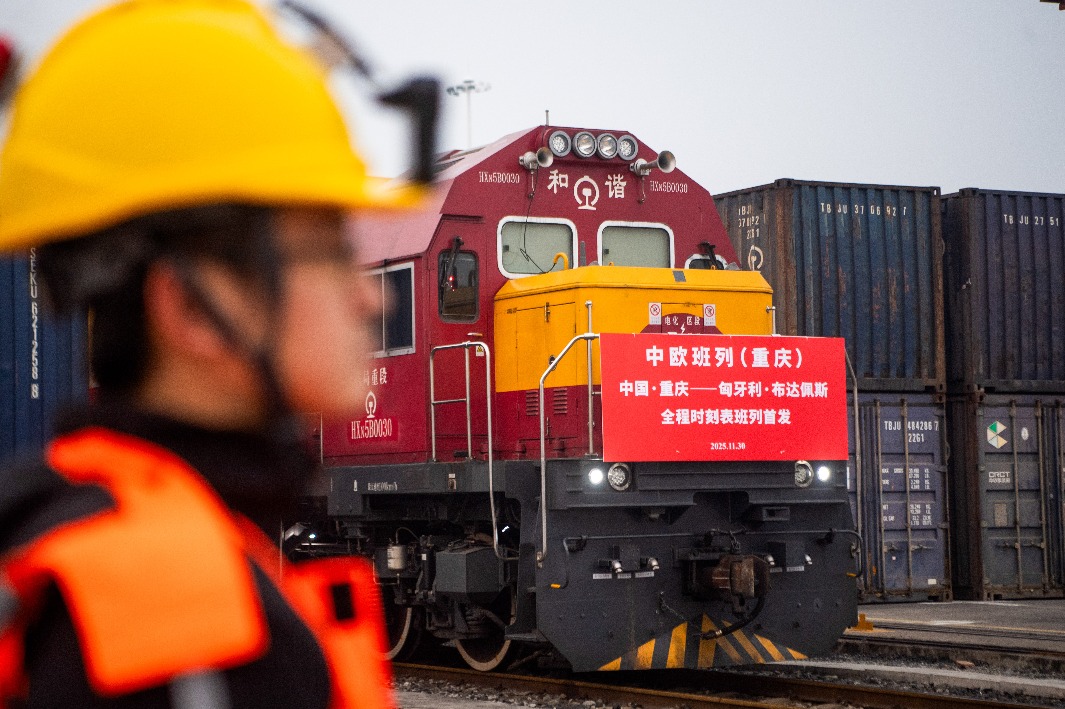
    Southwest China’s Chongqing municipality has inaugurated a new fixed-schedule China-Europe freight train service to Budapest, Hungary, strengthening trade connectivity between China and Central Europe. The inaugural departure occurred on Sunday, carrying automotive and motorcycle components, electronic products, and various consumer goods.

    This strategic logistics corridor will traverse approximately 11 days through multiple nations, exiting China via the Alataw Pass in Xinjiang Uygur Autonomous Region before progressing through Kazakhstan, Poland, the Czech Republic, and Slovakia, ultimately reaching Budapest—a crucial transportation hub for Central and Eastern European markets.

    The Chongqing-Budapest route represents the municipality’s second fixed-schedule China-Europe freight service, complementing its existing connection to Duisburg, Germany. Unlike conventional freight trains, these scheduled services operate on predetermined timetables and routes, substantially enhancing delivery reliability and efficiency.

    According to China Railway Chengdu Group Co., Ltd., this new logistics option reduces transit duration by approximately 30 percent compared to traditional freight services. Yang Lianchen, a representative from the Chongqing railway logistics center, emphasized that “the fixed-schedule service offers greater predictability for production planning, logistics and capital turnover,” particularly benefiting Chongqing’s electronics, automotive, motorcycle, and equipment manufacturing sectors.

    Recent data from China State Railway Group Co., Ltd. reveals the expanding scale of this transnational network, with China-Europe freight trains having completed 120,000 journeys while transporting merchandise valued at over $490 billion. As a flagship initiative of China’s Belt and Road Initiative, the China Railway Express has established an extensive logistics network spanning Eurasia, currently reaching 232 cities across 26 European nations and over 100 cities in 11 Asian countries.

  • Two dead, several injured after fatal multi-vehicle collision in Oman

    Two dead, several injured after fatal multi-vehicle collision in Oman

    A devastating chain-reaction collision on a major Omani highway has resulted in multiple casualties and significant traffic disruptions, according to authorities. The catastrophic incident occurred along Sultan Thuwaini bin Said Road beneath Baddab Bridge in the Ash-Sharqiya region, primarily affecting travel routes between Nizwa and Muscat.

    Initial reports from the Royal Oman Police indicate the tragedy began with a collision between two commercial trucks, which subsequently triggered a domino effect involving five additional vehicles traveling in the same lane. The compounded impact of the multi-vehicle pileup proved fatal for two Asian nationals, while numerous other individuals sustained injuries ranging from moderate to severe.

    Emergency response teams promptly arrived at the scene to provide critical medical assistance to the wounded, who were immediately transported to nearby medical facilities for treatment. Traffic management authorities have implemented strategic diversions to maintain vehicular flow while investigation and cleanup operations continue.

    The Royal Oman Police utilized official social media channels to alert the public about the incident, emphasizing the importance of road safety and recommending alternative routes for travelers. Motorists have been advised to exercise extreme caution in the affected area and adhere strictly to instructions from traffic personnel.

    Comprehensive investigations into the precise circumstances and contributing factors behind the collision are currently underway. Authorities have not yet released specific details regarding the identities of the deceased or the nationalities of those involved beyond confirming their Asian origin.

    This tragic event highlights ongoing concerns about road safety on Oman’s major transportation corridors, particularly during periods of high traffic volume. The incident serves as a somber reminder of the critical importance of defensive driving practices and maintaining appropriate following distances on high-speed roadways.

  • UAE petrol, diesel prices for December 2025 announced

    UAE petrol, diesel prices for December 2025 announced

    The United Arab Emirates has officially disclosed its fuel pricing structure for December 2025, marking a continuation of its market-linked pricing mechanism. The updated rates, which will take effect from December 1st, demonstrate modest increases across all petroleum product categories compared to November figures.

    According to the latest announcement made on Sunday, November 30th, Super 98 premium gasoline will retail at Dh2.70 per liter, representing a 7 fils increase from the previous month’s price of Dh2.63. Special 95 grade petrol will see a similar adjustment, rising to Dh2.58 per liter from November’s Dh2.51. The E-Plus 91 variant will experience a corresponding hike, moving from Dh2.44 to Dh2.51 per liter.

    Diesel prices have recorded the most substantial change, escalating to Dh2.85 per liter from the previous month’s rate of Dh2.67. This 18 fils increase represents the most significant monthly adjustment among all fuel categories.

    The UAE’s fuel pricing framework has operated under a deregulated model since 2015, when authorities implemented market reforms to align domestic petroleum prices with international market fluctuations. This systematic approach ensures that local fuel costs reflect global oil market dynamics, providing transparency and market-driven pricing for consumers and businesses alike.

    The December 2025 pricing announcement continues the nation’s established pattern of monthly fuel price revisions, maintaining consistency with international energy market trends while providing consumers with predictable pricing cycles.

  • Cyclone death toll jumps to 159 in Sri Lanka; floods hit capital

    Cyclone death toll jumps to 159 in Sri Lanka; floods hit capital

    Sri Lanka is confronting a severe humanitarian crisis in the wake of Cyclone Ditwah, with the official death toll surging to 159 individuals. The Disaster Management Centre (DMC) has confirmed an additional 203 persons remain missing as the nation struggles with the extensive devastation.

    While the cyclone itself moved away from the island on Saturday, its legacy continues to unleash chaos. The capital, Colombo, is now battling significant flooding in its northern districts. Officials attribute this new threat to rising water levels in the Kelani River, caused by heavy upstream rains that followed the storm’s passage.

    The scale of displacement is staggering. Preliminary reports indicate over 20,000 homes have been completely destroyed, forcing approximately 122,000 citizens into government-operated temporary shelters. A further 833,000 people have been adversely affected and are in urgent need of humanitarian assistance.

    In response to the catastrophe, President Anura Kumara Dissanayake has declared a nationwide state of emergency. This measure aims to streamline disaster response and facilitate international aid coordination. The Sri Lankan government has officially appealed for global support.

    International relief efforts are underway. India spearheaded the response, delivering critical relief materials and deploying two helicopters with crew members to conduct aerial rescue operations. Japan has also committed assistance, announcing plans to dispatch an assessment team to evaluate immediate needs on the ground.

    Despite the subsiding rains, access remains a critical hurdle. Several key roads in the worst-hit central provinces are still impassable, complicating relief distribution. Furthermore, a collapse of infrastructure has left nearly one-third of the population without electricity or clean running water due to ruined power lines and flooded water purification plants. Widespread internet disruptions have further hampered communication efforts.

    This event now stands as Sri Lanka’s most lethal natural disaster since 2017, drawing grim comparisons to historical tragedies that have previously battered the island nation.

  • Global airlines work through night to fix Airbus jets; US reports little disruption

    Global airlines work through night to fix Airbus jets; US reports little disruption

    A coordinated global effort by airlines successfully mitigated potential travel chaos over the Thanksgiving weekend as carriers worldwide addressed an urgent software recall affecting thousands of Airbus A320-family aircraft. The European planemaker’s surprise directive, impacting approximately 6,000 planes globally, prompted round-the-clock maintenance operations to rectify a software glitch in flight control computers.

    The remediation process, requiring both software rollbacks and selective hardware modifications, progressed more efficiently than initially anticipated. Major carriers including American Airlines, United Airlines, Delta Air Lines, Etihad Airways, and Air Arabia reported completing updates with minimal operational impact. Airbus CEO Guillaume Faury issued a public apology to airline customers and passengers affected by the recall, which represents over half of the global A320 fleet.

    The urgency stemmed from an October 30 incident involving a JetBlue flight from Cancun to Newark, where an unintended altitude deviation injured ten passengers. France’s BEA accident agency continues investigating the occurrence, which preliminary findings suggest may involve solar flare radiation interference with aircraft systems.

    Despite initial concerns about widespread cancellations during one of the year’s busiest travel periods, transportation officials reported limited disruption. U.S. Transportation Secretary Sean Duffy confirmed carriers made ‘great progress’ toward completing repairs by the Sunday midnight deadline. Flight tracking data from Cirium and FlightAware indicated generally normal operations at major global airports throughout the weekend.

    Industry analysts noted the timing proved fortunate for many airlines, as the alert arrived during off-peak hours for European and Asian carriers. The aviation industry’s coordinated response demonstrated improved crisis management capabilities following previous operational challenges.

  • Hong Kong fire: Anger grows over deadly blaze; Beijing warns against ‘disruption’

    Hong Kong fire: Anger grows over deadly blaze; Beijing warns against ‘disruption’

    Hong Kong remains gripped by grief and mounting anger following the catastrophic high-rise blaze that claimed 128 lives and left 150 individuals missing. The devastating fire at Wang Fuk Court complex in Tai Po district has triggered both public mourning and government apprehension about potential social unrest.

    Authorities have initiated parallel criminal and corruption investigations into the tragedy, with 11 individuals already detained in connection with the incident. The investigation focuses on possible use of unsafe materials during ongoing renovations at the residential complex, where seven of eight 32-story towers were engulfed in flames despite being wrapped in bamboo scaffolding and protective mesh.

    Tensions escalated when police arrested 24-year-old university student Miles Kwan on suspicion of inciting sedition through a petition demanding government accountability. The online petition had gathered over 10,000 signatures before being shut down, calling for an independent probe into potential corruption, proper resident resettlement, and comprehensive review of construction oversight protocols.

    China’s national security apparatus issued a stern warning against attempts to exploit the tragedy, stating that ‘anti-China disruptors’ would face severe punishment under Hong Kong’s national security legislation. This response reflects authorities’ heightened sensitivity following the 2019 pro-democracy protests.

    Revelations have emerged that residents had previously raised concerns about fire hazards posed by the renovation work, including questions about the flammability of protective green mesh covering the scaffolding. Despite these warnings, officials had assured residents of ‘relatively low fire risks’ just last year.

    The tragedy represents Hong Kong’s deadliest fire incident since 1948, exposing critical safety failures as investigations confirm the complex’s fire alarm systems were not functioning properly at the time of the disaster. Rescue operations have concluded, though authorities anticipate discovering additional victims during ongoing building assessments.

  • South Korean e-commerce firm Coupang says 33.7 million customer accounts breached

    South Korean e-commerce firm Coupang says 33.7 million customer accounts breached

    South Korea’s dominant e-commerce platform Coupang has confirmed a significant cybersecurity incident compromising the personal data of approximately 33.7 million customer accounts. The company, often referred to as South Korea’s equivalent of Amazon, disclosed that unauthorized access to its systems originated from overseas servers beginning June 24th.

    The breach was detected on November 18th, prompting immediate notification to relevant authorities. According to Coupang’s official statement, the exposed information includes customer names, email addresses, phone numbers, shipping addresses, and limited order history data. Crucially, the company emphasized that financial payment details and login credentials remained secure throughout the incident.

    This security compromise affects a substantial portion of Coupang’s user base, considering the company reported 24.7 million active commerce customers during the third quarter. The platform’s ‘Rocket’ delivery service has made it an integral part of daily life for millions of South Korean consumers.

    Coupang’s investigation remains ongoing with collaboration from law enforcement and regulatory agencies. The company has not yet released details regarding potential mitigation measures for affected customers or the specific methodologies employed in the cyber intrusion.

  • Hong Kong fire death toll rises to 146 as thousands pay respects

    Hong Kong fire death toll rises to 146 as thousands pay respects

    Hong Kong is reeling from its most catastrophic fire disaster in over seven decades, with authorities confirming at least 146 fatalities after an inferno ravaged multiple residential towers in the Tai Po district. The death toll continues to climb as recovery teams work through the charred remains of Wang Fuk Court, where 150 residents remain unaccounted for and 79 others suffered injuries.

    The conflagration, which ignited Wednesday and required more than 2,000 firefighters to fully extinguish by Friday, reached temperatures exceeding 500°C (932°F). The blaze spread with unprecedented speed across seven of eight interconnected towers, facilitated by highly flammable plastic netting and bamboo scaffolding surrounding the buildings during ongoing renovations.

    Law enforcement agencies have launched multiple investigations into the tragedy. Eight individuals face corruption charges related to the renovation work, while three others have been detained on manslaughter allegations. Police indicate the engineering company overseeing the project may have demonstrated ‘gross negligence’ in safety protocols.

    Fire safety systems failed catastrophically during the emergency, with investigations revealing non-functional alarms across all eight towers. The absence of early warnings proved particularly devastating for the complex’s elderly residents, who comprise nearly 40% of the approximately 4,600 inhabitants.

    The international community has been impacted, with Indonesia’s consulate reporting seven nationals among the deceased and the Philippines confirming one citizen perished. The firefighting community mourns the loss of 37-year-old firefighter Ho Wai-ho, who collapsed during rescue operations.

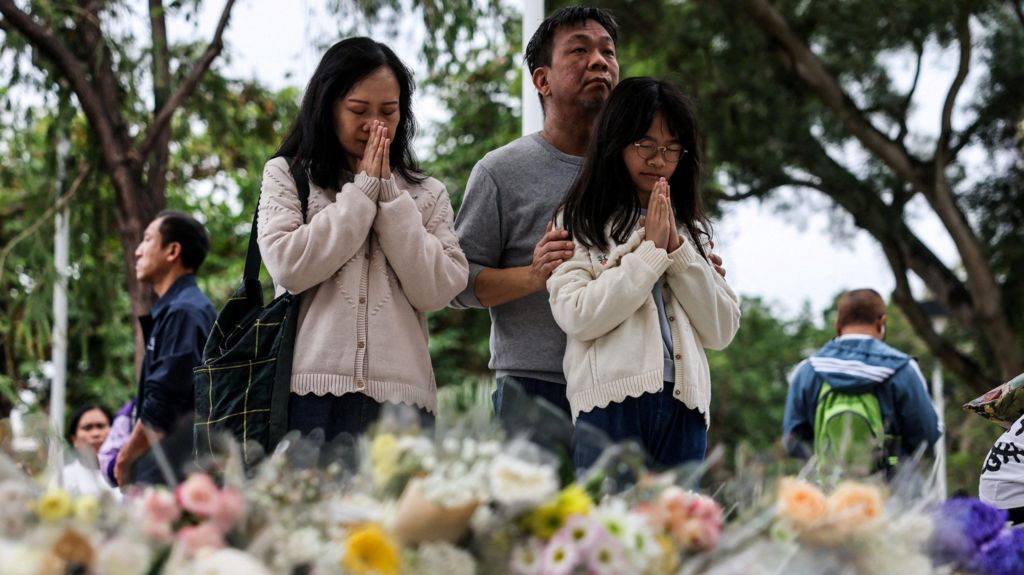
    As thousands gather in solemn procession—forming queues stretching nearly two kilometers—the city has declared an official three-day mourning period. Flags fly at half-mast while residents create makeshift memorials with flowers and handwritten tributes at the disaster site.

    The tragedy has ignited urgent debates about construction safety standards in dense urban environments, particularly regarding the widespread use of bamboo scaffolding and flammable cladding materials. Hong Kong’s buildings department has temporarily suspended work on 30 private projects pending comprehensive safety reviews.