标签: Asia

亚洲

  • Chaos erupts at Indian airports as country’s largest airline cancels flights

    Chaos erupts at Indian airports as country’s largest airline cancels flights

    NEW DELHI — India’s aviation sector experienced significant turmoil this week as IndiGo, the nation’s dominant carrier, faced massive flight disruptions following the implementation of stricter crew duty regulations. The new mandates, designed to combat pilot fatigue and enhance flight safety, have exposed critical operational vulnerabilities within the budget airline.

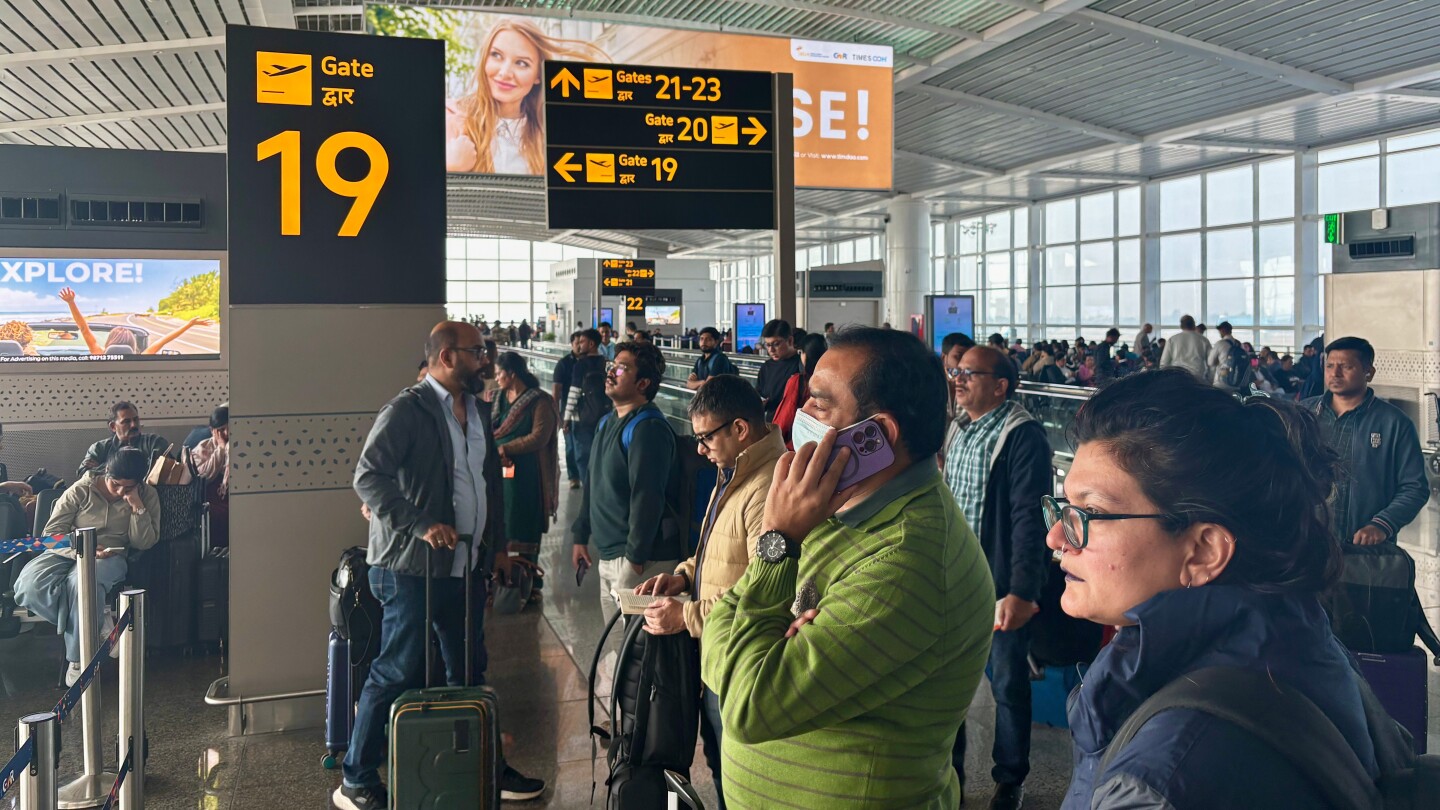
    Across major Indian airports, scenes of passenger distress unfolded as thousands of travelers encountered canceled flights and extensive delays. Airport terminals transformed into makeshift sleeping areas with stranded passengers occupying floors while others endured hours-long queues at service counters. The communication breakdown left many without clear alternatives or compensation information.

    The regulatory changes, implemented in two phases with the final segment activating in November, substantially extend mandatory rest periods and restrict night flying hours. While other carriers including Air India have adapted without major disruptions, IndiGo’s failure to adequately adjust its rostering systems has resulted in operational collapse. On Thursday alone, over 300 flights were grounded with hundreds more experiencing significant delays.

    With approximately 2,300 daily flights commanding 65% of India’s domestic market, IndiGo’s operational crisis has created nationwide travel chaos. The Delhi International Airport issued an advisory confirming all domestic IndiGo flights would remain canceled until midnight Friday.

    The human impact was starkly illustrated by Sajal Bose, a senior citizen whose flight from Kolkata to New Delhi was canceled merely one hour before scheduled departure. Forced to undertake a nine-hour train journey to access alternative flight options, Bose described the situation as ‘extremely irresponsible and negligent’ toward elderly passengers.

    In internal communications, CEO Pieter Elbers acknowledged multiple contributing factors including technology failures, adverse weather, airport congestion, and the regulatory changes. India’s Civil Aviation Ministry confirmed the disruptions stemmed from ‘misjudgment and planning gaps’ during implementation of the second phase of new rules.

    The airline has requested temporary exemptions from regulators while implementing corrective measures, projecting full operational restoration by February 10. Meanwhile, IndiGo announced plans to reduce flight operations beginning December 8 to minimize further passenger disruptions.

  • HKSAR govt urges residents to vote, eyes post-fire recovery

    HKSAR govt urges residents to vote, eyes post-fire recovery

    Hong Kong’s political leadership has issued a dual call to action—honoring the victims of the recent catastrophic fire while urging civic participation in the upcoming legislative elections. Chief Executive John Lee Ka-chiu addressed these pressing matters during a solemn National Constitution Day commemoration on Thursday, December 4th, 2025.

    The ceremony, jointly organized by the Hong Kong Special Administrative Region government and the Central People’s Government Liaison Office in Hong Kong, commenced with a moment of silence for the 159 lives lost in the November 26th Wang Fuk Court inferno in Tai Po. The traditional applause segment was omitted as a mark of respect for the deceased.

    Lee characterized the tragedy as having plunged ‘all of Hong Kong society into extreme grief,’ while extending official condolences to bereaved families and displaced survivors. The Chief Executive reaffirmed his administration’s commitment to transformative action, having established an independent investigative committee to conduct a comprehensive review of building safety protocols and prevent future catastrophes.

    ‘This devastating event has only reinforced my conviction in constitutional principles and legal governance,’ Lee asserted before an audience of approximately 900 attendees from various community sectors. He emphasized that the Constitution’s fundamental purpose lies in safeguarding public welfare, vowing to translate ‘painful lessons into concrete safety measures.’

    With critical Legislative Council elections scheduled for Sunday, Lee made an impassioned appeal for robust voter participation. He stressed that capable legislators are essential partners in approving reconstruction funding, enacting new safety legislation, and driving systemic reforms during the recovery period.

    Liu Guangyuan, Deputy Director of the Liaison Office, endorsed Lee’s message, praising the government’s crisis response and affirming that proceeding with elections aligns with constitutional principles and facilitates disaster recovery. He simultaneously issued a stern warning against ‘anti-China destabilizing forces’ attempting to exploit the tragedy, emphasizing they would ‘face severe legal consequences.’

    The event marked Hong Kong’s ninth annual observance of China’s National Constitution Day, established in 2014 to promote legal awareness and civic responsibility.

  • Students forgo vacations to prep for overseas universities

    Students forgo vacations to prep for overseas universities

    A significant shift in educational priorities is emerging among Chinese middle-income families, who are increasingly redirecting vacation budgets toward short-term overseas study programs designed to prepare students for foreign universities. This trend represents a strategic investment in children’s future academic prospects, with families routinely allocating tens of thousands of yuan for these international educational experiences.

    Recent data from the New Oriental Education and Technology Group’s 2025 China Overseas Study Development Report reveals a substantial increase in students choosing to study abroad after participating in overseas programs. The figures show a remarkable jump from 27% in 2015 to 43% in 2025, indicating a growing preference for experiential learning before making long-term educational commitments.

    This educational approach has gained consistent momentum over four consecutive years, establishing the ‘experience first, decide later’ model as a mainstream pathway for Chinese students considering international education. The trend reflects evolving parental perspectives on vacation time, which increasingly view breaks as educational extensions rather than mere periods of relaxation or travel.

    Zhu Lulu, Vice-Principal of the high school division at Wuxi Dipont School of Arts and Science, notes that education companies have responded to this demand by expanding their offerings of short-term international programs. ‘Contemporary parents demonstrate more progressive attitudes toward education, recognizing the dual benefits of exploration and academic development during vacation periods,’ Zhu explained.

    These programs serve multiple purposes, from helping students assess campus environments and living conditions to providing rigorous academic preparation through credit-bearing university courses and selective research programs. Prestigious opportunities such as the Ross Mathematics Program and Yale Young Global Scholars not only enhance academic readiness but also strengthen college applications, offering tangible advantages in the competitive admissions landscape.

  • Xi, Macron vow to deepen relations

    Xi, Macron vow to deepen relations

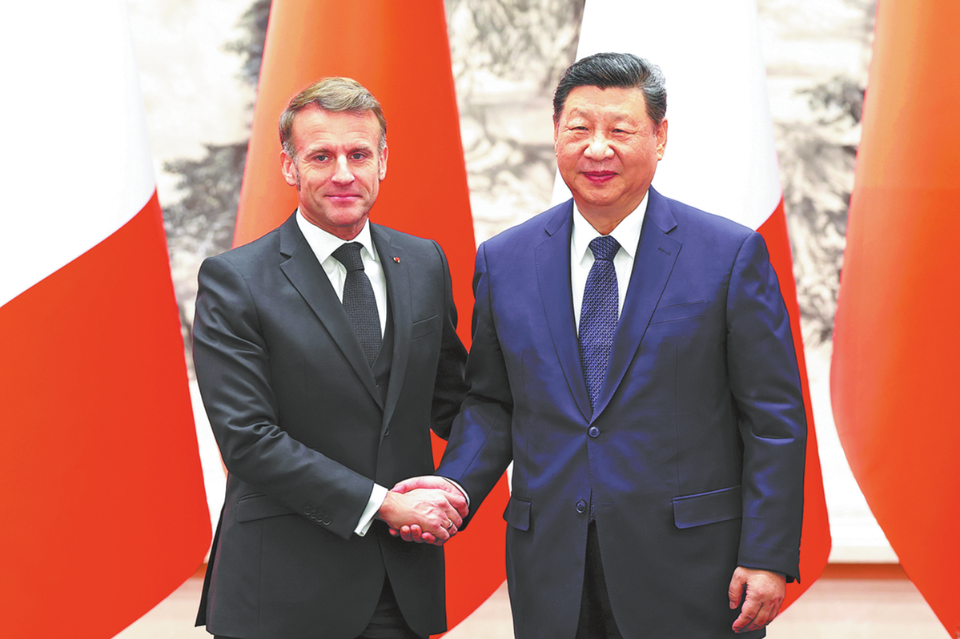
    In a significant diplomatic engagement, Chinese President Xi Jinping and French President Emmanuel Macron have pledged to deepen bilateral relations during Macron’s state visit to Beijing. The two leaders emphasized the importance of major-country responsibility in addressing global challenges during their talks at the Great Hall of the People on Thursday.

    President Macron’s delegation, comprising over 80 members including several ministers and more than 30 CEOs of major French corporations, arrived in Beijing on Wednesday for this fourth state visit since 2017. The itinerary includes both political discussions in the capital and cultural engagements in Sichuan province.

    The bilateral meeting yielded substantial outcomes, with both presidents personally witnessing the signing of multiple cooperation agreements spanning nuclear energy, agricultural food products, education, and ecological environmental protection. These agreements signal a broadening of the comprehensive strategic partnership between the two nations.

    President Xi articulated China’s perspective on current global dynamics, noting that “as changes unseen in a century accelerate, humanity stands at a crossroads facing critical directional choices.” He called for China and France to jointly uphold multilateralism and position themselves on “the right side of history” during this transformative period.

    The timing of this visit carries particular symbolic significance, marking the commencement of a new 60-year cycle (known as jiazi in Chinese tradition) in Sino-French relations. This follows last year’s celebration of the 60th anniversary of diplomatic relations between the two countries.

    President Xi emphasized the complementary nature of China’s 15th Five-Year Plan (2026-2030) and French economic interests, noting that the plan presents “a list of opportunities” for international partners. He advocated for expanded cooperation while criticizing protectionist tendencies, stating that “openness and cooperation bring development opportunities, while decoupling and supply chain fragmentation lead to isolation.

    As permanent members of the UN Security Council and founding UN members, both leaders committed to practicing “true multilateralism” and upholding the international legal order. They specifically addressed the need for improved global economic governance, noting current imbalances between developed and developing nations in international financial institutions.

    The discussions also covered China-Europe relations broadly, with President Xi characterizing the past 50 years of exchanges as “mutually beneficial and contributing to each other’s success.” He urged maintaining the partnership positioning between China and Europe with “strategic autonomy and win-win cooperation” at its core.

  • Ten photos from across China: Nov 28 – Dec 4

    Ten photos from across China: Nov 28 – Dec 4

    China Daily Information Co (CDIC) maintains rigorous copyright protection measures for all content published across its digital platforms. The organization asserts exclusive ownership rights over all textual, photographic, and multimedia materials appearing on its websites. According to the published policies, republication or utilization of any content in any format requires prior written authorization from CDIC. The company has established specific technical recommendations for optimal user experience, suggesting browsers with 1024*768 resolution or higher for best viewing results. The publication operates under formal registration number 130349 and holds multimedia online publishing license 0108263. The platform provides information regarding organizational background, advertising opportunities, contact methods, and employment prospects including specialized sections for expatriate recruitment. The notice concludes by encouraging visitors to follow the organization’s official channels for updates and continued engagement.

  • Palestinian embassy accuses UK government of failing to provide security after ‘multiple’ attacks

    Palestinian embassy accuses UK government of failing to provide security after ‘multiple’ attacks

    The Palestinian Embassy in London has formally accused the United Kingdom government of neglecting its diplomatic protection obligations following a succession of aggressive incidents targeting its premises. Embassy officials report that attacks have intensified both in frequency and severity since the onset of Israel’s military operations in Gaza, creating an environment of intimidation and fear among diplomatic staff.

    According to an official spokesperson, repeated requests for enhanced security measures have been systematically ignored by UK authorities. The embassy has engaged both the Foreign Office and the Metropolitan Police’s Diplomatic Protection Unit, yet received only sporadic police patrols instead of the comprehensive security detail required under international law. The most recent incident involved pro-Israel demonstrators who blockaded the embassy entrance while displaying Israeli and British flags, additionally defacing the property with stickers endorsing the Israeli Defense Forces.

    This pattern of violence extends beyond recent events, with embassy personnel recounting multiple previous attacks including shattered windows and paint projectiles launched while staff remained inside the building. Diplomats characterize these actions as politically motivated intimidation tactics designed to hinder Palestine’s diplomatic representation in the United Kingdom.

    The Vienna Convention on Diplomatic Relations explicitly mandates host nations to implement all necessary measures to safeguard diplomatic missions against intrusion, damage, or disruption of operations. Palestinian officials contend that Britain’s security provisions have consistently failed to meet this international standard, particularly noteworthy given the UK’s formal recognition of Palestinian statehood in September.

    The embassy has urgently called for a full government investigation and implementation of appropriate protective measures, emphasizing that current security shortcomings endanger staff and compromise diplomatic functions. Meanwhile, the Metropolitan Police confirmed awareness of the situation while noting that no formal incident report had been filed, asserting that diplomatic security protocols undergo continuous risk assessment and review.

  • Asian shares are mixed after Wall Street inches closer to its all-time high

    Asian shares are mixed after Wall Street inches closer to its all-time high

    Financial markets across Asia exhibited divergent trends on Friday as investors adopted a cautious stance ahead of critical economic data releases and central bank policy decisions. The trading session reflected growing uncertainty about monetary policy directions in both the United States and China.

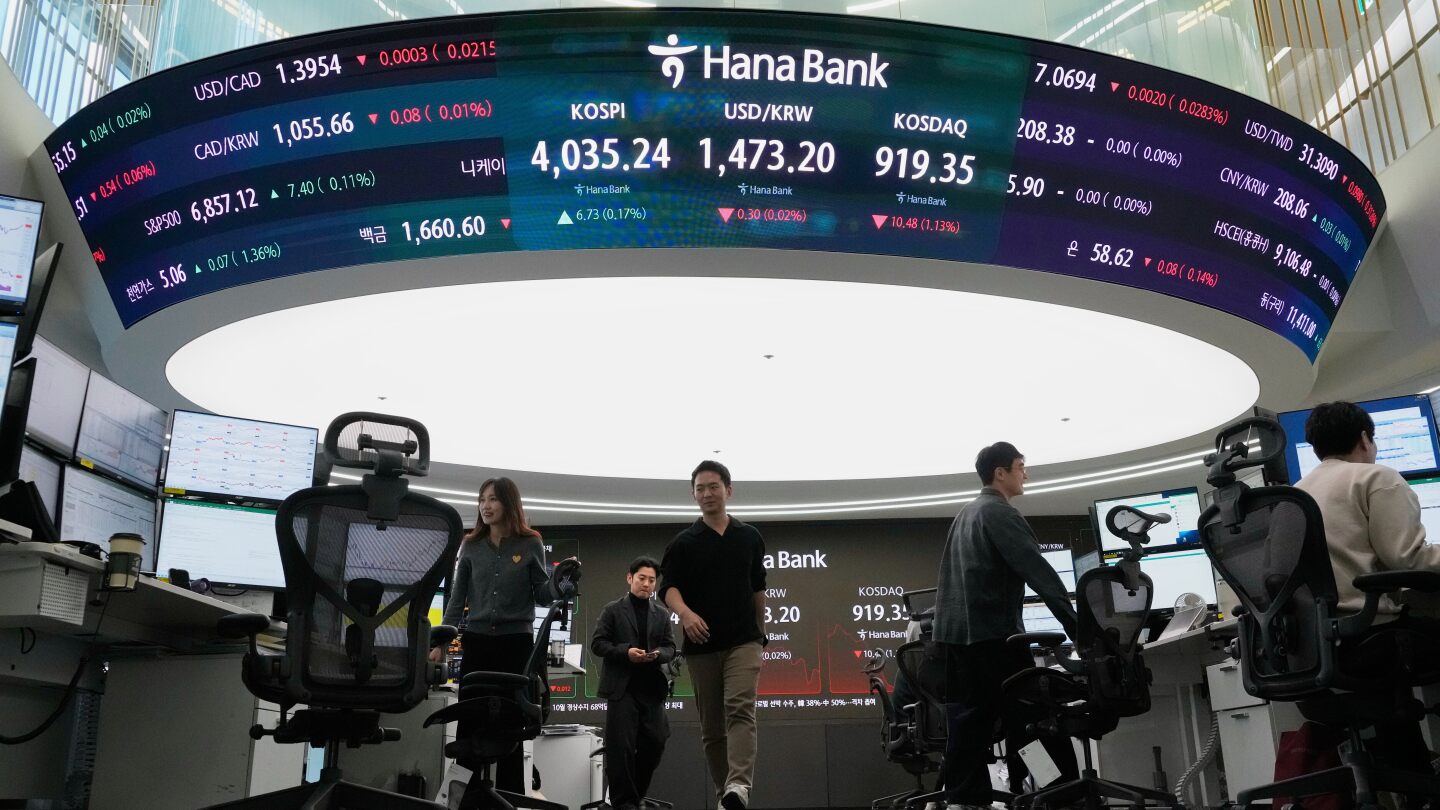
    Japan’s Nikkei 225 index retreated significantly, dropping 1.2% to close at 50,408.70, partially reversing previous gains. This decline coincided with disappointing economic data showing household spending decreased by 3.0% year-on-year in October—the most substantial contraction since January 2024 and contrary to market expectations of modest growth. Technology stocks led the downturn, with chip testing equipment manufacturer Advantest Corp. falling nearly 2.3% and semiconductor producer Tokyo Electron declining 2.8%.

    Chinese markets presented a mixed picture as traders awaited key economic indicators scheduled for release next week, including inflation figures, trade data, and producer price indices. Hong Kong’s Hang Seng index slipped 0.1% to 25,921.69, while mainland China’s Shanghai Composite index gained 0.1% to reach 3,877.83. Market participants also anticipated policy signals from upcoming high-level economic meetings in China.

    South Korea’s Kospi index outperformed regional peers, climbing 1.1% to 4,074.00, driven by substantial gains in major corporations. LG Electronics surged 5.6%, while Hyundai Motors advanced 7.2%. Australia’s S&P/ASX200 registered minimal movement, edging up less than 0.1% to 8,623.40, and Taiwan’s Taiex remained nearly unchanged.

    India’s Sensex index posted modest gains, rising 0.1% after the Reserve Bank of India reduced its repo rate to 5.25% from 5.5%, citing weak price pressures and anticipated economic slowdown. This monetary easing contrasted with growing uncertainty about the Federal Reserve’s interest rate trajectory.

    The cautious Asian trading session followed a relatively stable performance on Wall Street, where the S&P 500 added 0.1% to reach 6,857.12—positioning it just 0.5% below its all-time high. The Dow Jones Industrial Average dipped slightly by 0.1% to 47,850.94, while the Nasdaq composite rose 0.2% to 23,505.14. Retail giant Dollar General surged 14% after reporting better-than-expected quarterly profits, demonstrating improved customer traffic and enhanced profit margins.

    Market sentiment remained influenced by concerns about potential overinvestment in artificial intelligence sectors and ongoing uncertainty regarding Federal Reserve policy. Recent labor market data showing fewer unemployment claims and reduced layoffs suggested stronger job market conditions than anticipated, potentially reducing the urgency for immediate interest rate cuts.

    In commodity markets, U.S. benchmark crude declined by 17 cents to $59.50 per barrel, while Brent crude, the international standard, slipped 11 cents to $63.15 per barrel. Currency markets saw the U.S. dollar weaken to 154.77 Japanese yen from 155.12 yen, while the euro strengthened slightly to $1.1657 from $1.1645.

  • Putin and Modi to discuss Russia-India trade and defense ties amid US pressure

    Putin and Modi to discuss Russia-India trade and defense ties amid US pressure

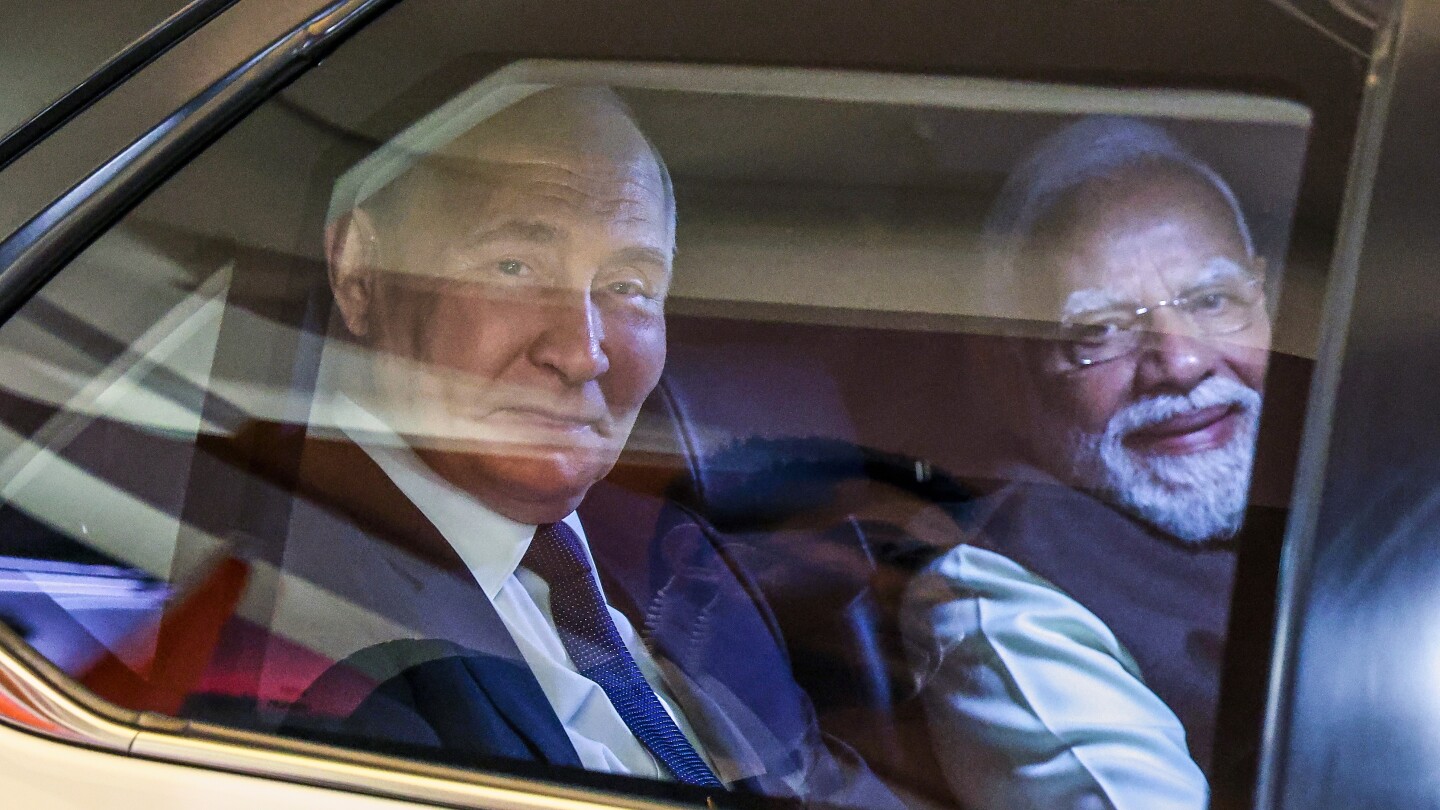
    Russian President Vladimir Putin commenced high-stakes negotiations with Indian Prime Minister Narendra Modi during the 23rd Russia-India Annual Summit in New Delhi on Friday, marking a critical juncture in bilateral relations amid ongoing geopolitical pressures. The meeting represents Putin’s first state visit to India since 2021, characterized by demonstrative camaraderie as Modi personally welcomed the Russian leader with an enthusiastic embrace at the airport.

    The summit agenda encompasses multifaceted discussions spanning defense cooperation, energy security, and labor mobility frameworks. Defense collaboration features prominently, with India advocating for expedited delivery of two additional S-400 missile systems under the 2018 $5.4 billion agreement, alongside modernization programs for Russia-supplied Su-30MKI fighter jets and accelerated military hardware transfers. February’s military cooperation pact, recently ratified by Moscow’s State Duma, further institutionalizes joint exercises, logistical support, and disaster response mechanisms.

    Economic dimensions reveal ambitious targets, with bilateral trade reaching $68.7 billion in the previous fiscal year and both nations aspiring to achieve $100 billion by 2030. India seeks to address its significant trade deficit through expanded pharmaceutical, agricultural, and textile exports while pursuing long-term fertilizer supply agreements and elimination of non-tariff barriers. The migration agreement for skilled Indian workers represents another breakthrough expected from the talks.

    This diplomatic engagement occurs against a complex backdrop where Western nations criticize India’s continued import of discounted Russian crude, which reached unprecedented levels making India Russia’s second-largest oil customer after China. The United States has implemented sanctions targeting Russian oil producers and elevated tariffs on Indian goods to 50%, directly linking these measures to India’s energy purchases. Simultaneously, negotiations for critical trade agreements with both the European Union and United States face potential complications due to India’s sustained engagement with Moscow.

    Indian officials maintain that their country adheres to all international sanctions regimes while pursuing national economic interests. The summit consequently embodies India’s delicate balancing act between historical Russo-Indian partnerships and contemporary Western alliances, all while the Ukraine conflict approaches its fourth year with ongoing international efforts to broker peace settlements.

  • US unveils sprawling consulate in Erbil as troops shift to Kurdistan region

    US unveils sprawling consulate in Erbil as troops shift to Kurdistan region

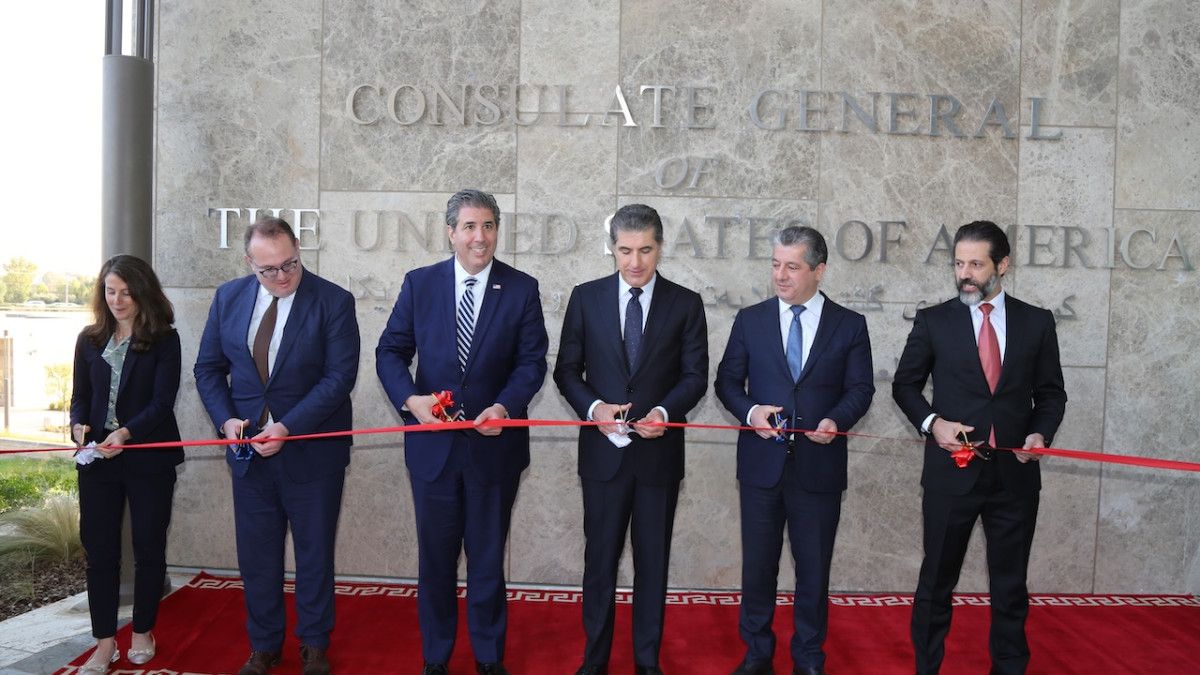
    In a significant diplomatic move, the United States inaugurated its largest global consulate complex in Erbil, capital of Iraq’s semi-autonomous Kurdish region, on Wednesday. The massive 206,000-square-meter facility, constructed at an estimated cost of $800 million since 2018, represents a substantial strategic investment in northern Iraq even as American forces draw down elsewhere in the country.

    The opening coincides with a fundamental shift in the US military mission in Iraq, transitioning from counter-Islamic State operations to a mutual defense partnership with Baghdad. This realignment has already seen hundreds of US troops withdrawn from key bases including Ain al-Asad in Anbar Province and the Victory Base Complex near Baghdad International Airport, with remaining forces increasingly consolidating in the Kurdish region.

    Erbil has served as a crucial hub for US anti-IS operations since 2014, though officials declared major combat operations complete earlier this year. The new consulate’s opening underscores Washington’s long-term commitment to the region despite complex political dynamics. Iraqi Prime Minister Mohammed Shia al-Sudani recently asserted that resolving Iran-backed militia issues would require US troop departures, highlighting ongoing tensions.

    While consulates traditionally focus on civilian functions—citizen services, cultural promotion, and economic diplomacy—this facility carries profound geopolitical significance. Michael Rigas, US deputy secretary of state for management and resources, stated the compound embodies “America’s long-term partnership with Iraq and the Iraqi Kurdistan Region.” Kurdish President Nechirvan Barzani welcomed it as “a clear political message regarding the importance of Erbil.”

    The economic dimension remains crucial, with Rigas noting the region serves as “a dynamic entry point to Iraq’s markets for American companies.” Energy interests feature prominently, as US firms including ExxonMobil maintain substantial investments in Kurdistan’s oil sector. Recent attacks on energy infrastructure, including a July drone strike and September rocket attack on the Khor Mor gas field, underscore ongoing security challenges.

    The Erbil government has persistently sought enhanced security cooperation, including independent air defense capabilities—a move opposed by both Baghdad and Iran. These dynamics unfold against backdrop of delicate negotiations over oil revenue sharing and pipeline operations between Erbil, Ankara, and Baghdad, ensuring the new consulate will operate at the nexus of complex diplomatic, security, and economic considerations.

  • Outgoing New York City mayor Eric Adams signs anti-BDS law

    Outgoing New York City mayor Eric Adams signs anti-BDS law

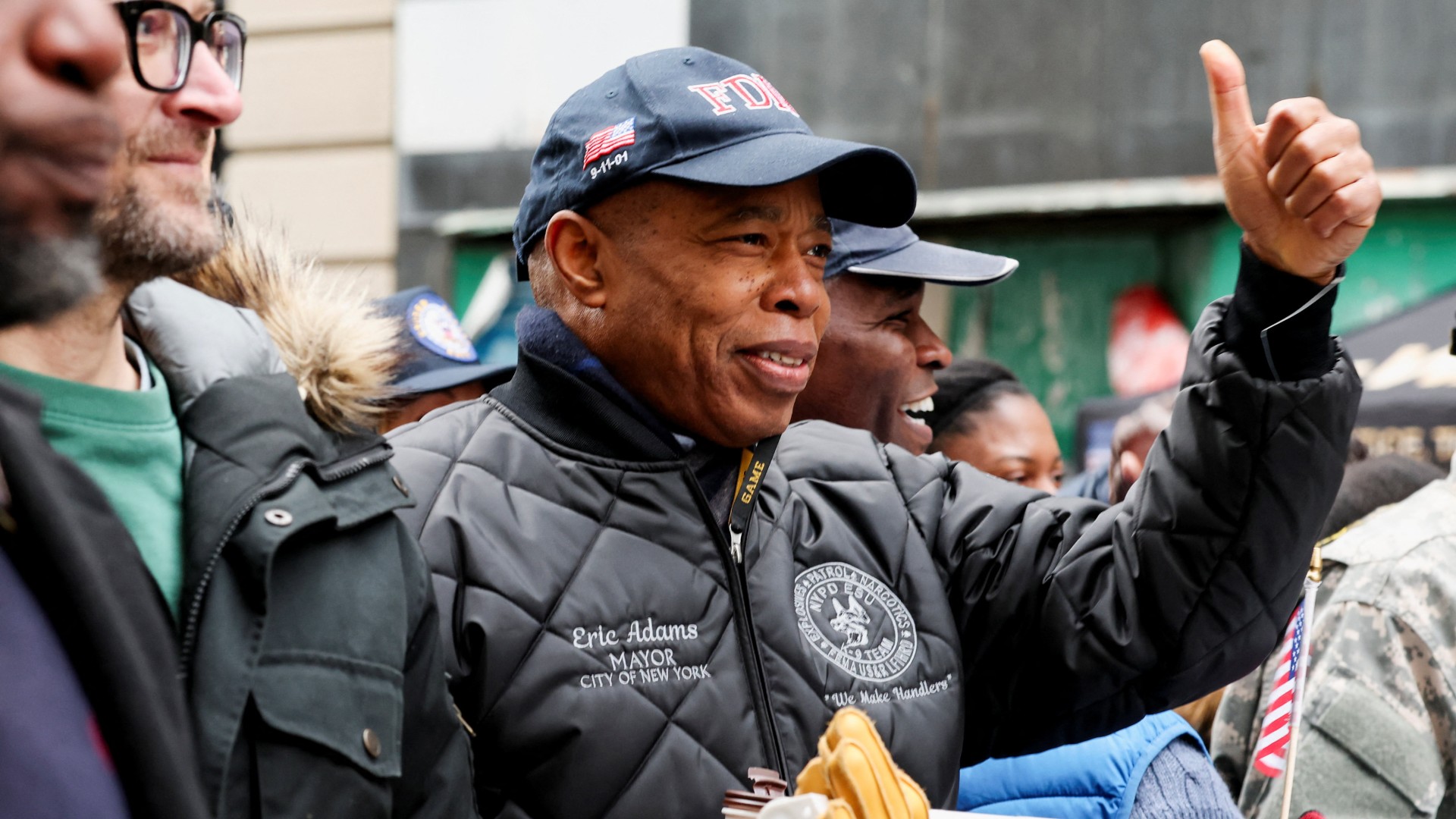
    In his final legislative actions before leaving office, New York City Mayor Eric Adams enacted two executive orders on Wednesday that have ignited immediate controversy. The first order formally prohibits municipal entities from participating in or supporting the Boycott, Divestment, and Sanctions (BDS) movement against Israel, while the second empowers authorities to establish protest-free zones around houses of worship.

    Executive Order 60 explicitly bans city agencies from engaging with organizations that support the BDS movement, which Adams characterized as “antisemitic in nature and discriminatory in practice.” The order mandates that investment decisions for the city’s five pension systems, serving approximately 750,000 beneficiaries, must be based solely on financial considerations rather than political stances. Currently, New York City maintains $300 million in Israeli bonds and assets within its $300 billion investment portfolio.

    The second directive, Executive Order 61, instructs the NYPD to review its patrol guidelines and explore establishing designated protest zones at significant distances from religious institutions. This measure follows recent demonstrations outside Park East Synagogue where protesters chanted anti-Israel slogans during an event promoting Jewish settlement in the occupied West Bank.

    These actions create an immediate political challenge for mayor-elect Zohran Mamdani, a progressive who has historically supported the BDS movement. Mamdani must now decide whether to uphold or overturn the orders upon assuming office—a decision that will inevitably provoke strong reactions from opposing factions within the city’s substantial Jewish and Muslim communities, each numbering approximately one million residents.

    The timing of these orders coincides with Adams’ recent taxpayer-funded trip to Israel, where he notably declared that he “served” Israeli Jews as mayor of New York. This statement, along with the executive orders, has renewed concerns about foreign influence in American politics and the appropriate boundaries between municipal governance and international conflicts.

    Civil rights organizations have criticized the measures as potentially unconstitutional restrictions on free speech and protest rights, particularly amid ongoing tensions surrounding the Israel-Palestine conflict. Adams’ administration has faced previous allegations of aggressively handling pro-Palestinian demonstrations, including police interventions at Columbia University encampments and Nakba-day protests in Brooklyn.