标签: Asia

亚洲

  • Annual Fairy’s Day marked in Xizang

    Annual Fairy’s Day marked in Xizang

    The ancient streets of Lhasa came alive with vibrant cultural celebrations on Thursday as the Tibetan Autonomous Region observed its annual Fairy’s Day, a traditional event dedicated to honoring women and Tibetan Buddhist heritage. Corresponding with the 15th day of the tenth month in the Tibetan calendar, this year’s festivities brought thousands of participants to the sacred grounds of Jokhang Temple.

    Women adorned in elaborate traditional costumes formed processions through the city, carrying ceremonial hada scarves—white silk khata symbols of purity and goodwill—and vessels of barley wine. The celebratory atmosphere filled the air as communities gathered to pay homage to Palden Lhamo, the revered female protector deity in Tibetan Buddhism known as the guardian of the Dharma.

    The temple precincts echoed with rhythmic movements as participants performed Guozhuang, the traditional Tibetan circle dance characterized by synchronized steps and colorful attire. This cultural expression, deeply rooted in Tibetan heritage, served as both spiritual devotion and community bonding experience.

    Local authorities noted the significance of preserving such cultural traditions that have been maintained for centuries. The festival not only reinforces cultural identity but also highlights the respected status of women in Tibetan society, where the feminine divine occupies a central role in spiritual practices.

    The celebrations demonstrated the continuing vitality of Tibetan cultural traditions within contemporary society, showcasing how ancient customs adapt and thrive in modern times while maintaining their spiritual significance and community functions.

  • Survivors plead for urgent aid after catastrophic floods and landslides killed over 1,500 in Asia

    Survivors plead for urgent aid after catastrophic floods and landslides killed over 1,500 in Asia

    Rescue operations across Southeast Asia are battling immense logistical challenges one week after catastrophic flooding and landslides claimed over 1,500 lives. The regional disaster has left a trail of unprecedented destruction, with Indonesia bearing the heaviest burden at 883 confirmed fatalities, followed by Sri Lanka with 486, and Thailand with 185.

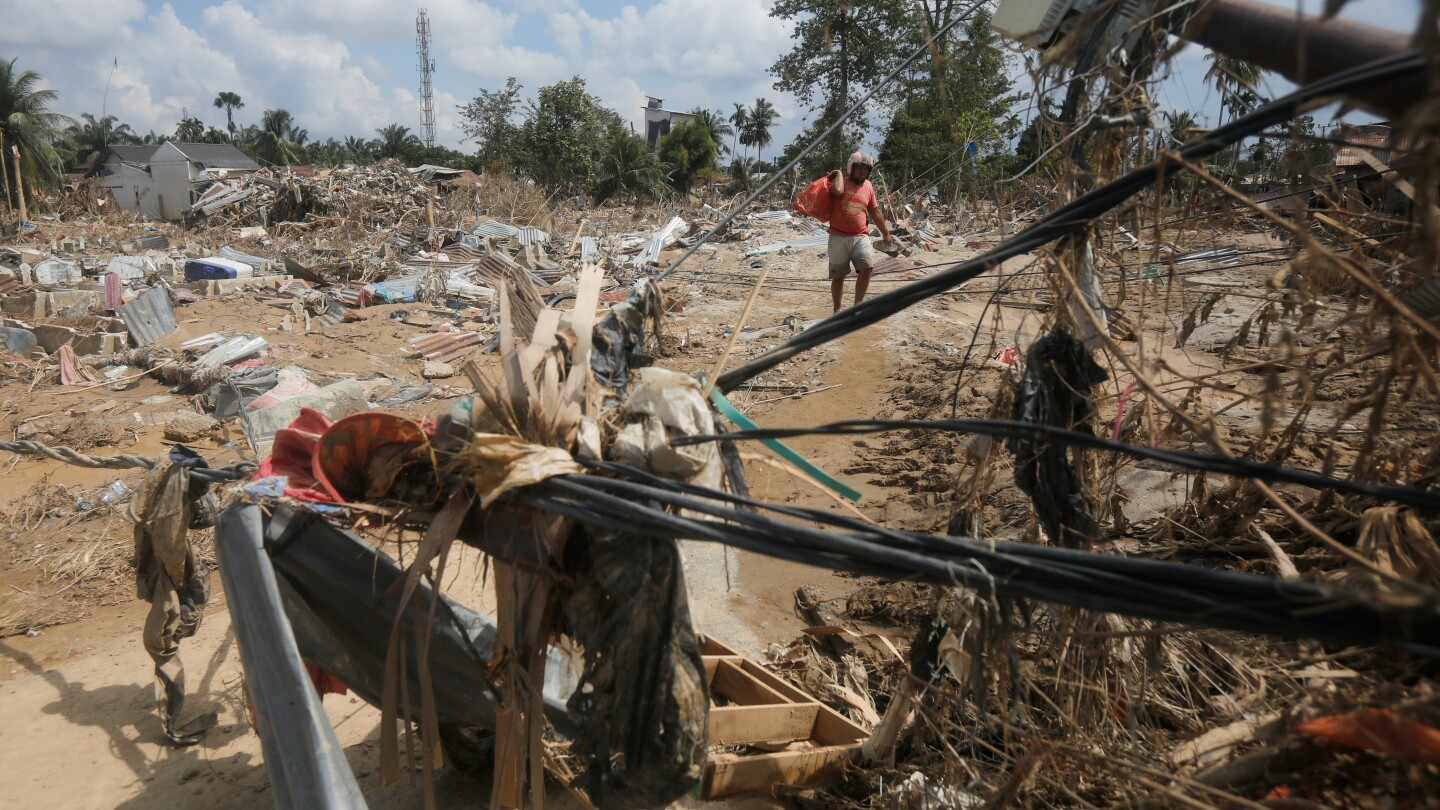
    The hardest-hit region, Aceh Tamiang in Indonesia’s Aceh province, presents a landscape of utter devastation. Entire villages have been entombed under layers of mud and debris, severing critical infrastructure. Roads have been washed away, rendering many areas accessible only by helicopter. The collapse of transmission towers has plunged communities into darkness and severed communication lines.

    For the more than 260,000 displaced residents, survival hinges on the rapid delivery of aid. Clean water, sanitation, and shelter have become urgent priorities. Relief trucks from Medan city are navigating debris-clogged roads that only recently reopened, significantly slowing distribution efforts according to National Disaster Management Agency spokesperson Abdul Muhari.

    Survivors describe harrowing escapes from torrents of water filled with logs that demolished entire neighborhoods. On the battered bridge over the swollen Tamiang River, families have sought refuge under makeshift tents fashioned from bedsheets. Ibrahim bin Usman, a survivor who lost six family homes, described the event as ‘a tsunami from the hills,’ noting many bodies remain buried beneath the mud.

    The humanitarian crisis is compounded by severe water contamination. With wells polluted and pipes destroyed, residents report being forced to drink sediment-laden floodwater after minimal purification, leading to illness among children.

    Frustration is mounting among survivors who accuse local officials of corruption and blame deforestation for exacerbating the disaster. Hadi Akher, a bare-chested survivor in a crowd awaiting aid, voiced the community’s anger: ‘This deadly flood happened because too many officials here are corrupt.’

    The catastrophe has evoked traumatic memories of the 2004 Indian Ocean tsunami that claimed approximately 160,000 lives in Aceh alone, adding psychological trauma to the physical devastation.

  • Full moon seen across China

    Full moon seen across China

    China Daily Information Co (CDIC) has reinforced its copyright protection measures, asserting exclusive ownership over all content published across its digital platforms. The comprehensive notice explicitly prohibits unauthorized republication or utilization of any materials—including textual articles, photographic images, and multimedia information—without obtaining formal written consent from CDIC.

    The company specifies technical requirements for optimal user experience, recommending display resolutions of 1024*768 or higher for proper content rendering. CDIC maintains multiple regulatory credentials, including Online Multimedia Publishing License 0108263 and Registration Number 130349, underscoring its compliance with China’s digital content regulations.

    Beyond content protection protocols, the notice provides organizational information regarding career opportunities—specifically highlighting expatriate employment positions—and invites potential advertising partnerships. The company encourages audience engagement through designated follow channels while maintaining structured communication protocols for general inquiries and business development.

  • Expo on AI machines, electronics opens in Macao, pursuing global opportunities

    Expo on AI machines, electronics opens in Macao, pursuing global opportunities

    MACAU – The 2025 Global Artificial Intelligence Machines and Electronics Expo (AIE) commenced Thursday in Macao, positioning the special administrative region as a crucial nexus for international technological collaboration. The landmark event, running concurrently in Macao and neighboring Zhuhai in Guangdong Province, has attracted participation from more than 1,000 domestic and international enterprises alongside buyers representing over 30 countries and regions.

    The expo’s strategic focus emphasizes strengthening cooperative ties within the Guangdong-Hong Kong-Macao Greater Bay Area while simultaneously creating pathways for global market integration. A highlight of the event is the Macao Innovation and Technology Pavilion, which brings together more than 50 local companies and four universities to demonstrate cutting-edge research and commercial applications across artificial intelligence, smart healthcare, and Internet of Things technologies.

    Wang Ning, President of the China Electronics Chamber of Commerce which organized the event, characterized the expo as an emerging global platform for electronic products and intelligent manufacturing. “This gathering facilitates essential connections that allow participants to integrate into worldwide industrial supply chains while fostering meaningful international partnerships,” Wang stated during an interview.

    The four-day event, which continues through Saturday, features extensive exhibition spaces showcasing humanoid robots, automated systems, and next-generation electronics. Visitors have been engaging with interactive displays, including photo opportunities with advanced humanoid robots that represent the forefront of AI embodiment technology. Industry analysts view the event as a significant milestone in Macao’s ongoing transformation into a technology and innovation hub within the Greater Bay Area’s comprehensive development strategy.

  • Security experts say India made ‘right call’ in dropping mandatory rollout of govt app

    Security experts say India made ‘right call’ in dropping mandatory rollout of govt app

    In a significant policy reversal, the Indian government has abandoned its controversial plan to mandate smartphone manufacturers to preinstall the state-developed Sanchar Saathi cybersecurity application. The decision follows substantial public outcry and expert warnings about potential privacy violations and security vulnerabilities associated with forced installation.

    The Sanchar Saathi platform, developed by India’s Department of Telecommunications, was designed to combat mobile-related crimes by enabling users to block lost or stolen devices, verify mobile device authenticity, and monitor SIM cards registered under their identity. The system integrates with national telecom databases to address SIM-swapping fraud and identity theft crimes.

    Cybersecurity experts universally praised the government’s reversal while acknowledging the application’s legitimate security purposes. Agam Chaudhary, Founder and CEO of Two99, explained that preinstalled applications typically operate with privileged system-level access that users cannot revoke, creating potential backdoors for unauthorized data collection. ‘In cybersecurity, control equals safety,’ Chaudhary emphasized. ‘The less control a user has over their own device, the more fragile the ecosystem becomes.’

    Technical analysis revealed the application required extensive permissions including access to call logs, SMS messaging capabilities, camera functions, device storage, and network connectivity. Morey Haber, Chief Security Advisor at BeyondTrust, noted that such broad access could enable the collection of rich metadata regardless of privacy policy limitations—a concern previously raised about social media platforms like TikTok.

    Obaidullah Kazmi, Founder & CTO of CREDO Technology Services, characterized the withdrawal as ‘the right call,’ stating that ‘security tools handling sensitive data must be built on transparency and trust rather than compulsion.’

    The voluntary approach appears successful thus far, with telecommunications ministry data indicating approximately 14 million users have voluntarily downloaded the application, reporting roughly 2,000 fraud cases daily. Experts suggest this demonstrates that security and privacy need not be mutually exclusive when users maintain autonomy over their digital environments.

  • Chinese zoologists reveal molecular landscape of aging monkeys

    Chinese zoologists reveal molecular landscape of aging monkeys

    In a groundbreaking study published in Nature Methods, researchers from China’s Kunming Institute of Zoology have unveiled the most comprehensive molecular mapping of aging in non-human primates to date. The research team, spearheaded by prominent scientist Kong Qingpeng, conducted an extensive multi-omics analysis of rhesus macaques, creating an unprecedented resource for understanding the biological mechanisms of aging.

    The investigation focused on 17 female rhesus monkeys ranging from 3 to 27 years old, with samples collected from 30 distinct organ systems including the skin, digestive tract, cardiovascular network, and immune-related organs. Through sophisticated analysis across three molecular dimensions—transcriptomics, proteomics, and metabolomics—the team identified critical patterns in how different organs age at varying rates.

    Researchers discovered that organs age at dramatically different paces, with twelve organs showing accelerated aging patterns including the thymus, spleen, gastrointestinal tract, kidneys, and ovaries. Conversely, eleven organs demonstrated slower aging trajectories, including the brain, liver, skin, and adrenal glands. The study pinpointed translation efficiency—the process of converting mRNA into proteins—as a fundamental molecular mechanism underlying these differential aging rates, with fast-aging organs showing significant decline in this crucial cellular function.

    The research builds upon previous findings that identified a critical aging acceleration point between 16-19 years in rhesus monkeys, equivalent to 48-57 human years. This alignment with human aging patterns reinforces the value of rhesus monkeys as ideal models for human aging research. All molecular data from this comprehensive study has been made publicly available, providing an invaluable resource for the global scientific community’s ongoing efforts to understand and potentially intervene in the aging process.

  • UAE’s national museum highlights Sino-Arab links, cultural exchanges

    UAE’s national museum highlights Sino-Arab links, cultural exchanges

    The United Arab Emirates unveiled its prestigious Zayed National Museum to the public on Wednesday, strategically timed to coincide with the nation’s 54th National Day celebrations. The inauguration ceremony featured captivating Emirati cultural performances within the museum’s architectural marvel in Abu Dhabi.

    Mohamed Khalifa Al Mubarak, Chairman of Abu Dhabi’s Department of Culture and Tourism, delivered a significant address emphasizing the profound historical connections between China and the Arab world. He highlighted how these centuries-old exchanges have substantially enhanced mutual understanding between Eastern and Western civilizations.

    The museum’s exhibits and narrative framework extensively document the Silk Road connections that facilitated not only trade but also intellectual and cultural exchanges between Arab and Chinese civilizations. Al Mubarak articulated that the wisdom derived from these historical interactions provides contemporary societies with practical insights for fostering harmonious civilizational engagement in the modern global landscape.

    This cultural institution stands as a testament to the UAE’s commitment to preserving and presenting its rich heritage while simultaneously acknowledging the international influences that have shaped its development. The emphasis on Sino-Arab relations reflects the growing importance of cultural diplomacy in strengthening international partnerships beyond economic and political dimensions.

  • China launched renovation projects at 25,100 urban residential communities from Jan-Oct

    China launched renovation projects at 25,100 urban residential communities from Jan-Oct

    China has successfully exceeded its annual urban renewal objectives by initiating comprehensive renovation projects across 25,100 aging residential communities during the first ten months of 2025. This achievement was confirmed by official data released by the Ministry of Housing and Urban-Rural Development on December 5, 2025.

    The substantial renovation effort, which forms part of China’s broader strategy to enhance urban livability, has already seen 16 provincial-level regions fulfill their annual renovation targets. The national program has now surpassed its goal of revitalizing 25,000 older urban residential communities this year.

    This initiative represents the continuation of an extensive urban renewal campaign that began in 2019. Historical data reveals that between 2019 and 2024, approximately 280,000 residential communities underwent significant upgrades, directly improving living conditions for over 120 million residents nationwide.

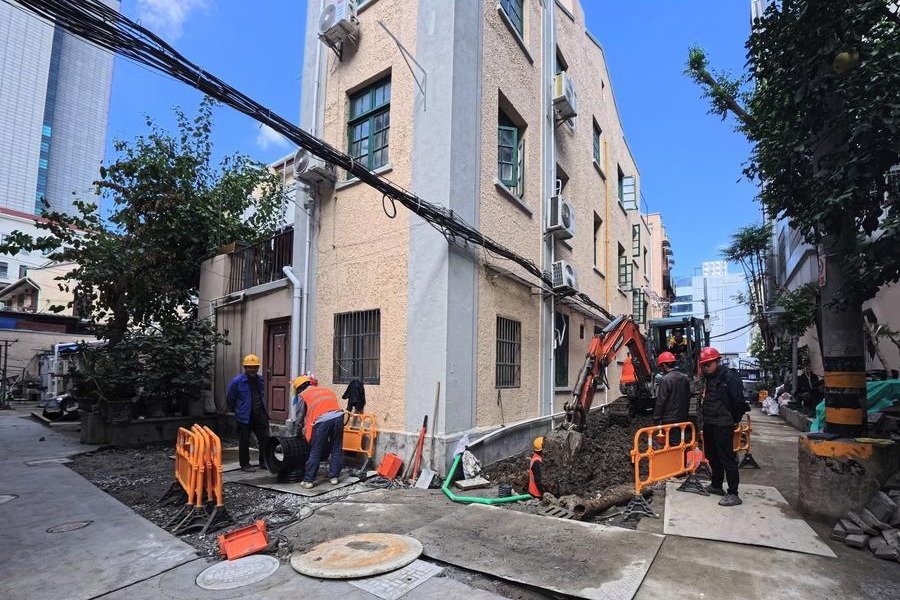
    The scope of these renovations extends beyond superficial improvements, addressing critical infrastructure needs including the replacement of 360,000 kilometers of aging pipelines, creation of 3.87 million new parking spaces, and establishment of 78,000 community-based facilities dedicated to elderly care and child care services.

    The current renovation drive aligns with directives issued during the Central Urban Work Conference in July 2025, which emphasized urban renewal as a crucial mechanism for optimizing urban structures, transforming growth patterns, enhancing quality of life, promoting green development, preserving cultural heritage, and improving governance efficiency.

    The accompanying photograph from October 31, 2025, depicts ongoing sewage pipeline renovation work in a Shanghai neighborhood, visually documenting the practical implementation of these nationwide improvements.

  • Chinese tech firms race to build AI computing capabilities in space

    Chinese tech firms race to build AI computing capabilities in space

    A technological revolution is unfolding in Earth’s orbit as Chinese companies lead the charge to deploy advanced artificial intelligence systems in space. This emerging frontier represents a strategic response to the growing computational constraints facing terrestrial AI development, including energy limitations, physical space shortages, and cooling challenges.

    The recent deployment of Starcloud-1 satellite equipped with Nvidia GPUs via SpaceX rocket in early November has brought space-based computing into international focus. Chinese enterprises have positioned themselves at the forefront of this movement, recognizing orbital platforms as a solution to Earth’s AI infrastructure bottlenecks.

    Among the pioneers is Zhongke Tiansuan (Comospace), established in 2024, which has achieved a significant milestone with its Aurora 1000 space computer logging over 1,000 operational days aboard a Jilin-1 satellite. The company is preparing to launch its next-generation Aurora 5000 system, featuring domestically developed high-performance GPUs, for orbital trials next year as part of an ambitious project to construct a ‘space supercomputer’ in low Earth orbit.

    According to Liu Yaoqi, CEO of Zhongke Tiansuan, orbital edge computing offers distinct advantages by positioning AI capabilities directly at the data source. ‘This approach enables processing petabytes of daily satellite imagery and traffic before transmission through constrained downlink channels,’ Liu explained to Xinhua. Additional benefits include global coverage through low-orbit constellations and nearly free computational power from abundant solar energy.

    China’s space computing initiative aligns with broader national ambitions. Beijing municipal authorities recently unveiled plans for a massive orbital data center positioned 700-800 kilometers above Earth in a dawn-dusk orbit. This project, spearheaded by an innovation consortium, targets a system with power capacity exceeding one gigawatt. The initial technology demonstration satellite, Chenguang-1, is scheduled for launch in late 2025 or early 2026, with computing power comparable to a single ground server.

    Zhang Shancong, president of Beijing Astro-future Institute of Space Technology (BAIST), which leads the project, acknowledged the modest beginning while emphasizing its significance: ‘Its scale is modest, but we are taking this first small step.’ The deployment strategy involves three progressive phases, culminating by 2035 in a megawatt-scale orbital data center expected to surpass China’s entire current ground-based computing capacity.

    In parallel developments, Hangzhou-based Zhejiang Laboratory has established a 12-satellite mini computing constellation named ‘Three-Body,’ equipped with an 8-billion-parameter space-borne AI model. Two satellites within this network carry X-ray polarimeters that combine their computational resources to detect transient gamma-ray bursts in real time. The laboratory projects that upon completion of its planned 1,000-plus satellite constellation, the system will process 100 quintillion operations per second.

    ‘With a computing constellation, part of the data can be processed in space and delivered straight to users,’ stated Li Chao from Zhejiang Laboratory.

    Critical to connecting these distributed orbital computers, China is advancing inter-satellite laser communication technology. Beijing startup Laser Starcom has achieved a breakthrough with a 400 Gbps laser link between its Guangchuan-01/02 satellites, launched aboard a Zhuque-2 rocket last November. Company founder Wu Shaojun emphasized that ‘Laser links are the bedrock that breaks the communication bottleneck and lets space-based computing fly.’

    Significant technical challenges remain, particularly regarding operation in extreme radiation environments and heat dissipation in the vacuum of space where conventional cooling methods are ineffective. The Tiansuan team has implemented redundant designs, error correction protocols, and recovery systems to address radiation-induced computational errors and system crashes in industrial-grade chips. They are also experimenting with fluid-loop cooling technology to manage thermal output from high heat-flux components in orbit.

    Liu Yaoqi outlined a developmental roadmap beginning with intelligent remote sensing to overcome data transmission limitations, progressing to enhanced communications through large satellite networks for increased capacity and reduced latency, and ultimately evolving toward sophisticated in-orbit AI providing real-time computational support for terrestrial applications. These could include perception systems for autonomous vehicles, drone traffic management, cross-border logistics coordination, and maritime navigation assistance.

    Envisioning practical applications, Liu suggested future fisheries might utilize a ‘Fish Finder’ application integrating real-time satellite imagery, environmental data, AIS signals, and on-orbit AI processing to direct fishing vessels precisely to optimal fishing locations.

  • Chinese vice-premier urges strengthened efforts to cultivate outstanding engineers

    Chinese vice-premier urges strengthened efforts to cultivate outstanding engineers

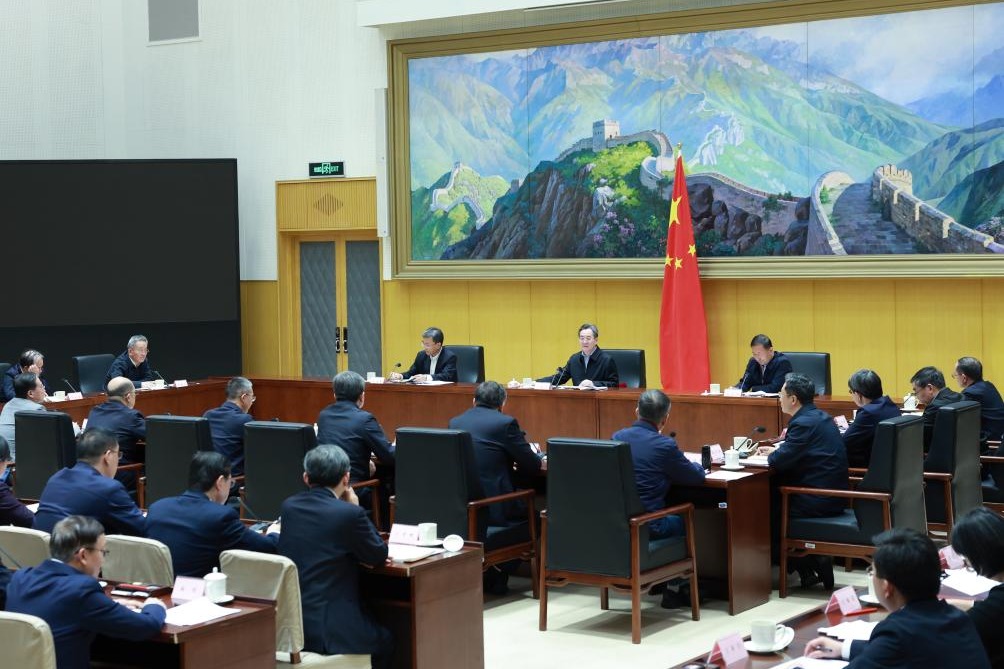
    Chinese Vice-Premier Ding Xuexiang has called for comprehensive reforms in engineering education to accelerate the cultivation of top-tier engineers essential for national development. The high-ranking official, who also serves on the Standing Committee of the Political Bureau of the Communist Party of China Central Committee, made these remarks during a December 4 symposium in Beijing addressing engineer cultivation reforms.

    Ding emphasized the critical need to align educational programs with the requirements of China’s modern industrial system and engineering advancement. He urged leading universities and corporations to strengthen their participation in developing future engineering talent through enhanced university-enterprise collaboration and deeper integration of production with education.

    The Vice-Premier specifically highlighted the importance of improving the quality and efficiency of talent development through these partnerships. Additionally, he stressed the significance of advancing bilateral and multilateral mutual recognition of engineer qualifications and educational standards to better support Chinese enterprises in their international operations and global expansion efforts.