标签: Asia

亚洲

  • Flu positivity hits 51% in China as school clusters rise

    Flu positivity hits 51% in China as school clusters rise

    China is confronting a significant escalation in influenza activity, with health authorities reporting that the nation has entered a high-transmission period for respiratory illnesses. Recent epidemiological data reveals an alarming surge in cases, particularly within educational institutions.

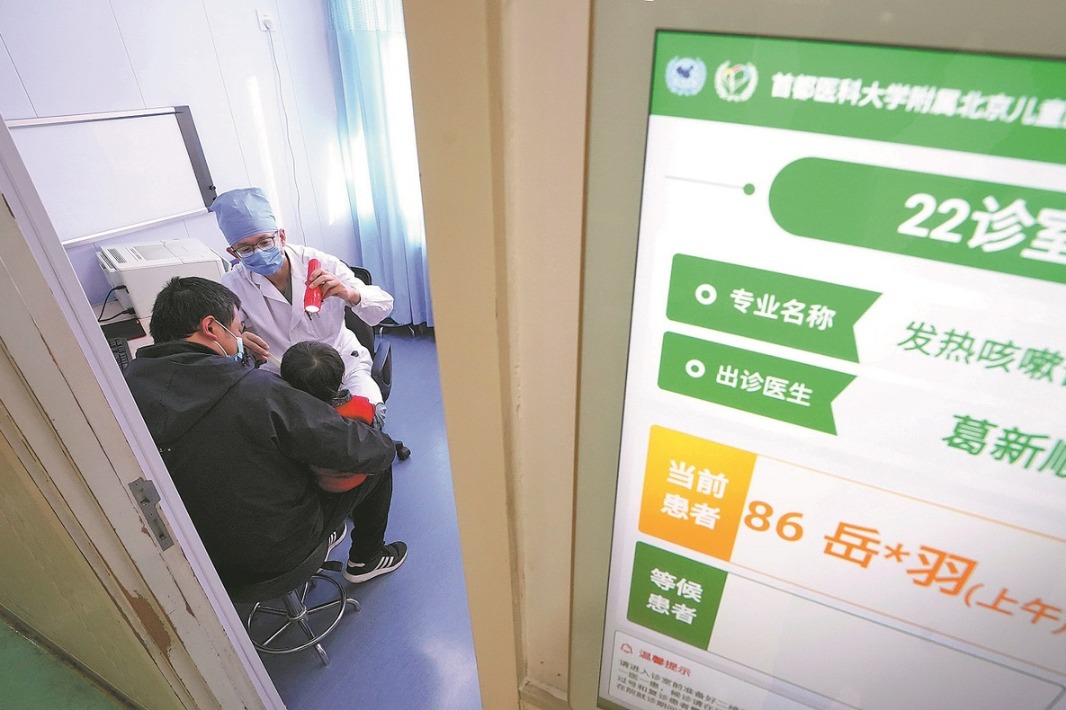
    According to the latest surveillance report from the Chinese Center for Disease Control and Prevention (China CDC), influenza positivity rates have reached concerning levels. For the week commencing November 24, 2025, testing confirmed that 51.1% of outpatient visits for influenza-like illnesses were positive for flu viruses, marking a substantial increase from the previous week’s rate of 44.8%.

    The epidemic pattern shows distinct demographic concentration, with children aged five to fourteen demonstrating markedly higher infection rates compared to other age groups. Multiple infection clusters have been identified within school environments, creating particular concern among public health officials.

    While influenza dominates the current respiratory disease landscape, other pathogens continue to circulate. Respiratory syncytial virus (RSV) maintains a positivity rate of 3.5%, with rhinovirus following at 5.3%. Both viruses show declining trends but remain at notable levels of community transmission.

    In response to the escalating situation, health authorities have issued enhanced guidance for high-risk environments. The China CDC recommends intensified health monitoring in schools, nursery facilities, and elderly care homes. Emphasis has been placed on early detection and rapid management of infection clusters to prevent further spread.

    The public has been advised to implement personal protective measures, including mask-wearing in crowded settings, enhanced hand hygiene, and seeking medical attention when experiencing respiratory symptoms. Health officials emphasize that these measures are particularly crucial during the current peak transmission season for respiratory infectious diseases.

  • IndiGo cancels 225 flights Friday morning; Delhi Airport issues travel advisory

    IndiGo cancels 225 flights Friday morning; Delhi Airport issues travel advisory

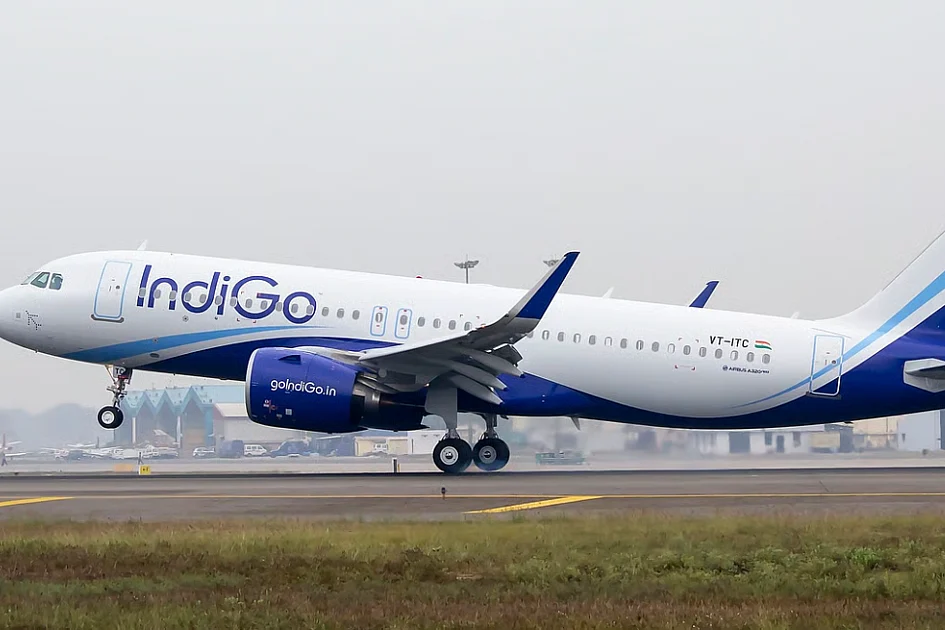
    India’s aviation sector faced significant disruption on Friday, December 5, 2025, as budget carrier IndiGo cancelled 225 flights from Delhi’s primary airport hub. The widespread cancellations, affecting both arrivals and departures, created substantial travel chaos for thousands of passengers during the morning operational window.

    Delhi International Airport promptly issued an official travel advisory through social media platform X, alerting travelers to ongoing operational challenges impacting domestic services. The airport authority strongly recommended that passengers verify their flight status directly with airlines before departing for the airport to avoid unnecessary congestion.

    Despite the domestic turmoil, aviation experts confirmed minimal impact on international routes to destinations including the UAE. Mohammed Safeer, General Manager of Smart Travels, clarified following direct communication with IndiGo that “none of the international flights have been impacted” and that scheduled international services would continue uninterrupted.

    The crisis follows emergency discussions between IndiGo’s senior leadership and India’s Directorate General of Civil Aviation (DGCA) on Thursday. The airline has formally requested temporary operational exemptions from specific Flight Duty Time Limitations (FDTL) provisions for its A320 fleet until February 10, 2026. The DGCA stated that IndiGo has committed to implementing corrective measures to restore normalized operations by this deadline.

    Current cancellation rates have surged to approximately 170-200 flights daily, markedly exceeding the airline’s typical operational disruption levels. Airport authorities have deployed dedicated ground teams working collaboratively with airline partners to mitigate passenger inconvenience and maintain safety standards throughout the operational challenge.

  • Dubai: Man jailed, fined Dh100,000 for using bank account for drug trafficking

    Dubai: Man jailed, fined Dh100,000 for using bank account for drug trafficking

    In a decisive ruling that underscores the United Arab Emirates’ intensified campaign against narcotics-related financial crimes, a Dubai court has delivered a comprehensive verdict against an Asian national convicted of facilitating drug trafficking through his banking services. The defendant received a three-year prison sentence coupled with a substantial fine of Dh100,000, followed by mandatory deportation upon completion of his incarceration.

    The judicial authorities further mandated the complete confiscation of all funds within the defendant’s bank account and instituted a stringent two-year prohibition preventing him from processing monetary transfers or deposits for third parties, whether directly or through intermediary channels. This financial restriction requires explicit prior authorization from the UAE Central Bank, coordinated with the Ministry of Interior, before any future transactional activities can be conducted.

    The case originated from actionable intelligence received by Dubai’s General Department of Anti-Narcotics, indicating that four Asian men were actively engaged in drug consumption and storage at a Bur Dubai residence. Executing a prosecution-sanctioned raid, law enforcement officials uncovered heroin packets, precision weighing scales, and drug distribution paraphernalia within the property. Subsequent searches revealed additional narcotics quantities concealed inside a vehicle belonging to one of the suspects.

    During criminal investigations, one suspect admitted procuring narcotics from an Asian supplier, while another confessed that proceeds from drug sales were channeled through a UAE bank account. Financial records ultimately identified the defendant as the account holder. Despite maintaining that he merely lent his bank card to assist an acquaintance without knowledge of its illicit use, the court rejected his defense, establishing his responsibility for managing drug-related proceeds.

    This verdict represents the UAE’s strengthened judicial approach toward combating narcotics networks, particularly targeting the financial infrastructure that enables drug trafficking operations. The ruling serves as a stark warning about the severe consequences awaiting those who facilitate criminal activities, even through indirect financial assistance.

  • Non-capital function relocation fuels Xiong’an’s rapid growth

    Non-capital function relocation fuels Xiong’an’s rapid growth

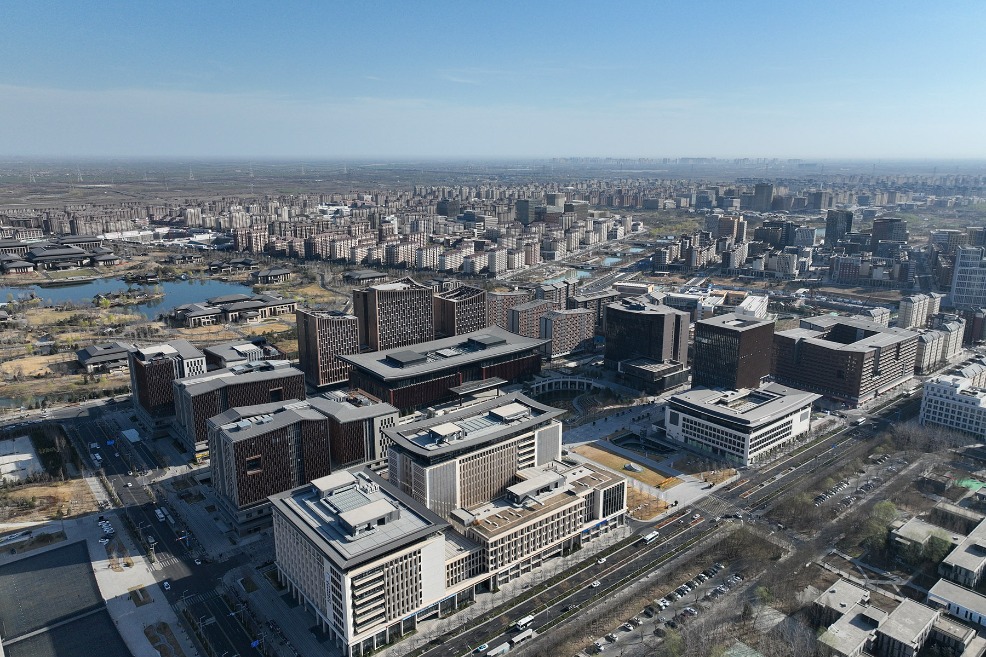
    Xiong’an New Area in Hebei Province has demonstrated remarkable economic transformation during China’s 14th Five-Year Plan period (2021-2025), establishing itself as the primary destination for Beijing’s non-capital function relocation initiative. This strategic decentralization drive has propelled the area into a phase of extensive development and quality growth, according to officials at a recent press conference.

    The statistics reveal an extraordinary economic performance, with Xiong’an achieving an average annual GDP growth rate of 17.1% over the past five years. This expansion has been supported by consistent annual investment approximating 200 billion yuan ($28 billion), accumulating to over one trillion yuan in total capital infusion, as reported by Wang Yanwei, director of Xiong’an’s Reform and Development Bureau.

    The relocation program has attracted major state-owned enterprises, with China Satellite Network Group, Sinochem Holdings, and China Huaneng Group having officially transferred their headquarters to the new area. Concurrently, construction is progressing rapidly on multiple fronts, including China Mineral Resources Group’s headquarters facility, along with four universities and two medical institutions in the initial relocation cohort.

    A subsequent wave of development is already underway, featuring the commencement of China Datang Corporation’s headquarters construction and finalized location agreements with additional enterprises and institutions, comprising three hospitals and five universities. This concentrated migration has generated powerful industrial clusters, with more than 400 subsidiaries and innovative business segments of central enterprises now established within Xiong’an.

    The area is rapidly evolving into a concentrated zone for higher education, elite talent, advanced medical resources, and state-owned enterprise innovation. This transformation is bolstered by substantial infrastructure advancements, including the nearing completion of critical transportation corridors such as the east-west axis railway and the Jingxiong Express Line connecting to Beijing Daxing International Airport.

    Public service capabilities have been systematically enhanced through the completion and operationalization of cultural and sports facilities, including the Xiong’an Sports Center and Xiong’an Library. Looking toward the 15th Five-Year Plan period (2026-2030), authorities plan to maintain focus on the relocation strategy to drive industrial innovation, technological advancement, and further talent aggregation, aiming for decisive progress in establishing a high-standard modern urban center.

  • Putin says Russia ready to supply ‘uninterrupted’ fuel to India

    Putin says Russia ready to supply ‘uninterrupted’ fuel to India

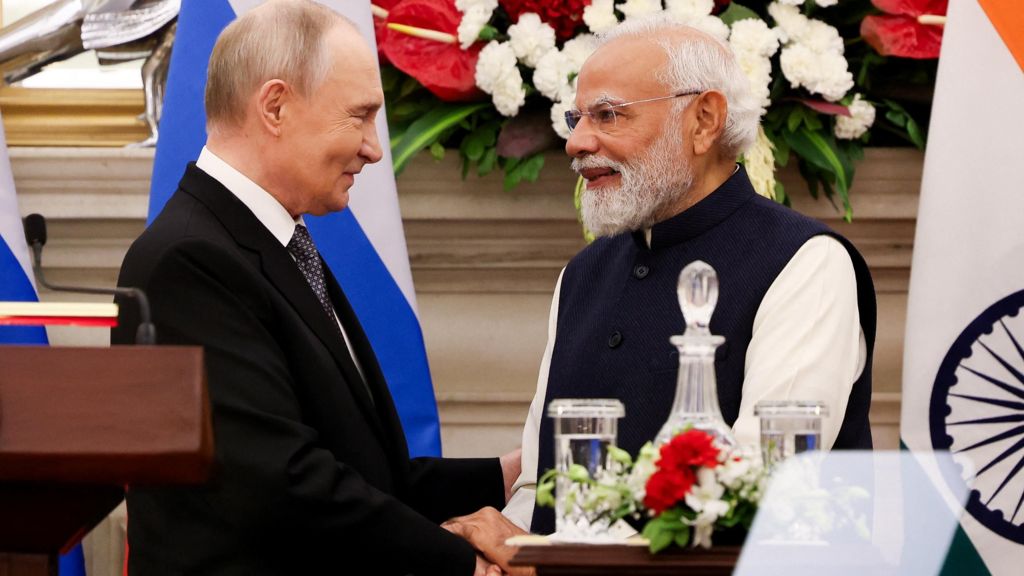
    During a high-profile meeting in Delhi, Russian President Vladimir Putin assured India of Moscow’s commitment to providing “uninterrupted shipments” of fuel, directly challenging U.S. pressure on New Delhi to cease purchasing Russian oil. The bilateral talks between Putin and Indian Prime Minister Narendra Modi highlighted growing geopolitical tensions as the United States imposes significant tariffs on Indian products in response to India’s continued energy trade with Russia.

    Putin pointedly questioned the logic behind U.S. sanctions, noting that America itself continues to purchase nuclear fuel from Russia. “The United States itself still buys nuclear fuel from us for its own nuclear power plants. If the US has the right to buy our fuel, why shouldn’t India have the same privilege?” he asked during an interview with India Today.

    The meeting occurred against the backdrop of deteriorating India-U.S. relations, which have reached an all-time low due to unresolved tariff disputes. The U.S. has imposed 50% tariffs on most Indian products, citing India’s oil purchases as indirectly funding Russia’s war in Ukraine—an accusation India firmly denies.

    While addressing the Ukraine conflict, Putin presented an ultimatum: “Either we liberate these territories by force, or Ukrainian troops will leave these territories.” Meanwhile, Modi reiterated India’s position of supporting peace and seeking a lasting solution to the conflict, without explicitly endorsing either side.

    The leaders announced several bilateral agreements, including new visa schemes for Russian tourists, the opening of Indian consulates in Russia, and the launch of Russia Today in India. They also signed memorandums covering trade, agriculture, shipbuilding, civil nuclear energy, and critical minerals. Notably, both countries agreed on an economic program extending through 2030, with ambitions to increase bilateral trade from $60 billion to $100 billion.

    Energy security emerged as a cornerstone of the partnership, though Modi avoided specific mention of oil. India, the world’s third-largest crude consumer, has significantly increased Russian oil imports since 2022 but recently begun reducing them to comply with U.S. sanctions.

    The joint statement emphasized a strategic reorientation toward joint research, development, and production of advanced defense platforms. Both leaders also highlighted their cooperation within BRICS, positioning the alliance as promoting a “more just” and “multi-polar” world order.

  • What Putin and Modi got out of Delhi meeting

    What Putin and Modi got out of Delhi meeting

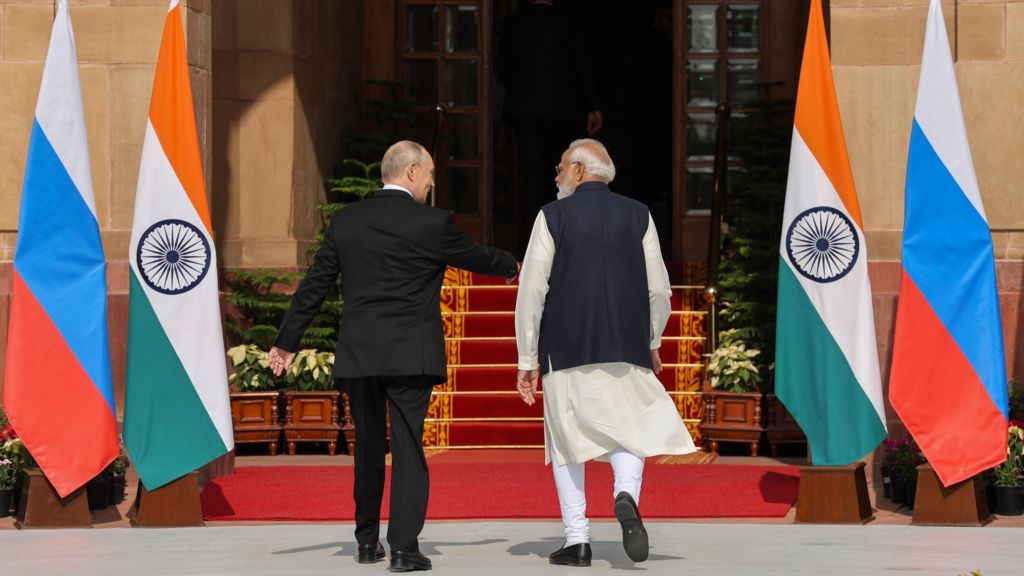
    Russian President Vladimir Putin concluded a highly symbolic visit to New Delhi, marking his first trip to India since the commencement of the Ukraine conflict in 2022. The carefully orchestrated event featured full ceremonial honors, including a military guard reception and a presidential banquet, signaling India’s continued diplomatic engagement despite Western pressure.

    During the intensive one-day itinerary, President Putin engaged in substantive discussions with Prime Minister Narendra Modi, participated in a bilateral business forum, and officially launched the India operations of RT (Russia Today), the Kremlin-funded media network. The visit’s ceremonial aspects—particularly Prime Modi’s unusual airport reception—demonstrated the enduring strength of Russo-Indian relations amid global geopolitical tensions.

    The bilateral meetings yielded several significant agreements, though falling short of anticipated major defense contracts. Both nations announced enhanced cooperation through a new economic partnership program covering critical minerals and pharmaceutical manufacturing, with plans to establish a Russian-Indian pharmaceutical facility in Russia’s Kaluga region. The leaders also advanced discussions on a potential free trade agreement between India and the Eurasian Economic Union.

    Energy security emerged as a central theme, with President Putin reaffirming Russia’s commitment to maintaining “uninterrupted oil shipments” to India. This pledge comes amid substantial pressure from the Trump administration, which has imposed heavy tariffs on Indian goods to discourage continued energy purchases from sanctioned Russian entities. Current bilateral trade has surged to $68.72 billion from $8.1 billion in 2020, primarily driven by India’s procurement of discounted Russian crude.

    Notably absent were expected announcements regarding major defense acquisitions, including advanced fighter jets and air defense systems. This omission reflects India’s delicate balancing act between its historical defense partnership with Moscow and its strategic relationship with Washington. However, officials emphasized that Russia remains India’s primary defense partner, with ongoing negotiations regarding delayed deliveries of the S-400 air defense systems and potential future acquisitions.

    The visit established an ambitious five-year framework aiming to achieve $100 billion in bilateral trade, emphasizing diversification beyond energy into sectors including shipbuilding, polar navigation training, civil nuclear energy, and visa-free travel arrangements.

  • Shah Rukh and Kajol unveil ‘DDLJ’ bronze statue in London

    Shah Rukh and Kajol unveil ‘DDLJ’ bronze statue in London

    In a landmark moment for Indian cinema, legendary actors Shah Rukh Khan and Kajol unveiled a bronze statue commemorating their iconic roles from the 1995 blockbuster ‘Dilwale Dulhania Le Jayenge’ (DDLJ) in London’s prestigious Leicester Square on Friday. This historic installation marks the first-ever recognition of an Indian film within the renowned Scenes in the Square trail, placing Bollywood’s most beloved characters alongside Western cinematic legends including Harry Potter, Mary Poppins, and superhero icons.

    The meticulously crafted statue captures the unforgettable pose of Raj and Simran, which the actors themselves recreated during the emotional unveiling ceremony. Shah Rukh Khan arrived in a sophisticated black suit while Kajol radiated elegance in a mint green saree, perfectly embodying the timeless charm that has defined their on-screen partnership for three decades.

    Directed by Aditya Chopra under the Yash Raj Films banner, DDLJ revolutionized Indian cinema with its cross-continental romance narrative that followed two non-resident Indians discovering love during a European journey originating from London’s King’s Cross Station. The film recently celebrated its 30th anniversary in October, demonstrating extraordinary longevity in global popular culture.

    During the unveiling, Khan expressed profound gratitude, stating: ‘DDLJ was crafted with pure artistic intention—we aimed to showcase how love transcends barriers and improves our world. This enduring impact over thirty years remains humbling and deeply personal.’ Kajol reflected on the emotional significance, noting: ‘Witnessing this statue unveiling felt like reliving our cinematic history—a narrative that has genuinely crossed generational boundaries.’

    The installation represents a significant cultural milestone, organized through collaboration with the Heart of London Business Alliance, acknowledging Indian cinema’s growing global influence and the specific cultural impact of what many consider the definitive Bollywood romance film.

  • Christmas in UAE: Giant fir trees from Canada, Denmark arrive in Dubai

    Christmas in UAE: Giant fir trees from Canada, Denmark arrive in Dubai

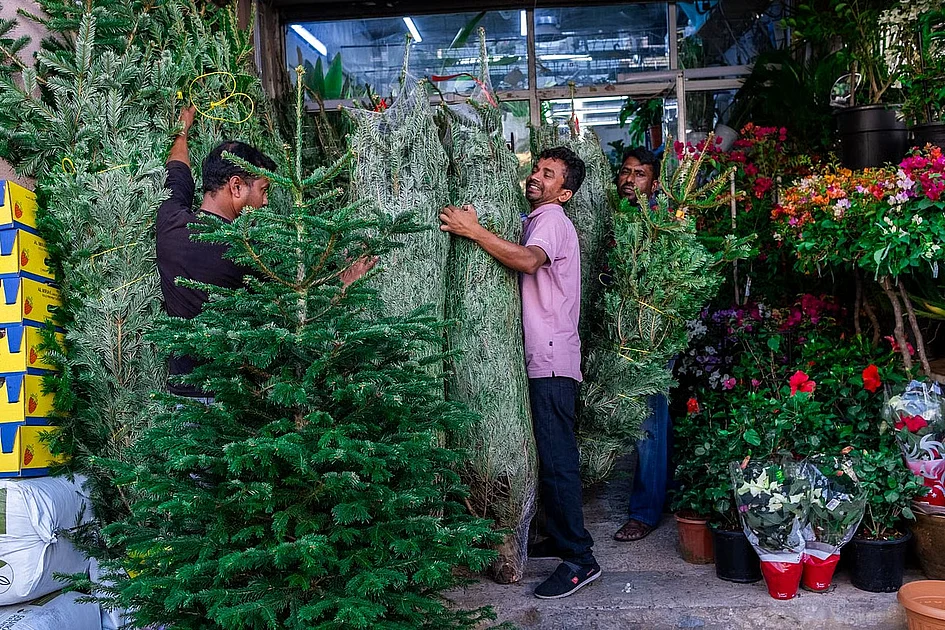
    As December’s cooler temperatures embrace Dubai, the city’s markets have undergone a remarkable transformation into seasonal hubs of festive commerce. The lanes of Satwa now resemble a miniature winter marketplace, brimming with freshly imported Christmas trees whose sharp pine fragrance permeates the morning air. This annual tradition marks the unofficial commencement of Christmas celebrations for the UAE’s diverse resident population.

    The current season has witnessed an unusually early surge in consumer interest, with inquiries beginning in late November according to veteran traders. Ahmed, a long-established Satwa vendor, noted the unprecedented early demand: “Typically, customers arrive during December’s first week, but this year families sought to reserve their trees even before the shipping containers had docked.”

    This year’s market features an impressive selection of northern conifers, with substantial 8 to 9-foot Danish firs commanding significant attention at approximately Dh750 per tree. These specimens have gained popularity for their majestic appearance and natural aromatic qualities. Simultaneously, Canadian firs have made a notable return to the UAE market, prized for their deep green pigmentation and exceptionally dense foliage structure.

    Ghattas, another experienced trader, explained the durability of these imports: “With proper maintenance, these robust trees maintain their vitality for approximately 45 days, making them ideal for residents hosting seasonal gatherings throughout the holiday period.”

    Addressing Dubai’s urban living constraints, traders have introduced compact alternatives including potted trees from the Netherlands. These smaller options, retailing around Dh200 and reaching approximately two feet in height, have proven particularly popular among young couples, students, and families seeking supplementary decorative pieces for children’s rooms.

    The journey these trees undertake to reach Dubai represents a logistical marvel of temperature-controlled transportation. After harvesting in European or North American forests, the trees undergo careful netting before entering refrigerated containers for their 25-day maritime transit. Upon arrival in UAE ports, they transfer to specialized cold storage facilities before final market presentation.

    Daily, vendors meticulously unwrap 30-45 fresh trees each morning, employing gentle shaking techniques to remove desiccated needles before customer inspection. Concurrently, major Dubai supermarkets have joined the seasonal trade, offering metric-sized options from 1-meter trees at Dh169 to more substantial 2-meter specimens priced at Dh299.

  • The ‘Gyrfalcon’ mounted police team safeguards grasslands in northern borderland of China

    The ‘Gyrfalcon’ mounted police team safeguards grasslands in northern borderland of China

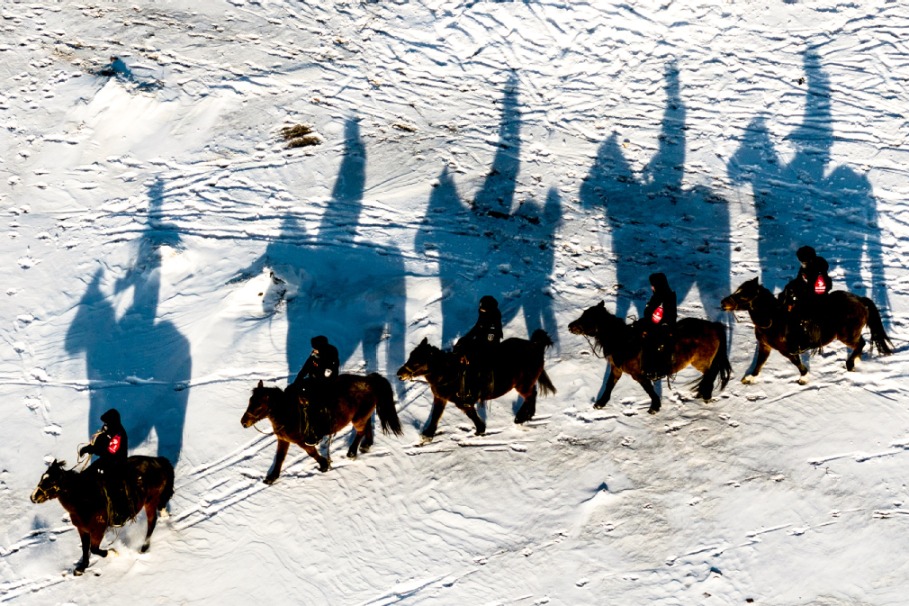
    In the snow-covered expanses of China’s northern borderlands, an elite mounted police unit known as the ‘Gyrfalcon’ maintains vigilant watch over the Chenbarhu Banner Grassland. Established in 2015 as Hulun Buir’s first specialized equestrian police force in Inner Mongolia Autonomous Region, this dedicated team patrols an immense 18,600 square kilometers of terrain regardless of extreme weather conditions.

    The unit’s specially trained horses, each undergoing rigorous six-month preparation programs, enable officers to navigate challenging landscapes inaccessible to conventional vehicles. Throughout their decade of service, these officers have endured both scorching summer ultraviolet exposure and winter temperatures plunging to minus 40 degrees Celsius while maintaining their protective duties.

    Beyond their primary security functions, the Gyrfalcon team has expanded their community service to include traffic management near local schools and safely escorting children through snowbound streets. Their remarkable patrol mileage has surpassed 140,000 kilometers—equivalent to circling the Earth more than three times—while providing critical assistance to approximately 700 residents in emergency situations.

    From remote grasslands to adjacent townships, this mounted police force has evolved into both a practical security solution and a powerful symbol of safety for the region’s herdsmen and communities throughout the year.

  • Liaoning launches first province-level online book lending platform

    Liaoning launches first province-level online book lending platform

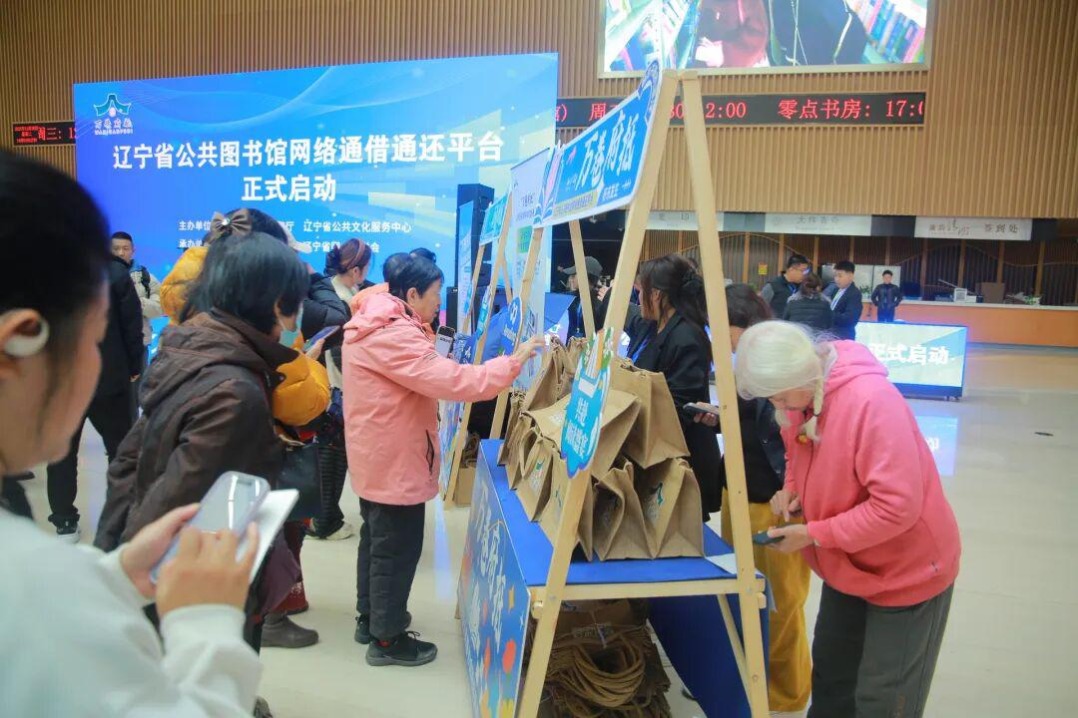
    Northeast China’s Liaoning Province has unveiled a groundbreaking digital initiative in public cultural services with the launch of ‘Wanjuanfudi’ (meaning ‘Abundant Books’), marking China’s first province-level coordinated online library lending platform. This innovative system represents a significant advancement in making literary resources more accessible to the public through digital integration.

    The platform debuted with an impressive collection of 500,000 volumes pooled from the Liaoning Provincial Library and 14 municipal libraries across the province. The service operates through a user-friendly mobile application that allows residents to browse, select, and order books for home delivery via courier services. Each registered user receives one complimentary shipping service per quarter, significantly reducing barriers to access.

    Developed through a collaboration between the Liaoning Provincial Department of Culture and Tourism and the Provincial Public Cultural Service Center, ‘Wanjuanfudi’ directly addresses longstanding challenges in public library services. The platform specifically targets issues such as slow collection updates in community libraries and the difficulties faced by residents in remote areas who previously encountered limited access and high costs associated with obtaining books.

    This initiative has been designated as a key cultural benefit project in Liaoning’s 2025 Provincial Government Work Report, highlighting its importance in the region’s public service agenda. Future expansion plans include integrating all 127 public libraries across the province while additionally incorporating resources from university libraries and urban reading spaces. This comprehensive approach aims to create an extensive network for resource sharing and significantly extend the program’s reach and impact throughout the region.