标签: Asia

亚洲

  • Middle East war reverberates in Europe

    Middle East war reverberates in Europe

    Europe confronts escalating multidimensional challenges as the Middle East conflict expands, creating ripple effects across the continent. Recent US-Israel military operations against Iran have triggered widespread anti-war demonstrations across European capitals, with thousands protesting in London, Madrid, Paris, and Milan against the spreading warfare.

    The strategic Strait of Hormuz blockade by Iran in retaliation has severely disrupted global energy markets, with crude oil prices experiencing extreme volatility, reaching nearly $120 per barrel before fluctuating dramatically. European energy security faces immediate threats, with natural gas futures surging over 14% to three-year highs. The continent’s vulnerability to energy supply shocks has been exposed, particularly given its increased reliance on Gulf energy since reducing Russian fossil fuel imports.

    Transportation costs are skyrocketing across Europe, with jet fuel prices nearly doubling due to supply disruptions. Motorists face rapidly increasing fuel costs, with German petrol prices reaching their highest levels since May 2024. The economic impact extends beyond energy markets, threatening to exacerbate existing cost-of-living crises.

    European leaders demonstrate divergent responses to the crisis. Spanish Prime Minister Pedro Sanchez has taken a firm anti-war stance, denying US access to military bases despite facing trade embargo threats. Other leaders, including UK Prime Minister Keir Starmer and French President Emmanuel Macron, have characterized the US-Israel actions as unlawful while maintaining more cautious diplomatic positions.

    The conflict threatens to trigger a refugee crisis of unprecedented scale. The European Union Agency for Asylum warns that displacement of even 10% of Iran’s population would create the largest refugee flow in decades. European nations, already grappling with anti-immigration sentiment, express concern about overwhelmed asylum systems.

    European security and economic interests face direct threats, with thousands of European citizens currently in conflict zones requiring evacuation. Multiple EU countries have activated civil protection mechanisms, while France and Britain have deployed naval vessels to the region.

    The crisis exposes fundamental tensions in transatlantic relations, with European leaders expressing shock at not being consulted beforehand about US military actions. Analysts suggest the conflict may accelerate Europe’s push for strategic autonomy, though immediate responses remain cautious and measured.

  • Israel accused of attempting to ‘erase’ Palestinian Muslim identity

    Israel accused of attempting to ‘erase’ Palestinian Muslim identity

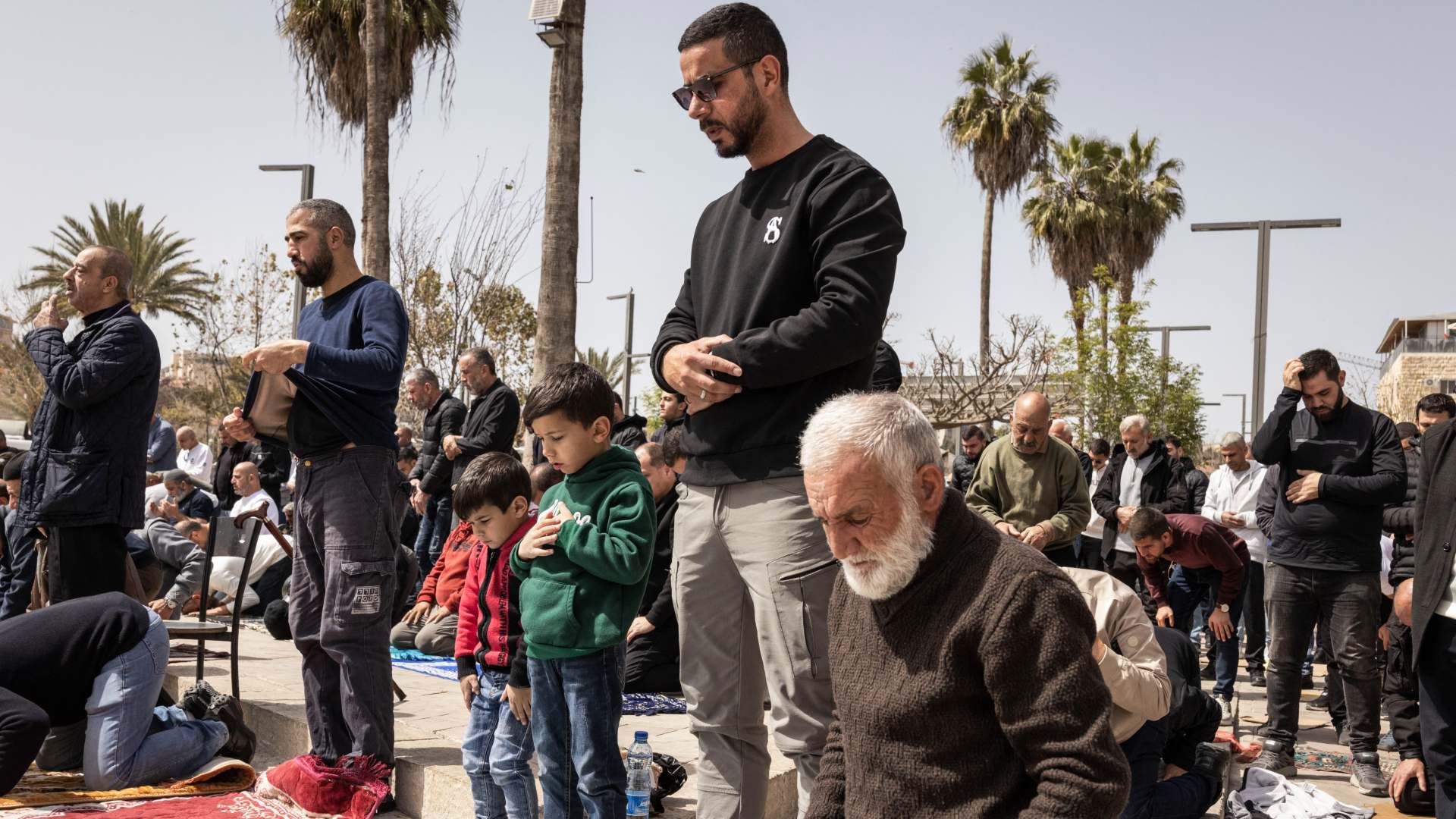
    A comprehensive investigation by the International Centre of Justice for Palestinians (ICJP) reveals an escalating pattern of religious persecution against Palestinian Muslims throughout occupied territories and Israel. The UK-based legal advocacy group’s report, scheduled for publication on Friday, documents what it describes as a coordinated campaign threatening the eradication of Palestinian religious and cultural identities.

    The findings indicate a significant deterioration in religious freedom conditions following the October 2023 Hamas-led attacks and Israel’s subsequent military operations in Gaza. The report highlights particularly severe restrictions during the current holy month of Ramadan, including multiple incidents of settler violence against places of worship, systematic limitations on access to Jerusalem’s Al-Aqsa Mosque complex, and the detention of over 100 Palestinians within the first week of the religious observance period.

    Legislative measures proposed by National Security Minister Itamar Ben Gvir seeking to ban the traditional Muslim call to prayer, alongside amendments to counter-terrorism laws that have resulted in Palestinians facing accusations of Hamas support for quoting Quranic verses, represent additional threats to religious expression according to the documentation.

    The ICJP analysis details extensive damage to Gaza’s religious infrastructure, with 1,160 of the territory’s 1,244 mosques reportedly destroyed or severely damaged since conflict initiation. These structures frequently served as civilian shelters, resulting in disproportionate casualties among women and children seeking protection from bombardments.

    The report further documents similar targeting of religious sites in the West Bank, referencing an October 2023 airstrike that substantially damaged Al-Ansar Mosque in Jenin. Israeli authorities stand accused of enabling settler attacks against Muslim places of worship through both action and inaction.

    Access restrictions to Al-Aqsa Mosque, one of Islam’s holiest sites, have violated the authority of the Islamic Waqf management body according to the findings. During Ramadan’s first Friday, only 2,000 worshippers received permission to traverse primary checkpoints between the West Bank and East Jerusalem.

    Recent security measures implemented after alleged Israeli-American operations against Iran resulted in complete closure of Jerusalem’s Old City holy sites, drawing condemnation from Muslim-majority nations who deemed these actions “illegal and unjustified.”

    Additional Ramadan restrictions included prohibitions on traditional lanterns, decorations, and the mesaharati practice of dawn drumming to signal pre-fast meals. The ICJP contrasts these limitations with permitted raucous celebrations for the Jewish festival of Purim elsewhere in Jerusalem, characterizing the differential treatment as religious apartheid.

    The report echoes United Nations bodies and human rights organizations in urging immediate cessation of attacks on cultural and religious sites, referencing the International Court of Justice’s advisory opinion calling for termination of Israel’s occupation of Palestinian territories.

    Dania Abu ElHaj, ICJP’s senior legal officer currently in Jerusalem, observed that many Palestinians face survival questions rather than spiritual reflection during Ramadan’s concluding days, describing occupied territories as functioning as “open-air prisons” under military control.

  • Hebei primary school students plant trees for National Tree Planting Day

    Hebei primary school students plant trees for National Tree Planting Day

    In a hands-on environmental initiative, students and faculty from the First Experimental Primary School in Guangping county, Handan, participated in a tree-planting ceremony on Thursday commemorating China’s 48th National Tree Planting Day. The event transformed into a practical learning experience as young learners collaborated with educators to dig pits, carefully position saplings, and nourish the new plantings with water. This coordinated effort served not only to enhance the local ecosystem but also to instill foundational principles of ecological conservation within the youth. School administrators emphasized that such activities are crucial for developing environmental consciousness from an early age, aligning educational values with national sustainability goals. The initiative represents a growing trend among Chinese educational institutions to integrate practical environmental education into standard curricula, fostering a generation more attuned to ecological responsibilities.

  • China-DPRK international passenger trains resume service

    China-DPRK international passenger trains resume service

    In a significant development for Northeast Asian connectivity, international passenger rail services between China and the Democratic People’s Republic of Korea (DPRK) officially resumed operations on Thursday, March 13, 2026. The restoration marks a pivotal moment in cross-border transportation following an extended period of suspension.

    The China State Railway Group confirmed the recommencement of two key routes: the Beijing-Pyongyang direct line and the Dandong-Pyongyang connection. These services are positioned to substantially enhance economic cooperation, facilitate trade activities, and promote cultural and personnel exchanges between the neighboring nations.

    Service frequency has been structured to accommodate varying travel needs. The Beijing-Pyongyang route operates bidirectional services every Monday, Wednesday, Thursday, and Saturday, while the Dandong-Pyongyang connection offers daily transit in both directions, providing greater flexibility for cross-border commuters.

    Multiple stations now serve international passengers, including Beijing Station, Tianjin Station, Shanhaiguan Station, Shenyang Station, and Dandong Station within China. On the DPRK side, Pyongyang Station and Sinuiju Station are operational for border crossings. Immigration formalities are processed at the designated border ports of Dandong and Sinuiju, streamlining the international travel experience.

    Railway authorities from both countries have implemented comprehensive safety protocols to ensure seamless operations. This includes rigorous inspections of locomotive and carriage equipment to maintain optimal mechanical conditions. Personnel have undergone specialized training programs to deliver high-quality service standards for international travelers.

    Tickets for these international routes are currently available at all participating railway stations. The relaunched service represents both a practical transportation solution and a symbolic ‘moving link’ strengthening bilateral relations, according to official statements from the Chinese railway administration.

  • Dubai financial hub hit by intercepted drone after Iran threatens banks

    Dubai financial hub hit by intercepted drone after Iran threatens banks

    Dubai’s prestigious International Finance Centre (DIFC) sustained damage on Friday when debris from an intercepted Iranian drone ignited a fire at the complex. Social media footage captured thick plumes of smoke rising from the iconic financial district, marking the latest escalation in regional tensions.

    The Dubai Media Office confirmed the incident resulted from defensive operations, stating: “Authorities confirm that debris from a successful interception caused a minor incident on the facade of a building in central Dubai. No injuries have been reported.”

    This attack follows Iran’s explicit threat to target “banks and economic centres” across the Gulf region in retaliation for recent US and Israeli strikes. Earlier this week, Iranian military spokesperson Khatam al-Anbiya warned regional populations to “not be within a one kilometre radius of the banks” following strikes on Bank Sepah in Tehran that killed several employees.

    Financial institutions responded with heightened security measures. Citigroup evacuated its Dubai offices in both the DIFC and Oud Metha neighborhoods due to security concerns. Professional services giants PwC and Deloitte implemented precautionary office closures across multiple Gulf states, including Saudi Arabia, Qatar, UAE, and Kuwait. HSBC suspended operations at all Qatar branches indefinitely.

    The broader conflict has inflicted significant damage across the UAE, with over 1,800 drones and missiles launched at the country since hostilities began two weeks ago. Notable structures including the Fairmont The Palm hotel and Burj Al Arab hotel have sustained damage, while drone incidents have occurred near Dubai International Airport. The conflict has claimed six lives in the UAE thus far, including nationals from Pakistan, Nepal and Bangladesh.

    Further compounding regional instability, Iran has closed the Strait of Hormuz, critically disrupting global energy markets by blocking transit for approximately 20% of worldwide oil output and one-third of global liquefied natural gas shipments.

  • Israeli defence minister threatens to take Lebanese territory and keep razing infrastructure

    Israeli defence minister threatens to take Lebanese territory and keep razing infrastructure

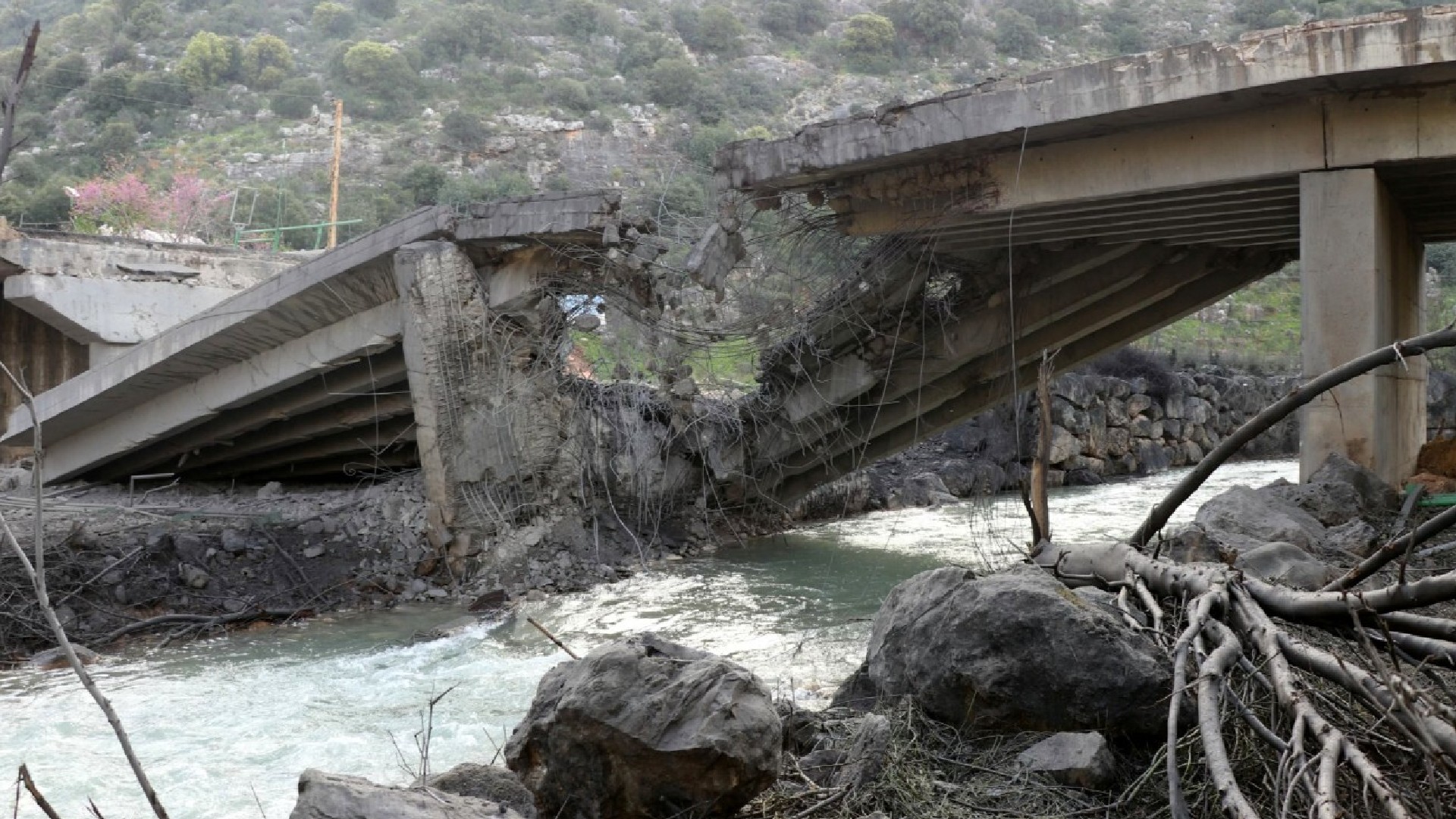
    Israeli Defense Minister Israel Katz has issued a stark warning to Lebanon, threatening to seize additional territory and systematically dismantle national infrastructure utilized by Hezbollah until the militant group is fully disarmed. Katz asserted that the Lebanese government had “deceptively failed to honor its commitment to disarm Hezbollah,” emphasizing that it would “consequently face escalating consequences until this obligation is met.”

    This declaration follows the Israeli military’s unprecedented admission on Friday that it targeted and struck the Zrarieh Bridge spanning the Litani River. Military officials described the structure as “a critical crossing point for Hezbollah operatives,” alleging it was used to “accumulate strength and prepare for combat operations.” No concrete evidence was provided to substantiate these claims. The military justified the action as “necessary to neutralize a threat to Israeli civilian populations.”

    This incident marks the first official acknowledgment by Israel of deliberately targeting civilian infrastructure during its current military campaign in Lebanon, raising significant concerns under international law. While the Geneva Conventions generally prohibit attacks on civilian infrastructure, exceptions exist for assets repurposed for military use. The Israeli Army has not disclosed the legal assessments conducted prior to the strike or reported on potential casualties.

    The offensive escalation includes a recent Israeli drone strike on a residential building in Beirut’s predominantly Christian Burj Hammoud district, signaling a potential expansion of target zones. This development occurred shortly after Katz directed the military to broaden its operational scope in Lebanon, cautioning President Michel Aoun that if the government could not curb Hezbollah’s activities, Israel would undertake the task unilaterally.

    The current phase of hostilities reignited on March 2nd following Hezbollah’s retaliatory strikes for the killing of a senior Iranian commander in US-Israeli operations. Israel’s subsequent aerial bombardment has resulted in over 700 fatalities and the displacement of hundreds of thousands of Lebanese civilians. Reports from Israeli media indicate that government authorization for this new wave of attacks was secured hours before Hezbollah launched its initial rockets, with sources suggesting the group pre-emptively acted upon intelligence of an imminent Israeli decision against them.

  • Larijani and top Iranian officials appear in Al-Quds Day march

    Larijani and top Iranian officials appear in Al-Quds Day march

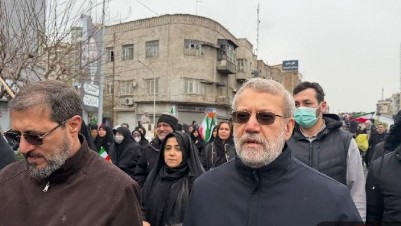
    Senior Iranian officials, including National Security Chief Ali Larijani and Judiciary Head Gholam-Hossein Mohseni-Ejei, participated in Friday’s Al-Quds Day demonstrations in Tehran, according to verified video footage. Their public appearance comes despite escalating security threats from ongoing U.S.-Israeli military operations that have claimed numerous high-ranking Iranian figures since hostilities intensified in late February.

    During the march, Larijani provided commentary to ANA TV, asserting that allied forces “are running out of steam” in their campaign against Iran. He further criticized former U.S. President Trump’s approach, stating, “Trump’s problem is that he doesn’t understand that the Iranian nation is mature and determined.”

    The demonstrations were marred by violence as Press TV reported civilian casualties, including one Iranian woman killed by shrapnel from alleged U.S.-Israeli strikes during the same event. The participation of top government figures in such volatile conditions underscores Tehran’s determination to maintain visible resistance amid continuing regional tensions.

    The Al-Quds Day observance, an annual event expressing solidarity with Palestinians and opposition to Israeli control of Jerusalem, took on heightened significance this year as it coincided with active military engagements targeting Iranian leadership and infrastructure.

  • Macron announces first death of French soldier in Middle East war

    Macron announces first death of French soldier in Middle East war

    A significant escalation in Middle Eastern hostilities has resulted in the first death of a French armed forces member, confirmed by military officials on Friday. Chief Warrant Officer Arnaud Frion, 42, was killed when an Iranian-manufactured Shahed drone struck his position at the Mala Qara base in Iraqi Kurdistan, approximately 40 kilometers southwest of Erbil.

    Colonel Francois-Xavier de la Chesnay, Frion’s commanding officer, verified the attack’s details, while President Emmanuel Macron publicly denounced the ‘unacceptable’ assault via social media. The French defense ministry reported six additional soldiers sustained injuries during the incident.

    The pro-Iran armed faction Ashab al-Kahf, without directly claiming responsibility, issued a Telegram statement threatening French interests throughout the region following the deployment of France’s Charles de Gaulle aircraft carrier to the Eastern Mediterranean. The group explicitly warned Iraqi security forces to maintain distance from French military installations in Kirkuk.

    Macron emphasized that French troops operate in Iraq exclusively within counter-terrorism parameters against Islamic State, asserting that regional tensions cannot justify attacks on these forces. The French Armed Forces General Staff confirmed the soldiers were conducting counter-terrorism training with Iraqi partners during the attack.

    This incident represents the most severe assault against French external operations since August 2023 and follows another drone strike on a separate French base merely one day prior. Iraqi Kurdistan has experienced increased attacks attributed to pro-Iranian factions since the beginning of the Israel-Hamas conflict, primarily targeting US military assets though most have been intercepted by air defenses.

    The Islamic Resistance in Iraq, an umbrella organization for Iran-backed armed groups, has claimed responsibility for numerous attacks throughout the country. Regional threats to Western forces have intensified substantially, with at least 11 American troops killed—including four in a recent aerial crash in western Iraq—and a British base also coming under drone attack on Thursday.

    France has significantly reinforced its regional military presence, deploying eight frigates and two amphibious helicopter carriers across the Eastern Mediterranean, Red Sea, and Strait of Hormuz to protect French citizens and support allied nations including Lebanon and Gulf states.

  • Superyacht Luminara makes 1st Chinese mainland port call in Shanghai

    Superyacht Luminara makes 1st Chinese mainland port call in Shanghai

    Shanghai’s International Cruise Terminal welcomed an extraordinary maritime visitor on Wednesday as the ultra-luxury superyacht Luminara made its inaugural mainland China port call. The Ritz-Carlton Yacht Collection’s newest vessel, which commenced operations in July 2025, brought nearly 500 passengers and crew members to experience Shanghai’s spring ambiance during this landmark visit.

    The 226-suite vessel, featuring exclusive private terraces for each accommodation, represents the pinnacle of luxury cruising with capacity for 452 guests. According to the ship’s Asia-Pacific itineraries for the 2025-2026 season, voyages aboard this floating palace range from five to fourteen nights, with per person rates starting at approximately $8,800.

    Notably, 84 percent of those aboard qualified for China’s visa exemption policies, highlighting how favorable entry regulations are facilitating increased luxury tourism traffic. This strategic easing of travel restrictions has positioned Shanghai as an increasingly attractive destination for high-end cruise operators seeking to tap into China’s growing premium travel market.

    The visit coincides with Shanghai’s remarkable tourism recovery, with official data from the Municipal Administration of Culture and Tourism revealing 9.36 million inbound passenger trips in 2025—a substantial 39.58 percent year-on-year increase. Overnight international visitors reached 8.79 million, surging 45.09 percent compared to previous year figures, demonstrating the city’s strengthened appeal as a global tourism destination.

  • Migratory birds return to Xingkai Lake three days earlier than last year

    Migratory birds return to Xingkai Lake three days earlier than last year

    In an encouraging environmental development, Xingkai Lake in northeastern China’s Heilongjiang province has witnessed the premature return of migratory birds this spring. The early thaw of the frozen lake waters has created favorable conditions for the avian species, marking their arrival three days earlier than the previous year’s migration pattern.

    Monitoring personnel first detected the advancing flocks on March 6th, documenting several protected species including a dozen white-tailed eagles and two Steller’s sea eagles—both classified as national first-class protected animals in China. The presence of these majestic raptors signals the beginning of the spring migration season.

    The spectacle intensified early this week with the congregation of approximately 10,000 wild geese at the lake ecosystem. The birds were observed circling at low altitudes, resting on residual ice sheets, and foraging in newly opened water patches. Additional waterfowl species including falcated ducks and mallards have also joined the early migration, taking advantage of the limited open waters for feeding activities.

    Ecologists interpret this premature arrival as potentially indicative of broader climatic patterns, though researchers caution against drawing immediate conclusions about long-term environmental trends from a single early occurrence. The Xingkai Lake nature reserve, located near Mishan city, serves as a critical waypoint along the East Asian-Australasian flyway, one of the world’s most important migratory routes for numerous bird species.

    Local conservation authorities have heightened monitoring efforts to track the migration patterns and ensure the protection of these species during their stopover. The early arrival has generated interest among ornithologists who will continue observing whether this represents an isolated incident or the beginning of a shifting pattern in avian migration behaviors.