标签: Asia

亚洲

  • Two giant pandas debut at Urumqi Water Park Zoo

    Two giant pandas debut at Urumqi Water Park Zoo

    URUMQI – In a landmark event for wildlife conservation and public education, two giant pandas have officially made their public debut at the Urumqi Water Park Zoo in Northwest China’s Xinjiang Uygur autonomous region. The pandas, named Bao Yuan and De Rui, arrived in the city on February 5 and have now completed a crucial two-week acclimatization period, allowing them to settle into their new habitat.

    The zoo’s newly opened Giant Panda Pavilion commenced its trial operation on Thursday, introducing a unique viewing system to ensure the animals’ welfare. To facilitate a smooth transition and minimize stress, each visitor is allotted a five-minute viewing window. The pavilion will be open daily from 11 am to 7 pm. This carefully managed approach is designed to protect the pandas’ natural behaviors while accommodating public interest, enabling a larger number of guests to witness the celebrated creatures.

    The arrival of the pandas marks a significant cultural and ecological milestone for Xinjiang, enhancing the region’s biodiversity conservation efforts and providing a unique educational resource for residents and tourists. The event underscores China’s ongoing commitment to the protection and preservation of its national treasure, the giant panda.

  • Why emotional connection has become the ultimate luxury

    Why emotional connection has become the ultimate luxury

    In an era defined by digital saturation and transactional interactions, a profound shift is redefining the very essence of luxury. Moving beyond traditional markers of wealth and status, contemporary luxury now manifests in the quality of human connection, intentional presence, and emotional depth. This transformation represents a fundamental evolution from material possession to experiential richness.

    The hyper-connected nature of modern life has created an unexpected scarcity: genuine emotional engagement. As screens mediate relationships and efficiency dominates social exchanges, the capacity for unhurried, focused attention has become increasingly rare. This scarcity positions emotional connection as an exquisite form of luxury that transcends conventional economic measures.

    Travel exemplifies this paradigm shift. Aircraft cabins, once merely functional transit spaces, have evolved into environments cultivating human experience. The luxury of presence enables travelers to engage more authentically with companions, colleagues, and themselves. This intentional focus amplifies the value of every moment, transforming ordinary interactions into extraordinary experiences.

    True modern luxury manifests not through grand gestures but through carefully designed time and quality interactions. It emerges in conversations without agenda, shared adventures requiring collaboration, and the quiet comfort of unspoken presence. These moments demand deliberate boundaries against digital distractions and the courage to prioritize depth over efficiency.

    This evolution challenges traditional success metrics that emphasize output, speed, and scale. Instead, it values patience, curiosity, and emotional resonance as sophisticated indicators of refinement. The luxury of emotional depth represents a more evolved understanding of value—one where the ability to invest in meaningful moments becomes the ultimate currency.

    For leaders, creators, and travelers alike, emotional connection functions as essential nourishment for creativity, insight, and fulfillment. Just as restorative sleep revitalizes the body, intentional emotional engagement sustains the heart and mind. Both require conscious design—from physical environments that encourage presence to conversations that minimize distraction.

    Ultimately, the most valuable experiences cannot be purchased or scheduled. They must be cultivated through authentic presence, shared journeys, and conversations that unfold organically. As luxury continues evolving in the 21st century, its core principles remain constant: agency, intentionality, and the freedom to choose experiences that genuinely enrich human existence.

  • German leader to make his 1st visit to China next week as country seeks ‘right balance’ in ties

    German leader to make his 1st visit to China next week as country seeks ‘right balance’ in ties

    BERLIN — In a significant diplomatic move, German Chancellor Friedrich Merz is scheduled to undertake his inaugural visit to China since assuming leadership of Europe’s largest economy. The high-stakes visit, set for next week, comes as Germany navigates an increasingly complex international landscape dominated by assertive global powers.

    Government spokesperson Sebastian Hille confirmed on Friday that Chancellor Merz will engage in high-level meetings with Chinese Premier Li Qiang and Chinese leader Xi Jinping in Beijing on Wednesday, followed by a visit to Hangzhou in southeastern China. The diplomatic mission carries the thematic focus of ‘competition,’ with officials emphasizing the critical need to strike an appropriate balance in cooperation with the Asian superpower.

    ‘We seek cooperation where it is necessary and aligns with our mutual interests,’ Hille stated during a press briefing in Berlin, outlining Germany’s nuanced approach to Sino-German relations.

    This diplomatic engagement occurs against the backdrop of Germany’s delicate balancing act in recent years—maintaining robust ties with China while expressing concerns over Beijing’s growing assertiveness and its stance regarding Russia’s invasion of Ukraine. Simultaneously, Berlin has pursued strategic diversification of its commercial partnerships and supply chains to avoid excessive reliance on Chinese trade.

    Recent economic data from Germany’s Federal Statistical Office reveals China reclaimed its position as Germany’s primary trading partner in the previous year, with bilateral trade reaching 251.8 billion euros ($297 billion). This development marks a significant shift, as the United States had briefly displaced China from this position in 2024. Trade with China demonstrated growth during this period, while commercial exchanges with the U.S. declined to 240.5 billion euros.

    Addressing his Christian Democratic Union party convention in Stuttgart, Chancellor Merz emphasized the necessity of global business connections, explicitly including China. ‘China remains a crucial trading partner for Germany, which is why I will travel to China next week accompanied by a substantial business delegation,’ he stated. Neither the Chancellor nor his spokesperson disclosed specific delegation members.

    However, Merz maintained a realistic perspective, cautioning against illusions regarding China’s geopolitical ambitions. He noted that China ‘asserts the claim to define a new multilateral order according to its own rules,’ signaling fundamental shifts in the international landscape.

    The Chancellor articulated that the established rules-based order has fundamentally transformed, with ‘a new world order, an order of great powers, taking shape at accelerated pace.’ He stressed Europe’s urgent need to enhance its economic and military capabilities while aggressively pursuing trade agreements with diverse global partners.

    This diplomatic development occurs alongside preparations for U.S. President Donald Trump’s anticipated visit to China in April, highlighting the intricate interplay of major power diplomacy in contemporary global affairs.

  • Cute meets technology in fashion’s latest obsession

    Cute meets technology in fashion’s latest obsession

    The fashion landscape is undergoing a profound transformation as artificial intelligence merges with emotional design to create irresistible consumer products. The emergence of interactive robotic accessories like Mirumi demonstrates how technology is reshaping purchasing decisions through sophisticated algorithmic targeting and psychological engagement strategies.

    This technological revolution began capturing consumer attention through precisely targeted social media advertisements that identified potential buyers based on their digital behavior patterns. The Mirumi robotic bag charm—available in pastel pink, cream, and grey—represents a new category of fashion-tech hybrids that combine tactile appeal with interactive artificial intelligence. Unlike traditional accessories, these devices employ sophisticated algorithms to mimic lifelike behaviors, including responsive head movements and simulated emotional expressions designed to trigger nurturing instincts.

    The commercial implications are substantial. Industry analysis from McKinsey projects that AI-mediated commerce could influence between $3 to $5 trillion in global consumer spending by 2030. This shift extends beyond obvious technological displays like LED-enhanced clothing to more subtle algorithmic interventions that determine which fashion styles consumers encounter during online searches.

    What makes these products particularly compelling is their ability to forge emotional connections. The Mirumi’s design intentionally mimics infant-like characteristics, leveraging psychological principles that trigger caregiving responses. This approach has proven remarkably effective, with similar emotional design strategies having generated approximately $20 billion in value for previous viral products like Labubu.

    The rise of fashion technology coincides with growing discussions about AI’s broader societal impact, including recent warnings from AI researchers about potential risks. Yet in the consumer space, the technology is increasingly integrated into daily life through agentic commerce systems that mediate between consumers and products with growing sophistication.

    For those preferring technology-free alternatives, brands like Veganologie offer sustainable options featuring endangered species designs crafted from bamboo fiber leather. However, the dominant trend clearly points toward increasingly interactive fashion-tech hybrids that blend physical products with digital intelligence, creating new categories at the intersection of technology, fashion, and emotional design.

  • Iran warns US bases, assets ‘legitimate targets’ if attacked

    Iran warns US bases, assets ‘legitimate targets’ if attacked

    In a significant escalation of diplomatic tensions, Iran has formally declared United States military installations and assets as “legitimate targets” should Washington initiate military action against the Islamic Republic. The warning was delivered through an official letter from Amir Saeid Iravani, Iran’s ambassador to the United Nations, to Secretary-General Antonio Guterres and the Security Council president.

    The communication directly referenced President Donald Trump’s recent social media post suggesting potential use of UK military bases, including facilities in the Indian Ocean, for operations against Iran. Ambassador Iravani characterized these statements as “belligerent” and indicative of “a real risk of military aggression” that would have catastrophic regional consequences and pose grave threats to international peace.

    This development occurs amid substantial US military deployments to the Middle East, including warships and fighter aircraft, ostensibly to prevent Iranian nuclear weapons development—a ambition Tehran consistently denies pursuing. The Iranian delegation simultaneously affirmed its commitment to diplomatic solutions and addressing concerns regarding its nuclear program on a reciprocal basis.

    President Trump has intensified rhetoric against Iran following recent internal crackdowns on protesters and continued nuclear program concerns, issuing an ultimatum giving Tehran approximately 15 days to reach an agreement. This warning follows indirect talks in Geneva between US envoys, including presidential son-in-law Jared Kushner, and Iranian diplomatic representatives, which reportedly showed some progress despite previous negotiation failures following Israeli strikes on Iranian facilities last June.

  • Hainan Free Trade Port is the future of globalization

    Hainan Free Trade Port is the future of globalization

    The global economic paradigm is undergoing a profound transformation as the traditional model of unfettered globalization demonstrates increasing vulnerabilities. Where once borderless trade and complete market liberalization were considered inevitable pathways to prosperity, recent crises including the 2008 financial collapse, pandemic disruptions, and geopolitical fractures have prompted a fundamental reassessment among major economies.

    China’s Hainan Free Trade Port emerges as a groundbreaking response to this new reality, representing not merely another logistics hub but a sophisticated recalibration of how nations might engage with global markets. Unlike conventional free trade zones that function as open gateways, Hainan operates as an institutional filter—a controlled experimental space where globalization is permitted selectively within carefully defined parameters.

    The port’s distinctive architecture creates a deliberate separation between international commerce and China’s domestic economy. Within Hainan’s boundaries, enterprises benefit from minimal tariffs, streamlined administration, and predictable legal frameworks. However, when goods or capital transition to mainland China, standard national regulations and tariffs reappear, ensuring the state maintains oversight of economic flows.

    This innovative approach embodies what analysts term ‘selective globalization’—a middle path between complete isolation and unconditional openness. The strategy reflects China’s evolving perception of economic security, where risk management now rivals efficiency as a primary policy consideration. Rather than retreating from global engagement, China is architecting a more deliberate, state-guided form of international economic integration.

    For international businesses, Hainan presents both opportunity and clarification: advantageous operating conditions coexist with the clear understanding that China’s openness will be strategically managed rather than comprehensive. The port functions simultaneously as an economic zone and a geopolitical instrument, allowing China to maintain global connections while buffering against external vulnerabilities.

    The implications extend beyond China’s borders, particularly for Southeast Asian economies that have positioned themselves as alternative manufacturing hubs. Hainan’s combination of fiscal incentives, regulatory clarity, and proximity to Chinese markets may attract higher-value activities, potentially reshaping regional supply chain dynamics and compelling neighboring nations to reconsider their own strategic economic positioning.

    Hainan ultimately signals a broader transformation in global economic governance—away from neutrality and toward politically conscious engagement where nations actively design their integration parameters. This model acknowledges interconnectedness while asserting national priorities, potentially establishing a new template for how major economies navigate an increasingly fragmented international landscape.

  • Trump sets Iran deadline of 10-15 days, warns Tehran of ‘really bad things’

    Trump sets Iran deadline of 10-15 days, warns Tehran of ‘really bad things’

    In a dramatic escalation of tensions, US President Donald Trump has delivered a stark ultimatum to Iran, demanding a nuclear agreement within 10-15 days or facing severe consequences. Speaking at the inaugural meeting of his ‘Board of Peace’ in Washington, Trump declared negotiations were progressing but insisted Tehran must reach a “meaningful” agreement to avoid catastrophic outcomes.

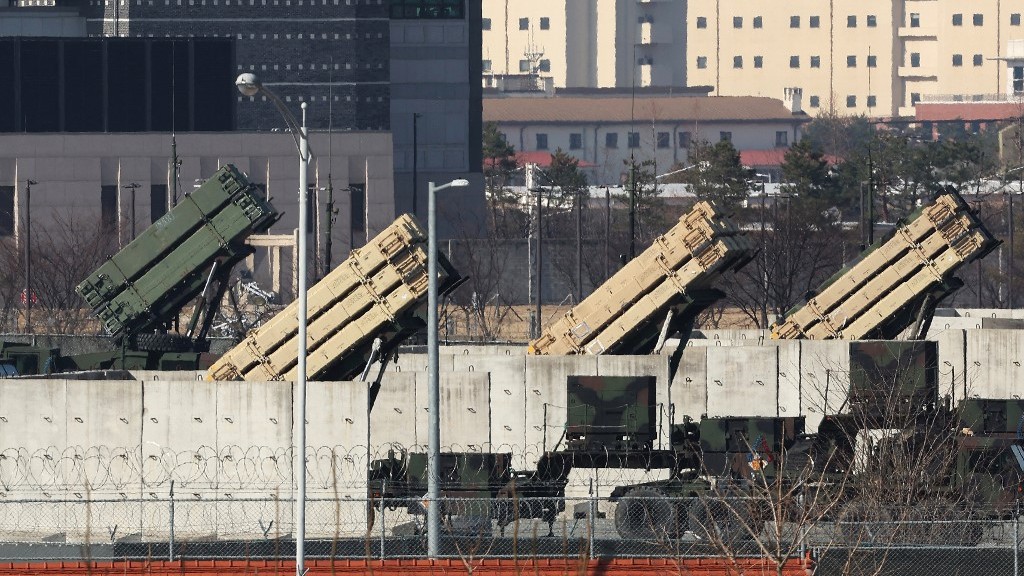
    The presidential warning came amid substantial US military deployments across the Middle East that have intensified fears of regional conflict. While Trump referenced successful airstrikes against Iranian nuclear facilities in June that allegedly “decimated” capabilities, he explicitly threatened further military action should diplomacy fail.

    Iran responded with measured defiance through an official letter to UN Secretary-General Antonio Guterres. While assuring no initiation of hostilities, Tehran warned that any American aggression would trigger “decisive and proportionate” self-defense measures targeting all US bases and assets throughout the region. The communication emphasized that Washington would bear “full and direct responsibility for any unpredictable and uncontrolled consequences.”

    The geopolitical standoff has already influenced global markets, with oil prices climbing amid the heightened tensions. Adding complexity to the situation, Russian naval forces participated in joint exercises with Iran in the Gulf of Oman, a critical maritime corridor for energy transportation.

    Despite diplomatic engagements between Iranian and US negotiators that reportedly established “guiding principles,” significant divisions persist. The White House acknowledges remaining disagreements on crucial issues. Trump maintains his fundamental position: “They can’t have a nuclear weapon. You can’t have peace in the Middle East if they have a nuclear weapon.”

    Iran continues to resist discussions beyond its nuclear program, specifically identifying missile arsenal limitations as an absolute “red line.” Satellite imagery analysis reveals both reconstruction efforts at damaged nuclear sites and military preparations across US installations in the region.

    International concern continues mounting, with Poland becoming the latest European nation to urgently advise citizen evacuation from Iran. Russian officials concurrently cautioned against “unprecedented escalation” while advocating for restraint from all involved parties.

  • Grey’s Anatomy and Euphoria actor Eric Dane passes away at 53 after ALS battle

    Grey’s Anatomy and Euphoria actor Eric Dane passes away at 53 after ALS battle

    The entertainment industry mourns the loss of acclaimed actor Eric Dane, who passed away on February 19 at age 53 after a courageous battle with amyotrophic lateral sclerosis (ALS). The beloved performer, best known for his roles as Dr. Mark Sloan on the long-running medical drama ‘Grey’s Anatomy’ and Cal Jacobs in HBO’s groundbreaking series ‘Euphoria,’ died surrounded by family and close friends.

    Born in San Francisco in 1972, Dane cultivated his craft through numerous television appearances throughout the 1990s before achieving breakthrough success. His portrayal of the charismatic plastic surgeon ‘McSteamy’ on ‘Grey’s Anatomy’ earned him international recognition and cemented his status as a fan favorite. The character proved so popular that Dane returned for multiple guest appearances over nearly two decades, most recently in the show’s seventeenth season.

    Following his ‘Grey’s Anatomy’ tenure, Dane demonstrated remarkable versatility across genres. He starred in Michael Bay’s action drama ‘The Last Ship’ for five seasons and delivered a critically acclaimed performance as the complex patriarch Cal Jacobs in ‘Euphoria,’ showcasing his ability to navigate emotionally demanding roles.

    Dane’s diagnosis with ALS in 2025 transformed him into a passionate advocate for neurodegenerative disease research and patient support. He collaborated extensively with the organization I Am ALS, championing legislative initiatives and fundraising efforts to advance treatment options and raise public awareness about the condition often referred to as Lou Gehrig’s disease.

    In an official statement, Dane’s family remembered him as a devoted husband and father to his two daughters, Billie and Georgia, who remained ‘the centre of his world’ throughout his health struggles. The statement expressed gratitude for the overwhelming support from fans and requested privacy as the family navigates this profound loss.

    Dane’s extensive filmography includes notable appearances in ‘X-Men: The Last Stand,’ ‘Marley & Me,’ and ‘Valentine’s Day,’ alongside numerous television projects that demonstrated his range and commitment to his craft. His final performances will appear in the upcoming projects ‘Borderline,’ ‘Into the Beautiful,’ and the television series ‘Wireless.’

  • UAE weather: Partly cloudy day, red alert issued for fog

    UAE weather: Partly cloudy day, red alert issued for fog

    The National Centre of Meteorology (NCM) has issued a significant red alert for foggy conditions across the United Arab Emirates, effective from 4am to 10am on Friday. Meteorological authorities indicate generally fair weather with intermittent partly cloudy conditions throughout the day.

    Temperature patterns show considerable variation, with maximum readings reaching 31°C in Abu Dhabi and 30°C in Dubai. Minimum temperatures will drop to 18°C in the capital, 20°C in Dubai, and a notably cooler 10°C in mountainous regions. Wind patterns will remain light to moderate, blowing from southeasterly to northeasterly directions at 10-20 km/h, occasionally reaching 30 km/h.

    Maritime conditions remain calm with slight seas reported in both the Arabian Gulf and Oman Sea. Humidity levels demonstrate significant fluctuation, ranging from 15% to 90% in Abu Dhabi and 20% to 85% in Dubai.

    The NCM has specifically warned residents about heightened humidity levels overnight into Saturday morning, with probable fog or mist formation anticipated across various coastal and internal areas. This weather phenomenon necessitates increased caution for early morning travelers and maritime activities.

    Meteorological experts emphasize that such conditions are characteristic of seasonal transitional periods, though the red alert status indicates potentially hazardous visibility reductions that warrant public awareness and appropriate safety measures.

  • 2 Cambodian journalists appeal treason convictions over a photo from Thai border clash

    2 Cambodian journalists appeal treason convictions over a photo from Thai border clash

    Two Cambodian journalists have formally appealed their treason convictions and 14-year prison sentences after being found guilty of posting Facebook photographs related to border clashes with Thailand. Phorn Sopheap of Battambang Post TV Online and Pheap Pheara of TSP 68 TV Online were arrested on July 31, 2023, while returning from reporting assignments near the contentious border region.

    The Siem Reap Provincial Court convicted both journalists in December on charges of ‘supplying a foreign state with information prejudicial to national defense.’ Authorities alleged the journalists operated within a restricted military zone and captured images containing land mines—evidence that contradicted official Cambodian denials about deploying such weapons in border conflicts.

    International press freedom organizations have condemned the verdicts. Shawn Crispin, senior Southeast Asia representative for the Committee to Protect Journalists, demanded Cambodian authorities cease using ‘vague national security laws to criminalize legitimate reporting.’ The case highlights Cambodia’s troubling press freedom record, with Reporters Without Borders ranking the nation 161st out of 180 countries in their 2025 World Press Freedom Index.

    According to court documents reviewed by rights group Licadho, the charges stemmed from Facebook posts made while covering military engagements between Cambodia and Thailand. Thai media extensively republished one controversial photograph allegedly showing unplanted land mines, fueling diplomatic tensions between the neighboring countries.

    Cambodia maintains it adheres to international agreements prohibiting land mine use, attributing any explosives to remnants from 1990s conflicts. Thailand, however, has accused Cambodia of deploying fresh mines that injured Thai soldiers.

    Om Sarath, wife of convicted journalist Pheap Pheara, told The Associated Press her husband had no malicious intent. ‘He just took gifts to distribute to front-line soldiers and took a photo with them as a souvenir without knowing there was a land mine in the background,’ she explained, adding that an appeal was filed Monday seeking acquittal for both journalists.

    Yin Srang, spokesperson for Siem Reap Provincial Court, confirmed the appeals process is underway. The border clashes that prompted the journalists’ reporting displaced hundreds of thousands and resulted in approximately 100 military and civilian casualties before a December ceasefire temporarily eased tensions.