标签: Asia

亚洲

  • Scholars, industry insiders call for a responsible, scientific, credible think tank research system

    Scholars, industry insiders call for a responsible, scientific, credible think tank research system

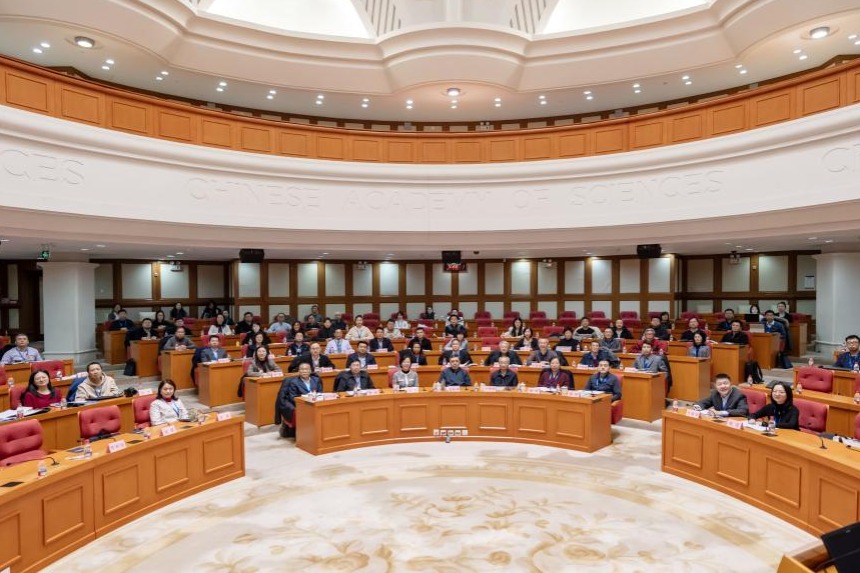
    Academic leaders and research specialists convened in Beijing this weekend to establish comprehensive guidelines for responsible think tank operations in the digital era, with particular emphasis on balancing artificial intelligence capabilities with human intellectual oversight.

    At the forefront of this initiative, the Chinese Academy of Sciences (CAS) has outlined an ambitious roadmap to develop a national high-level scientific think tank by 2030. Professor Pan Jiaofeng, President of the CAS Institutes of Science and Development, emphasized the critical timing of this effort: “As China advances through its modernization journey amid rapid technological transformation, we face increasingly complex decision-making environments that demand unprecedented research quality and accountability.”

    The proposed framework distinguishes think tank research from conventional academic work by prioritizing practical applicability and real-world implementation. Professor Pan noted that responsible research must align with national development objectives while respecting scientific principles and guiding societal expectations toward improved public welfare.

    Health policy expert Chen Jiapeng from the China Population and Development Research Center reinforced the human-centered approach, advocating for inclusive methodologies that ensure representation from even the most remote communities. “While comprehensive coverage requires substantial investment and may initially demonstrate lower efficiency, this approach remains fundamental to achieving equitable development outcomes,” Chen explained, highlighting the necessity of phased implementation and cross-departmental collaboration.

    Operational standards emerged as another critical focus area. Wang Zhenyu of CAS’s Integrated Research Support Centers revealed that the academy’s newly released proposal addresses longstanding challenges including duplicate reporting, authorship confusion, and appropriate AI utilization. The guidelines incorporate both domestic experience and international best practices to standardize research values and output management.

    Petroleum industry economist Wei Xinqiang articulated specific technical requirements, calling for standardized protocols covering quality control, procedural transparency, and data security. While acknowledging AI’s transformative potential in data processing and information gathering, Wei cautioned against over-reliance on technology for strategic formulation. “Insight generation and strategic planning must remain fundamentally human-driven capabilities,” he asserted, pointing to verification challenges with open-source data that necessitate multi-source validation and expert consultation.

  • Two taken into custody after gunshot leave 10 dead at Sydney’s Bondi Beach

    Two taken into custody after gunshot leave 10 dead at Sydney’s Bondi Beach

    Sydney’s iconic Bondi Beach became the scene of a devastating mass shooting on Sunday, resulting in ten fatalities and multiple injuries. New South Wales Police confirmed the tragic incident occurred during a crowded summer afternoon, sending shockwaves through the Australian community.

    According to official statements released via social media platform X, law enforcement authorities have taken two individuals into custody following the violent outbreak. The police operation remains active, with authorities urging public avoidance of the affected area and instructing those nearby to shelter in place until further notice.

    The comprehensive police update revealed grim details: among the ten confirmed fatalities is one man believed to be a shooter, while the second alleged perpetrator remains in critical condition. The casualty count includes eleven additional injured persons, two of whom are police officers responding to the crisis.

    Disturbing footage circulated online captured a brave bystander confronting one attacker and successfully disarming him. The visual evidence, as reported by Al Jazeera, shows the disarmed suspect walking away while another shooter positioned on a nearby bridge approximately 50-100 meters away continued firing toward civilians.

    The tragedy unfolded during peak beach hours, with the popular coastline packed with families, children, and swimmers enjoying relief from summer heat. The unprecedented violence at such a cherished public space represents one of Australia’s most severe mass shooting incidents in recent history, raising immediate questions about public safety and security measures at popular tourist destinations.

    As investigations continue, Australian authorities have pledged ongoing updates while coordinating with emergency services to manage the aftermath of this national tragedy.

  • Thailand imposes coastal curfew as border clashes with Cambodia escalate

    Thailand imposes coastal curfew as border clashes with Cambodia escalate

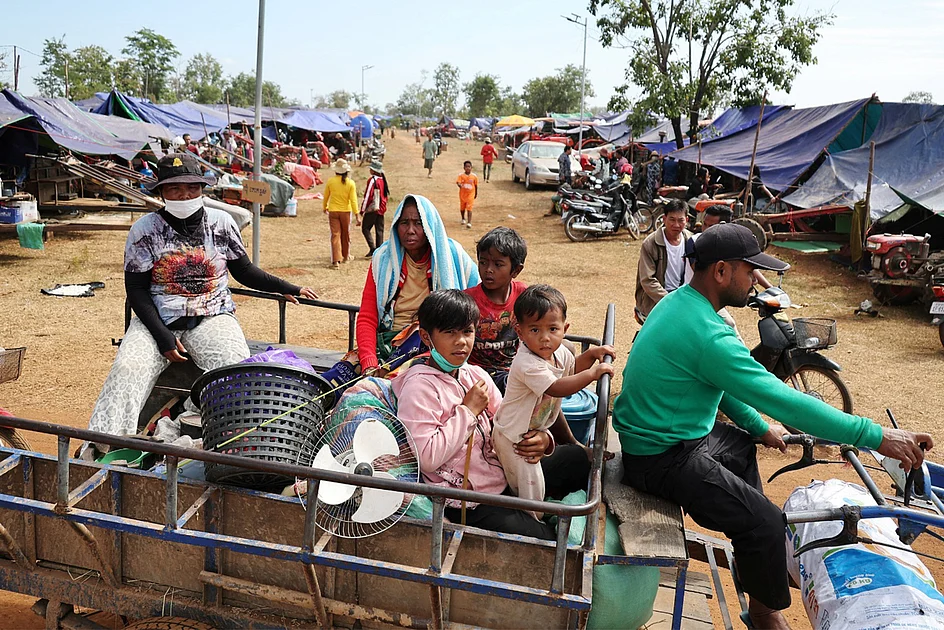
    Thailand has intensified security measures by imposing a coastal curfew in its southeastern Trat province as border hostilities with Cambodia continue to escalate, despite recent diplomatic interventions. The new restrictions affect five districts adjacent to Cambodia’s Koh Kong province, though popular tourist destinations Koh Chang and Koh Kood remain exempt from the military directive.

    This development follows Friday’s announcement by U.S. President Donald Trump claiming both nations had agreed to cease fire after his discussions with Thai caretaker Prime Minister Anutin Charnvirakul and Cambodian Premier Hun Manet. However, combat operations persisted throughout the weekend, with Anutin vowing to continue military actions until Thailand perceives no further threats to its territorial integrity.

    The conflict has witnessed intensified artillery exchanges across multiple points of the 817-kilometer contested border, representing the most severe clashes since July’s five-day confrontation. Thai military forces reported destroying a strategic bridge used by Cambodia for transporting heavy weaponry, while Cambodian authorities accused Thailand of targeting civilian infrastructure.

    Rear Admiral Surasant Kongsiri, Thai Defence Ministry spokesman, stated that despite Cambodia’s expressed openness to ceasefire discussions, continuous hostilities have prevented meaningful dialogue. “Thailand remains receptive to diplomatic solutions, but Cambodia must first cease all hostile actions before negotiations can commence,” he emphasized during a Bangkok press conference.

    The current violence marks another chapter in the prolonged border dispute that reignited in May following the death of a Cambodian soldier, subsequently displacing hundreds of thousands of residents from both nations. The White House has subsequently reinforced President Trump’s expectation that all parties honor their ceasefire commitments, warning that accountability measures will be enforced to ensure lasting peace.

  • At least 6 Bangladesh peacekeepers killed, 8 injured in Sudan UN base attack

    At least 6 Bangladesh peacekeepers killed, 8 injured in Sudan UN base attack

    In a devastating attack on United Nations peacekeeping operations, a drone assault on the Kadugali Logistics Base in Abyei, Sudan has resulted in the deaths of six Bangladeshi peacekeepers and left eight others wounded. The incident occurred between approximately 3:40 PM and 3:50 PM local time on Saturday when separatist armed groups targeted the UN facility.

    The Bangladesh Army confirmed the casualties in an official statement, noting that the situation in the region remains highly volatile with ongoing clashes against terrorist elements. Military authorities emphasized that rescue operations and medical treatment for the injured are being prioritized despite the challenging security environment.

    Bangladesh maintains its position as one of the largest contributors to UN peacekeeping missions worldwide, with its forces having been stationed long-term in the contentious Abyei region. This territory represents a persistent flashpoint in the unresolved border disputes between Sudan and South Sudan, frequently experiencing outbreaks of violence despite international peacekeeping presence.

    The attack underscores the increasing dangers faced by peacekeeping personnel in conflict zones where non-state armed groups are employing more sophisticated weaponry, including drone technology. The UN mission in Abyei, established to maintain stability in the disputed region, now faces renewed challenges to its operational security and mandate fulfillment.

  • Remains of former Chinese leader Wang Bingqian cremated

    Remains of former Chinese leader Wang Bingqian cremated

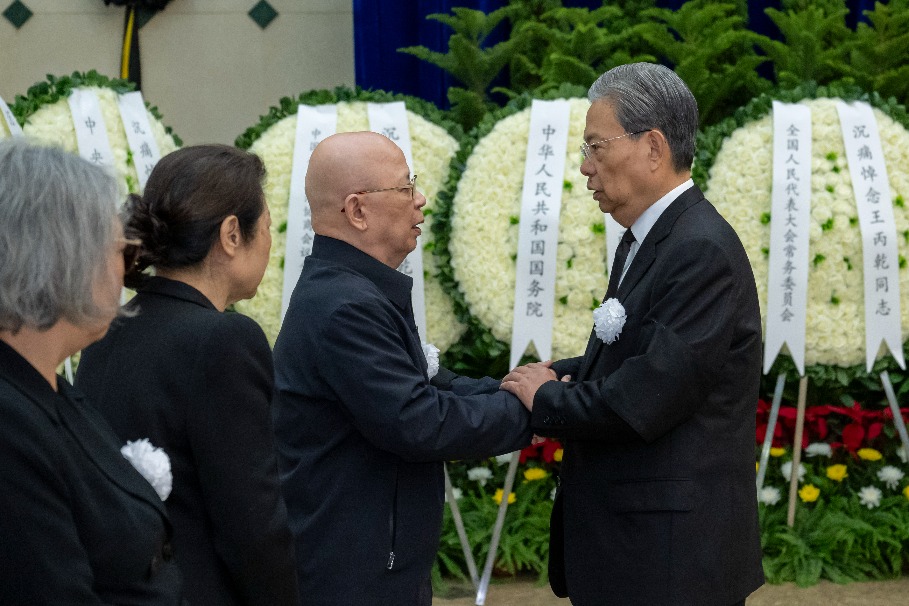
    GUANGZHOU – China conducted formal funeral proceedings on Sunday for Wang Bingqian, the esteemed former state leader who passed away at age 100 on December 8. The cremation ceremony took place in Guangzhou, capital of Guangdong province, with senior government officials paying their respects to the veteran politician who held multiple high-ranking positions throughout his career.

    Wang served the nation in several pivotal roles, including State Councilor and Vice Chairman of the Standing Committee of the National People’s Congress (NPC), China’s top legislative body. His decades of public service spanned critical periods of the country’s economic reform and development.

    The ceremony was attended by Zhao Leji, Chairman of the NPC Standing Committee and member of the Standing Committee of the Political Bureau of the Communist Party of China Central Committee, alongside other dignitaries. The gathering at Guangzhou Funeral Home represented a formal state recognition of Wang’s contributions to national governance.

    Prior to the funeral, China’s current leadership including Xi Jinping, Li Qiang, Wang Huning, Cai Qi, Ding Xuexiang, Li Xi, Han Zheng, and former leader Hu Jintao had either visited Wang during his hospitalization or conveyed formal condolences to his family through appropriate channels. This demonstration of respect from both current and previous generations of leadership highlights Wang’s enduring legacy within Chinese political circles.

    The passing of Wang Bingqian marks the departure of one of China’s century-old revolutionary generation, whose career trajectory mirrored the nation’s modern political development through various historical periods.

  • Buddhist body urges followers not to release lifeless items into the natural environment

    Buddhist body urges followers not to release lifeless items into the natural environment

    The Buddhist Association of China has issued a formal condemnation against the growing practice of releasing inanimate objects into natural environments under the guise of religious observance. This statement comes in response to recent incidents in Liaoning province where individuals were documented pouring substantial quantities of rice into the ocean and ‘releasing’ bottled water as purported acts of Buddhist devotion.

    The Association clarified that traditional Buddhist ‘life release’ practices (fang sheng) exclusively involve liberating living creatures facing imminent slaughter or danger, allowing them to thrive in suitable habitats. This ancient ritual embodies the core Buddhist principles of unconditional compassion and the sacred precept against killing. The organization emphasized that plant seeds like rice and manufactured items such as bottled water lack consciousness and cannot be classified as sentient beings, making their ‘release’ doctrinally invalid.

    Beyond theological concerns, the Association highlighted significant environmental and social consequences. These practices contradict traditional Chinese virtues of frugality, constitute wasteful resource expenditure, and potentially damage delicate ecosystems. The statement further warned that improper release methods often achieve opposite results from their intended purpose, potentially endangering more lives and disrupting ecological balance.

    The Association specifically addressed several problematic scenarios: introducing terrestrial animals to aquatic environments, releasing domesticated species into the wild, introducing invasive species or pathogen-carrying animals, and conducting releases in protected areas or urban water sources. These activities not only violate environmental regulations but also foster commercial markets that exploit wildlife specifically for release ceremonies.

    In response to these concerns, the Buddhist Association has implemented new guidelines approved on June 30th to promote civilized and environmentally responsible practices. The directive mandates that all release activities must comply with national laws and receive supervision from environmental, agricultural, forestry, marine, and quarantine authorities. Group releases outside formal Buddhist venues now require approval as large religious events with thorough review of species, quantities, timing, and locations. Commercialization of release activities is strictly prohibited, with specific bans on protected areas, urban water bodies, transportation routes, and residential zones.

    The Association concluded by committing to incorporate education about proper release practices into Buddhist teachings, ensuring followers understand the authentic meaning and appropriate methods of this traditional practice while protecting both environmental integrity and religious sanctity.

  • Average age of China’s workforce nearing 40, report says

    Average age of China’s workforce nearing 40, report says

    China’s labor landscape is undergoing a profound demographic transformation as the nation’s workforce approaches a pivotal age milestone. According to the China Human Capital Report 2025 released by the Central University of Finance and Economics’ research center, the average age of Chinese workers is now nearing 40 years, signaling significant implications for the country’s economic future.

    The comprehensive study reveals distinct patterns across geographic and gender dimensions. In rural areas, workers averaged 39.66 years in 2023, with men significantly older at 41.6 years compared to women at 39.06 years. Urban centers showed slightly younger demographics, with male workers averaging 40.26 years and female workers 38.07 years.

    This aging trend represents a dramatic shift from previous decades. Between 1985 and 2023, China’s overall workforce age increased from 32.25 to 39.66 years—a seven-year maturation that reflects both improved life expectancy and declining birth rates. Urban workers aged from 33.03 to 39.25 years during this period, while rural workers experienced an even more pronounced aging from 31.99 to 40.54 years.

    Regional analysis reveals substantial disparities across China. The oldest workforce concentrations are found in Inner Mongolia Autonomous Region and the northeastern provinces of Heilongjiang, Liaoning, and Jilin, alongside southwestern Sichuan Province. Conversely, the youngest labor forces are located in Hainan Province, Tibet Autonomous Region, Guangdong Province, Guizhou Province, and Xinjiang Uygur Autonomous Region, presenting very different demographic challenges and opportunities across China’s economic landscape.

    The report underscores how this demographic evolution intersects with China’s broader population aging challenges, potentially affecting productivity, innovation capacity, and social welfare systems in coming decades.

  • Key Dubai corridor to see travel time cut from 20 minutes to five

    Key Dubai corridor to see travel time cut from 20 minutes to five

    Dubai’s Roads and Transport Authority (RTA) has launched a transformative infrastructure project that will dramatically reduce travel times along a critical transportation corridor. The newly awarded contract focuses on redeveloping the intersection of Sheikh Zayed bin Hamdan Al Nahyan Street with Al Awir Road and Al Manama Street, cutting journey times from 20 minutes to just 5 minutes.

    The comprehensive development plan includes constructing 2,300 meters of bridges, expanding existing lanes, and paving new service roads along both Sheikh Zayed bin Hamdan Al Nahyan Street and Al Awir Road. The project will replace the current roundabout at the main intersection with a grade-separated interchange, enabling seamless traffic flow in all directions without signal interruptions.

    Scheduled for completion in Q3 2028, the upgrade will boost traffic capacity by 176%—from 5,200 to 14,400 vehicles per hour in both directions. This expansion directly addresses the needs of residential and development areas housing over 600,000 residents and visitors, ensuring improved mobility and reduced congestion.

    Additional components include a new bridge at the intersection of Al Awir Road with Emirates Road to facilitate traffic toward Al Awir and Sharjah. The project will also enhance surface roads by widening Sheikh Zayed bin Hamdan Al Nahyan Street from two to four lanes in each direction and optimizing signalized intersections for greater operational efficiency.

    This initiative represents the latest phase in RTA’s ongoing program to upgrade Sheikh Zayed bin Hamdan Al Nahyan Street, following previous developments that included a 25-kilometer stretch from Dubai–Al Ain Road to Al Yalayis Street and the construction of dual bridges at Dubai Silicon Oasis intersection.

  • Watch: Rain triggers waterfalls in UAE mountains as downpour hits some parts of country

    Watch: Rain triggers waterfalls in UAE mountains as downpour hits some parts of country

    The United Arab Emirates experienced a remarkable meteorological phenomenon on Sunday, December 14, 2025, as unusual winter rainfall dramatically altered the nation’s typically arid landscape. The National Centre of Meteorology’s earlier predictions materialized into reality when substantial precipitation generated spontaneous waterfalls cascading through the mountainous regions of Jebel Jais in Ras Al Khaimah, creating breathtaking natural spectacles rarely witnessed in the region.

    Visual documentation from Storm Centre, a prominent weather monitoring entity, captured the extraordinary transformation of wadis into flowing waterways and the formation of temporary waterfalls along rugged mountain terrain. The footage revealed vehicles navigating cautiously through rain-soaked roads with headlights illuminating the precipitation-filled atmosphere during what would typically be daylight hours.

    Simultaneously, coastal areas experienced dramatic electrical storms with lightning displays illuminating the Ras Al Khaimah coastline. The meteorological disturbance created striking visual contrasts against the UAE’s normally consistent blue skies, with thick cloud formations presenting varying shades of gray over Dubai and surrounding emirates.

    Authorities including Abu Dhabi Police and Dubai Police issued coordinated safety advisories, urging residents to exercise caution and adhere to official guidelines during the ongoing weather event. The unusual conditions prompted adjustments to daily routines, with many companies implementing remote work policies in response to the National Centre of Meteorology’s warnings.

    Meteorologist Dr. Ahmed Habib from the NCM indicated that this weather pattern represents part of a broader multi-system convergence affecting the region, with projections suggesting peak intensity between December 16-19. The current conditions include scattered showers, potential heavy downpours, thunder, possible hail, and significantly reduced temperatures across the country.

  • China steps up cultural heritage protection to keep its past alive for the future

    China steps up cultural heritage protection to keep its past alive for the future

    China is implementing a comprehensive strategy to safeguard its extensive cultural legacy, combining legislative reinforcement, technological innovation, and international partnerships to preserve its 5,000-year civilization for future generations.

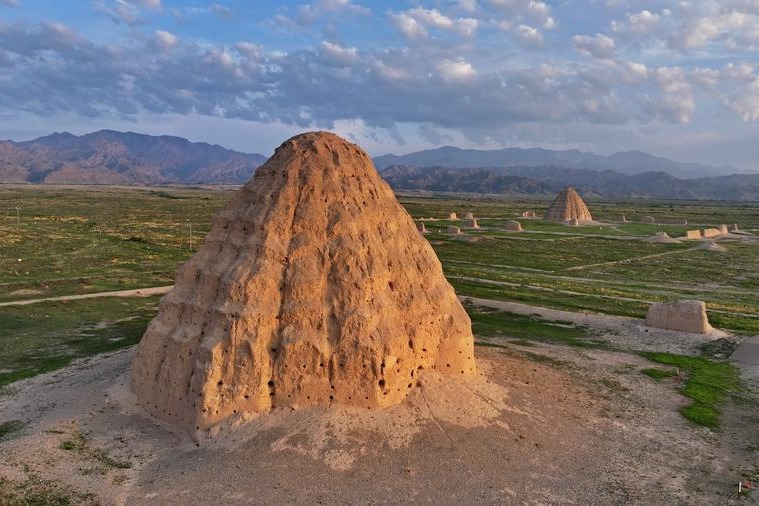
    Between 2021 and 2025, China successfully secured UNESCO World Heritage status for four significant sites: the Beijing Central Axis, Jingmai Mountain’s Ancient Tea Forests, the Xixia Imperial Tombs, and the historic maritime trade hub of Quanzhou. These additions bring China’s total World Heritage count to 60, positioning the nation second globally, trailing only Italy’s 61 recognized sites.

    The National Cultural Heritage Administration (NCHA) reveals several promising candidates in the nomination pipeline, including Jingdezhen’s porcelain heritage, Sichuan’s Sanxingdui and Jinsha archaeological sites, Yangtze River waterfront towns, and the Maritime Silk Road corridor.

    Underpinning this expansion is China’s evolving preservation philosophy, transitioning from reactive restoration toward an integrated approach combining emergency response with preventive conservation. The country has established a robust legal framework anchored by the Cultural Relics Protection Law, supplemented by six administrative regulations, ten ministerial directives, and over 400 local statutes.

    Technological advancements are revolutionizing heritage monitoring and public engagement. Satellite remote sensing, drone surveillance, and artificial intelligence enable continuous assessment of site conditions, facilitating early risk detection. Digital archiving initiatives have created intricate 3D models of Longmen Grottoes sculptures and high-resolution virtual tours of Dunhuang’s Mogao Caves.

    Public accessibility has dramatically improved through expanded cultural infrastructure. Over 7,000 museums nationwide—91% offering free admission—record approximately 1.5 billion annual visits. The network includes 65 national archaeological parks and 200+ thematic heritage routes connecting urban and rural communities through shared historical resources.

    Internationally, China has pioneered the Alliance for Cultural Heritage in Asia—the continent’s inaugural intergovernmental preservation body—and leads the ISO technical committee on heritage conservation standards. Chinese experts have conducted six restoration projects across four nations and initiated 49 joint archaeological programs involving 28 countries.

    Additionally, repatriation efforts have successfully recovered 537 lost cultural artifacts across 35 separate batches over the past five years, with commitments to strengthen institutional mechanisms for further returns.