标签: Asia

亚洲

  • Bangladesh mourns slain activist as tensions rise ahead of elections

    Bangladesh mourns slain activist as tensions rise ahead of elections

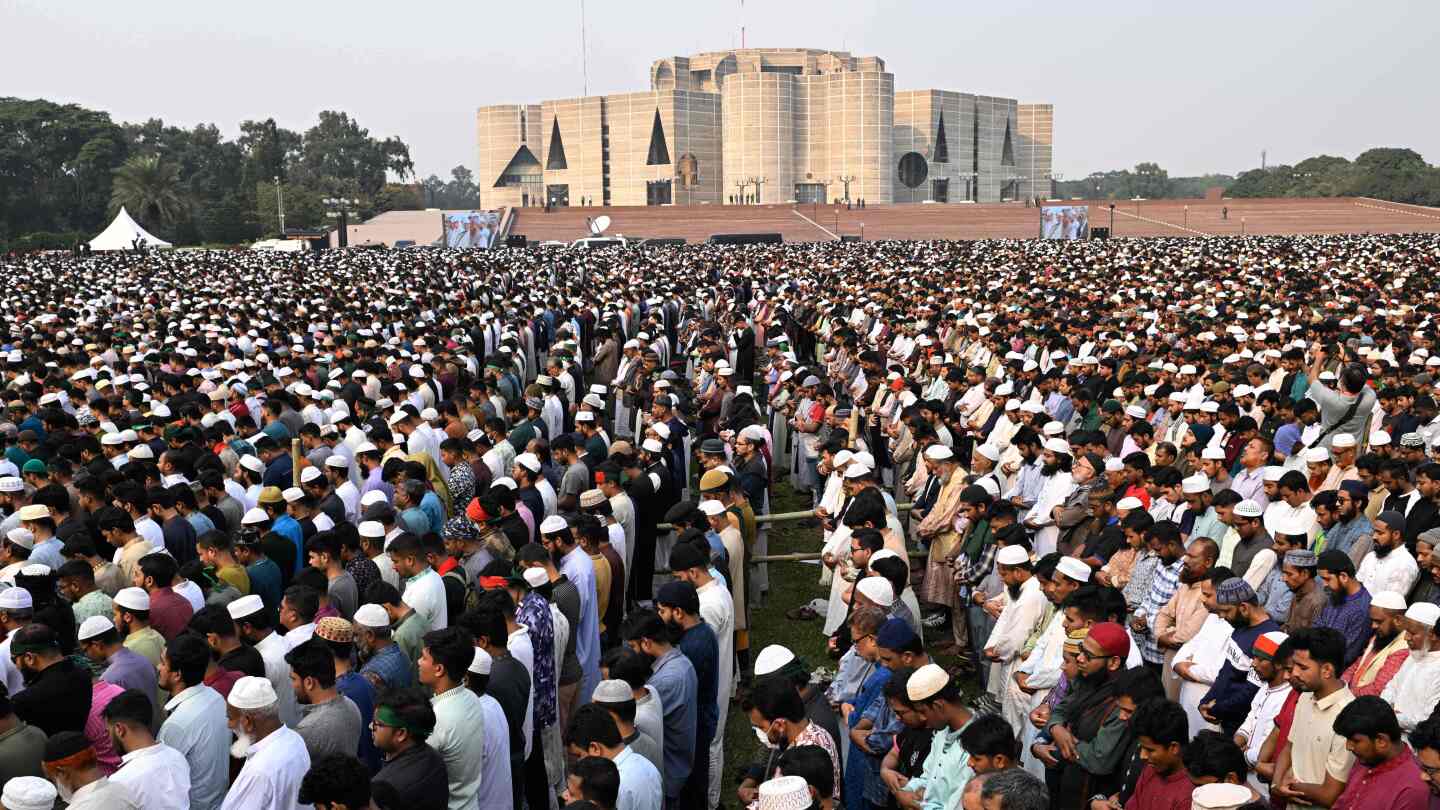
    DHAKA, Bangladesh — Bangladesh witnessed massive funeral processions on Saturday for prominent political activist Sharif Osman Hadi, whose death has intensified the nation’s political instability ahead of crucial February elections. Hundreds of thousands of mourners gathered in Dhaka under tight security measures as the country observed a national day of mourning.

    Hadi, a key figure in the 2024 political uprising that ended former Prime Minister Sheikh Hasina’s 15-year administration, succumbed to gunshot wounds on Thursday in a Singapore hospital. The initial attack occurred on December 12 in Dhaka, with police indicating the primary suspect has likely fled to India—a development that has sparked diplomatic tensions between the neighboring nations.

    The funeral proceedings took place outside Bangladesh’s Parliament complex, where mourners carried national flags and chanted slogans vowing to continue Hadi’s political legacy. As spokesperson for the Inqilab Moncho cultural organization, Hadi will be laid to rest at Dhaka University campus beside national poet Kazi Nazrul Islam.

    The activist’s death has triggered violent responses, with protesters attacking and setting fire to offices of two major national newspapers. Interim leader and Nobel Peace laureate Muhammad Yunus has appealed for calm amid the escalating tensions.

    Hadi, known for his criticism of both India and the exiled former leader Hasina, had planned to run as an independent candidate in Dhaka during the upcoming elections. Bangladesh currently navigates a delicate political transition under Yunus’s interim government, with the absence of Hasina’s Awami League party creating a complex power dynamic.

    The political landscape now features Hasina’s rival Bangladesh Nationalist Party led by former Prime Minister Khaleda Zia, alongside the Jamaat-e-Islami party—the country’s largest Islamist organization—which seeks expanded political influence following Hasina’s departure. India has remained unresponsive to Bangladesh’s requests for extraditing Hasina, who faces death sentencing for crimes against humanity.
  • Imran Khan and wife given further jail terms after state gift fraud case

    Imran Khan and wife given further jail terms after state gift fraud case

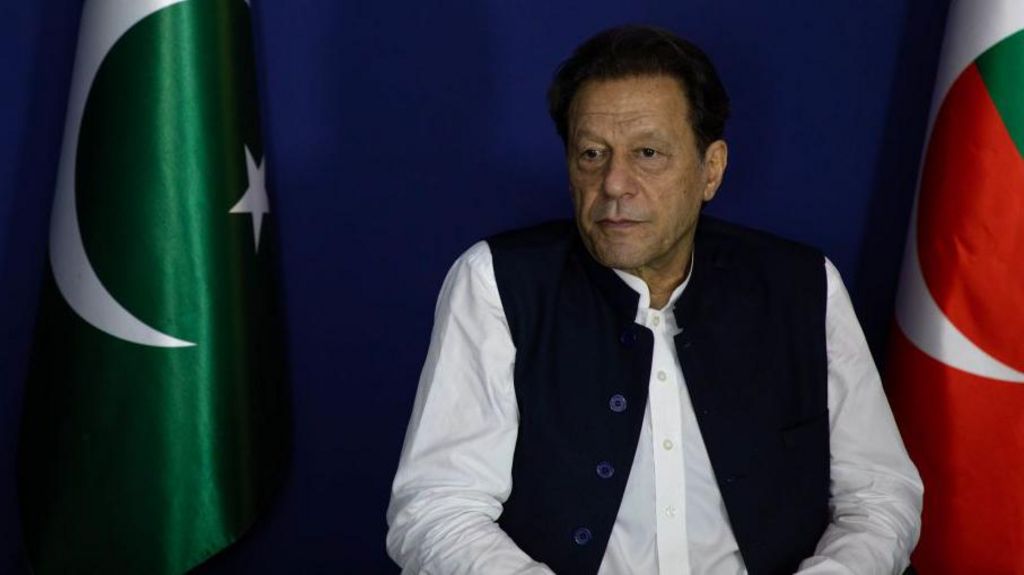
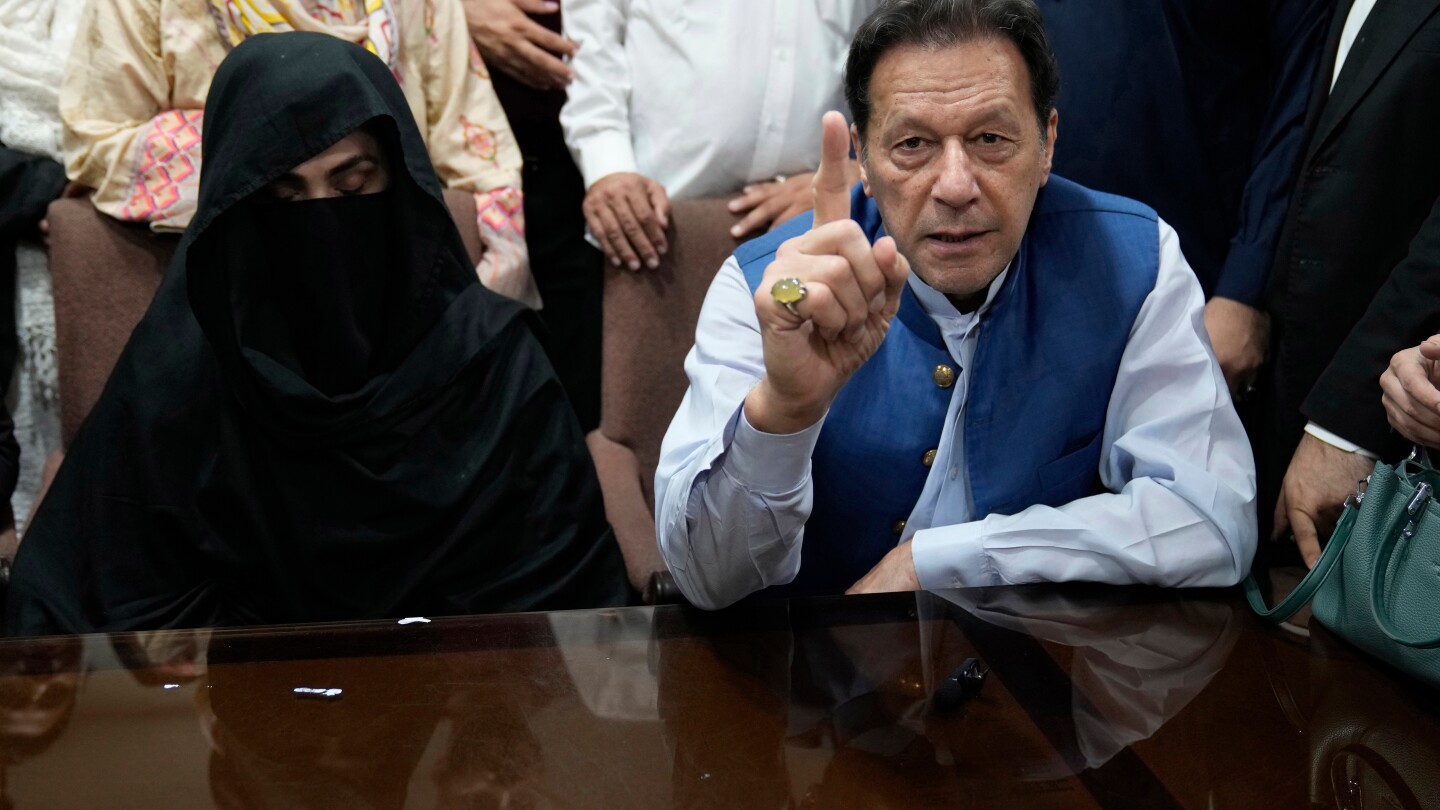
    In a significant legal development, Pakistan’s former Prime Minister Imran Khan and his spouse Bushra Bibi have been handed additional prison sentences in a high-profile fraud case concerning state gifts. The conviction centers on a luxury Bulgari jewelry set received from Saudi Crown Prince Mohammed bin Salman during an official 2021 visit.

    The Islamabad court delivered sentences of 10 years for criminal breach of trust and 7 years for criminal misconduct, accompanied by a fine exceeding 16 million Pakistani rupees (£42,600). These terms will run concurrently with their existing prison sentences. Notably, the defendants were absent during sentencing, with their legal team receiving notification after standard court hours concluded.

    This case, colloquially termed ‘Toshakhana 2’ in Pakistani media, alleges that Khan orchestrated the undervaluation of the jewelry through a private firm before repurchasing it at a substantially reduced price—a direct violation of Pakistan’s regulations requiring state gifts to be deposited with the Toshakhana treasury.

    Khan’s defense team, led by attorney Salman Safdar, has characterized the charges as politically motivated and plans to appeal the verdict in Pakistan’s high court. This judgment represents the latest in over 100 legal cases brought against the former cricket icon since his removal from office via no-confidence vote in April 2022.

    The sentencing occurs against a backdrop of heightened political tensions. Khan’s social media channels continue to operate despite his incarceration, posting content sharply critical of current military leadership. Recent months have seen restricted visitation rights, with family access severely limited following controversial posts attributed to Khan.

    Correctional authorities confirmed both defendants were present during the verdict announcement, though media observation was prohibited. The court documentation notably referenced leniency in sentencing due to Khan’s ‘advanced age.’

  • Pakistani court sentences former Prime Minister Imran Khan and wife to 17 years in graft case

    Pakistani court sentences former Prime Minister Imran Khan and wife to 17 years in graft case

    A Pakistani court has delivered a significant verdict against imprisoned former Prime Minister Imran Khan and his spouse Bushra Bibi, sentencing both to 17 years imprisonment for illicitly retaining and selling state gifts. The ruling, announced Saturday at Adiala prison in Rawalpindi, marks another legal setback for the ousted leader.

    The conviction centers on allegations that the couple substantially undervalued precious gifts received from foreign dignitaries—including jewelry from Saudi Arabia’s government—during Khan’s premiership. Prosecutors demonstrated that Khan and Bibi declared the gifts’ worth at slightly over $10,000, enabling their purchase at reduced prices, despite their actual market valuation exceeding $285,000.

    Pakistani legislation explicitly mandates that government officials must acquire gifts from foreign dignitaries at fair market value if they wish to retain them, with any subsequent sales proceeds requiring declaration. The court found the couple violated these regulations through systematic undervaluation.

    Khan’s political party, Pakistan Tehreek-e-Insaf, immediately condemned the decision as “a black chapter in history,” while his spokesperson Zulfiquar Bukhari criticized the verdict for imposing “criminal liability without proof of intent, gain, or loss.” Bukhari further alleged the judgment relied on “retrospective reinterpretation of rules” and raised concerns about judicial impartiality.

    The sentencing adds to multiple corruption convictions Khan has accumulated since his 2022 ouster via parliamentary no-confidence vote. The former cricket superstar maintains that all charges against him constitute politically motivated attempts to derail his continuing influence and potential return to power.

  • Children at kindergarten in N China learn to make dumplings ahead of Winter Solstice

    Children at kindergarten in N China learn to make dumplings ahead of Winter Solstice

    In anticipation of the upcoming Winter Solstice, young students at a kindergarten in Jiyuan city, Shandong province, engaged in a hands-on cultural activity by learning to make traditional Chinese dumplings on December 19, 2025.

    The event, captured in photographs distributed by Xinhua News Agency, shows children proudly presenting their handmade dumplings while learning about this significant seasonal festival. Winter Solstice, occurring this year on December 21st, represents the shortest day of the year and historically marked the beginning of deep winter in traditional Chinese agricultural society.

    This educational initiative connects the younger generation with China’s rich cultural heritage surrounding the solar term. The tradition of consuming specific foods during Winter Solstice varies regionally across China, with northern provinces maintaining the custom of eating dumplings, while southern regions typically enjoy tangyuan (sweet glutinous rice balls).

    The kindergarten’s curriculum-integrated activity demonstrates how educational institutions are preserving cultural traditions through experiential learning. Children not only developed culinary skills but also gained understanding of seasonal changes and their significance in Chinese agricultural history and contemporary practices.

  • Museum’s donated painting in spotlight

    Museum’s donated painting in spotlight

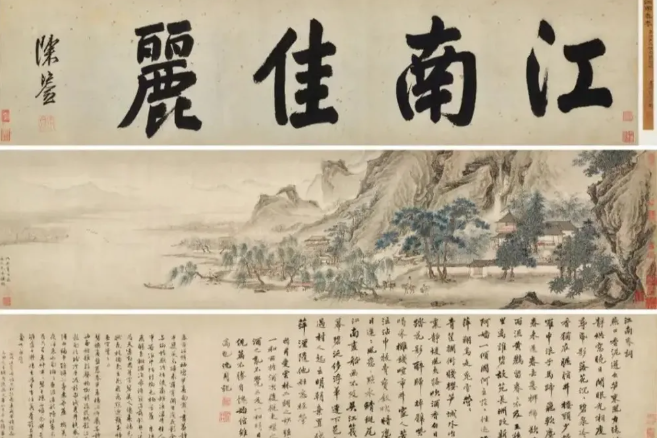
    Nanjing Museum has produced archival documents claiming a disputed 16th-century landscape painting at the center of a major donation controversy was officially classified as forged decades ago. The revelation comes amid escalating legal battles with the descendants of renowned collector Pang Laichen (1864-1949), who donated 137 artifacts to the institution in 1959.

    The conflict emerged when family members discovered ‘Jiangnan Spring’ – attributed to Ming Dynasty master Qiu Ying – was scheduled for auction in Beijing with an ¥88 million ($12.5 million) price tag. The painting was abruptly withdrawn after the Pangs protested, prompting investigations that revealed five artworks from their donation were missing from museum records.

    According to documents presented by the museum, a 1961 expert panel determined ‘Jiangnan Spring’ was duplicated, with a second panel confirming its forged status in 1964. Records indicate the painting was subsequently transferred to Jiangsu Cultural Relics Store in the 1990s under then-prevailing collection management regulations, with a 2001 invoice showing its eventual sale for merely ¥6,800 as ‘A Copy of Qiu Ying’s Jiangnan Spring’.

    Pang Shuling, the collector’s great-granddaughter, has filed a court enforcement application demanding full transparency regarding the transferred artifacts. ‘The donation made by my father to Nanjing Museum in 1959 are all precious works, they are not forged,’ she asserted.

    The museum maintains it acted within historical guidelines, with attorney Zhang Han noting ownership transferred completely upon donation. However, family attorney Yin Zhijun argues donors retain right-to-know privileges regarding their contributions’ preservation.

    Museology professor Pan Shouyong of Shanghai University contextualized the dispute: ‘People’s understanding of what a ‘cultural relic’ is has been constantly growing. It’s unfair to always use today’s guiding mindset to judge past deeds, but neither can we conceal a past blemish if we want to achieve more.’

    The case highlights evolving standards in China’s cultural heritage management, particularly since the National Cultural Heritage Administration’s 2018 interim measures requiring donor consultation for deaccessioning procedures.

  • New optical chip can help advance generative AI

    New optical chip can help advance generative AI

    Researchers at Shanghai Jiao Tong University have unveiled a groundbreaking optical computing chip that promises to transform the landscape of generative artificial intelligence. Dubbed LightGen, this innovative all-optical chip represents a significant leap forward in addressing the enormous computational and energy challenges facing next-generation AI systems.

    The research breakthrough, published as a featured paper in the prestigious journal Science on December 20, 2025, marks the first successful development of an all-optical computing chip capable of supporting large-scale semantic and visual generative models. This achievement comes at a critical juncture when generative AI applications are expanding into increasingly complex real-world scenarios, from instant text-to-image conversion to rapid video creation.

    Unlike conventional electronic chips that process information using electrons within transistors, LightGen harnesses the natural properties of light to achieve unprecedented processing speeds and parallelism. The technology fundamentally reimagines computational architecture by overcoming three previously insurmountable bottlenecks: integrating millions of optical neurons on a single chip, achieving comprehensive all-optical dimensional transformation, and developing specialized training algorithms for optical generative models that operate independently of ground truth data.

    According to lead researcher Chen Yitong, assistant professor at Shanghai Jiao Tong University’s School of Integrated Circuits, LightGen’s architecture enables a complete ‘input-understanding-semantic manipulation-generation’ cycle entirely through optical processes. The system can extract and represent semantic information from input images, then generate new media data under semantic control—effectively enabling light to both ‘understand’ and ‘cognize’ complex information patterns.

    Experimental results demonstrate LightGen’s capability to perform high-resolution image semantic generation, 3D modeling, high-definition video generation, and sophisticated semantic control operations. The chip supports diverse large-scale generative tasks including advanced denoising and feature transfer applications.

    Performance evaluations conducted under rigorous computational standards revealed that LightGen achieves generation quality comparable to leading electronic neural networks like Stable Diffusion and NeRF, while delivering staggering efficiency improvements. Testing showed computational and energy efficiency enhancements of two orders of magnitude compared to top-tier digital chips, even when using relatively outdated input devices. Theoretical projections suggest that with advanced devices, LightGen could achieve computational power improvements of seven orders of magnitude and energy efficiency improvements of eight orders of magnitude.

    This development signals a potential paradigm shift in the post-Moore’s law era, where global research efforts are increasingly focused on next-generation computing solutions. As generative AI becomes more deeply integrated into production systems and daily life, LightGen opens new pathways for developing high-speed, energy-efficient generative intelligent computing systems that could fundamentally reshape AI implementation across industries.

  • Deputies now more engaged in legislation

    Deputies now more engaged in legislation

    China’s legislative process is witnessing increased participation from people’s congress deputies nationwide, marking significant progress in the implementation of whole-process people’s democracy. Huang Haihua, spokesman for the NPC Standing Committee’s Legislative Affairs Commission, confirmed on Friday that deputies are actively contributing to lawmaking through substantive suggestions and participating in enforcement inspections.

    The engagement mechanism has yielded tangible results, with 19 legislative items connected to 43 motions from deputies either approved, currently under review, or incorporated into the legislative planning framework. The legislative body has particularly integrated deputy input across multiple domains including environmental protection, private sector development, legal education, national parks, cybersecurity, and anti-unfair competition legislation.

    Huang emphasized the comprehensive approach to deputy involvement, noting that “we’ve invited deputies, particularly those with relevant expertise, to participate directly in legislative activities and share their perspectives personally. This has significantly enhanced our communication channels and collaborative engagement.” Regular briefings now provide updates on how deputy suggestions are incorporated into draft laws, creating a systematic feedback loop.

    These developments operationalize the amended Law on Deputies to the NPC and to Local People’s Congresses at Various Levels, which took effect on March 12, 2025. The measures aim to progressively expand both the scope and depth of deputy participation in legislative work, while creating improved mechanisms for gathering public opinions and integrating wisdom from diverse sectors of society.

    The upcoming NPC Standing Committee session, scheduled from Monday to Saturday in Beijing, will review several significant legislative items concerning economic development and livelihood issues. The agenda includes a draft amendment to the Civil Aviation Law proposing new airworthiness certification standards for unmanned aerial vehicles alongside enhanced passenger protection and flight safety measures.

    Addressing persistent safety concerns, lawmakers will consider draft legislation establishing a comprehensive risk identification system and skill enhancement requirements for employees in the hazardous chemicals sector, where accidents continue to occur in some regions.

    Additional items slated for review include a draft law on childcare services and legislation governing activities and environmental protection in Antarctica, alongside deliberations regarding the fourth plenary session of the 14th NPC.

  • US bombs Islamic State targets in Syria after attack on personnel

    US bombs Islamic State targets in Syria after attack on personnel

    In a decisive military response, the United States executed a series of airstrikes against ISIS targets in Syria late Friday. The operation, officially designated ‘Operation Hawkeye Strike,’ comes as direct retaliation for the December 13th ambush in Palmyra that resulted in the deaths of three American personnel—two soldiers and one civilian interpreter.

    Secretary of War Pete Hegseth publicly announced the offensive via social media platform X, characterizing the action as a measured response rather than an escalation toward broader conflict. ‘This is not the beginning of a war,’ Hegseth stated. ‘It is a declaration of vengeance.’ His accompanying message delivered a stark warning to adversaries: ‘If you target Americans – anywhere in the world – you will spend the rest of your brief, anxious life knowing the United States will hunt you, find you, and ruthlessly kill you.’

    The Syrian government, through its foreign ministry, issued a statement reaffirming its commitment to combating Islamic State militants. This alignment of interests appears to extend to the highest levels of leadership, with US President Donald Trump noting on his TruthSocial account that Syrian President Ahmed al-Sharaa expressed ‘full support’ for the operation.

    According to Pentagon reports, the initial provocation occurred when US personnel engaged in a meeting with local leaders in Palmyra were ambushed by an attacker subsequently identified as an IS sympathizer within Syrian security forces. US Central Command confirmed its troops responded immediately, neutralizing the gunman responsible.

    The current US military presence in northern Syria consists of approximately 1,000 troops dedicated to counter-ISIS operations. This retaliatory strike underscores the persistent security challenges facing American forces engaged in ground engagement missions throughout the region.

  • HK bids farewell to Tai Po blaze’s fallen firefighter

    HK bids farewell to Tai Po blaze’s fallen firefighter

    Hong Kong observed a day of profound mourning on Friday as the city paid final respects to Firefighter Ho Wai-ho, who made the ultimate sacrifice during last month’s catastrophic Tai Po residential fire that claimed 160 lives. The solemn ceremonies brought together government leaders, emergency personnel, and grieving citizens in a powerful display of communal solidarity.

    The formal funeral service, organized by the Fire Services Department at Hung Hom’s Universal Funeral Parlour, commenced at 10 am with Chief Executive John Lee Ka-chiu joining senior officials, Ho’s heartbroken family, and his fellow firefighters. The 37-year-old hero sustained fatal injuries on November 26 while conducting rescue operations at Wang Fuk Court in Tai Po district.

    In recognition of his extraordinary bravery, the Fire Services Department posthumously promoted Ho to the honorary rank of senior fireman. Having joined the department in 2016 and stationed at Sha Tin, Ho built a distinguished nearly nine-year career marked by exceptional dedication and participation in numerous critical rescue missions.

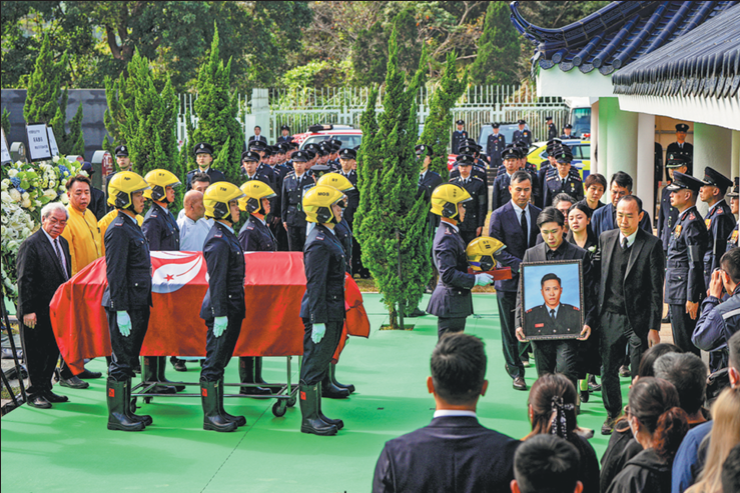
    Public admiration manifested early as residents began gathering outside the funeral parlor by 8 am, many bringing floral tributes to honor the fallen first responder. The subsequent procession featured a fire-truck-turned-hearse carrying Ho’s flag-draped coffin, which paused at approximately 11:10 am near the scene of the tragic blaze for a poignant memorial ceremony. Firefighters stood at solemn attention while officials bowed in respect, with nearby footbridges filled with mourning citizens.

    Among those paying respects was a Ms. Lee from adjacent Kwong Fuk Estate, who came to express gratitude for Ho’s sacrifice. She recounted how the acrid smoke from the November fire had permeated her home, creating an enduring sensory memory of the disaster.

    The procession then proceeded to Sha Tin Fire Station, where Ho had been based. There, personnel from across Hong Kong bowed collectively as a fire bell sounded four times—three short rings followed by one long—symbolically releasing Ho from his duties. The final journey concluded at Gallant Garden in Wo Hop Shek Cemetery, the resting place reserved for government servants who die in service to Hong Kong.

    At approximately 1:10 pm, six firefighters and two pallbearers carried Ho’s coffin to his final resting place, followed by his brother holding a portrait and his bereaved fiancée. In a touching final ritual, the flag covering the coffin was carefully folded and Ho’s service helmet was placed atop the lid, marking the formal end of his watch.

  • Students to benefit from direct flights

    Students to benefit from direct flights

    The restoration of direct air connectivity between India and China after a five-year hiatus is catalyzing a significant resurgence in bilateral exchanges, with educational and cultural ties emerging as primary beneficiaries. This aviation breakthrough, officially commencing in October 2025 with IndiGo Airlines’ Kolkata-Guangzhou route, has dramatically reduced travel barriers that previously hampered academic collaboration.

    Indian students pursuing educational opportunities in China are experiencing substantial relief from previously exorbitant travel costs and logistical complexities. Priyanshu Yadav, who recently completed advanced Chinese language studies at Tsinghua University, attested to the transformative impact: ‘Travel expenses have been reduced to less than half, eliminating the need for third-country transits that previously cost approximately $430 for one-way journeys.’

    The renewal of direct routes—including China Eastern Airlines’ Shanghai-New Delhi connection and Air India’s planned 2026 resumption of Delhi-Shanghai services—has reinvigorated institutional academic partnerships. Prestigious institutions including Jawaharlal Nehru University and Visva-Bharati University’s Cheena Bhavana (India’s oldest Chinese studies center) are actively reestablishing formal ties with Chinese counterparts like Fudan and Tsinghua Universities.

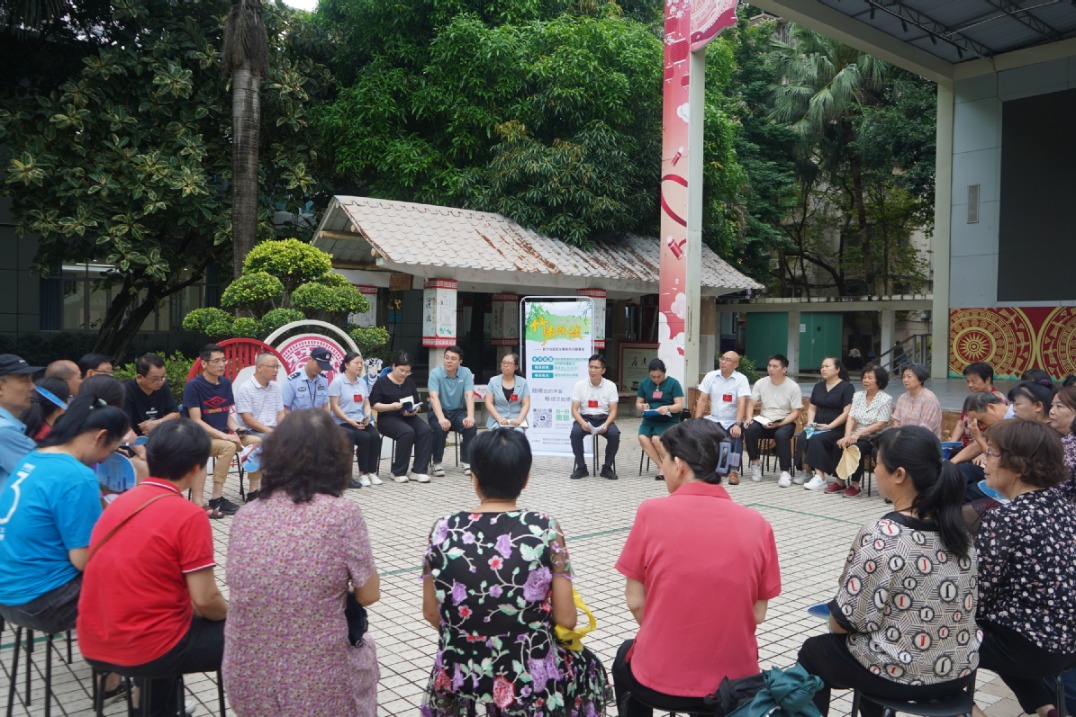
    Professor Huang Yinghong of O.P. Jindal Global University emphasized the multidimensional advantages: ‘The elimination of third-country transit saves time, energy, and financial resources while symbolizing improved bilateral relations.’ This sentiment is echoed by academic leaders anticipating renewed physical exchanges of faculty and students by July 2026, reviving cultural programs encompassing tai chi, calligraphy, Kathak dance, and yoga that were maintained online during the connectivity gap.

    The diplomatic dimension continues to develop with China’s recent implementation of an online visa application system for Indian travelers, further streamlining cross-border educational mobility. As Ambassador Xu Feihong noted, these developments reflect mutual commitment to strengthening cooperation across educational, cultural, and people-to-people exchanges, marking a new chapter in Sino-Indian relations through the prism of academic collaboration.