标签: Asia

亚洲

  • State Department watchdog asked to investigate senior Trump officials over UAE chip sales

    State Department watchdog asked to investigate senior Trump officials over UAE chip sales

    The US State Department’s internal watchdog has formally acknowledged a congressional request to investigate senior Trump administration officials for their roles in advocating sensitive technology transfers to the United Arab Emirates. Democratic Senator Elizabeth Warren and Congresswoman Elise Slotkin initially demanded the probe in September, specifically targeting David Sacks, who served as White House AI Czar, and diplomatic envoy Steve Witkoff.

    According to a December 12 letter obtained by Semafor, the Office of the Inspector General noted the lawmakers’ request to examine whether these officials improperly promoted the sale of advanced AI chips to the UAE. The correspondence, described as a standard acknowledgment, did not commit to launching a formal investigation.

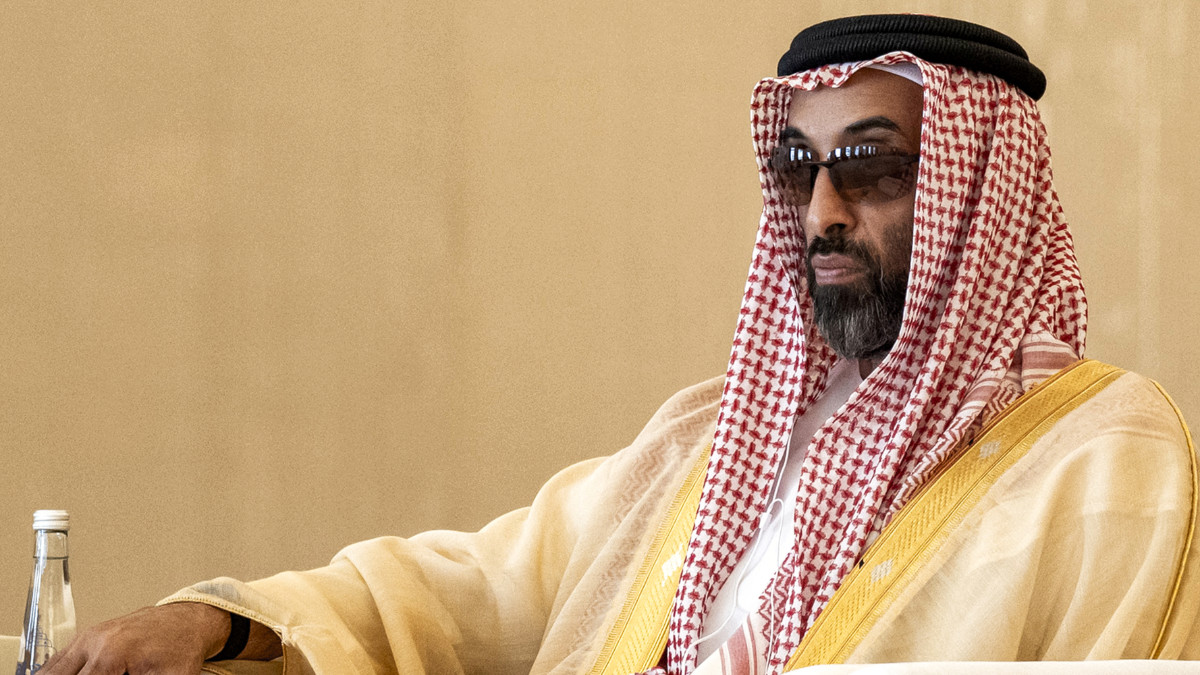
    The controversy stems from a New York Times report detailing a summer meeting between Witkoff and UAE National Security Adviser Sheikh Tahnoon bin Zayed Al Nahyan off the coast of Sardinia. During this period, Witkoff reportedly advocated for AI chip sales while his son’s cryptocurrency firm, World Liberty Financial, received a $2 billion deposit from one of Tahnoon’s companies. Neither official disclosed their financial connections to the UAE royal.

    Sacks emerged as the primary advocate for selling advanced AI technology to both the UAE and Saudi Arabia. The Times investigation revealed that Abu Dhabi’s wealth fund was an early investor in Craft Ventures, a firm Sacks co-founded in 2017, with additional funding from Saudi Arabia’s Public Investment Fund.

    In November, the Trump administration approved the export of tens of thousands of Nvidia’s advanced AI chips to G42 (the UAE’s state-owned AI company) and its Saudi counterpart, Humain. This decision contrasted sharply with the Biden administration’s stricter export controls, which had previously limited such transfers due to national security concerns about dual-use technology and potential diversion to China.

    The administration’s approach reflects a broader policy prioritizing technology exports to the Gulf region, which offers substantial markets with plentiful land and cheap electricity for AI data centers. Notably, the White House recently approved the sale of Nvidia’s H200 chips to China with a 25% government fee, despite these chips being less sophisticated than the Blackwell models authorized for Gulf allies.

    On Monday, Warren and Congressman Gregory Meeks further demanded full transparency regarding any ongoing license reviews for technology sales to China, highlighting continuing concerns about the administration’s export approval process.


  • US drops plan to deport Chinese national who exposed Xinjiang abuses, rights activists say

    US drops plan to deport Chinese national who exposed Xinjiang abuses, rights activists say

    In a significant reversal, the U.S. Department of Homeland Security has abandoned its effort to deport Chinese national Guan Heng, whose clandestine documentation of human rights violations in China’s Xinjiang region had placed him at grave risk. The decision, confirmed by human rights advocates on Monday, follows mounting public pressure and congressional advocacy on behalf of the 38-year-old detainee.

    Human rights attorney Rayhan Asat, who provided legal assistance in the case, revealed that Guan’s legal representatives received official correspondence from DHS indicating the withdrawal of deportation proceedings to Uganda. Asat expressed confidence that Guan’s asylum application would now ‘proceed smoothly and favorably.’ Zhou Fengsuo, executive director of Human Rights in China, simultaneously verified the administration’s policy shift, stating simply: ‘We’re really happy.’

    The case centers on Guan’s courageous actions in 2020, when he covertly filmed detention facilities in Xinjiang where activists allege up to one million ethnic minorities, predominantly Uyghurs, have been incarcerated. Beijing consistently denies these allegations, maintaining the facilities constitute vocational training centers aimed at combating extremism while teaching employable skills.

    Understanding he couldn’t safely release the evidence from within China, Guan departed the mainland in 2021, traveling through Hong Kong to Ecuador—which then permitted visa-free entry for Chinese citizens. His journey continued to the Bahamas, where he procured a small inflatable vessel before undertaking a perilous 23-hour maritime crossing to Florida’s coastline. The footage was subsequently published on YouTube, providing visual documentation of the alleged abuses.

    Following his arrival, Guan sought asylum and established residence in a quiet New York community outside Albany until his detention by Immigration and Customs Enforcement (ICE) agents in August. His plight gained national attention after human rights organizations publicized his case, generating substantial congressional support. The Tom Lantos Human Rights Commission declared on social media that Guan ‘put himself at risk to document concentration camps in Xinjiang, part of the CCP’s genocide against Uyghurs,’ adding that he ‘should be given every opportunity to stay in a place of refuge.’

    Representative Raja Krishnamoorthi (D-Ill.), ranking member of the House Select Committee on the Chinese Communist Party, personally appealed to Homeland Security leadership, arguing the U.S. bears ‘a moral responsibility to stand up for victims of human rights abuses in Xinjiang’ and those who risk their safety to expose them. Guan’s legal team is currently negotiating his release on bond from the ICE detention facility as his asylum process continues. The Department of Homeland Security did not immediately respond to requests for commentary.

  • Kurdish force shelling kills one person in Syria’s Aleppo city, state media says

    Kurdish force shelling kills one person in Syria’s Aleppo city, state media says

    A deadly exchange of fire rocked the northern Syrian city of Aleppo on Monday, December 22, 2025, resulting in civilian casualties and prompting a war of words between opposing factions. The incident underscores the fragile and volatile security situation in regions outside central government control.

    According to a report from Syria’s official state news agency, SANA, mortar and rocket shelling originating from the US-backed, Kurdish-led Syrian Democratic Forces (SDF) struck several neighborhoods within Aleppo. The agency stated that the bombardment resulted in one civilian fatality.

    In a separate communiqué, the SDF presented a contrasting narrative. While not directly acknowledging the state media’s casualty report, the force confirmed that a clash had occurred and reported that five civilians were wounded by the violence. Each side attributed the initiation of hostilities to the other, leaving the precise catalyst for the escalation unclear.

    The skirmishes are reported to have erupted in districts of Aleppo with significant Kurdish populations, areas that have historically been flashpoints amidst Syria’s complex geopolitical landscape. The SDF, which controls large territories in northeastern Syria, often finds itself in a precarious position, opposed by both the Damascus government and neighboring Turkey.

    This event highlights the ongoing tensions that persist despite a relative calmer period in the decade-long conflict, serving as a stark reminder that the Syrian civil war, though diminished in scale, continues to simmer with localized outbreaks of violence that threaten civilian lives.

  • AI-driven cybersecurity challenges demand a new level of resilience

    AI-driven cybersecurity challenges demand a new level of resilience

    A startling revelation that 94% of UAE organizations have experienced materially damaging cyberattacks underscores an urgent regional security crisis. This alarming statistic signals that compliance-focused approaches, while foundational, no longer suffice for ensuring business continuity in today’s threat landscape. Despite the UAE’s robust digital governance framework—including comprehensive Personal Data Protection Laws and AI ethics guidelines—cyber incidents continue to escalate with severe consequences including revenue loss, customer attrition, and operational paralysis.

    The core challenge stems from artificial intelligence innovation advancing at a pace that outstrips cyber readiness capabilities. As organizations rapidly adopt generative AI for automation, analytics, and customer experience enhancement, their attack surfaces expand exponentially. Traditional cybersecurity models, designed for predictable threats and structured data environments, prove inadequate against adaptive, fast-moving AI-enabled threats that exploit vulnerabilities across identity systems, ungoverned data repositories, and interconnected digital ecosystems.

    This evolving threat environment has elevated cyber resilience—moving beyond mere prevention to encompass rapid recovery, data integrity preservation, and trust maintenance—as the paramount priority for UAE businesses. True resilience integrates prevention, detection, response, and recovery into a seamless continuous capability, minimizing reliance on isolated tools while leveraging intelligent automation and fostering organizational preparedness.

    A critical misconception positions resilience as solely a technological challenge. In reality, it represents an organizational imperative requiring clear governance structures, defined responsibilities, and pre-tested response protocols. Effective resilience demands that critical systems across finance, supply chain, HR, and customer operations be supported by redundant, fully auditable data environments capable of restoration with minimal downtime. For the UAE’s digitally-driven economy spanning banking, logistics, healthcare, and government services, the ability to restore operations within minutes has emerged as a competitive differentiator.

    Artificial intelligence presents a dual-faced reality in this landscape: while AI-generated attacks employing deepfake phishing, automated credential stuffing, and AI-powered malware can overwhelm human response teams, AI also offers transformative defensive capabilities. These include automated anomaly detection, predictive risk modeling, data integrity validation, and accelerated recovery workflows—all contingent on responsible deployment with strong governance and transparency safeguards.

    The resilience gap proves particularly pronounced for SMEs, which typically lack dedicated cybersecurity teams or sophisticated tooling despite facing threat levels equivalent to large enterprises. Practical, achievable measures for smaller businesses include standardizing on secure cloud platforms, automating backups, implementing multi-factor authentication, and adopting Zero Trust access controls. Equally crucial is comprehensive staff training, given that human error remains a predominant breach cause.

    Industry analysis demonstrates that resilience increases significantly when businesses consolidate digital operations within unified, secure platforms rather than fragmented tool collections. Connected ecosystems enable consistent security policies, real-time monitoring, seamless data continuity, and accelerated recovery—providing SME access to enterprise-grade protection at accessible cost points.

    As the UAE accelerates its transformation toward an AI-driven digital economy, cyber resilience will ultimately determine which organizations thrive versus those that struggle. The most successful entities will treat resilience not as an IT function but as a strategic, organization-wide capability rooted in agility, transparency, and trust. In an era where disruption is inevitable, rapid recovery capability emerges as the defining characteristic of enduring businesses.

  • Sri Lanka cyclone caused $4.1b in physical damage, World Bank reports

    Sri Lanka cyclone caused $4.1b in physical damage, World Bank reports

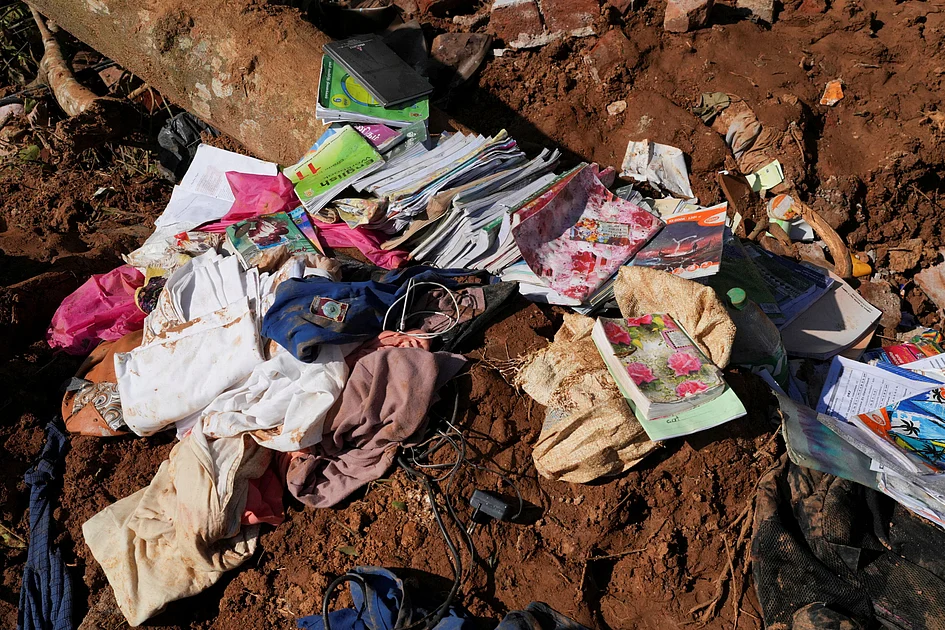
    A comprehensive assessment by the World Bank has revealed that Cyclone Ditwah inflicted approximately $4.1 billion in direct physical damage across Sri Lanka last month. The catastrophic weather event resulted in the tragic loss of over 640 lives and adversely affected more than 10% of the nation’s population through devastating floods and landslides.

    The damage estimate, equivalent to roughly 4% of Sri Lanka’s Gross Domestic Product (GDP), was detailed in the World Bank’s Global Rapid Post-Disaster Damage Estimation (GRADE) report released Monday. Critical infrastructure sustained the most significant portion of the devastation, with roads, bridges, railways, and water supply networks accounting for an estimated $1.735 billion in damages.

    Housing emerged as the second-most impacted sector with $985 million in destruction, representing 24% of the total damage. Educational institutions, healthcare facilities, and commercial enterprises located near major waterways suffered extensive damage valued at $562 million.

    The World Bank emphasized that these figures represent direct physical damage only and exclude broader economic losses related to income disruption, production declines, or comprehensive reconstruction expenses.

    The disaster struck as Sri Lanka was demonstrating signs of recovery from its severe 2022 economic crisis, which depleted foreign exchange reserves necessary for essential imports. Following a $2.9 billion International Monetary Fund (IMF) bailout approved in early 2023, the country had achieved economic stabilization prior to the cyclone.

    In response to the catastrophe, international financial institutions have mobilized support. The IMF has approved $206 million in emergency financing, while the World Bank has repurposed $120 million from an existing project to aid disaster recovery efforts.

  • Gold jumps over 2% to all-time peak; silver follows with record gain

    Gold jumps over 2% to all-time peak; silver follows with record gain

    Global financial markets witnessed an extraordinary surge in precious metals on Monday as gold and silver prices shattered previous records amid escalating geopolitical tensions and favorable economic conditions. Gold experienced a remarkable 2% surge, reaching an unprecedented peak of $4,428.92 per ounce during trading sessions, while silver simultaneously achieved its own historic milestone with a 2.7% gain to $69.44 per ounce.

    The dramatic price movement stems primarily from renewed geopolitical friction between the United States and Venezuela. President Donald Trump’s recent announcement of a comprehensive blockade targeting sanctioned oil tankers entering and exiting Venezuelan waters has significantly heightened market uncertainty. This aggressive stance, complemented by increased military mobilization and multiple strikes on vessels in the Pacific and Caribbean regions, has triggered substantial safe-haven investment flows into precious metals.

    Market analysts from Nemo.Money indicate that gold had been consolidating just beneath record levels in previous sessions, with the current breakthrough representing a classic momentum surge amplified by reduced holiday trading volumes. The firm’s analysts have now identified $5,000 per ounce as a plausible target for gold bulls in the coming year.

    Beyond geopolitical factors, the metals rally demonstrates profound fundamental strength. Gold has achieved an astonishing 68% annual appreciation—its most substantial yearly gain since 1979—driven by robust central bank acquisitions, sustained safe-haven demand, and declining global interest rates. Silver has outperformed even this spectacular benchmark with an extraordinary 138% year-to-date increase.

    Macquarie strategists attribute silver’s exceptional performance to persistent supply-demand imbalances and heightened import requirements during India’s festive season, though they project a more moderate average of $57 per ounce for 2026.

    The broader precious metals complex participated in the rally, with platinum jumping 5.3% to multi-year highs and palladium climbing 3.2% to approach three-year peaks. A marginally weaker U.S. dollar further supported the advance by enhancing the affordability of dollar-denominated assets for international investors.

  • Captain Pat Cummins out and spin bowler Murphy in for the 4th Ashes test against England

    Captain Pat Cummins out and spin bowler Murphy in for the 4th Ashes test against England

    MELBOURNE, Australia — Australia’s cricket selectors have announced significant changes to their squad for the pivotal fourth Ashes test against England, commencing Friday at the Melbourne Cricket Ground. The team will field a substantially altered bowling attack with rising spinner Todd Murphy replacing the injured Nathan Lyon and captain Pat Cummins opting for strategic rest.

    Murphy, who has been selected ahead of fellow spin contenders Matt Kuhnemann and Corey Rocchiccioli, is poised to make his Australian test debut on home soil during the prestigious Boxing Day match. The 15-player roster, unveiled Tuesday, reflects Australia’s calculated approach to squad management after securing the Ashes urn with three consecutive victories in the series.

    Cummins’ decision to sit out the Melbourne encounter follows medical advice regarding his recovery from a significant back injury sustained in June. The pace bowler confirmed his likely absence after Australia’s commanding 82-run triumph in Adelaide, prioritizing long-term fitness over immediate participation.

    In positive news for the hosts, former captain Steve Smith is anticipated to return to the lineup after missing the third test due to a vertigo episode. Smith will resume leadership duties during Cummins’ absence, providing experienced guidance to the restructured squad.

    The selection panel has also recalled fast bowler Jhye Richardson, who could potentially play his first test match in over four years following an extensive rehabilitation from multiple injuries. Richardson’s inclusion offers additional pace options alongside established bowlers Mitchell Starc and Scott Boland.

    Lyon’s hamstring strain, suffered during a boundary-saving dive on the final day of the Adelaide test, represents another setback for the veteran spinner who previously missed matches during the 2023 Ashes series in England with a calf injury. Murphy, who previously deputized for Lyon during that series and claimed six wickets at The Oval, now steps into the primary spin role.

    The fifth and final Ashes test is scheduled to begin January 3rd at the Sydney Cricket Ground, where Australia will look to extend their dominant position in the historic rivalry.

  • NGOs fear ‘catastrophic impact’ of new Israel registration rules

    NGOs fear ‘catastrophic impact’ of new Israel registration rules

    Humanitarian organizations are issuing dire warnings that Israel’s newly implemented registration requirements for non-governmental organizations could devastate aid operations across Gaza and the West Bank. The controversial policy, which mandates all NGOs to register under a new framework by December 31, 2025, has already resulted in the rejection of at least 14 organizations including prominent groups like Save the Children and the American Friends Service Committee.

    According to Israel’s Ministry of Diaspora Affairs and Combating Antisemitism, approximately 100 registration requests had been submitted as of November 2025, with the majority either approved or under review. The government maintains that the regulations aim to prevent “hostile actors or supporters of terrorism” from operating in Palestinian territories, specifically targeting organizations involved in terrorism, antisemitism, Holocaust denial, or delegitimization of Israel.

    The policy emerges amid persistent humanitarian crises in Gaza, where basic infrastructure including running water and electricity remains unavailable despite the US-brokered October ceasefire. Current aid delivery falls dramatically short of requirements—while the ceasefire agreement stipulated 600 trucks daily, only 100-300 trucks carrying humanitarian aid actually enter the region.

    Rejected organizations now face a 60-day deadline to withdraw all international staff from Gaza, the West Bank, and Israel, while losing authorization to send humanitarian supplies across borders. This development threatens essential services for vulnerable populations, including Save the Children’s programs supporting 120,000 children with psychosocial support and education.

    The Humanitarian Country Team for the Occupied Palestinian Territory cautioned that deregistration could collapse the humanitarian response entirely, noting that currently approved NGOs represent only a fraction of required capacity. Many organizations report complying with most requirements but refusing to cross “red lines” such as providing information about Palestinian staff.

    Legal experts highlight particular concern over the vague terminology surrounding “delegitimization” of Israel, which NGOs say could encompass any criticism of Israeli policies. Israeli lawyer Yotam Ben-Hillel, representing several organizations in appeals, noted that any reporting on ground conditions could potentially justify rejection under these provisions.

    With the year-end deadline approaching, humanitarian workers fear catastrophic consequences for Gaza’s population if experienced organizations are replaced by unknown entities without established operational capacity or expertise in the region.

  • Turkey says captured senior Daesh figure on Afghan-Pakistan border

    Turkey says captured senior Daesh figure on Afghan-Pakistan border

    Turkish intelligence forces have successfully apprehended a high-ranking operative of the Daesh terrorist organization in a sophisticated cross-border operation along the Afghanistan-Pakistan frontier. The captured individual, identified as Turkish national Mehmet Goren, held a leadership position within Islamic State Khorasan Province (IS-K), the group’s regional affiliate known for its brutal attacks across South and Central Asia.

    According to detailed reports from Turkey’s state-run Anadolu Agency, Goren had been actively coordinating suicide operations targeting civilian populations across multiple regions including Afghanistan, Pakistan, Turkey, and European nations. Intelligence tracking revealed Goren’s journey from Turkey to the Afghanistan-Pakistan border region, where he ascended through Daesh’s ranks while operating from militant training camps.

    The Turkish National Intelligence Organization (MIT) conducted meticulous surveillance before executing the precise apprehension in the volatile border zone. Goren, who reportedly survived previous airstrikes targeting Daesh positions in Pakistan, was subsequently transferred to Turkish territory for detention and interrogation.

    This operation represents another strategic victory in Turkey’s intensified counterterrorism campaign against Daesh networks. Turkish authorities have particularly focused on disrupting the group’s Khorasan affiliate, which has claimed responsibility for numerous devastating attacks including the March 2024 Moscow concert hall massacre that killed over 140 people.

    Security analysts note that Goren maintained operational connections with Ozgur Altun (also known as Abu Yasir Al Turki), previously arrested and imprisoned for facilitating militant transfers from Turkey to conflict zones. The successful capture demonstrates Turkey’s growing capability to project intelligence operations beyond its immediate borders against transnational terrorist threats.

  • FCC bans new Chinese-made drones, citing security risks

    FCC bans new Chinese-made drones, citing security risks

    In a decisive move with profound implications for the U.S. technology and security landscape, the Federal Communications Commission (FCC) announced a comprehensive prohibition on new foreign-manufactured drones. This policy, enacted on Monday, effectively blocks market leaders like China’s DJI and Autel from introducing new models to American consumers and businesses. The ruling stems from a year-long security review mandated by a prior congressional defense bill, which concluded that drones and their critical components produced outside the U.S. present ‘unacceptable risks to the national security.’

    The FCC justified its stringent position by highlighting imminent major events, including the 2026 World Cup, the America250 anniversary celebrations, and the 2028 Los Angeles Olympics, as potential targets for malicious actors exploiting vulnerabilities in foreign drone technology. The policy does include a provision for exemptions, allowing specific drones or components to be permitted if the Department of Defense or the Department of Homeland Security certifies they pose no threat.

    Industry response was sharply divided. The Association for Uncrewed Vehicle Systems International (AUVSI) applauded the decision. Its president, Michael Robbins, declared it a critical step toward reducing U.S. dependence on China and revitalizing domestic drone production and secure supply chains, citing China’s history of restricting strategic exports like rare earth magnets.

    Conversely, DJI expressed profound disappointment, labeling the FCC’s concerns as ‘protectionism’ that lacks evidentiary support and contradicts open market principles. The impact on American operators is already tangible. Gene Robinson, a Texas-based trainer for law enforcement, lamented the disruption his fleet of nine DJI drones will face, acknowledging the necessary ‘growing pains’ for achieving technological independence. Meanwhile, Arthur Erickson, CEO of American drone maker Hylio, viewed the ban as an unexpected but significant opportunity for domestic growth, even as he criticized its overly broad ‘blanket’ scope against all foreign products and urged regulatory clarification.