标签: Asia

亚洲

  • ‘Politics aside’: Top Pakistan ex-cricketers call for urgent treatment for Imran Khan’s vision loss

    ‘Politics aside’: Top Pakistan ex-cricketers call for urgent treatment for Imran Khan’s vision loss

    Prominent Pakistani cricket icons have issued urgent appeals for former national captain Imran Khan to receive immediate medical attention amid reports of severe vision deterioration in his right eye. Wasim Akram and Waqar Younis, both legendary fast bowlers who played under Khan’s leadership, have publicly called for authorities to prioritize the 73-year-old’s healthcare needs regardless of political considerations.

    According to ESPNcricinfo reports, Khan has been experiencing significant vision loss attributed to an eye infection that developed during his extended solitary confinement. Medical professionals familiar with the case indicate the condition requires specialized treatment to prevent permanent damage.

    Wasim Akram, expressing profound concern on social media platform X, described the situation as ‘heartbreaking’ and emphasized Khan’s pivotal role in his cricketing development. ‘I sincerely hope the authorities take this seriously and ensure he receives the best possible medical care,’ Akram stated, adding wishes for ‘strength, a speedy recovery, and a full return to good health.’

    Waqar Younis echoed these sentiments while acknowledging Khan’s dual legacy as both sporting hero and philanthropist. ‘Putting politics aside, our national hero who gave us our greatest glory on the sporting field, a cancer hospital which helped so many, including my own mother, is suffering a health emergency,’ Younis noted in his public appeal.

    The former prime minister’s family has consistently raised concerns about inadequate medical attention during his incarceration since August 2023. Khan’s son, Kasim Khan, recently claimed his father retains only 15% vision in his right eye, attributing this deterioration to ‘922 days of solitary confinement, medical neglect, and deliberate denial of proper treatment.’

    Government officials have denied allegations of medical negligence, maintaining that Khan receives appropriate care according to standard prison protocols. The situation continues to draw international attention to Pakistan’s treatment of high-profile political detainees and the intersection of healthcare with judicial proceedings.

  • Saudi Arabia suspends Umrah agency over accommodation lapse for pilgrims

    Saudi Arabia suspends Umrah agency over accommodation lapse for pilgrims

    Saudi authorities have imposed regulatory sanctions against an Umrah travel agency following confirmed failures in providing mandatory accommodation services to Egyptian pilgrims. The Makkah Region Governorate confirmed the suspension on February 14, 2026, noting that immediate alternative lodging arrangements were secured for affected pilgrims.

    This enforcement action represents the latest development in Saudi Arabia’s comprehensive quality control campaign within the religious tourism sector. The Kingdom recently suspended approximately 1,800 foreign travel agencies for service quality violations, granting a 10-day remediation window exclusively addressing new visa issuance limitations.

    The Saudi government maintains rigorous oversight of pilgrim activities through integrated monitoring systems tracking all aspects of religious travel—from visa processing and transportation logistics to accommodation standards. This holistic approach ensures operational efficiency, crowd management optimization, and enhanced pilgrim safety throughout their spiritual journey.

    Industry professionals from the UAE have observed increasing regulatory scrutiny targeting agencies that offer visa processing without comprehensive service packages including approved hotel accommodations and transportation. Saudi regulations explicitly require pilgrims to utilize government-approved hotels specifically designated for Umrah travelers, with strict compliance enforcement mechanisms.

    This regulatory environment reflects Saudi Arabia’s commitment to elevating service quality standards within its multi-billion dollar religious tourism industry, which hosts millions of pilgrims annually undertaking the Islamic pilgrimage to Mecca.

  • Galloping into Chinese New Year

    Galloping into Chinese New Year

    In an innovative fusion of technology and cultural celebration, China’s Hainan province has unveiled an artificial intelligence pony as its new “Chief Experience Officer” to mark the arrival of the Year of the Horse. This digital ambassador represents a cutting-edge approach to tourism promotion during the significant Lunar New Year period.

    The AI equine character embodies the energetic spirit traditionally associated with the horse in Chinese zodiac symbolism, conveying wishes for success and vitality throughout the coming year. The technological initiative serves as an invitation for global visitors to explore Hainan’s diverse opportunities, described in promotional materials as being ‘as vast as the ocean.’

    Accompanying the announcement is an interactive video component that showcases the AI pony’s virtual tour across China’s famous landmarks, creating a personalized connection by highlighting recognizable sites from various hometowns. This digital engagement strategy demonstrates how regional tourism boards are incorporating advanced technology into cultural marketing campaigns.

    The launch coincides with numerous festive activities across China, including spectacular natural displays like blooming ancient trees in Shaanxi and vibrant cherry blossom fields in Fuzhou. Traditional craftsmanship experiences, such as hands-on Terracotta Warrior workshops in Xi’an, and innovative concepts like train-themed pet restaurants in Changchun offering special New Year’s Eve meals, further enrich the seasonal celebrations.

    This technological initiative reflects China’s broader integration of AI solutions into cultural promotion and tourism development, showcasing how digital innovation can enhance traditional celebrations while reaching global audiences.

  • ‘Drishyam 3’ release date locked in April, confirms Mohanlal

    ‘Drishyam 3’ release date locked in April, confirms Mohanlal

    The cinematic universe of Georgekutty prepares for its conclusive chapter as megastar Mohanlal officially announced the worldwide release date for “Drishyam 3” on April 2, 2026. The confirmation came through the actor’s social media channels, generating immediate excitement among the franchise’s global fanbase.

    Director Jeethu Joseph, the creative architect behind the entire thriller trilogy, has indicated this installment will serve as the definitive conclusion to the narrative that began with the groundbreaking 2013 original. The production team completed principal photography in December 2025, sharing behind-the-scenes moments from the emotional final shoot.

    The journey toward this third installment gained momentum following the remarkable success of “Drishyam 2” in 2021. Joseph revealed that Mohanlal himself initiated discussions about continuing the story shortly after the second film’s triumph. Despite initial creative uncertainties, the director eventually developed a narrative framework that satisfied both his artistic vision and audience expectations.

    Originally emerging as the highest-grossing Malayalam film of its time, the Drishyam phenomenon transcended regional boundaries through successful remakes in Tamil, Telugu, Hindi, and Kannada languages. This cross-cultural adoption established the franchise as one of India’s most influential cinematic exports.

    Industry analysts anticipate substantial box office performance given the franchise’s established track record and the strategic April release window, coinciding with the beginning of the Indian summer entertainment season. The film features returning cast members Meena and Asha Sharath, maintaining continuity with the previous installations while promising to deliver a memorable conclusion to this critically acclaimed series.

  • Dubai confirms trackless tram plans at 8 locations, expands bus lanes

    Dubai confirms trackless tram plans at 8 locations, expands bus lanes

    Dubai’s transportation landscape is poised for a transformative leap forward as the Roads and Transport Authority (RTA) unveils comprehensive mobility enhancements. The ambitious plan, confirmed by Director General Mattar Al Tayer, encompasses both immediate infrastructure expansions and futuristic transit solutions designed to address the emirate’s growing congestion challenges.

    Over the next two years, Dubai will implement 13 kilometers of dedicated bus and taxi lanes across six critical corridors: Sheikh Sabah Al Ahmad Al Jaber Al Sabah Street, 2nd of December Street, Al Satwa, Al Nahda, Omar bin Al Khattab Street, and Naif Street. These distinctively marked pathways will be protected by a Dh600 fine for unauthorized vehicles, ensuring priority movement for public transportation. The RTA projects these lanes will deliver substantial benefits: a 10% increase in ridership, 42% improvement in punctuality, and 41% reduction in journey times.

    Concurrently, the RTA is conducting feasibility studies for a revolutionary trackless tram system across eight strategic locations. This cutting-edge transportation technology operates without physical rails, instead utilizing camera-guided virtual tracking along painted road markings. The fully autonomous, electric-powered vehicles represent a paradigm shift in urban mobility, offering comparable capacity to traditional trams at significantly reduced implementation costs and timelines.

    Each articulated tram will feature three carriages with a 300-passenger capacity—triple that of conventional buses—with operational speeds ranging from 25-60 km/h and maximum speeds reaching 70 km/h. The system combines the high capacity of rail transport with the flexibility of bus networks, operating on fixed routes with designated stations while avoiding the infrastructure constraints of fixed-track systems.

    These initiatives respond to Dubai’s pronounced traffic growth, which has surged at 10% over two years—far exceeding the global average of 2-4%. The comprehensive strategy includes dynamic toll pricing, heavy vehicle restrictions, and flexible work policies that could potentially reduce traffic volumes by up to 30% according to RTA estimates.

    The announcement coincided with revealing Dubai’s 2025 public transport statistics, which recorded 802 million users across metro, buses, marine transport, shared mobility, and taxi services, averaging 2.2 million daily riders. Al Tayer emphasized the authority’s commitment to developing “an intelligent, sustainable and integrated public transport system” leveraging artificial intelligence for data management and customer experience enhancement, aligning with Dubai’s aspirations as a leading global city.

  • Xi’s article on key tasks of China’s current economic work to be published

    Xi’s article on key tasks of China’s current economic work to be published

    BEIJING – A comprehensive article detailing China’s economic roadmap for the current period, authored by President Xi Jinping, is scheduled for publication in the forthcoming issue of Qiushi Journal, the Communist Party of China Central Committee’s premier theoretical publication. The article derives from President Xi’s pivotal address delivered during last December’s Central Economic Work Conference, which establishes the nation’s annual economic agenda.

    The publication outlines several strategic pillars for China’s economic development. A primary emphasis is placed on stimulating domestic demand as a foundational element for constructing a robust and self-sustaining domestic market. Concurrently, the article champions innovation as the central driver for progress, advocating for the accelerated incubation of new growth engines to ensure long-term economic vitality.

    Further directives call for a deepening of structural reforms designed to inject renewed momentum into high-quality development initiatives. This is paired with a reaffirmed commitment to expanding the country’s openness, fostering international collaboration for mutual benefit across various sectors. The development strategy also prioritizes enhanced coordination to bridge urban-rural disparities and bolster regional synergistic growth.

    Environmental sustainability forms another critical component of the economic plan, with a dedicated push for a comprehensive green transition. This initiative is explicitly aligned with China’s ambitious dual carbon objectives of achieving peak emissions and carbon neutrality. Finally, the article underscores the government’s focus on social welfare, emphasizing the paramount importance of improving public livelihoods and proactively managing potential risks in crucial economic areas to ensure overall stability.

  • Cautious optimism on China-US relations on display at MSC

    Cautious optimism on China-US relations on display at MSC

    At the Munich Security Conference, senior diplomats from the United States and China articulated a cautiously optimistic yet pragmatic vision for bilateral relations, acknowledging both the potential for cooperation and the persistence of fundamental challenges. Chinese Foreign Minister Wang Yi stated that while the relationship between the world’s two largest economies possesses ‘bright prospects,’ its trajectory remains bifurcated between cooperation and confrontation. Minister Wang emphasized China’s preference for a collaborative path but confirmed the nation’s preparedness to navigate potential risks. He outlined two distinct scenarios: one where the U.S. adopts a more objective and pragmatic policy leading to mutual benefit, and another defined by containment, decoupling, and confrontational actions, particularly regarding Taiwan, which he warned would lead to direct conflict. Concurrently, U.S. Secretary of State Marco Rubio characterized the maintenance of diplomatic dialogue not as a concession but as a strategic necessity, describing a failure to communicate as ‘geopolitical malpractice.’ While acknowledging that American and Chinese national interests ‘will often not align,’ Rubio stressed the obligation of both powers to manage disagreements peacefully to avoid economic or military conflict. The diplomatic exchanges in Munich were bolstered by confirmation of ongoing high-level engagement planning, including a potential visit by the U.S. President to China in April, following a recent telephone conversation between the two heads of state. A meeting between Wang and Rubio on the sidelines of the conference was subsequently described by both sides as positive and constructive, with agreements to implement existing consensus and strengthen dialogue across various fields to stabilize the relationship.

  • Bitcoin bounce revives bulls but ‘crypto winter’ risks linger

    Bitcoin bounce revives bulls but ‘crypto winter’ risks linger

    Bitcoin has demonstrated a tentative recovery following weeks of substantial market pressure, climbing over 4% to approach the $69,000 threshold. This upward movement, adding approximately $2,700 to its valuation, offers a temporary reprieve from the cryptocurrency’s recent 44% decline from its October 2025 peak. However, market analysts caution that this stabilization may represent technical market dynamics rather than fundamental strength, with macroeconomic uncertainties continuing to cast shadows on Bitcoin’s immediate prospects.

    Market strategists observe that the current rebound appears driven primarily by technical buying and short-covering activities rather than robust institutional participation. Trading volumes remain notably subdued, while volatility metrics indicate many investors maintain a cautious stance awaiting clearer signals from key economic indicators, particularly US inflation data and Federal Reserve policy directions.

    Research firm Ned Davis Research presents one of the more conservative outlooks, suggesting Bitcoin could potentially face further declines should current corrections evolve into a prolonged bear market. Historical analysis indicates that during previous major downturns, Bitcoin experienced peak-to-trough declines ranging between 70-75%. Should similar patterns emerge, prices could theoretically approach the $31,000 range—representing a potential 55% decrease from current levels.

    The duration of historical crypto winters further compounds concerns. Since 2011, Bitcoin has endured average drawdowns of approximately 84% during bear markets, with these downturns typically lasting around 225 days. With only 120 days elapsed since October’s peak, the current correction might still be in its preliminary phases if historical cycles repeat.

    Despite these cautionary indicators, some market observers identify reasons for measured optimism. Analysts at Bitfinex note diminishing selling pressure and improving funding rates across derivatives markets, potentially signaling the formation of a short-term base. Simultaneously, CoinShares research indicates stabilization in institutional flows into crypto investment products following weeks of outflows, suggesting selective re-entry by larger investors.

    The cryptocurrency’s strengthened correlation with global equities and risk assets renders it particularly sensitive to interest rate expectations and liquidity conditions. For investors in UAE and regional markets, Bitcoin’s recent volatility reinforces its characterization as a high-risk, high-reward asset class, with many traders adopting wait-and-see approaches focused on short-term opportunities rather than long-term accumulation.

    While the modest rebound provides temporary relief for bullish investors after months of declines, the broader outlook remains delicately balanced. Stabilizing prices and improving sentiment suggest potential base formation, yet bearish forecasts and historical precedents emphasize the risk that current recovery efforts might prove transient. Bitcoin’s trajectory will likely depend significantly on global macroeconomic signals and investor risk appetite in the coming weeks, with analysts anticipating range-bound movement until clearer market catalysts emerge.

  • ‘O Romeo’ review: Shahid Kapoor is fabulous in a weak Vishal Bhardwaj film

    ‘O Romeo’ review: Shahid Kapoor is fabulous in a weak Vishal Bhardwaj film

    Vishal Bhardwaj’s latest cinematic offering ‘O Romeo’ emerges as a perplexing case study in squandered potential, combining brilliant individual performances with a fundamentally flawed narrative execution. Drawing inspiration from Mumbai’s notorious underworld era of the 1990s-2000s, the film allegedly takes creative inspiration from the legendary story of Sapna Didi—a real-life housewife turned vigilante who challenged Dawood Ibrahim’s criminal empire to avenge her husband’s murder.

    The film assembles an impressive creative ensemble, reuniting Bhardwaj with Shahid Kapoor following their acclaimed collaborations in ‘Haider’ and ‘Kaminey’. Kapoor embodies Hussain Ustara, a blade-wielding contract killer operating in Mumbai’s gritty underworld. His character development shows fascinating complexity, particularly through his relationships with intelligence officer Khan (Nana Patekar) and his foul-mouthed grandmother (Farida Jalal). The plot gains momentum when Ustara encounters Afshan Qureshi (Tripti Dimri), a widow seeking retribution for her husband’s murder at the hands of mafia kingpin Jalal (Avinash Tiwary).

    Bhardwaj demonstrates directorial brilliance in isolated sequences, employing symbolic imagery like rifle-shaped liquor bottles and staging action sequences in unconventional locations including an empty theater playing ‘Dhak Dhak’. The first half maintains engaging tension through well-crafted montages exploring the developing relationship between Ustara and Afshan against Mumbai’s atmospheric backdrop.

    However, the film undergoes a dramatic deterioration in its second act with an ill-conceived relocation to Spain. This geographical shift introduces bizarre bullfighting sequences and transforms the previously menacing Jalal into a caricatured villain resembling 1980s Bollywood antagonists. The narrative becomes increasingly implausible, culminating in a climactic bullring confrontation that defies logical coherence while failing to generate emotional investment.

    The fundamental weakness lies in the screenplay’s abandonment of its compelling source material. Rather than exploring the feminist undertones of a woman challenging patriarchal criminal structures, the film opts for excessive violence and profanity that overshadow character development. Despite Kapoor’s committed performance—blending elements of his previous roles from ‘Udta Punjab’ and ‘Kabir Singh’—the writing fails to provide adequate depth to either his character or Dimri’s potentially fascinating avenger.

    Supporting performances from veteran actors provide occasional highlights, particularly Patekar’s nuanced portrayal of the morally ambiguous Khan. Yet these cannot compensate for the film’s structural deficiencies, including underdeveloped themes about political-criminal nexus and emotional conflicts surrounding loyalty and redemption.

    ‘O Romeo’ ultimately represents a disappointing departure from Bhardwaj’s established reputation for crafting sophisticated crime narratives with literary depth. The production values—including exceptional cinematography and melodic soundtrack—highlight the tragedy of wasted potential, making this underdeveloped effort particularly frustrating for audiences anticipating another masterpiece from the acclaimed director.

  • Indonesia says 8,000 troops ready for possible peacekeeping mission in Gaza by June

    Indonesia says 8,000 troops ready for possible peacekeeping mission in Gaza by June

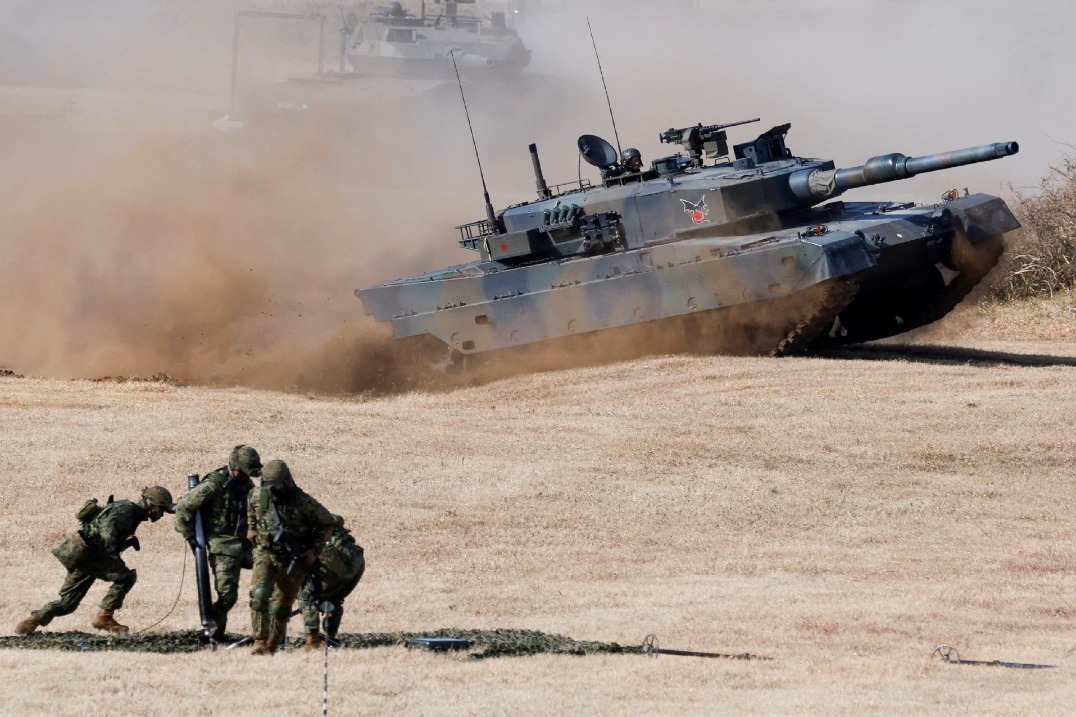
    JAKARTA, Indonesia — In a significant development for Middle East peace efforts, Indonesia’s military has announced preparations to deploy up to 8,000 personnel to Gaza as part of an international humanitarian and stabilization initiative. The Indonesian National Armed Forces (TNI) has completed operational planning for what would represent the first concrete troop commitment to President Donald Trump’s postwar reconstruction framework for the conflict-ravaged territory.

    Army spokesperson Brigadier General Donny Pramono confirmed that military authorities have finalized the proposed troop structure and deployment timeline, though actual deployment remains contingent on governmental approval and international coordination mechanisms. ‘In principle, we are ready to be assigned anywhere,’ Pramono stated. ‘Our troops are fully prepared and can be dispatched at short notice once the government gives formal approval.’

    The comprehensive preparation schedule involves medical examinations and administrative processing throughout February, followed by a force readiness assessment at month’s end. According to military planning, approximately 1,000 personnel could deploy as an advance team by April, with the full composite brigade of 8,000 troops prepared for movement by June’s conclusion.

    Indonesian officials have emphasized that any participation would be strictly humanitarian in nature, focusing on civilian protection, medical services, and reconstruction support rather than combat operations. The Foreign Ministry has repeatedly clarified that Indonesian forces would not engage in actions that might precipitate direct confrontation with armed factions.

    This potential deployment marks a strategically nuanced position for Indonesia, the world’s most populous Muslim-majority nation, which maintains no formal diplomatic relations with Israel while historically advocating for Palestinian self-determination. Indonesian authorities have justified participation in Trump’s Board of Peace initiative as necessary to represent Palestinian interests from within the international framework, particularly given Israel’s inclusion on the board without Palestinian representation.

    The Southeast Asian nation brings substantial peacekeeping experience to the potential mission, ranking among the top ten contributors to United Nations peacekeeping operations globally with previous deployments in Lebanon and other conflict zones.