标签: Asia

亚洲

  • Legal support for IPs to be bolstered

    Legal support for IPs to be bolstered

    China is embarking on significant legislative reforms to enhance its intellectual property protection framework, according to announcements from the China National Intellectual Property Administration. Commissioner Shen Changyu revealed on Wednesday that the administration will prioritize legal upgrades to cultivate a more innovation-conducive environment through elevated protection standards.

    The comprehensive overhaul includes advancing amendments to integrated circuit layout design regulations and accelerating revisions to the Trademark Law. A draft amendment to the Trademark Law has already undergone preliminary review by the Standing Committee of the National People’s Congress in December, marking a crucial step in the legislative process.

    Addressing emerging technological challenges, Shen emphasized the urgent need for robust IP protection in new sectors and the expedited establishment of data-related intellectual property regulations. This initiative responds to the rapid evolution of technologies including artificial intelligence, biomedicine, and advanced internet applications.

    Legal expert Liu Bin of Beijing Zhongwen Law Firm endorsed the proposed reforms, highlighting critical gaps in current regulations. “Data has transformed into an essential production factor, yet the absence of clear guidelines creates a paradox where everyone desires to utilize it but hesitates due to legal uncertainties,” Liu noted. He identified pressing challenges including determining ownership of AI-generated content and clarifying rights concerning data circulation and utilization.

    Liu advocated for establishing comprehensive data IP protection rules that would clarify legal data sources, define permissible usage parameters, and implement benefit-sharing mechanisms. “These measures are fundamental to safeguarding contributors’ legitimate interests while encouraging corporate participation in data development and innovative applications,” he added.

    Recent achievements during the 14th Five-Year Plan period (2021-25) demonstrate China’s progressive trajectory in IP development. The administration completed substantial revisions to the Patent Law and its implementing regulations, establishing a high-standard system for punitive damages against infringement. Updated patent examination guidelines have improved review standards for emerging fields, including artificial intelligence.

    Operational efficiencies have shown marked improvement, with invention patent examination periods reduced from 20 to 15 months since 2020. Trademark registration reviews have stabilized at approximately four months, ranking among the fastest globally. Quantitative achievements include surpassing 5 million valid domestic invention patents and reaching 16 high-value invention patents per 10,000 people, exceeding established targets.

  • China expects huge surge in winter tourism

    China expects huge surge in winter tourism

    China’s winter tourism sector is experiencing unprecedented growth, with snow sports rapidly evolving from specialized activities into mainstream economic drivers. According to the China Tourism Academy’s latest report, the December 2025-February 2026 season is projected to witness 360 million winter tourism excursions, generating approximately 450 billion yuan ($64 billion) in revenue.

    The transformation reflects a fundamental shift in consumer behavior, as evidenced by Yang Lezhi, a 27-year-old Beijing resident who represents the new generation of winter sports enthusiasts. “Skiing makes me feel like Elsa from Frozen—it’s almost addictive once you master the slopes,” she remarked, highlighting how winter activities have transitioned from niche pursuits to popular recreational trends.

    This remarkable expansion stems from multiple factors: the successful legacy of the 2022 Beijing Winter Olympics, substantial government support, and strategic infrastructure investments. In November 2024, China’s State Council issued comprehensive guidelines targeting a 1.2 trillion yuan winter economy by 2027 and 1.5 trillion yuan by 2030.

    Industry analyst Yang Jinsong from the China Tourism Academy identifies several growth catalysts: “Post-Olympic awareness has significantly increased public interest in winter activities, while supportive policies have encouraged broader industry participation. Both naturally advantaged northern regions and southern provinces with artificial facilities are contributing to this expansion.”

    Remarkably, southern China—including Guangdong province—has emerged as the national leader in winter tourism infrastructure investment, exceeding 30 billion yuan annually. The industry’s structural development is equally impressive, with 1,423 new winter tourism companies established in 2025, bringing the national total to over 14,000 enterprises—an 11% increase from 2024.

    Supporting data reveals consistent industry expansion, with winter-related consumption reaching 187.5 billion yuan between late 2024 and early 2025. The sector has demonstrated remarkable growth trajectory, expanding from 270 billion yuan in 2015 to 980 billion yuan in 2024, and is projected to surpass 1 trillion yuan for the first time in 2025.

    Consumer surveys indicate strong continued demand, with 75% of respondents expressing interest in winter travel, over 40% planning increased participation frequency, and a similar percentage intending to boost winter activity spending—signaling sustained momentum for China’s burgeoning winter economy.

  • Mainland sanctions Taiwan officials, warns separatists

    Mainland sanctions Taiwan officials, warns separatists

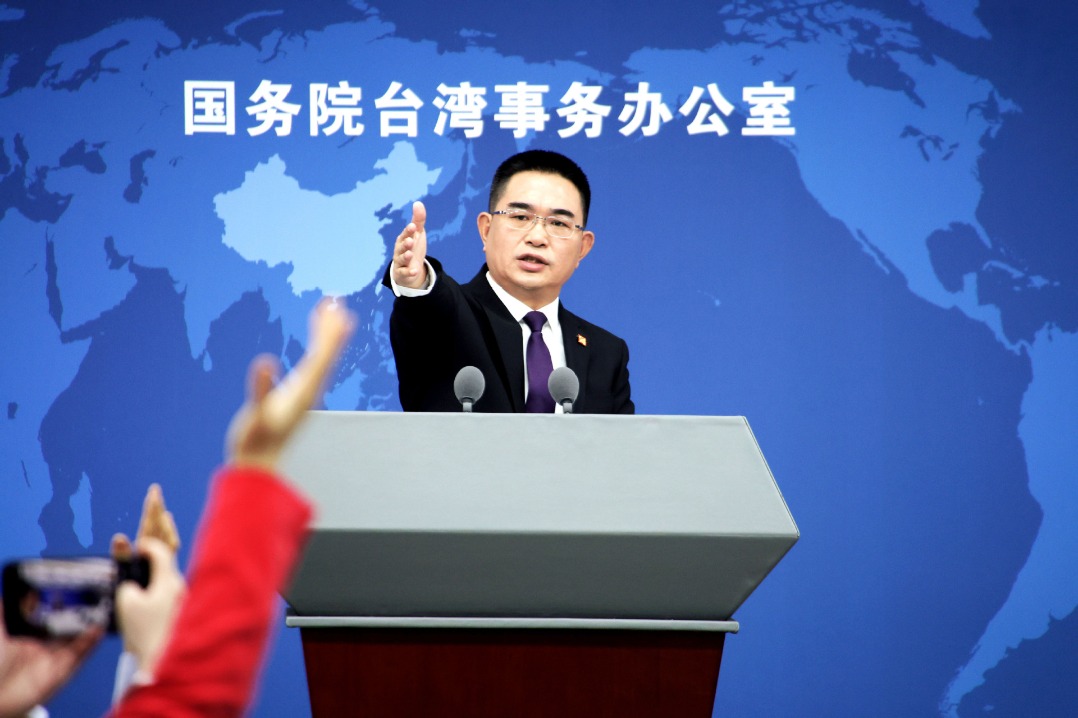
    In a significant escalation of cross-strait tensions, Chinese mainland authorities have designated two senior Taiwanese officials as hardened ‘Taiwan independence’ separatists and imposed comprehensive sanctions against them. The announcement came from Chen Binhua, spokesperson for the State Council’s Taiwan Affairs Office, during a press briefing on Wednesday.

    Liu Shih-fang, head of Taiwan’s Interior Affairs Department, and Cheng Ying-yao, overseeing the island’s education policy, were formally added to Beijing’s list of individuals accused of promoting separatist agendas. According to the spokesman, both officials have engaged in persistent activities that contradict mainstream public opinion and deliberately undermine cross-strait relations.

    The sanctions package imposes lifelong legal accountability measures, prohibiting the officials and their family members from entering mainland China, Hong Kong, and Macao. Additionally, organizations affiliated with either official are barred from conducting business or establishing cooperative ties with mainland entities.

    In a parallel development, prosecutor Chen Shu-yi from Taiwan’s High Prosecutors Office was designated as an accomplice to separatist activities. Authorities accused her of manufacturing cases and targeting individuals who support cross-strait exchanges, allegedly creating an atmosphere of intimidation.

    The mainland has now identified 14 individuals as primary ‘Taiwan independence’ separatists, including Taiwan’s deputy leader Hsiao Bi-khim and defense chief Koo Li-hsiung, alongside 12 individuals listed as accomplices.

    The spokesman referenced China’s Anti-Secession Law, emphasizing that challenges to national sovereignty would face severe consequences. He also addressed a recently withdrawn proposal by DPP lawmakers that sought to redefine cross-strait relations, warning that such ‘de jure independence’ attempts would not be tolerated.

    Authorities have encouraged citizens from both sides of the strait to provide information regarding illegal activities by those named in the sanctions list.

  • Pursuit of ‘silver dividends’ redefines seniors’ golden years

    Pursuit of ‘silver dividends’ redefines seniors’ golden years

    China is undergoing a profound demographic transformation as millions of experienced seniors are redefining retirement through workforce reentry, creating both opportunities and challenges for the nation’s economy. This shift comes alongside policy changes that are gradually raising retirement ages and encouraging the utilization of older workers’ accumulated expertise.

    The voluntary retirement age adjustment policy, implemented from January 1, 2025, progressively increases the retirement threshold from 60 to 63 for men and from 55 to 58 for women over a 15-year transition period. This aligns China more closely with developed nations where retirement typically occurs between 64-65 years, with several countries moving toward 67 in response to aging populations.

    Personal narratives illustrate this trend. Yan Qin, a 58-year-old former accountant from Beijing, returned to employment after three years of retirement, finding satisfaction in supporting younger colleagues despite reduced compensation expectations. Similarly, 62-year-old Wang Qingwen of Hangzhou invested in barista training, aspiring to establish her own café despite visual and manual challenges.

    Research from the China Research Center on Aging reveals distinct employment patterns by age cohort: 38.3% of respondents aged 60-69 seek paid employment, compared to 19.4% of those 70-79, and merely 5.2% of octogenarians and beyond.

    This demographic shift necessitates robust legal protections and policy support. Landmark regulations proposed in July 2025 by multiple government agencies aim to safeguard older workers’ rights through written agreements specifying working conditions, compensation, and insurance coverage. Employers are encouraged to provide age-appropriate positions while prohibited from assigning physically or mentally hazardous tasks.

    The economic implications are substantial. China’s silver economy reached approximately 7 trillion yuan (6% of GDP) in 2024, with projections indicating growth to 30 trillion yuan (10% of GDP) by 2035. Currently, 77,600 companies specialize in products and services for seniors, supported by government investments including 7.59 billion yuan for constructing 202 nursing facilities in 2024.

    Demographic statistics underscore the urgency: China’s 310 million citizens aged 60+ constitute 22% of the population, including 220 million aged 65+ (15.6%). Life expectancy has risen to 79 years, exceeding global averages by five years.

    Beyond economic contributions, seniors are increasingly pursuing quality lifestyles through continued education, technology adoption, and experiential consumption. Wellness products, tailored smartphones, specialized tourism, and educational programs are gaining popularity among older demographics seeking meaningful engagement rather than mere subsistence.

    Experts emphasize that successful integration of senior workers requires collaborative efforts between government, employers, and older individuals themselves—transforming demographic challenges into sustainable silver dividends through experienced talent utilization while alleviating pension system pressures.

  • Nation’s annual parcel volume hits nearly 200 billion

    Nation’s annual parcel volume hits nearly 200 billion

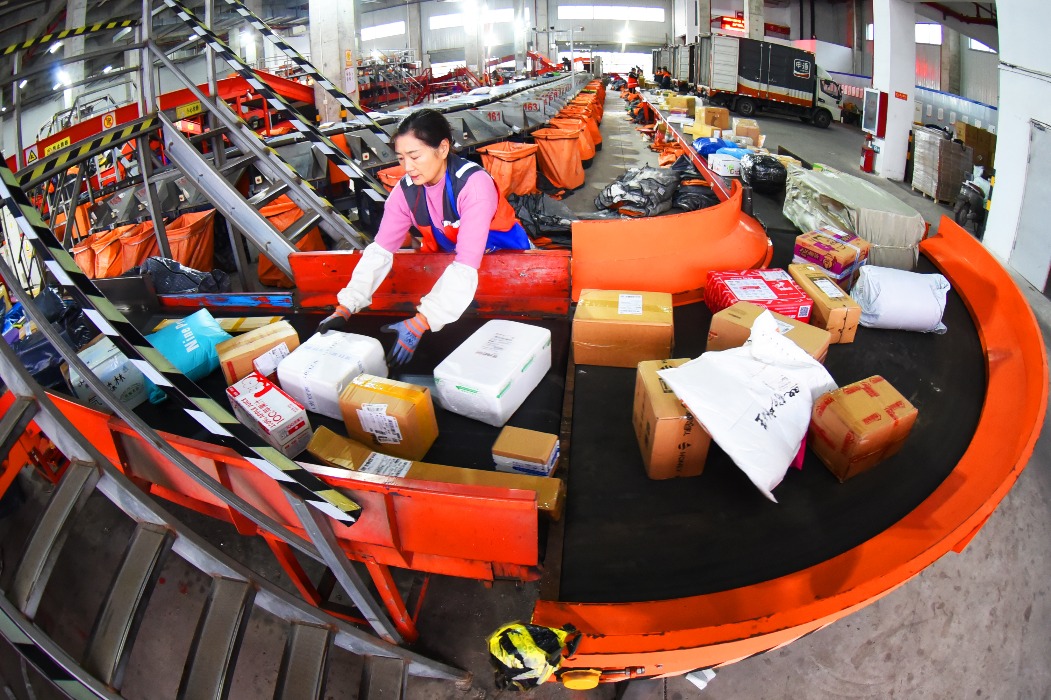
    China has reinforced its global dominance in express delivery services, achieving an unprecedented milestone of 199 billion parcels handled in 2025. This represents a substantial 13.7% year-on-year growth, while sector revenue climbed to 1.5 trillion yuan ($214 billion), marking a 6.5% increase from the previous year.

    The State Post Bureau of China, announcing these figures at its annual conference in Beijing, revealed the industry has now led global parcel volumes for twelve consecutive years. The nation has developed the world’s most extensive delivery network, serving the largest consumer base while continuously enhancing both technological capabilities and geographical coverage.

    During the 14th Five-Year Plan period (2021-2025), China’s parcel volume skyrocketed from over 80 billion to nearly 200 billion items, accounting for more than 60% of worldwide courier growth. The peak daily processing capacity reached 777 million parcels, with annual per capita parcel usage surging from 59 to 141 items between 2020 and 2025.

    Bureau head Zhao Chongjiu emphasized how the sector’s prosperity reflects both growing public demand for convenient postal services and the underlying resilience of China’s economy. “We’ve established the planet’s largest delivery network, penetrating deep into rural communities while expanding international connections to major global economies,” Zhao stated.

    Significant infrastructure expansion has brought postal services to all border villages, with nationwide service outlets increasing nearly 1.5 times. Central and western regions saw their shares of express delivery revenue and volume rise by 5.4 and 7.5 percentage points respectively, facilitating better integration into the national unified market.

    In Xinjiang Uygur Autonomous Region, daily mail and parcel deliveries increased nearly fivefold since 2020. Resident Aikeremu Tula from Gonglati village noted the transformation: “Previously we traveled to town pickup points, but now we have a local station just minutes from home.”

    Technological advancements have been equally impressive. The 180 billionth parcel milestone in November 2025—a smart learning device ordered by Shenzhen resident Li Xiaojun—was processed through fully automated JD.com facilities and delivered via unmanned vehicle. Li praised the “much faster and more precise” service, highlighting the logistics system’s growing efficiency.

    JD’s Pingshan warehouse head An Jixing reported unmanned vehicles now handle approximately 15,000 parcels daily, boosting capacity while reducing staff workload. Nationwide, over 450 drones delivered nearly 4 million parcels in 2025.

    Looking ahead, the sector anticipates handling 214 billion parcels in 2026, maintaining an estimated 8% growth trajectory. Bureau researcher Liu Jiang identified technology as “a strong engine injecting lasting vitality into the market,” while Zhao confirmed expectations for continued revenue growth across both postal and express services.

  • What’s next in AI development? A tech pro’s lens

    What’s next in AI development? A tech pro’s lens

    As China embarks on its 15th Five-Year Plan (2026-2030), technological self-reliance has emerged as a cornerstone of national strategy. The blueprint emphasizes accelerating high-level technological independence to cultivate new quality productive forces, positioning artificial intelligence as a critical driver of economic transformation.

    In an exclusive video feature, an AI enterprise founder provides expert insights into the anticipated evolution of cutting-edge technologies over the coming five-year period. The analysis delves into the development trajectories of artificial intelligence systems, large language models, and advanced robotics—technologies poised to redefine China’s innovation landscape.

    The strategic focus on AI advancement aligns with broader national objectives to establish technological leadership in core sectors. This development pathway represents a concerted effort to build domestic capabilities that reduce external dependencies while fostering indigenous innovation ecosystems.

    Industry experts suggest that the integration of AI across traditional manufacturing and service sectors will accelerate, potentially creating new industrial paradigms and productivity benchmarks. The emphasis on “new quality productive forces” indicates a shift toward technology-intensive, high-value-added economic activities that leverage China’s substantial digital infrastructure investments.

    The coming half-decade is expected to witness significant breakthroughs in AI applications, with particular emphasis on practical implementations that address real-world challenges while strengthening the nation’s technological sovereignty.

  • Australia’s leader announces a royal commission into antisemitism after Bondi mass shooting

    Australia’s leader announces a royal commission into antisemitism after Bondi mass shooting

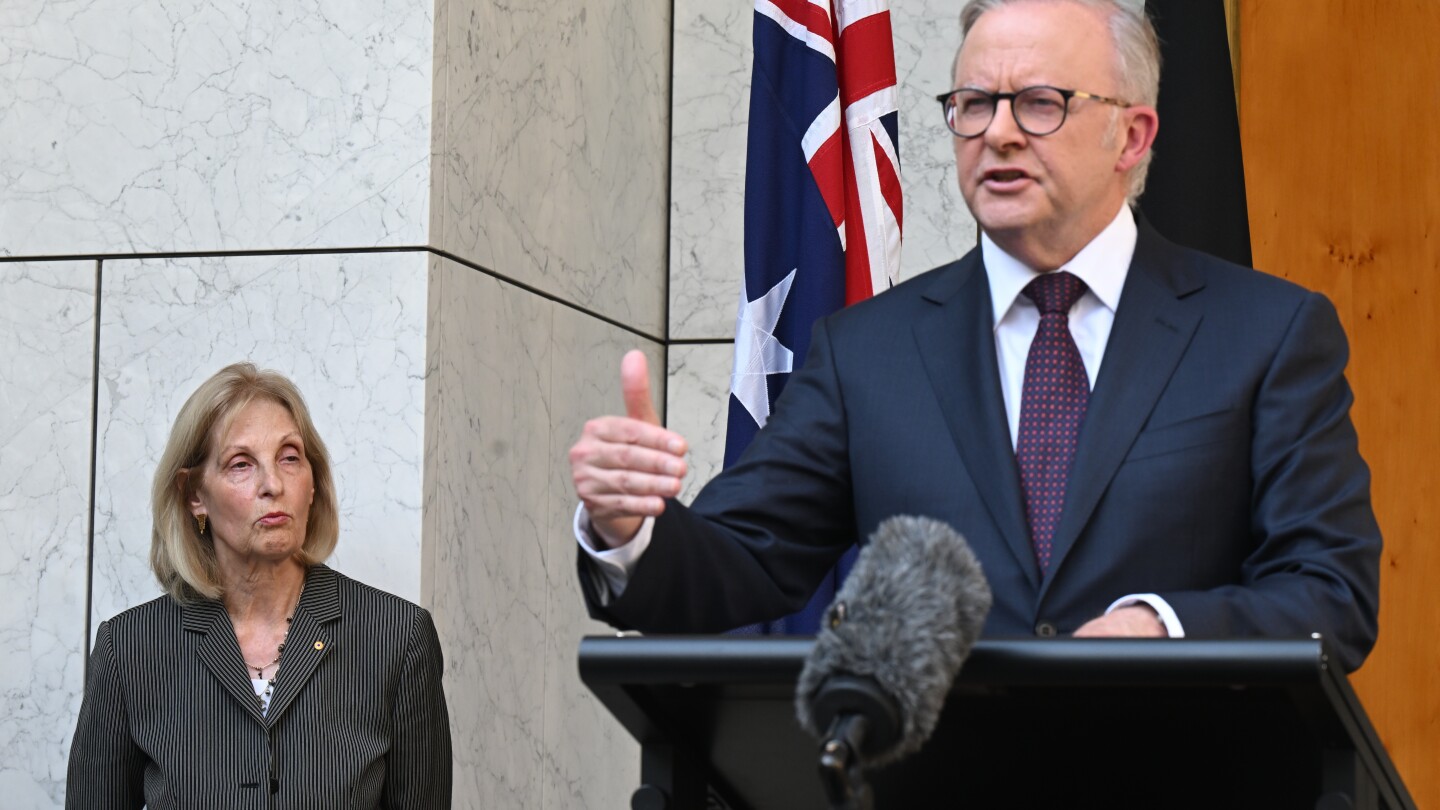
    CANBERRA, Australia — Prime Minister Anthony Albanese has established a comprehensive royal commission to investigate antisemitism in Australia, responding to growing national concerns following the deadly terrorist attack at Bondi Beach that claimed 15 lives during a Hanukkah celebration. The announcement comes after weeks of mounting pressure from political leaders, Jewish community representatives, and prominent public figures demanding federal-level action.

    The commission, Australia’s most powerful form of governmental inquiry, will conduct an extensive examination of antisemitism’s nature, prevalence, and underlying causes. Former High Court Justice Virginia Bell will lead the investigation, which possesses full authority to summon witnesses and compel document production. The probe will specifically analyze the circumstances surrounding the Bondi Beach massacre while also addressing broader societal concerns regarding extremism and social cohesion.

    Prime Minister Albanese characterized the attack as “an antisemitic terrorist attack, aimed at Jewish Australians, inspired by ISIS” and acknowledged the deadliest incident of its kind in Australian history. The commission’s mandate extends beyond investigation to providing concrete recommendations for law enforcement enhancement, counter-extremism strategies, and strengthened community relations.

    A complete report is expected by December 14, marking the one-year anniversary of the tragedy. The surviving suspect, 24-year-old Naveed Akram, currently faces multiple criminal charges including murder and terrorism offenses, while his father was fatally shot by police during the incident.

    The government’s response also includes previously initiated reviews of security agencies and proposed legislative measures to tighten gun control laws and criminalize hate speech that currently falls below prosecution thresholds.

  • Saudi Arabia and Pakistan in talks to swap loans for JF-17 warplanes: Report

    Saudi Arabia and Pakistan in talks to swap loans for JF-17 warplanes: Report

    Saudi Arabia and Pakistan are engaged in advanced negotiations regarding a significant defense arrangement that would convert approximately $2 billion in Saudi loans into a procurement agreement for JF-17 Thunder fighter jets, according to a Reuters report. This potential arms deal, valued at up to $4 billion total, represents a strategic deepening of military cooperation between the two longstanding allies.

    The discussions occur against a complex geopolitical backdrop featuring Saudi Arabia’s intensified military operations against UAE-backed forces in Yemen and Pakistan’s concerted efforts to expand its arms exports to Arab nations. The two countries formalized their defense partnership with a mutual security pact last year, strengthening their existing alliance.

    This proposed arrangement would see Saudi Arabia acquire the JF-17 combat aircraft, jointly manufactured by Pakistan and China, with an additional $2 billion potentially allocated for supplementary military equipment beyond the loan conversion framework. The negotiation highlights the symbiotic nature of the Riyadh-Islamabad relationship: Saudi Arabia provides crucial financial support to Pakistan’s economy, while Pakistan offers military expertise and hardware to the Gulf monarchy.

    Financial assistance from oil-rich Saudi Arabia has proven vital to Pakistan’s economic stability over the past decade. In 2018, Riyadh extended a $6 billion assistance package comprising $3 billion in central bank deposits and $3 billion in deferred oil payments. Saudi Arabia has consistently rolled over these deposits, providing Pakistan with essential dollar liquidity to mitigate current account pressures.

    In return, Saudi Arabia benefits from Pakistan’s professional military establishment, with Pakistani advisors historically contributing to Saudi defense capabilities and many Saudi pilots receiving training in Pakistan. The current negotiations reflect both nations’ responses to regional security dynamics, including Pakistan’s recent $4 billion arms agreement with Libya’s National Army and Saudi Arabia’s ongoing military campaign in Yemen.

    The potential deal may generate concern in Washington, where officials are simultaneously negotiating F-35 sales to Saudi Arabia. Members of the U.S. intelligence community have previously expressed apprehension about technology transfer issues involving Chinese-made military equipment in sensitive regions.

  • UAE issues recall for some Nestle infant formula products

    UAE issues recall for some Nestle infant formula products

    The United Arab Emirates has enacted a voluntary product recall for specific batches of Nestlé infant nutrition formulas as a precautionary health measure. This action, coordinated between the Emirates Drug Establishment (EDE) and the global food manufacturer, follows the discovery of a potential microbial contaminant in a raw material used during production.

    The affected products include several lines of specialized infant formula: NAN Comfort 1, NAN Optipro 1, NAN Supreme Pro 1, 2 and 3, Isomil Ultima 1, 2 and 3, and the Alfamino range. The EDE emphasized that this recall is proactive and preventative, initiated after quality controls detected traces of Bacillus cereus bacteria, which can produce the toxin cereulide.

    This UAE recall forms part of a broader international response, with at least 37 countries across Europe, Africa, the Americas, and Asia having issued similar health advisories regarding these specific batches. National food safety authorities in Brazil, China, South Africa, Mexico, and Australia have all implemented comparable precautionary measures.

    Critical to public reassurance, the EDE confirmed that no illnesses or adverse health events related to these products have been reported within the UAE to date. All other Nestlé products remain unaffected and safe for consumption. The authority detailed that the identified batches have been immediately quarantined within Nestlé’s and distributors’ warehouses. A comprehensive process is now underway to ensure the complete removal of these products from all retail channels, including online marketplaces, to safeguard consumer health and safety in alignment with the nation’s stringent regulatory protocols.

  • UN rights chief calls on Israel to end ‘apartheid system’ in West Bank

    UN rights chief calls on Israel to end ‘apartheid system’ in West Bank

    In an unprecedented condemnation, the United Nations human rights chief has formally characterized Israel’s administration of the occupied West Bank as an “apartheid system” that systematically discriminates against Palestinians. The landmark 42-page report from the Office of the UN High Commissioner for Human Rights, released Wednesday, documents what it describes as intensifying violations of international law through a comprehensive system of racial discrimination and segregation.

    UN Rights Chief Volker Turk stated that Israel has created “a systematic asphyxiation of the rights of Palestinians” through decades-long discriminatory practices that have dramatically accelerated since late 2022. The report details how Israeli authorities maintain two distinct legal systems—one for Israeli settlers and another for Palestinians—creating what Turk called “a particularly severe form of racial discrimination and segregation that resembles the kind of apartheid system we have seen before.”

    The investigation documents numerous violations including unlawful killings, arbitrary detentions, torture, settlement expansion, land confiscation, movement restrictions, home demolitions, and forcible transfers. Between 2005 and September 2025, Israeli military forces killed 2,321 Palestinians in the West Bank, including 496 children, while during the same period, 205 Israelis were killed.

    Since the outbreak of the Gaza conflict in October 2023, the situation has deteriorated significantly with Israeli troops and settlers killing over 1,000 Palestinians in the West Bank alone. The report notes an alarming increase in extrajudicial killings with “almost complete impunity”—of more than 1,500 Palestinian killings recorded between 2017 and 2023, Israeli authorities opened just 112 investigations, resulting in only one conviction.

    The document provides harrowing accounts of gratuitous violence, including the shooting of an eight-year-old boy in the back of the head as he ran away and a 15-year-old shot twice in the chest while attempting to light a small device that posed no threat to armored vehicles. Soldiers provided no medical assistance as the children died.

    Economic and social impacts are equally severe. Movement restrictions have caused the loss of 306,000 jobs, with unemployment reaching 31.7% for men and 33.7% for women by early 2025. Education has been devastated—85% reduction in traffic across the West Bank affected at least 782,000 students, with girls disproportionately impacted due to safety concerns at checkpoints.

    The report also documents systematic torture and sexual violence in detention, including anal rape with objects, forced nudity, and genital beatings. Israeli authorities dismissed the report as “absurd and distorted,” claiming it reflects the UN’s “inherently politically driven fixation on vilifying Israel.”

    The UN rights office called on Israel to immediately end all discriminatory laws and practices, dismantle all settlements, evacuate settlers, and respect Palestinian self-determination rights, concluding that the separation and subordination of Palestinians appears “intended to be permanent… to maintain oppression and domination.”