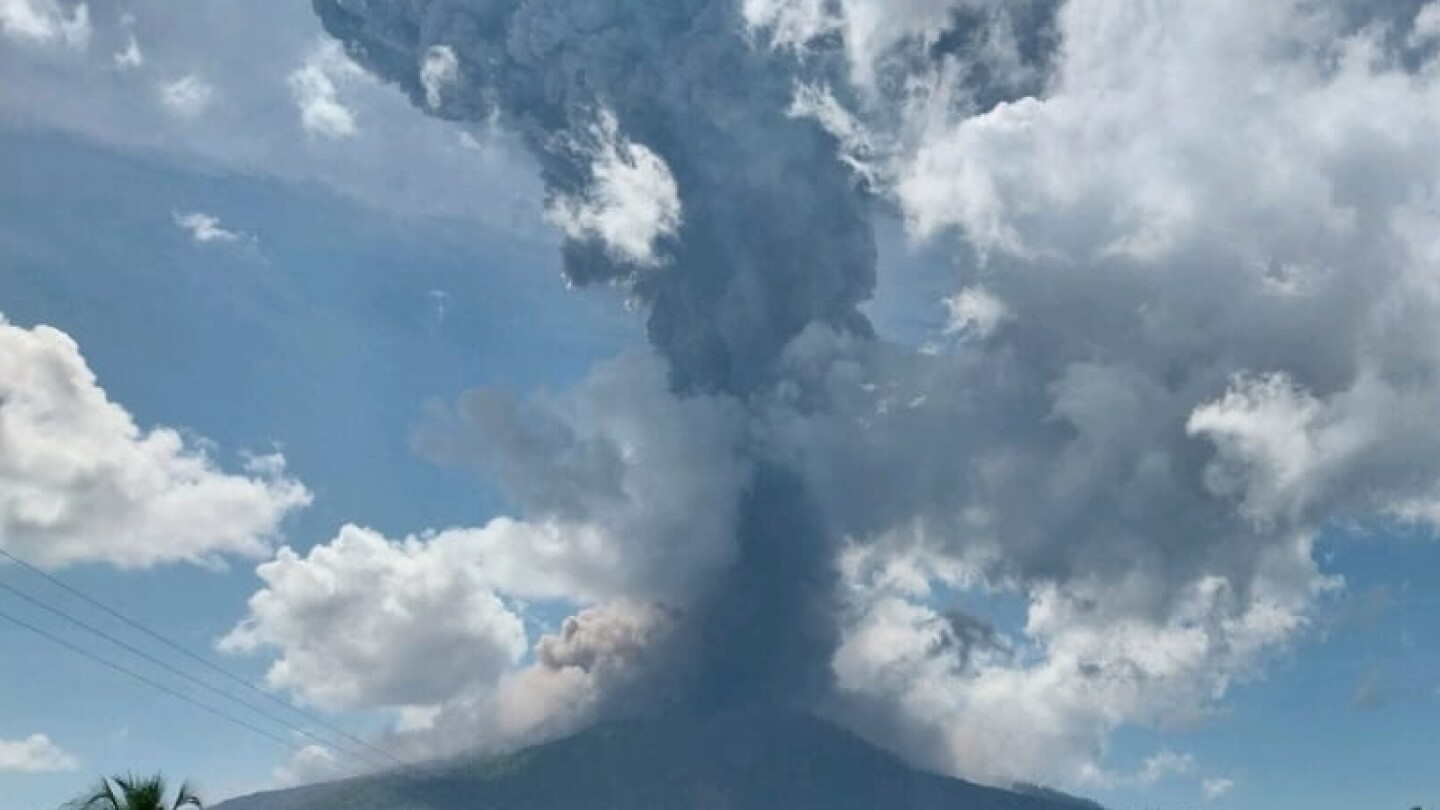
JAKARTA, Indonesia — Mount Lewotobi Laki Laki, one of Indonesia’s most active volcanoes, erupted for the second consecutive day on Wednesday, releasing massive plumes of hot ash that covered nearby villages. Authorities have not reported any casualties so far. According to Indonesia’s Geology Agency, the first eruption occurred in the early morning, propelling lava and ash clouds up to 10 kilometers (6 miles) into the sky. A subsequent eruption less than nine hours later produced a mushroom-shaped ash column reaching 8 kilometers (nearly 5 miles) high. The volcano, located on Flores Island, had already erupted three times on Tuesday, with avalanches of scorching gas, rocks, and lava cascading down its slopes. The third eruption illuminated the night sky with glowing lava and lightning. Hadi Wijaya, head of the Center for Volcanology and Geological Disaster Mitigation, reported that several villages were blanketed in ash and debris. He also cautioned residents to remain alert for heavy rainfall, which could trigger dangerous lava flows in rivers originating from the volcano. Standing at 1,584 meters (5,197 feet), Mount Lewotobi Laki Laki has been under the highest alert level since its eruption on June 18. An exclusion zone of 7 kilometers (4.3 miles) from the crater has been established due to increasing volcanic activity. The volcano’s major eruption in November 2024 resulted in nine fatalities and dozens of injuries, with another eruption occurring in March of this year. Indonesia, home to over 280 million people, is part of the seismically active ‘Ring of Fire,’ a horseshoe-shaped zone encircling the Pacific Basin, and boasts 120 active volcanoes.
标签: Asia
亚洲
-

New Zealand official says Pacific nations threatened by great power contest over deep sea minerals
New Zealand’s Defense Minister Judith Collins has raised concerns over the increasing pressure faced by small South Pacific nations due to great power competition for their rare minerals and fisheries wealth. In an interview with The Associated Press, Collins emphasized the need for regional neighbors to take more action to protect the sovereignty of these island nations. Collins, who also oversees New Zealand’s intelligence and space sectors, made these remarks ahead of her visit to Washington D.C., where she is set to meet with Trump administration officials, including Secretary of War Pete Hegseth and Secretary of Homeland Security Kristi Noem.
-
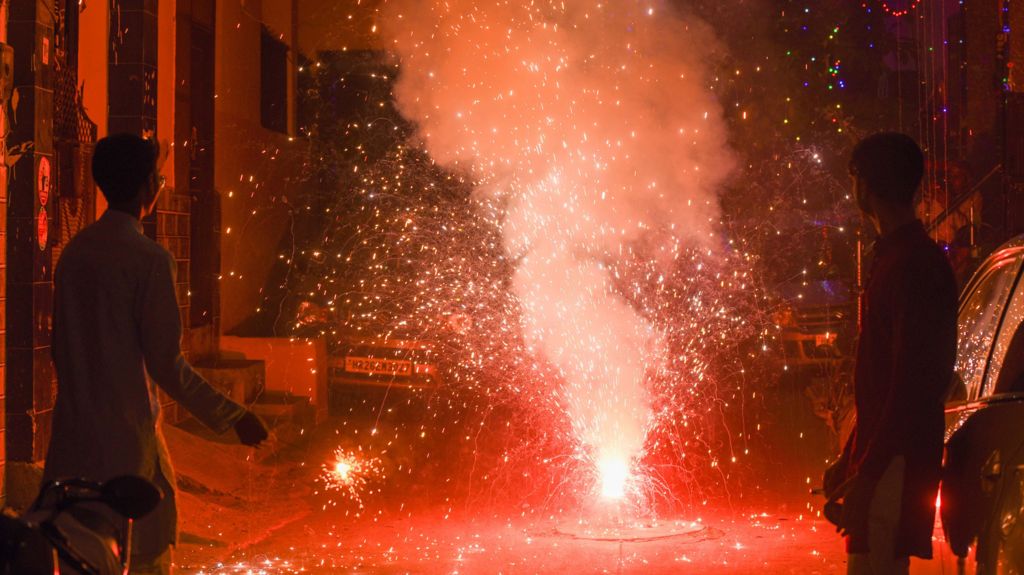
India top court allows less-polluting crackers even as Delhi air turns toxic
As Delhi’s air quality plunges into the ‘very poor’ category, India’s Supreme Court has permitted the sale and use of ‘green firecrackers’ during the upcoming Diwali festival. These firecrackers, designed to emit 20-30% fewer pollutants and produce minimal ash, are seen as a compromise between tradition and environmental concerns. However, critics argue that even these less harmful alternatives release toxic substances, exacerbating the city’s already dire pollution levels. On Wednesday, Delhi’s air quality was 25-30 times worse than the World Health Organization’s safe limits, with PM2.5 levels in some areas exceeding 400, a threshold that poses severe health risks. The court’s decision, which includes strict guidelines on the sale and use of firecrackers, has sparked mixed reactions. While some welcome the opportunity to celebrate Diwali fully, others fear weak enforcement will worsen the pollution crisis. Meanwhile, the Delhi government has activated the Graded Response Action Plan (GRAP) to combat rising pollution, banning coal, firewood, and non-essential diesel generators. As winter approaches, Delhi faces its annual pollution battle, with Diwali’s firecrackers adding to the challenge.
-

Australia’s highest court rejects Candace Owens’ visa challenge
In a landmark decision, Australia’s High Court has upheld the government’s refusal to grant a visa to U.S. conservative commentator Candace Owens, citing concerns over her potential to incite discord within the country. The unanimous ruling by three judges on Wednesday dismissed Owens’ legal challenge against Home Affairs Minister Tony Burke’s decision last year to deny her entry on character grounds. Owens, known for her controversial and conspiratorial views, had planned a speaking tour in Australia and New Zealand in November 2023. Burke invoked the Migration Act in October 2023, determining that Owens failed the ‘character test’ due to her history of making extremist and inflammatory remarks targeting Muslim, Black, Jewish, and LGBTQIA+ communities. The court documents revealed Burke’s assessment that her presence could pose a risk to national interests by fostering division. Owens’ legal team argued that the Migration Act infringed upon Australia’s implied freedom of political communication, a claim the judges rejected. The court also ordered Owens to cover the government’s legal costs. While Owens’ spokesperson indicated she would address the decision on social media, her plans to visit New Zealand remain unclear. Notably, New Zealand initially denied her visa in November 2023, citing Australia’s rejection, but later reversed the decision in December, emphasizing the value of free speech. This case underscores Australia’s stringent visa policies, which have also been applied to other high-profile figures, such as rapper Ye (formerly Kanye West), whose visa was revoked earlier this year.
-
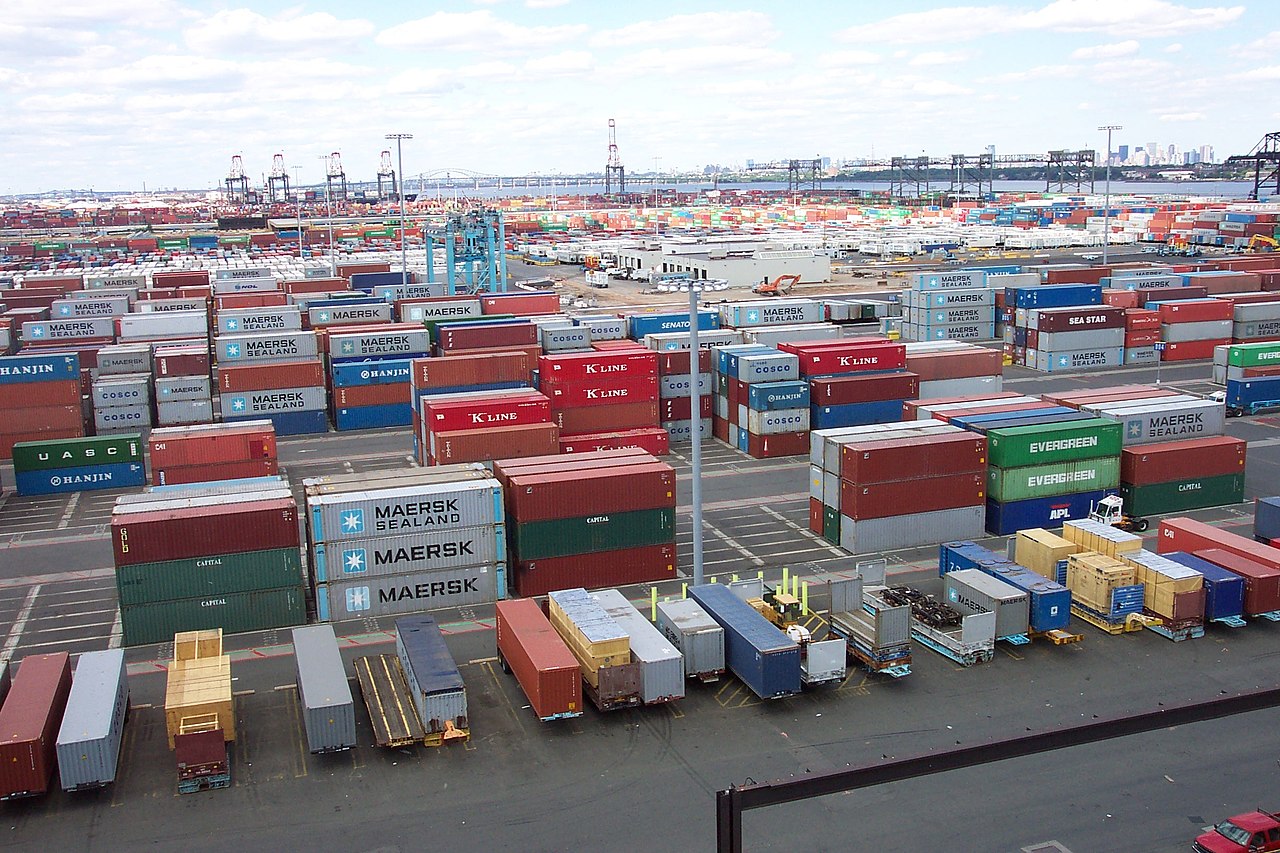
China, US clash in global shipping after chip and tariff wars
In a significant escalation of trade tensions, China has announced retaliatory measures against the United States’ newly imposed port fees. The Chinese Commerce Ministry revealed on Tuesday that it would levy a special port-entry charge of 400 yuan ($56) per net ton on US-linked container ships. This rate is set to increase annually, reaching 1,120 yuan by April 17, 2028. Additionally, China has sanctioned five US-related subsidiaries of South Korea’s Hanwha Ocean, accusing them of aiding US investigations into China’s maritime and shipbuilding sectors, which Beijing claims undermines its sovereignty and development interests. The sanctions prohibit Chinese entities from engaging in transactions or cooperation with the listed firms. A spokesperson for the Chinese Commerce Ministry emphasized that while China is open to dialogue, it is prepared to defend its interests if necessary. The spokesperson also criticized the US for its approach, stating that negotiations should not be conducted under threats or intimidation. This development comes ahead of a potential meeting between Chinese President Xi Jinping and US President Donald Trump at the APEC Summit in Seoul later this month. The US had previously imposed fees on Chinese ships entering its ports, citing unfair trade practices. China’s new measures are seen as a direct response to these actions, further straining bilateral relations. The situation underscores the growing rivalry between the two nations in the global trade and maritime sectors, with both sides taking increasingly assertive stances to protect their economic interests.
-
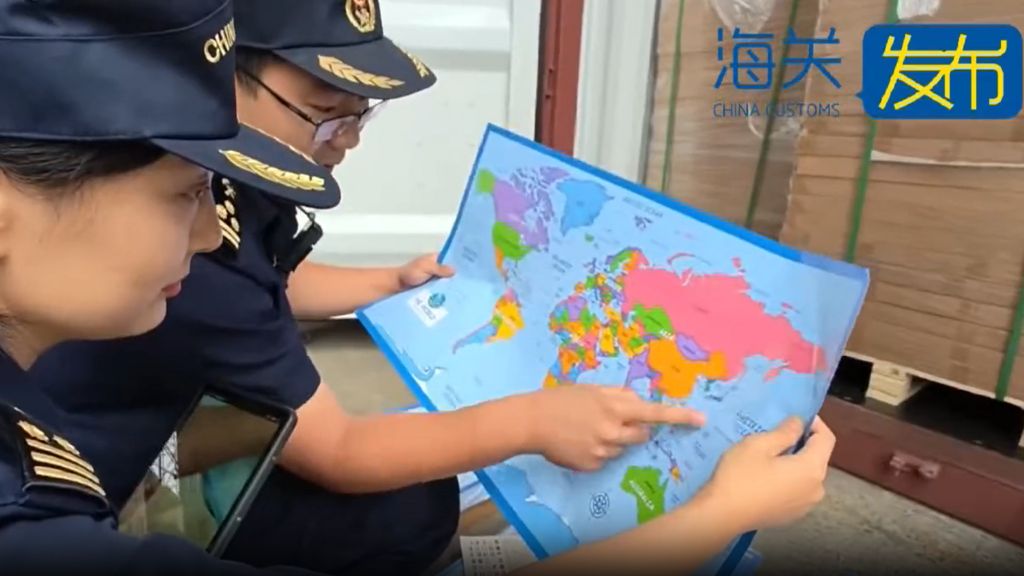
China seizes 60,000 maps for ‘mislabelling’ Taiwan
Chinese customs authorities in Shandong province have intercepted a significant shipment of 60,000 maps destined for export, citing serious concerns over national sovereignty and territorial integrity. The maps were deemed ‘problematic’ due to their mislabelling of Taiwan, which China claims as an integral part of its territory, and the omission of key islands in the South China Sea. Beijing’s claims in the South China Sea overlap with those of neighboring countries, including the Philippines and Vietnam, making cartographic accuracy a highly sensitive issue. The seized maps also failed to include the controversial nine-dash line, which demarcates China’s expansive claims over nearly the entire South China Sea, as well as the maritime boundary between China and Japan. Authorities emphasized that such maps ‘endanger national unity, sovereignty, and territorial integrity,’ rendering them unfit for sale. This incident underscores the heightened tensions in the region, particularly following recent confrontations between Chinese and Philippine vessels in the South China Sea. The Philippines accused a Chinese ship of ramming and firing a water cannon at a Philippine government vessel, while Beijing claimed the incident occurred after repeated warnings were ignored. The confiscation of ‘problematic maps’ is not unprecedented, but the scale of this seizure is notable. Earlier this year, customs officers in Qingdao and Hebei provinces also intercepted similar shipments containing errors in national borders and territorial depictions. The sensitivity surrounding maps in the region was further highlighted by the 2023 Barbie movie, which faced bans and censorship in Vietnam and the Philippines for depicting the nine-dash line. China Customs did not disclose the intended destination of the seized maps, but the incident reflects Beijing’s unwavering stance on territorial issues and its commitment to enforcing strict standards on cartographic representations.
-
US soybean farmers are dangerously overdependent on China
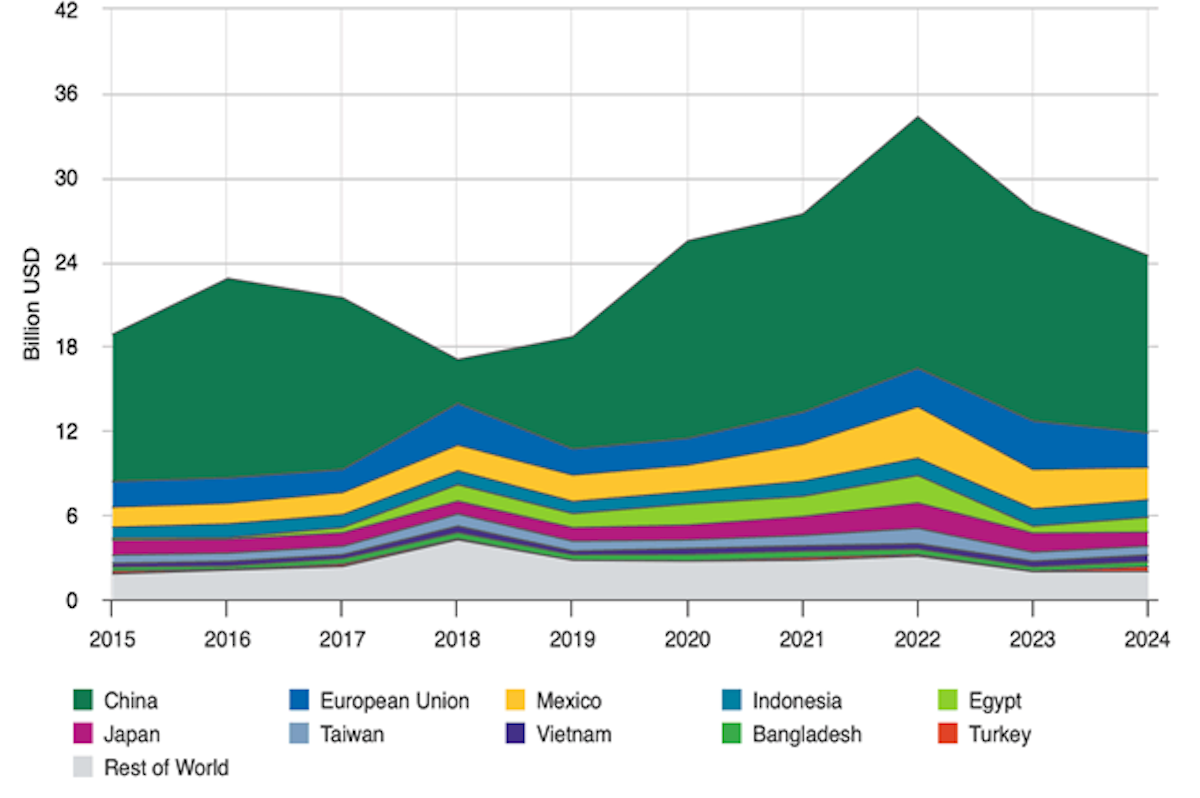
In 2003, during my early days at DTN/The Progressive Farmer, I was invited to speak about China at a farmers’ meeting in Iowa. Though not an expert on Chinese agriculture, my 17 years living and working in Tokyo and Hong Kong allowed me to witness China’s extraordinary economic growth. I confidently declared, ‘China is the difference between $5 soybeans and $10 soybeans.’ This prediction proved accurate, as US soybean exports to China doubled in the following years, with prices soaring to $9–$15 per bushel. For decades, China has been the largest overseas buyer of US soybeans, accounting for over half of American exports in 2024, far surpassing the European Union’s 10% share. However, the trade war initiated by President Donald Trump in 2018 disrupted this relationship, prompting China to increasingly turn to Brazil as its primary supplier. Despite this shift, China continued to purchase significant quantities of US soybeans—until 2024. This year, China has drastically reduced its imports, buying only 200 million bushels in the first eight months, compared to 1 billion during the same period in 2023. In recent months, imports have dropped to zero. The American Soybean Association’s president, Caleb Ragland, expressed concern, stating, ‘The farm economy is suffering while our competitors supplant the United States in the biggest soybean import market in the world.’ While some analysts predict a potential rebound in Chinese purchases, the ongoing trade tensions, including Trump’s imposition of 100% tariffs on Chinese goods, cast doubt on this possibility. The situation underscores the urgent need for US farmers to diversify their markets and reduce reliance on China. Meanwhile, China is actively expanding its domestic soybean production and investing in alternative suppliers like Brazil and Russia. For US farmers, the loss of China as a major buyer is a stark reminder of the risks of overdependence on a single market. Developing new domestic and international markets is essential to ensure long-term stability and growth in the soybean industry.
-
Chinese airlines protest US plan to ban their flights over Russian airspace
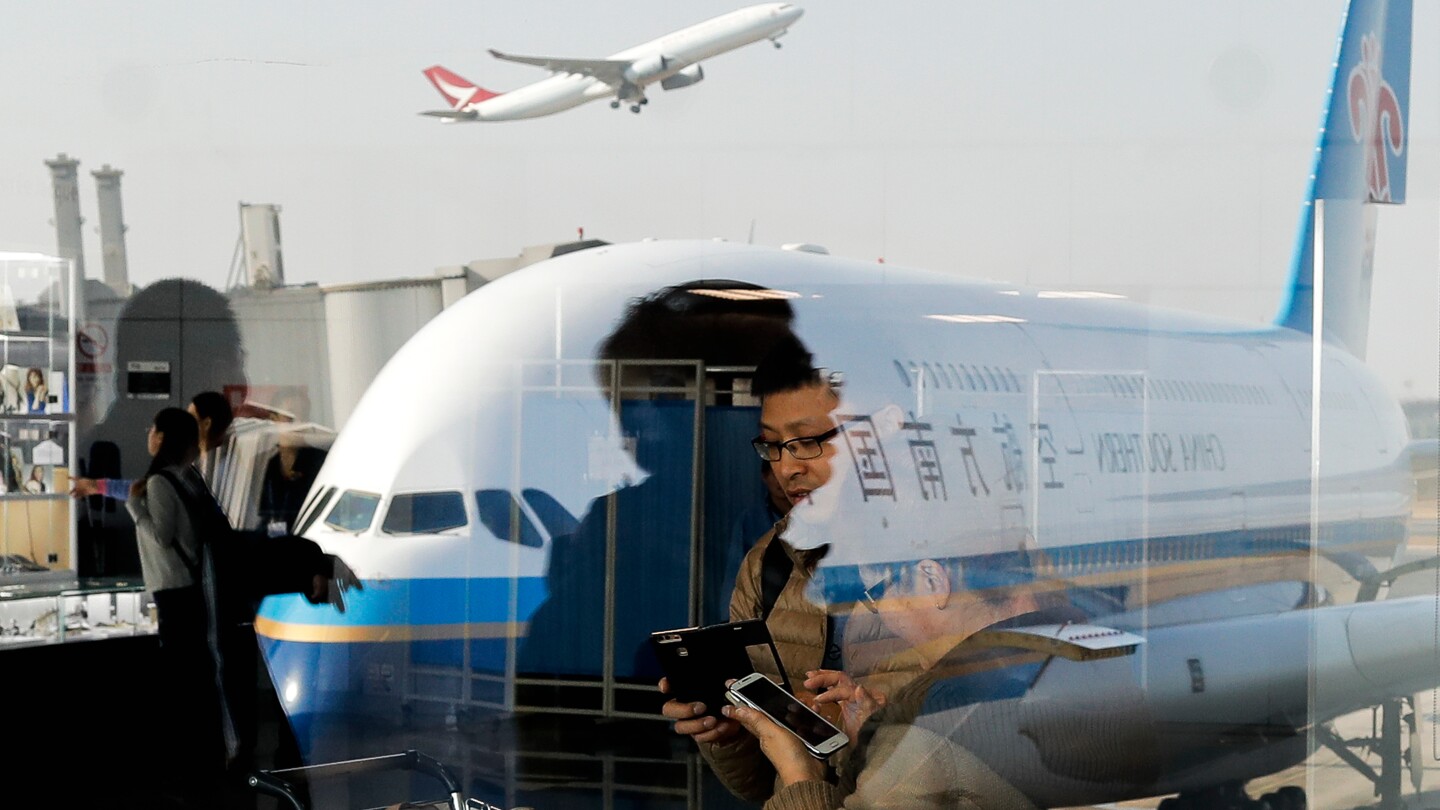
Major Chinese state-owned airlines have strongly opposed a U.S. proposal to prohibit them from flying over Russian airspace on routes to and from the United States. The U.S. argues that this restriction would level the playing field, as American carriers are barred from Russian airspace due to sanctions imposed after Russia’s invasion of Ukraine in 2022. Air China, China Eastern, and China Southern are among six carriers that have filed formal complaints against the proposed ban, warning of significant disruptions to travelers and increased costs. China Eastern emphasized that the ban would harm public interest and inconvenience passengers, leading to longer flight times, higher fuel consumption, and elevated airfares. China Southern highlighted the potential impact on thousands of travelers, while Air China estimated that over 4,400 passengers could be affected during the upcoming holiday season. The Chinese Foreign Ministry also criticized the proposal, labeling it as punitive to global passengers. Aviation expert David Yu noted that U.S. carriers face increased costs due to longer flight paths, while Chinese airlines benefit from cost savings by using Russian airspace. Despite these advantages, Chinese carriers have faced financial challenges, particularly since the COVID-19 pandemic. The U.S. Department of Transportation defended the proposal, citing ‘competitive imbalances’ caused by Chinese airlines’ access to more efficient routes. European carriers, including Air France-KLM, have also expressed concerns, while United Airlines urged that Cathay Pacific, Hong Kong’s flagship carrier, be excluded from the ban.
-
Most US stocks rise after swinging through another erratic day
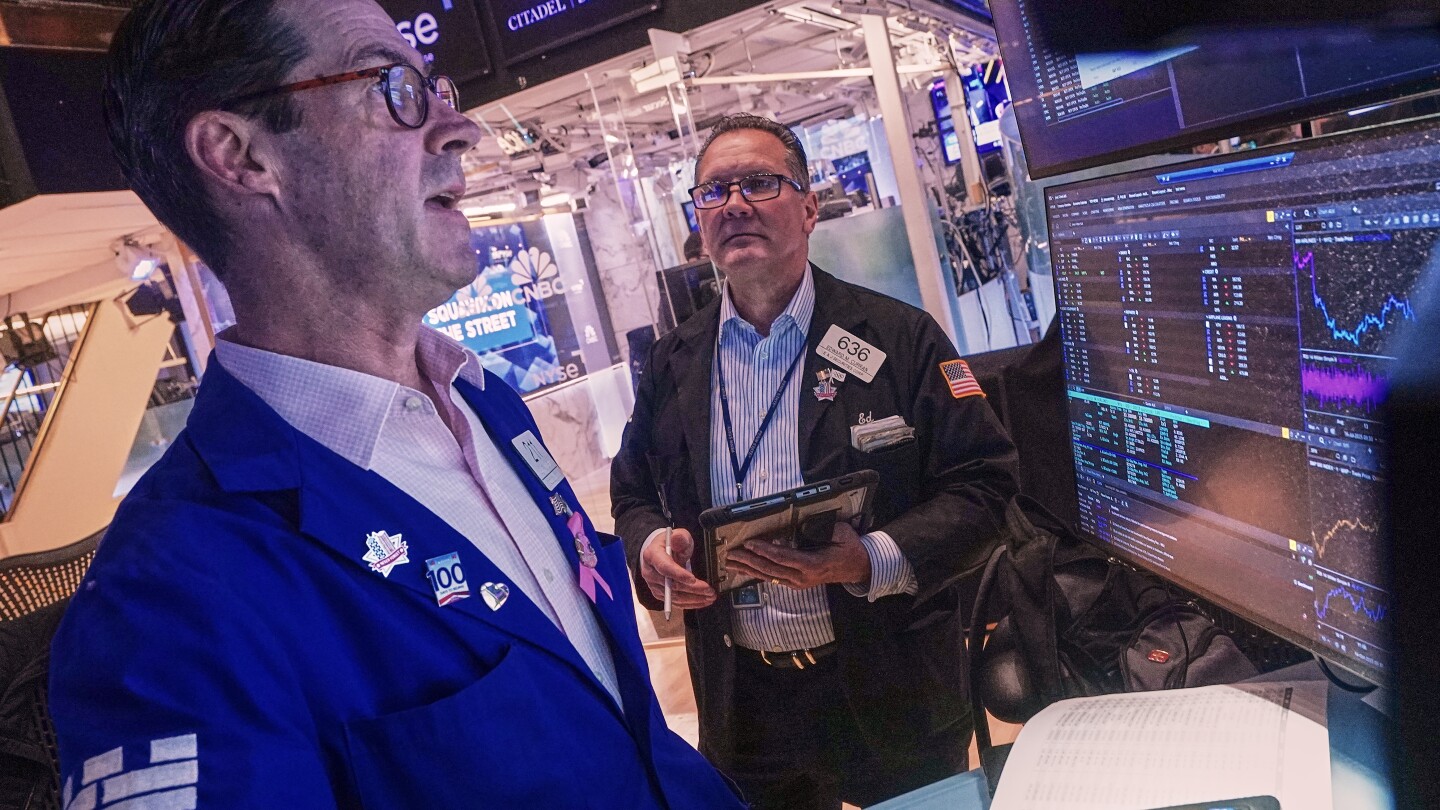
Wall Street experienced another day of erratic trading on Wednesday, with major indices showing mixed results. The S&P 500 gained 0.4%, recovering from earlier fluctuations that saw it nearly erase a significant morning rally. The Nasdaq composite rose 0.7%, bouncing between a 0.4% drop and a 1.4% surge, while the Dow Jones Industrial Average dipped slightly by 17 points, or less than 0.1%. This volatility follows a turbulent Tuesday, where the Dow swung between a 615-point loss and a 455-point gain, reflecting ongoing market uncertainty. The recent instability traces back to President Donald Trump’s threat of higher tariffs on China, which disrupted a period of relative calm in the markets. Technology stocks led the charge on Wednesday, buoyed by a strong earnings report from ASML, a key player in the semiconductor industry. ASML projected a 15% revenue increase by 2025, with next year’s earnings expected to match or exceed this year’s. CEO Christophe Fouquet highlighted the growing momentum in AI investments, countering concerns of a potential bubble akin to the dot-com frenzy of 2000. Financial institutions also contributed to the market’s upward movement, with Bank of America and Morgan Stanley posting better-than-expected profits. However, PNC Financial and Abbott Laboratories faced declines due to underwhelming forecasts and revenue shortfalls. Corporate earnings are under heightened scrutiny as investors seek clarity on the U.S. economy’s health, especially with delayed government reports on inflation and other key indicators. The Federal Reserve’s recent rate cut and hints of further reductions add another layer of complexity, as policymakers balance inflation concerns with a slowing job market. In the bond market, the 10-year Treasury yield held steady at 4.03%, while gold prices surged 0.9% to over $4,200 per ounce, driven by global economic uncertainties. Overseas, Asian markets saw strong gains, with South Korea’s Kospi jumping 2.7%, while European indices showed mixed results.
-

Red Cross en route to collect bodies of Israeli hostages from Hamas, Israel says
In a significant development within the ongoing ceasefire agreement between Israel and Hamas, Red Cross vehicles have been deployed to collect the bodies of Israeli hostages held in Gaza. The operation, which took place on October 14, 2025, in Gaza City, is part of a broader hostages-prisoners exchange deal initiated after the deadly October 7, 2023, attack. The Israeli military and Shin Bet security agency confirmed that the Red Cross was en route to a designated meeting point in the northern Gaza Strip to receive several coffins containing the remains of deceased hostages. Hamas had earlier communicated to mediators its intention to transfer four bodies, with a senior Hamas official revealing plans to hand over an additional four bodies later in the evening. The official emphasized the challenges in locating more bodies due to the extensive destruction caused by the conflict, which has severely hampered search and recovery efforts. This move comes as Israel has tightened restrictions on humanitarian aid to Gaza, including the closure of the Rafah crossing, in an effort to pressure Hamas to release the remaining 24 bodies. Despite the ceasefire, tensions persist, with both sides accusing each other of violations. Israeli fire reportedly killed at least six people in Gaza, while Hamas has yet to return all the remaining bodies. The fragile truce, now in its fifth day, remains a critical yet precarious step toward de-escalation.