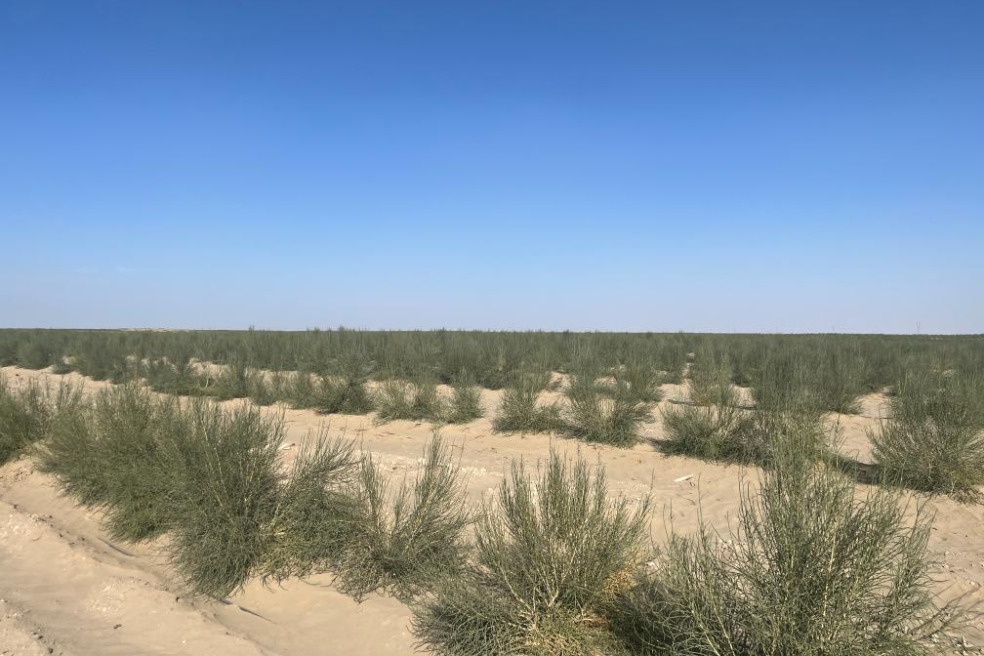
In the arid expanse of the Taklimakan Desert, a remarkable tale of symbiosis unfolds between the saxaul tree and the cistanche herb, offering a sustainable solution to desertification. The saxaul seed, known for its rapid germination, takes root in the sandy soil of Xinjiang’s southern desert edge. Within hours, it sprouts, braving harsh ultraviolet radiation and relentless sandstorms. Its grayish-white branches sway in the wind, forming a natural barrier against drifting sand while its deep roots tap into scarce groundwater. Beneath the surface, the cistanche herb thrives parasitically, embedding its roots into the saxaul’s vascular system to absorb water and nutrients. Each spring, the cistanche’s stem emerges, releasing a sweet fragrance that attracts honeybees. These bees, in turn, facilitate pollination, ensuring the propagation of both species. This intricate relationship not only stabilizes the desert but also provides economic benefits. Cistanche, dubbed ‘desert ginseng,’ is a valuable medicinal herb cultivated alongside saxaul forests. Farmers rent beehives to enhance pollination, creating a virtuous cycle where ecological protection and economic gains coexist. This model exemplifies China’s ‘edge-locking’ project, which aims to encircle the Taklimakan Desert with artificial vegetation. Li Peng, a veteran of desert control in Xinjiang, emphasizes the complexity of such initiatives, highlighting the need for systematic planning in water management, infrastructure, and maintenance. This innovative approach demonstrates how nature’s resilience, coupled with human ingenuity, can transform barren landscapes into thriving ecosystems.
标签: Asia
亚洲
-
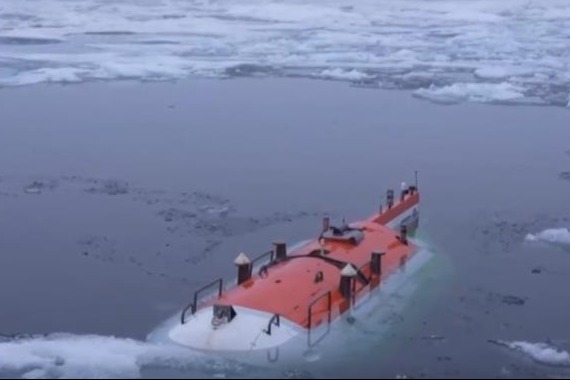
Pioneering deep-sea mission ends
China has successfully concluded its first-ever collaborative deep-sea manned submersible operation, marking a significant milestone in the nation’s polar research capabilities. The mission, which spanned 98 days, primarily focused on the Arctic Circle and was carried out by the Tansuo 3, the world’s first ice-breaking manned deep-sea submersible support vessel. The expedition, jointly organized by the Ministry of Natural Resources and the Chinese Academy of Sciences, utilized China’s domestically developed submersibles, Fendouzhe and Jiaolong. During the mission, the team navigated 1,989 nautical miles through ice-covered waters, conducting 43 dive missions. Notably, Jiaolong and Fendouzhe performed cooperative operations, including dual-submersible positioning searches and underwater motion filming, a first for China. The team also achieved the world’s first manned deep-sea exploration of the Gakkel Ridge, a tectonic plate boundary in the Arctic’s central basin. Fendouzhe completed 32 dives, reaching a maximum depth of 5,277 meters and enduring extreme polar conditions. The mission validated the operational capabilities of Fendouzhe and Tansuo 3 in polar ice-covered regions, establishing new protocols for extreme conditions and pioneering a mobile ice-diving model. This effort has cultivated a specialized polar deep-diving research team, positioning China as the only nation capable of continuous manned submersible operations in Arctic dense ice zones. The expedition collected valuable water, sediment, rock, and biological samples, providing critical scientific support for studying Arctic climate change, geological processes, and polar life evolution.
-

Hong Kong’s ‘King of Supporting Actors’ Benz Hui dies aged 76
Benz Hui, a revered figure in Hong Kong’s entertainment industry and affectionately known as the ‘King of Supporting Actors,’ has died at the age of 76. The veteran performer, whose real name was Hui Shiu-hung, passed away in the early hours of Tuesday at a Hong Kong hospital due to complications from cancer, as reported by local media.
-
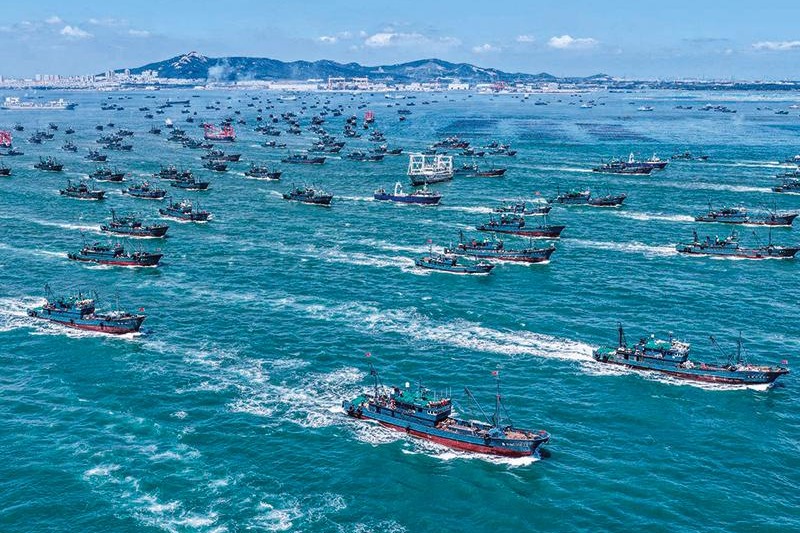
Judicial reforms strengthen China’s maritime rule of law
China is making significant strides in enhancing its maritime legal framework and judicial capabilities to bolster the high-quality development of its marine economy and solidify its position as a global leader in resolving international maritime disputes. Zhang Jun, President of the Supreme People’s Court, emphasized these developments during a report presented to the Standing Committee of the National People’s Congress, China’s top legislative body. The report underscores the evolution of China’s maritime adjudication system, which now handles the largest and most diverse array of maritime disputes worldwide. Since the inception of maritime courts over four decades ago, the number of cases has skyrocketed from 18 in 1984 to an estimated 34,400 in 2024. The scope of these cases has expanded beyond traditional maritime trade and shipping to include emerging sectors such as marine resource development, environmental protection, port construction, and cultural tourism. Notably, disputes related to offshore wind power and marine ranching have seen a sharp rise. Over the past 40 years, 88,000 cases have involved foreign parties, with an increasing number of international litigants opting to bring their disputes to Chinese courts, even when the cases have no direct connection to China. For instance, a maritime cargo transportation dispute involving Chile, Turkiye, and Singapore was successfully mediated by the Dalian Maritime Court in Liaoning province. Similarly, the Qingdao Maritime Court in Shandong province mediated a settlement in an oil tanker dispute involving parties from six countries, allowing the continuation of the ship sale contract. The new Greek shipowner renamed the tanker ‘Respect’ to honor China’s legal system. Zhang Jun highlighted the maturity of China’s specialized maritime adjudication system, noting its significant increase in case numbers, diversification in case types, and enhanced international influence. However, he also pointed out new challenges as China transitions from a major maritime nation to a maritime power. While the number of foreign-related disputes is substantial, the proportion of cases involving only foreign litigants remains low. Zhang called for intensified efforts in resolving disputes in shipping service sectors such as marine insurance, ship financing, and charter party contracts. He also stressed the need to optimize the maritime legal framework in response to the rapid development of emerging marine industries, including offshore renewable energy, deep-sea aquaculture, new offshore engineering technologies, and marine carbon credit trading. Zhang announced plans to formulate judicial interpretations for maritime laws and release notable cases to improve the rule of law environment for the marine economy. Additionally, bilingual and multilingual white papers on maritime adjudication will be released, and an English-language database of maritime cases along with a cross-border legal service mechanism will be established. Revisions to the Special Maritime Procedure Law and the development of relevant judicial interpretations are also on the agenda.
-
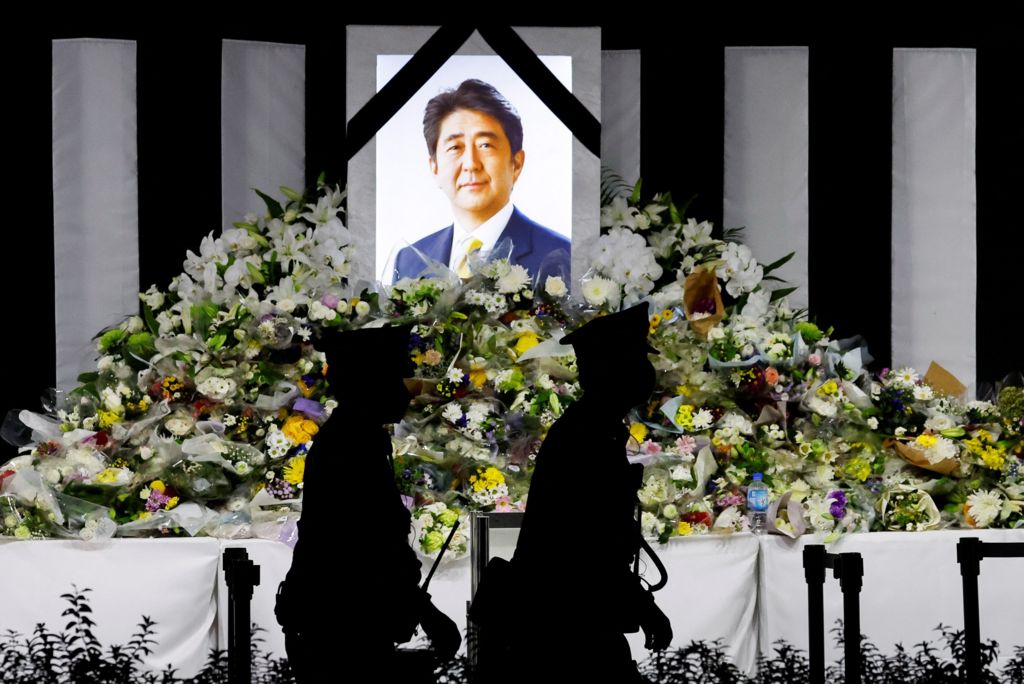
Man pleads guilty to killing Japan’s former PM Shinzo Abe
In a dramatic turn of events, Tetsuya Yamagami, the man accused of assassinating former Japanese Prime Minister Shinzo Abe, has pleaded guilty on the opening day of his trial. The 45-year-old defendant, facing additional charges for violating arms control laws, admitted to the court in Tokyo that “everything is true,” as reported by local media. Yamagami’s admission comes two years after he used a homemade firearm to shoot Abe during a political campaign event in Nara, a city in western Japan. Abe, renowned for his hawkish foreign policy and the economic strategy dubbed “Abenomics,” succumbed to his injuries later that day. Yamagami reportedly targeted Abe due to his alleged ties to the Unification Church, which he claimed had financially devastated his mother through substantial donations. The assassination has since exposed the controversial connections between Japan’s ruling Liberal Democratic Party and the church, leading to the resignation of several ministers. Earlier this year, a Tokyo court ordered the disbandment of the Unification Church, revoking its tax-exempt status and mandating the liquidation of its assets.
-
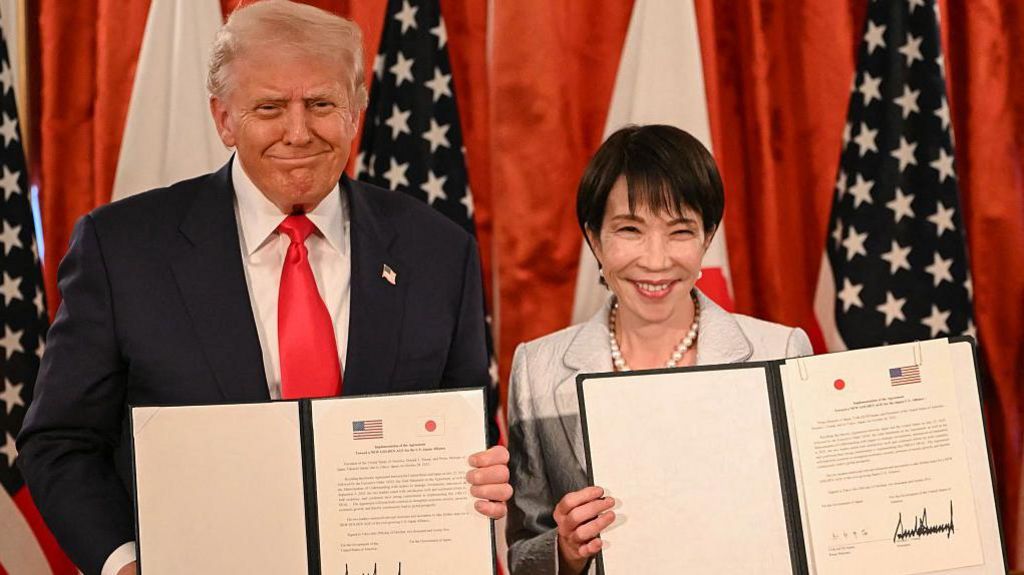
Trump is signing rare earths deals ahead of talks with China’s Xi- will they help?
During his recent Asia tour, US President Donald Trump signed a series of agreements with Japan, Malaysia, Thailand, Vietnam, and Cambodia to secure access to rare earth minerals, a sector long dominated by China. These deals, varying in scope and detail, aim to diversify the US supply chain for these critical materials, essential for advanced manufacturing in industries ranging from electric vehicles to smartphones. While the tangible impact of these agreements remains uncertain, they represent a strategic move to reduce reliance on China ahead of Trump’s high-stakes meeting with Chinese President Xi Jinping.
-

India closes schools and evacuates thousands as Cyclone Montha approaches
Indian authorities have initiated large-scale evacuations and closed schools as Cyclone Montha approaches the eastern coastline. The severe cyclonic storm, currently swirling over the Bay of Bengal, is expected to make landfall near Kakinada in Andhra Pradesh late Tuesday. With winds predicted to reach 90-110 kph (55-68 mph), the storm has prompted the issuance of red alerts—the highest weather warning level—for 19 districts in Andhra Pradesh. Neighboring states, including Tamil Nadu, Telangana, Kerala, and Karnataka, are also bracing for moderate to heavy rainfall. Disaster teams have evacuated 38,000 people from low-lying areas to relief camps, with an estimated 4 million residents in vulnerable zones. Andhra Pradesh has prepared 1,906 relief camps and 364 school shelters to accommodate evacuees from 1,238 at-risk villages. Schools and colleges remain closed until Wednesday, and fishermen have been warned against venturing into the sea. Train and flight services have been partially disrupted. In Odisha, around 32,000 people have been relocated to relief camps. Climate scientists attribute the increasing frequency and intensity of such storms to global warming, which fuels warmer oceans and more extreme weather patterns. India, one of the world’s largest emitters of greenhouse gases, is also among the most vulnerable regions to climate impacts. The 2023 cyclone season was particularly devastating, claiming 523 lives and causing $2.5 billion in damages. Tropical cyclones, known as hurricanes or typhoons in other regions, are among the most destructive natural disasters, especially in densely populated coastal areas. As global warming continues to escalate, the frequency and severity of such events are expected to rise, posing significant challenges for vulnerable regions like South Asia.
-
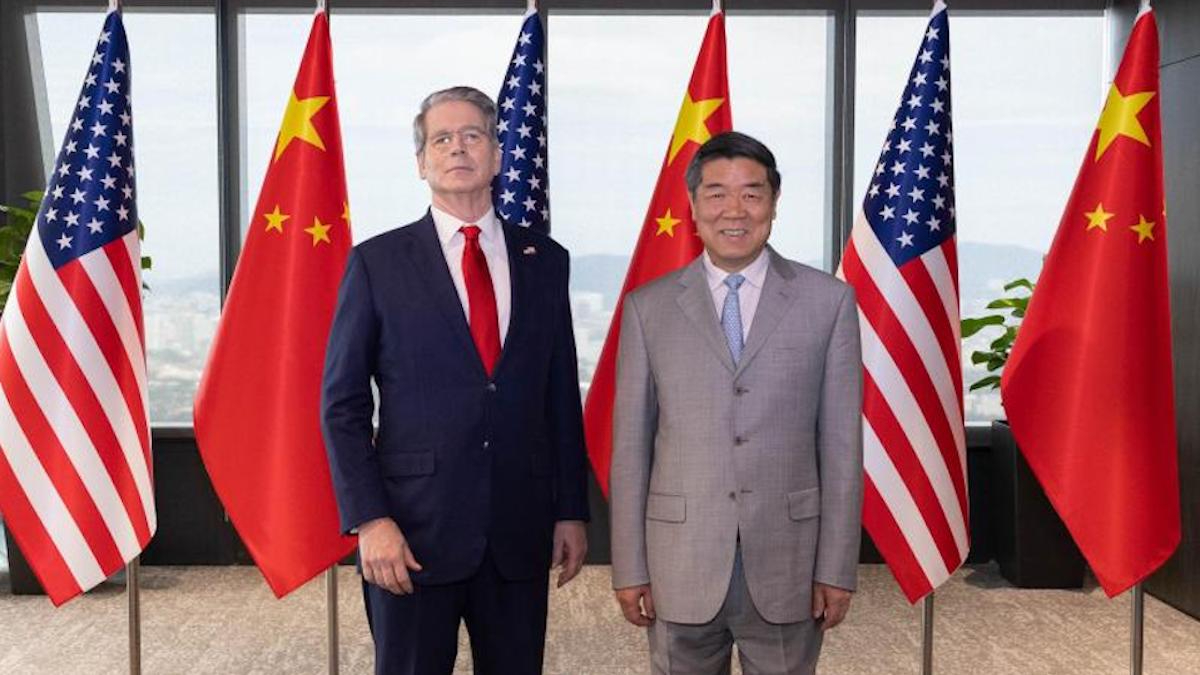
US, China edge toward fragile truce ahead of Trump-Xi meeting
In a significant development aimed at de-escalating their protracted trade dispute, the United States and China have established a preliminary framework to prevent further tensions. This breakthrough comes as both nations prepare for a high-stakes meeting between their leaders, US President Donald Trump and Chinese President Xi Jinping, on the sidelines of the APEC Summit in South Korea. The agreement follows intensive negotiations between US Treasury Secretary Scott Bessent and Chinese Vice Premier He Lifeng in Kuala Lumpur, Malaysia. Key concessions include China’s commitment to resume soybean purchases from the US and a one-year delay in implementing proposed rare-earth export controls. Bessent emphasized that the framework would avert the imposition of a 100% tariff on Chinese goods, which had been threatened by Trump. Additionally, the two nations are set to discuss broader issues, including the fentanyl crisis and Trump’s peace plan for Ukraine and Russia. In a separate development, Bessent confirmed that a final deal on TikTok’s US operations has been reached, with details to be finalized during the leaders’ meeting. The agreement reportedly involves the sale of TikTok’s American operations to a consortium of US investors, with ByteDance retaining a minority stake. This tentative truce marks a critical step in stabilizing US-China relations, though underlying tensions in technology and trade remain unresolved.
-

Red Cross transfers body of hostage held by Hamas to Israel
In a significant development amid the ongoing ceasefire between Israel and Hamas, the International Committee of the Red Cross (ICRC) facilitated the transfer of the body of a deceased hostage from Gaza to Israel on Monday night. The hostage, whose identity remains undisclosed, had been held by Hamas since the October 7, 2023, attack. The transfer was part of a broader ceasefire agreement and a hostage-prisoner swap deal between the two parties. Hamas handed over the coffin to the ICRC in Gaza City, which subsequently delivered it to the Israeli military and the Shin Bet security agency. The body will undergo identification at the National Center of Forensic Medicine in Tel Aviv, after which the family will be officially notified. A Hamas source revealed that the body was recovered earlier in the day from the Al-Tuffah neighborhood in eastern Gaza City. This exchange marks the latest in a series of transfers under the ceasefire, which has seen Hamas release all 20 living Israeli hostages and Israel free approximately 2,000 Palestinian detainees. Israel estimates that the bodies of 28 hostages remain in Gaza, with some killed before capture and others dying in captivity. Hamas has previously returned 15 bodies.
-

Ford’s enormous F-150 becomes unlikely part of Japan’s efforts to woo Trump
In a symbolic move to strengthen economic ties with the United States, Japanese Prime Minister Sanae Takaichi showcased an American Ford F-150 truck during her meeting with U.S. President Donald Trump at the Akasaka Palace in Tokyo. The gesture was aimed at fostering goodwill, as Trump has long criticized Japan’s stringent vehicle safety standards and the scarcity of American cars in the country. The Ford F-150, a favorite of Trump, was prominently displayed as part of Takaichi’s efforts to align with U.S. trade interests. However, the practicality of large American vehicles in Japan remains questionable due to the country’s narrow roads, limited parking, and consumer preferences for compact or European models. Despite Trump’s enthusiasm for the idea, Japanese consumers and experts highlight challenges such as left-hand steering, lower fuel efficiency, and insufficient maintenance networks as barriers to the success of American car brands in Japan. This diplomatic maneuver comes amid ongoing trade negotiations, where Trump has pushed for increased purchases of American goods and investments in U.S. infrastructure. While Japan has committed to significant investments, it seeks to prioritize its own vendors and contractors in these deals.