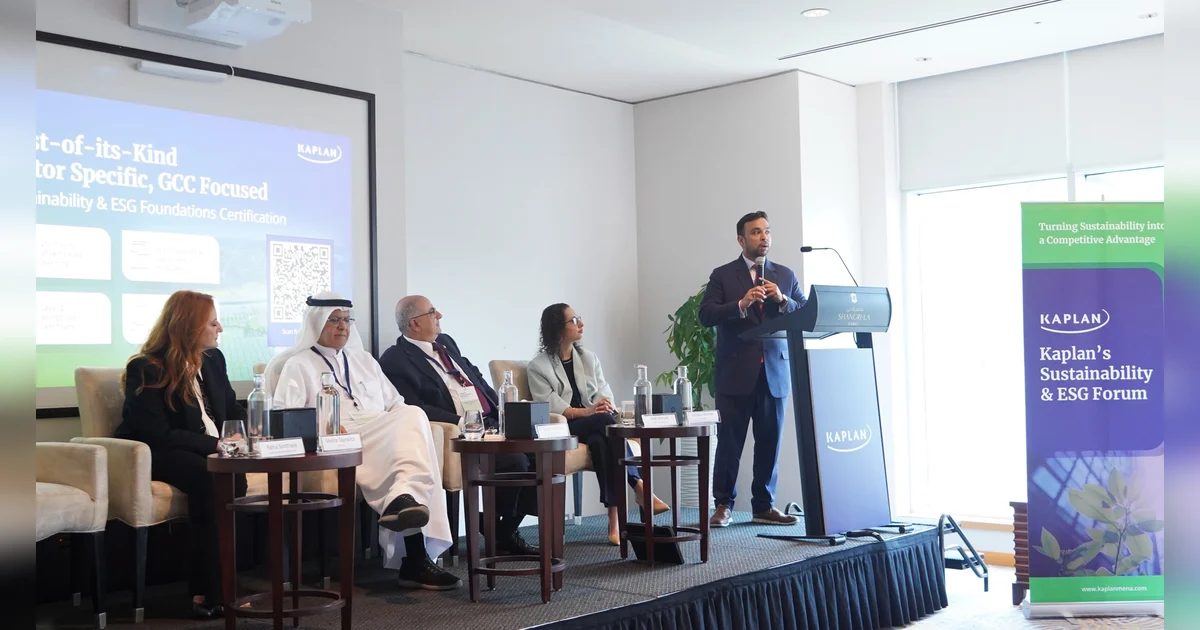
Kaplan Middle East & North Africa (MENA), a leading professional learning provider, recently hosted two pivotal Sustainability & ESG Forums in Riyadh and Dubai on October 28 and 29, 2025. These events brought together prominent leaders in environmental, social, and governance (ESG) from across the globe to address the critical need for integrating ESG principles into core business strategies. The Riyadh forum was co-hosted with the Financial Academy, while the Dubai event was organized solely by Kaplan MENA. Both gatherings featured senior decision-makers from government, industry, and finance sectors, focusing on transforming ESG from a compliance requirement to a driver of competitive advantage. Under the theme ‘Turning Sustainability into a Competitive Advantage: From Cost Center to Value Driver,’ the forums included panel discussions and keynote speeches from renowned sustainability experts, including representatives from ACWA Power, Emirates Global Aluminium, Al Safi Danone, VFS Global, and a UN-awarded ESG specialist. The discussions emphasized operationalizing ESG strategies, future-proofing businesses, and aligning with national visions like ‘Saudi Vision 2030’ and ‘UAE Net Zero 2050.’ Stuart Whent, COO of Kaplan MENA, highlighted the forums as catalysts for meaningful change, stating, ‘We are convening the people who have the influence and vision to reshape how sustainability is embedded in our region’s economic future.’ A key outcome of the forums was the launch of Kaplan’s Sustainability and ESG Foundations Certificate, a first-of-its-kind accredited learning program tailored for GCC professionals. Developed in collaboration with Melina Taprantzi, founder of Earth & Co. and a UN-awarded ESG expert, the program integrates regional context, sector-specific pathways, and global academic rigor. Taprantzi noted, ‘We designed this program to close the gap between ESG intent and credible implementation.’ The initiative aims to support Middle Eastern organizations by enhancing ESG reporting, facilitating access to green capital, building a sustainable talent pipeline, and fostering cross-sector collaboration. With over 1.2 million learners annually in 27 countries, Kaplan is leveraging its global expertise to address the region’s pressing ESG challenges.
标签: Asia
亚洲
-

Dubai: Parkin introduces new paid parking zones at Academic City, Sports City
Dubai continues to enhance its public parking infrastructure with the introduction of new paid parking zones in Dubai International Academic City and Dubai Sports City. This move follows the recent launch of similar zones in Dubai Studio City and Outsource City, signaling the city’s commitment to addressing parking challenges in high-traffic areas. The new zones, managed by Parkin, Dubai’s leading provider of paid public parking facilities, will operate under distinct tariff codes: Code F for Academic City and Code S for Sports City. Clear signage has been installed in both locations to guide motorists. Tariffs vary by zone, with Academic City offering rates starting at Dh2 for half an hour, while Sports City begins at Dh2 for one hour. Parkin has also introduced subscription packages for both zones, providing long-term parking solutions for residents and visitors. In addition to these developments, Parkin has announced plans to construct five multi-story car parking buildings over the next two years to alleviate congestion in Dubai’s busiest commercial districts. Currently, Parkin operates 3,651 parking spaces across seven multi-storey car parks in key areas such as Oud Metha, Al Jaffiliya, and Al Satwa. These initiatives underscore Dubai’s proactive approach to urban planning and infrastructure development.
-

Arshad Warsi on his new crime thriller ‘Bhagwat’, life in Dubai, and why he chooses real stories
Arshad Warsi, the beloved actor known for his iconic role as Circuit in ‘Munna Bhai M.B.B.S.’, is now exploring darker territories with his latest crime thriller, ‘Bhagwat Chapter One: Raakshas’. At 57, Warsi plays an intense cop tasked with solving a disappearance case in a notorious small town. This role marks a significant shift from his comedic repertoire, which includes hits like ‘Golmaal’, ‘Dhamaal’, and ‘Jolly LLB’. Despite the darker tone, Warsi’s signature humor and instinct remain intact, both on and off the screen.
-

Afghanistan: At least 7 killed, 150 injured as powerful 6.3 quake hits northern area
A devastating 6.3-magnitude earthquake rocked the northern Afghan city of Mazar-e Sharif early on Monday, resulting in at least seven fatalities and approximately 150 injuries, according to provincial authorities. The quake, which occurred at a depth of 28 kilometers (17.4 miles), struck near Mazar-e Sharif, a city with a population of around 523,000. The US Geological Survey (USGS) issued an orange alert through its PAGER system, warning of significant casualties and widespread disaster potential. Past events with similar alerts have necessitated regional or national-level responses. The earthquake caused extensive damage, including the partial destruction of the revered Blue Mosque, a holy shrine in Mazar-i-Sharif, as confirmed by Balkh province spokesperson Haji Zaid. Rescue operations are underway, with videos circulating on social media platform X showing efforts to extract victims from the rubble. Afghanistan, situated on two major active fault lines, remains highly susceptible to seismic activity. This latest disaster follows a series of deadly earthquakes in recent years, including a 2023 quake that claimed over 1,000 lives. The national disaster management agency is expected to release further details on casualties and damage.
-
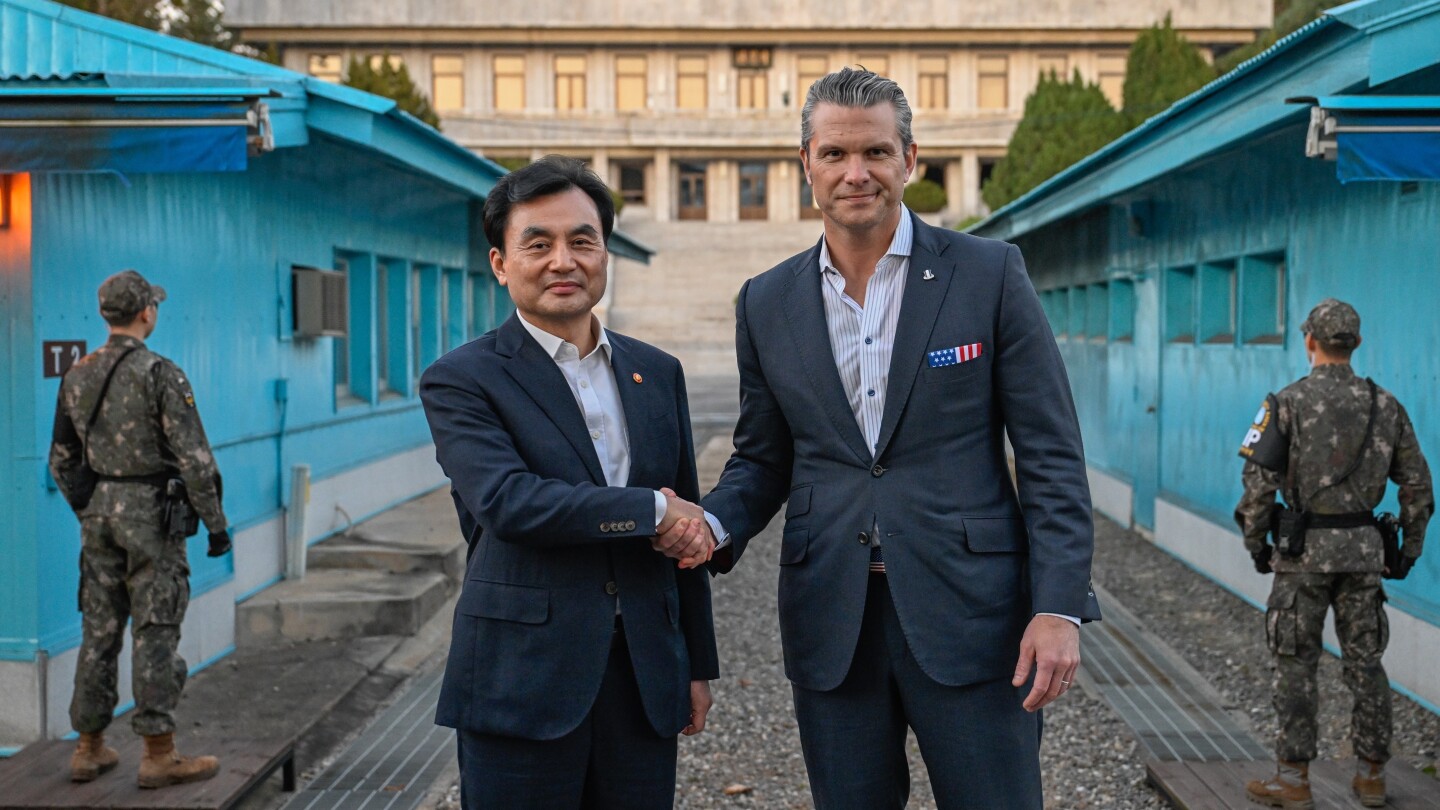
Hegseth visits inter-Korean border ahead of security talks with South Korean officials
SEOUL, South Korea — U.S. Defense Secretary Pete Hegseth embarked on a two-day visit to South Korea, focusing on strengthening bilateral security ties and reaffirming the alliance between the two nations. His itinerary included a visit to the Demilitarized Zone (DMZ), a symbolic and strategic area separating the two Koreas, where he received a detailed briefing from military officials at Observation Post Ouellette. This site has previously hosted notable figures, including former U.S. President Donald Trump in 2019, who used the vantage point to observe North Korea and engage with American troops stationed there. Hegseth, accompanied by South Korean Defense Minister Ahn Gyu-back, also toured the historic Panmunjom border village, where the 1953 armistice agreement was signed, effectively halting the Korean War. The visit underscored the robust defense collaboration and seamless coordination between the two allies, as highlighted by Ahn’s ministry. Notably, Hegseth refrained from addressing North Korea’s ongoing nuclear and missile advancements, despite the regime’s persistent refusal to engage in dialogue with Washington and Seoul. In a display of military solidarity, South Korea’s Joint Chiefs of Staff Chairman Gen. Jin Yong-sung and U.S. Gen. Dan Caine jointly supervised a combined formation flight of South Korean and U.S. F-16 fighter jets above Pyeongtaek, a major U.S. military base. This inaugural exercise aimed to showcase the unwavering strength and ironclad defense posture of the alliance. Hegseth and Ahn, who had previously convened at a defense ministers’ meeting in Malaysia, are set to participate in the annual U.S.-South Korea defense talks in Seoul. Key agenda items include South Korea’s pledge to bolster defense spending and the implementation of a prior agreement to transition wartime operational control to a binational command led by a South Korean general with a U.S. deputy. However, concerns linger in Seoul regarding potential demands from the Trump administration for increased financial contributions to support the U.S. military presence or a possible reduction of American forces to prioritize strategic focus on China. Hegseth’s visit follows closely on the heels of Trump’s recent trip to South Korea, where he engaged in discussions with South Korean President Lee Jae Myung and Chinese President Xi Jinping during the Asia-Pacific Economic Cooperation summit in Gyeongju. During their meeting, Lee reiterated South Korea’s commitment to enhancing defense expenditures and sought U.S. assistance in acquiring nuclear-powered submarines. Trump subsequently announced on social media that the U.S. would share advanced technology to facilitate South Korea’s construction of a nuclear-powered submarine at the Philly Shipyard, recently acquired by South Korea’s Hanwha Group. Additionally, the leaders made progress in trade negotiations, addressing specifics of South Korea’s $350 billion investment pledge to mitigate the impact of U.S. tariffs.
-
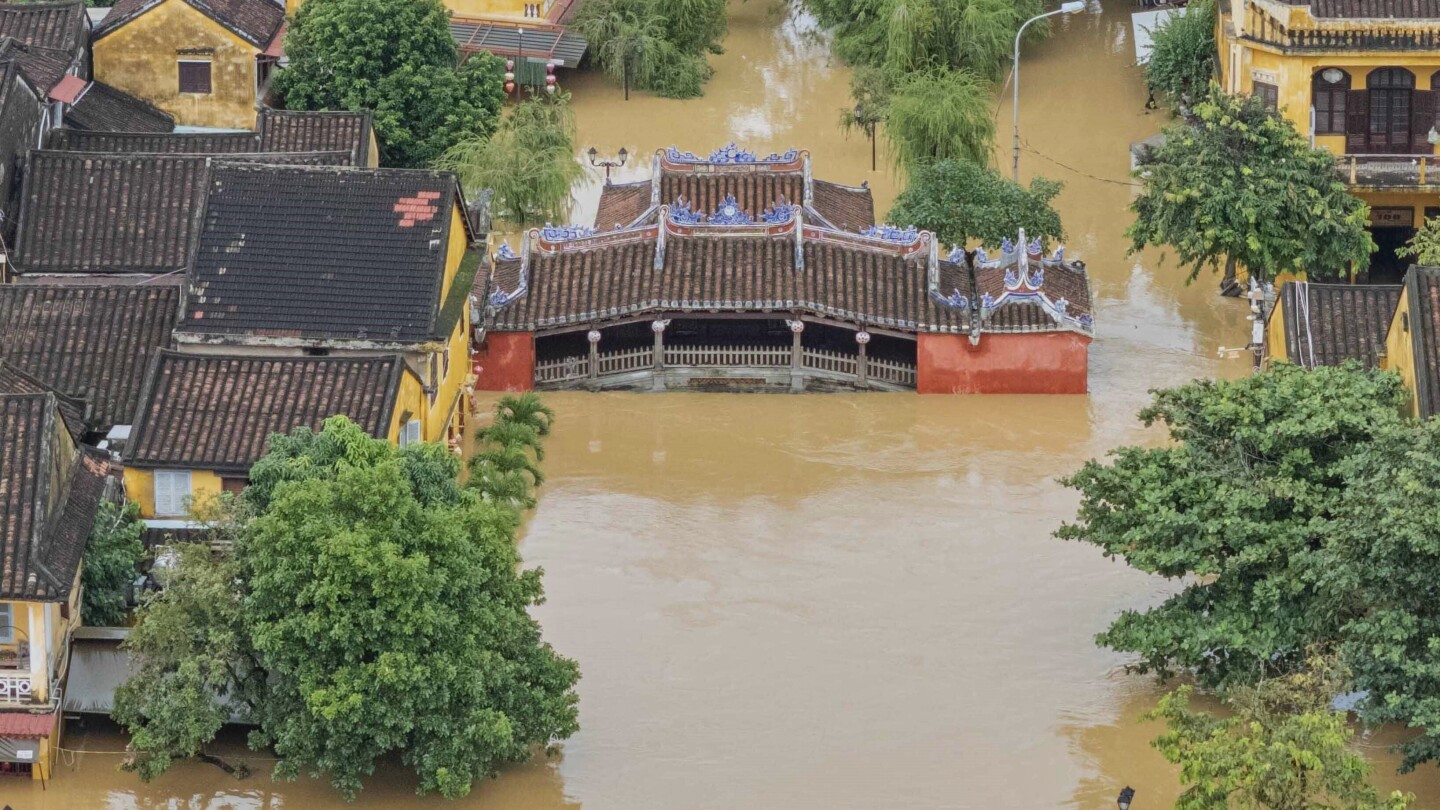
Vietnam flood death toll rises to 37 as a new typhoon threatens to worsen devastation
Central Vietnam is grappling with the aftermath of severe floods and landslides that have claimed at least 37 lives, displaced tens of thousands, and left many areas isolated and without power. The disaster, triggered by record-breaking rainfall since late October, has caused widespread destruction, including the erosion of canals, riverbanks, and coastlines, as well as the blockage of several national highways. Rescue teams and aid workers are racing to reach affected communities, particularly in Danang and Hue City, where rivers have reached dangerous levels. Meanwhile, Typhoon Kalmaegi is expected to intensify as it approaches Vietnam’s central coast, with winds potentially reaching 166 kph (103 mph) by Wednesday. The storm, which recently crossed the Philippines, poses an additional threat to the already battered region. Authorities have been distributing food, clean water, medicine, and shelter while assisting families in rebuilding damaged homes. Efforts are also underway to restore power, water, and transport links, clean debris, and prevent disease outbreaks. The government is focusing on repairing irrigation systems and supporting farmers to restart agricultural activities as floodwaters recede. Vietnam has faced a relentless series of storms this year, including Typhoon Ragasa, Typhoon Bualoi, and Typhoon Matmo, which collectively caused over 85 deaths or disappearances and an estimated $1.36 billion in damage. As one of the world’s most flood-prone countries, Vietnam’s vulnerability is exacerbated by climate change, which scientists warn is intensifying storms and rainfall across Southeast Asia.
-

Fujian swings into action to host South Korean golfers
Fujian Province in China has become a hotspot for South Korean golfers, thanks to a combination of favorable policies, improved infrastructure, and strategic marketing efforts. The introduction of a visa-free policy for South Korean citizens in November 2024, coupled with the resumption of direct flights between the two countries, has significantly boosted inbound tourism, particularly to Fujian’s golf courses. The Trans Strait Golf Club in Fuzhou, for instance, welcomed approximately 6,000 South Korean golfers from December to April, capitalizing on the region’s milder winter climate compared to South Korea. This influx has not only offset the traditional winter lull but also bolstered the club’s income. The surge in visitors is further supported by China’s expanded transit policy, allowing foreigners to stay for up to 240 hours in key Fujian cities. Travel agencies have reported a 125% year-on-year increase in South Korean tourism bookings to China in the first half of 2025, with Fujian’s diverse attractions—ranging from its scenic coastline to historical landmarks—proving particularly appealing. The provincial government has also incentivized travel agencies to attract international visitors and invested in infrastructure upgrades. To cater to the growing number of South Korean golfers, local clubs have adapted their services, offering Korean cuisine, signage, and language support. The Wuyi Mountain scenic area, known for its unique golfing experience amidst stunning landscapes, is also preparing to attract more visitors following the introduction of a direct flight route to Seoul. As the winter season approaches, Fujian is poised to surpass last year’s record in hosting South Korean golfers, further cementing its status as a premier golfing destination.
-
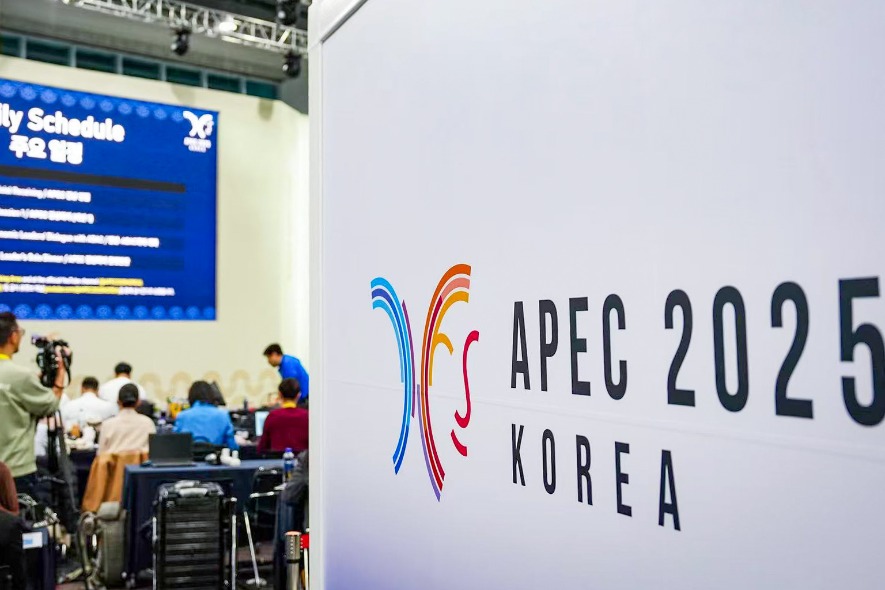
APEC expected to lead global green transition
The recently concluded APEC Economic Leaders’ Meeting in Gyeongju, South Korea, has underscored the Asia-Pacific region’s pivotal role in steering the world toward a sustainable, low-carbon future. Amid ongoing global resistance to climate action, experts emphasize that the region must spearhead efforts to combat environmental challenges. APEC’s ambitious goal, set in 2014, to double renewable energy usage by 2030 from 2010 levels, is already ahead of schedule. Between 2010 and 2022, renewable energy’s share in power generation surged by 63.4%, from 15.58% to 25.46%. Kazutomo Irie, president of the Asia Pacific Energy Research Centre, expressed confidence that APEC will achieve its target in the power sector by 2030. The Gyeongju Declaration, adopted at the meeting, urged member economies to address shared challenges such as energy security, food security, and extreme weather events. Shakeel Ahmad Ramay, CEO of the Asian Institute of Eco-civilization Research and Development, highlighted the region’s growing recognition of green development’s importance amid global climate pressures. This year’s meeting, themed ‘Building a Sustainable Tomorrow: Connect, Innovate, Prosper,’ emphasized collaboration to tackle climate change and promote green growth. Lin Boqiang, head of the China Institute for Studies in Energy Policy, noted that APEC provides a crucial platform for addressing common challenges, especially after the U.S. withdrawal from the Paris Agreement. Despite progress, the region faces hurdles such as insufficient momentum and investment in the green transition. Experts called for deeper international cooperation to enhance investment, facilitate technological exchange, and promote policy coordination. Ramay suggested establishing an apolitical green transition fund to support developing economies. Lin also advocated for reducing trade barriers to enable the entry of affordable clean energy equipment into the Asia-Pacific market, fostering both energy security and clean energy goals.
-

APEC leaders jointly agree on AI vision
The Asia-Pacific region is emerging as a global leader in artificial intelligence (AI), with experts emphasizing the need for enhanced regional collaboration and smart governance to ensure the technology benefits all. At the recently concluded Asia-Pacific Economic Cooperation (APEC) CEO Summit in Gyeongju, South Korea, leaders and experts highlighted the region’s potential to drive AI innovation and its transformative impact on economies. Nitin Mittal, Deloitte’s global AI leader, underscored the region’s advantages, including its vast talent pool, rapid innovation pace, and substantial infrastructure investments. The summit, held alongside the APEC Economic Leaders’ Meeting, marked a historic moment as member economies adopted a joint AI initiative. This initiative aims to spur economic growth through innovation, enhance AI capabilities, and expand private investment in resilient AI infrastructure. Kim Wan-joong, a special adviser to the 2025 APEC CEO Summit Secretariat, stressed the importance of collective efforts, stating that no single company or country can achieve AI-driven growth alone. He emphasized the need for governments to take a proactive role in fostering collaboration. The potential for deepened AI cooperation between South Korea and China was also highlighted, given their strong trade ties and shared technological ambitions. Lee Young-chan, a professor at Dongguk University, pointed to opportunities for startups in both countries to collaborate on AI research and development, particularly in areas like smart manufacturing and the internet of things. However, Choi Pil-soo, a professor at Sejong University, cautioned against the unchecked substitution of human labor and judgment with AI, urging countries to establish robust AI norms. He called for governments to create mechanisms to manage excessive competition and ensure sustainable AI governance. Mittal echoed this sentiment, emphasizing that AI should not be viewed as a race among nations but as a tool to improve quality of life and drive societal advancement. He lauded China’s AI advancements, noting its potential to benefit the Asia-Pacific region and beyond. The recently unveiled recommendations for China’s 15th Five-Year Plan (2026-30) further underscore the country’s commitment to AI innovation and its role in shaping the global AI landscape.
-

Serious business of jokes
Hong Kong’s stand-up comedy scene has experienced a remarkable resurgence since the pandemic, with more frequent gigs, refined humor, and comedians gaining international recognition. The city’s audience, known for its discerning taste, has embraced both local and international talent, creating a vibrant and inclusive comedy culture.