In a significant diplomatic push, China has expressed its commitment to enhancing collaboration with Pacific Island countries and deepening its strategic partnership with Qatar. Zhao Leji, Chairman of the Standing Committee of the National People’s Congress, emphasized China’s readiness to expand mutually beneficial cooperation with Pacific Island nations during a collective meeting with their legislative representatives in Beijing. Zhao highlighted the alignment between China’s Belt and Road Initiative and the 2050 Strategy for the Blue Pacific Continent, underscoring the importance of multi-level exchanges and legal frameworks to bolster bilateral ties. The visiting representatives reaffirmed their adherence to the one-China principle and their eagerness to strengthen cooperation with China. Meanwhile, Vice-President Han Zheng, during his visit to Doha for the Second World Summit for Social Development, pledged to elevate China-Qatar relations by deepening collaboration across various sectors. These developments reflect China’s proactive approach to fostering international partnerships and advancing its global influence.
标签: Asia
亚洲
-

Malaysian rapper Namewee detained in murder investigation of Taiwanese influencer
KUALA LUMPUR, Malaysia — Prominent Malaysian rapper and filmmaker Wee Meng Chee, known professionally as Namewee, was taken into custody on Wednesday to aid police in their investigation into the murder of Taiwanese social media influencer Hsieh Yu-hsin. According to his lawyer, Joshua Tay, Namewee voluntarily surrendered to authorities and will be held under a six-day remand. The case, initially treated as a suspicious death, was reclassified as a murder following the discovery of new evidence. Hsieh, a 31-year-old former nurse with over half a million Instagram followers and an OnlyFans account, was found dead in a Kuala Lumpur hotel bathtub on October 22. Local media reported that Namewee was the last person seen with her before her death. He was briefly detained at the time and separately charged with drug possession, which he denies. Hsieh, affectionately dubbed ‘Nurse Goddess’ by her fans, had arrived in Malaysia on October 20 for a four-day stay. Authorities are awaiting full post-mortem and toxicology reports to determine the official cause of death. Namewee expressed deep sorrow over Hsieh’s passing and pledged full cooperation with the investigation. His lawyer emphasized the need for a thorough and impartial inquiry. Namewee, a controversial figure known for his satirical takes on Malaysian politics, race, and religion, has faced multiple arrests in the past. His provocative works, including a 2007 video mocking Malaysia’s national anthem and a 2014 film banned for allegedly disparaging national agencies, have often sparked controversy. In 2016, he was detained over a music video deemed disrespectful to Islam, though he was not charged. Similarly, in 2018, he faced backlash for a video featuring dancers in dog masks, which authorities claimed insulted Islam. Namewee maintains that his critiques target hypocrisy and abuse of power, not religion or race. His contentious reputation extends beyond Malaysia; in 2021, a song he released with Australian singer Kimberley Chen mocking Chinese nationalists led to both artists being banned from China and their work removed from Chinese platforms.
-
Prosecutors in Asia seize yachts, luxury cars and cash from man accused of running cyberscams
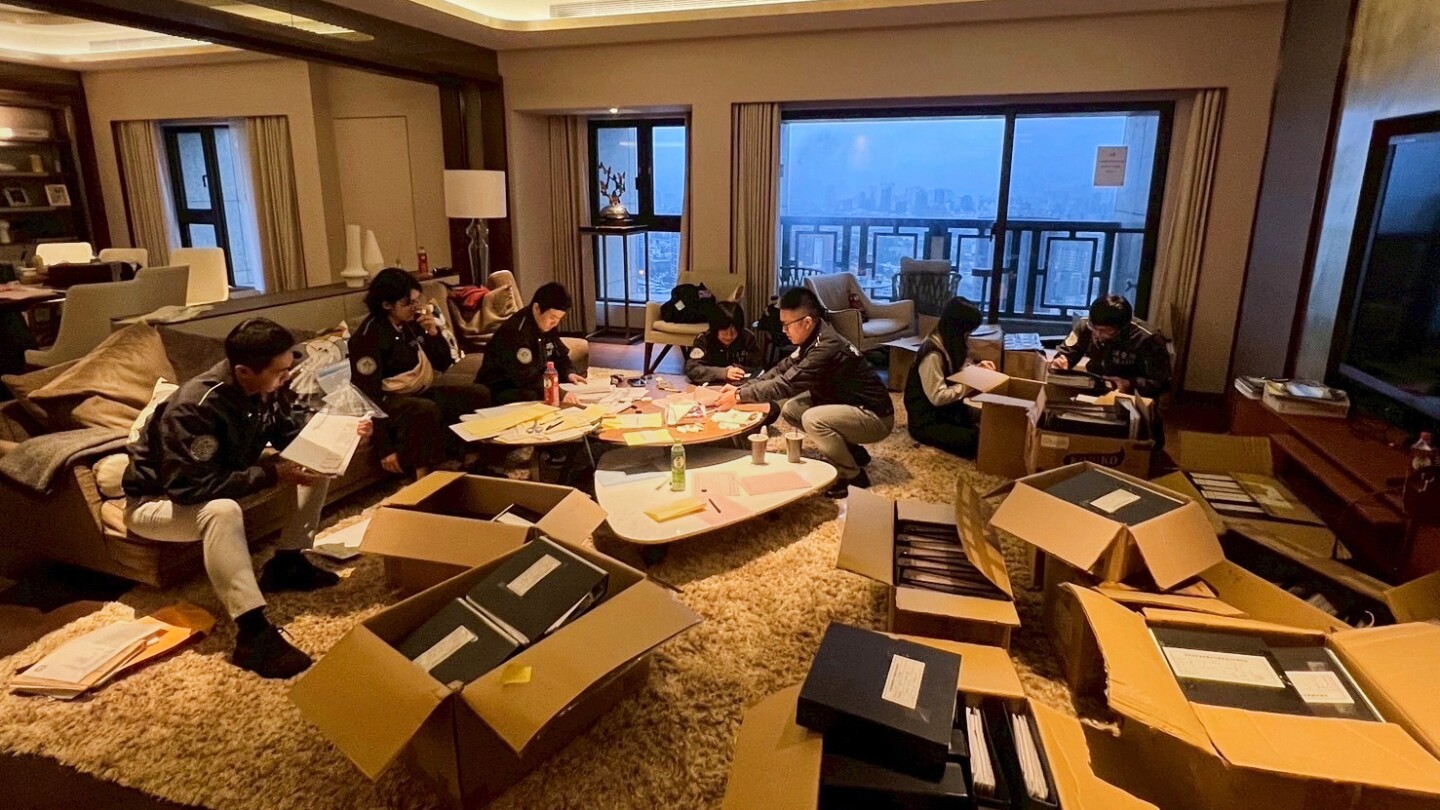
In a coordinated international effort, prosecutors in Taiwan, Hong Kong, and Singapore have seized hundreds of millions of dollars in assets linked to Chen Zhi, a Cambodian businessman accused by the U.S. of leading a global cyber-scam syndicate. The crackdown follows an October 14 indictment by U.S. authorities, which charged Chen with wire fraud conspiracy and money laundering conspiracy, alongside the seizure of $14 billion in cryptocurrency. Chen, founder of Cambodia’s Prince Holding Group, allegedly orchestrated a vast network of scams spanning multiple countries, including the U.S., the U.K., and Palau. The U.S. and U.K. governments have jointly sanctioned Chen and his collaborators, while investigations into his operations continue to expand. Singaporean authorities seized over $114 million in financial assets, a yacht, and luxury liquor on October 30. Taiwanese prosecutors confiscated $150 million in assets, including 26 luxury cars and 11 upscale apartments in Taipei, while Hong Kong police announced the seizure of $353 million in cash, stocks, and other funds. U.K. authorities also targeted Chen’s assets, seizing a $15.6 million mansion and a $130 million office building. Chen, a Chinese national with Cambodian citizenship, has close ties to Cambodia’s political elite, having served as an adviser to Prime Minister Hun Manet and former Prime Minister Hun Sen. Despite his prominent status, prosecutors allege that the bulk of his wealth stems from fraudulent activities, including the notorious ‘pig butchering’ scam, which reportedly generated $30 million daily. The Prince Holding Group has yet to respond to requests for comment.
-

Japan’s Toyota, hurt by President Trump’s tariffs, reports a drop in profit
Toyota Motor Corporation reported a 7% year-on-year decline in net profit for the April-September period, attributing the downturn to the impact of U.S. tariffs on Japanese automakers. The company’s net profit for the six-month period stood at 1.77 trillion yen ($11.5 billion), down from 1.9 trillion yen in the same period last year. Despite these challenges, Toyota has revised its full-year profit forecast upward to 2.93 trillion yen ($19 billion) for the fiscal year ending March 2026, citing improved vehicle sales and cost-cutting measures. This revised forecast, however, still represents a 38.5% drop from the previous fiscal year’s profit of 4.77 trillion yen. Earlier, Toyota had projected a profit of 2.66 trillion yen ($17 billion) for the current fiscal year. The U.S. tariffs on Japanese automobiles and auto parts, which were reduced to 15% in September from an initial 27.5%, continue to weigh heavily on the company’s performance. Nevertheless, Toyota reported growth in vehicle sales in both the U.S. and Japan, with North American sales exceeding 1.5 million units and Japanese sales reaching 970,000 units during the six-month period. The company’s first-half sales increased by 5.8% to 24.6 trillion yen ($160 billion), while quarterly profit for the period through September surged 62% to 932 billion yen ($6 billion) on sales of 12.38 trillion yen ($80 billion), an 8% year-on-year increase. Toyota remains optimistic, stating that its strategic initiatives, including enhanced sales, cost efficiencies, and value chain improvements, are expected to contribute over 900 billion yen ($5.8 billion) to its bottom line this fiscal year.
-
China launches new giant panda base, expanding conservation network
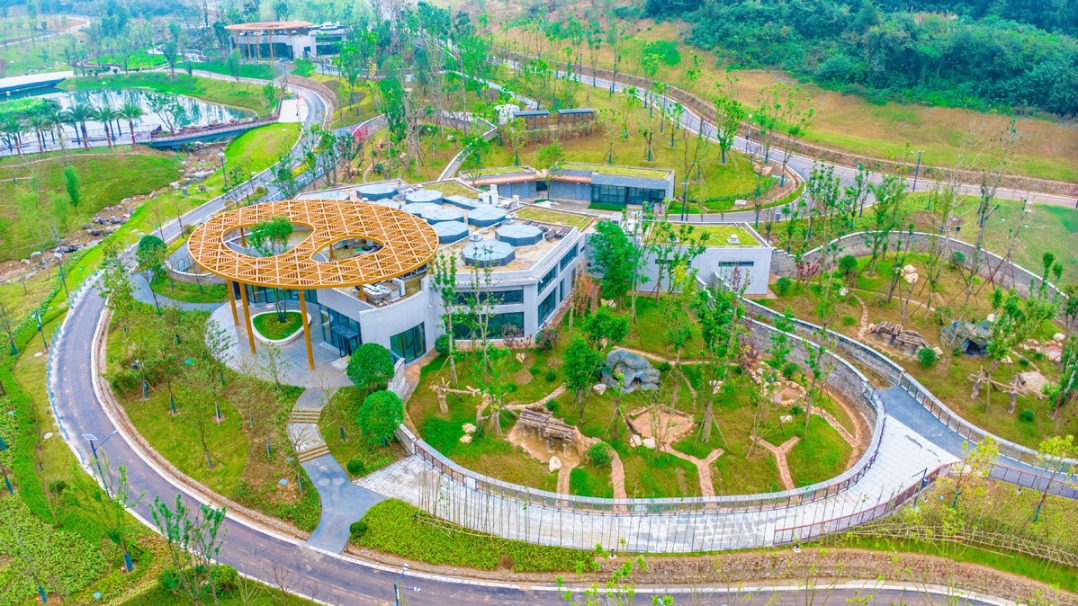
China has inaugurated a new giant panda base in Mianyang, Sichuan province, marking a significant expansion of its conservation network. The facility, part of the China Conservation and Research Center for the Giant Panda (CCRCGP), is the fifth such site nationwide and aims to enhance panda breeding, research, and international collaboration. Spanning 120 hectares, the base began trial operations after relocating 13 pandas on November 4, 2025. It is slated to open to the public in 2026, once the pandas have acclimated to their new environment. Huang Zhi, head of the Mianyang base’s preparatory team, noted that while the pandas are adjusting to their surroundings, they are in good health, with a dedicated team monitoring their transition. Mianyang is home to 418 wild giant pandas, representing 22.4% of China’s total population, the highest among prefecture-level cities. Since the 1980s, the CCRCGP has made remarkable strides in captive breeding, increasing the panda population from just six in 1983 to over 380 today. This initiative underscores China’s commitment to biodiversity conservation and ecosystem protection.
-
HK and mainland financial market to forge proactive and deep alignment
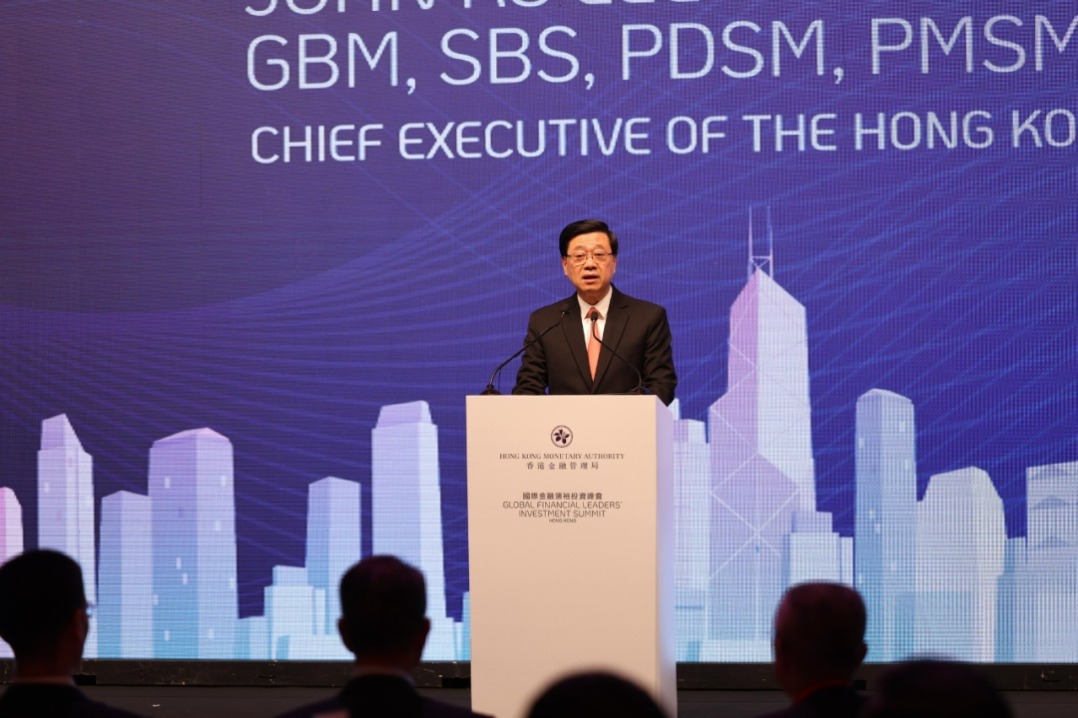
Hong Kong is poised to deepen its financial and economic collaboration with mainland China, aligning with the country’s 15th Five-Year Plan (2026-30) to enhance global financial governance reform. Vice-Premier He Lifeng emphasized this strategic alignment during his address at the fourth Global Financial Leaders’ Investment Summit, hosted by the Hong Kong Monetary Authority. The summit, themed ‘Trekking through Shifting Terrain,’ gathered over 300 global financial leaders to discuss emerging trends, opportunities, and risks in a rapidly evolving geopolitical and technological landscape. He highlighted Hong Kong’s pivotal role in fostering a fair, just, and inclusive international economic order, as envisioned by President Xi Jinping’s Global Governance Initiative. Hong Kong Chief Executive John Lee Ka-chiu underscored the city’s financial market growth and fintech advancements, noting a 30% year-to-date surge in the stock market and record-breaking IPO activity. Regulatory efforts are also underway to support digital asset development, including asset tokenization and cross-border payment innovations. Mainland financial regulators, including representatives from the People’s Bank of China and the National Financial Regulatory Administration, reiterated the importance of financial market integration, particularly in the Guangdong-Hong Kong-Macao Greater Bay Area. The China Securities Regulatory Commission further pledged to deepen cooperation between mainland and Hong Kong capital markets, fostering a virtuous interaction between onshore and offshore development. Amid macroeconomic uncertainties, Hong Kong Monetary Authority Chief Executive Eddie Yue Waiman urged financial leaders to remain vigilant and proactive in navigating market dynamics.
-

US courts stay deportation of Indian-origin man wrongly jailed for 43 years
Subramanyam ‘Subu’ Vedam, a 64-year-old Indian-origin man who spent over four decades in prison for a murder he did not commit, now faces deportation to India by U.S. Immigration and Customs Enforcement (ICE). Vedam was exonerated in October 2025 after new evidence emerged in his case, but he was immediately detained by ICE upon his release from prison. Born in India, Vedam moved to the U.S. at just nine months old and is a legal permanent resident. His citizenship application was accepted before his arrest in 1983. Currently held at a short-term detention center in Alexandria, Louisiana, Vedam’s deportation has been temporarily halted by two U.S. courts. An immigration judge and a U.S. District Court in Pennsylvania both issued stays pending further review of his case. ICE cited a 1988 deportation order and a separate drug conviction as grounds for his detention. Vedam’s lawyers argue that his wrongful imprisonment for 43 years should outweigh his past drug charges. His family emphasizes his minimal ties to India and his decades of good behavior, academic achievements, and community service while incarcerated. Immigration lawyer Ava Benach described the case as ‘truly extraordinary,’ stating that deportation would compound the injustice Vedam has already endured. The Board of Immigration Appeals is expected to take several months to decide whether to review his case.
-
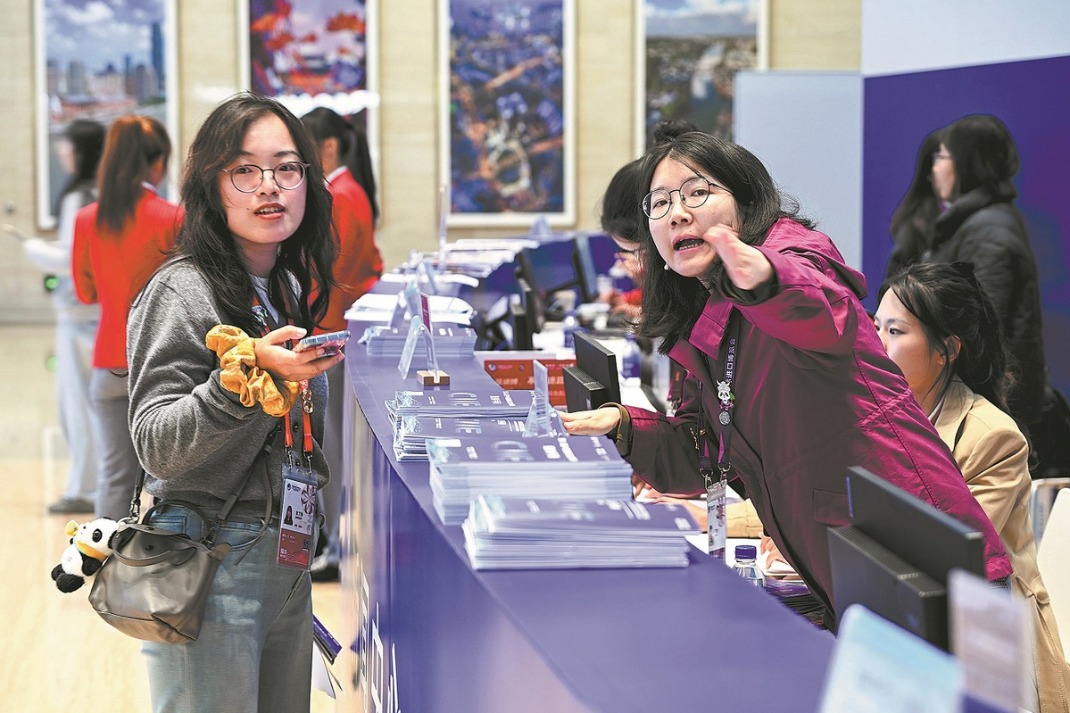
Li meets with foreign leaders attending CIIE
Premier Li Qiang engaged in a series of high-level discussions with foreign leaders on Tuesday, as they gathered in Shanghai for the eighth China International Import Expo (CIIE), set to commence on Wednesday. The meetings underscored China’s commitment to fostering closer international relations and mutual understanding. During his talks with Serbian Prime Minister Djuro Macut, Premier Li emphasized the importance of mutual respect and trust, particularly in supporting each other’s core interests. He highlighted key collaborative projects, such as the Hungary-Serbia railway, and called for enhanced economic, trade, and cultural cooperation to benefit both nations. Li also stressed the need for strengthened multilateral coordination to improve global governance. Macut expressed optimism about the opportunities presented by China’s 15th Five-Year Plan (2026-30) and reiterated Serbia’s eagerness to deepen cooperation with China. In his meeting with Georgian Prime Minister Irakli Kobakhidze, Premier Li reflected on the 33-year diplomatic relationship between China and Georgia, marked by mutual respect and support. He advocated for strategic communication and enhanced cooperation under the Belt and Road Initiative, aiming to benefit both peoples. Kobakhidze reaffirmed Georgia’s adherence to the one-China principle and expressed readiness to expand collaboration in various fields. The discussions concluded with the signing of multiple bilateral cooperation documents. Premier Li also met with Abbas Tajudeen, Speaker of Nigeria’s House of Representatives, to discuss aligning development strategies and advancing modernization through high-quality Belt and Road cooperation. Tajudeen reiterated Nigeria’s commitment to the one-China principle and expressed a desire to strengthen the comprehensive strategic partnership between the two countries.
-
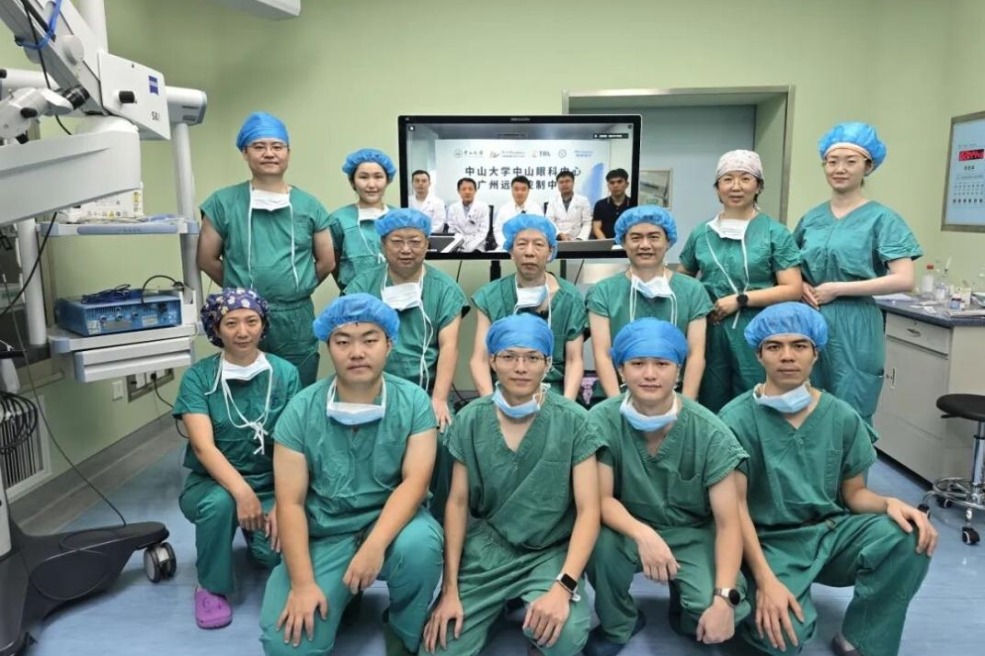
Remote robotic eye surgery achieves breakthrough
In a groundbreaking achievement, ophthalmologists from the Zhongshan Ophthalmic Center at Sun Yat-sen University have successfully conducted the world’s first remote robotic subretinal injection surgery. This historic procedure, performed on Sunday, utilized a domestically developed 5G ophthalmic surgical robot, marking a significant leap in remote high-precision medical care. The surgery was executed seamlessly over a distance of 4,200 kilometers, with the main control terminal in Guangzhou, Guangdong province, guiding the surgical terminal in Urumqi, Xinjiang Uygur autonomous region. The operation, led by Professor Lin Haotian and Professor Yang Bo, involved precise micron-level fundus procedures, completed in less than seven minutes. The success of this surgery underscores China’s capability to deliver advanced medical resources to remote regions and safely apply high-precision robotic technologies in ophthalmic treatments. This achievement not only advances the field of remote intelligent medical care but also highlights the potential of 5G technology in revolutionizing healthcare. Moving forward, the team aims to expand this ‘remote plus intelligent’ model, making high-level ophthalmic medical resources more accessible to grassroots patients.
-

Higher-level opening-up to offer new possibilities
China’s commitment to advancing reform and development through higher-level opening-up is set to unlock new opportunities for multinational corporations and trading partners, according to business leaders and market analysts. This strategic focus, outlined in the Recommendations of the Central Committee of the Communist Party of China for the 15th Five-Year Plan (2026-30), emphasizes institutional opening-up, safeguarding the multilateral trading system, and promoting international economic flows. These measures aim to spur new growth drivers and enhance resilience against global risks such as protectionism and geopolitical uncertainties. A communique issued after the fourth plenary session of the 20th CPC Central Committee highlighted China’s intention to open wider to the world, innovate trade practices, expand two-way investment cooperation, and pursue high-quality Belt and Road initiatives. Mei Xinyu, a researcher at the Chinese Academy of International Trade and Economic Cooperation, noted that these efforts will attract quality foreign investment and strengthen global confidence in China’s development. Foreign business leaders, including Poh-Yian Koh of FedEx and Jens Eskelund of the European Union Chamber of Commerce in China, expressed optimism about the policy directions, citing potential for expanded market access and a more enabling business environment. Companies like Kone Corp and ABB Group are also leveraging China’s urbanization and energy transition strategies to deepen their investments and innovation capabilities. China’s foreign direct investment (FDI) in the first three quarters of 2025 reached 573.75 billion yuan ($80.68 billion), with significant increases from key trading partners. Despite global economic challenges, China remains a stabilizing force and a key growth engine for the global economy.