标签: Asia

亚洲

  • Xi’an City Wall gets health checkup after heavy rains

    Xi’an City Wall gets health checkup after heavy rains

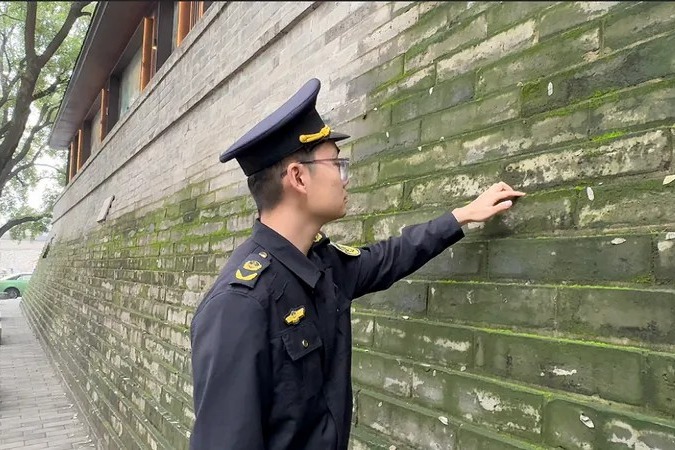
    The historic Xi’an City Wall, a UNESCO World Heritage Site, is undergoing a thorough health assessment following months of heavy rainfall linked to climate change. Since September, Shaanxi province has experienced three prolonged rainy periods, with 87 monitoring stations recording over 20 days of rainfall. The average precipitation reached 314 millimeters, 1.6 times higher than the normal level, marking the second-highest rainfall since 1961. This has raised concerns about the structural integrity of the ancient wall, which dates back to the Ming Dynasty (1368-1644).

    Gao Heng, head of the cultural heritage protection department of the Xi’an City Wall Management Committee, highlighted the risks posed by water infiltration. Increased moisture has led to surface deterioration, such as moss and lichen growth, and structural issues, including water seeping into the wall’s rammed-earth core. This can reduce the soil’s bearing capacity, potentially causing localized settlement or collapse.

    To mitigate these risks, the committee has implemented a differentiated maintenance approach. Routine measures include sealing cracks and re-leveling surface bricks, while engineering solutions involve re-compacting loose soil and enhancing drainage systems. A key drainage project, approved by the National Cultural Heritage Administration, is underway to divert rainwater from the wall’s foundation.

    Technology plays a crucial role in preservation efforts. Since 2018, a ‘digital cabin’ system with over 3,000 sensors has monitored settlement and crack displacement. Drones conduct aerial inspections quarterly, and a four-color warning system assesses risks based on damage severity. In 2023, a comprehensive ‘CT health scan’ using ground-penetrating radar revealed over 1,300 historical cavities and 800 areas of less compact soil within the wall.

    Collaboration with local meteorological bureaus and academic institutions ensures specialized weather forecasts and technical support. The committee has also introduced a ‘wall chief’ system, assigning individuals to oversee specific sections for routine monitoring and early issue reporting.

    Despite these challenges, Gao emphasized that the wall’s original structure remains intact, with only restored outer layers affected by recent damage. The ongoing efforts aim to safeguard this cultural treasure for future generations.
  • Down to the bones of the matter

    Down to the bones of the matter

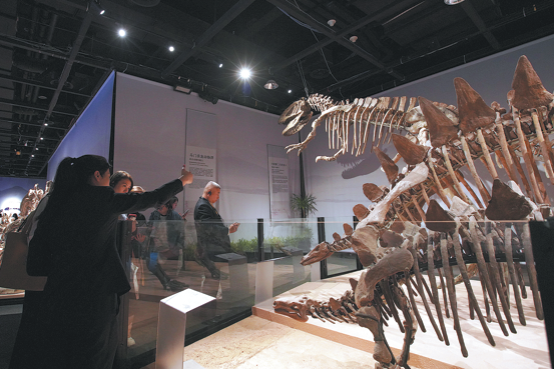
    The dream of resurrecting dinosaurs, once confined to the realms of science fiction, may become a reality within the next 100 to 200 years, thanks to advancements in artificial intelligence (AI) and genetic technologies. This groundbreaking perspective was shared by leading paleontologists at the international symposium ‘China’s Dinosaurs: From Research to Science Education,’ held in Shanghai from October 28 to 31. The event gathered over 20 top international experts to discuss the future of paleontology and China’s growing influence in the field. While the idea of dinosaur revival sparked lively debate, the symposium also highlighted China’s pivotal role in global dinosaur research, driven by its rich fossil discoveries and innovative public science initiatives. The ongoing ‘China Dinosaur World’ exhibition in Shanghai, featuring 118 representative dinosaur specimens from 12 national institutions, has drawn international acclaim. Experts like Xu Xing, a prominent Chinese paleontologist, emphasized that while current technology cannot resurrect dinosaurs using DNA, new methods involving bone proteins and AI offer promising avenues. British paleontologist Emily Rayfield highlighted AI’s transformative potential in understanding dinosaur biology. However, ethical considerations remain a significant hurdle. The symposium also underscored China’s contributions to paleontology, with nearly one-third of known dinosaur species discovered in the country. The event concluded with a focus on bridging scientific research with public education, as exemplified by the Shanghai exhibition, which has attracted nearly 400,000 visitors and garnered international interest for a global tour.

  • Experts urge disease prevention awareness to boost HPV vaccination

    Experts urge disease prevention awareness to boost HPV vaccination

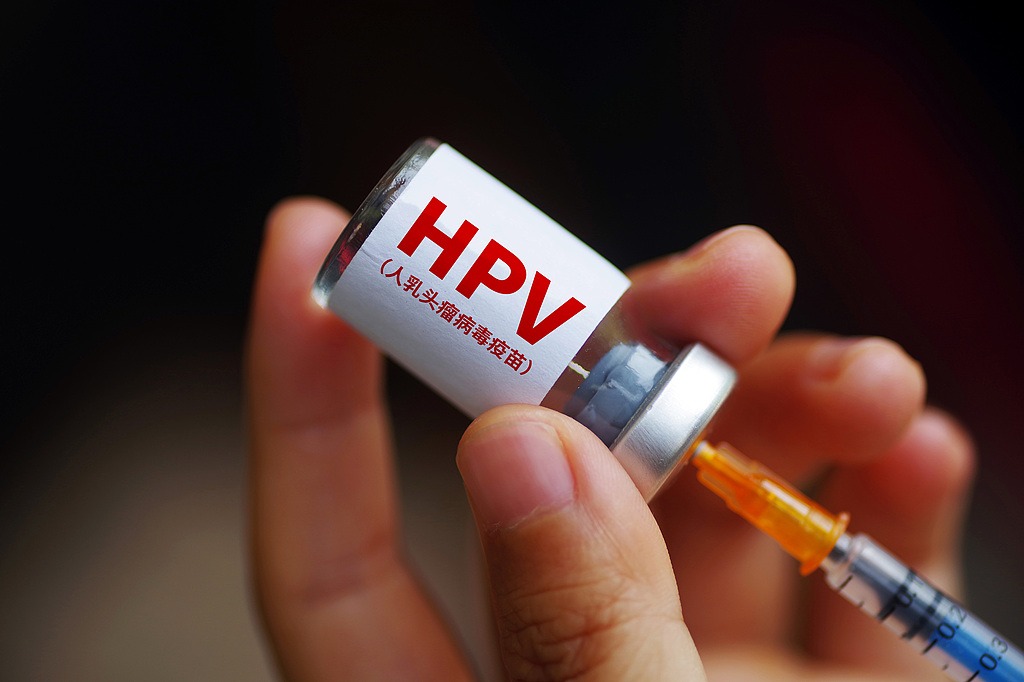
    In a concerted effort to combat cervical cancer, health experts are emphasizing the need to increase public awareness and dispel misconceptions surrounding the Human Papillomavirus (HPV) vaccine. HPV, the primary cause of cervical cancer, claimed nearly 350,000 lives globally in 2022, with China accounting for 16% of these fatalities. Starting Monday, China will integrate the HPV vaccine into its national immunization program, offering free bivalent vaccines to 13-year-old girls, administered in two doses six months apart. This initiative, announced by seven government agencies on October 30, aims to bolster public health and reduce cervical cancer rates. As of June, 18 provincial-level regions in China have already provided free HPV vaccinations to eligible girls, benefiting approximately 5 million annually, according to a State Council white paper released on September 19. In Beijing, for instance, seventh-grade girls are eligible for free domestically developed bivalent vaccines targeting HPV strains 16 and 18, which are responsible for 70-80% of cervical cancer cases. Despite these efforts, some parents remain hesitant. Li Yun, a Beijing mother, opted for an imported nine-valent vaccine for her daughter, citing reliability concerns. However, she noted that some parents declined the vaccine, citing fears of adverse effects or the belief that their children were too young to need it. Health experts like Tan Xianjie from Peking Union Medical College Hospital stress the importance of early vaccination, particularly before sexual activity begins, to maximize protection. The World Health Organization has set a global target to ensure 90% of girls receive full HPV vaccination by age 15 by 2030, as part of its strategy to eliminate cervical cancer. In China, the free vaccination policy has already made significant strides, covering many eligible girls and promoting health equity across the nation. Experts like Qiao Youlin from Peking Union Medical College and Zhao Fanghui from the National Cancer Center highlight the long-term benefits of vaccination and the need for continued public education to overcome hesitancy and ensure widespread uptake.

  • Scientists discover rare earth elements in ferns

    Scientists discover rare earth elements in ferns

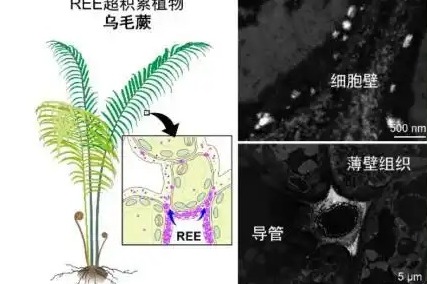
    In a groundbreaking scientific breakthrough, a team of Chinese researchers has uncovered the phenomenon of rare-earth mineralization in ferns, marking the first time such a discovery has been made in the plant kingdom. This finding, published in the prestigious international journal *Environmental Science & Technology*, could revolutionize the extraction of rare earth elements (REEs) by offering a cleaner and more sustainable alternative to traditional mining methods. The study, led by Zhu Jianxi of the Guangzhou Institute of Geochemistry under the Chinese Academy of Sciences, focused on *Blechnum orientale*, an evergreen fern known as a hyperaccumulator plant. The researchers discovered that this fern not only absorbs and concentrates REEs from the soil but also facilitates their self-assembly into a mineral called Monazite-(La) within its tissue cells. This biomineralization process, previously observed only in microorganisms and animals, represents a significant leap in understanding plant mechanisms. Unlike traditional rare-earth mining, which often causes severe environmental damage, this plant-based approach could enable the recovery of valuable REEs while simultaneously remediating contaminated soil and restoring ecosystems. The discovery also highlights the potential of nearly a thousand known hyperaccumulator plants for sustainable resource utilization. The ‘biomonazite’ formed by *Blechnum orientale* is pure and nonradioactive, making it a promising candidate for green extraction methods. This research not only advances scientific knowledge but also offers a practical solution to the global challenges of resource scarcity and environmental degradation.

  • China calls for improved international cooperation on disaster response

    China calls for improved international cooperation on disaster response

    In a significant move to bolster global disaster management, China has called for intensified international cooperation in disaster prevention and response. Vice-Premier Zhang Guoqing emphasized this during his address at the Belt and Road ministerial meeting on natural disaster prevention and control, held in Sanya, Hainan Province. Zhang, who also serves as a member of the Political Bureau of the Communist Party of China Central Committee, highlighted China’s commitment to enhancing disaster resilience through technological advancements and collaborative efforts. He noted that China has been actively contributing to international disaster response by deploying rescue teams and supplying essential relief materials. The meeting saw participation from emergency management officials and representatives of 36 countries, alongside 11 international organizations, along with experts and scholars in the field. This gathering underscores the global recognition of the need for a unified approach to tackling natural disasters, which are increasingly frequent and severe due to climate change and other factors.

  • Honda’s profit slips as President Trump’s tariffs take their toll on Japanese automakers

    Honda’s profit slips as President Trump’s tariffs take their toll on Japanese automakers

    Honda Motor Co. announced a significant 37% drop in its first-half fiscal profit for the period ending September, attributing the decline to the adverse effects of U.S. tariffs and unfavorable currency exchange rates. The Tokyo-based automaker reported a profit of 311.8 billion yen ($2 billion), down from 494.6 billion yen in the same period last year. Sales also saw a slight decrease, falling 1.5% to 10.6 trillion yen ($69 billion). The company has revised its annual profit forecast downward to 300 billion yen ($2 billion), a stark 64% decline from the previous year’s 835.8 billion yen. Earlier projections had anticipated a 420 billion yen ($2.7 billion) profit. Honda cited President Donald Trump’s tariffs as a major factor, which led to a 164 billion yen ($1.1 billion) reduction in operating profit. Additionally, unfavorable currency rates erased 116 billion yen ($756 million) from its earnings. Despite these challenges, Honda achieved record motorcycle sales, particularly in Asia, where it sold over 9 million units, up from 8.8 million a year ago. Global motorcycle sales reached a record 10.7 million units, with growth in all regions except Europe. However, global vehicle sales declined to 1.68 million units from 1.78 million, with drops in Japan, Asia, and Europe, though North America saw an increase. Honda also faced supply chain disruptions due to a chip shortage following the Dutch government’s intervention in Nexperia, a Dutch-based company owned by China’s Wingtech Technology. This led to production halts at Honda’s Mexico plant and adjustments in North American operations. Despite these setbacks, Honda’s stock rose 1.8% to 1,585 yen ($10) in Tokyo trading.

  • Scam centers in southeast Asia are on the rise despite crackdowns to root out the illegal industry

    Scam centers in southeast Asia are on the rise despite crackdowns to root out the illegal industry

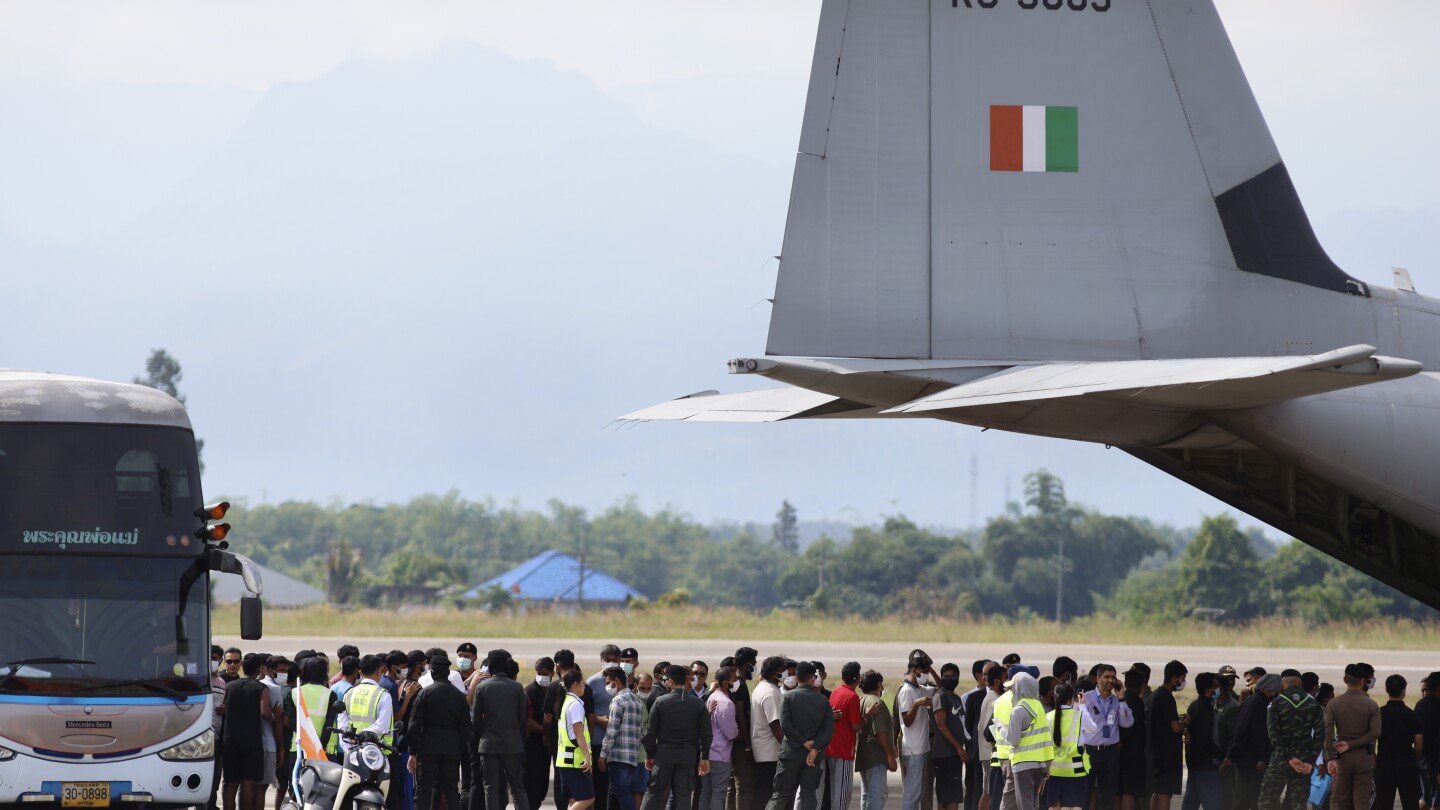
    In the shadows of Southeast Asia, a sinister industry thrives, exploiting both victims and laborers. Scam operations, often initiated through innocuous text messages, have become a global menace, siphoning billions of dollars from unsuspecting individuals. These schemes are powered by a network of forced laborers, many of whom are lured with false promises of lucrative jobs, only to find themselves trapped in sprawling compounds across the region. The scale of this crisis is staggering, with estimates suggesting that hundreds of thousands of people are coerced into working in these fraudulent operations. The issue is further complicated by the involvement of local elites and transnational criminal syndicates, making it a formidable challenge for law enforcement agencies. Despite recent crackdowns, such as the shutdown of Myanmar’s infamous KK Park, the problem persists, with new scam centers emerging across Southeast Asia and beyond. The United Nations has highlighted the global reach of these scams, which now target victims as far afield as Africa and Latin America. Activists argue that while rescuing victims is crucial, dismantling the criminal networks behind these operations is essential to eradicating the scourge. The fight against this global fraud epidemic requires coordinated international efforts and a sustained commitment to justice.

  • Thai king to pay state visit to China

    Thai king to pay state visit to China

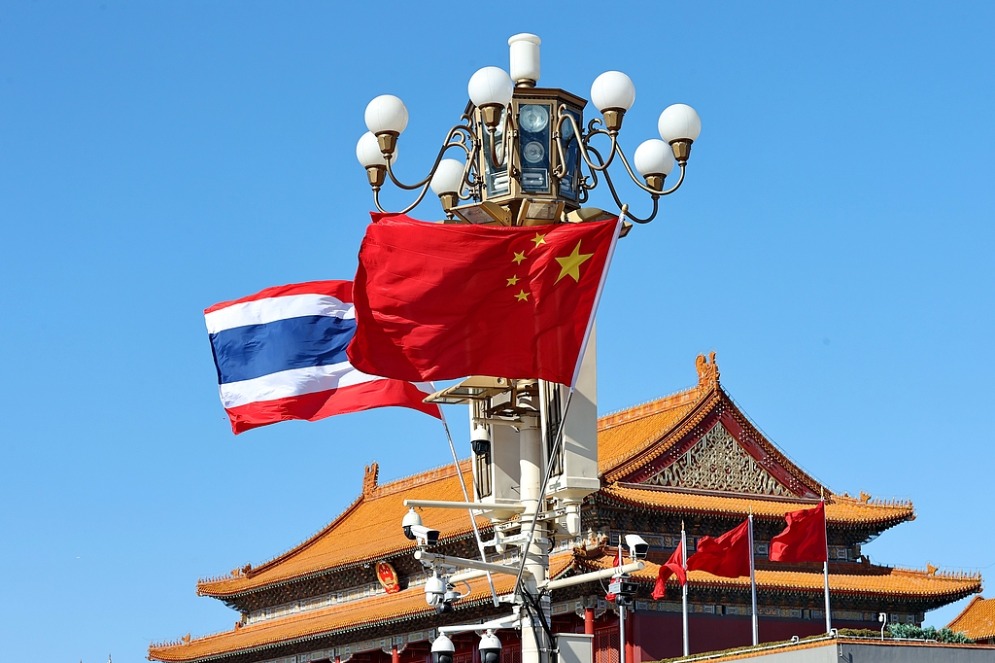
    In a landmark event marking 50 years of diplomatic relations, King Maha Vajiralongkorn of Thailand is set to embark on a state visit to China from November 13 to 17, 2025. This visit, the first by a Thai monarch since the establishment of diplomatic ties in 1975, underscores the deepening relationship between the two nations. During his stay, King Maha Vajiralongkorn and Queen Suthida Bajrasudhabimalalakshana will engage in a series of high-level meetings with Chinese President Xi Jinping and Premier Li Qiang, alongside visits to significant cultural and developmental sites in Beijing. The Thai Foreign Ministry highlighted the visit as a testament to the enduring friendship and mutual understanding between Thailand and China, aiming to bolster bilateral relations and foster regional peace and prosperity. China, Thailand’s largest trading partner for 12 consecutive years, anticipates this visit to further enhance economic and political cooperation, building on a bilateral trade volume that surpassed $133.98 billion in the previous year. The visit also coincides with the golden jubilee of China-Thailand friendship, presenting new opportunities for collaboration in various sectors, including science, technology, and education.

  • Nation’s Mars orbiter snaps images of interstellar object

    Nation’s Mars orbiter snaps images of interstellar object

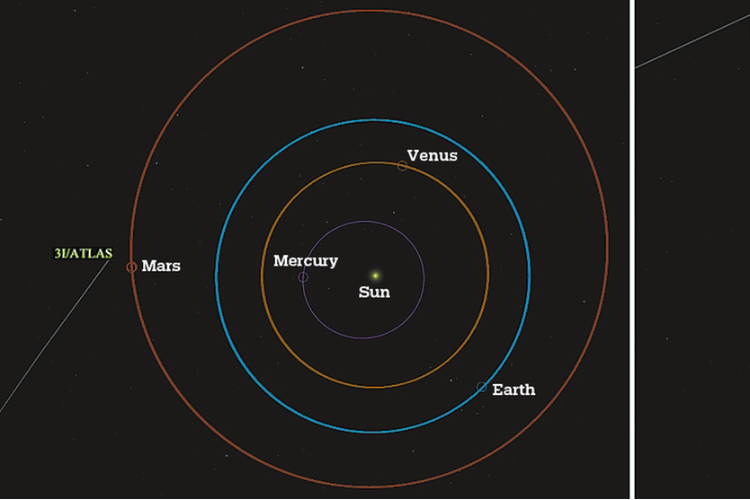
    In a groundbreaking achievement, China’s Mars orbiter, part of the Tianwen 1 mission, has successfully captured images of a rare interstellar comet, 3I/ATLAS, as it traversed the solar system. The China National Space Administration (CNSA) announced the milestone on Thursday, marking a significant advancement in space exploration. The comet, first discovered on July 1 by NASA-funded ATLAS telescopes, is the third confirmed interstellar object to pass through our solar system, following 1I/’Oumuamua and 2I/Borisov. The Tianwen 1 orbiter, positioned approximately 29 million kilometers from the comet, executed one of the closest observations of such a celestial body. Scientists and engineers meticulously planned the observation, conducting extensive calculations and simulations to optimize the imaging process. The comet, estimated to be between 3 to 11 billion years old, offers invaluable insights into the composition and evolution of exoplanets. Its unique characteristics, including a tail direction opposite to typical comets, have piqued scientific interest, providing a rare opportunity to study extraterrestrial icy objects. This observation also serves as a technical test for the upcoming Tianwen 2 asteroid exploration mission, launched in May. The discovery underscores China’s growing prowess in space exploration and its contribution to understanding the cosmos.

  • What to know about China’s newest aircraft carrier, the Fujian

    What to know about China’s newest aircraft carrier, the Fujian

    China has officially commissioned its third aircraft carrier, the Fujian, solidifying its position as the nation with the second-largest carrier fleet globally, trailing only the United States. The Fujian, unveiled in a ceremony attended by President Xi Jinping, represents a significant technological leap with its electromagnetic catapult launch system. This innovation enhances the carrier’s ability to project power across the Pacific, particularly in contested regions like the East China Sea, the Taiwan Strait, and the South China Sea. The Fujian is China’s first domestically designed carrier, distinguishing it from its predecessors, the Liaoning and Shandong, which were based on Soviet designs. The Fujian’s advanced catapult system allows it to launch heavier, fully-loaded aircraft, including early-warning and control planes, extending its operational range and firepower. While China’s carrier fleet now surpasses those of India, the UK, and Italy, it still lags behind the U.S., which operates 11 nuclear-powered carriers. The Fujian’s electromagnetic catapult system, second only to the U.S. Navy’s USS Gerald R. Ford, offers greater efficiency and flexibility, enabling the launch of a wider range of aircraft. However, the Fujian’s non-nuclear propulsion limits its operational range compared to U.S. carriers. China is reportedly developing nuclear propulsion for future carriers, though the timeline remains uncertain. Despite its advancements, the Fujian is smaller than U.S. carriers, with a displacement of over 80,000 tons and an estimated capacity of 40 to 60 aircraft, compared to the 60 to 70 planes on U.S. carriers. The Fujian’s commissioning underscores China’s growing naval ambitions, though it still faces significant gaps in carrier technology and capacity compared to the U.S.