
In the heart of Zhaojue County, Sichuan Province, Qumu Shiwu, a 29-year-old inheritor of the ancient Yi lacquerware craft, is breathing new life into a centuries-old tradition. With a paintbrush in hand, she meticulously creates vibrant patterns on wooden cores, a skill passed down through 14 generations of her ethnic Yi family. Her captivating short videos, showcasing the intricate process of lacquerware decoration, have amassed over 200 million views on social media, transforming this traditional art form into a modern sensation. Born into a family of artisans, Qumu defied gender norms to become the first female inheritor of the craft. Despite challenges, including a severe allergic reaction to raw lacquer, she persevered, completing her first independent work in 2017. Leveraging platforms like Douyin, Kuaishou, and Xiaohongshu, Qumu has expanded the reach of Yi lacquerware, attracting customers from across China and overseas. By integrating traditional designs into contemporary products like phone cases and tea sets, she has revitalized her father’s workshop, increasing its annual revenue from 400,000 yuan to over 3 million yuan. Qumu’s efforts also include nurturing the next generation of artisans through university partnerships and exploring cross-sector collaborations. Her ultimate goal is to introduce Yi lacquerware to a global audience, showcasing the rich cultural heritage of Liangshan.
标签: Asia
亚洲
-

UAE: Gold prices fall from record highs, but analysts predict another surge
Gold prices, which recently soared to an unprecedented $4,500 per ounce, have experienced a slight decline, closing at $4,080.78 over the weekend. This 2.62% drop is attributed to profit-taking by investors. In the UAE, 24K and 22K gold were trading at Dh492.25 and Dh455.5 per gram, respectively. Despite the current dip, market analysts predict a potential resurgence, with prices potentially revisiting the $4,500 mark in the near future. Amir Boucetta, a marketing team leader at CPT, anticipates a temporary decline to $3,700-$3,800 before a bullish recovery. He emphasizes that this correction is healthy and advises investors to focus on fundamentals rather than panic selling. Komalpreet Kaur of XtremeMarkets highlights a gradual recovery, projecting gold could reach $5,000 by 2026-27, driven by factors such as US tariffs, China’s gold reserves buildup, and the US economy. Alex Kuptsikevich, chief market analyst at FxPro, notes that the US dollar’s weakness and Federal Reserve’s monetary policies have historically favored gold. However, he warns of potential volatility, as recent market trends suggest a shift in sentiment. Despite short-term fluctuations, the long-term outlook for gold remains optimistic, supported by global economic uncertainties and central bank activities.
-
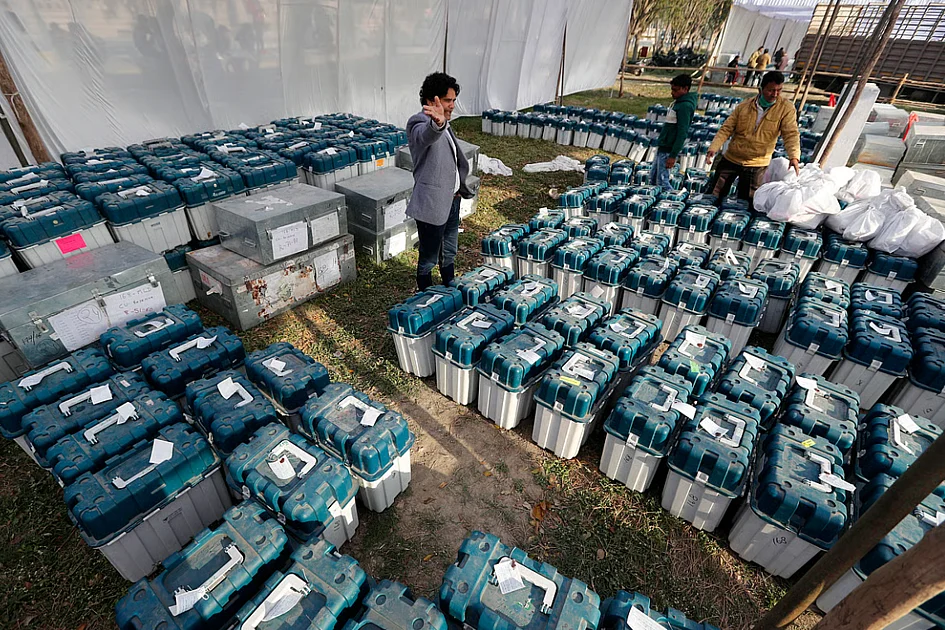
SIR forms: Indian expats in UAE rush to update, verify voter status
Indian expatriates residing in the UAE are actively engaging in the Special Intensive Revision (SIR) process to update and verify their voter status ahead of the 2026 elections in India. The Election Commission of India is conducting this initiative across 12 states and Union Territories, including Kerala and Karnataka, to ensure accurate voter rolls by removing fraudulent entries and adding eligible voters. This marks the first such comprehensive revision in 21 years. Only those listed on the electoral roll will be eligible to vote in upcoming local and national elections. Many expats are sending necessary documents, such as Aadhar cards and passports, to their families in India to facilitate the process. Dubai resident Asheem PK shared, ‘My father urged me to complete the process, so I sent all required documents as soon as it began.’ The first draft of the voter list will be published on December 9, after which new applicants can submit Form 6A online to be added. Muneer Berike, an Indian social worker, emphasized the significance of this opportunity for non-resident Indians (NRIs), stating, ‘We fought hard for this right, and now it’s crucial for NRIs to exercise it.’ NRI voter registration began in 2010, with overseas electors allowed to register since 2011. Applicants must provide details such as their overseas address, reason for residing abroad, and a relative’s voter information. Proof documents, including the Aadhar card, may also be required. Unlike resident voters, NRIs do not receive voter IDs and must vote in person in India using their passports. To assist expats, Indian social groups are planning to set up help desks, though the Indian consulate has yet to confirm its involvement in the registration process. The final voter list will be published in February 2026.
-

CNS Sichuan achieves desired results on its maiden sea trial
China’s first Type 076 amphibious assault ship, the CNS Sichuan, has successfully concluded its maiden sea trial, marking a significant milestone in the nation’s naval advancements. The vessel, which is the largest and most advanced of its kind in China, returned to the Hudong-Zhonghua Shipbuilding yard in Shanghai on Sunday afternoon after a three-day voyage. During the trial, engineers meticulously tested and verified the ship’s electric, propulsion, and other critical systems, achieving the desired results. Further tests are planned as part of the ship’s construction blueprint. The Sichuan, with a hull code of 51, displaces over 40,000 metric tons and is equipped with an electromagnetic catapult system, making it the first Chinese amphibious assault ship capable of deploying fixed-wing drones. This technology, previously seen only on the CNS Fujian aircraft carrier, underscores China’s growing prowess in naval innovation. Once commissioned, the Sichuan will support a range of operations, including amphibious landings, airstrikes, and airborne missions. The PLA Navy currently operates four Type 075 amphibious assault ships, each with a full displacement of nearly 40,000 tons, built at the same Shanghai shipyard.
-
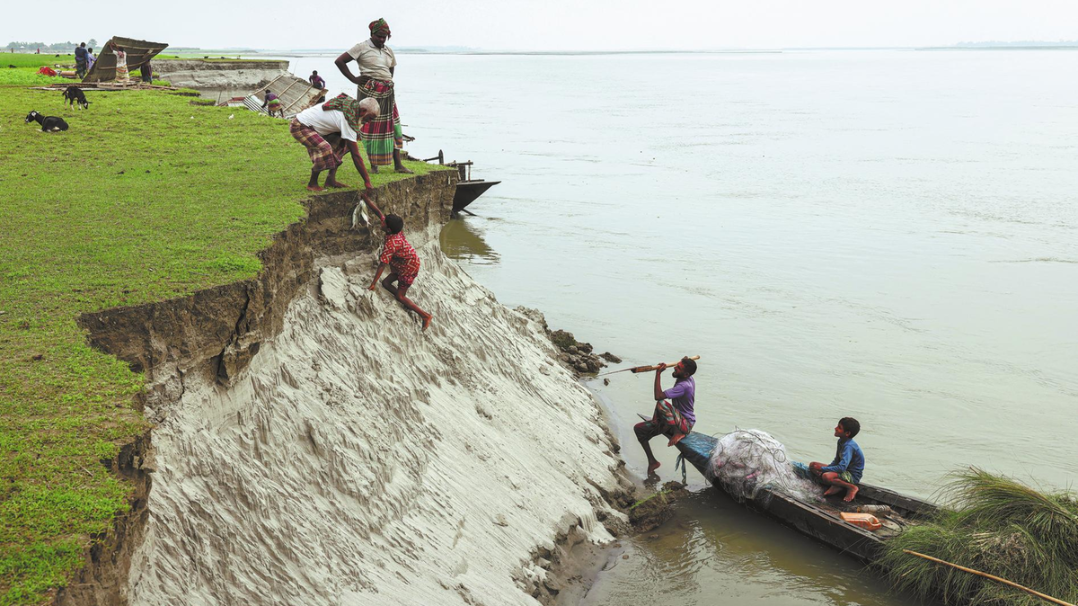
Engulfed by water
As global leaders convene at COP30 to address climate challenges, Bangladesh continues to grapple with the devastating effects of river erosion. On a somber morning in Kurigram, Nurun Nabi prepares to relocate his family for the second time in a year. His home, constructed just twelve months ago on the precarious Char Youthnet island in the Brahmaputra River, is now threatened by the encroaching waters. ‘The river is coming closer every day,’ Nabi lamented, his voice heavy with fatigue. ‘We are born to suffer. Our struggle is never-ending. I’ve lost count of how many times the river took my home.’
The plight of Nabi and countless others underscores the urgent need for effective climate solutions. The Brahmaputra River, a lifeline for many, has become a source of relentless destruction, swallowing homes, schools, and livelihoods. The only school on Char Youthnet island, where children continue their education amidst the crisis, stands as a fragile symbol of resilience.
As nations gather to strategize at COP30, the situation in Bangladesh serves as a stark reminder of the human cost of climate change. The country, already vulnerable to rising sea levels and extreme weather events, faces an existential threat from river erosion. The international community’s response will be crucial in determining whether nations like Bangladesh can adapt and survive in an increasingly unstable climate.
-

Global energy challenges targeted through China-UN collaboration
In a groundbreaking initiative to address global energy transition challenges, a Chinese international NGO, the Global Energy Interconnection Development and Cooperation Organization (GEIDCO), has partnered with United Nations agencies to launch a comprehensive research program. Announced during the COP30 climate conference in Belem, Brazil, this collaboration aims to identify capacity gaps and training needs across different regions to foster a just and inclusive energy transition. GEIDCO, established in 2016 as China’s first international energy organization, brings extensive experience in capacity-building, having trained over 10,000 participants from 80+ countries through 30+ international programs. The research will focus on energy policies, technologies, talent development, and financing, with a particular emphasis on regional disparities. For instance, African participants prioritize distributed renewable energy and project financing, while West Asian stakeholders are more interested in emerging technologies like hydrogen energy. The program, developed in collaboration with the UN Framework Convention on Climate Change and the Paris Committee on Capacity-building, seeks to create targeted training initiatives to bridge these gaps. Gloria Alvarenga of the Latin American Energy Organization praised the initiative, highlighting the importance of shared experiences and collaborative mechanisms in accelerating climate action. Riad Meddeb of the UN Development Programme emphasized the urgency of addressing capacity gaps to ensure a just transition, noting that 60% of global energy production remains inefficient. He also underscored the role of digitalization in transforming clean energy systems, while pointing out the stark digital divide, with only 27% of people in low-income countries having internet access. The initiative reflects a growing global consensus to limit temperature rise to 1.5°C, as outlined in the Paris Agreement, to avoid catastrophic climate impacts.
-
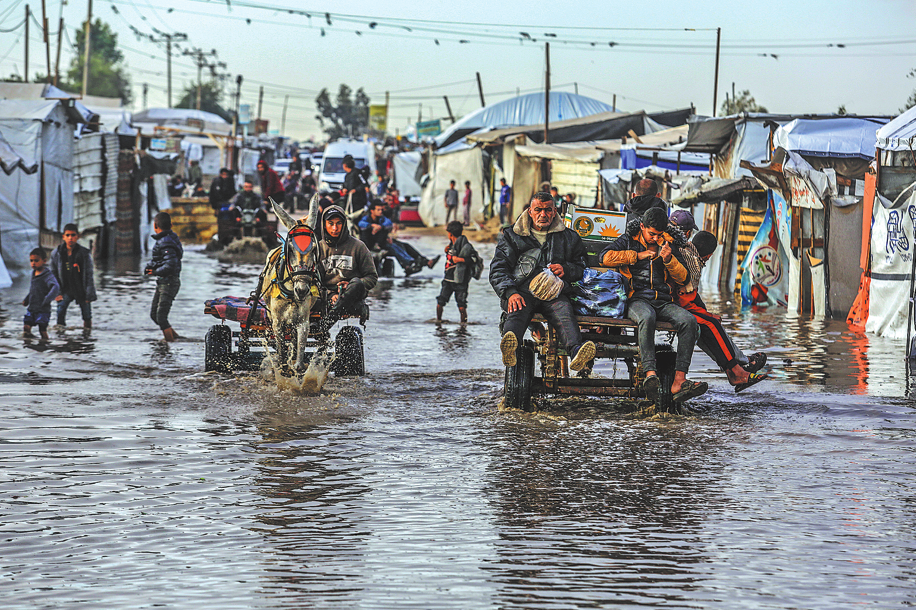
First winter rains soak makeshift Gaza tents
The first heavy rains of winter have inundated the Mawasi tent camp in Gaza, exacerbating the already dire living conditions for displaced Palestinians. On Saturday, torrential downpours flooded the makeshift shelters, forcing residents to dig trenches in a desperate attempt to divert water from their tents. The rains, which began on Friday, seeped through torn tarpaulins and fragile structures, soaking the meager belongings of families. Strong winds further threatened to topple tents and disrupt the already scarce food and supply distribution.
Bassil Naggar, a resident who recently purchased a new tent for $712 on the black market, described the relentless struggle to keep his shelter dry. ‘I spent all of Friday pushing water out of my tent,’ he said, noting that his neighbors’ tents and possessions were also ruined. ‘Water puddles are inches high, and there is no proper drainage.’
The United Nations reports that Mawasi housed up to 425,000 displaced Palestinians earlier this year, most of whom are living in temporary tents after being displaced by Israel’s military campaign. While the Israeli defense body overseeing humanitarian aid claims to be allowing winter supplies like blankets and tarpaulins into Gaza, aid organizations argue that these efforts are insufficient as temperatures drop and winds intensify.
Amid the worsening humanitarian crisis, international efforts to stabilize Gaza are underway. The UN Security Council is set to vote on a U.S. proposal for a UN-mandated stabilization force, which would operate independently of the UN and maintain Israel’s control over Gaza’s security perimeter. Meanwhile, Russia has introduced a competing resolution advocating for a UN-led stabilization force, opposing territorial changes in Gaza and urging a two-state solution.
On Saturday, Russian President Vladimir Putin and Israeli Prime Minister Benjamin Netanyahu discussed the Gaza ceasefire, Iran’s nuclear program, and stability in Syria during a phone call. As the first stage of the Gaza ceasefire agreement nears its end, the focus shifts to the more challenging task of establishing a governing body and deploying an international stabilization force.
-

Prosecutors approve ex-abbot’s arrest
The Supreme People’s Procuratorate has officially sanctioned the arrest of Shi Yongxin, the former abbot of the renowned Shaolin Temple in Henan Province. Shi is accused of embezzlement, misappropriation of funds, and bribery. The case, initially investigated by the Xinxiang public security authorities under the directive of the Henan Provincial Public Security Department, has now progressed to the arrest phase following approval from the Xinxiang People’s Procuratorate. The allegations against Shi surfaced on July 27, when the Shaolin Temple disclosed that he was under investigation for embezzling funds, misusing project and temple assets, maintaining inappropriate relationships with multiple women, and fathering an illegitimate child. The following day, the Buddhist Association of China revoked Shi’s ordination certificate, effectively expelling him from the monastic community. Shi, who became a monk in 1981 and served as the 30th abbot of the 1,500-year-old Shaolin Temple since 1999, has been a prominent figure in Zen Buddhism and the temple’s celebrated kung fu tradition. The case has drawn significant attention due to the temple’s cultural and spiritual significance.
-

Man who grabbed Ariana Grande at premiere jailed in Singapore
An Australian man, Johnson Wen, 26, has been sentenced to nine days in jail by a Singapore court for causing a public nuisance by grabbing Hollywood star Ariana Grande at the Asia premiere of ‘Wicked: For Good’ last Thursday. Videos circulating on social media captured Wen leaping over barriers, rushing towards Grande, and grabbing her shoulders while jumping up and down, leaving the singer visibly shocked. The incident has sparked widespread outrage in Singapore, with many calling for Wen’s arrest and deportation. Grande, who has previously spoken about her struggles with post-traumatic stress disorder following the 2017 Manchester Arena bombing, has not publicly commented on the incident. During the trial, it was revealed that Wen had attempted to intrude on the premiere twice. After the initial grab, Grande’s co-star Cynthia Erivo forcibly removed Wen, and security staff escorted him out. However, Wen made a second attempt to breach the barriers, leading to his detention by security. Wen later posted videos of the incident on his social media accounts, thanking Grande and claiming he was ‘free.’ Singapore police arrested him the following day, and he pleaded guilty to the charges. Prosecutors argued for a week’s jail term, citing Wen’s history of disrupting concerts and sporting events to gain online popularity. Wen, who was unrepresented in court, assured the judge he would ‘not do it again.’ Under Singapore’s public nuisance laws, Wen could have faced up to three months in jail, a fine of up to S$2,000, or both. Meanwhile, Grande has continued her public appearances in Los Angeles, while Erivo subtly referenced the incident in a recent statement about their relationship during the film’s production.
-

Museums turn to technology for relics care
At the 27th General Conference of the International Council of Museums in Dubai, officials and scholars emphasized the pivotal role of museums as custodians of civilization. The event, the largest global gathering of museum professionals, highlighted the importance of integrating new technologies and engaging younger generations to protect cultural heritage and foster mutual understanding among civilizations. Hala Badri, Director-General of Dubai Culture and Arts Authority and chairwoman of the conference’s organizing committee, underscored the shared commitment to leveraging digital transformation, artificial intelligence (AI), and virtual interaction to create inclusive and impactful cultural experiences. Harith Al Battashi, an expert from the National Museum of Oman, stressed that attracting and nurturing young talent is central to museums’ missions. He praised the Chinese video game *Black Myth: Wukong* as a groundbreaking example of how cultural heritage can be promoted globally through youth-centric mediums. The game, which integrates Chinese folklore, has sparked international interest and bridged the gap between tradition and modern youth culture. At the conference, Zhejiang University’s Department of Cultural Heritage showcased the International Alliance of Teaching Museology in Universities, an initiative aimed at advancing global museum education and professional training. The alliance, comprising nearly 20 members from East Asia, Europe, and North America, seeks to foster collaboration with Middle Eastern universities to develop a more open museology education system. Chinese companies like Bangda Group also demonstrated their innovative solutions for cultural relic preservation, including earthquake-resistant storage facilities with real-time environmental monitoring. Omar Al Kaabi, an official from Abu Dhabi’s Department of Culture and Tourism, announced the upcoming opening of the Zayed National Museum, which will utilize VR and AI technologies to showcase the UAE’s rich cultural history. He expressed openness to adopting Chinese technologies for heritage protection and promotion.