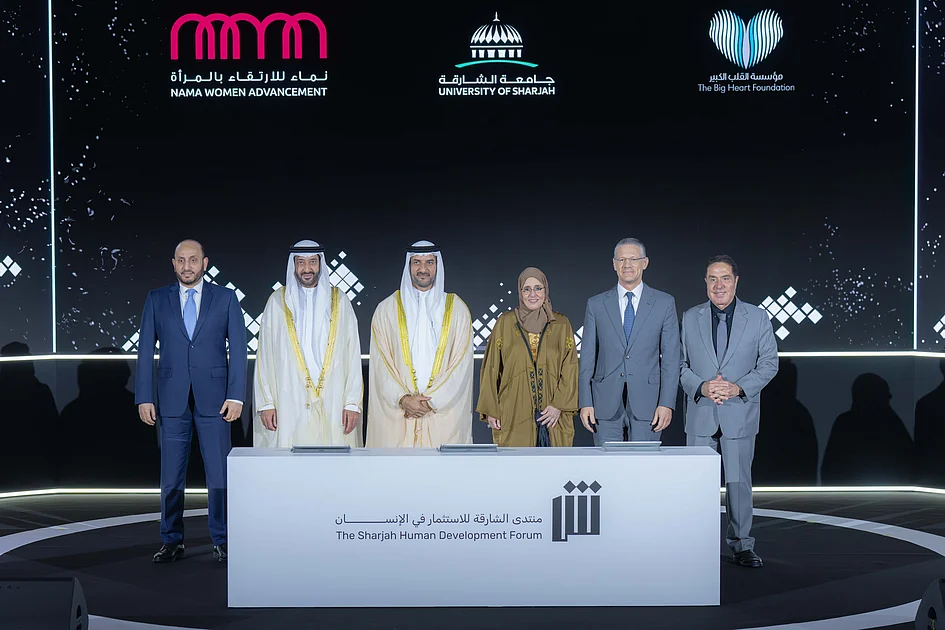
Sharjah has inaugurated its first-ever Human Development Forum, a groundbreaking initiative designed to foster humanitarian and cultural progress in the region. Hosted at the University of Sharjah (UOS) under the theme “Humanity and Heritage in Palestine,” the forum convened leaders, academics, and students to explore strategies for preserving Palestinian culture and supporting local communities. The event was attended by prominent figures, including Sheikh Sultan bin Ahmed Al Qasimi, Deputy Ruler of Sharjah and President of UOS, and Sheikha Jawaher bint Mohammed Al Qasimi, Chairperson of the Sharjah Family and Community Council. In his keynote address, Sheikh Sultan emphasized the importance of heritage preservation as a means to impart values, knowledge, and creativity to future generations. He highlighted the pivotal role of students in achieving the forum’s objectives, expressing confidence in their innovative ideas and proposals. Sheikha Jawaher announced the establishment of the Jawaher Al Qasimi Chair in Palestinian Studies and the Palestine Legacy Fund, initiatives aimed at safeguarding Palestinian heritage and providing scholarships for displaced students, particularly from Gaza. She underscored the forum’s commitment to combating efforts to erase Palestinian identity and heritage, stating that true belonging transcends geography and is rooted in values and history. The forum also featured discussions on protecting Palestinian history, arts, architecture, and social traditions, while encouraging research, student projects, and community engagement. By integrating academic research, humanitarian action, and cultural preservation, the forum has established a new model for advancing human development and reinforcing the UAE’s dedication to Palestine.
标签: Asia
亚洲
-
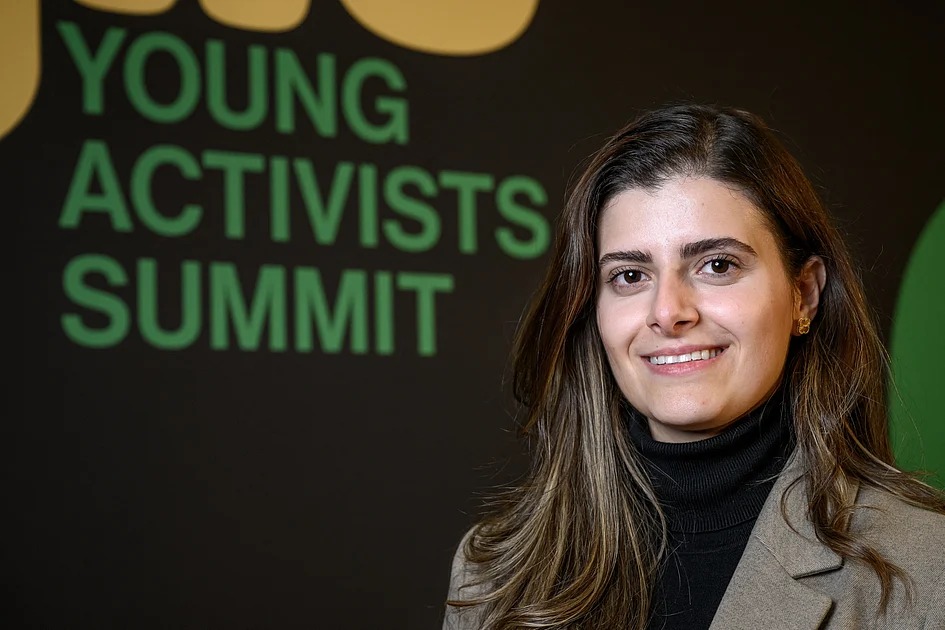
Youth activist turning trauma into treatment in Lebanon
Marina El Khawand, a 24-year-old Lebanese activist, has turned personal tragedy into a global mission to provide healthcare access for vulnerable communities. Her journey began in 2020 when she witnessed the devastating Beirut port explosion, which claimed over 220 lives and left her hometown in ruins. Despite the trauma, Khawand chose to stay and help, volunteering at the blast site before eventually founding Medonations, a non-profit organization dedicated to providing free medical assistance.
-

Tears, walkouts and drama: New Miss Universe to be crowned as chaotic season ends
The 74th edition of Miss Universe, held in Bangkok, Thailand, concluded amidst a whirlwind of controversies and organizational turmoil. The event, which has been a global staple since its inception in 1952, faced unprecedented challenges this year, including contestant walkouts, judge resignations, and allegations of rigging. These issues have highlighted the cultural and strategic differences between the pageant’s Thai and Mexican owners, raising questions about its future direction. The pageant, traditionally a platform for women to advocate for global causes like HIV/AIDS awareness and children’s education, has also been a launchpad for international celebrity status. This year, Thailand’s Praveenar Singh emerged as a fan favorite, with hopes of becoming the country’s third Miss Universe. However, the event was overshadowed by a series of incidents that began with Thai media mogul Nawat Itsaragrasil’s public reprimand of Miss Mexico, Fatima Bosch, leading to a walkout by several contestants. The Miss Universe Organisation condemned Nawat’s actions as ‘malicious,’ and international executives were brought in to oversee the competition. Further complicating matters, two judges resigned, with one accusing organizers of pre-selecting finalists. Despite these challenges, the pageant continues to evolve, transitioning from a once-a-year television spectacle to a media brand embracing social media platforms like TikTok. The leadership transition has been rocky, with former CEO Anne Jakrajutatip’s resignation and the subsequent appointment of Guatemalan diplomat Mario Bucaro. Jakrajutatip, who acquired the pageant in 2022, had made significant strides towards inclusivity, allowing transgender women, married women, and women with children to participate. However, her entertainment company JKN filed for bankruptcy in 2023, adding to the pageant’s financial woes. As the Miss Universe brand navigates these turbulent waters, former queens like Catriona Gray continue to use their platforms to promote charitable causes, underscoring the pageant’s potential for positive impact. Despite the controversies, the event remains a significant cultural phenomenon, though its future will depend on its ability to reconcile its diverse leadership and maintain its core values of empowering women.
-
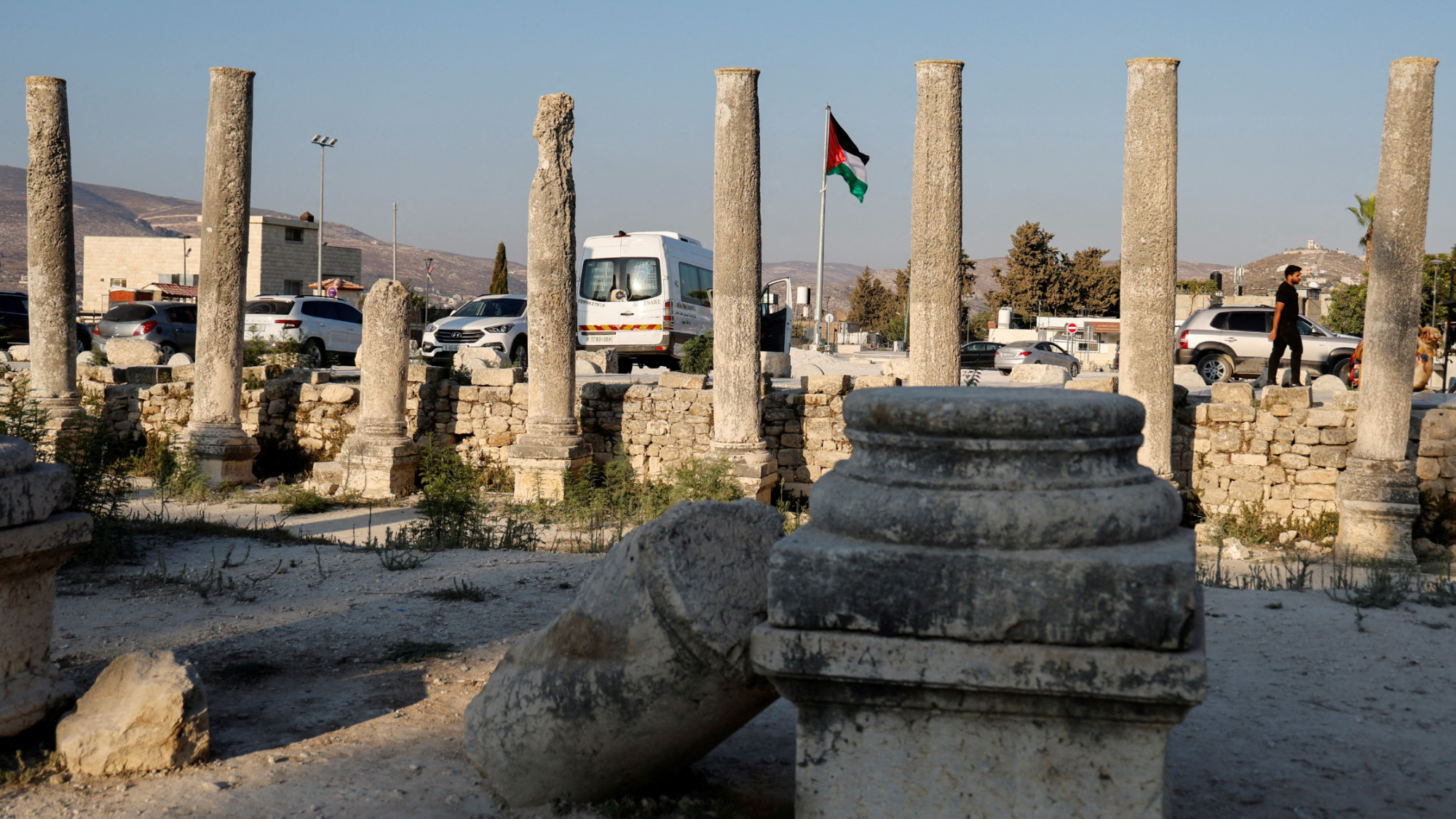
Israel to seize 180 hectares near Bronze Age heritage site in West Bank
Israel has announced plans to confiscate 180 hectares of privately owned land in the occupied West Bank, citing the development of an archaeological site as the primary reason. The targeted area, located near the town of Sebastia north of Nablus, is home to tens of thousands of olive trees and spans across Sebastia and the neighboring village of Burqa. Local officials have labeled this as the largest land seizure for archaeological purposes since 1967. The site in Sebastia dates back to the Bronze Age, approximately 3200 BCE, and Israel claims it is linked to the biblical city of Samaria, associated with the ancient Kingdom of Israel. However, Palestinians argue that this move is part of a broader strategy to ‘Judaise’ Palestinian heritage and legitimize land annexation. Sebastia’s mayor, Muhammad Azem, stated that Israel aims to connect the archaeological site to the nearby Shavei Shomron settlement, built on land belonging to several Palestinian towns. Additionally, Israel plans to confiscate more land from Burqa to construct a settler road leading to the settlement. Azem warned that this decision seeks to take control of one of Palestine’s largest archaeological sites, effectively blocking Palestinians from accessing their own land. The economic and security impacts are expected to be severe, with local tourism suffering as Palestinians lose access to the site, and foreign visitors are only permitted entry through Israel. Sebastia, which relies heavily on the site for tourism revenue, could face economic paralysis. Azem also revealed that Israel conducted a year-long excavation, reaching deep archaeological layers, and moved a mobile archaeological unit from Sebastia to the Shavei Shomron settlement, further confirming suspicions of land confiscation. In May 2023, the Israeli government allocated 30 million shekels (approximately $9 million) for excavations and development in Sebastia, including the restoration of the town’s old train station, where settlement activity began in 1974. The plans also include a new road bypassing the Palestinian village entirely. Palestinian expert Dirgham Fares accused Israel of using antiquities as a pretext to annex and Judaise more land, calling it a systematic policy. Peace Now, an Israeli NGO, condemned the move as a violation of Palestinian rights and international law, emphasizing that Sebastia is a heritage site within a Palestinian village and part of a future Palestinian state. Fares also highlighted ongoing Israeli restrictions on Palestinian tourism and antiquities ministry staff, including detentions and disruptions of restoration work, further exacerbating tensions in the region.
-

Almost half of UK would consider ending a friendship over Israel-Palestine, poll finds
A recent survey conducted by More In Common UK has uncovered a startling trend: nearly half of the UK population would consider ending a friendship over differing views on the Israel-Palestine conflict. The poll, which involved 2,000 participants, revealed that 43% of pro-Palestine respondents and 46% of pro-Israel respondents would sever ties with friends who held opposing stances. Additionally, 75% of respondents expressed discomfort discussing the issue on social media, while approximately 30% felt uneasy discussing it with friends. The ongoing war in Gaza has exacerbated tensions across the UK, sparking widespread pro-Palestine demonstrations and counter-calls from Israel supporters for bans on such protests. The government’s proscription of the pro-Palestine group Palestine Action, following their vandalism of British planes at RAF Brize Norton in June, has led to the arrest of at least 2,094 individuals opposing the ban. Luke Tryl, director of More In Common UK, highlighted the ‘divisive’ impact of the conflict, noting that individuals with strong views often retreat to their own information sources online, making it difficult to have conversations based on shared facts. He also pointed out the tendency to attribute bad faith to those on the opposing side, such as assuming pro-Israel supporters are anti-Muslim or pro-Palestine supporters are antisemitic. Middle East Eye continues to provide independent coverage and analysis of the Middle East, North Africa, and beyond, offering insights into the complexities of this contentious issue.
-

India debunks false claims of Tejas Mk1 ‘oil leak’ at Dubai Airshow 2025
The Indian government has firmly dismissed social media allegations that the Light Combat Aircraft (LCA) Tejas Mk1 experienced an oil leak during its display at the Dubai Airshow 2025. The Press Information Bureau’s (PIB) Fact Check unit labeled these claims as ‘false’ and ‘propaganda-driven,’ emphasizing that the viral videos circulating online depict a routine procedure rather than a technical malfunction. The footage in question shows the standard draining of condensed water from the aircraft’s Environmental Control System (ECS) and On-Board Oxygen Generating System (OBOGS), a common practice in humid environments like Dubai. The PIB reiterated that the Tejas Mk1 has a proven performance record and has successfully participated in numerous international airshows. The Indian Air Force contingent arrived at Al Maktoum Airbase for the Dubai Airshow, which ran from November 17 to 21, showcasing the aircraft’s capabilities. Air Marshal Narmdeshwar Tiwari, Vice Chief of Air Staff, expressed optimism about foreign interest in the Tejas, highlighting the growing defense cooperation between India and the UAE. The Indian Air Force also performed high-maneuver displays with the Tejas, drawing significant attention from the audience. The PIB urged the public to verify facts before sharing unverified claims, reinforcing the aircraft’s reliability and technical integrity.
-

Egyptian explorer Omar Samra on how mountaineering helped him rediscover himself
Egyptian explorer Omar Samra’s journey is one of resilience, self-discovery, and transformation. Known as the first Egyptian to summit Mount Everest and complete the Explorer’s Grand Slam, Samra’s life has been marked by both extraordinary achievements and profound personal loss. His story is a testament to how adventure and mountaineering became tools for healing and rediscovery.
-

UAE: Visitors now get free 10GB SIM at Abu Dhabi’s Zayed International Airport
In a move to enhance the travel experience for international visitors, Abu Dhabi’s Zayed International Airport has partnered with telecom giant e& to provide free 10GB SIM cards to arriving passengers. This initiative, announced on November 20, 2025, offers travellers instant connectivity with 10GB of data valid for 24 hours, enabling seamless access to essential online services such as maps, ride-hailing apps, payment platforms, messaging services, and destination guides like the Abu Dhabi Pass. The collaboration aims to simplify the arrival process and ensure visitors feel welcomed and connected from the moment they land. Zayed International Airport, one of the world’s fastest-growing aviation hubs, serves over 100 destinations through a network of more than 30 airlines. As of September 30, 2025, the airport’s new terminal has welcomed 23.9 million passengers, marking its 18th consecutive quarter of double-digit growth. Elena Sorlini, Managing Director and CEO of Abu Dhabi Airports, emphasized the organization’s commitment to shaping the future of airport experiences. Masood M. Sharif Mahmood, CEO of e& UAE, highlighted the partnership’s focus on delivering a fast, digital-first experience that makes visitors feel at home in Abu Dhabi.
-

Why Booker winner Banu Mushtaq refuses to ‘internationalise’ her language
Banu Mushtaq, a celebrated writer, activist, and lawyer, has carved a unique space in the literary world with her unwavering commitment to truth and resistance. As the winner of the 2025 International Booker Prize for her work ‘Heart Lamp,’ Mushtaq’s journey from Karnataka’s Bandaya Sahitya movement to global recognition is a testament to her profound empathy for the marginalized. Emerging from a radical wave of writers in the 1970s and ’80s, she has consistently challenged caste, class, and gender hierarchies through her evocative storytelling. Her years as a journalist with Lankesh Patrike further honed her political consciousness and her ability to capture the essence of ordinary lives. Mushtaq’s writing, deeply rooted in regional idioms and everyday experiences, resonates with a global audience, offering a powerful lens into the struggles and resilience of the marginalized. In an exclusive interview, she reflects on her evolution as a writer, her politics of empathy, and the transformative power of language. Mushtaq’s work, spanning six short story collections, a novel, essays, and poetry, has earned her numerous accolades, including the Karnataka Sahitya Academy and Daana Chintamani Attimabbe awards. ‘Heart Lamp,’ her first full-length English translation, has brought her poignant narratives to a wider readership, with one story even featured in The Paris Review. Mushtaq’s journey underscores the importance of authenticity in literature, as she continues to write with a fierce love for the marginalized, refusing to ‘internationalize’ her language. Her stories, drawn from the lives of farmers, Dalits, migrants, and women, illuminate the extraordinary within the ordinary, reminding us of our shared humanity. Mushtaq’s voice, both rebellious and contemplative, remains a beacon of hope and resistance in a fractured world.
-

Beijing set to open 8th railway station soon
Beijing is poised to enhance its urban transportation network with the inauguration of its eighth railway station, the Beijing Sub-center Station, located in Tongzhou district. This development, announced by transportation authorities during a press conference on Thursday, is scheduled to be operational by the end of this year. The integration of all eight railway stations with subway lines underscores the city’s commitment to improving commuter convenience and efficiency. Furthermore, the recent advancements in regional rail connectivity, including the launch of the Beijing-Harbin high-speed railway and the Beijing-Xiong’an intercity line, along with the opening of Yizhuang Station on the Beijing-Tianjin intercity railway, have significantly bolstered the transportation infrastructure in the Beijing-Tianjin-Hebei region. These developments have effectively established a travel circle of 1 to 1.5 hours between major cities, fostering a one-hour commuter belt around Beijing.