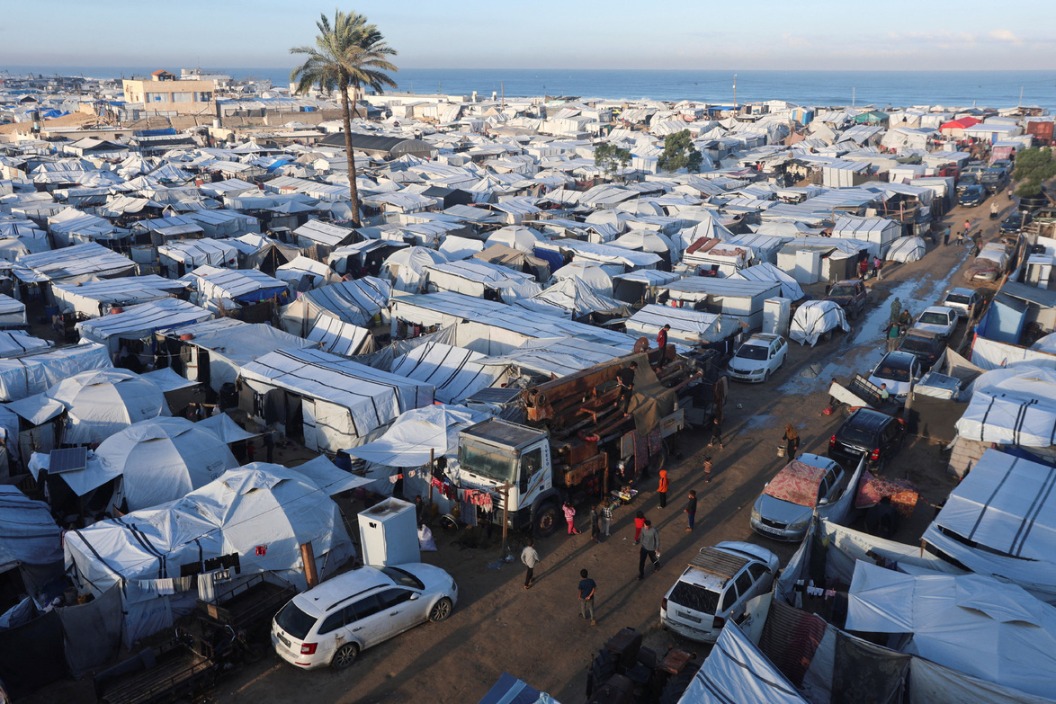
The highly anticipated Gaza reconstruction conference, initially scheduled for November in Cairo, has been postponed indefinitely due to escalating violence in Gaza and the West Bank. This delay has cast a shadow of uncertainty over the next phase of the ceasefire agreement between Israel and Hamas. Egyptian Prime Minister Mostafa Madbouly had previously confirmed Egypt’s readiness to host the event during his speech at the G20 summit in Johannesburg, South Africa, but did not specify a date. According to Arabic outlet Asharq Al-Awsat, an Egyptian source revealed that the conference’s postponement stems from the ongoing Israeli escalation and repeated violations, which have left many countries demanding guarantees against future destruction in Gaza. These guarantees remain unsecured, further complicating the situation. Recent weeks have seen both Israel and Hamas accusing each other of breaching the truce, with the United Nations and various media outlets reporting Israeli strikes resulting in civilian casualties, including children. The Israel Defense Forces have justified their actions by claiming that Hamas fighters are emerging from underground tunnels and posing threats to their troops. Meanwhile, the Israeli Prime Minister’s office has emphasized that Hamas must uphold its commitments to mediators and return all hostages, including the remains of two captives still missing in Gaza. UN Secretary-General Antonio Guterres has urged parties to maintain the ceasefire and capitalize on the diplomatic momentum, describing the October agreement as a ‘glimmer of hope.’ However, the postponement of the Cairo conference coincides with a new UN report highlighting the dire economic crisis in the occupied Palestinian Territory, which has erased 69 years of human development. The report estimates that the cost of Gaza’s reconstruction exceeds $70 billion, placing it among the top 10 worst global economic crises since 1960. Omer Behram Ozdemir, a lecturer at Ibn Haldun University in Turkiye, stressed that prolonged negotiations have exacerbated Gaza’s infrastructure damage and eroded its commercial potential. He called for significant funding from Gulf countries and Egypt to restore normalcy in Gaza, emphasizing that mere reconstruction of the city will not suffice.
标签: Asia
亚洲
-
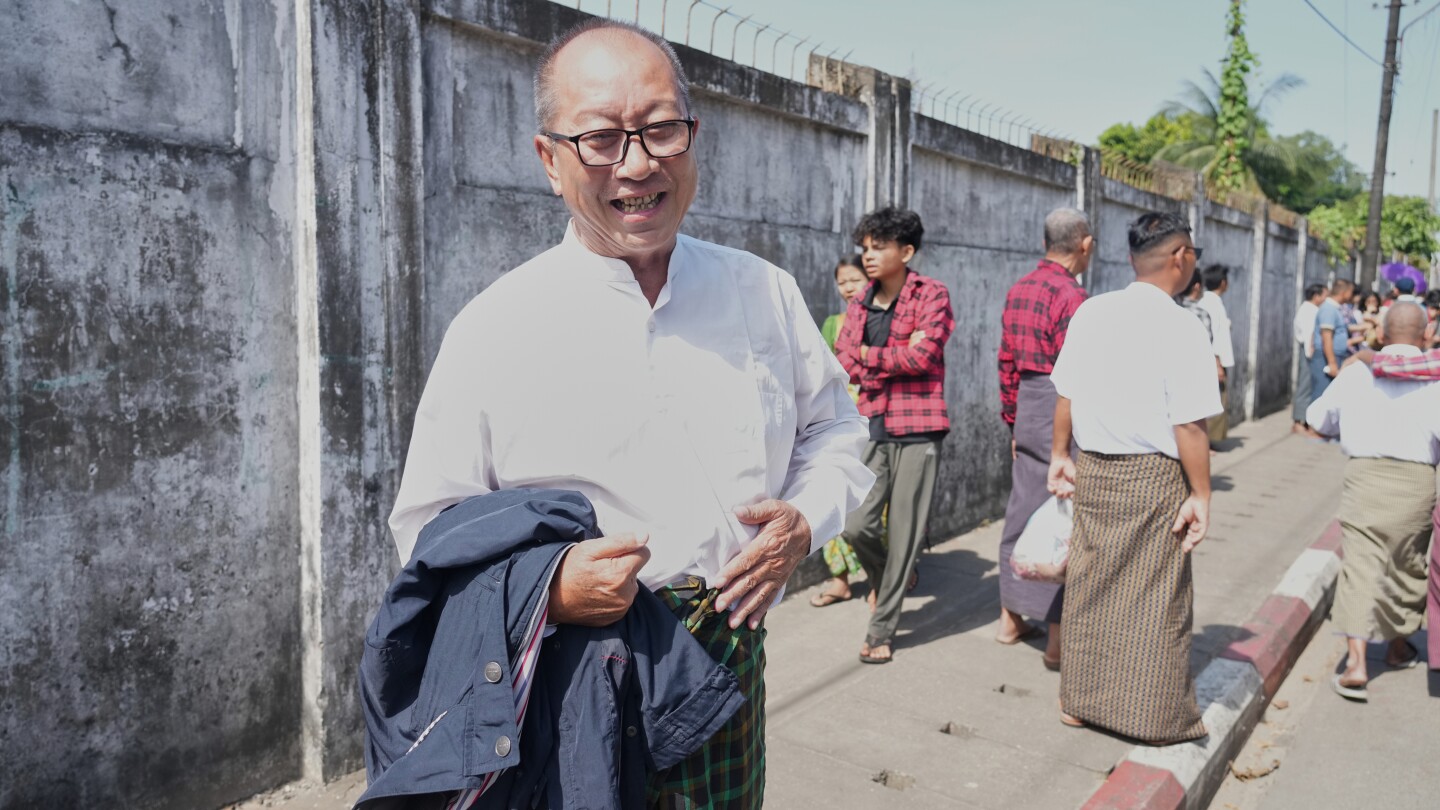
Political prisoners released in Myanmar mass amnesty
In a significant move ahead of the December 28 elections, Myanmar’s military rulers have granted amnesty to over 3,000 individuals detained for opposing army rule, while dropping charges against more than 5,500 others. The mass release, announced by state-run broadcaster MRTV on Wednesday, aims to ensure eligible voters can participate in the upcoming polls. On Thursday, at least eight buses carrying prisoners departed from Yangon’s Insein Prison, where families and friends eagerly awaited their loved ones since early morning. Among those released were Kyi Toe, a member of the National League for Democracy’s (NLD) central information committee, and freelance journalist Zaw Lin Htut, both arrested in 2021. However, there was no indication that former leader Aung San Suu Kyi, who has been held incommunicado since the 2021 military coup, would be freed. Critics argue that the election will lack fairness, citing the absence of free media and the imprisonment of most NLD leaders. The amnesty includes 3,085 prisoners convicted under the incitement law, which criminalizes spreading comments that create public unrest or fear. Additionally, 724 prisoners received conditional release, while 5,580 individuals facing incitement charges were granted amnesty. According to the Assistance Association for Political Prisoners, 22,708 political detainees, including Suu Kyi, remain in custody. The 80-year-old Suu Kyi is serving a 27-year sentence following what supporters describe as politically motivated prosecutions. The 2021 military takeover sparked widespread nonviolent resistance, which has since evolved into an armed struggle.
-
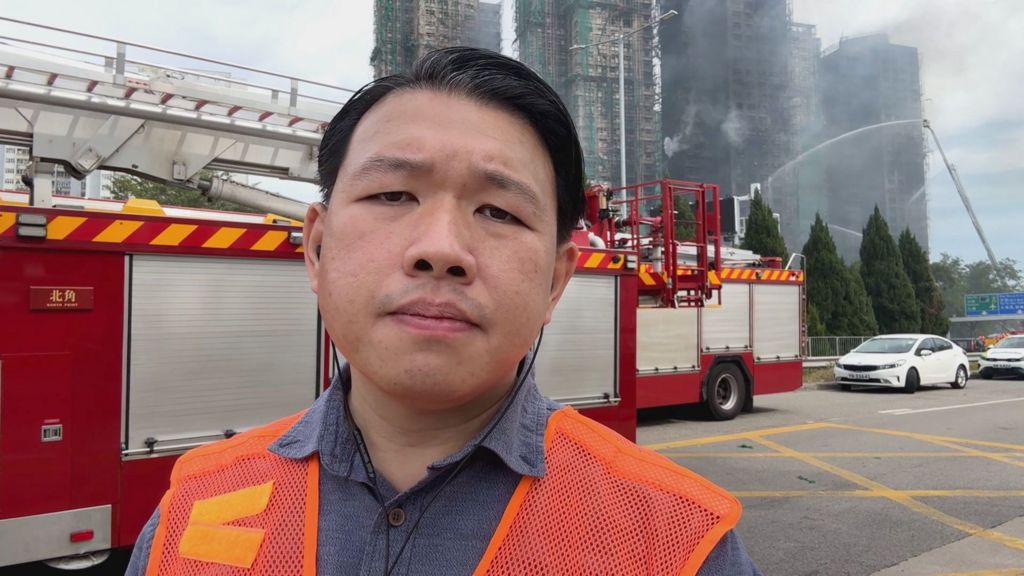
BBC on the scene of the Hong Kong apartment block blaze
A devastating fire engulfed a residential building in Hong Kong, resulting in the tragic loss of at least 44 lives. The blaze, which broke out unexpectedly, required an arduous 18-hour effort by local firefighting teams to fully extinguish. Emergency responders faced significant challenges in controlling the inferno, highlighting the intensity and complexity of the situation. The incident has sent shockwaves through the community, raising concerns about fire safety measures in densely populated urban areas. Authorities have launched an investigation to determine the cause of the fire and to assess whether existing safety protocols were adequately followed. This tragedy underscores the urgent need for enhanced fire prevention strategies and improved emergency response systems in Hong Kong’s residential infrastructure.
-
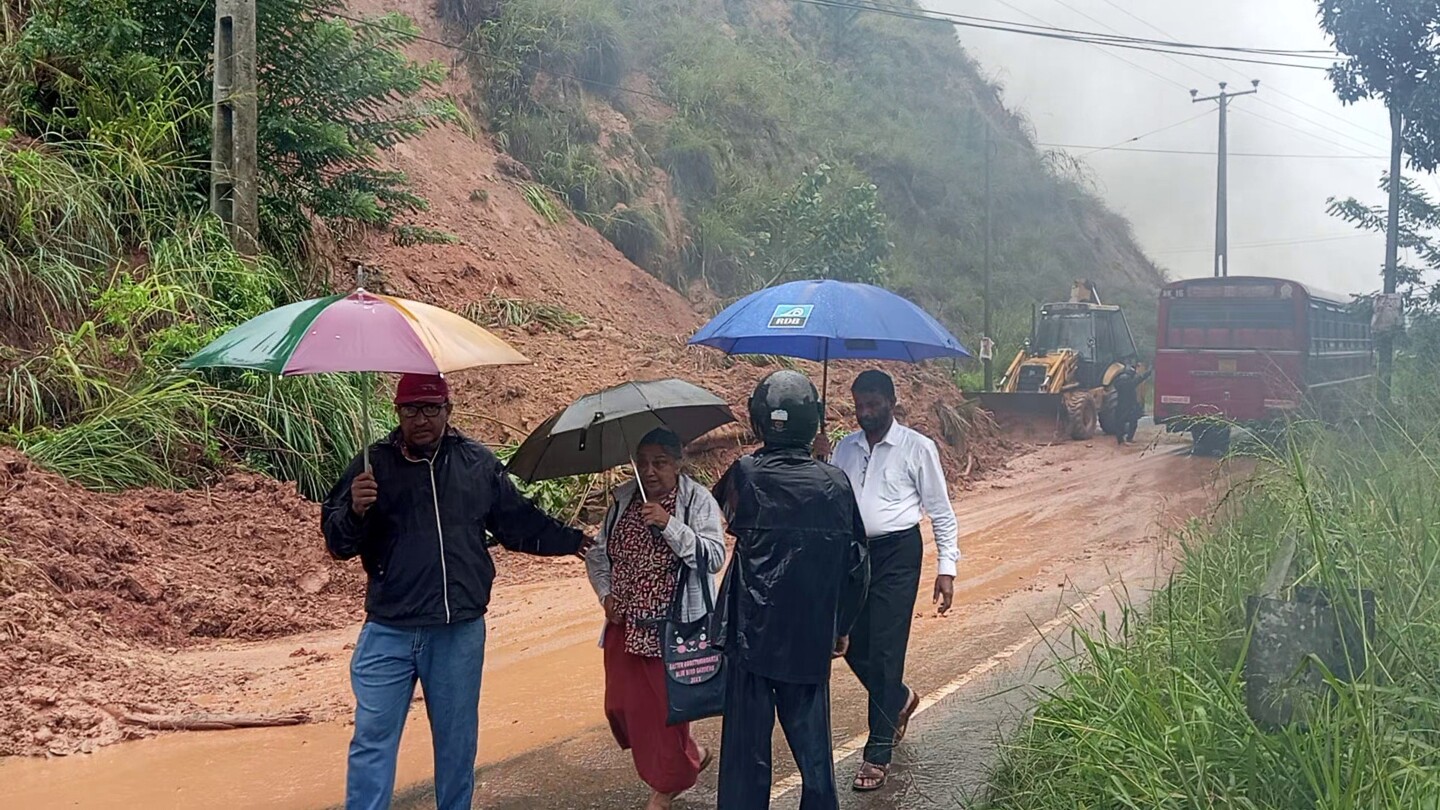
More than 30 dead and 14 missing as heavy rains trigger landslides and floods in Sri Lanka
COLOMBO, Sri Lanka — Sri Lanka has been plunged into chaos as relentless heavy rains triggered catastrophic landslides and widespread flooding, claiming the lives of over 30 people and leaving 14 others missing, officials reported on Thursday. The disaster has particularly ravaged the central provinces of Badulla and Nuwara Eliya, renowned for their tea-growing mountainous terrain, located approximately 300 kilometers east of the capital, Colombo.
-
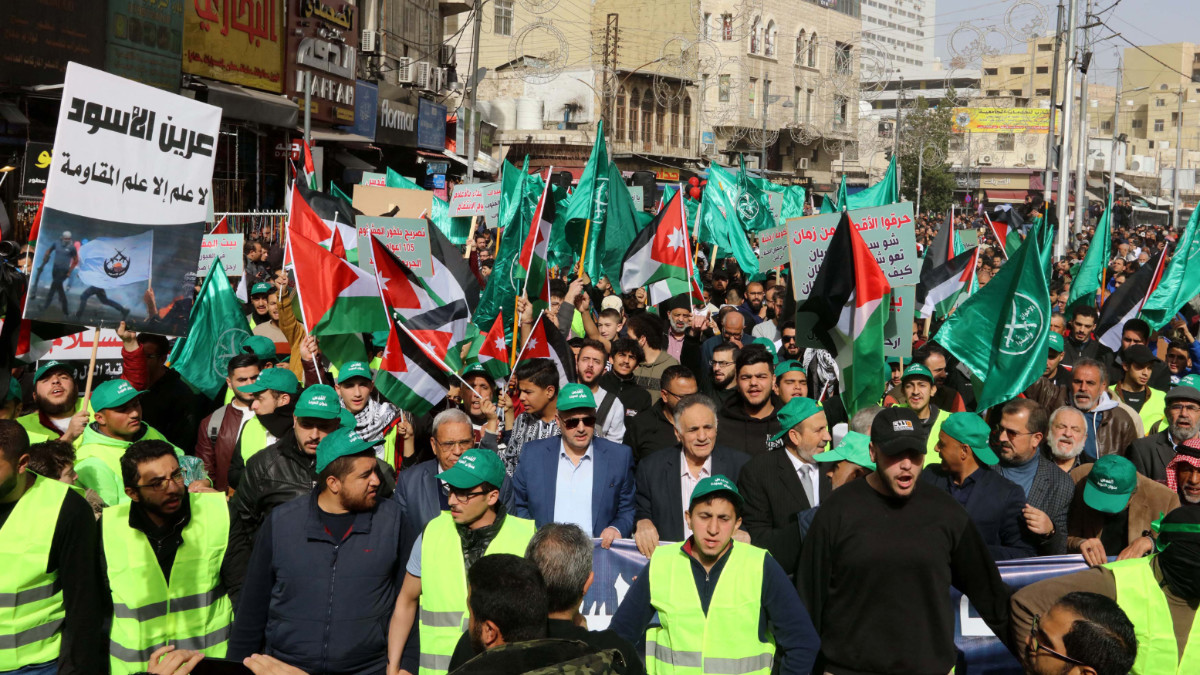
Muslim Brotherhood says Trump’s terror designation is ‘detached from reality’
The Muslim Brotherhood has strongly criticized U.S. President Donald Trump’s executive order to designate certain chapters of the group as Foreign Terrorist Organizations (FTOs), labeling it as ‘detached from reality’ and politically motivated. In a statement released via their official X account on Wednesday, the group asserted that Trump’s claims of their involvement in terrorist activities were ‘unsupported by evidence.’ They argued that the order lacked credible legal or security foundations and warned that it sets a dangerous precedent. The statement further accused Trump of succumbing to pressure from Israel and the UAE, two nations historically hostile to the Brotherhood, and claimed the order undermines U.S. national security and regional stability. The Muslim Brotherhood emphasized that independent organizations in Muslim countries, while sharing a common Islamic ideology, operate autonomously and lawfully within their respective nations. They highlighted their long history of peaceful social, religious, and political engagement. The Brotherhood, founded in Egypt in the late 1920s, gained prominence during the 2011 Arab protests but has faced significant opposition from regional powers like Egypt, Saudi Arabia, and the UAE. The group’s brief political ascendancy in Egypt ended with the 2013 coup that ousted President Mohamed Morsi. The Brotherhood remains a contentious issue in the region, with many monarchies viewing it as a threat to their rule.
-
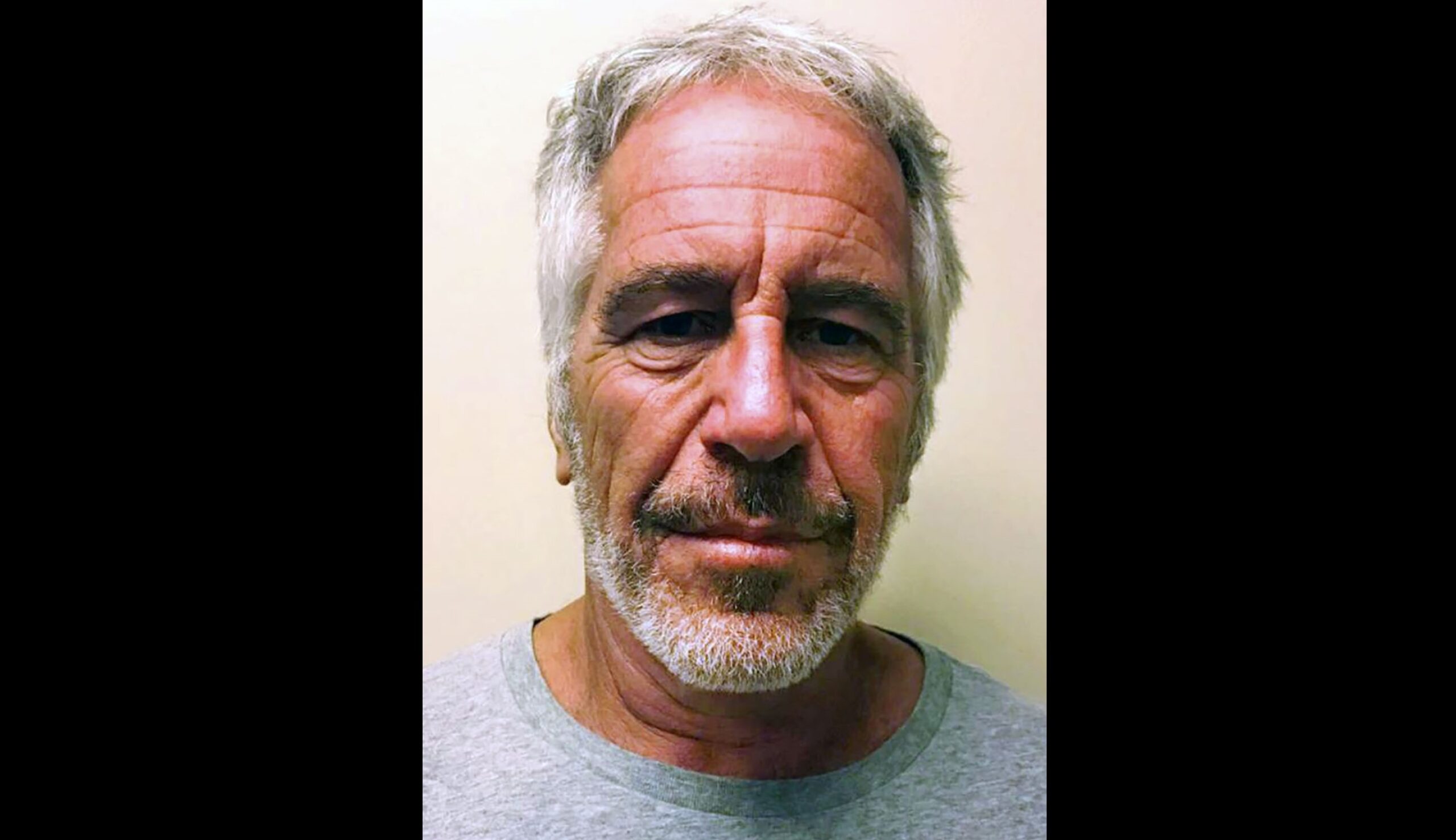
Epstein and Alan Dershowitz colluded to attack John Mearsheimer over ‘Israeli lobby’ paper: Report
Newly uncovered emails reveal that convicted sex offender Jeffrey Epstein and prominent lawyer Alan Dershowitz collaborated to discredit political scientists John Mearsheimer and Stephen Walt following their controversial 2006 paper on the influence of the Israeli Lobby in the US. The emails, reported by Drop Site News, show Epstein praising Dershowitz’s rebuttal titled “Debunking the Newest – and Oldest – Jewish Conspiracy” and promising to circulate it among his contacts. Epstein, who was later convicted of sexual offenses, described Dershowitz’s attack on the academics as “terrific.” Dershowitz, a Harvard law professor and frequent media commentator, has long defended Israeli policies, including illegal settlements and actions in the occupied West Bank and Gaza. At the time of their collaboration, Dershowitz was also representing Epstein in a legal case that resulted in Epstein’s 2008 guilty plea for a sexual offense. Mearsheimer and Walt’s work, which later became the book *The Israeli Lobby and US Foreign Policy*, faced intense backlash from pro-Israel groups and was criticized by prominent figures like Strobe Talbott of the Brookings Institution. The authors argued that powerful supporters of Israel, including think tanks and philanthropic organizations, exerted undue influence on US foreign policy. Despite their academic credentials, Mearsheimer and Walt faced significant pushback, including the cancellation of a scheduled talk by the Chicago Council on Global Affairs. Mearsheimer, a leading realist theorist, has gained recent recognition for his accurate prediction of Russia’s invasion of Ukraine, though his views on NATO’s role in the conflict have sparked controversy in Washington.
-
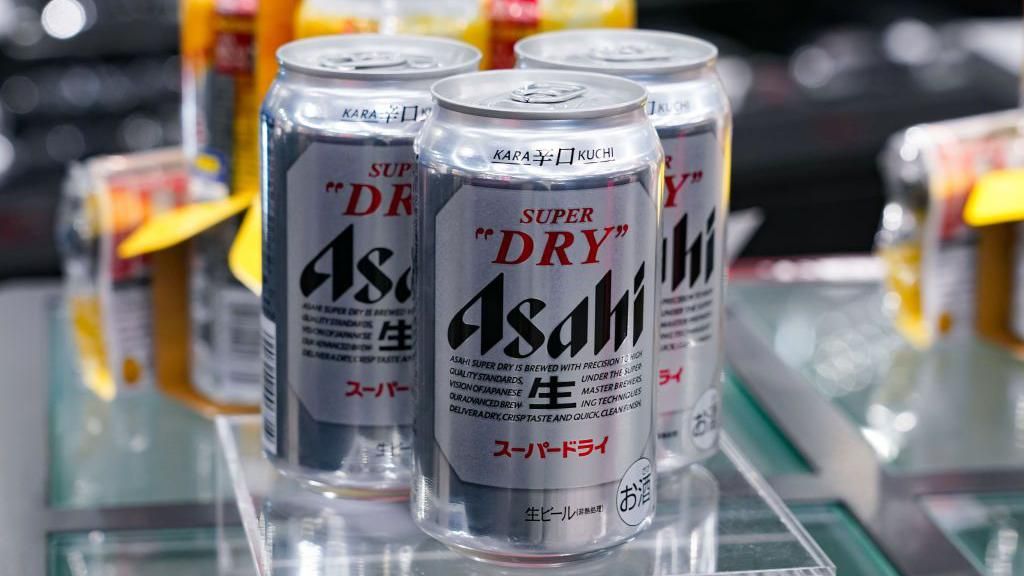
Asahi says 1.5 million customers’ data leaked in cyber-attack
Japanese beverage giant Asahi has disclosed the severe impact of a ransomware attack that struck its operations in September, potentially compromising the personal information of over 1.5 million customers. The cyber-attack, which targeted Asahi’s data centers, forced the company to revert to manual processes, significantly disrupting its production and distribution systems. Asahi confirmed that the personal details of individuals who interacted with its customer service centers were likely exposed, including names, genders, addresses, and contact information. Additionally, data belonging to approximately 107,000 current and former employees, along with 168,000 family members, were also potentially leaked. The attack, attributed to the ransomware group Qilin, encrypted Asahi’s data and demanded a ransom for its release. While credit card details were not compromised, the breach has raised significant concerns about data security. Asahi has delayed its full-year financial results to focus on mitigating the attack’s fallout and restoring its systems. The company has assured that its European operations, including brands like Peroni and Fuller’s Brewery, remain unaffected. Asahi’s president, Atsushi Katsuki, apologized for the disruptions and emphasized efforts to strengthen cybersecurity measures. The attack has also led to temporary shortages of Asahi products in Japan, where the company holds a 40% market share. This incident follows a series of high-profile cyber-attacks on global corporations, highlighting the growing threat of ransomware in the digital age.
-
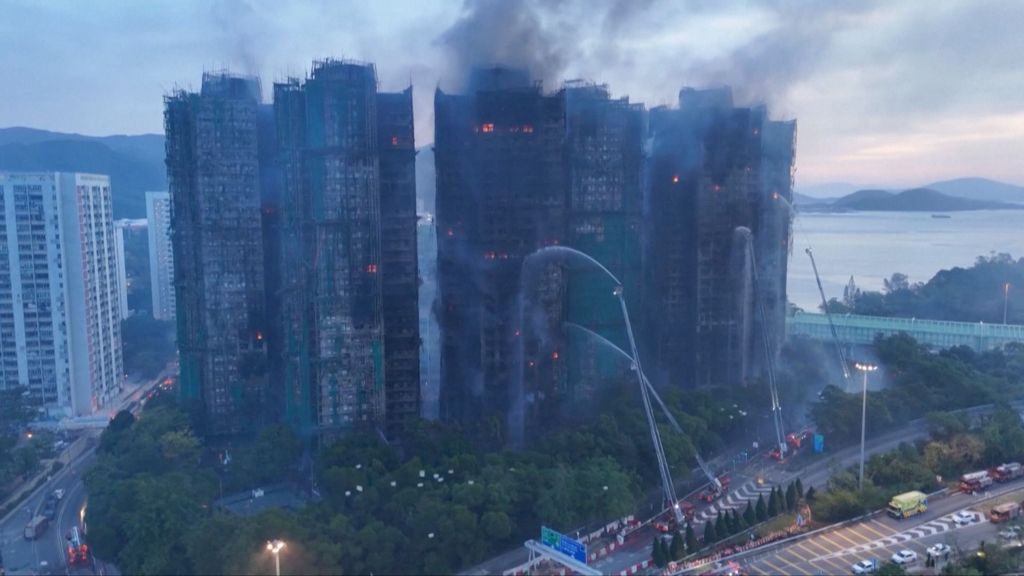
Watch: Dawn aerial vision reveals scale of Hong Kong blaze
A devastating fire broke out at Wang Fuk Court in Hong Kong, with over 800 firefighters mobilized to combat the raging inferno. The blaze, which continued into the early hours of the morning, was captured in dramatic aerial footage, revealing the sheer scale of the disaster. The footage, taken at dawn, showed thick plumes of smoke billowing into the sky and flames consuming multiple structures. Emergency services worked tirelessly to contain the fire, with the situation remaining critical as the day progressed. Authorities have yet to determine the cause of the fire, but initial reports suggest it may have started in a residential area. The incident has raised concerns about fire safety measures in densely populated urban areas. No casualties have been reported so far, but the extent of property damage is significant. The community has been urged to remain vigilant and follow safety protocols as investigations continue.
-
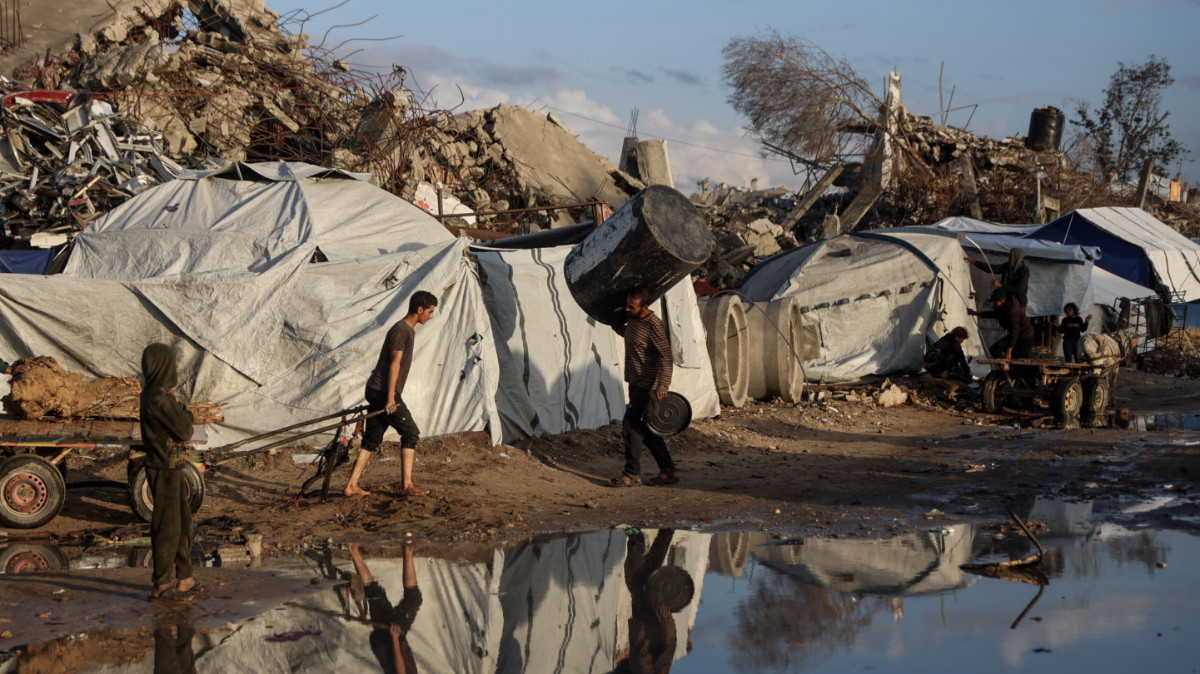
Senior US official confirms plan to build housing compounds in Israeli occupied Gaza
The Trump administration has confirmed its involvement in a controversial initiative to construct housing for thousands of ‘screened’ Palestinians in Israeli-occupied Gaza, according to a report by The New York Times. The project, named ‘Alternative Safe Communities,’ is spearheaded by a team of US officials and former Department of Government Efficiency (Doge) workers, operating from luxury hotels in Tel Aviv. Aryeh Lightstone, a senior Trump administration official and former advisor to US Ambassador to Israel David Friedman, is leading the effort, reporting directly to Jared Kushner, Trump’s son-in-law and advisor. The plan, which aims to relocate Palestinians to Israeli-controlled areas, has drawn criticism from Arab officials and raises questions about funding and land ownership. The initiative, still in its early stages, involves clearing rubble in Rafah, near Gaza’s border with Egypt, and constructing prefabricated homes, with costs estimated in the tens of millions of dollars. However, no US sovereign funds have been pledged, with Trump suggesting Gulf states should finance the project. The plan also faces legal and ethical challenges, particularly regarding Palestinian land rights and the broader implications of relocating populations in a conflict zone.
-
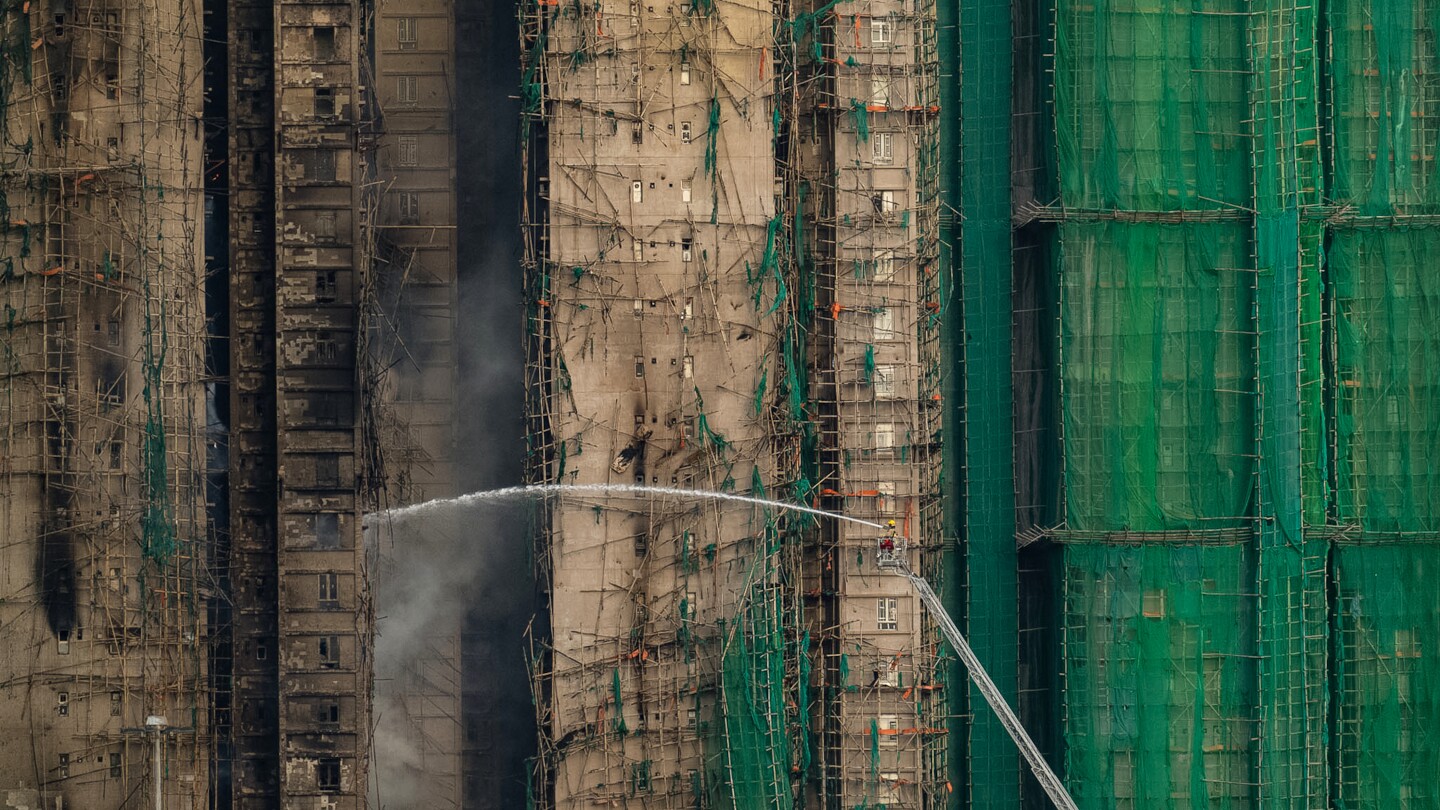
At least 55 dead as Hong Kong firefighters battle burning towers for a second day
A devastating fire at the Wang Fuk Court residential complex in Hong Kong’s Tai Po district has claimed 55 lives, marking one of the deadliest blazes in the city’s modern history. The fire, which began on Wednesday afternoon, engulfed seven of the complex’s eight buildings, with thick smoke and flames still visible on Thursday evening. Over 70 people were injured, and approximately 900 residents were evacuated to temporary shelters. Authorities reported that 51 victims were found dead at the scene, while four others succumbed to injuries in hospitals. One firefighter also lost his life in the tragedy. Hong Kong leader John Lee revealed that contact had been lost with 279 individuals, raising concerns about the number of people still trapped. Firefighters managed to extinguish flames in four buildings by Thursday afternoon, with the remaining three under control. The fire originated from bamboo scaffolding and construction netting, spreading rapidly due to windy conditions and suspected substandard fire-resistant materials. Three individuals, including directors and an engineering consultant from a construction company, were arrested on suspicion of manslaughter. Police seized documents from the office of Prestige Construction & Engineering Company, which was overseeing renovations at the complex. The incident has prompted an anti-corruption probe and calls for stricter safety regulations, including the replacement of bamboo scaffolding with metal alternatives. The tragedy has reignited debates about fire safety standards in Hong Kong’s densely populated residential areas.