标签: Asia

亚洲

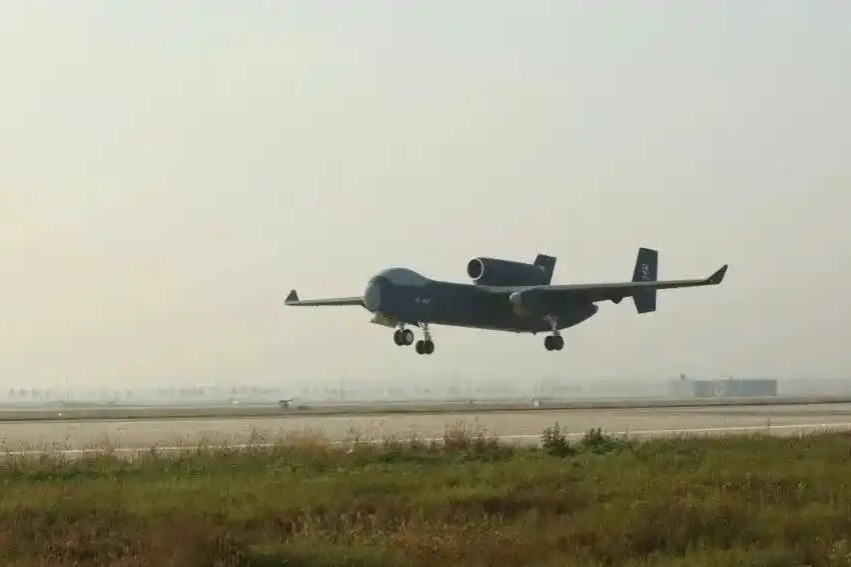
  • 2-ton cargo drone ready for takeoff

    2-ton cargo drone ready for takeoff

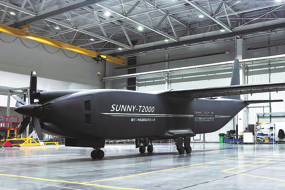
    China’s aviation sector has achieved a significant technological breakthrough with the successful production of the SUNNY-T2000, a heavy-payload unmanned cargo aircraft capable of carrying two metric tons. This development marks a substantial advancement in the country’s capabilities for long-haul transportation, regional distribution, and last-mile delivery solutions.

    Manufactured by Shenyang Sunny Aeronautics and Space Adventure Company, the drone officially rolled off production lines in Shenyang, Liaoning Province, on December 12, 2025. The aircraft features a substantial 15-cubic-meter rectangular cargo bay designed to accommodate diverse freight including emergency supplies, industrial components, and agricultural products.

    According to Professor He Jun, Chairman of Shenyang Sunny Aeronautics and Space Adventure and academic at Shenyang Aerospace University, the SUNNY-T2000 boasts an operational range exceeding 1,000 kilometers when fully loaded. The aircraft requires only an 800-meter runway for takeoff and landing operations, making it particularly suitable for reaching remote locations and navigating challenging terrain.

    Beyond conventional cargo transport, the drone’s design incorporates aerial cargo drop capabilities, expanding its potential applications to emergency rescue missions and forest firefighting operations. This multifunctional approach addresses limitations in existing cargo aircraft regarding payload capacity, internal space, and range efficiency.

    The development represents part of a broader strategic initiative in Shenbei New District, which has designated the low-altitude economy as a priority emerging industry during China’s 14th Five-Year Plan period (2021-2025). The district has attracted over thirty enterprises specializing in low-altitude technologies, creating a comprehensive manufacturing ecosystem.

    Infrastructure development has kept pace with technological advancements, with authorities approving fourteen airspaces and two dedicated drone logistics test routes—the largest and highest-quality airspace resources in Liaoning Province. The district has also established twenty-one temporary takeoff and landing points alongside ongoing construction of key facilities including Shenbei General Airport and the second phase of the Aifeike flight camp.

    Looking forward, the company is already advancing more ambitious projects including 6-ton and 7-ton cargo drone models, with the 6-ton variant designed to accommodate space equivalent to a 40GP standard container (approximately 67 cubic meters). Development is also underway for a 10-ton commercial cargo aircraft targeting cross-regional heavy cargo transportation.

    These developments collectively contribute to forming a multi-tiered logistics network that integrates with existing transportation infrastructure while expanding capabilities for specialized applications across multiple industries.

  • Novel system tracks sandstorms precisely

    Novel system tracks sandstorms precisely

    China has initiated trial operations for an innovative artificial intelligence system that dramatically enhances sand and dust storm forecasting capabilities. Developed by researchers at the Chinese Academy of Meteorological Sciences’ Lanzhou Institute of Arid Meteorology, the advanced model commenced testing in Gansu province during late November 2025.

    The groundbreaking system represents a quantum leap in meteorological technology, improving spatial resolution from 50 kilometers to just 5 kilometers through sophisticated downscaling techniques. This enhancement addresses critical limitations in previous AI models that, while effective for large-scale regional tracking, lacked the precision necessary for localized forecasting and public safety applications in Northwest China’s vulnerable regions.

    Beyond precision, the system delivers unprecedented processing speed. Unlike traditional physics-based models that require supercomputers and extensive processing times, this AI-powered solution operates on standard GPU hardware, generating comprehensive global five-day predictions in under sixty seconds. With eight daily updates, meteorologists now possess significantly more opportunities to monitor and respond to developing storm events.

    Dr. Che Huizheng, a researcher at the academy, emphasized the transformative nature of this development: “This represents a paradigm shift not merely in velocity but in accessibility. We can now execute sophisticated dust forecasts using conventional desktop computing equipment.”

    The system’s capabilities were demonstrated during a late November dust event originating in the southern Xinjiang basin. The AI model successfully detected warning signals two to three days in advance and provided near real-time updates on November 22nd that closely correlated with ground observations as the plume expanded across Ningxia Hui Autonomous Region, Qinghai, Gansu, and other northern territories.

    According to researcher Yue Ping, spring remains the most active period for sandstorm formation due to exposed soil conditions and frequent cold-air activity. Summer and autumn events, primarily driven by long-range transport, present continued forecasting challenges that the new system aims to address through higher-resolution optical data, mass concentration metrics for multiple aerosol types, and dozens of continuously refreshed environmental indicators.

    Meteorological experts suggest the technology could establish a template for international cooperation in regions where dust storms regularly cross national boundaries. The reduced hardware requirements may enable meteorological agencies across Central Asia, North Africa, and the Middle East to implement similar early-warning systems, potentially transforming regional environmental monitoring capabilities.

  • Large, unmanned jet makes maiden flight

    Large, unmanned jet makes maiden flight

    China’s aviation sector achieved a significant technological milestone on Thursday, December 12, 2025, with the successful maiden flight of the Jiutian (High Sky), a large multifunctional unmanned jet aircraft. The prototype conducted its inaugural flight from an airport in Pucheng, Shaanxi Province, completing a brief aerial demonstration before returning safely to its departure point.

    Developed by the AVIC First Aircraft Institute for State-owned Shaanxi Unmanned Equipment Technology, the Jiutian represents a sophisticated advancement in unmanned aerial systems. The aircraft measures 16.4 meters in length with an impressive 25-meter wingspan, boasting a maximum takeoff weight of 16 metric tons and a payload capacity of up to 6 tons. With an operational ceiling of 15 kilometers and an endurance of 12 hours or 7,000 kilometers per mission, the platform demonstrates remarkable range and altitude capabilities.

    The Jiutian’s modular design architecture enables exceptional mission flexibility, allowing for various payload configurations including guided munitions, air-to-air missiles, cruise missiles, and loitering munitions. A distinctive feature is its compartmentalized internal bay, capable of housing over 100 loitering munitions or small attack drones, effectively functioning as a ‘mothership’ for drone swarm operations.

    Beyond military applications, the unmanned jet excels in civilian roles including heavy cargo transportation to remote mountainous regions and offshore islands, emergency communications restoration, disaster relief operations, geographic mapping, mineral surveys, cultural relic documentation, maritime patrol, and forest fire suppression.

    According to Wang Yanan, Chief Editor of Aerospace Knowledge magazine, the Jiutian’s substantial size and payload capacity enable extended operations behind enemy air defenses. The platform can perform long-range detection and tracking of naval targets followed by anti-ship missile engagements, or deploy drone swarms to overwhelm defensive systems in asymmetric warfare scenarios. Multiple Jiutian aircraft can operate collaboratively in fleet formations for enhanced mission effectiveness.

    The Jiutian was initially unveiled to the international community at the 15th China International Aviation and Aerospace Exhibition in Zhuhai, Guangdong Province, in November 2024. Aviation Industry Corp of China (AVIC), the nation’s premier aircraft manufacturer, confirmed that the maiden flight successfully validated the drone’s fundamental design parameters and basic flight performance characteristics.

  • New method devised to save Xizang’s poplar trees from canker

    New method devised to save Xizang’s poplar trees from canker

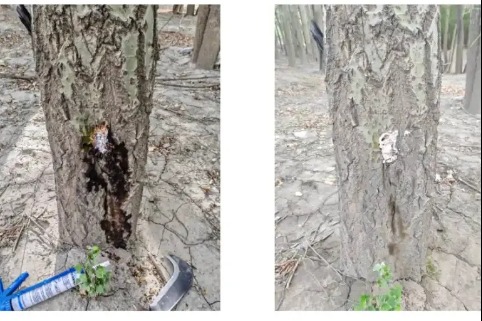
    Scientists from the Chinese Academy of Sciences have pioneered an innovative ecological defense system to protect the Qinghai-Tibet Plateau’s crucial poplar populations from devastating canker disease. Their integrated biocontrol strategy has demonstrated remarkable effectiveness, achieving sustained disease suppression rates exceeding 80% in year-long field trials across Tibet Autonomous Region.

    The research initiative, spanning three years and approximately 35 hectares of poplar plantations, addressed a critical threat to the region’s ecological restoration efforts. Poplars constitute 45% of Tibet’s planted forest area and serve as fundamental components in sand stabilization and carbon sequestration programs. Research confirms these plantations along the Yarlung Zangbo River capture 20-30 metric tons of carbon per hectare, matching national averages despite extreme high-altitude conditions.

    Professor Zhang Gengxin of the Institute of Tibetan Plateau Research explained the environmental challenges: “The combination of low temperatures, drought conditions and intense ultraviolet radiation creates exceptional vulnerability to fungal pathogens that cause bark necrosis, branch failure and complete tree mortality.”

    The scientific breakthrough emerged from meticulous study of diseased tree bark, where researchers isolated antagonistic bacteria with both disease-resistant properties and growth-promoting capabilities. This biological control agent proved highly effective in laboratory and field inoculation experiments. The team discovered optimal results emerged when combining the biocontrol treatment with physical interventions including trunk whitewashing using calcium carbonate and strategic pruning of infected sections.

    Professor Zhang Sheng of Sichuan University’s College of Life Sciences emphasized the importance of ecological diversity: “Mixed-species stands create more diverse soil microbiomes that enhance nitrogen and phosphorus availability through resource complementarity and niche differentiation.”

    Project leader Liang Eryuan highlighted the solution’s environmental advantages: “Our biocontrol agent is not only cost-effective compared to chemical alternatives but poses minimal risk to the plateau’s fragile ecosystems. The methodologies developed provide sustainable models for green plantation management that could benefit forest health globally.”

    The technology’s impending industrialization promises significant enhancements to plantation forest development, potentially strengthening ecological resilience and carbon sink capacity throughout high-altitude regions.

  • China’s 2026 stimulus plan isn’t exports, it’s economic reform

    China’s 2026 stimulus plan isn’t exports, it’s economic reform

    TOKYO — China’s economic trajectory is undergoing a fundamental recalibration as President Xi Jinping’s administration confronts the limitations of its export-oriented growth model. Despite achieving a remarkable $1 trillion trade surplus within 11 months and securing a 12-month delay in trade negotiations with the Trump administration, Chinese leadership recognizes that external demand cannot sustainably deliver the 5% growth target for 2026.

    The Politburo’s recent meeting in Beijing signaled a strategic shift toward domestic-driven growth, emphasizing the critical need to mobilize approximately $22 trillion in household savings to combat deflationary pressures. The leadership’s directive to ‘adhere to domestic demand as the main driver and build a strong domestic market’ represents a significant policy reorientation.

    Central to this new approach is Xi’s concept of ‘new productive forces,’ first introduced in 2023, which focuses on technological enhancement of manufacturing efficiency rather than reducing industrial output. This strategy aligns with the Politburo’s emphasis on ‘cross-cyclical’ policies prioritizing long-term stability over short-term gains.

    While monetary easing is anticipated—with Societe Generale economist Wei Yao predicting record-low bond yields—the core growth strategy centers on supply-side reforms. However, economists caution about implementation challenges. Lizzi Lee of the Asia Society Policy Institute notes: ‘Aligning fiscal expansion with structural reform, strengthening household demand without amplifying financial vulnerabilities, and advancing industrial upgrading while preserving market discipline will be central to navigating China’s economic transition.’

    The reform agenda addresses multiple structural weaknesses: resolving the property crisis, reducing economic opacity, leveling playing fields for private enterprises, tackling youth unemployment, managing local government debt, and developing social safety nets to reduce precautionary savings.

    Historical context reveals repeated delays in market-oriented reforms since 2013, when Xi initially promised to let market forces play a ‘decisive role.’ Previous crises, including the 2015 market crash, COVID-19 lockdowns, and the tech sector crackdown, have consistently diverted attention from structural reforms.

    Analysts suggest abandoning annual GDP targets could facilitate a genuine transition toward sustainable growth. While China has made progress in deleveraging and achieved technology successes through initiatives like ‘Made in China 2025,’ the underlying economy remains constrained by unfinished reforms.

    The external environment adds complexity, with potential policy shifts from the Trump administration representing a significant uncertainty. As fund manager Cheng Hao observes, there are concerns that current policies might represent ‘old wine in new bottles,’ highlighting the challenge of demonstrating genuine reform progress amid global economic uncertainties.

  • Nation’s digital heft in UAE spotlight

    Nation’s digital heft in UAE spotlight

    ABU DHABI—China’s technological and cultural prowess took center stage at the BRIDGE Summit 2025 this week as Asia’s premier gaming exhibition, ChinaJoy, made its Middle Eastern debut in the United Arab Emirates capital. The event showcased China’s emerging role as a global innovator blending artificial intelligence, interactive entertainment, and cultural storytelling into a unified digital ecosystem.

    The three-day conference, running from December 9-11, attracted over 60,000 participants from across media and entertainment industries. The China-Joy pavilion featured 19 exhibitors and internationally celebrated titles including Black Myth: Wukong and Delta Force, demonstrating China’s integrated approach to technology and cultural content.

    Yu Kun, head of the China-Joy pavilion, described the event as more than an exhibition—but rather a ‘proof of concept’ for cultural co-creation. ‘We’re building a bridge between Chinese technological strength and Middle Eastern cultural preferences,’ Yu stated, emphasizing gaming’s unique capacity for cultural export through immersive experiences.

    The expansion aligns with China’s established dominance in digital content exports. Market analyst AppsFlyer reports China solidified its position as the world’s largest game exporter in the first half of 2025, accounting for 32.6% of global game exports.

    Middle Eastern audiences responded enthusiastically to the Chinese offerings. Emirati gamer Basem Sheikha noted, ‘Black Myth: Wukong blends gameplay with Chinese culture brilliantly. I’ve recommended it to many friends, and they all love it.’

    Regional industry leaders recognized the strategic significance of the partnership. Jamal Mohammed Obaid Al Kaabi, director-general of the UAE National Media Office, stated that bringing ChinaJoy to Abu Dhabi ‘opens a new channel for partnerships among China, the UAE and global gaming leaders.’

    The collaboration extends beyond entertainment into economic opportunity. According to market researcher Niko Partners, Saudi Arabia, the UAE and Egypt together will host 85.8 million gamers generating $3.1 billion in game revenue by 2025, with UAE players expected to exceed $100 in average annual revenue per user by 2029.

    Mohammed Ali Alblooshi of twofour54, an Abu Dhabi government-backed media production company, observed: ‘Asian influence lies in merging tech innovation with cultural diversity. Chinese gaming proves local narratives can resonate globally. China could be the tech enabler and content inspiration.’

    The event also highlighted broader technological convergence, with the Khaleej Times reporting that 67% of creators now use AI tools, while cross-sector collaborations have surged 340% over three years.

    Emirati media expert Mayed Alsakhawi noted the natural synergy between the partners: ‘China provides the tech and content, and the UAE offers geographic access and a flexible regulatory environment. Future media will bring more co-productions, cultural exchanges and business models that deepen mutual understanding.’

  • New academy to sharpen skills of riders

    New academy to sharpen skills of riders

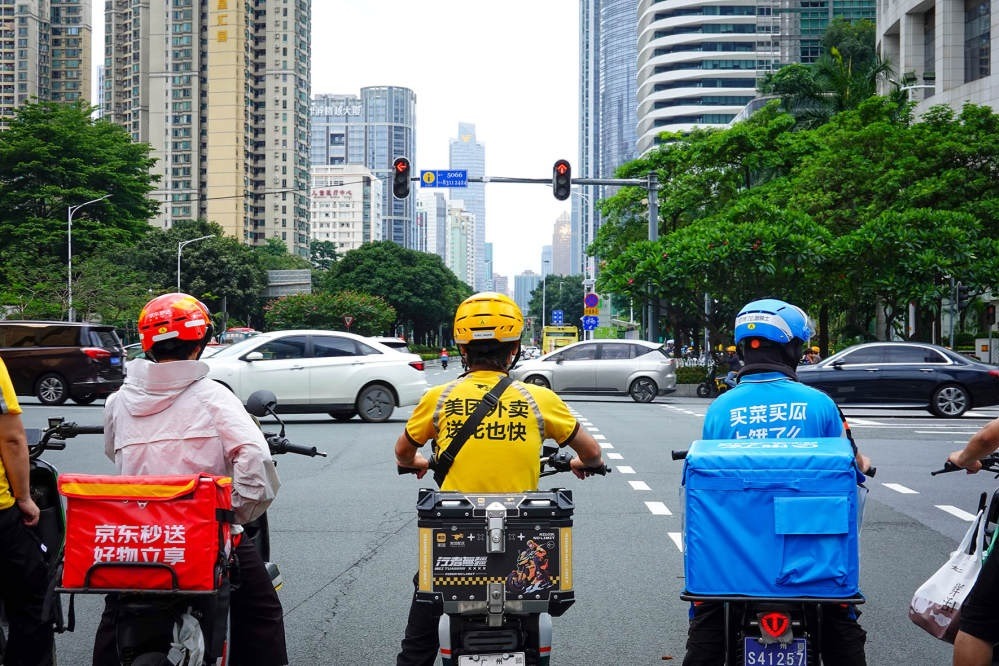
    In a groundbreaking initiative for China’s gig economy, the nation’s first dedicated vocational academy for delivery riders officially opened in Guangdong province on Thursday. The Modern Grassroots Workers Academy—collaboratively established by the Guangdong Provincial Education Department and e-commerce titan JD—represents a strategic effort to professionalize the rapidly expanding courier workforce.

    Housed at Guangzhou Polytechnic University with satellite training centers across the province, the institution aims to equip over 100,000 full-time delivery personnel with enhanced skills within the next three years. The curriculum addresses both immediate practical needs and future technological shifts, offering courses in food safety protocols, mental wellness, English communication, and emerging delivery technologies including drone operation.

    Lin Rupeng, Director of Guangdong’s Education Department, emphasized the academy’s role in bridging educational offerings with industrial demands. “Through the enabling power of education, we are opening new pathways for rider career development while creating a more dynamic model of industry-education integration,” he stated.

    The initiative responds to the growing significance of China’s 84 million workers in new employment forms—including delivery riders, live-stream sellers, and ride-hailing drivers—who have become essential to urban ecosystems. JD executive Feng Lei clarified that despite automation advances, drones and robotics would complement rather than replace human workers. “These technologies raise skill requirements rather than eliminate the need for riders,” she noted, explaining that personnel must now operate intelligent order systems and collaborate with automated devices.

    Academic expert Feng Lipan from South China University of Technology observed that the academy would help transform public perception of delivery work from low-skilled labor to a technically proficient occupation. The move parallels similar upskilling efforts nationwide, including Jiangsu province’s recent three-year action plan for workers in new employment forms.

  • Ten photos from across China: Dec 5 – 11

    Ten photos from across China: Dec 5 – 11

    Between December 5th and 11th, 2025, a series of compelling photographs emerged from across China, painting a vibrant picture of the nation’s economic, cultural, and social landscape. These images, curated and released by China Daily, document a week of significant activity and progress.

    The visual narrative begins in the southwestern city of Pu’er, Yunnan province, where the 2025 China (Pu’er) International Coffee Expo and Pu’er Tea Expo & Trade Fair commenced on December 5th. This major dual-expo event, spanning three days, successfully attracted over 100 enterprises from both within China and across the globe. The photograph captures attendees intently examining a diverse array of coffee products, highlighting the region’s growing prominence in the global specialty coffee market and its deep-rooted tea culture. This event serves as a crucial platform for trade and cultural exchange, underscoring Yunnan’s strategic role in China’s agricultural export economy.

    While the specific details of the subsequent nine photographs were not provided in the source text, such collections typically offer a panoramic view of the country. They often feature advancements in technology and infrastructure, celebrations of cultural heritage, glimpses into daily urban and rural life, and milestones in sports or education. Each image stands as a testament to the multifaceted development and complex tapestry of modern Chinese society, capturing moments of innovation, tradition, and community engagement that define the nation’s character.

  • A Chinese official exposed his boss. Now in Texas, he’s hunted by Beijing – with help from US tech

    A Chinese official exposed his boss. Now in Texas, he’s hunted by Beijing – with help from US tech

    A former Chinese official’s harrowing escape from China’s pervasive surveillance apparatus reveals the extensive reach of Beijing’s global monitoring operations. Li Chuanliang, a retired vice mayor from Jixi, was recovering from cancer treatment on a South Korean resort island when he received an urgent warning: Chinese authorities had designated him a fugitive. What followed was an international chase spanning multiple continents, documented through exclusive interviews and evidence obtained by The Associated Press.

    The Chinese government employed sophisticated surveillance technology—much of it originally developed by U.S. tech firms—to track Li’s movements, monitor his communications, and pressure his associates. More than 40 individuals connected to Li, including his pregnant daughter, were identified and detained through methods that included facial recognition scans of taxi drivers. Three former associates died in custody during the investigation.

    China’s Operations “Fox Hunt” and “Sky Net” represent a systematic approach to targeting officials, dissidents, and alleged criminals beyond its borders. These initiatives have resulted in over 14,000 individuals being returned from more than 120 countries through various coercive measures, according to state media reports. While Beijing frames these operations as anti-corruption efforts, critics argue they primarily serve to suppress dissent and eliminate political opponents.

    The technological infrastructure enabling this global surveillance traces back to American companies including IBM, Oracle, and Microsoft. Internal documents reveal these firms provided software and systems to China’s Economic Crime Investigation Bureau, allowing authorities to mine texts, payments, travel records, and communications to map relationships and assets. Though these sales complied with U.S. sanctions, they have empowered China’s ability to monitor perceived enemies worldwide.

    Li maintains that the corruption charges totaling approximately $435 million are politically motivated retaliation for his criticism of local officials and the Communist Party. Legal documents and expert analyses reviewed by AP indicate irregularities in the prosecution’s case, including altered records, blocked evidence access, and coerced confessions.

    Despite obtaining temporary refuge in the United States, Li remains in legal limbo with his asylum application pending. His case exemplifies how China projects its power globally through digital surveillance, creating what experts describe as a profoundly effective chilling effect on dissent both within China and abroad.

  • A 6.9 magnitude earthquake causes small tsunami waves off northeastern Japan

    A 6.9 magnitude earthquake causes small tsunami waves off northeastern Japan

    TOKYO — Northeastern Japan experienced a significant seismic event on Friday when a 6.9 magnitude earthquake struck off the coast of Aomori prefecture. The tremor, which occurred at 11:44 a.m. local time at a depth of 20 kilometers (12.4 miles), prompted immediate tsunami warnings from the Japan Meteorological Agency. These advisories were lifted approximately two hours later after only minor wave activity was recorded.

    The quake generated small tsunami waves that reached coastal areas of Hokkaido and Aomori prefectures, but preliminary assessments indicated no substantial damage or injuries resulting from the event. This seismic activity follows a more powerful 7.5 magnitude earthquake that impacted the same region earlier in the week, which resulted in multiple injuries and temporary power disruptions.

    Seismologists note that both recent earthquakes occurred in proximity to the epicenter of the catastrophic 2011 magnitude 9.0 quake that devastated Japan’s northeastern coast, claiming nearly 20,000 lives and causing the Fukushima nuclear disaster. Japanese authorities have maintained heightened alert levels, warning residents of potential aftershocks and advising continued emergency preparedness measures.

    While officials confirmed a marginally increased risk of larger seismic events following Monday’s quake, they emphasized that current monitoring does not predict an imminent megaquake. The agency continues to urge coastal communities from Chiba prefecture to Hokkaido to remain vigilant and maintain disaster readiness protocols.