标签: Asia

亚洲

  • Hasina’s conviction for crimes against humanity is testing India-Bangladesh ties

    Hasina’s conviction for crimes against humanity is testing India-Bangladesh ties

    The longstanding relationship between India and Bangladesh has reached a critical juncture, with the exile and death sentence of Bangladesh’s former leader Sheikh Hasina creating a complex diplomatic bind. Hasina, who ruled Bangladesh for 15 years, was a key ally for India, ensuring stability and connectivity in the region while aligning with Delhi’s interests over Beijing’s. However, her crackdown on student-led protests in 2024 led to her ousting and subsequent exile in India, where she has been granted asylum. A special tribunal in Bangladesh has sentenced her to death for crimes against humanity, but India has shown no inclination to extradite her, leaving the sentence unenforceable.

    This situation has placed India in a precarious position. South Asia expert Michael Kugelman outlines four unappealing options for Delhi: extraditing Hasina, maintaining the status quo, pressuring her to remain silent, or finding a third country to take her in. Each option carries significant risks, particularly as Bangladesh’s interim government, led by Nobel laureate Muhammad Yunus, seeks to rebalance its foreign policy by reducing reliance on India and strengthening ties with China, Pakistan, and Turkey.

    The India-Bangladesh relationship is deeply intertwined, with Bangladesh being India’s largest trading partner in South Asia and India serving as Bangladesh’s biggest export market in Asia. Over the past decade, India has provided billions in concessional credit, built cross-border infrastructure, and supplied energy and raw materials. Despite this economic interdependence, public sentiment in Bangladesh has soured, with a recent survey revealing that 75% of Bangladeshis view ties with China positively, compared to just 11% for India. Many blame Delhi for supporting Hasina’s increasingly authoritarian regime.

    Experts argue that while political and diplomatic relations may fluctuate, economic and cultural ties often endure. However, the current situation poses significant challenges for India, particularly in managing border security and counterterrorism efforts along the 4,096 km shared border. The path forward, according to Avinash Paliwal of SOAS University of London, requires quiet and patient engagement with key stakeholders in Dhaka, including the armed forces.

    The uncertainty surrounding Bangladesh’s upcoming elections adds another layer of complexity. If the interim government can conduct credible elections, it may open opportunities for India and Bangladesh to renegotiate their relationship. However, the Hasina factor remains a wildcard, with the potential to strain bilateral ties further. Ultimately, the next elected government in Bangladesh will need to balance core national interests against domestic politics and public sentiment, making the future of India-Bangladesh relations fragile at best.

  • Exclusive: Saudi-US defence partnership will fast track arms sales, sources say

    Exclusive: Saudi-US defence partnership will fast track arms sales, sources say

    In a significant move to bolster military cooperation, the United States and Saudi Arabia have inked a Strategic Defence Agreement (SDA), paving the way for expedited arms sales to the kingdom. The deal, signed by US President Donald Trump and Crown Prince Mohammed bin Salman, marks a pivotal shift in bilateral relations, with Saudi Arabia poised to gain access to cutting-edge US defence technology, including the coveted F-35 warplanes. The agreement, currently under detailed negotiation by US officials, is expected to position Saudi Arabia ahead of other Gulf states in acquiring sophisticated US weaponry. A former senior US official revealed that the Saudis have received Trump’s approval to secure the best in defence technology, despite Israeli lobbying efforts to limit the capabilities of the F-35s sold to the kingdom. Beyond the F-35, Saudi Arabia is exploring futuristic weapons systems like Collaborative Combat Aircraft (CCA) drones, designed to operate alongside manned aircraft. The kingdom is also in talks with US firms, including Shield AI and General Atomics, for advanced drone acquisitions. The SDA extends beyond military technology, with separate deals anticipated in civilian nuclear technology and AI chips. Additionally, the US has designated Saudi Arabia as a major non-NATO ally, a status that accelerates weapons transfers and deepens military training. This designation places Saudi Arabia alongside other Middle Eastern allies like Bahrain, Qatar, and Kuwait. Crown Prince Mohammed bin Salman’s visit to Washington, his first since 2018, underscores Riyadh’s ambition to strengthen economic and security ties with the US. The crown prince’s diplomatic efforts, including navigating Israel’s war on Gaza and rekindling relations with Iran, have bolstered his international standing. However, Saudi Arabia seeks a more binding defence commitment from Washington, akin to the US-Japan mutual defence treaty. Talks on such a treaty are ongoing, contingent on Saudi Arabia’s recognition of Israel. The crown prince expressed a desire to join the Abraham Accords, emphasizing the need for a clear path toward a two-state solution. The agreement reflects Saudi Arabia’s strategic importance as the world’s largest oil exporter and the Arab world’s only G-20 economy, amid evolving regional dynamics.

  • Japan’s PM seen as playing to right wing

    Japan’s PM seen as playing to right wing

    Japanese Prime Minister Sanae Takaichi has drawn sharp criticism for her recent comments suggesting potential military intervention in Taiwan, a move widely seen as an attempt to rally right-wing support and bolster her ruling Liberal Democratic Party (LDP), which recently lost its parliamentary majority. Speaking in Japan’s parliament earlier this month, Takaichi framed such intervention as a response to a ‘survival-threatening situation,’ marking the first time an incumbent Japanese leader has publicly entertained such a possibility. However, her remarks directly contradict Article 9 of Japan’s pacifist Constitution, which renounces war and the use of force in international disputes. Chinese officials and analysts have condemned the comments as a dangerous echo of Japan’s militarist past. Chinese Foreign Ministry spokeswoman Mao Ning highlighted historical parallels, noting that Japan has previously used similar justifications for aggression, including the 1931 Manchurian Incident and the attack on Pearl Harbor. At the UN General Assembly, China’s Permanent Representative Fu Cong argued that Takaichi’s statements undermine the postwar international order and Japan’s commitment to peaceful development. Domestically, Takaichi’s strategy appears aimed at shoring up support among right-wing factions and voters, even as her government faces significant challenges. Critics, including Japanese lawmakers and social media influencers, have warned against escalating tensions with China, emphasizing the potential economic fallout. In response to Tokyo’s refusal to retract Takaichi’s remarks, China has suspended imports of Japanese aquatic products, citing safety concerns and public sentiment. Mao reiterated that Japan would bear full responsibility for any consequences of its actions.

  • Algerian ‘Hirak poet’ facing death sentence begins hunger strike

    Algerian ‘Hirak poet’ facing death sentence begins hunger strike

    International human rights organizations and activists are rallying for the immediate release of Algerian poet and activist Mohamed Tadjadit, who faces a potential death sentence in Algeria. Tadjadit, known as ‘the poet of the Hirak’ for his influential role in the 2019 pro-democracy protests, has been arbitrarily detained since January and recently began a hunger strike to protest his treatment in prison. On November 11, he was sentenced to five years in prison on charges including ‘condoning terrorism’ and ‘spreading extremist ideas,’ which rights groups have condemned as baseless. A new trial on November 30 could see him charged with ‘conspiring to incite citizens against the state,’ a crime punishable by death. Algeria has not carried out executions since 1993, but the threat remains. Tadjadit will be tried alongside 12 other activists, including whistleblowers and former military members. Rights groups, including Amnesty International and PEN America, have decried his prosecution as a crackdown on free expression. Index on Censorship awarded Tadjadit its Freedom of Expression Award, calling him ‘truly inspiring’ and urging his release. Tadjadit has been imprisoned multiple times since 2019, reflecting Algeria’s broader suppression of dissent. The Hirak movement, which forced the resignation of former President Abdelaziz Bouteflika, has been largely repressed, but sporadic protests continue. Critics accuse the ruling National Liberation Front of corruption and undemocratic practices. The government has also targeted individuals using the hashtag #Manich_Radhi (‘I am not happy’) to express discontent. Human rights defenders estimate there are 200–250 prisoners of conscience in Algeria, many linked to the 2019 protests. The case highlights ongoing tensions between the Algerian government and its critics.

  • Brussels Airport cancels all departing flights on November 26 due to strike

    Brussels Airport cancels all departing flights on November 26 due to strike

    Brussels Airport has announced the cancellation of all departing flights scheduled for November 26, 2025, due to a nationwide strike involving a significant portion of its security and handling staff. The airport issued a statement on Wednesday, November 19, warning travelers of potential disruptions. In addition to departures, some arriving flights may also face cancellations, and public transportation services to and from the airport could be severely impacted. The strike, which is part of broader labor actions across the country, is expected to cause widespread inconvenience for passengers and airlines alike. Authorities are urging travelers to monitor updates and make alternative arrangements if necessary. This disruption comes at a time when the aviation industry is already grappling with challenges such as fluctuating demand and operational complexities.

  • Baseball United × TSUNAGARU TOWEL™:  Dubai’s New Rally Towel Tradition Begins

    Baseball United × TSUNAGARU TOWEL™: Dubai’s New Rally Towel Tradition Begins

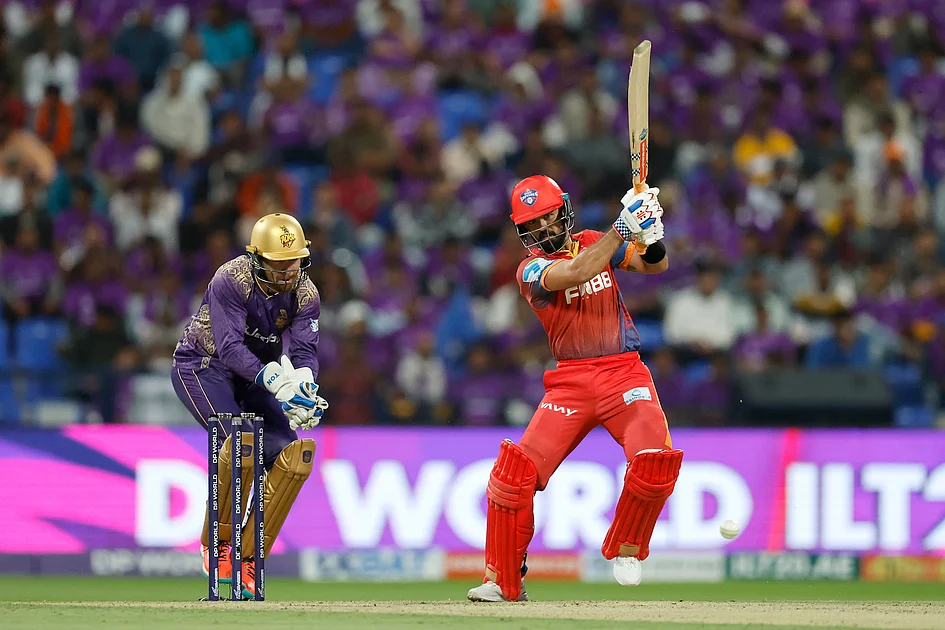
    As Baseball United gears up to launch its inaugural season in Dubai this November, fans are set to witness the birth of a unique tradition: the Baseball United × TSUNAGARU TOWEL™ collection. Crafted in Imabari, Japan, a world-renowned hub for premium towel-making, these rally towels symbolize unity, rhythm, and community, marking a historic moment for baseball in the Middle East and South Asia. The league, the first of its kind in the region, will host 21 broadcast games, including matches for the Mumbai Cobras, Arabia Wolves, Mid East Falcons, and Karachi Monarchs, from November 14 to December 14, 2025. The TSUNAGARU TOWEL™ collection, featuring exclusive designs for each team and the league, combines Japanese craftsmanship with regional pride. Imabari’s 130-year legacy of towel-making, known for its exceptional softness and vivid colors, ensures these towels are both functional and visually striking. Designed for Dubai’s hot climate, they are highly absorbent, quick-drying, and perfect for celebratory moments in the stands. Available only during Season One, the limited-edition towels are a collector’s item, with designs for the league and each team. Fans can purchase them at Baseball United Ballpark, select retailers like Books Kinokuniya and The Galleria, or online via Amazon.ae. This collaboration not only enhances the stadium experience but also celebrates the global connection fostered by sports.

  • Israeli military strikes southern Lebanon after evacuation warning

    Israeli military strikes southern Lebanon after evacuation warning

    The Israeli military launched a series of intense airstrikes targeting southern Lebanon on Wednesday, focusing on the villages of Deir Kifa and Chehour. Witnesses reported significant explosions as the strikes hit what the Israeli military described as ‘several Hezbollah terror infrastructure sites.’ This operation is part of an ongoing campaign in the border region, where Israel claims to be countering Iran-backed Hezbollah activities. Prior to the attacks, the Israeli military issued evacuation warnings to residents of specific buildings in the affected villages, signaling imminent military action. No casualties have been reported so far. The strikes underscore the escalating tensions in the region, with Israel intensifying its efforts to neutralize perceived threats from Hezbollah. The situation remains volatile, with both sides maintaining a high state of alert.

  • Chinese drug trafficking suspect handed to the US by Mexico pleads not guilty in NYC

    Chinese drug trafficking suspect handed to the US by Mexico pleads not guilty in NYC

    A high-profile Chinese drug trafficking suspect, Zhi Dong Zhang, also known by aliases including “Brother Wang,” has been extradited to the United States to face charges of trafficking large quantities of cocaine and fentanyl. Zhang, who escaped custody in Mexico only to be recaptured in Cuba, pleaded not guilty during his arraignment in Brooklyn federal court on Wednesday. His defense attorney refrained from commenting post-court appearance. Federal authorities allege that Zhang orchestrated an extensive drug trafficking and money laundering operation, importing thousands of kilograms of narcotics into the U.S. and other countries. U.S. Deputy Attorney General Todd Blanche emphasized the significance of Zhang’s extradition, stating, “His return to the United States is a major step in dismantling a network that has fueled addiction, violence, and death.” Zhang’s criminal enterprise, based in Mexico since at least 2016, allegedly laundered drug proceeds through over 100 shell companies in the U.S., using fraudulent documents and false social security numbers to conceal illicit activities. Mexican authorities initially apprehended Zhang in Mexico City in October 2024 at the U.S. government’s request. However, after being granted house arrest, he escaped from a military-guarded residence. He was later recaptured in Cuba and handed over to U.S. officials on October 23. Zhang remains in custody pending his next court appearance in January and faces additional federal charges in Georgia. Court documents reveal a sprawling cocaine and fentanyl trafficking network with operations in Atlanta and Los Angeles, where millions in drug proceeds were allegedly collected and deposited into accounts accessible to Zhang from Mexico.

  • Fears grow Emirati dissident forcibly disappeared in Syria could be extradited to UAE

    Fears grow Emirati dissident forcibly disappeared in Syria could be extradited to UAE

    The recent abduction of Jassem Rashid al-Shamsi, an Emirati dissident and political activist, near Damascus has raised alarm among his family and human rights organizations. Shamsi, a former UAE government official, was seized by Syrian security forces on November 6 while traveling to the Damascus suburb of Ein Tarma. His wife, who was present during the incident, reported that armed men in black took him without presenting a judicial warrant or stating any charges. She has since been denied access to her husband and fears he may be forcibly extradited to the UAE, where he faces a life sentence on terrorism-related charges.

    Shamsi was previously imprisoned during the UAE’s notorious ‘UAE 94’ trial in 2013, which targeted activists, lawyers, and academics advocating for democratic reforms. The trial was widely criticized as unfair, with defendants accused of plotting to overthrow the government—a charge they denied. In December 2023, Shamsi was implicated in the ‘UAE 84’ case, leading to a life sentence in July 2024.

    Human rights groups, including the Emirates Detainees Advocacy Centre (EDAC) and the Arab Organisation for Human Rights in the UK (AOHR UK), have condemned Shamsi’s disappearance as a violation of international law. AOHR UK accused Syria of acting on behalf of the UAE in a case of ‘transnational repression.’ Alkarama, a Swiss-based NGO, warned that extraditing Shamsi to the UAE would breach Syria’s obligations under the Convention against Torture.

    Mohammed bin Saqr Al Zaabi, a former UAE judicial advisor, questioned the legality of Shamsi’s arrest, noting that he had legally resided in Syria for ten months without prior issues. The Syrian government has yet to comment on the case, leaving Shamsi’s fate uncertain and intensifying concerns over his safety and the broader implications for political exiles in the region.

  • Missouri seeks federal help in pressing China for $25 billion in COVID damages

    Missouri seeks federal help in pressing China for $25 billion in COVID damages

    Missouri has intensified its efforts to seize Chinese government-owned assets in the United States, seeking assistance from the Trump administration to enforce a $25 billion court judgment related to the COVID-19 pandemic. State Attorney General Catherine Hanaway announced on Wednesday that Missouri has requested the U.S. State Department to formally notify China of its intent to pursue assets with full or partial Chinese government ownership to satisfy the judgment. This legal action stems from a lawsuit accusing China of hoarding personal protective equipment (PPE) during the early stages of the pandemic, allegedly causing harm to Missouri and its residents. A federal judge ruled in favor of Missouri earlier this year after China refused to participate in the trial, dismissing the lawsuit as “very absurd” when it was initially filed in 2020. China’s Ministry of Foreign Affairs has consistently rejected the ruling, asserting that its pandemic-related actions are not subject to U.S. jurisdiction. Legal experts have expressed skepticism about Missouri’s ability to collect on the judgment, citing federal laws that generally protect foreign nations from lawsuits in U.S. courts. Hanaway acknowledged the complexity of the process, stating that Missouri is compiling a list of Chinese properties that could be targeted, including those wholly or partially owned by the Chinese government. Liu Pengyu, spokesperson for the Chinese Embassy in Washington, condemned the lawsuit as a politically motivated and baseless legal maneuver, emphasizing China’s opposition to such actions. The State Department has yet to respond to Missouri’s request. The case has followed an unusual legal trajectory, with an appeals court allowing the PPE hoarding allegation to proceed after an initial dismissal in 2022. The judgment includes tripled damages and interest, reflecting Missouri’s estimated losses. The lawsuit was originally filed by former Attorney General Eric Schmitt, a Trump ally, and has since been inherited by Hanaway, who was appointed by Republican Governor Mike Kehoe.