
In a sweeping effort to foster a more positive online environment, the Chinese government has launched a two-month campaign targeting social media posts that amplify negative and pessimistic sentiments. Spearheaded by the Cyberspace Administration of China, the initiative aims to curb narratives such as ‘studying is useless’ and ‘hard work is useless,’ which have gained traction amid economic slowdowns, high youth unemployment, and intense competition for education and jobs. This campaign reflects Beijing’s growing concern over the disillusionment among its younger generation, who increasingly question their future prospects. The government’s anxiety has manifested in a series of sanctions against influencers and platforms. Notably, content creator Hu Chenfeng saw his social media accounts wiped clean after a viral comment that many interpreted as reinforcing social divides. Similarly, Zhang Xuefeng, a prominent online tutor, faced restrictions on his accounts following controversial remarks about Taiwan and his blunt advice on social mobility. The campaign also extends to social media platforms like Xiaohongshu, Kuaishou, and Weibo, which have been warned to curb ‘negative’ content. While the government frames this as a move to create a ‘civilised and rational online environment,’ critics argue that such top-down efforts may fail to address the root causes of societal pessimism. Experts like Dr. Simon Sihang Luo of Nanyang Technological University caution that suppressing expressions of frustration could exacerbate mental health issues. Despite the crackdown, the underlying pressures driving China’s youth to ‘lie flat’ and retreat from the rat race persist, highlighting the challenges of addressing systemic issues through censorship alone.
标签: Asia
亚洲
-
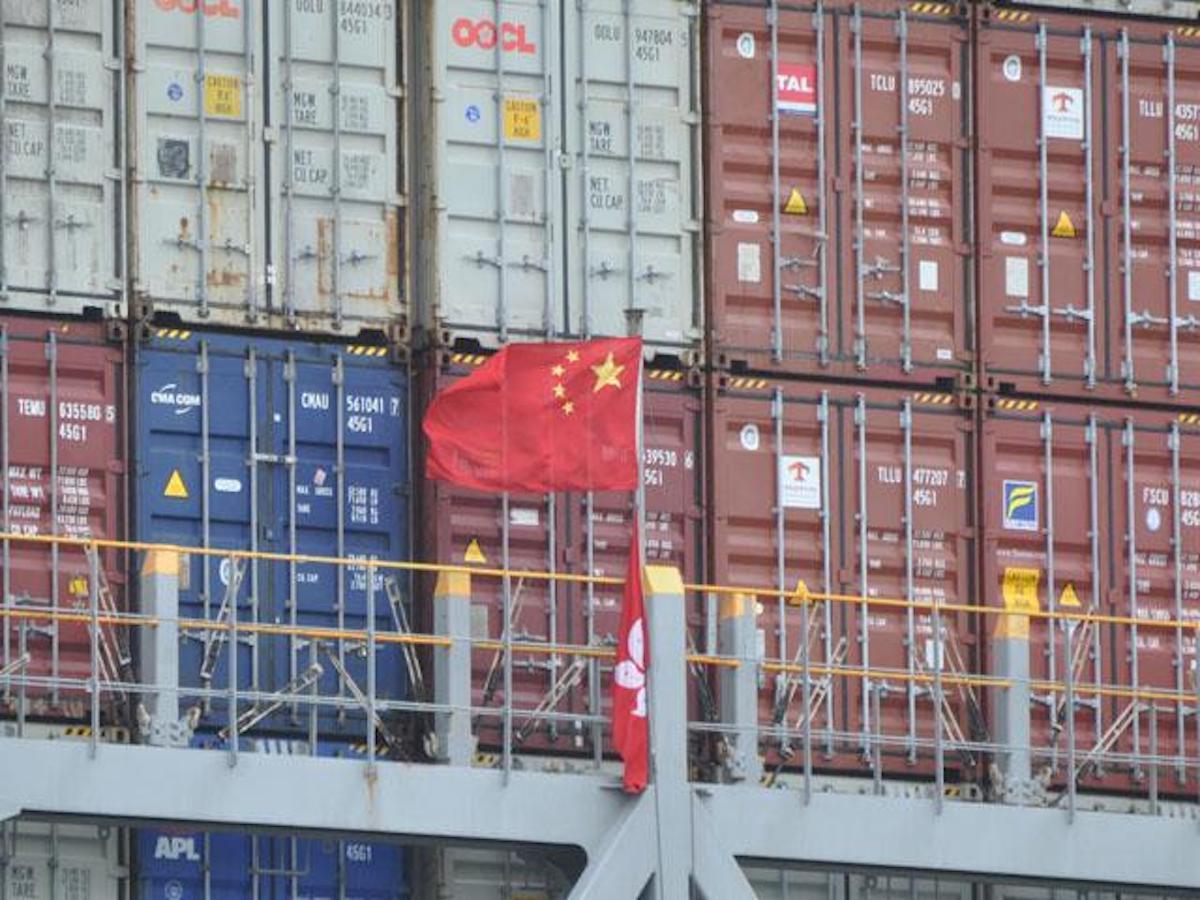
China’s export juggernaut defying and denying Trump’s tariffs
Despite former U.S. President Donald Trump’s aggressive tariff policies, China’s export sector has demonstrated remarkable resilience, with its trade surplus projected to reach $1.2 trillion by the end of 2025, surpassing last year’s $1 trillion mark. This success stems from China’s strategic adaptability, including market diversification, supply chain rerouting, and a focus on sectors less vulnerable to U.S. tariffs. For instance, exports to Southeast Asia have surged beyond their COVID-19 peak, with record-breaking shipments to India and Africa. Arthur Kroeber of Gavekal Dragonomics notes that the Trump era inadvertently spurred China to enhance its export competitiveness through innovative workarounds, such as transshipments and relocating production to lower-tariff countries. However, these tactics have drawn scrutiny, with Trump vowing to penalize nations facilitating such arbitrage. Meanwhile, Southeast Asian economies, including Vietnam, Indonesia, and Thailand, face challenges from China’s overcapacity, political instability, and weak infrastructure, hindering their aspirations to become manufacturing hubs. Mexico stands out as a potential outlier, considering a 50% tariff on Chinese goods. As global tensions escalate, China seeks to avoid provoking protectionist measures while navigating deflationary pressures and internal economic reforms. The U.S., burdened by a $36 trillion national debt, faces its own economic reckoning, with experts warning of severe consequences from Trump’s tariff-driven trade war. Despite these challenges, China’s export engine continues to defy expectations, underscoring its pivotal role in the global economy.
-

South Korea legalises tattooing by non-medical professionals
In a landmark decision, South Korea has officially legalized tattoo artistry by non-medical professionals, marking the end of a three-decade-long prohibition. The Tattooist Act, passed by the General Assembly on Thursday, grants licenses to non-medical practitioners, who constitute the majority of the industry. This historic move follows years of advocacy by tattoo artists seeking to practice their craft without fear of prosecution or harassment. Since 1992, offering tattoos had been restricted to medical professionals under a Supreme Court ruling, with violators facing up to five years in prison or hefty fines. Lim Bo-ran, president of the Korea Tattoo Federation, expressed overwhelming gratitude, describing the law’s passage as ‘a dream come true.’ Despite the widespread popularity of tattoos in South Korea, the industry has operated in a legal gray area, with artists often subjected to threats or legal action from disgruntled clients. Recent court acquittals of tattoo artists signaled a shift in societal attitudes, paving the way for this legislative change. However, the new law has faced opposition from the medical community, which argues that tattooing poses health risks and should remain a medical procedure. The law will take effect in two years, requiring artists to pass a national exam, complete safety training, and maintain detailed records. While the change is celebrated by many, it may not immediately erase the stigma surrounding tattoos, as recent polls indicate that a majority of South Koreans still view them negatively. The journey toward full societal acceptance of tattoos in South Korea is likely to be gradual and complex.
-

Over 1,000 children fall ill from free school lunches in Indonesia
Indonesia’s ambitious free school lunch program, a flagship initiative of President Prabowo Subianto, has come under intense scrutiny following a series of mass food poisoning incidents affecting thousands of children. Since its launch in January, the program, which aims to provide nutritious meals to 80 million students, has been marred by health and safety concerns, sparking calls for its suspension. Authorities reported over 1,000 cases of food poisoning this week alone, adding to a growing tally that has seen more than 6,400 children fall ill since the program’s inception. Symptoms among victims include stomach aches, dizziness, nausea, and even shortness of breath, raising alarms about the quality and preparation of the meals. The National Nutrition Agency attributed a recent outbreak in Cipongkor to a technical error by the Nutrition Fulfillment Service Unit, which has since been suspended. Critics, including non-governmental organizations, have urged the government to halt the program temporarily for a thorough evaluation, with some proposing alternative solutions such as direct funding to parents. Despite the backlash, the government has reaffirmed its commitment to the initiative, citing its potential to combat malnutrition and stunting among children. However, experts warn that the program’s massive $28 billion budget could also make it a target for corruption, further complicating its implementation. As Indonesia grapples with these challenges, the future of its free school lunch program remains uncertain.
-
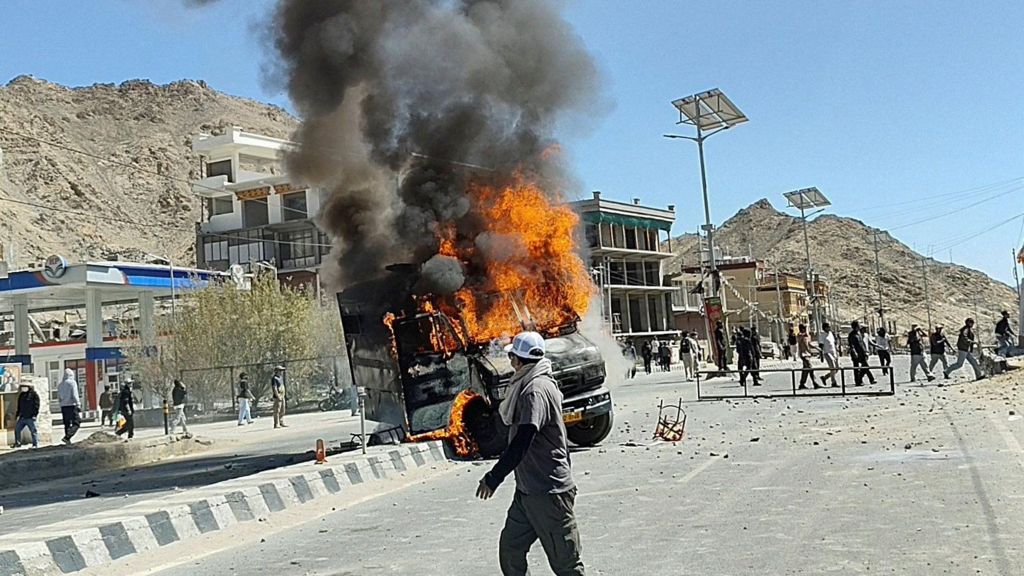
India imposes curfew in Ladakh after statehood protests turn violent
In a dramatic escalation of tensions, violent clashes erupted in Leh, the capital of India’s Himalayan region of Ladakh, leaving at least four dead and dozens injured. The unrest, which occurred on Wednesday, saw protesters set fire to a local office of the ruling Bharatiya Janata Party (BJP) and a security vehicle, prompting Indian security forces to impose a curfew in the area. The protests, led by activist Sonam Wangchuk, are part of a long-standing demand for statehood and greater autonomy for Ladakh, a region that lost its semi-autonomous status in 2019 when the BJP government reorganized the former state of Jammu and Kashmir. The Leh region, predominantly Buddhist, has been advocating for separate statehood, while the Muslim-majority Kargil district seeks integration with Indian-administered Kashmir. Since 2019, both communities have united in their demand for restored statehood and job quotas. The government has accused Wangchuk of inciting violence, a claim he vehemently denies, stating that the unrest stems from years of frustration among unemployed youth. Wangchuk, a prominent activist and engineer known for his work on education and climate change, called off his hunger strike on Wednesday and appealed for calm, emphasizing that violence undermines their cause. The federal government has initiated an investigation into the violence and plans further talks with local leaders, though tensions remain high as the region grapples with its political future.
-
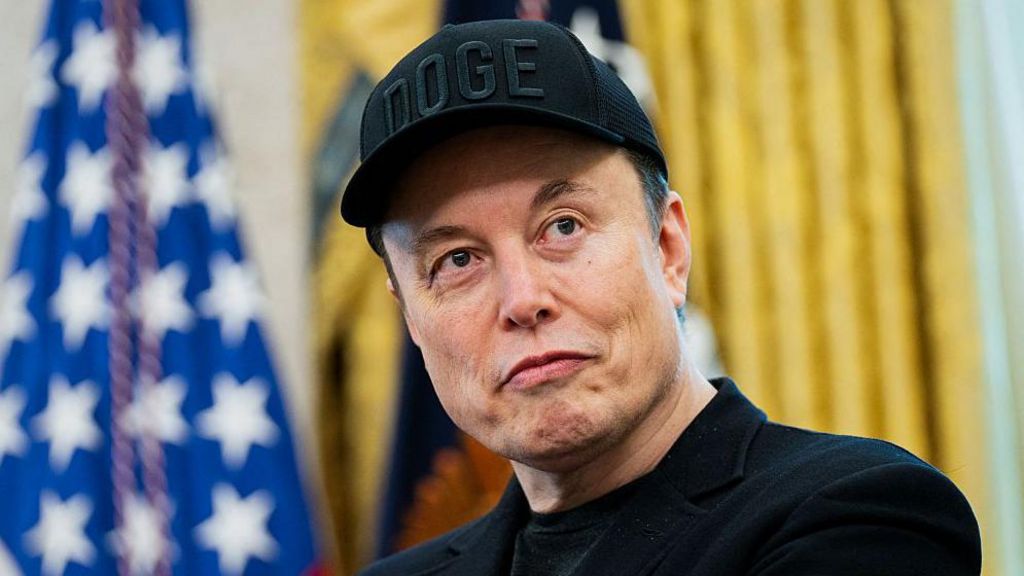
India legal setback for Elon Musk’s X in free speech fight
An Indian court has dismissed a legal challenge by Elon Musk’s social media platform, X, against the Indian government’s Sahyog portal, which the company alleged was being used to arbitrarily censor content. The Karnataka High Court ruled that X’s case was ‘without merit,’ though the full judgment remains undisclosed. This marks the second time in just over two years that X has lost a legal battle against the Indian government’s content-blocking powers, raising concerns among free speech and digital rights advocates. X, which boasts an estimated 25 million users in India, has not yet indicated whether it will appeal the decision.
The Sahyog portal, operated by India’s federal home ministry, automates the process of sending government notices to social media platforms like X and Facebook. While other tech giants such as Google, Amazon, and Meta have joined the portal, X has refused, labeling it a ‘censorship portal.’ X argued that Sahyog bypasses legal safeguards, allowing government officials, including local police officers, to issue content removal orders unilaterally and arbitrarily. The company’s lawyer criticized the system, stating that it authorizes ‘every Tom, Dick, and Harry officer’ to issue takedown orders, a remark that drew objections from the government.
The Indian government defended Sahyog, emphasizing its necessity in addressing the ‘growing volume of unlawful and harmful content’ on social media. It clarified that the portal is not for issuing blocking orders but for notifying intermediaries about unlawful content. The court upheld this view, stating that social media cannot be left in ‘a state of anarchic freedom’ and that regulation is essential. The judge also noted that while X complies with similar takedown orders in the U.S., it refuses to do so in India.
This ruling has sparked debates about free speech and government overreach in India. Digital rights experts have warned that Sahyog has led to a ‘wholesale increase in censorship.’ X has a history of challenging India’s content-blocking mechanisms, which legal experts often describe as opaque and arbitrary. In 2022, before Musk’s acquisition, X became the first platform to contest takedown orders, resulting in a fine of 5 million rupees ($56,000) for delayed compliance. Its appeal against that ruling is still pending.
-
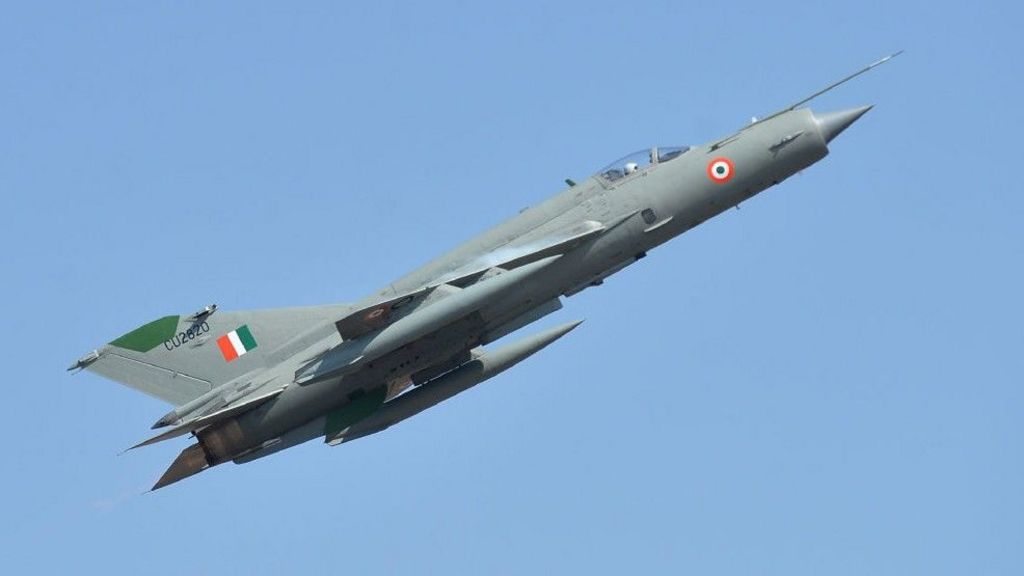
The sun sets on India’s iconic and controversial Soviet fighter jet
The MiG-21, once the backbone of the Indian Air Force (IAF), is set to take its final flight, marking the end of an era for one of the most iconic fighter jets in aviation history. For decades, the MiG-21 dominated the skies, comprising two-thirds of the IAF’s fighter fleet at its peak. Pilots who flew the aircraft recall its blistering speed and versatility, but also its grim reputation as a ‘flying coffin’ due to a series of fatal crashes in its later years.
Designed by the Soviet Union and first inducted into the IAF in 1963, the MiG-21 was renowned for its needle-nose design, supersonic speed, and ability to climb rapidly. It became a cornerstone of India’s defense strategy, playing pivotal roles in conflicts such as the 1971 war with Pakistan. Pilots adapted the aircraft for close combat and ground attacks, pushing it beyond its original design limitations.
However, the MiG-21’s legacy is marred by tragedy. Between 1971 and 2012, 482 crashes were recorded, resulting in the deaths of 171 pilots, 39 civilians, and others. Analysts attribute these accidents to aging airframes, high landing speeds, and stretched maintenance cycles. Despite its flaws, the MiG-21 remained in service far longer than expected due to delays in developing replacements.
For retired Air Marshal Prithvi Singh Brar, who flew the MiG-21 for 26 years, the aircraft was more than a machine—it was a trusted partner in the sky. ‘I loved flying the MiG-21 the way a bird loves the sky,’ he recalls. Yet, as India retires its last two MiG-21 squadrons, the IAF faces a significant gap, with only 29 fighter units operational against a sanctioned 42.
The MiG-21’s retirement symbolizes the end of a chapter in India’s aviation history, leaving behind a legacy of both admiration and caution. As the skies grow quieter, the memories of those who flew this legendary jet will endure, a testament to its enduring impact on India’s defense and aerospace industry.
-
Final goodbye: MEE reporters on the pain of being forced out of Gaza City
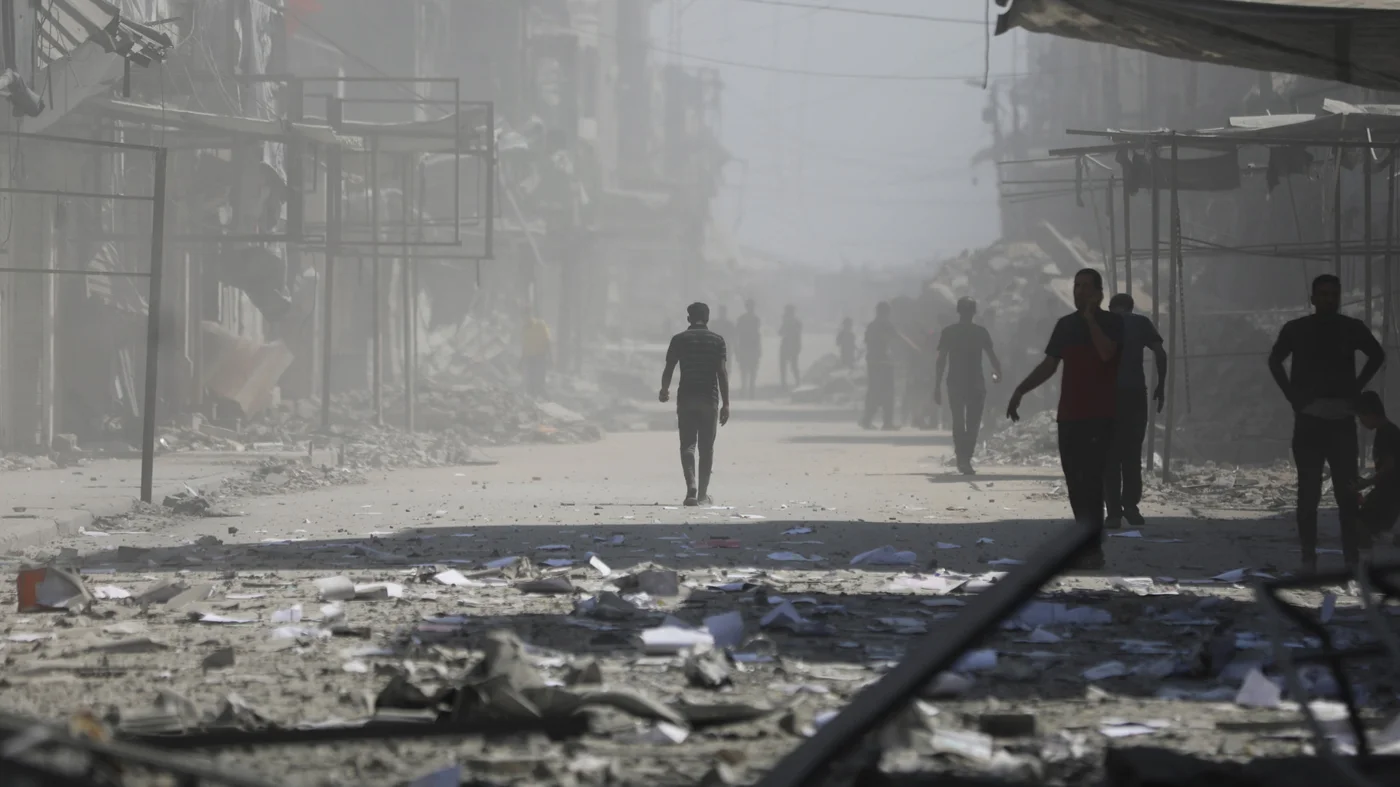
In the midst of Israel’s intensified military campaign in Gaza City, Palestinian journalist Ahmed Dremly faces an agonizing decision: to stay in his lifelong home or flee to uncertain safety. His friend Youssef’s advice to sell his furniture as firewood underscores the dire reality. “Who would buy them?” Dremly retorts, his voice heavy with bitterness. The conversation, reminiscent of a dystopian narrative, reflects the plight of Gaza’s one million residents, forced to choose between survival and the loss of their homes and memories. Since mid-August, Israel’s relentless bombing campaign, coupled with the deployment of explosive-laden robots, has aimed to depopulate the city, described by many as ethnic cleansing. The goal is clear: drive residents south, leaving Gaza City a ghost town. Estimates suggest between 300,000 to 600,000 have already fled, though many remain, unable to afford transportation or face the fear of permanent displacement. For Dremly, the thought of abandoning his home is unbearable. “I look at the walls of my house, even the lamp, and it breaks my heart,” he laments. Award-winning journalist Maha Hussaini shares his anguish, having delayed her departure until the last possible moment. “The last time you leave the house and shut the door—that’s the last time you’ll close that door,” she says. Despite her determination to stay “until the last gasp,” Hussaini was ultimately forced to flee south, leaving behind a city that once teemed with life. The streets, now eerily empty, serve as a stark reminder of the human cost of this conflict. As Gaza’s residents grapple with impossible choices, their stories highlight the devastating toll of war on identity, memory, and home.
-
‘No warning’ – residents reel from deadly flood after typhoon bursts Taiwan lake
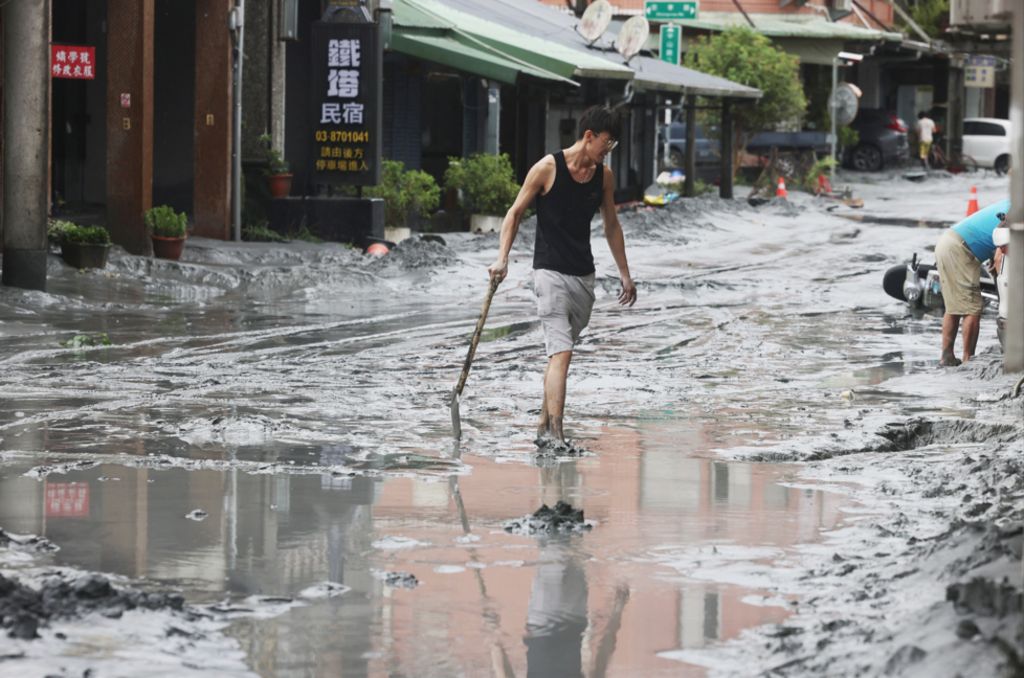
Super Typhoon Ragasa has left a trail of destruction in Taiwan, particularly in the eastern county of Hualien, where a catastrophic flood caused by the breach of a barrier lake has claimed lives and devastated communities. The barrier lake, formed after landslides triggered by an earlier typhoon in July, held an immense volume of water—approximately 91 million tonnes. When it burst its banks on Tuesday, it unleashed a torrent comparable to a tsunami, killing at least 14 people, injuring 32, and leaving 46 unaccounted for. The floodwaters, reaching depths of up to the second floor of buildings in some areas, swept away bridges, uprooted trees, and submerged vehicles, leaving residents in shock and despair. Awa, a 42-year-old bookstore owner in Guangfu Township, described the scene as “like a river outside, with cars floating and everything drifting.” She and her husband sought refuge on the second floor of their shop, attempting to salvage their books. Survivors reported receiving no immediate warning before the disaster struck, despite prior monitoring of the lake’s water levels by universities and authorities. Emergency evacuations were not mandatory, and many elderly residents, particularly those without access to smartphones, were left vulnerable. The disaster has highlighted the challenges of managing natural hazards in Taiwan, where barrier lakes are a recurring phenomenon. Experts noted that the lake’s composition and the lack of accessible roads hindered preventive measures. The tragedy has further strained Hualien’s tourism industry, already reeling from recent earthquakes. As communities grapple with loss and recovery, questions remain about the adequacy of disaster preparedness and response.
-
Is Netanyahu on a mission to realize a Greater Israel?
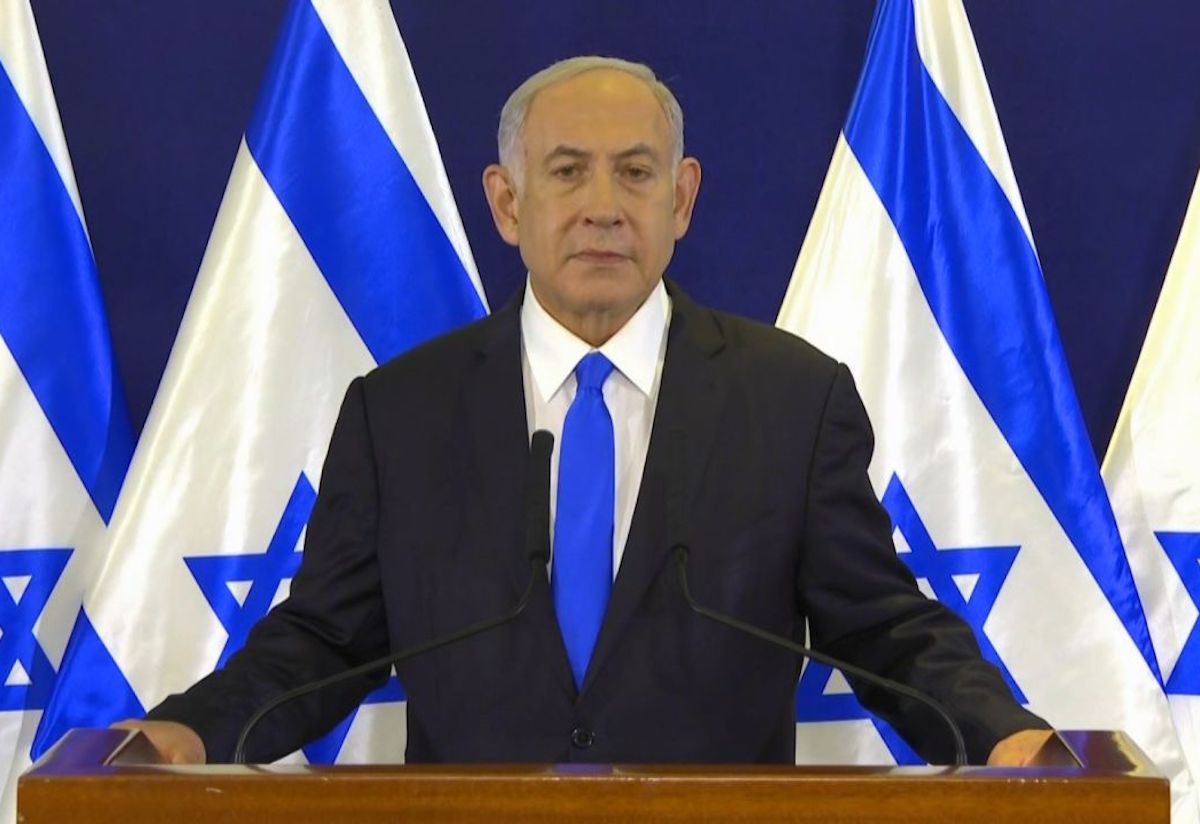
The long-standing Israeli-Palestinian conflict has often been framed around the concept of a two-state solution, but Israeli Prime Minister Benjamin Netanyahu seems determined to pursue a different path—his vision of a ‘Greater Israel.’ Despite widespread international condemnation of Israel’s actions in Gaza and its increasing isolation, Netanyahu appears to be making significant strides toward this goal. The two-state solution, once a cornerstone of diplomatic efforts, now seems increasingly irrelevant as Israel works to render the idea obsolete. The prospects of establishing an independent Palestinian state encompassing the West Bank, East Jerusalem, and Gaza Strip have never been more uncertain. Netanyahu’s strategy is bolstered by unwavering support from the United States, particularly under the Trump administration. Recent events, such as Israel’s attack on Hamas leaders in Qatar, have further highlighted the region’s inability to counter Israel’s actions. An emergency Arab-Muslim summit convened by Qatar resulted in a tepid response, with leaders issuing condemnations but failing to propose concrete measures to curb Israel’s aggression. Middle Eastern leaders recognize that only the United States holds the power to influence Israel, yet Washington shows no signs of altering its staunch support. Netanyahu’s rhetoric and actions suggest a commitment to expanding Israeli sovereignty over contested territories, including Gaza and the West Bank. This vision, rooted in the ideology of Netanyahu’s Likud Party, has drawn sharp criticism from Arab and Muslim leaders, though the U.S. has not publicly endorsed it. Despite international backlash, Netanyahu remains undeterred, prioritizing his vision over the safety of Israeli hostages held by Hamas and the desires of many Israelis for a ceasefire. As the international community grapples with how to respond, the path forward remains unclear. Sanctions and severing ties with Israel are among the few potential measures that could alter its course, but such actions are unlikely given the current geopolitical landscape. Netanyahu’s pursuit of a ‘Greater Israel’ risks further destabilizing the region and tarnishing Israel’s global reputation, leaving a legacy of conflict and international disrepute.