
The Taliban regime in Afghanistan has implemented a sweeping nationwide shutdown of telecommunications, plunging the country into a total internet blackout. This drastic measure follows weeks of the group severing fiber-optic internet connections, citing concerns over ‘immorality.’ According to internet watchdog Netblocks, the blackout has disrupted mobile phone services, satellite TV, and mobile internet across the country. The international news agency AFP reported losing contact with its Kabul office, while residents in the capital confirmed the abrupt halt of fiber-optic internet services around 17:00 local time (12:30 GMT). The impact is expected to be felt more acutely on Tuesday morning, when banking and business operations resume. Fiber-optic cables, which enable high-speed data transfer, are a critical component of global internet infrastructure. Netblocks, in a post on Mastodon.social, described the blackout as a stepwise disconnection of multiple networks, with telephone services also affected. The Taliban had previously hinted at creating an alternative internet route but provided no specifics. Business leaders have warned of severe economic repercussions if the ban persists. Hamid Haidari, former editor-in-chief of Afghan news channel 1TV, lamented the isolation, stating that Afghanistan has now surpassed North Korea in internet disconnection. This blackout is the latest in a series of restrictive measures imposed by the Taliban since their return to power in 2021, including banning books by women from university curricula, outlawing human rights education, and restricting women’s access to education beyond the age of 12. The Taliban’s hardline interpretation of Islamic Sharia law continues to reshape Afghan society, with women and girls bearing the brunt of these policies.
标签: Asia
亚洲
-
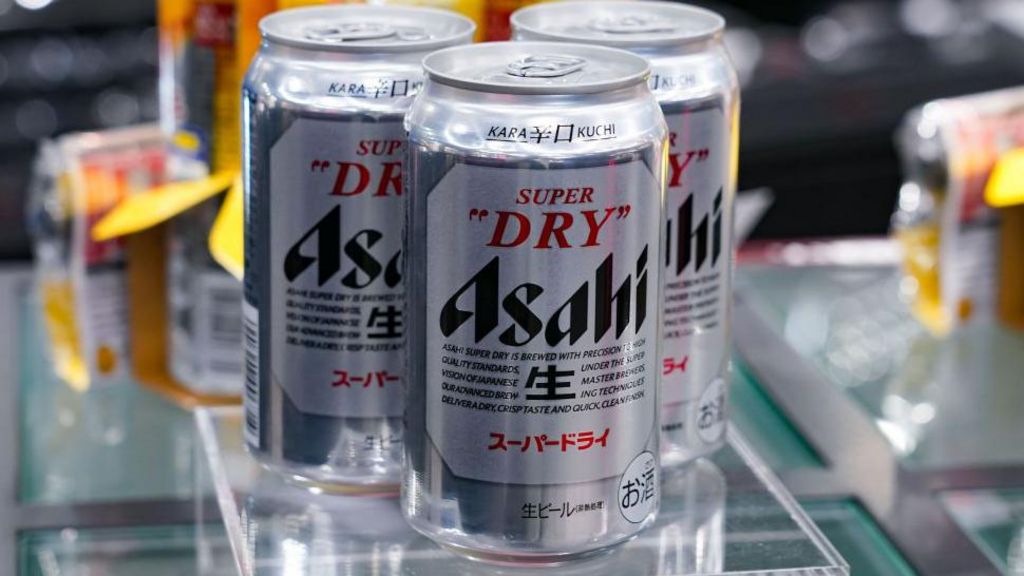
Japanese brewing giant Asahi hit by cyber-attack
Japanese brewing powerhouse Asahi Group Holdings has fallen victim to a significant cyber-attack, resulting in a widespread ‘systems failure’ that has disrupted its shipping and customer service operations in Japan. The company, renowned for its global beer brands such as Peroni, Pilsner Urquell, and Grolsch, confirmed that its European operations, including the UK, remain unaffected. However, the incident has forced the suspension of order and shipment activities domestically, as well as customer service functions. Asahi, which also owns Fullers in the UK—producer of London Pride and other beverages—has issued an apology to its customers and business partners, emphasizing that no personal data breaches have been detected. The company is actively investigating the cause and working to restore operations, though no timeline for recovery has been provided. This cyber-attack underscores the growing threat of digital crime to major corporations, with Asahi previously identifying such risks in its 2024 report. The incident comes amid a challenging domestic market in Japan, where declining alcohol consumption among younger generations has prompted Asahi to pivot toward zero or low-alcohol beverages, aiming to double their share of overall sales to 20%.
-
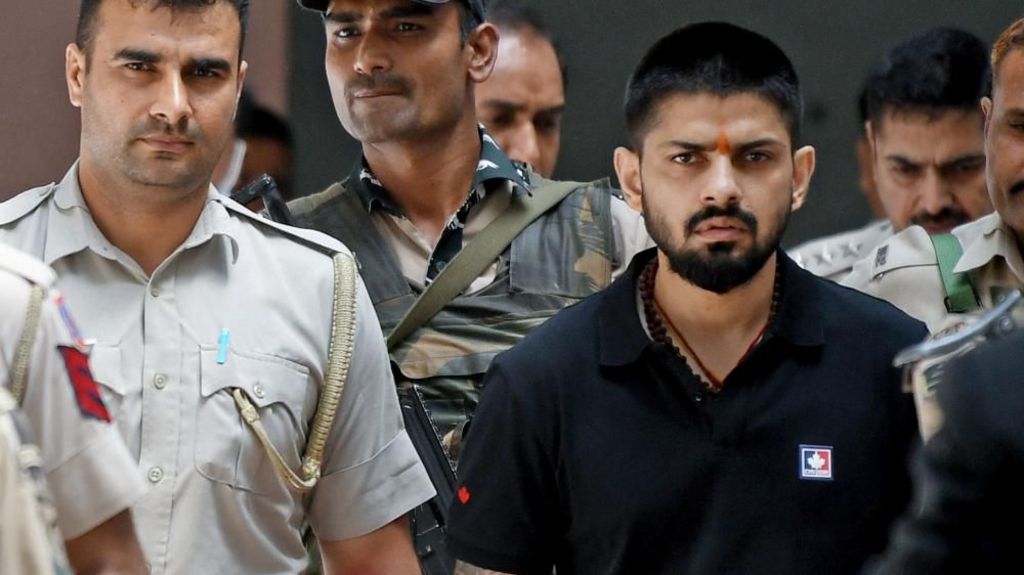
Canada lists India’s Bishnoi gang as terrorist entity
In a significant move, Canada has officially classified India’s Bishnoi gang as a terrorist organization, granting the federal government authority to confiscate the group’s assets and freeze its financial holdings within the country. The announcement was made by Public Safety Minister Gary Anandasangaree on Monday, who emphasized that the gang has fostered an environment of fear and intimidation within Canadian diaspora communities. The decision follows allegations by Canadian police last year that members of the Bishnoi gang, allegedly linked to the Indian government, were involved in homicides, extortion, and violent acts targeting supporters of the pro-Khalistan movement. India has consistently denied these claims, citing a lack of evidence provided by Canada. The new designation empowers Canadian law enforcement to prosecute terrorist activities such as financing, recruitment, and travel. Minister Anandasangaree stated, ‘Specific communities have been subjected to terror, violence, and intimidation by the Bishnoi gang. This listing equips us with stronger tools to combat and halt their criminal operations.’ The Bishnoi gang, led by Lawrence Bishnoi, a 32-year-old incarcerated Indian gangster, is described as a transnational criminal organization primarily based in India but with significant operations in Canada, particularly in areas with large diaspora populations. In India, Bishnoi is accused of controlling a 700-member gang involved in extortion, drug and weapon smuggling, and targeted assassinations. The designation follows pressure from opposition parties and provincial leaders in Alberta and British Columbia, who argued that such a move would enable the government to impose sanctions and counter the gang’s activities more effectively.
-
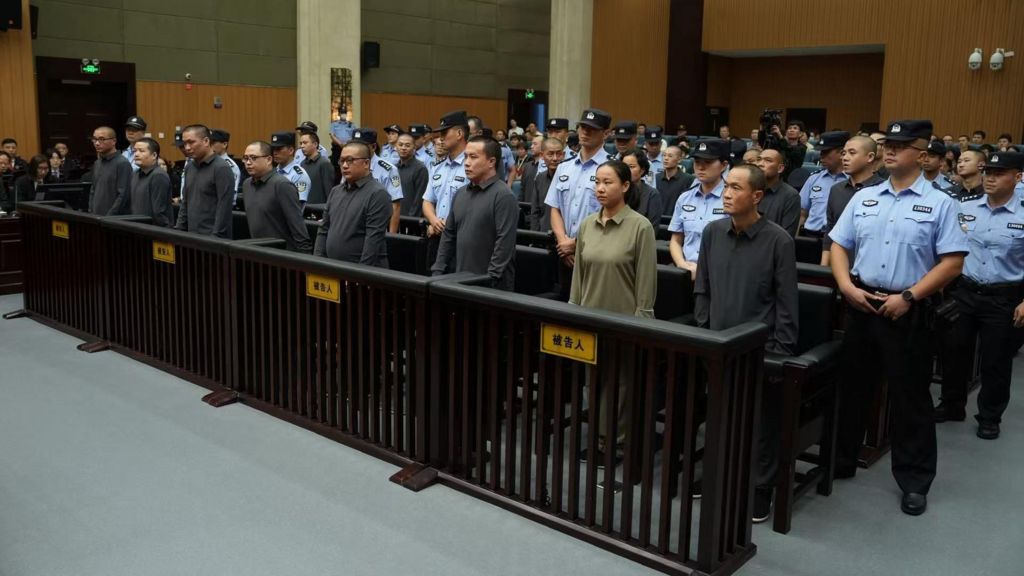
China sentences 11 members of mafia family to death
A Chinese court has delivered a landmark verdict, sentencing 39 members of the infamous Ming family for their involvement in extensive criminal operations in Myanmar. According to Chinese state media, 11 members were handed the death penalty, while five received death sentences with a two-year reprieve. Additionally, 11 were sentenced to life imprisonment, and the remaining members received prison terms ranging from five to 24 years. The Ming family, part of one of the four dominant clans in Laukkai, a town near the China-Myanmar border, transformed the area into a hub for illegal gambling, drug trafficking, and scam centers. Their operations, which began in 2015, reportedly generated over 10 billion yuan ($1.4 billion) in illicit profits. The court also revealed that the family was responsible for the deaths of several scam center workers, including an incident where workers were shot to prevent their return to China. Laukkai, initially developed to cater to Chinese gambling demand, evolved into a center for money laundering and human trafficking. The Ming family’s activities were part of a broader ‘scamdemic,’ as termed by the UN, which has seen over 100,000 foreign nationals, predominantly Chinese, lured into forced labor in scam centers. The family’s downfall began in 2023 when Myanmar cracked down on their operations, leading to their arrest and extradition to China. Ming Xuechang, the family patriarch, reportedly committed suicide, while other members confessed to their crimes. This sentencing underscores China’s commitment to combating cross-border criminal activities and serves as a warning to other organized crime networks in the region.
-
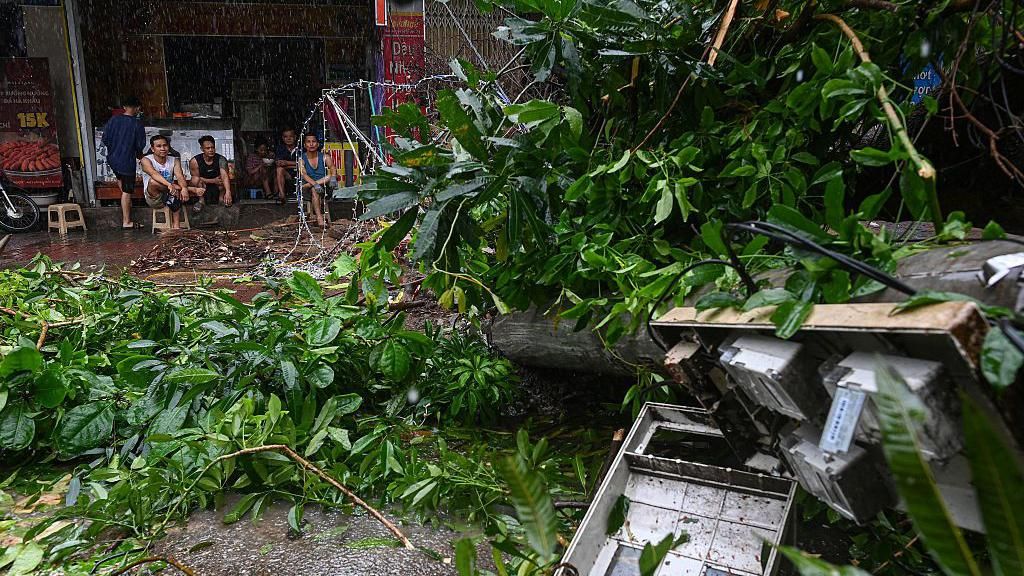
Typhoon kills at least 11 as it sweeps through Vietnam
Typhoon Bualoi has wreaked havoc across central and northern Vietnam, claiming at least 11 lives and causing widespread destruction. The storm, which made landfall on Sunday night, has left dozens missing or injured, flooded roads, washed away bridges, and torn roofs off buildings. After weakening, it moved into neighboring Laos, where its impact continues to be felt. This marks the latest in a series of devastating storms to hit the region, following Super Typhoon Ragasa, which claimed 28 lives in the Philippines and Taiwan last week. Bualoi, with initial wind speeds of 117 km/h (73 mph), has already killed over 20 people in the Philippines since Friday. In Vietnam, nearly 30,000 residents were evacuated preemptively, and dozens of flights were delayed or canceled. Rescue teams are currently searching for 17 missing fishermen whose boats were struck by massive waves. The central province of Ha Tinh experienced a blackout after power lines were downed, while torrential rains flooded crop fields. Authorities have warned of continued heavy rainfall, with some areas expected to receive up to 500 mm. Vietnamese Prime Minister Phan Minh Chinh has issued urgent directives to intensify rescue and relief efforts. Climate change is increasingly blamed for the intensification of such extreme weather events, with typhoons growing stronger and more frequent.
-

The Indian superstar at the centre of row over crush deaths
A tragic incident at a political rally organized by Tamil cinema superstar-turned-politician Vijay has left 40 people dead and sparked a heated blame game in Tamil Nadu, India. The event, held in Karur district on Saturday, drew tens of thousands of supporters. Chaos erupted during Vijay’s speech when the crowd surged unexpectedly, leading to a fatal crush. Opposition parties have accused government officials of inadequate police deployment, while police claim the organizers underestimated the crowd size and failed to implement sufficient safety measures. Vijay, 51, is one of Tamil Nadu’s most beloved actors, with a career spanning decades and numerous box-office hits. Last year, he launched his political party, Tamilaga Vettri Kazhagam (TVK), marking a surprising shift from cinema to politics. His decision to quit acting after his upcoming film, Jana Nayagan, has further fueled public interest in his political ambitions. The tragedy has raised questions about his political inexperience and the viability of celebrity-led parties in India. Vijay has expressed his devastation over the incident and announced financial compensation for the victims’ families. A one-member commission has been established to investigate the cause of the crush, with the state government promising action within two months. Meanwhile, TVK has sought a federal investigation through the Madras High Court. The incident has cast a shadow over Vijay’s political aspirations, with critics questioning his leadership and the safety protocols at his rallies. Despite the backlash, his immense popularity may shield him from significant political fallout.
-

Recognizing Palestine doesn’t make it real
The recent wave of international recognition of Palestine as a sovereign state marks a significant diplomatic milestone. However, the territorial boundaries of this nascent state remain a contentious issue, with disputes spanning from the West Bank to Gaza. To understand the complexities of this situation, it is essential to delve into the historical evolution of Palestine’s borders, which have been shaped by decades of conflict and political upheaval. The 1947 UN partition plan envisioned two semi-contiguous territories for Jewish and Arab states, with Jerusalem as an international city. However, this vision was shattered by the 1948 war, leading to the establishment of Israel and the confinement of Palestinians to the West Bank and Gaza Strip, separated by the ‘green line’ and placed under Jordanian and Egyptian control. The 1967 Six-Day War further altered the landscape, with Israel occupying the West Bank, Gaza Strip, and East Jerusalem, effectively tripling its territory. Israeli settlements, illegal under international law, have since fragmented the West Bank, creating a patchwork of Palestinian governance areas under the Oslo Accords. The construction of a separation barrier during the second intifada (2000-05) further divided the region, leaving the West Bank resembling a fragmented archipelago rather than a cohesive state. Recent studies using satellite imagery reveal the extent of settlement expansion, with the average settlement growing by two-thirds in size over the past decade, now occupying 151 sq km of built-up area. This expansion, coupled with extensive Israeli military presence and infrastructure, has severely restricted Palestinian movement and economic activity. The E1 development project, if constructed, threatens to bisect the West Bank, further complicating the prospects of a viable Palestinian state. The presence of settlements has also fueled political violence, with research indicating that proximity to settlements nearly doubles the likelihood of engagement in high-risk and violent actions. Despite these challenges, the recognition of Palestine by various nations is reshaping international engagement with Palestinian representatives and applying pressure on Israeli leaders. However, without addressing the issue of settlement expansion and creating genuine conditions for statehood, recognition risks becoming an empty gesture. The future of Palestinian statehood and Israeli security hinges on the commitment to build a viable state that upholds the interests of all parties involved.
-
China claims its green, US leaves the scene
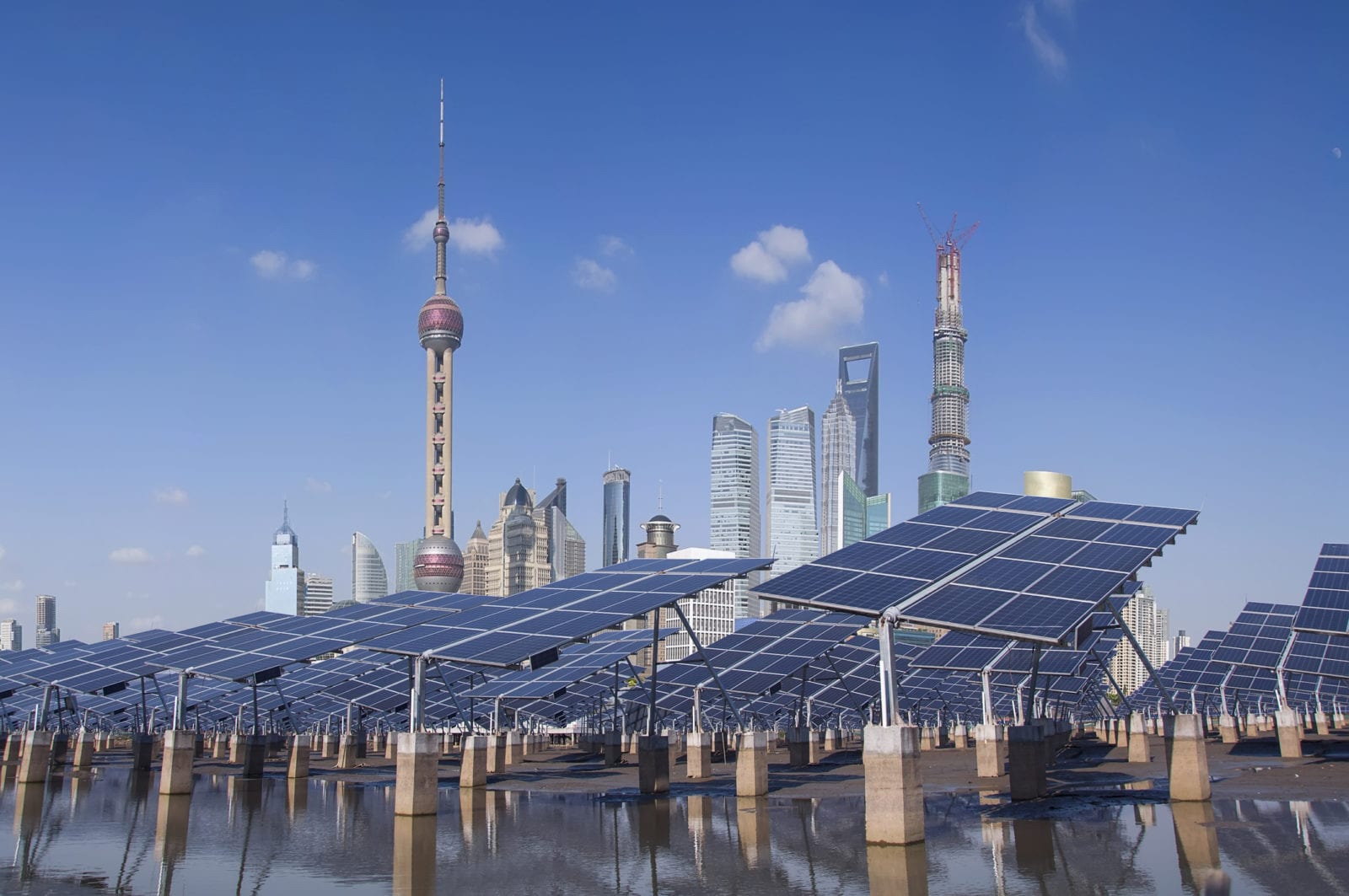
While U.S. President Donald Trump dismisses climate action as a ‘con job’ at the UN, China has strategically positioned itself as a ‘responsible power’ with modest emission reduction targets. Chinese President Xi Jinping’s pledge to cut greenhouse gas emissions by 7-10% from peak levels by 2035 marks China’s first absolute emissions target. However, this falls short of the 30% reduction experts deem necessary to align with 1.5°C pathways. The timing of Xi’s announcement, following Trump’s criticism of climate efforts, underscores China’s intent to contrast its approach with the U.S. retreat from global commitments. Beyond diplomatic optics, China’s real climate strategy lies in its industrial policy: dominating the supply chains of the post-carbon global economy. In the first five months of 2025, China added 46 gigawatts of wind capacity—enough to power 30 million homes—while simultaneously approving 25 gigawatts of new coal plants. This dual approach reflects China’s ambition to lead in renewable energy manufacturing while maintaining energy security through coal. Xi’s promise to scale wind and solar capacity sixfold from 2020 levels cements China’s role as the global supplier of clean energy hardware, producing over 80% of the world’s solar photovoltaic modules. However, China’s climate diplomacy masks a glaring contradiction: it continues to build more coal capacity than the rest of the world combined. In the first half of 2025, China and India accounted for 87% of new global coal capacity, with China alone starting construction on 46 gigawatts. The ‘from peak’ baseline in China’s emission target creates perverse incentives for local governments and firms to increase emissions, weakening the actual impact of the target. Without clarity on when emissions will peak, the 7-10% reduction becomes an accounting exercise rather than a meaningful decarbonization pathway. This ambiguity allows China to claim climate leadership while preserving policy flexibility. Trump’s UN performance, labeling climate change a ‘con job,’ handed China a diplomatic gift by positioning the U.S. as opposing the energy transition. This strategic misstep allowed China to emerge as the default ‘responsible actor’ despite its questionable climate performance. For Asia, the China-U.S. dynamic presents both opportunities and risks, with countries like Japan pursuing dual-track strategies to balance energy security and decarbonization. The real climate story in Asia is unfolding in manufacturing and supply chain decisions, not UN speeches. As China dominates clean energy hardware production, other Asian economies face the choice of technological dependence or building indigenous capacity. Renewable energy components, like fossil fuels before them, have become a strategic resource that can be weaponized. China’s climate gambit succeeds by operating in the realm of perception rather than performance, positioning itself as a reliable partner while maintaining a problematic emission trajectory. The unorthodox reality is that neither superpower treats climate as an existential crisis requiring economic transformation. China pursues industrial dominance through green technology exports while maintaining coal dependence; the U.S. abandons climate cooperation to protect fossil fuel interests. Both strategies prioritize short-term competitive advantage over long-term climate stability. For Asia, the lesson is clear: climate diplomacy has become a subset of industrial policy and technological competition. The countries that will thrive in the coming decades are those that treat decarbonization as an economic and strategic imperative, not a moral obligation. China’s climate pledge may be modest, but its manufacturing strategy is anything but—and that is where the real climate leadership will be decided.
-

Singapore denies entry to exiled HK pro-democracy activist
Nathan Law, a prominent Hong Kong pro-democracy activist living in exile in the UK, was denied entry to Singapore upon arrival on Saturday, despite having a valid visa. Law, 32, was detained at the border for four hours before being placed on a flight back to San Francisco, his initial departure point. He had traveled to Singapore to attend a private, invitation-only conference but was not provided with a reason for the denial. Law speculated that the decision may have been politically motivated, raising concerns about potential external influences, including the People’s Republic of China (PRC). Singapore’s immigration and home affairs offices have yet to comment on the incident. Law, who fled Hong Kong in 2020 following the imposition of China’s national security law, was granted asylum in the UK in 2021. Hong Kong authorities have offered a HK$1 million reward for information leading to his arrest. This incident is not the first time Singapore has taken action against Hong Kong activists; in 2019, a Singaporean activist was fined for hosting an online forum featuring Joshua Wong. Singapore maintains an extradition treaty with Hong Kong, adding complexity to the situation.
-

High-speed falcon crowned New Zealand Bird of the Year
The New Zealand falcon, known by its Māori name kārearea, has soared to victory in the country’s annual Bird of the Year competition, securing 21% of the votes. Renowned for its incredible speed, reaching up to 200km/h in a dive, this high-speed hunter thrives in the dense forests of New Zealand. However, its population is dwindling, with only 5,000 to 8,000 individuals remaining. The competition, now in its 20th year, aims to raise awareness about the plight of New Zealand’s endangered native species. This year’s contest featured 73 birds, each championed by volunteer campaign managers who employed memes, reels, and hand-drawn posters to garner support. Nicola Toki, chief executive of conservation group Forest & Bird, emphasized the seriousness behind the campaign, noting that 80% of this year’s top 10 birds are at risk. Among them are the kākāpō and karure black robin, both classified as ‘nationally critical’ with fewer than 300 individuals each. Habitat destruction, climate change, and introduced predators continue to threaten these species, but Toki highlighted the power of public awareness. The competition saw a record-breaking 75,000 voters, with the kārearea not only earning the title but also inspiring a new waiata (Māori song). Other notable contenders included the kea and kakaruia black robin, which secured second and third place, respectively. The competition has gained international attention, with past controversies including voter fraud allegations and the unexpected win of a bat in 2021. New Zealand’s initiative mirrors similar efforts globally, such as Australia’s Bird of the Year competition, underscoring the importance of celebrating and conserving local birdlife.