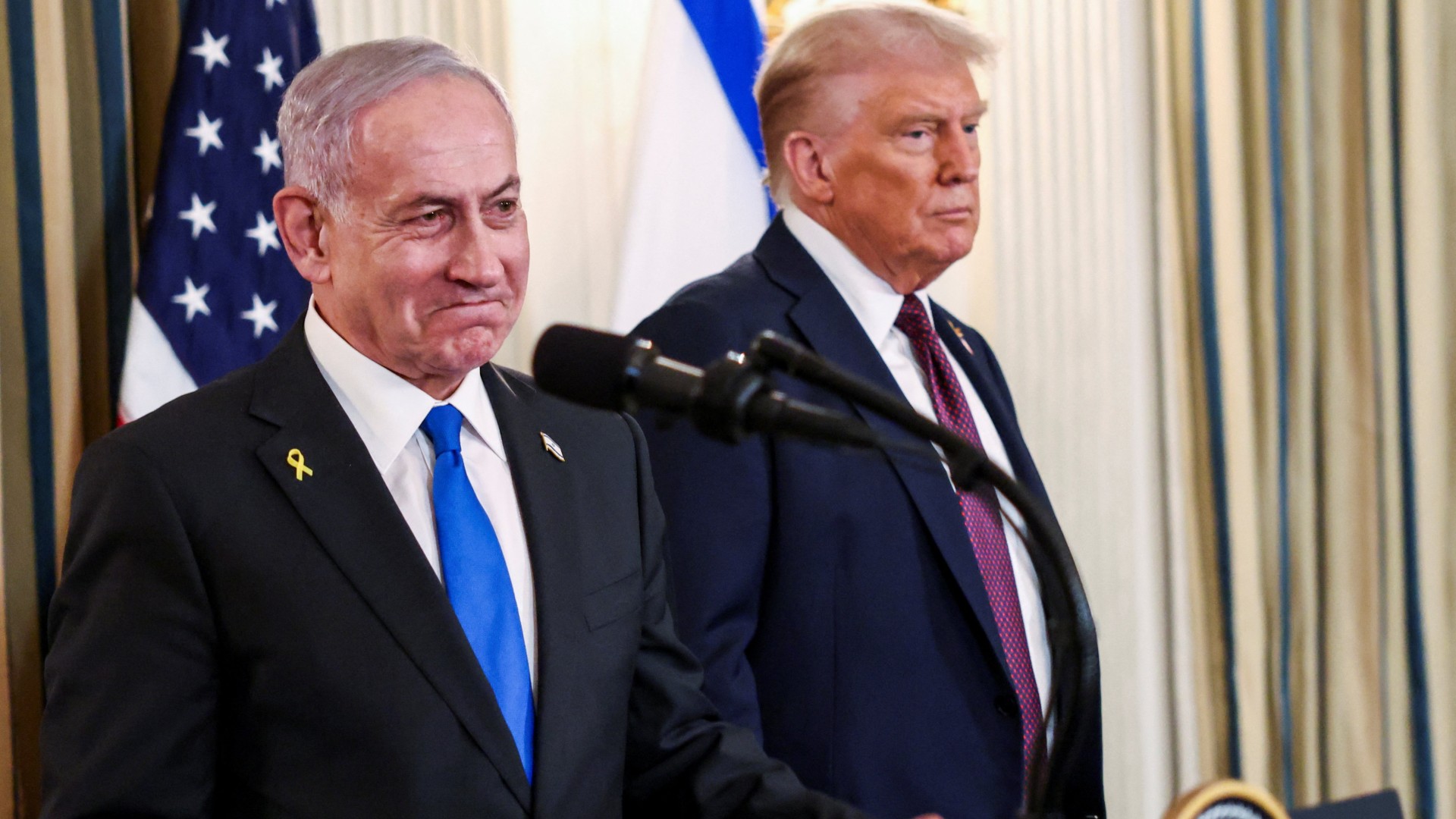
In a bold move to address the longstanding conflict in the Middle East, former US President Donald Trump unveiled a 20-point plan for Gaza alongside Israeli Prime Minister Benjamin Netanyahu. The plan, presented as a pathway to peace, has sparked significant debate and criticism for its perceived bias and lack of Palestinian involvement. Central to the proposal is a return to the pre-October 7, 2023, status quo, including a truce between Hamas and Israel, UN-led aid distribution in Gaza, and aspirational talks on Palestinian statehood. However, the plan sidelines the Palestinian Authority and demands Hamas disarm and exit Gaza, effectively excluding Palestinians from the decision-making process. Critics argue that the plan mirrors past failed US strategies, imposing solutions without genuine Palestinian consent. Arab and Muslim nations, while acknowledging Trump’s efforts, have expressed reservations, particularly regarding the exclusion of Palestinian representation. The proposal also introduces a post-conflict rebuilding model led by Trump and former British Prime Minister Tony Blair, raising concerns about colonial overtones. Despite international support from some European nations, the plan faces significant hurdles, including internal Israeli resistance and the lack of a viable alternative for Palestinian political representation. As Hamas reviews the proposal, the broader implications for regional stability and Palestinian self-determination remain uncertain.
标签: Asia
亚洲
-
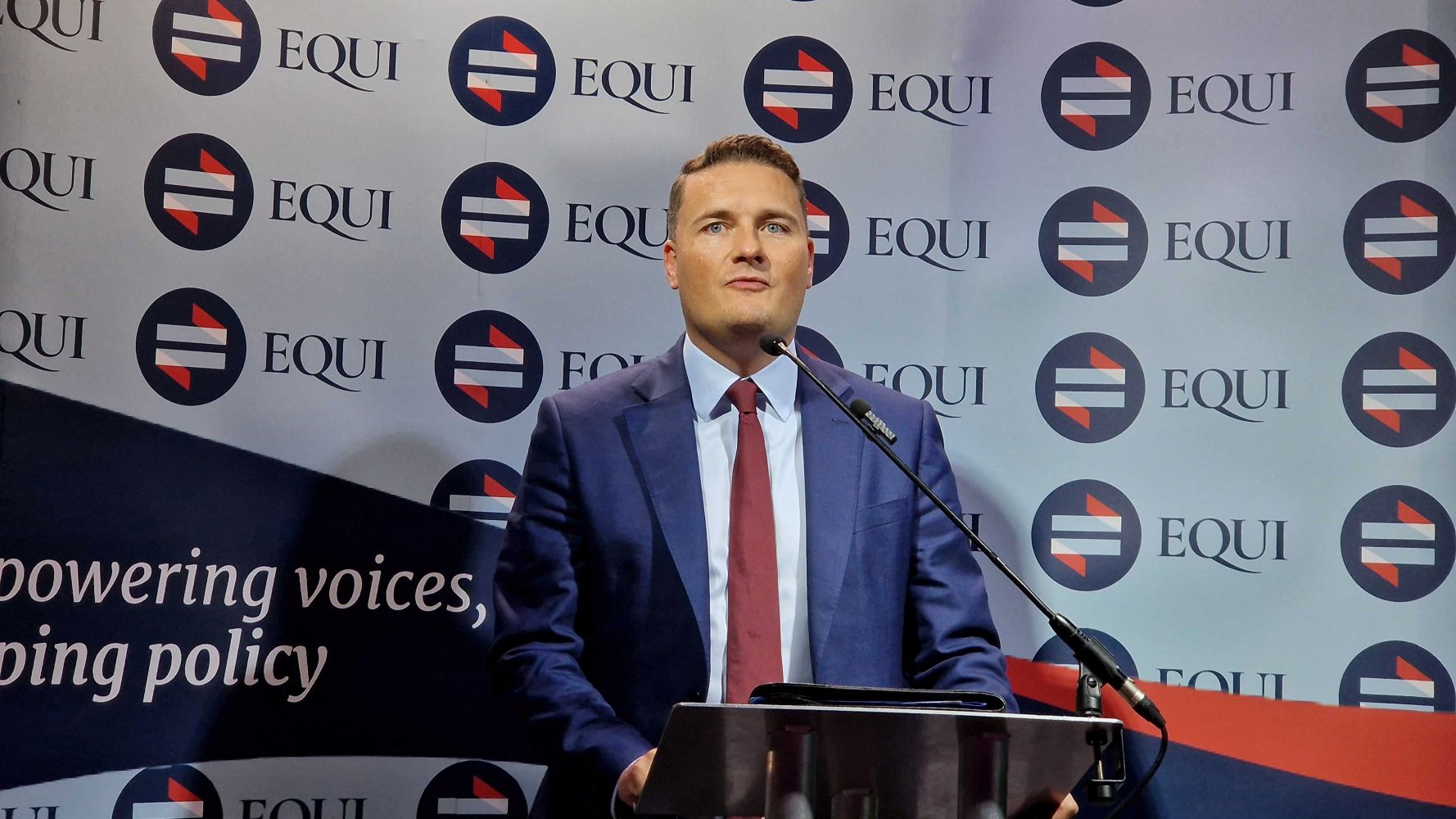
‘Fight of our lives’: Inside the Muslim Labour conference event addressed by Wes Streeting
On Monday night, a vibrant gathering of Muslims formed a lengthy queue outside Liverpool’s Hilton hotel, an event that could easily have been mistaken for a nightclub. Inside, a room bathed in pink and purple fluorescent lights hosted conference attendees enjoying a buffet. Among the guests were several Labour backbenchers and imams, marking a significant moment for Equi, a Muslim think tank founded just a year ago. The event, held on the sidelines of the Labour conference, showcased Equi’s new report highlighting how Muslim-led youth initiatives save the UK £30 million annually. Despite the historical challenges Muslim civil society groups face in engaging with British governments, Equi has garnered substantial support from MPs and peers, including Afzal Khan and Baroness Sayeeda Warsi. The evening’s highlight was the rumored attendance of Wes Streeting, the Health Secretary, who arrived late but was warmly received by Equi’s director, Dr. Javed Khan. Streeting delivered a passionate speech addressing the marginalization of British Muslims and the threat from the far right, resonating deeply with the audience. The event also featured a surprise appearance by Shabana Mahmood, the newly appointed Home Secretary, who outlined her controversial immigration policy requiring migrants to demonstrate societal contributions and English proficiency for indefinite leave to remain. Mahmood’s vision for multiculturalism and controlled immigration aims to counter the insurgent right wing and restore national harmony. The gathering concluded with celebrations of Equi’s first anniversary, symbolizing a significant step forward for Muslim representation in British politics.
-

‘Blueprint for permanent occupation’: Outrage online over Trump’s plan to end Gaza war
Donald Trump’s 20-point proposal to address the conflict in Gaza has ignited widespread criticism, with many accusing the former US president of masking a plan for Israel’s permanent occupation of the Palestinian enclave as a peace initiative. Announced alongside Israeli Prime Minister Benjamin Netanyahu at the White House, the plan conditions a halt to Israel’s military campaign on Hamas’s acceptance of its terms. Trump hailed the proposal as a historic achievement, claiming support from Arab, Muslim, and European leaders. However, reactions outside the White House were far from celebratory. Palestinian journalist Motasem Dalloul described the plan as a ‘dirty trick’ to reinforce Israeli occupation under international cover. Critics highlighted the plan’s lack of Palestinian self-determination, Israel’s continued control over borders, and the involvement of figures like Tony Blair, whom many view as emblematic of colonial overreach. Human rights scholars and activists condemned the proposal as an ultimatum rather than a genuine peace effort, emphasizing the exclusion of Palestinians from the decision-making process. Netanyahu’s subsequent announcement that Israel would not withdraw from Gaza further fueled accusations of bad faith. The plan’s deeper flaws, including its focus on ‘de-radicalization’ of victims rather than perpetrators and its failure to address accountability for alleged genocide, drew sharp criticism. Despite Qatar and Egypt forwarding the proposal to Hamas, many view it as a blueprint for permanent occupation rather than a pathway to peace.
-
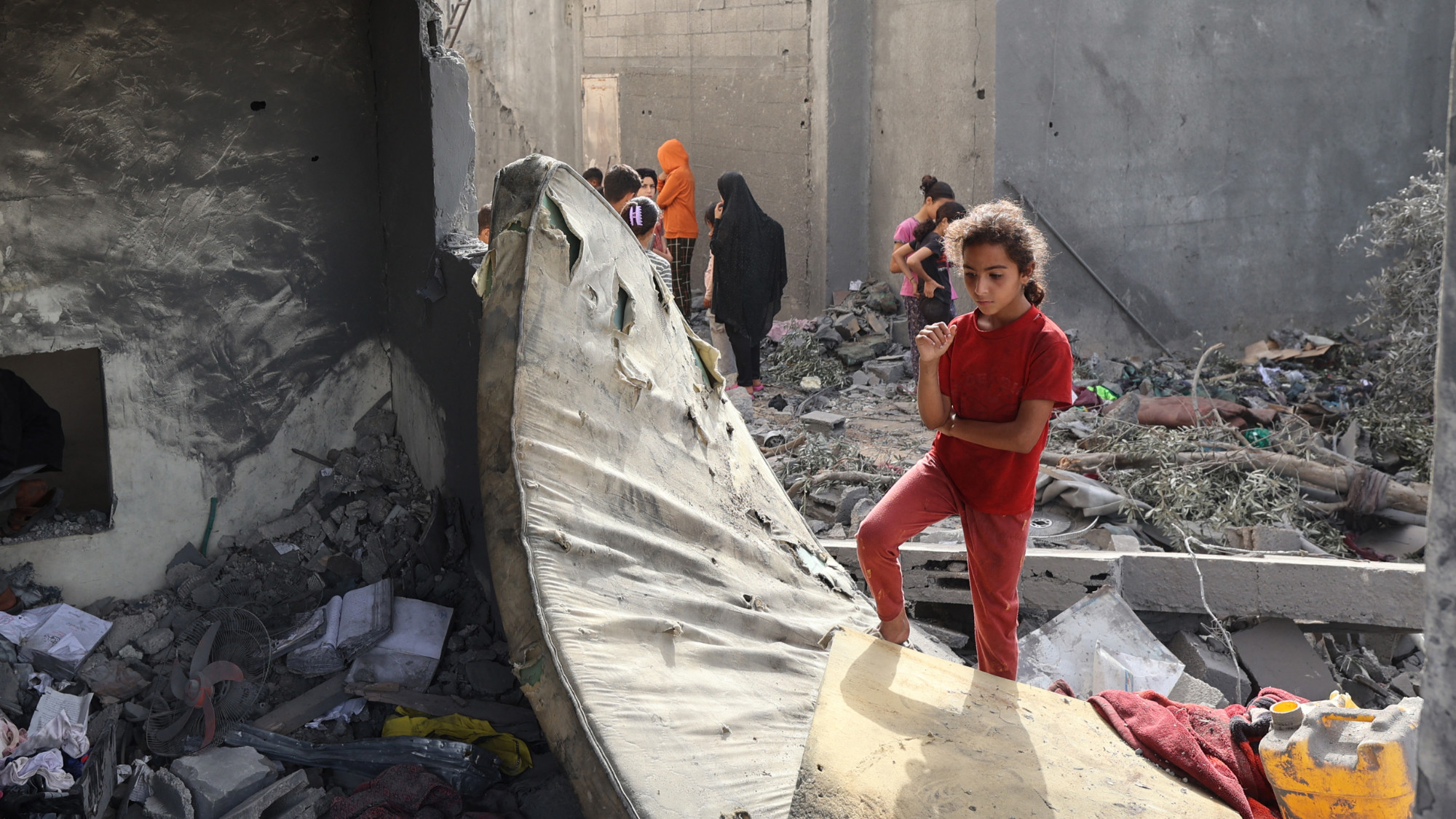
Gaza’s children face genetic harm ‘for generations to come’ from Israel’s genocide
In the war-torn Gaza Strip, 22-month-old Rewan Aldreini’s life is a stark illustration of the devastating impact of conflict and malnutrition. Born in November 2023, just a month after the Israeli siege began, Rewan has never tasted her mother’s milk. Her mother, grappling with depression and post-traumatic stress disorder (PTSD), stopped producing milk due to the trauma of relentless bombardment and displacement. The family fled their home in Beit Lahia, moving first to Gaza City and then to Khan Younis, where they now struggle to survive. Rewan’s father, Mohamed Aldreini, can only afford rice to feed his daughter, who suffers from severe malnutrition, a weak immune system, heart problems, and developmental delays. At just 7kg, her health continues to deteriorate under what her father describes as “engineered starvation.”
Rewan’s plight is not unique. Scientists warn that the ongoing crisis in Gaza is creating an epigenetic disaster, with long-term health consequences for future generations. Epigenetics, the study of how environmental factors like stress and malnutrition alter gene expression without changing the DNA sequence, has shown that such conditions can leave lasting genetic imprints. Research from historic famines, such as the Dutch Hunger Winter and the Rwandan genocide, reveals that trauma and starvation can lead to increased risks of chronic diseases, mental health disorders, and developmental issues in children and their descendants.
Professor Tessa Roseboom, a biologist at the University of Amsterdam, explains that stress hormones in mothers can affect babies’ bodies and brains. Similar findings were observed in Holocaust survivors and their children, where gene changes were directly linked to parental trauma. In Gaza, the combination of starvation, displacement, and ongoing violence is creating a perfect storm for epigenetic damage. Dr. Leon Mutesa of the University of Rwanda, who studied the epigenetic legacy of the 1994 genocide, warns that the symptoms in Gaza—fear, stress, and high cholesterol—are early indicators of epigenetic changes.
According to Palestinian health officials, at least 20,000 children have been killed since the war began, and over 50,000 have been injured or killed. In August alone, 12,800 children were identified as acutely malnourished, a condition the UN has confirmed as famine. Experts like Professor Hassan Khatib of the University of Wisconsin–Madison predict that the epigenetic damage in Gaza will be catastrophic, affecting not only current generations but also future ones. Khatib emphasizes that the crisis is particularly harmful to pregnant women and adolescent boys, whose developing bodies are more vulnerable to genetic alterations.
While the damage already inflicted may be irreversible, scientists agree that immediate action can mitigate further harm. Ending the war, providing access to food, healthcare, and safe living conditions, and offering psychological support are critical steps. “We need action from the international community to stop the suffering in Gaza,” says Roseboom. “This conflict isn’t just about the present moment; it’s creating life-long consequences for children like Rewan, and potentially for generations to come.”
For Mohamed Aldreini, the hope for a normal life remains. “I still dare to dream this genocide will end,” he says. “That we can return to a normal life—as human beings.”
-
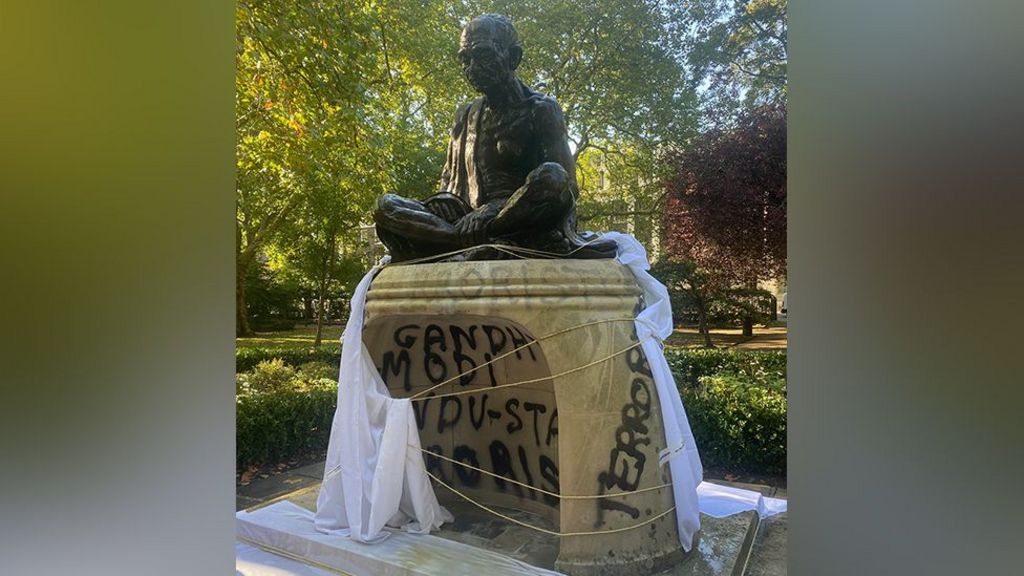
India calls Gandhi statue defacement in London ‘shameful’
India has called for ‘immediate action’ following the vandalism of a statue of Mahatma Gandhi in London. The bronze statue, located in Tavistock Square and unveiled in 1968, was defaced with graffiti, including the words ‘Terrorists,’ ‘Gandhi,’ ‘Modi,’ and ‘Hindustani [Indians].’ The Indian High Commission condemned the act as not merely vandalism but a ‘violent attack on the idea of non-violence,’ describing it as ‘shameful.’ The Metropolitan Police are investigating the incident as a racially aggravated crime, though no arrests have been made. Cleaning teams from Camden Council were seen power-hosing the statue to remove the graffiti. The incident occurred just days before the 156th anniversary of Gandhi’s birth on October 2, which is also observed as the International Day of Non-Violence. The statue, created by Polish sculptor Fredda Brilliant, depicts Gandhi in robes, seated cross-legged, with an inscription honoring his life. This is not the first time Gandhi’s statue has been targeted in the UK; a similar incident occurred in Leicester in 2014. The Indian mission is working with local authorities to restore the statue’s dignity.
-
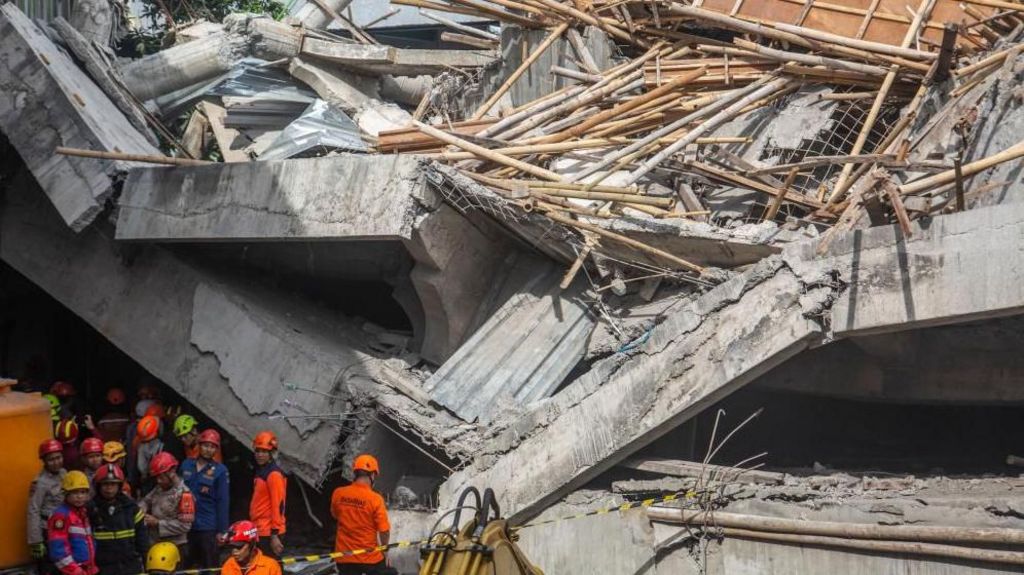
Three dead, dozens trapped after Indonesian school collapses on students
Rescue teams are working tirelessly to save dozens of students and workers trapped beneath the rubble of a collapsed school building in East Java, Indonesia. The incident, which occurred on Monday at the Al Khoziny Islamic Boarding School in Sidoarjo, has already claimed three lives and left 99 others hospitalized, some with critical injuries. Authorities fear the death toll may rise as at least 38 individuals, predominantly teenage boys, remain unaccounted for. The collapse happened during a prayer gathering, with the two-story building succumbing to its unstable foundation, exacerbated by the ongoing construction of two additional floors. The disaster mitigation agency described the structure as having a ‘pancake-like’ formation, with layers of concrete slabs creating narrow voids that complicate rescue efforts. The girls, who were praying in a separate section of the building, managed to escape unharmed. Local media footage depicts the collapsed section of the building completely sunken, with large concrete slabs protruding. The sounds of crying and shouting emanate from the rubble, as anxious relatives camp outside the school, desperate for news of their loved ones. Rescue operations were temporarily halted on Tuesday due to the risk of further collapse. Mohammad Syafeii, head of the search and rescue agency Basarnas, highlighted the challenges of using heavy equipment, which, while aiding in lifting concrete slabs, could endanger survivors still trapped. The agency is preparing a specialized operation, deploying units equipped with advanced extrication tools. Families of the missing, like Rosida, whose son Kaffa Ahmad Maulana is among those trapped, are enduring agonizing waits. Survivors, such as seventh-grader Muhammad Rijalul Qoib, recounted their narrow escapes, describing the terrifying moments before the collapse. The school’s caretaker, KH Abdus Salam Mujib, apologized to the families, attributing the tragedy to ‘God’s will.’ Sidoarjo’s regent revealed that the school had not obtained the necessary permits for the building’s expansion. Al Khoziny, a traditional Islamic boarding school, or pesantren, falls under the jurisdiction of Indonesia’s Ministry of Religious Affairs, which often lacks stringent oversight. This incident underscores Indonesia’s poor construction safety record, as highlighted by the International Labour Organization. Earlier this month, a similar tragedy in West Java resulted in multiple fatalities and injuries.
-
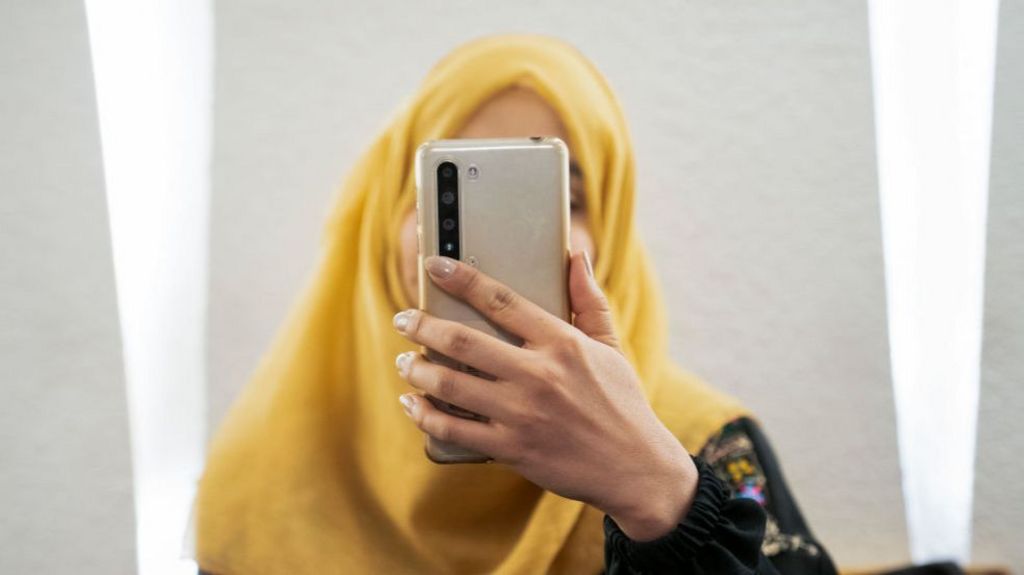
Afghan women lose their ‘last hope’ as Taliban shuts down internet
Fahima Noori, a young Afghan woman, once harbored ambitious dreams. After graduating with a law degree, completing a midwifery program, and working in a mental health clinic, her aspirations were shattered when the Taliban regained power in 2021. The militant group banned girls over 12 from attending school, severely limited women’s employment opportunities, and recently removed books authored by women from university curricula. For Fahima, the internet became her sole connection to the outside world—a lifeline that was abruptly severed on Tuesday when the Taliban imposed a nationwide internet shutdown, set to last indefinitely. ‘Our last hope was online learning. Now that dream has been destroyed,’ she lamented. Her identity, along with others interviewed, has been concealed for safety. Over recent weeks, the Taliban began cutting fiber-optic connections across provinces, citing the prevention of immorality. This move culminated in a ‘total internet blackout,’ according to internet watchdog Netblocks, crippling essential services and disrupting mobile internet, satellite TV, and flights from Kabul airport. The shutdown has devastated countless lives. Shakiba, a resident of Tahkar province, shared her despair: ‘We want to study, be educated, and help people in the future. When I heard the internet was cut, the world felt dark.’ Fahima, now feeling ‘helpless,’ described how she and her sisters relied on the internet to study, stay informed, and acquire new skills. ‘We dreamed of finishing our education and helping our father financially, but now we sit at home doing nothing,’ she said. Since 2021, the Taliban have enforced strict interpretations of Islamic Sharia law, including banning books by women and outlawing the teaching of human rights and sexual harassment. Around 140 books, including ‘Safety in the Chemical Laboratory,’ were deemed ‘anti-Sharia.’ The Taliban claim to respect women’s rights within their cultural and religious framework, but their actions tell a different story. The internet shutdown has also impacted teachers like Zabi, who relied on online English classes to support his students preparing for the IELTS exam. ‘Two days ago, 45 of my students were mid-exam when the internet was cut. It was heartbreaking,’ he said. Zabi, like many others, faces an uncertain future. ‘I’ll need to leave the country if the internet isn’t restored soon,’ he admitted. The shutdown has also disrupted businesses, with Anas, a money changer in Takhar, reporting a 90% drop in operations. ‘My brother couldn’t even send an email to a client,’ he said. Anas’s primary concern, however, is his three daughters, who can no longer access online education. ‘Their last opportunity to study is gone. Seeing them so helpless is the hardest thing,’ he said. The Taliban have yet to provide an official reason for the shutdown, leaving millions in limbo.
-
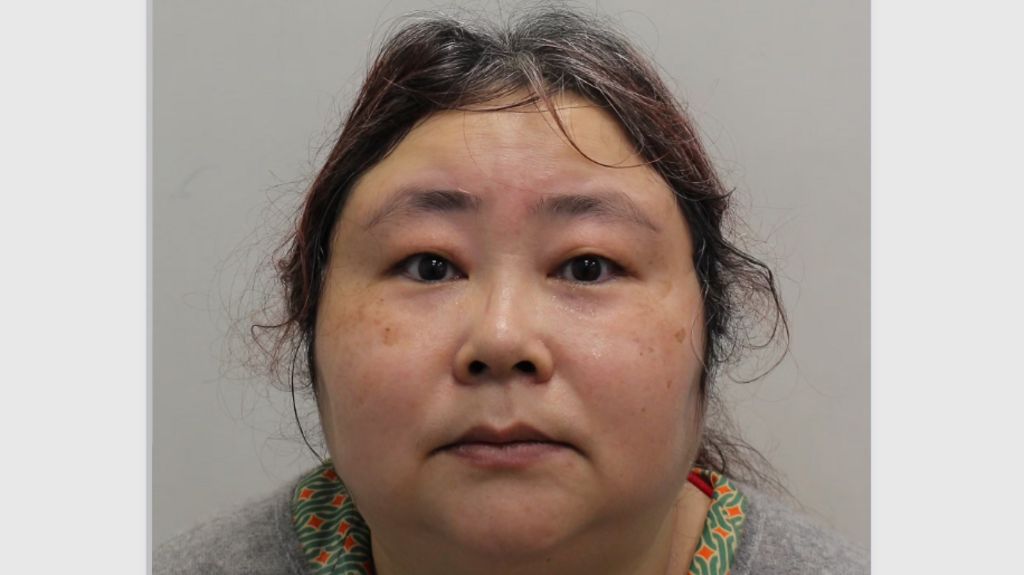
Chinese woman convicted after ‘world’s biggest’ bitcoin seizure
In a landmark case, Zhimin Qian, also known as Yadi Zhang, has been convicted for her pivotal role in what is now recognized as the largest cryptocurrency seizure globally, valued at over £5.5 billion ($7.4 billion). Qian, a 47-year-old Chinese national, pleaded guilty on Monday at Southwark Crown Court in London to charges of illegally acquiring and possessing cryptocurrency. The Metropolitan Police revealed that between 2014 and 2017, Qian orchestrated a massive scam in China, defrauding more than 128,000 victims and converting the stolen funds into Bitcoin assets. Her arrest followed a seven-year international investigation into a complex money laundering network. Detective Sergeant Isabella Grotto, who led the investigation, noted that Qian had been evading justice for five years before her capture, which required coordinated efforts across multiple jurisdictions. Qian fled China using falsified documents and entered the UK, where she attempted to launder the stolen money through property purchases. She was aided by Jian Wen, another Chinese national, who was sentenced to six years and eight months in prison last year for her involvement. Robin Weyell, deputy chief Crown prosecutor, emphasized the growing use of cryptocurrencies by organized criminals to conceal and transfer illicit assets. The Crown Prosecution Service (CPS) is actively working to prevent the fraudsters from accessing the stolen funds. Many victims have already received partial compensation through a scheme established in China. Qian remains in custody awaiting sentencing, with the date yet to be determined. This case underscores the increasing challenges posed by cybercrime and the critical need for international cooperation in combating such sophisticated financial frauds.
-

Mumbai’s new airport faces traffic woes as it takes on Singapore and Dubai
The Navi Mumbai International Airport (NMIA), a sprawling 1,100-hectare facility, is poised to transform India’s aviation landscape. Located 40 kilometers from Mumbai’s commercial center, the airport will feature four terminals and handle up to 90 million passengers annually upon full expansion. This development comes as a much-needed relief for Mumbai’s overburdened Chhatrapati Shivaji Maharaj International Airport, which has reached its capacity of 55 million passengers per year. Arun Bansal, CEO of Adani Airport Holdings Limited, emphasized that NMIA will significantly ease congestion and meet the growing demand for air travel in India’s financial capital. The airport, connected to Mumbai by India’s longest sea bridge, will operate two parallel runways and is designed to be India’s first fully digital hub, leveraging advanced technology to streamline check-in, security, and boarding processes. However, challenges remain, including connectivity issues and regulatory hurdles that could impede its ambition to become a global aviation hub on par with Singapore or Dubai. Despite these obstacles, NMIA represents a critical step in India’s aviation ambitions, joining cities like New York and London in operating multiple airports.
-
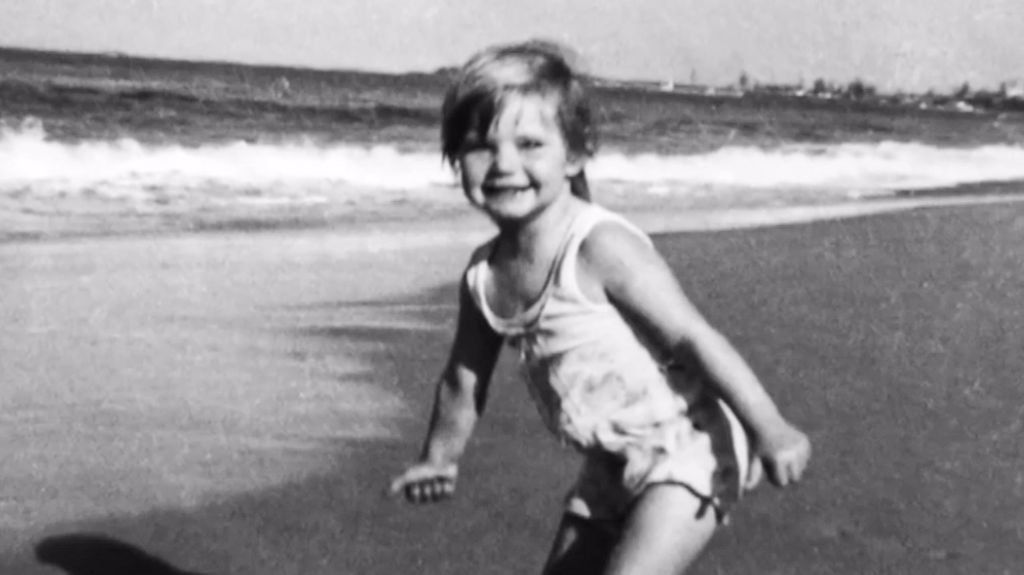
Missing Cheryl Grimmer: Family’s anger over police decision not to contact witnesses
The family of Cheryl Grimmer, a three-year-old girl who vanished from Fairy Meadow beach in New South Wales, Australia, in January 1970, has expressed frustration over the police’s handling of the case. Despite a four-year review, no new evidence has emerged, and three potential eyewitnesses who came forward after a BBC podcast were not formally interviewed. Cheryl’s brother, Ricki Nash, described the situation as ‘total frustration,’ emphasizing that the family cannot move forward without police assistance. The podcast, which has been downloaded five million times, prompted witnesses to share their accounts, including one man who claimed to have seen a teenage boy carrying a child from the beach changing rooms on the day of Cheryl’s disappearance. Retired detective Damian Loone criticized the police for not pursuing these leads, calling it ‘sloppy police work.’ In 2016, a man was charged with Cheryl’s abduction and murder based on a 1971 confession, but the charges were dropped in 2019 after the confession was deemed inadmissible. The family has launched a petition for an inquiry into missing persons investigations, which garnered over 10,000 signatures but has yet to result in action. NSW Police stated that all information received was assessed, but not all leads warranted formal interviews. The case remains unresolved, leaving Cheryl’s family desperate for answers.