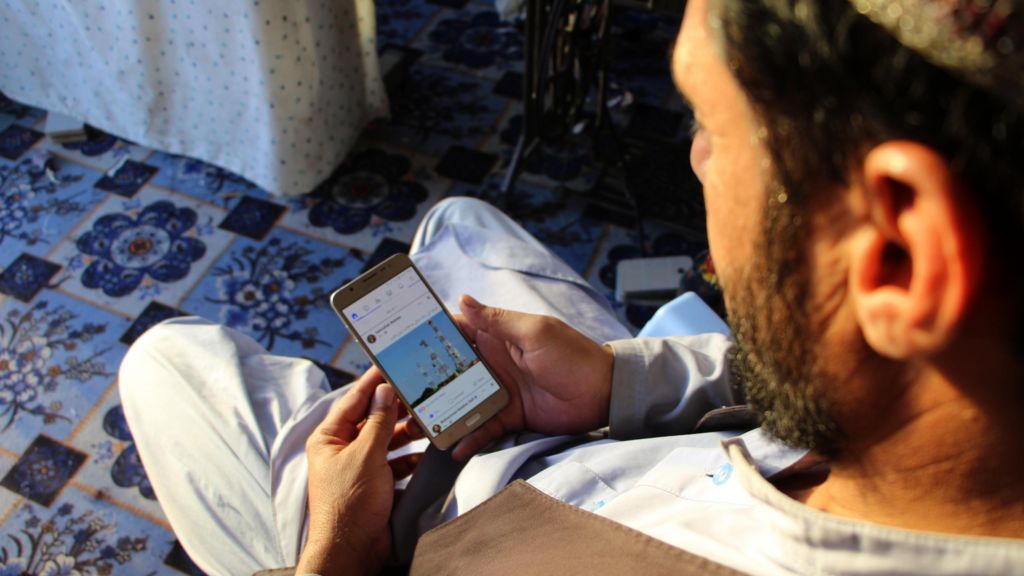
The Taliban-led government in Afghanistan has implemented stringent restrictions on social media platforms, including Facebook, Instagram, and X (formerly Twitter), according to sources from the Ministry of Communications and Information Technology. While the specific criteria for content filtering remain unclear, users in Kabul have reported issues such as unviewable videos on Facebook and restricted access to Instagram. These measures follow a recent two-day nationwide internet and telecommunications blackout, which caused widespread disruptions to businesses, emergency services, and daily life. The blackout, which ended with public relief, heightened concerns about the further isolation of women and girls, whose rights have been severely curtailed since the Taliban regained power in 2021. Social media users across various provinces have reported limited access to platforms since Tuesday, with some experiencing severely slow internet speeds or complete outages of fibre optic connections. A government source stated that the filtering measures are widespread and cover most provinces, though no formal explanation has been provided. Cybersecurity organization NetBlocks confirmed the intentional nature of these restrictions, noting intermittent accessibility on smartphones. The Taliban’s actions align with their interpretation of Islamic Sharia law, which has led to numerous societal restrictions, including bans on education for girls over 12 and the removal of books authored by women from universities. For Afghan women, the internet has been a crucial connection to the outside world, making these restrictions particularly impactful.
标签: Asia
亚洲
-

Fans mourn death of popular Punjabi singer Rajvir Jawanda
The untimely demise of Rajvir Jawanda, a beloved Punjabi singer, actor, and former police officer, has sent shockwaves through his vast fanbase and the music community. Jawanda, 35, passed away on Wednesday, succumbing to severe injuries sustained in a motorcycle accident in Himachal Pradesh’s Solan district. The incident occurred when his bike reportedly collided with cattle, causing him to lose control. His death has sparked an outpouring of grief from fans, politicians, and fellow artists, who remember him as a cultural icon and a voice of Punjab’s youth. Jawanda’s music, which blended traditional Punjabi rhythms with modern storytelling, resonated deeply with listeners. His YouTube channel boasted over 900,000 subscribers, and his music videos garnered millions of views. Known for his catchy beats and relatable lyrics, Jawanda’s songs became dance anthems in clubs across the region. Beyond music, he also acted in Punjabi films and was admired for his clean image, steering clear of controversies and avoiding themes of drugs and violence prevalent in some Punjabi rap. A passionate biker, Jawanda often shared videos of his adventures in north India’s mountainous terrains, embodying an adventurous spirit. His death has reignited calls for improved road safety in India, with fans expressing anger over the country’s hazardous road conditions. Jawanda’s journey to stardom was unconventional. Born into a family with ties to law enforcement, he initially pursued a career in the Punjab police, serving as a constable for nine years. However, his love for music, cultivated since childhood through exposure to Punjabi folk ballads, eventually led him to transition into a full-time singer. His breakout came after one of his songs went viral, propelling him into the spotlight. Despite his fame, Jawanda remained grounded, actively supporting the 2020 farmers’ protests and using his platform to amplify their voices. His passing leaves a void in Punjab’s music industry and the hearts of his fans. Tributes poured in from political leaders, with Punjab’s Aam Aadmi Party senior leader Manish Sisodia praising his “soulful voice” and former Chief Minister Amarinder Singh acknowledging the impact of his music on countless lives.
-

Telecoms company sent emails to wrong addresses during deadly outage
Optus, one of Australia’s largest telecommunications providers, is facing intense scrutiny following revelations of its mishandling of a severe outage on 18 September, which has been linked to four deaths, including that of an eight-week-old baby. During a parliamentary hearing, it was disclosed that Optus sent emails about the outage to an incorrect email address at the Department of Communications, where they remained unread for over a day. The emails significantly downplayed the severity of the incident, claiming only 10 emergency calls were affected, while in reality, more than 600 calls failed over 13 hours. Authorities were only informed of the outage more than 36 hours after it began, via the industry regulator. Australia’s Deputy Secretary for Communications, James Chisholm, criticized Optus for not adhering to protocols, including redirecting triple-0 calls to other providers during outages. The outage occurred during a routine firewall upgrade, deviating from standard procedures. Singapore’s Prime Minister Lawrence Wong, currently on an official visit to Australia, expressed condolences and emphasized the need for accountability. Optus, owned by Singapore’s Singtel, is under investigation by Australia’s media regulator for potential legal breaches. This incident adds to Optus’ troubled history, including a 2022 cyberattack and a 2023 nationwide outage. Calls for the resignation of current CEO Stephen Rue and the revocation of Optus’ operating license are growing among lawmakers.
-

The Indian messaging app that wants to take on WhatsApp
India, WhatsApp’s largest market, has long been dominated by the messaging giant, which has become an integral part of daily life. However, a new contender, Arattai, developed by Indian tech company Zoho, is making waves. Over the past few weeks, Arattai has seen a meteoric rise in popularity, with seven million downloads in just seven days, according to Zoho. This surge is largely attributed to the Indian government’s push for self-reliance, a message echoed by Prime Minister Narendra Modi and his ministers, who have encouraged the use of homegrown apps. Federal minister Dharmendra Pradhan recently urged citizens to use Arattai on social media, further boosting its visibility. Zoho CEO Mani Vembu reported that daily sign-ups skyrocketed from 3,000 to 350,000 in just three days, with active users increasing 100-fold. Despite this growth, Arattai still lags behind WhatsApp, which boasts 500 million monthly active users in India. Arattai offers features similar to WhatsApp, including messaging, voice, and video calls, and is designed to function smoothly on low-end devices and slow internet connections. Users have praised its interface and design, with many expressing pride in supporting an Indian-made app. However, experts remain skeptical about Arattai’s ability to dethrone WhatsApp, citing the latter’s entrenched user base and extensive integration with businesses and government services. Additionally, concerns have been raised about Arattai’s data privacy policies. While the app offers end-to-end encryption for calls, it does not yet extend this feature to messages, raising questions about user privacy. Zoho has stated that it is working to implement full end-to-end encryption for text messages. The company has also emphasized its commitment to complying with India’s IT regulations while ensuring user control over data. Historically, Indian apps like Koo and Moj have struggled to sustain initial success against global giants. Whether Arattai can overcome these challenges and carve out a lasting presence in India’s competitive tech landscape remains uncertain.
-

Japan football official sentenced for viewing child abuse images on plane
Masanaga Kageyama, a senior official of the Japan Football Association (JFA), has been sentenced to an 18-month suspended jail term and banned from France for 10 years after being caught viewing child sexual abuse images on a plane. The incident occurred during a stopover at Charles de Gaulle Airport in Paris, as reported by French newspaper Le Parisien. Kageyama, who was traveling to the Under-20 World Cup in Chile, admitted to viewing the images but claimed he was unaware of their illegality in France. The flight crew alerted authorities after noticing the explicit content on his laptop in the business class cabin of an Air France flight. Kageyama initially defended the images as ‘art’ and AI-generated. The court also imposed a €5,000 fine and barred him from working with minors. The JFA terminated his contract immediately, labeling the incident ‘unacceptable to the football world.’ JFA Chairman Tsuneyasu Miyamoto apologized for the incident and pledged to strengthen governance and compliance systems. Kageyama, a former professional footballer, has managed teams in Japan, Macau, and Singapore.
-

World’s first resort hospital opens in gambling hub Macau
Macau, long celebrated as the world’s premier gambling destination, is now setting its sights on becoming a global leader in healthcare tourism. In a groundbreaking move, the city’s Studio City, a Hollywood-themed casino and entertainment resort owned by Hong Kong-based Melco Resorts and Entertainment, has launched its first-ever resort hospital. This innovative facility, opened in collaboration with Hong Kong’s iRad Hospital, specializes in health screenings, advanced MRI scans, and cosmetic procedures, offering a seamless blend of luxury medical services and leisure. Lawrence Ho, CEO of Melco Resorts, emphasized that this project is designed to promote medical tourism, generate employment, and integrate healthcare with entertainment under one roof. The initiative aligns with Macau’s broader economic diversification strategy, which seeks to reduce the city’s reliance on gaming and expand into sectors like healthcare, technology, and events. With nearly 40 million annual visitors, Macau presents a unique opportunity to emerge as a top destination for medical tourism, according to iRad’s honorary chairman, Dennis Tam. The global medical tourism industry, valued at tens of billions of dollars, is poised for significant growth, with Asia leading the charge. Countries like South Korea and Singapore have already established themselves as hubs for cosmetic surgeries and advanced medical treatments, while Turkey attracts millions for procedures such as transplants and dentistry. Macau’s latest venture marks a pivotal step in its transformation into a multifaceted tourism powerhouse.
-

At least 24 killed as paraglider drops bombs at Myanmar Buddhist festival
A devastating paramotor attack during the Thadingyut festival in Chaung U township, central Myanmar, has resulted in the deaths of at least 24 people and left 47 others wounded, according to a spokesperson from the exiled National Unity Government. The incident occurred on Monday evening as approximately 100 individuals gathered to celebrate the Buddhist-rooted national holiday, which also served as a candlelight vigil protesting the policies of the ruling junta. A local official from the anti-junta People’s Defence Force reported that a motor-powered paraglider dropped two bombs on the crowd, causing widespread destruction and chaos. Witnesses described the scene as horrific, with bodies torn apart and identification of the deceased proving difficult. Amnesty International condemned the attack, labeling it part of a ‘disturbing trend’ of using paramotors to target communities. The junta’s increasing reliance on such methods is attributed to international sanctions limiting access to conventional military equipment. The attack has prompted calls for urgent protection of civilians and increased pressure on the junta from regional bodies like ASEAN. The vigil also highlighted broader grievances, including opposition to military conscription and the upcoming December elections, which critics argue will not be free or fair. The conflict in Myanmar, ongoing since the 2021 military coup, has claimed over 5,000 civilian lives, according to UN estimates.
-

Chinese construction firms changed the way they operate in Africa
Over the past two decades, Chinese construction companies have been a dominant force in Africa’s infrastructure development, largely fueled by substantial financial backing from Chinese banks. Between 2000 and 2019, Chinese lenders committed nearly $50 billion to African transport projects, primarily through development finance institutions. However, since 2019, this funding has significantly dwindled, with only $6 billion allocated to infrastructure projects. Despite this decline, Chinese companies continue to flourish across the continent, maintaining their market leadership in countries like Ethiopia, Ghana, and Kenya. A recent study sheds light on the strategies that have enabled these firms to sustain and expand their presence in Africa. The research, conducted through extensive fieldwork in China, Kenya, and Ghana, identifies three key drivers of their success. First, Chinese companies leverage their ties to the Chinese state to establish and maintain their market presence, particularly in projects aligned with African development agendas. Second, they build trust-based relationships with other companies, governments, and international organizations, enabling them to secure cross-border projects. Third, they cultivate everyday relations with local politicians, officials, and business elites, embedding themselves deeply in local political and business environments. The study emphasizes that while state support is crucial for market entry, it is the firms’ ability to adapt and shift between these strategies that ensures their survival and expansion. This flexibility allows them to compete effectively in international tenders, partner with other multinationals, and adapt to local conditions. The findings also challenge the perception that Chinese companies are mere extensions of China’s foreign policy, highlighting their increasingly independent and competitive behavior. For African governments, this shift presents both opportunities and responsibilities in shaping the role of Chinese firms in their economies. The next phase of Africa-China infrastructural engagement will likely be driven by operational contexts, diverse alliances, and a competitive global market rather than large Chinese loan packages.
-

The deadly dose: Inside India’s cough syrup obsession
In a distressing recurrence of events, India is grappling with yet another wave of child fatalities linked to contaminated cough syrups. Recent reports from Jammu reveal the deaths of at least 12 children under five years old, allegedly caused by toxic ingredients in locally manufactured cough remedies. This tragedy echoes similar incidents in Madhya Pradesh and Rajasthan, where children succumbed to kidney failure after consuming syrups laced with diethylene glycol, a hazardous industrial solvent.
-

Threat assessment of China led to spy case collapse, says CPS
A high-profile espionage case in the UK involving two men accused of spying for China has been dropped due to insufficient evidence, according to the country’s top prosecutor. Christopher Cash, 30, and Christopher Berry, 33, both denied allegations of gathering and providing information prejudicial to the UK’s safety and interests between December 2021 and February 2023. The charges were dismissed in September 2024, sparking criticism from ministers and MPs. Sir Keir Starmer, the UK Prime Minister, stated that the government could only rely on the previous Conservative administration’s assessment of China, which labeled the country as an ‘epoch-defining challenge’ rather than a direct national security threat. Stephen Parkinson, the Director of Public Prosecutions, explained that while there was initially sufficient evidence to prosecute under the Official Secrets Act, a precedent set by another espionage case raised the threshold for conviction. Parkinson revealed that the Crown Prosecution Service had spent months attempting to obtain further evidence from the government, but the witness statements provided failed to meet the required standard. He emphasized that the evidence would have needed to portray China as a ‘threat to national security’ at the time of the alleged offenses. The government maintained that its description of China could not be retrospectively altered and had to align with the previous administration’s stance. The collapse of the trial has fueled frustration within the government, with Parkinson’s intervention following weeks of speculation. The case has also highlighted the Labour government’s efforts to recalibrate UK-China relations, including a cross-Whitehall audit of bilateral ties. In October 2024, Foreign Secretary David Lammy visited China, advocating for ‘pragmatic solutions to complex challenges.’ Additionally, Jonathan Powell, the UK’s National Security Adviser, met with Chinese officials in July 2024, signaling Britain’s willingness to enhance dialogue with Beijing. The case underscores the complexities of prosecuting espionage under the Official Secrets Act, which requires proof that the information shared was useful to an enemy nation.