
Dubai is poised to introduce a groundbreaking trackless tram system, designed to alleviate road congestion and enhance the city’s public transportation network. The project, spearheaded by Dubai’s Roads and Transport Authority (RTA), is expected to be fully operational by the first quarter of 2026. This innovative system will integrate seamlessly with the existing Dubai Metro, marking a significant step towards Dubai’s ambitious goal of making 25% of its transportation smart and driverless by 2030. Dawood Alrais, Director of Rail Maintenance at RTA’s Rail Agency, emphasized the system’s potential to support the city’s growing population and reduce environmental impact. Unlike traditional trams, the trackless variant operates on rubber tires and utilizes advanced navigation technologies such as optical sensors, GPS, and LiDAR to follow virtual tracks. This eliminates the need for fixed rails, reducing both construction costs and environmental footprint. Each tram, capable of carrying up to 300 passengers across three carriages, will operate on dedicated lanes to ensure safety and efficiency. With a top speed of 70 km/h and a range of 100 km per charge, the trackless trams promise faster and more flexible travel compared to conventional trams. Initially planned for eight locations, the project may expand to additional areas, further enhancing Dubai’s public transport infrastructure.
标签: Asia
亚洲
-
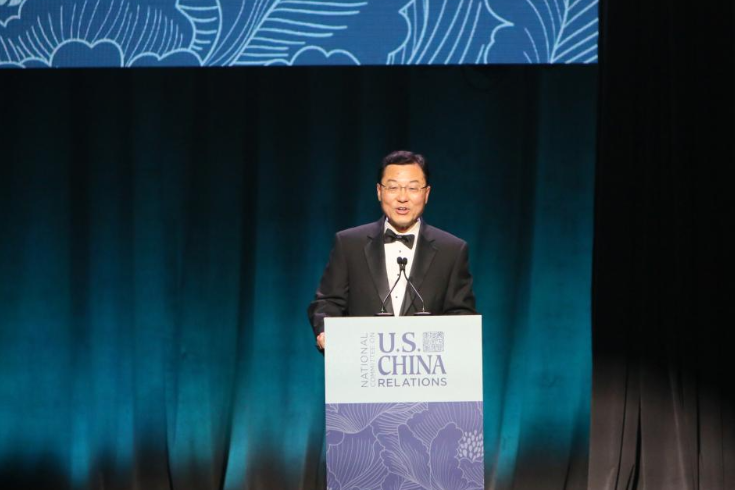
Ambassador urges healthier bilateral ties
In a pivotal address at the annual gala dinner of the National Committee on US-China Relations in New York, Chinese Ambassador to the United States Xie Feng emphasized the critical need for a healthier and more cooperative bilateral relationship between the two global powers. Speaking on October 14, 2025, Ambassador Xie highlighted the profound impact of US-China relations on global stability and prosperity, urging both nations to move beyond trade wars and tariffs, which he described as detrimental to all parties involved. He stressed the importance of mutual respect, peaceful coexistence, and collaboration as the foundation for resolving differences and fostering a constructive partnership. Xie underscored the shared responsibilities of China and the US as permanent members of the UN Security Council, major nuclear powers, and the world’s largest economies. He called for a focus on common interests rather than allowing historical and cultural differences to fuel suspicion and conflict. The ambassador also highlighted the strategic value of business collaboration between the two nations, encouraging more US businesses to invest in China, which offers vast opportunities in industrial transformation, technological innovation, and infrastructure development. Xie concluded by emphasizing the importance of people-to-people ties as the cornerstone of a strong bilateral relationship, asserting that the world has ‘a thousand reasons to get the China-US relationship right, and no single one to mess it up.’
-

‘Large scale’ Chinese spying in UK, says witness in collapsed trial
The UK government is under intense scrutiny following the collapse of a high-profile espionage case involving two individuals accused of spying for China. Christopher Berry, an academic, and Christopher Cash, a former parliamentary researcher, were charged under the Official Secrets Act in April 2024. The case was dropped by the Crown Prosecution Service (CPS) due to insufficient evidence that China posed a national security threat at the time of the alleged offenses. Deputy National Security Adviser Matthew Collins, in his witness statements, asserted that China was engaged in ‘large-scale espionage’ against the UK, describing it as the ‘biggest state-based threat to the country’s economic security.’ However, the CPS determined that the evidence fell short of the threshold required for prosecution. The controversy has sparked accusations from the Conservative Party that the Labour government allowed the case to collapse to protect economic ties with China. The government denies these claims, attributing the case’s failure to the previous Conservative administration. MPs have questioned the CPS’s decision, with some suggesting there was enough evidence to proceed to trial. The case has reignited debates about the UK’s relationship with China and the adequacy of its national security measures.
-

Flying cars and AI dazzle at Dubai expo
China’s cutting-edge low-altitude technology and innovative flying vehicles took center stage at the 45th edition of GITEX Global in Dubai, one of the world’s most influential technology and AI exhibitions. Over 300 Chinese enterprises showcased their latest advancements in AI robotics, intelligent solutions, flying cars, and 5G technologies at the event, which ran from October 13 to 17 and attracted 6,800 tech companies and 2,000 startups from 180 countries and regions. Among the highlights was Xpeng AeroHT’s two-seater electric vertical takeoff and landing (eVTOL) aircraft, part of the world’s first mass-produced modular flying car, the ‘Land Aircraft Carrier.’ The aircraft completed its first overseas manned flight in Dubai, securing 600 orders across the Middle East, marking the largest overseas order volume for a Chinese eVTOL manufacturer. Deliveries are set to begin in 2027. GOVY, a flying vehicle brand under Chinese automaker GAC Group, also made its Middle East debut with the Govy AirCar, featuring aviation-grade carbon fiber composites and gull-wing doors for vertical takeoff and landing. The event underscored China’s efforts to build a low-altitude economy ecosystem, utilizing airspace below 3,000 meters for applications in manufacturing, logistics, entertainment, and emergency services. Ou Boqian, China’s consul-general in Dubai, emphasized the significance of this progress, calling it a crucial step in the internationalization of China’s low-altitude electric manned flight technology. The Boston Consulting Group forecasts that China’s eVTOL market will be worth $41 billion by 2040, with the Middle East market expected to reach $11 billion. As the UAE and Saudi Arabia pivot toward technology-driven economies, low-altitude transportation has emerged as a key sector, with Chinese solutions poised to play a pivotal role in shaping the future of air commuting in the region.
-

Australia reaches semifinals after thrashing Bangladesh in Women’s Cricket World Cup
In a commanding display of skill and strategy, Australia secured their place in the semifinals of the Women’s Cricket World Cup with a resounding 10-wicket victory over Bangladesh on Thursday. The match, held in Visakhapatnam, India, saw Australia effortlessly chase down Bangladesh’s total of 198-9 in just 24.5 overs, finishing at 202 without loss. Captain Alyssa Healy led the charge with an unbeaten 113 off 77 balls, while Phoebe Litchfield contributed a solid 84 not out off 72 deliveries. Healy’s innings, marked by 20 boundaries, was the fastest century of the tournament, showcasing her exceptional form following her 142-run performance against India earlier in the week. Litchfield also impressed with 12 fours and a six. The Australian spinners, particularly Alana King who took 2-18 in 10 overs, played a pivotal role in restricting Bangladesh’s batting lineup. King’s performance earned her the Player of the Match award. Despite a steady start by Bangladesh’s opener Rubya Haider, who scored 44, and Sobhana Mostary’s resilient 66 not out, the team struggled to build momentum, with none of the last six batters reaching double figures. Australia’s victory extends their unbeaten streak in the World Cup to 13 consecutive games, solidifying their status as seven-time champions. The team now looks ahead to their next match against England in Indore, while Bangladesh prepares to face Sri Lanka in Navi Mumbai.
-
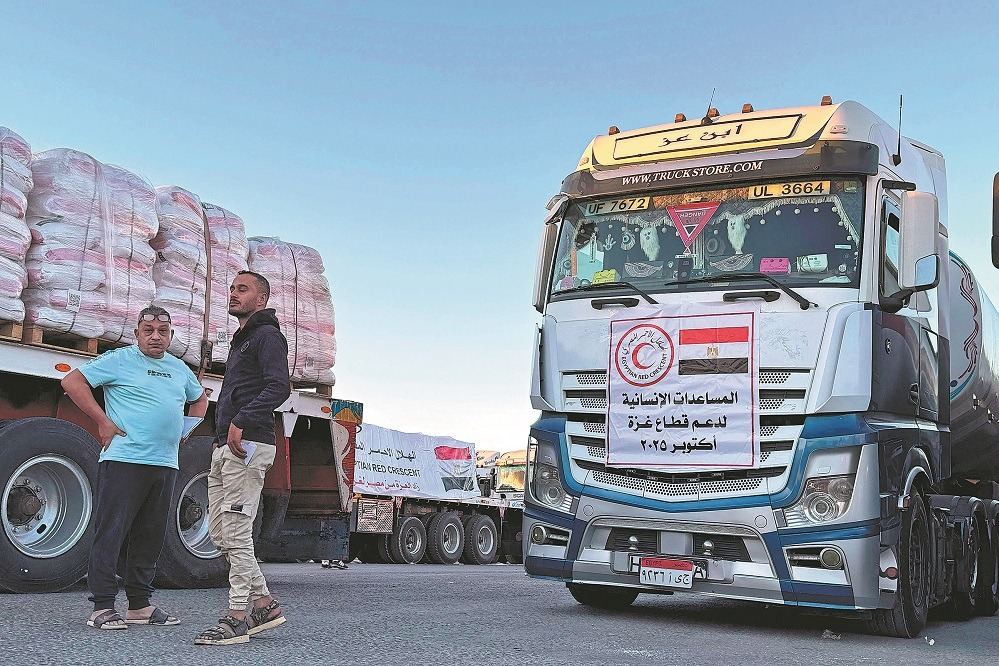
Israel asked to smoothen aid flow amid fraught ceasefire
Amid a fragile ceasefire, Israel has been called upon to ensure the uninterrupted flow of humanitarian aid into Gaza, as Hamas faces significant challenges in retrieving the bodies of deceased hostages due to widespread destruction and the presence of Israeli forces across half of the territory. Reports indicate that Israel has delayed the reopening of the Rafah border crossing and drastically reduced aid deliveries, citing the slow return of approximately 20 additional hostage bodies held by Hamas. On Tuesday, Hamas transferred four more bodies, believed to be Israeli hostages, to the International Committee of the Red Cross, bringing the total to eight. However, Israel suspects one of the bodies may belong to a Palestinian. Ismail al-Thawabta, Director General of Gaza’s Government Media Office, has urged Israel to open the crossings and allow immediate aid into the enclave, emphasizing the dire need for water and other essentials. The United Nations has reiterated the necessity of opening more crossings, ensuring the sustained entry of fuel and cooking gas, and providing security guarantees for convoys. UN Deputy Spokesman Farhan Haq highlighted the ongoing efforts to scale up operations under a 60-day response plan. Meanwhile, Israeli officials have stated preparations are underway to open Rafah to Gazan citizens, with plans to send in 600 aid trucks. The ceasefire remains precarious, with both Hamas and Israel accusing each other of violations. The Red Cross has warned that recovery teams may struggle to locate some bodies due to the extensive destruction. The World Health Organization has deployed emergency medical teams and delivered essential medical supplies, while the World Food Programme has facilitated the entry of 137 trucks carrying food aid. However, tensions persist, with reports of Israeli forces allegedly killing a man in the West Bank and abducting four citizens.
-
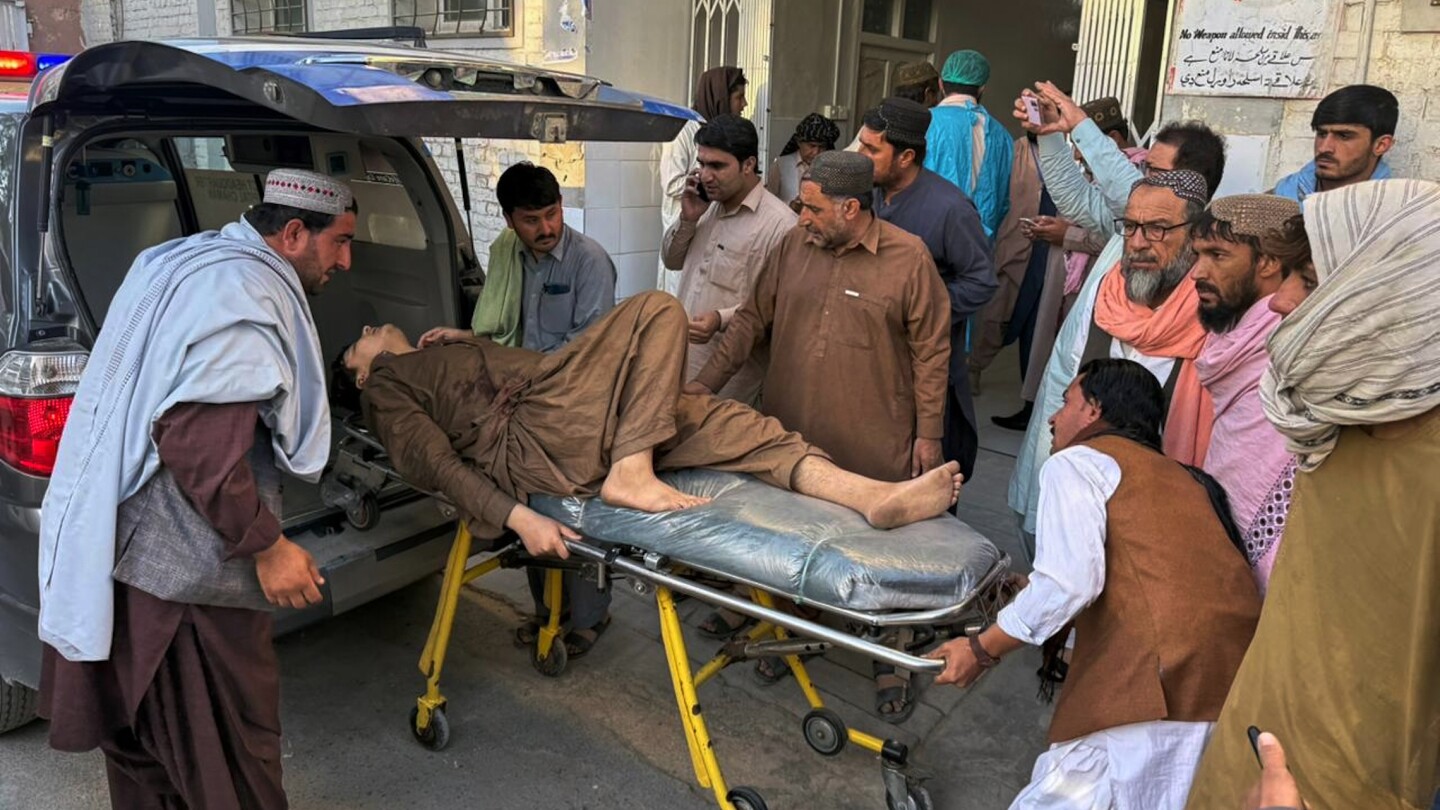
UN urges Pakistan and Afghanistan to end hostilities to protect civilians
The United Nations has called on Pakistan and Afghanistan to halt ongoing hostilities to safeguard civilian lives, following days of intense cross-border clashes that have resulted in dozens of fatalities and hundreds of injuries. This marks the most severe crisis between the two nations since the Taliban’s rise to power in Afghanistan in 2021. The violence, which escalated on October 10, saw both countries accusing each other of armed provocations. On Wednesday, a ceasefire was agreed upon after appeals from regional powers, aiming to stabilize a region threatened by the resurgence of groups like the Islamic State and al-Qaida. As of Thursday, key border crossings remained closed, and no overnight fighting was reported. The U.N. Assistance Mission in Afghanistan (UNAMA) welcomed the truce and is currently assessing the casualty count, with preliminary reports indicating at least 17 civilian deaths and 346 injuries in Spin Boldak, Afghanistan. UNAMA also documented 16 civilian casualties in earlier clashes across several Afghan provinces. Pakistan has yet to release figures on civilian casualties on its side of the border but has repeatedly accused Afghanistan of harboring militants, a claim denied by the Taliban. The two nations share a contentious 2,611-kilometer border, known as the Durand Line, which Afghanistan has never formally recognized.
-

Patrick Kluivert exits as Indonesia’s head coach after missing out on a World Cup spot
Patrick Kluivert has resigned from his position as head coach of the Indonesian national football team, just days after the country’s aspirations to qualify for the 2026 FIFA World Cup were dashed. The former Barcelona striker, who was appointed in January on a two-year contract, aimed to lead Indonesia to its first World Cup appearance since gaining independence in 1945. However, recent defeats to Saudi Arabia and Iraq in the qualifying rounds sealed Indonesia’s fate, prompting an early termination of Kluivert’s tenure. The Football Association of Indonesia announced the mutual decision, citing a comprehensive evaluation of the national team’s coaching and development program as the reason for the change. In a heartfelt message to fans on social media, Kluivert expressed his disappointment and took full responsibility for the team’s performance. He described the losses as ‘bitter lessons’ but also as reminders of the shared dreams for Indonesian football. Kluivert’s appointment was part of the federation’s strategy to naturalize players of Indonesian heritage from Europe, a policy that helped the team reach the final stages of World Cup qualification for the first time since 1938, when it competed as the Dutch East Indies. Despite the majority of his 23-player squad being born overseas, primarily in the Netherlands, the team’s performance under Kluivert’s leadership remained inconsistent, with only three wins in eight matches.
-
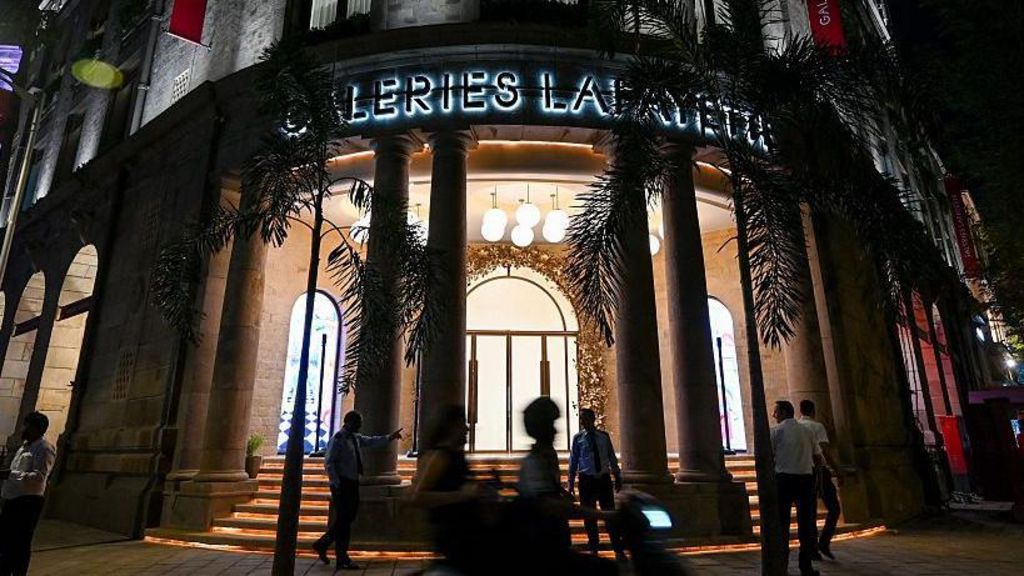
Galeries Lafayette to enter India amid luxury boom
Galeries Lafayette, the iconic French luxury department store, is making its grand entry into India with the opening of its first flagship store in Mumbai’s historic Fort area. This strategic move marks a significant milestone in the brand’s international expansion, as it seeks to capitalize on India’s rapidly growing luxury market. The store, spanning five levels and 90,000 square feet, is set to open in early November, with plans for another location in Delhi. Partnering with the Aditya Birla Group, Galeries Lafayette aims to offer an unparalleled shopping experience, featuring over 250 global luxury brands, private lounges, and concierge services. Nicolas Houzé, Executive Chairman of Galeries Lafayette Group, described the launch as a ‘defining moment’ and ‘a new chapter’ in the brand’s 130-year history. India’s luxury market, currently valued at $17 billion, is projected to soar to $85 billion by 2030, driven by increasing wealth creation and a shift in consumer preferences. Kumar Mangalam Birla, Chairman of the Aditya Birla Group, highlighted the growing appetite for high-end experiences among India’s affluent population. However, despite the booming luxury sector, income inequality remains a significant challenge, with a vast majority of the population unable to afford discretionary spending. This has led brands to focus on premium offerings catering to the wealthy, while mass-market demand remains subdued. Galeries Lafayette’s entry into India reflects a broader trend of global luxury brands targeting the country’s burgeoning high-end market.
-
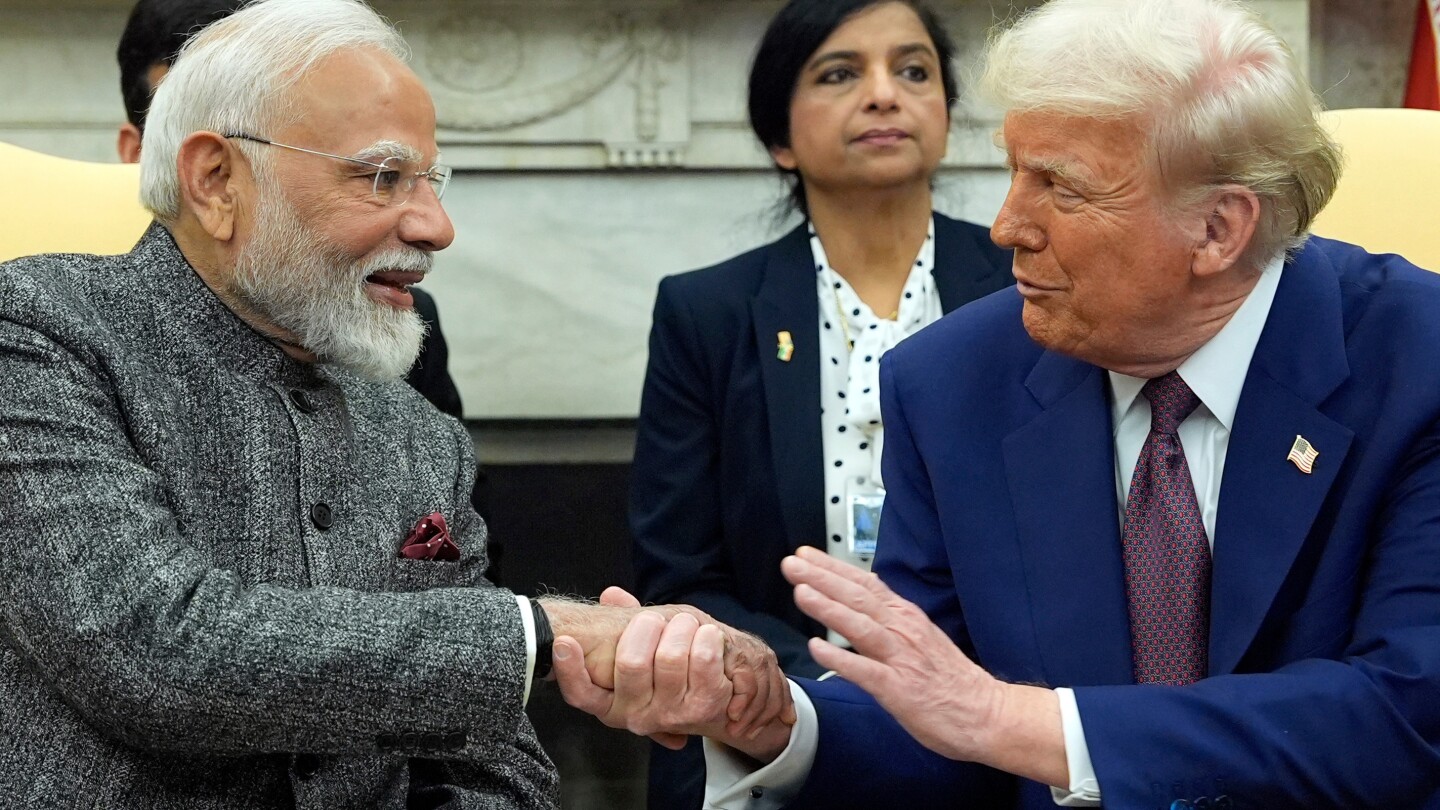
India seeks to import more US oil and gas under pressure from Trump to stop Russian oil purchases
India is actively pursuing increased imports of crude oil and natural gas from the United States as part of its strategy to diversify energy sources and address criticism from U.S. President Donald Trump regarding its purchases of discounted Russian oil. Trump claimed on Wednesday that Indian Prime Minister Narendra Modi had personally assured him India would cease buying Russian oil, a move that could intensify pressure on Moscow to negotiate an end to the Ukraine conflict. However, India’s foreign ministry did not directly address Trump’s remarks, instead emphasizing its commitment to safeguarding Indian consumers’ interests in a volatile energy market.