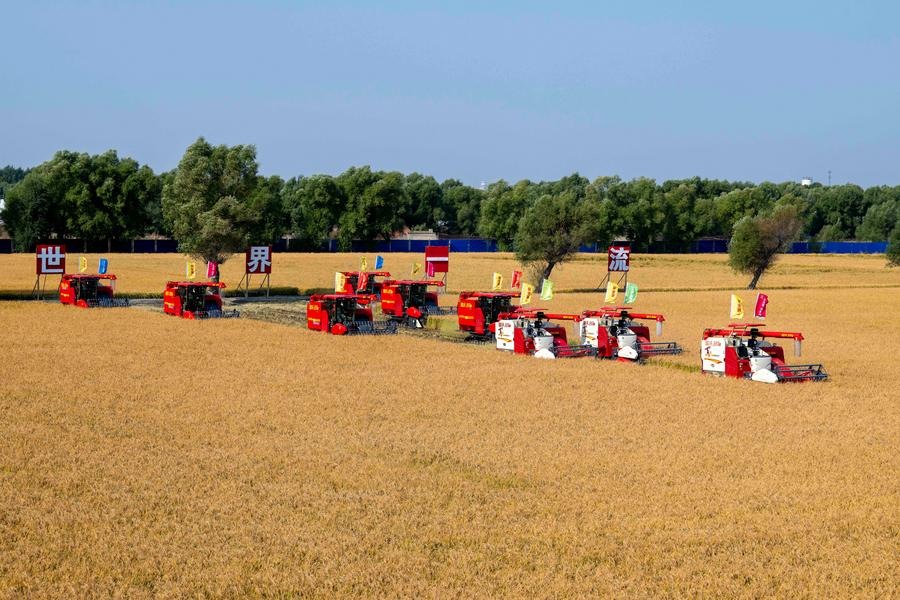
As China commemorated World Food Day on October 16, 2025, the nation showcased its technological advancements in agriculture, which have significantly bolstered food security. In major grain-producing regions, fleets of crawler harvesters worked tirelessly to gather a bountiful harvest, despite challenging weather conditions. In Shandong province, farmers employed advanced measures such as mechanical drying facilities to combat persistent rainfall, ensuring minimal grain loss. By October 2025, Wenshang county had established 38 grain drying centers with a daily capacity of 9,500 tonnes, a fivefold increase since 2020.
标签: Asia
亚洲
-

Australian rainforests no longer a carbon sink: study
A groundbreaking study published in Nature has revealed that Australia’s tropical rainforests are now emitting more carbon dioxide than they absorb, marking a significant shift in their ecological role. This alarming trend, linked directly to climate change, positions these rainforests as the first of their kind globally to transition from carbon sinks to net carbon emitters. The research, led by Hannah Carle of Western Sydney University’s Hawkesbury Institute for the Environment, underscores the escalating vulnerability of these ecosystems to extreme temperatures, atmospheric dryness, and prolonged droughts. The study, which analyzed nearly five decades of data from Queensland’s rainforests, found that increased tree mortality has outpaced growth, resulting in a net release of carbon into the atmosphere. This contradicts the expected response of enhanced plant growth under higher carbon dioxide levels. The findings have profound implications for global emissions reduction strategies, which rely heavily on the carbon-absorbing capacity of forests. Carle warned that current climate models may overestimate the ability of tropical forests to offset fossil fuel emissions, especially as cyclones, exacerbated by climate change, further diminish their carbon sink potential. The study calls for urgent global monitoring of other tropical forests to assess similar risks. Despite its ecological challenges, Australia remains a leading exporter of gas and thermal coal, with per capita carbon emissions among the highest worldwide. The research highlights the pressing need for accelerated climate action to meet the Paris Agreement’s goals of limiting global warming to safer levels.
-

Airline apologises for asking dead flight attendant for paperwork
The tragic death of a 34-year-old Eva Air flight attendant, surnamed Sun, has ignited widespread outrage in Taiwan, particularly after the airline’s insensitive request for documentation following her passing. Ms. Sun reportedly fell ill during a flight from Milan to Taoyuan City on September 24 and was hospitalized upon arrival. She succumbed to her condition on October 8, with speculation mounting that overwork may have contributed to her death. Anonymous social media users, claiming to be her colleagues, have alleged that Ms. Sun was pressured to continue working despite her illness. Taiwanese authorities and Eva Air are investigating whether she was denied medical assistance or discouraged from taking sick leave. Flight records indicate that Ms. Sun averaged 75 hours of flying per month, within regulatory limits. In a shocking turn of events, Ms. Sun’s family received a text message from an Eva Air representative days after her death, requesting proof of her leave application during her hospitalization. The family responded with a copy of her death certificate. Eva Air President Sun Chia-Ming publicly apologized at a press conference, calling the message ‘a mistake by an internal employee’ and expressing deep sorrow over Ms. Sun’s passing. The airline has faced multiple fines since 2013, primarily for overtime-related violations. The incident has raised serious concerns about employee welfare in the aviation industry.
-

Mongolia’s leader ousted after 4 months in ruling party feud
In a dramatic turn of events, Mongolia’s parliament has voted to remove Prime Minister Zandanshatar Gombojav from office, marking a significant escalation in the internal power struggle within the ruling Mongolian People’s Party. The decision, made on Friday, followed the passage of a contentious resolution that effectively dismissed the prime minister. This political upheaval comes at a critical juncture, as the country grapples with unresolved budget issues for the upcoming year, including demands for salary increases from teachers and medical professionals. The conflict within the party intensified after Zandanshatar lost a leadership election to Amarbayasgalan Dashzegve, the speaker of parliament and his chief rival. Zandanshatar’s supporters have accused Amarbayasgalan of corruption in the coal mining industry, prompting a government investigation. Despite a parliamentary committee initially voting against his dismissal, the full parliament ultimately supported the resolution, with lawmakers who abstained being counted as ‘no’ votes. The prime minister’s fate was sealed when a clear majority of ‘no’ votes emerged. The political instability has raised concerns about the future of Mongolia’s governance and its ability to address pressing economic and social challenges.
-
Chinese airlines oppose US ban on flights over Russia
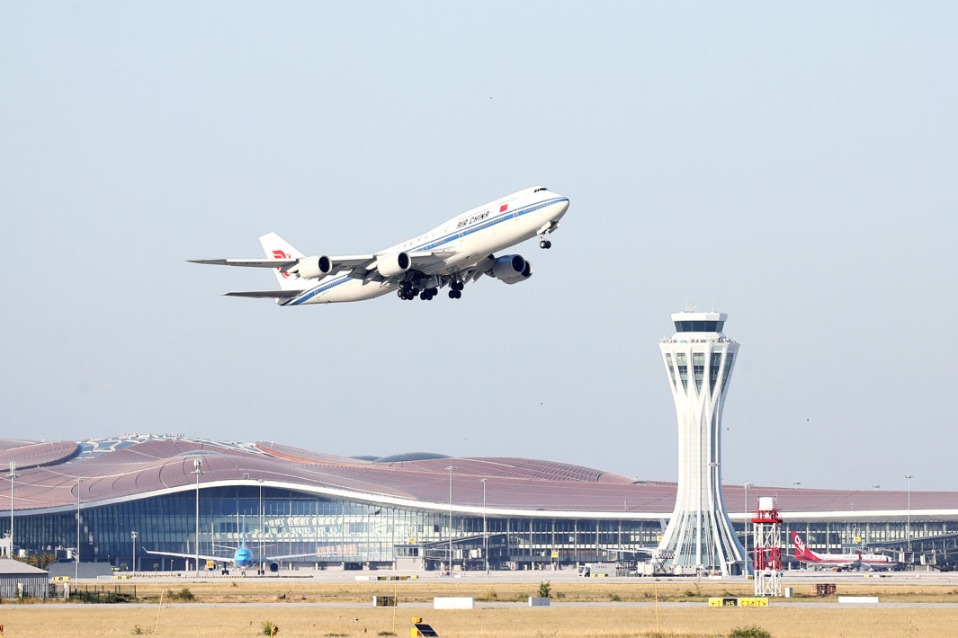
Major Chinese airlines have strongly opposed a recent US proposal to prohibit them from using Russian airspace for round-trip flights between China and the United States. The proposed ban, which could be enforced as early as November, has sparked significant backlash from the aviation industry and raised concerns about its broader implications. The US claims that Chinese carriers gain an unfair cost advantage over US airlines, which are barred from Russian airspace due to existing restrictions. In response, seven Chinese airlines, including Air China, China Eastern Airlines, and China Southern Airlines, have formally requested an extension of the comment period from two to seven business days to assess the impact and prepare a comprehensive response. Industry experts warn that the ban would disrupt travel for thousands of passengers, increase airfares, and force travelers to opt for longer connecting flights via hubs like Hong Kong, Japan, or South Korea. Qi Qi, a senior civil aviation analyst, criticized the US demand as unreasonable and unprofessional, emphasizing the need for rational and practical solutions. The proposal comes amid escalating tensions in US-China trade and economic relations. Chinese Foreign Ministry spokesman Lin Jian highlighted that the restrictions would harm people-to-people exchanges and ultimately damage US interests. As of September, Chinese airlines operated 50.73% of direct China-US flights, with US carriers accounting for the remaining 49.27%. Analysts argue that rerouting flights would increase travel time and costs, negatively impacting business and trade exchanges between the two nations. Lin Zhijie, an independent aviation analyst, suggested that Chinese airlines should be granted reciprocal rights to operate stopover routes via Tokyo, similar to US carriers.
-

Author of I Want To Die But I Want To Eat Tteokbokki dies at 35
Baek Se-hee, the acclaimed South Korean author of the groundbreaking memoir *I Want to Die but I Want to Eat Tteokbokki*, has passed away at the age of 35. Her 2018 book, which chronicled her candid conversations with her psychiatrist about her struggles with depression, became a global sensation, resonating deeply with readers worldwide. Originally written in Korean, the memoir gained international recognition following its English translation in 2022. While the circumstances of her death remain unclear, Baek’s legacy continues through her selfless act of organ donation, which saved five lives, according to the Korean Organ Donation Agency. Her sister shared that Baek’s life mission was to inspire hope and share her heart with others through her work. The memoir, which has sold over a million copies and been translated into 25 languages, was praised for its honest portrayal of mental health struggles and its ability to normalize conversations about inner turmoil. Baek’s work highlighted the duality of human emotions, as encapsulated in the book’s iconic line: ‘The human heart, even when it wants to die, quite often wants at the same time to eat some tteokbokki, too.’ Born in 1990, Baek studied creative writing and worked in publishing before dedicating herself to writing. Her decade-long battle with dysthymia, a chronic form of depression, formed the foundation of her bestselling memoir. A sequel, *I Want to Die but I Still Want to Eat Tteokbokki*, was published in Korean in 2019 and in English in 2024, further cementing her impact on mental health discourse.
-

Australia sharing tips on curbing social media for children before age limit starts in December
The Australian government has initiated a comprehensive public education campaign to guide parents and children in transitioning away from social media ahead of the implementation of a groundbreaking national age restriction. Starting December 10, social media platforms such as Facebook, Instagram, Snapchat, TikTok, X, and YouTube will face fines of up to 50 million Australian dollars ($33 million) if they fail to enforce measures preventing users under 16 from creating accounts. The current de facto age limit, based on U.S. privacy laws, is 13. Australian eSafety Commissioner Julie Inman Grant emphasized the significance of this change, describing it as a “very monumental event for a lot of young people.” The campaign, which includes digital, television, radio, and billboard messages, aims to raise awareness and provide resources for families to navigate the new regulations. Communications Minister Anika Wells highlighted the goal of allowing children to experience childhood without the pressures of social media, while also giving young Australians more time to develop their identities. However, the policy has sparked debate, with over 140 academics opposing the age limit as overly simplistic. Despite these concerns, the law passed with strong support last year. Australia’s approach is being closely monitored by other nations, including Denmark, which is considering similar measures to protect children in the digital age.
-
Former Japanese prime minister Murayama, known for apology over wartime aggression, dies at 101
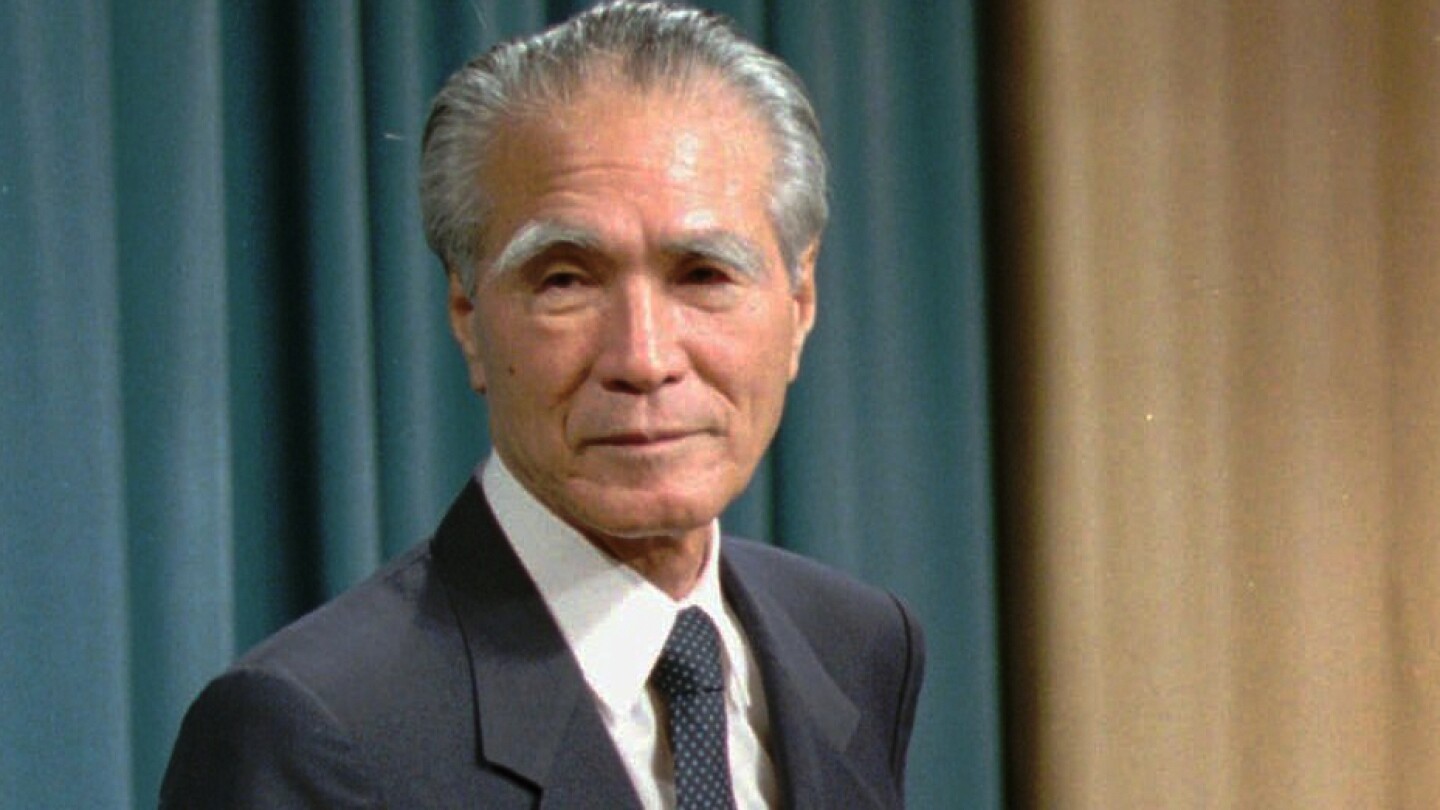
TOKYO — Tomiichi Murayama, the former Prime Minister of Japan renowned for his distinctive bushy eyebrows and his landmark 1995 apology to Asian nations for Japan’s wartime aggression, passed away on Friday at the age of 101. Murayama succumbed to old age at a hospital in his hometown of Oita, located in southwestern Japan. The announcement of his death was made by Mizuho Fukushima, the leader of Japan’s Social Democratic Party. Murayama, who headed the Japan Socialist Party (now the Social Democratic Party), served as Prime Minister from June 1994 to January 1996, leading a coalition government during a transformative period in Japanese politics. His 1995 statement, often referred to as the ‘Murayama Statement,’ remains a cornerstone of Japan’s post-war reconciliation efforts, expressing deep remorse for the suffering caused by Japanese imperialism in Asia. Murayama’s legacy is marked by his commitment to peace and his efforts to mend historical wounds.
-

Trade, Covid, rare earths and a real danger of global recession
China has strategically positioned itself for a potential confrontation with the United States, a scenario that could precipitate a global financial collapse. Unlike China, the US appears unprepared, lacking a viable contingency plan beyond diplomatic talks. This imbalance stems from America’s recent upheaval in its alliance networks and growing distrust among its trading partners, a situation not witnessed in over three decades. Capitalizing on this perceived US vulnerability, China has initiated a preemptive counteroffensive, imposing sanctions on rare earth elements—a move that has effectively cornered the US. While the US possesses potential countermeasures, such as disrupting air traffic control services, these actions could escalate tensions to the brink of war. Conversely, other US responses, like restricting the supply of advanced chips, may prove ineffective as alternative, albeit less efficient, solutions exist. China’s rare earth sanctions, however, pose an immediate threat to global markets, potentially triggering a recession. This strategy pits global markets against US President Donald Trump, while Chinese President Xi Jinping maintains firm control over China’s largely detached markets. The COVID-19 pandemic served as a rehearsal for China, demonstrating its populace’s adaptability and trust in government directives during crises. This preparedness contrasts sharply with the US’s initial denial and subsequent struggle to manage the pandemic, which ultimately contributed to Trump’s electoral defeat. China’s strategic foresight, coupled with the US’s lack of readiness, suggests that Beijing holds the upper hand in this high-stakes geopolitical standoff. However, the situation remains fluid, with global developments, such as the Netherlands’ nationalization of a Chinese tech company, potentially complicating China’s position. As tensions escalate, the world watches closely, aware that the outcome of this confrontation could reshape the global order.
-

Wall Street steadies after its slide as banks recover some of their losses
The U.S. stock market showed signs of stabilization on Friday, with bank stocks recovering from significant losses earlier in the week. Despite this, Wall Street remains volatile, experiencing frequent fluctuations. The S&P 500 saw a slight decline of 0.1% in early trading, while the Dow Jones Industrial Average rose by 91 points (0.2%), and the Nasdaq composite dropped by 0.3%. Big Tech stocks, including Nvidia, faced downward pressure, dropping 0.6% amid concerns over inflated valuations driven by the artificial intelligence boom, despite strong profit growth. Meanwhile, bank stocks rebounded after several institutions, such as Fifth Third Bancorp, Huntington Bancshares, and Truist Financial, reported better-than-expected quarterly earnings. This recovery followed a sharp decline in the sector triggered by fears of bad loans affecting smaller and midsized banks. Zions Bancorp and Western Alliance Bancorp, both central to Thursday’s concerns, also saw gains, rising 3.4% and 2.9%, respectively. The market remains cautious as scrutiny intensifies over loan quality following the bankruptcy of First Brands Group, an auto parts supplier. Jefferies Financial Group, potentially impacted by the bankruptcy, rose 4.8% after a significant drop since mid-September. JPMorgan CEO Jamie Dimon warned of potential risks in the banking sector, likening them to ‘cockroaches,’ but analysts suggest the situation is not yet critical. Trading volatility persists amid geopolitical tensions, including President Trump’s tariff threats on China, though he later indicated a possible meeting with Chinese President Xi Jinping. Overseas, European and Asian markets saw declines, with Germany’s DAX dropping 1.8% and Hong Kong’s Hang Seng falling 2.5%. Treasury yields remained steady after Thursday’s sharp declines.