
The UAE Media Council has announced an extension to the registration deadline for the Advertiser Permit, a regulatory measure introduced in July 2025 to enhance transparency, professionalism, and consumer protection in digital advertising. Originally set to take effect later this month, the new deadline for registration is now January 31, 2026. This permit is mandatory for anyone sharing advertisements, whether paid or unpaid, on social media platforms, websites, or apps. The permit is valid for one year and must be renewed annually. Failure to renew within 30 days of expiration will result in cancellation. Applicants must be at least 18 years old, with exceptions for minors requiring a legal guardian to hold the activity licence. UAE citizens and residents must obtain a trade licence in electronic media, while visitors can secure the permit through a licensed agency within the country. This initiative underscores the UAE’s commitment to regulating the digital advertising landscape, ensuring ethical practices and safeguarding consumer interests.
标签: Asia
亚洲
-
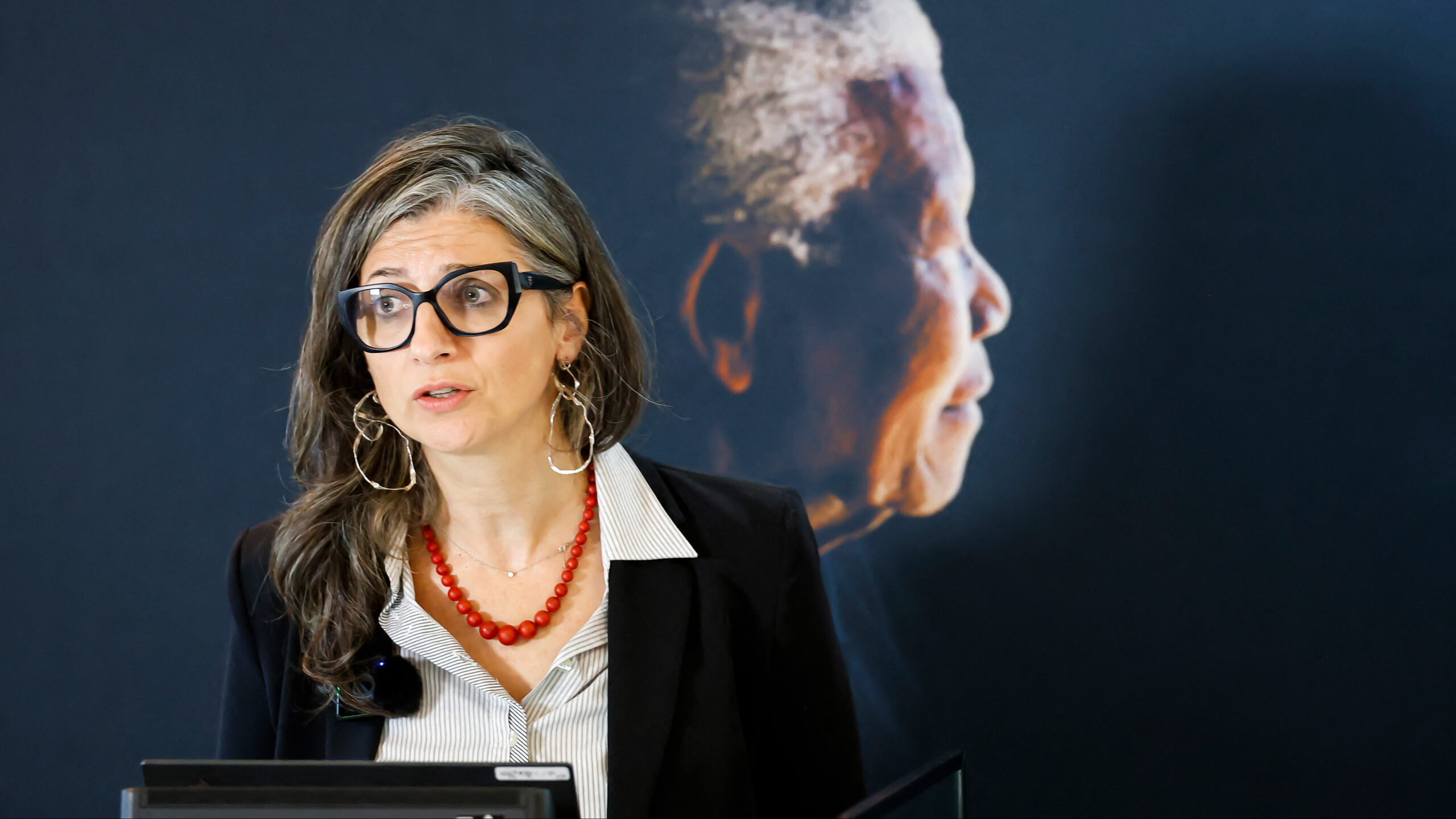
Israel’s genocide in Gaza impossible without global complicity, UN report says
A groundbreaking United Nations report has unveiled that over 60 nations are implicated in what it describes as a ‘collective crime’ enabling Israel’s genocide against Palestinians in Gaza. Authored by Francesca Albanese, the UN Special Rapporteur on the Occupied Palestinian Territories, the report was released on Monday and marks her second such analysis this year. Albanese asserts that the genocide is sustained by the complicity of influential third-party states, which have facilitated Israel’s systemic violations of international law through diplomatic, military, economic, and humanitarian support. The report highlights that without the backing of predominantly European countries, Israel would struggle to maintain its comprehensive assault on Gaza. Albanese categorizes the support into four main areas: diplomatic, military, economic, and humanitarian. She criticizes the diplomatic immunity granted to Israel and the failure to hold it accountable for international law violations, particularly in Western nations. The report also points out that Western media and political discourse have perpetuated Israeli narratives, failing to distinguish between Hamas and Palestinian civilians, and drawing on colonial tropes of Israel’s right to defend itself as a ‘civilized’ nation against ‘savages’. Albanese notes that the US has used its UN Security Council veto power seven times to control ceasefire negotiations and provide diplomatic cover for the genocide. She also highlights that the US was aided by abstentions and delays, as well as watered-down draft resolutions from countries like the UK, Australia, New Zealand, Canada, Germany, and the Netherlands. These actions have created an ‘illusion of progress’ while stymieing concrete measures. The report further criticizes Arab and Muslim states for their failure to take decisive action, with some regional players facilitating land routes to Israel, bypassing the Red Sea. Egypt, for instance, maintained relations with Israel, including energy cooperation and closing the Rafah crossing. Albanese also underscores the failures of international courts, noting that most Western countries did not support South Africa or Nicaragua before the International Court of Justice (ICJ) and continue to deny that Israel has committed genocide. Additionally, she points out that most Western countries have undermined the arrest warrants issued by the International Criminal Court (ICC) against Israeli Prime Minister Benjamin Netanyahu and other government members. The US has imposed sanctions on the ICC, and the UK has threatened to pull its funding. Despite UN resolutions calling for arms embargoes on Israel since 1976, the report notes that many countries have supplied it with military support and arms transfers throughout its genocide, with the US, Germany, and Italy being among the largest suppliers. The US currently guarantees $3.3 billion per year in Foreign Military Financing (FMF) and, until 2028, an additional $500 million per year for missile defense. Albanese also highlights the UK’s role in military cooperation with Israel, reporting on over 600 surveillance flights over Israel and intelligence-sharing with its government, suggesting ‘cooperation in the destruction of Gaza’. She notes that 26 states sent at least 10 consignments of ‘arms and ammunition’, with the most frequent being China (including Taiwan), India, Italy, Austria, Spain, Czechia, Romania, and France. Additionally, 19 countries, 17 of which have ratified the Arms Trade Treaty, were complicit in supplying components and parts for the ‘F-35 stealth strike fighter programme’ that was key to the military assault in Gaza. These include Australia, Belgium, Canada, the Czech Republic, Denmark, Finland, Germany, Greece, Italy, Japan, the Netherlands, Norway, Poland, South Korea, Romania, Singapore, Switzerland, the UK, and the US. Some of these countries continue to supply parts. While the Arms Trade Treaty does not recognize a distinction between ‘defensive’ or ‘non-lethal’ arms sales, some countries used these terms to justify arms trade to Israel. Some countries, such as Italy, the Netherlands, Ireland, France, and Morocco, permitted the transfer of weapons through their ports and airports. Albanese notes that Spain and Slovenia had canceled contracts and imposed embargoes. Other states continued to buy weapons and military technology produced by Israel, which the report says has been tested on Palestinians under occupation. Exports to the EU more than doubled during Israel’s war on Gaza and accounted for 54 percent of Israeli military exports in 2024. Under the Abraham Accords, exports to Asia and the Pacific, and Arab countries, made up 23 and 12 percent of exports, respectively. The report also states that thousands of US, Russian, French, Ukrainian, and British citizens who have served in the Israeli military have enjoyed immunity and have failed to be investigated or prosecuted for war crimes in Gaza. Albanese concludes that the maintenance of normal trade relations with Israel by various states ‘legitimizes and sustains the Israeli apartheid regime’. While Israel’s international trade in goods and services decreased from 61 percent of its GDP in 2022 to 54 percent in 2024, Albanese noted the European Union (Israel’s largest trading partner) continued to provide almost a third of total trade to Israel for the last two years. Some European countries increased their trade with Israel during the genocide against the Palestinians, such as Germany, Poland, Greece, Italy, Denmark, France, and Serbia. Arab countries, such as the UAE, Egypt, Jordan, and Morocco, also increased their trade. Only Turkey suspended trade with Israel in May 2024, although Albanese reported some trade continued indirectly. Albanese also pointed out that before the 7 October 2023 Hamas-led attacks on southern Israel, most Palestinians were dependent on aid, with the United Nations Relief and Works Agency for Palestine Refugees (UNRWA) providing the bedrock of that aid. She highlighted that when Israel alleged UNRWA staff were involved in the Hamas-led attacks without citing evidence, 18 states immediately suspended funding without investigating Israel’s claims. Despite inconclusive investigations, most donors took months to resume contributions to UNRWA. The US, its largest donor, passed a law prohibiting US funding to UNRWA. When the Israeli Knesset outlawed UNRWA, only a few states took action by seeking an ICJ Advisory Opinion. The report accuses countries like Canada, the UK, Belgium, Denmark, and Jordan of being distracted from the key issue by parachuting aid in, a move she says was both dangerous and ineffective. Albanese, who has been one of the most vocal and forceful critics of Israel’s conduct in Gaza throughout its two-year genocide, said that complicit states perpetuate ‘colonial and racial-capitalist practices that should have long been consigned to history’. ‘Even as the genocidal violence became visible, States, mostly Western ones, have provided, and continue to provide, Israel with military, diplomatic, economic and ideological support, even as it weaponized famine and humanitarian aid,’ she said. ‘The horrors of the past two years are not an aberration, but the culmination of a long history of complicity.’
-
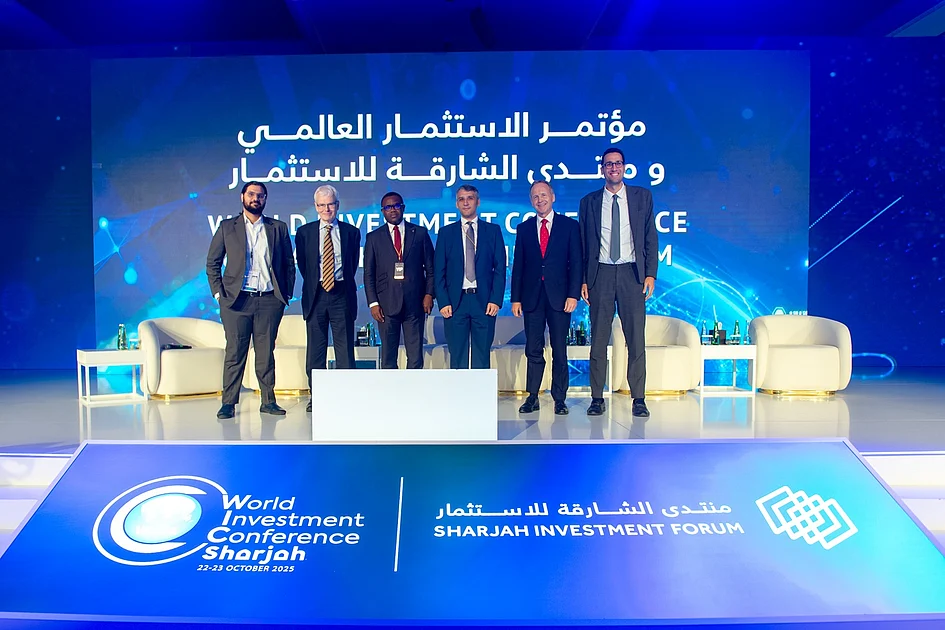
Despite $2 trillion poured into green finance, vast potential in the sector remains untapped
The global green finance sector has seen significant investment, with nearly $2 trillion mobilized in 2024. However, experts at the 8th Sharjah Investment Forum 2025 highlighted that vast potential remains untapped. Creon Butler, Director of the Global Economy & Finance Programme at Chatham House, emphasized that a substantial portion of global finance is still not aligned with sustainability goals. He stressed the need for standardized taxonomies, pragmatic ESG (Environmental, Social, and Governance) practices, and catalytic public capital to unlock sustainable finance, particularly in emerging markets.
-
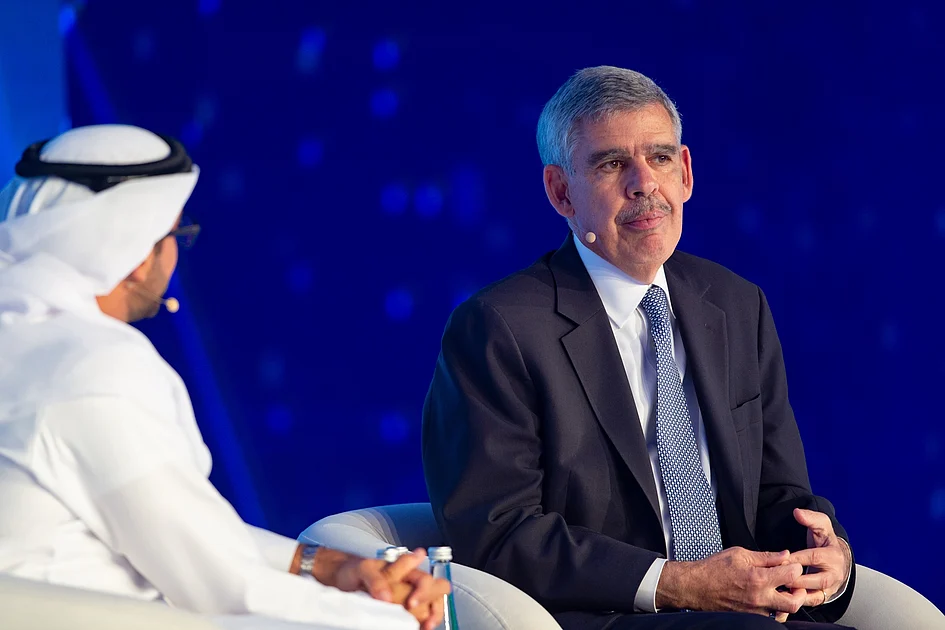
Top US economist hails Sharjah as a ‘hidden gem’ in global investment
At the World Investment Conference–Sharjah Investment Forum (WIC–SIF 2025), renowned economist Mohamed El-Erian highlighted Sharjah as a strategic investment hub, urging global investors to capitalize on its unique advantages. El-Erian, Chief Economic Adviser at Allianz, emphasized Sharjah’s geopolitical stability, connectivity, and long-term vision as key factors that set it apart in a volatile global landscape. Speaking during a fireside chat, he suggested that sectors benefiting from logistics, innovation, and global trade flows should be prioritized. El-Erian described Sharjah as a ‘hidden gem,’ urging policymakers to enhance its global narrative and showcase its potential. He also addressed global financial risks, including the U.S.’s potential to disrupt the global system, the dual-edged nature of AI, and fiscal stability concerns in advanced economies. Additionally, he highlighted India’s economic rise as a significant opportunity for investors, citing its dynamic population and rapid growth. El-Erian concluded by stressing the importance of responsible financial governance and smarter risk frameworks in navigating the current economic transition.
-
Why financial wellbeing depends on financial identity
In an era where financial literacy is increasingly emphasized globally, particularly in the UAE, the gap between understanding financial principles and applying them effectively remains significant. Despite extensive educational programs on budgeting, saving, and investing, many individuals still struggle with financial anxiety and inconsistency. The missing link, according to experts, lies in the concept of financial identity—the inner narrative that shapes how individuals perceive and interact with money. Financial identity is deeply influenced by family, culture, and personal experiences, and it determines whether financial knowledge translates into actionable behavior. For instance, someone who views themselves as financially careless is unlikely to change their habits simply by learning about compound interest. Conversely, those who see themselves as intentional decision-makers naturally align their financial actions with their values. Traditional financial education focuses on imparting knowledge, but the next evolution must address who individuals are in relation to money. When financial identity is strong, habits like budgeting, saving, and investing become expressions of self rather than acts of discipline. Financial wellbeing, therefore, is not merely about income or assets but about coherence between one’s financial actions and personal values. This alignment fosters stability and confidence, which raw knowledge alone cannot achieve. Money is inherently emotional, moral, and social, reflecting what individuals value and how they define security and freedom. A strong financial identity enables individuals to navigate these complexities with purpose, even under pressure. When identity is weak or conflicted, individuals experience internal friction, oscillating between saving and splurging. The key to transforming financial literacy into wellbeing lies in integrating knowledge with a robust sense of self. Financial literacy provides the tools, but financial identity provides the will to use them wisely. Together, they create a sense of financial wellbeing that goes beyond the absence of debt or the presence of savings—it is a quiet confidence that one’s financial life aligns with their values and purpose. As the global conversation on financial education evolves, the focus must shift from financial knowledge to financial self-knowledge. True wellbeing begins when individuals stop defining money by numbers and start defining it by identity.
-

MLB postseason seeing increased audiences in the U.S., Canada and Japan
Major League Baseball (MLB) is experiencing its most-watched postseason in the United States since 2017, with viewership through the League Championship Series (LCS) averaging 4.48 million, marking a 13% increase from last year. This surge is largely attributed to the first two rounds of the playoffs, particularly the American League Championship Series (ALCS), which averaged 4.99 million viewers across seven games on Fox, Fox Sports 1, Fox Deportes, and streaming platforms. This figure matches last year’s ALCS viewership on TNT Sports, where the New York Yankees triumphed over the Cleveland Guardians in five games. Fox and TNT Sports alternate broadcasting rights for the leagues each season. TNT Sports faced a setback due to the Los Angeles Dodgers’ four-game sweep over the Milwaukee Brewers, with Shohei Ohtani’s remarkable three-homer game and 10-strikeout performance in Game 4 drawing an average of 3.51 million viewers on a Friday night. The series averaged 4.7 million viewers, a 17% decline from last year’s six-game series between the New York Mets and Dodgers on Fox. The Toronto Blue Jays’ thrilling 4-3 victory over the Seattle Mariners in Game 7 of the ALCS averaged 9.03 million viewers, peaking at 12.35 million during the ninth inning, making it the most-watched ALCS game in eight years. Internationally, MLB has seen significant growth, particularly in Canada and Japan. Toronto’s victory, which secured their first World Series appearance since 1993, averaged 6 million viewers in Canada, becoming the most-watched Blue Jays game on Sportsnet. In Japan, Ohtani’s standout performance in Game 4 averaged 10.26 million viewers, the second most-watched LCS game in the country’s history. The NLCS also set a record in Japan with 7.34 million viewers, a 26% increase from last year, as fans continue to follow stars like Ohtani, Yoshinobu Yamamoto, and Roki Sasaki in record numbers.
-

Over 145 successful robotic surgeries performed at Dubai Hospital in 3 years
Dubai Hospital has marked a significant achievement in healthcare innovation, having successfully performed over 145 robotic surgeries since the launch of its robotic surgery programme in late 2022. This milestone underscores the hospital’s commitment to integrating advanced medical technologies to enhance patient care and outcomes. Dr. Amer Sharif, CEO of Dubai Health, emphasized that this progress aligns with the organization’s vision to ‘Advance Health for Humanity’ and reflects its ongoing digital transformation efforts. The robotic surgeries have demonstrated remarkable clinical results, including a reduction in hospital stays from two weeks to less than three days, and a significant decrease in blood loss, complications, and pain. Dr. Yaser AlSaeedi, Head of Urology and Director of the Robotic Surgery programme, highlighted the precision and safety benefits of these procedures, which span multiple specialties such as urology, general surgery, and gynaecology. The minimally invasive approach, utilizing 3D visualization and robotic arms, allows surgeons to perform complex operations with greater accuracy and control. Dubai Health also prioritizes training medical staff in robotic surgical systems, combining theoretical knowledge with hands-on practice to ensure safe and effective implementation. This initiative solidifies Dubai’s position as a leader in quality healthcare and sets a benchmark for the future of medical innovation.
-

American guard Rejean Ellis to join Dubai Basketball
Dubai Basketball has secured a significant addition to their roster with the signing of American guard Rejean Ellis. The 24-year-old, known for his explosive playing style and scoring prowess, will join the team for the remainder of the 2025/26 season, with his contract extending through 2027. Ellis, who began the season with ALBA Berlin in Germany, has a strong background in collegiate basketball at Memphis and USC, as well as experience in the NBA G League, where he established himself as a reliable scorer and versatile backcourt player.
Ellis’s ability to create his own shot and consistently deliver double-digit scores in international competitions has made him a valuable asset. General Manager Dejan Kamenjašević expressed enthusiasm about the signing, stating, ‘Boogie fits perfectly with our vision—young, hungry, competitive, and already tested at a high level. He brings immediate impact, creativity, and pace to our backcourt, especially during challenging moments when injuries sideline key players.’
Kamenjašević also highlighted Ellis’s potential to grow and elevate the team’s identity in European basketball. Ellis himself is eager to contribute, saying, ‘Dubai is building something exciting on a global stage, and I want to be part of that journey. I’m ready to give everything for this team and connect with the fans from day one.’
Dubai Basketball is set to face Partizan Belgrade in the ABA League on November 3 at the Coca-Cola Arena, following a successful EuroLeague debut. This match will be a crucial test for the team as they continue to establish themselves on the international basketball scene.
-
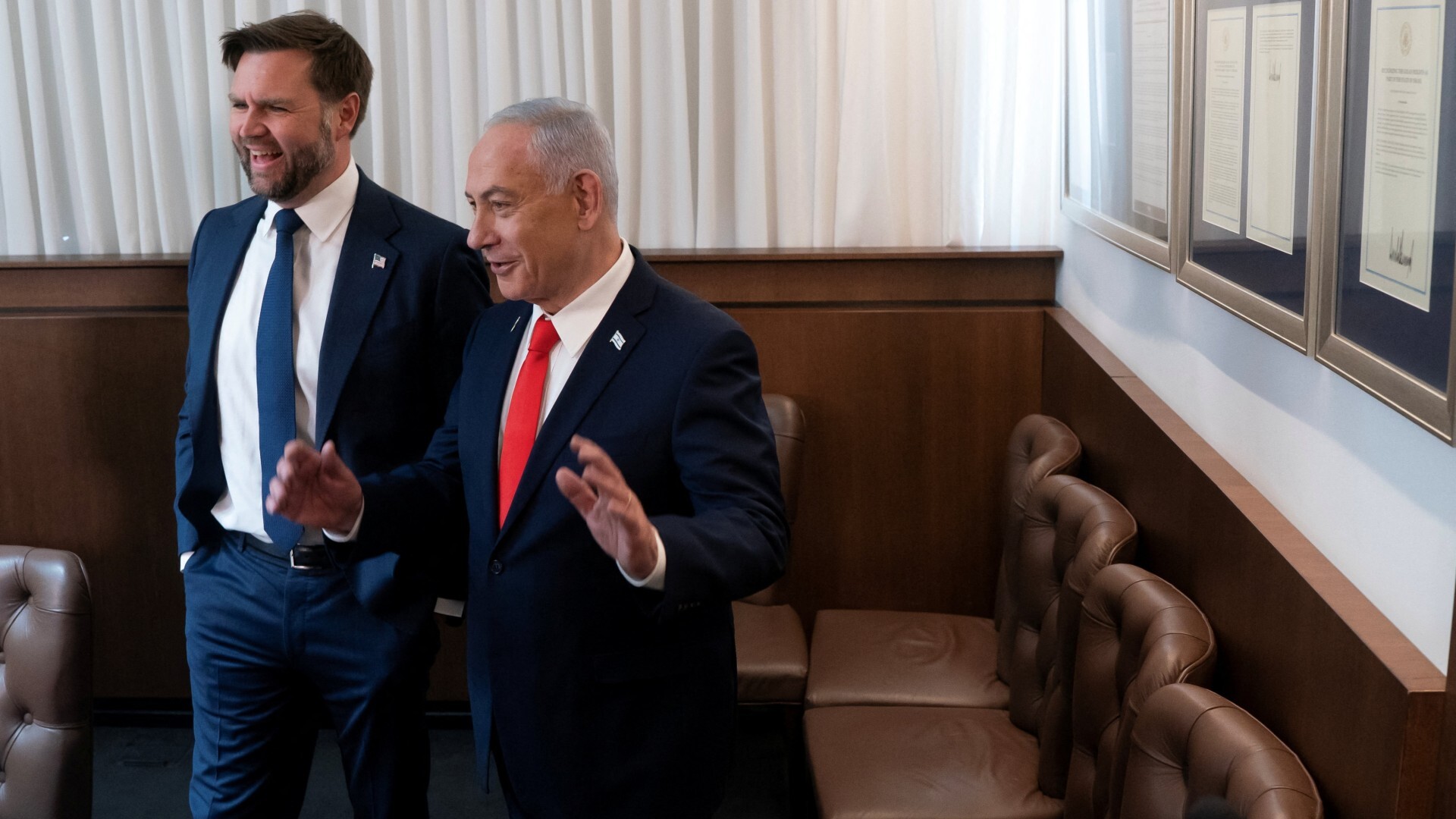
Democratic senators urge Trump to oppose West Bank annexation
In a significant move, 44 out of 45 Democratic senators in the US Senate have penned a letter to President Donald Trump, urging him to reaffirm his opposition to Israel’s potential annexation of the occupied West Bank. The letter, reported by Axios on Tuesday, highlights concerns over the impact such actions could have on the Israeli-Palestinian conflict and regional stability. John Fetterman of Pennsylvania, known for his staunch support of the current Israeli government, was the sole Democrat who did not sign the letter. The senators emphasized that annexation or settlement expansion would undermine the viability of a negotiated resolution to the conflict and jeopardize the Abraham Accords, which normalized relations between Israel and several Arab nations in 2020. The letter was spearheaded by California Senator Adam Schiff, who has faced criticism for his unconditional support of Israel. A recent Reuters-Ipsos poll revealed that 80% of Democratic voters support the recognition of a Palestinian state, with 41% of Republicans sharing the same view. Trump had previously assured Muslim leaders that he would not allow Israeli Prime Minister Benjamin Netanyahu to annex the West Bank, a condition believed to have been part of his 20-point plan for Gaza. However, much of the West Bank is already de facto annexed, with US officials either condoning or ignoring the situation. Meanwhile, the Knesset advanced a bill to extend Israeli law to the entire West Bank, a move that could lead to formal annexation. The bill, which passed with a narrow majority, requires three more rounds of voting before becoming law. A senior Emirati official warned that the Abraham Accords would be at risk if Israel proceeds with annexation, calling it a ‘red line’ for the United Arab Emirates. Anwar Gargash, a top adviser to Emirati ruler Mohammed bin Zayed, stressed the need to address the Palestinian issue with a more balanced approach, rejecting maximalist views that hinder progress.
-
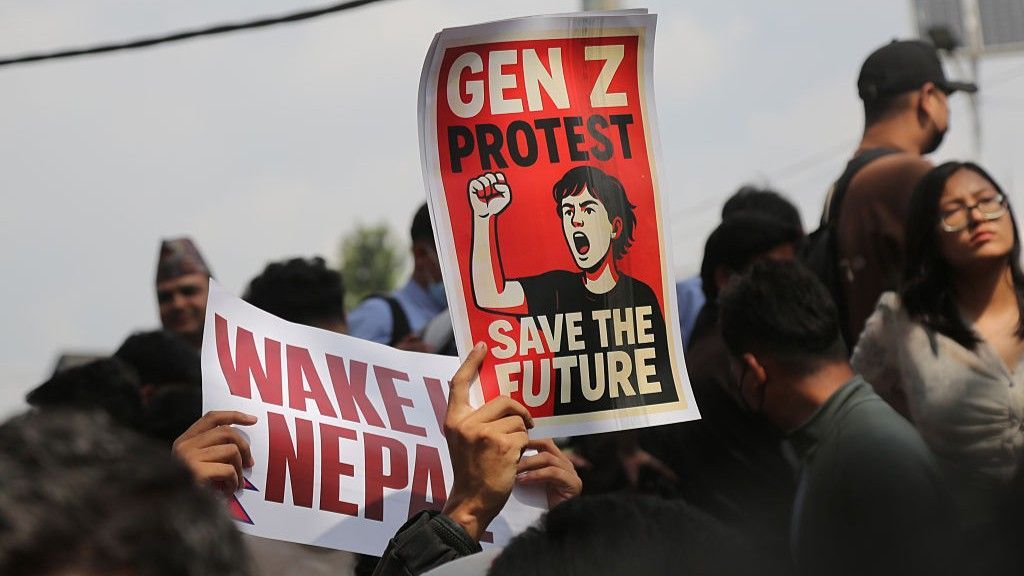
Gen Z rising? Why young Indians aren’t taking to the streets
India’s Generation Z, comprising over 370 million individuals under 25, represents nearly a quarter of the nation’s population. Armed with smartphones and social media, they are hyper-connected and acutely aware of political corruption, inequality, and economic pressures. However, their activism remains subdued compared to their peers in Asia and Africa, where youth-led movements have toppled governments and forced significant political changes. In Nepal, young protesters dismantled a government in just 48 hours, while in Madagascar and Bangladesh, youth uprisings led to regime changes. In India, despite sporadic protests—such as those in Ladakh demanding statehood—a unified national movement remains elusive. The fear of being labeled ‘anti-national,’ regional and caste divides, and economic anxieties deter widespread mobilization. Experts argue that India’s Gen Z is too fragmented by linguistic, regional, and caste identities to coalesce into a singular force. While urban youth rally for job opportunities and infrastructure, Dalit youth focus on caste discrimination, and Tamil-speaking youth advocate for regional rights. The government, recognizing the potential of this demographic, claims to prioritize youth policies. Yet, economic pressures and waning trust in traditional politics persist. Only 38% of 18-year-olds registered to vote in the 2024 elections, reflecting a broader disengagement. Despite their muted dissent, India’s Gen Z remains watchful, their aspirations for change unmistakably clear.