
The United Nations and international humanitarian organizations have accused Israel of politicizing and weaponizing critical aid deliveries to Gaza, despite an ongoing ceasefire. The United Nations Relief and Works Agency for Palestine Refugees (UNRWA) stated on social media platform X that its international staff and humanitarian supplies continue to be barred from entering Gaza. Caroline Willemen, Gaza project coordinator for Doctors Without Borders, highlighted that while Israeli attacks have decreased since the truce, sporadic strikes persist, exacerbating the humanitarian crisis. Willemen emphasized that aid should not be subject to political conditions, noting that Gaza’s residents have endured the threat of mass extermination for years. Oxfam International further alleged that Israeli authorities have arbitrarily blocked shipments of essential aid and imposed restrictive registration processes on NGOs, delaying urgent relief efforts. On Thursday, Oxfam and 40 other organizations, including the Norwegian Refugee Council, urged Israel to comply with the ceasefire agreement and international law, ensuring unimpeded aid flow. This appeal followed the International Court of Justice’s advisory opinion, which called on Israel to facilitate humanitarian aid delivery to Gaza. Meanwhile, US Secretary of State Marco Rubio, during his visit to Israel, declared that UNRWA would not be permitted to assist in Gaza, labeling it a subsidiary of Hamas, which he referred to as a terror group. Concurrently, an Egyptian convoy entered Gaza to expedite the search for deceased Israeli hostages, with Israeli Prime Minister Benjamin Netanyahu approving the mission.
标签: Asia
亚洲
-

China, ASEAN sign Free Trade Area 3.0 Upgrade Protocol
In a significant move to bolster economic cooperation, China and the Association of Southeast Asian Nations (ASEAN) have officially signed the Free Trade Area 3.0 Upgrade Protocol. The signing ceremony took place in Kuala Lumpur on Tuesday, marking a new chapter in the long-standing partnership between the two regions. This upgraded protocol aims to further reduce trade barriers, enhance market access, and foster deeper economic integration. The agreement is expected to stimulate trade and investment flows, benefiting businesses and consumers across both China and ASEAN member states. The signing of this protocol underscores the commitment of both parties to maintaining open and mutually beneficial trade relations, especially in an era of global economic uncertainty. This development is seen as a strategic step towards strengthening regional economic resilience and promoting sustainable growth.
-

Direct flights seen to benefit connectivity
The resumption of direct flights between India and China marks a significant milestone in strengthening bilateral relations, fostering economic cooperation, and enhancing cultural exchanges between the two nations. IndiGo Airlines, India’s largest carrier, has reinstated daily nonstop flights between Kolkata and Guangzhou, with plans to expand services to other key cities. China Eastern Airlines has also announced the resumption of direct flights between Shanghai and New Delhi, signaling a renewed commitment to connectivity. This development, celebrated by officials and passengers alike, is expected to reduce travel time and costs, while opening doors for investors, tourists, and businesses. The initiative is seen as a practical step to connect over 2.8 billion people, supporting sectors such as tourism, education, healthcare, and trade. The long-awaited service, suspended since March 2020 due to the COVID-19 pandemic, is anticipated to act as a catalyst for deeper engagement and mutual growth. Analysts and industry leaders have hailed the move as a positive sign for economic, diplomatic, and strategic relations between the two countries.
-

Shanghai initiative to provide early weather warnings globally
Shanghai has unveiled a groundbreaking AI-driven meteorological system aimed at providing early weather warnings globally. The initiative, introduced at the 2025 SDG Cities Global Conference, seeks to transform China’s expertise in disaster prevention into a shared global resource. The Shanghai Meteorological Service will collaborate with domestic and international partners to expand cross-regional and international cooperation, ultimately building an intelligent early warning network tailored to the needs of countries and cities worldwide. The system, named MAZU-Urban, integrates advanced technologies such as multi-hazard monitoring tools and AI-driven large language models to deliver real-time disaster bulletins, personalized risk assessments, and emergency response guidance. MAZU-Urban has already been deployed in 35 cities across Asia, Africa, and Oceania, demonstrating its effectiveness during Typhoon Wipha in Macao. The initiative emphasizes collaborative sharing and aims to equip vulnerable regions with the capability to respond to extreme weather changes. The World Meteorological Organization has pledged to promote this Chinese innovation among its members, highlighting its potential to transform passive reactions into proactive actions globally.
-
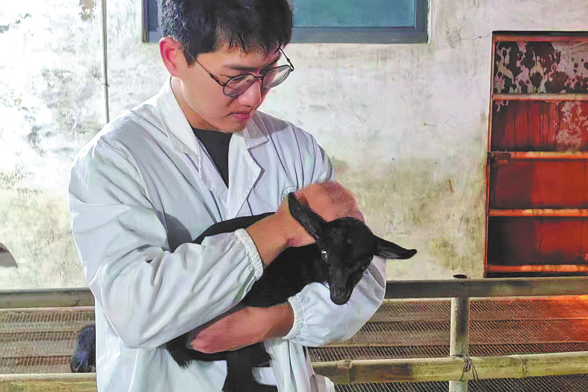
World’s first gene-edited black goat fit for hot days
In a groundbreaking scientific achievement, Chinese researchers at Guangdong Ocean University have successfully created the world’s first gene-edited black goat, designed to withstand high temperatures and humidity. Named ‘Hai Yang’ (Ocean Goat), this innovative breed was born on August 25, 2025, in Zhanjiang, Guangdong province, and marks a significant step forward in addressing the challenges posed by climate change on livestock production. The goat, which underwent editing of the PRLR (prolactin receptor) gene, has demonstrated remarkable resilience to heat stress, maintaining a robust appetite and faster weight gain compared to non-edited counterparts. According to Gan Shangquan, the chief scientist leading the project, Hai Yang has grown to weigh nearly 4,300 grams, outperforming the control group by 300 grams. This development is particularly crucial for southern China and other tropical coastal regions, where heat stress has historically caused significant economic losses in the livestock industry. The research team, which began its work in November 2022, plans to expand the program with additional batches of gene-edited goats expected later this year. The project not only highlights China’s leadership in livestock biological breeding but also offers a sustainable solution to ensure food security in the face of global warming.
-
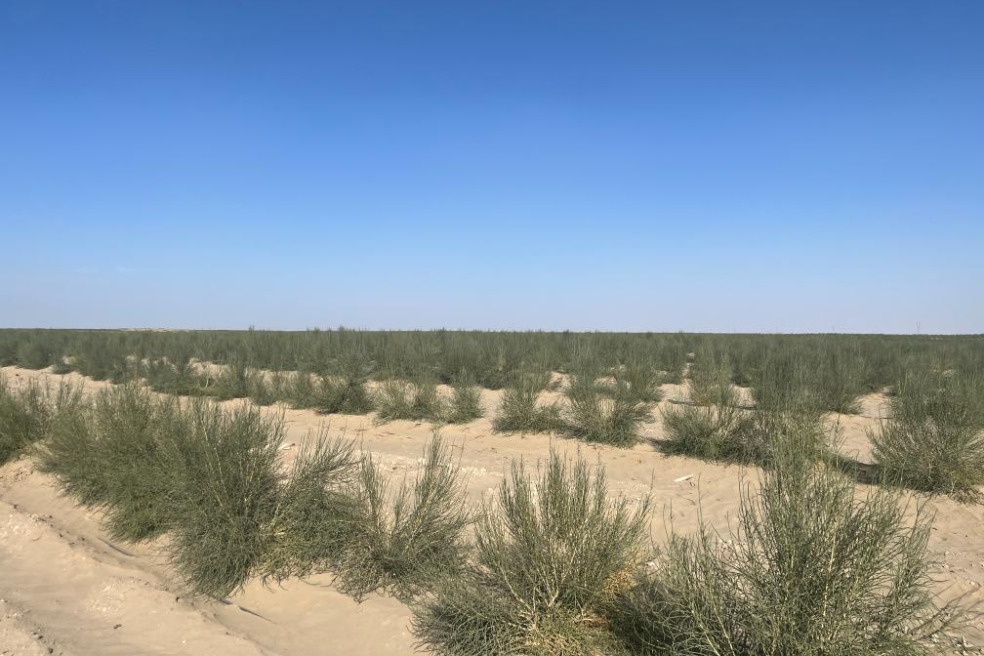
A story of symbiosis that stills spread of dust bowl
In the arid expanse of the Taklimakan Desert, a remarkable tale of symbiosis unfolds between the saxaul tree and the cistanche herb, offering a sustainable solution to desertification. The saxaul seed, known for its rapid germination, takes root in the sandy soil of Xinjiang’s southern desert edge. Within hours, it sprouts, braving harsh ultraviolet radiation and relentless sandstorms. Its grayish-white branches sway in the wind, forming a natural barrier against drifting sand while its deep roots tap into scarce groundwater. Beneath the surface, the cistanche herb thrives parasitically, embedding its roots into the saxaul’s vascular system to absorb water and nutrients. Each spring, the cistanche’s stem emerges, releasing a sweet fragrance that attracts honeybees. These bees, in turn, facilitate pollination, ensuring the propagation of both species. This intricate relationship not only stabilizes the desert but also provides economic benefits. Cistanche, dubbed ‘desert ginseng,’ is a valuable medicinal herb cultivated alongside saxaul forests. Farmers rent beehives to enhance pollination, creating a virtuous cycle where ecological protection and economic gains coexist. This model exemplifies China’s ‘edge-locking’ project, which aims to encircle the Taklimakan Desert with artificial vegetation. Li Peng, a veteran of desert control in Xinjiang, emphasizes the complexity of such initiatives, highlighting the need for systematic planning in water management, infrastructure, and maintenance. This innovative approach demonstrates how nature’s resilience, coupled with human ingenuity, can transform barren landscapes into thriving ecosystems.
-

Pioneering deep-sea mission ends
China has successfully concluded its first-ever collaborative deep-sea manned submersible operation, marking a significant milestone in the nation’s polar research capabilities. The mission, which spanned 98 days, primarily focused on the Arctic Circle and was carried out by the Tansuo 3, the world’s first ice-breaking manned deep-sea submersible support vessel. The expedition, jointly organized by the Ministry of Natural Resources and the Chinese Academy of Sciences, utilized China’s domestically developed submersibles, Fendouzhe and Jiaolong. During the mission, the team navigated 1,989 nautical miles through ice-covered waters, conducting 43 dive missions. Notably, Jiaolong and Fendouzhe performed cooperative operations, including dual-submersible positioning searches and underwater motion filming, a first for China. The team also achieved the world’s first manned deep-sea exploration of the Gakkel Ridge, a tectonic plate boundary in the Arctic’s central basin. Fendouzhe completed 32 dives, reaching a maximum depth of 5,277 meters and enduring extreme polar conditions. The mission validated the operational capabilities of Fendouzhe and Tansuo 3 in polar ice-covered regions, establishing new protocols for extreme conditions and pioneering a mobile ice-diving model. This effort has cultivated a specialized polar deep-diving research team, positioning China as the only nation capable of continuous manned submersible operations in Arctic dense ice zones. The expedition collected valuable water, sediment, rock, and biological samples, providing critical scientific support for studying Arctic climate change, geological processes, and polar life evolution.
-

Hong Kong’s ‘King of Supporting Actors’ Benz Hui dies aged 76
Benz Hui, a revered figure in Hong Kong’s entertainment industry and affectionately known as the ‘King of Supporting Actors,’ has died at the age of 76. The veteran performer, whose real name was Hui Shiu-hung, passed away in the early hours of Tuesday at a Hong Kong hospital due to complications from cancer, as reported by local media.
-
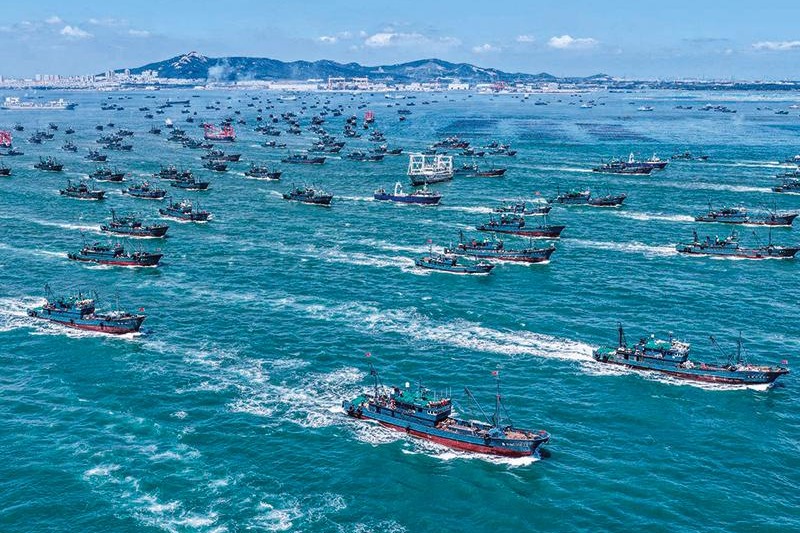
Judicial reforms strengthen China’s maritime rule of law
China is making significant strides in enhancing its maritime legal framework and judicial capabilities to bolster the high-quality development of its marine economy and solidify its position as a global leader in resolving international maritime disputes. Zhang Jun, President of the Supreme People’s Court, emphasized these developments during a report presented to the Standing Committee of the National People’s Congress, China’s top legislative body. The report underscores the evolution of China’s maritime adjudication system, which now handles the largest and most diverse array of maritime disputes worldwide. Since the inception of maritime courts over four decades ago, the number of cases has skyrocketed from 18 in 1984 to an estimated 34,400 in 2024. The scope of these cases has expanded beyond traditional maritime trade and shipping to include emerging sectors such as marine resource development, environmental protection, port construction, and cultural tourism. Notably, disputes related to offshore wind power and marine ranching have seen a sharp rise. Over the past 40 years, 88,000 cases have involved foreign parties, with an increasing number of international litigants opting to bring their disputes to Chinese courts, even when the cases have no direct connection to China. For instance, a maritime cargo transportation dispute involving Chile, Turkiye, and Singapore was successfully mediated by the Dalian Maritime Court in Liaoning province. Similarly, the Qingdao Maritime Court in Shandong province mediated a settlement in an oil tanker dispute involving parties from six countries, allowing the continuation of the ship sale contract. The new Greek shipowner renamed the tanker ‘Respect’ to honor China’s legal system. Zhang Jun highlighted the maturity of China’s specialized maritime adjudication system, noting its significant increase in case numbers, diversification in case types, and enhanced international influence. However, he also pointed out new challenges as China transitions from a major maritime nation to a maritime power. While the number of foreign-related disputes is substantial, the proportion of cases involving only foreign litigants remains low. Zhang called for intensified efforts in resolving disputes in shipping service sectors such as marine insurance, ship financing, and charter party contracts. He also stressed the need to optimize the maritime legal framework in response to the rapid development of emerging marine industries, including offshore renewable energy, deep-sea aquaculture, new offshore engineering technologies, and marine carbon credit trading. Zhang announced plans to formulate judicial interpretations for maritime laws and release notable cases to improve the rule of law environment for the marine economy. Additionally, bilingual and multilingual white papers on maritime adjudication will be released, and an English-language database of maritime cases along with a cross-border legal service mechanism will be established. Revisions to the Special Maritime Procedure Law and the development of relevant judicial interpretations are also on the agenda.
-
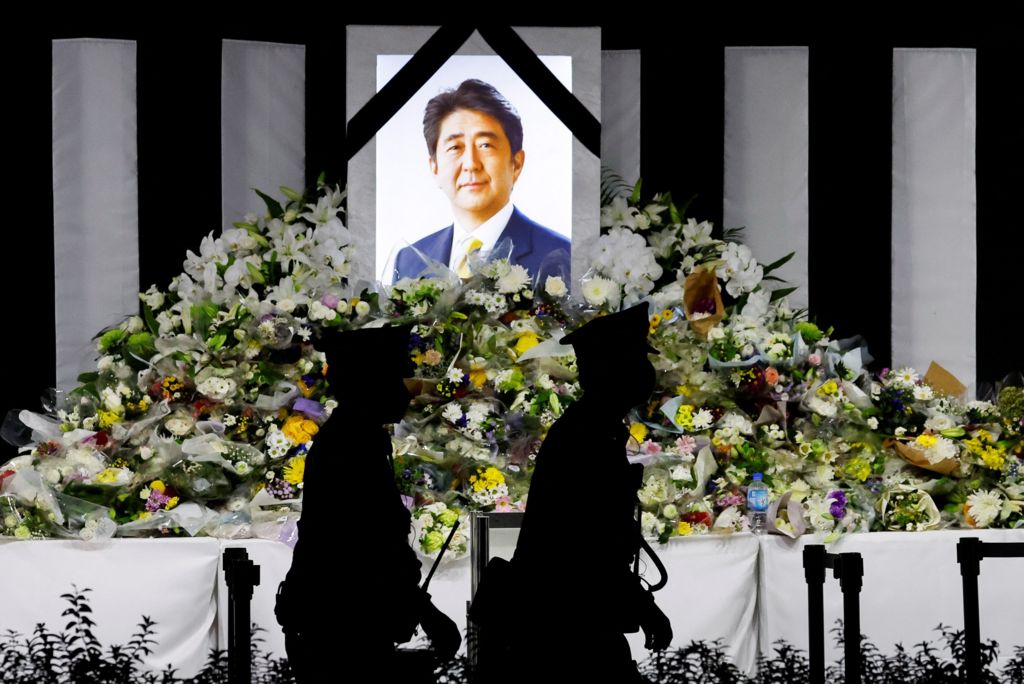
Man pleads guilty to killing Japan’s former PM Shinzo Abe
In a dramatic turn of events, Tetsuya Yamagami, the man accused of assassinating former Japanese Prime Minister Shinzo Abe, has pleaded guilty on the opening day of his trial. The 45-year-old defendant, facing additional charges for violating arms control laws, admitted to the court in Tokyo that “everything is true,” as reported by local media. Yamagami’s admission comes two years after he used a homemade firearm to shoot Abe during a political campaign event in Nara, a city in western Japan. Abe, renowned for his hawkish foreign policy and the economic strategy dubbed “Abenomics,” succumbed to his injuries later that day. Yamagami reportedly targeted Abe due to his alleged ties to the Unification Church, which he claimed had financially devastated his mother through substantial donations. The assassination has since exposed the controversial connections between Japan’s ruling Liberal Democratic Party and the church, leading to the resignation of several ministers. Earlier this year, a Tokyo court ordered the disbandment of the Unification Church, revoking its tax-exempt status and mandating the liquidation of its assets.