标签: Asia

亚洲

  • Bangladesh to give state funeral for ex-PM Khaleda Zia; 3-day mourning period declared

    Bangladesh to give state funeral for ex-PM Khaleda Zia; 3-day mourning period declared

    Bangladesh has initiated three days of national mourning to honor former Prime Minister Khaleda Zia, who passed away Tuesday at age 80. The government will conduct an elaborate state funeral ceremony on Wednesday afternoon, with prayers scheduled outside the national parliament building in Dhaka.

    As the first female prime minister of this South Asian nation of 170 million people, Zia pioneered women’s leadership in Bangladeshi politics. Her educational stipend programs for girls transformed opportunities for female students nationwide. Despite significant health challenges and political imprisonment in recent years, Zia remained politically active until her final days, with nomination papers filed on her behalf for upcoming February elections just hours before her death.

    The current interim government under Nobel laureate Muhammad Yunus acknowledged Zia as “a great guardian” of the nation, recognizing her role in repeatedly restoring democratic governance. Security forces have been extensively deployed throughout the capital, with flags flying at half-mast as the country prepares for anticipated large public gatherings.

    Zia’s son, Tarique Rahman, recently returned from 17 years abroad and is viewed as a potential prime ministerial candidate should their Bangladesh Nationalist Party secure victory in the upcoming elections. The funeral will see diplomatic representation from regional powers, with both Indian and Pakistani foreign ministers attending—marking significant diplomatic engagements since the overthrow of Zia’s longtime rival, Sheikh Hasina, last year.

    Zia’s body will be laid to rest beside her late husband, President Ziaur Rahman, who was assassinated in 1981. Her political career spanned decades, featuring both historic achievements and intense rivalry with Hasina’s Awami League, which continues to operate from exile after Hasina’s recent conviction and forced departure from power.

  • China’s Xi hails nation’s technological progress and renews promise to take back Taiwan

    China’s Xi hails nation’s technological progress and renews promise to take back Taiwan

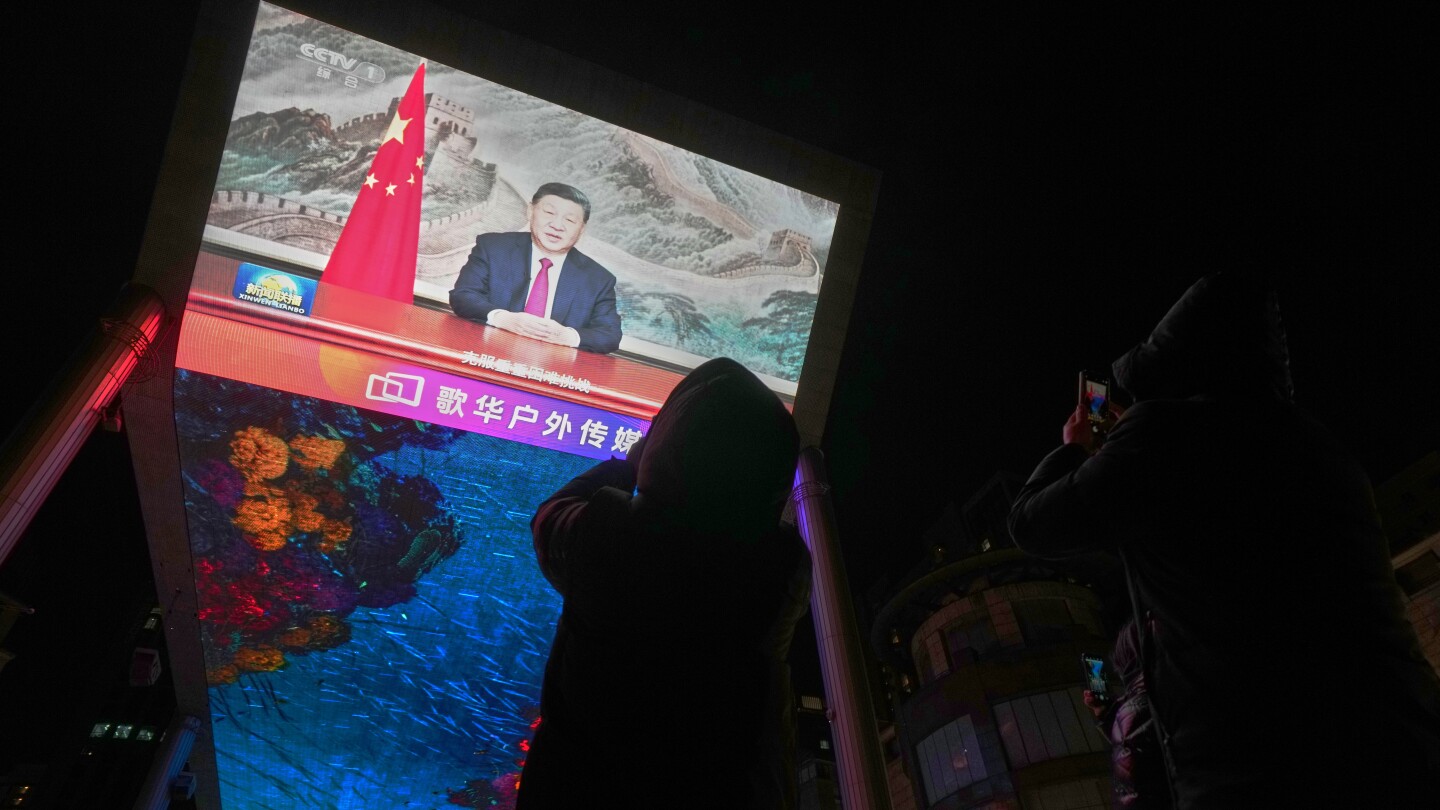
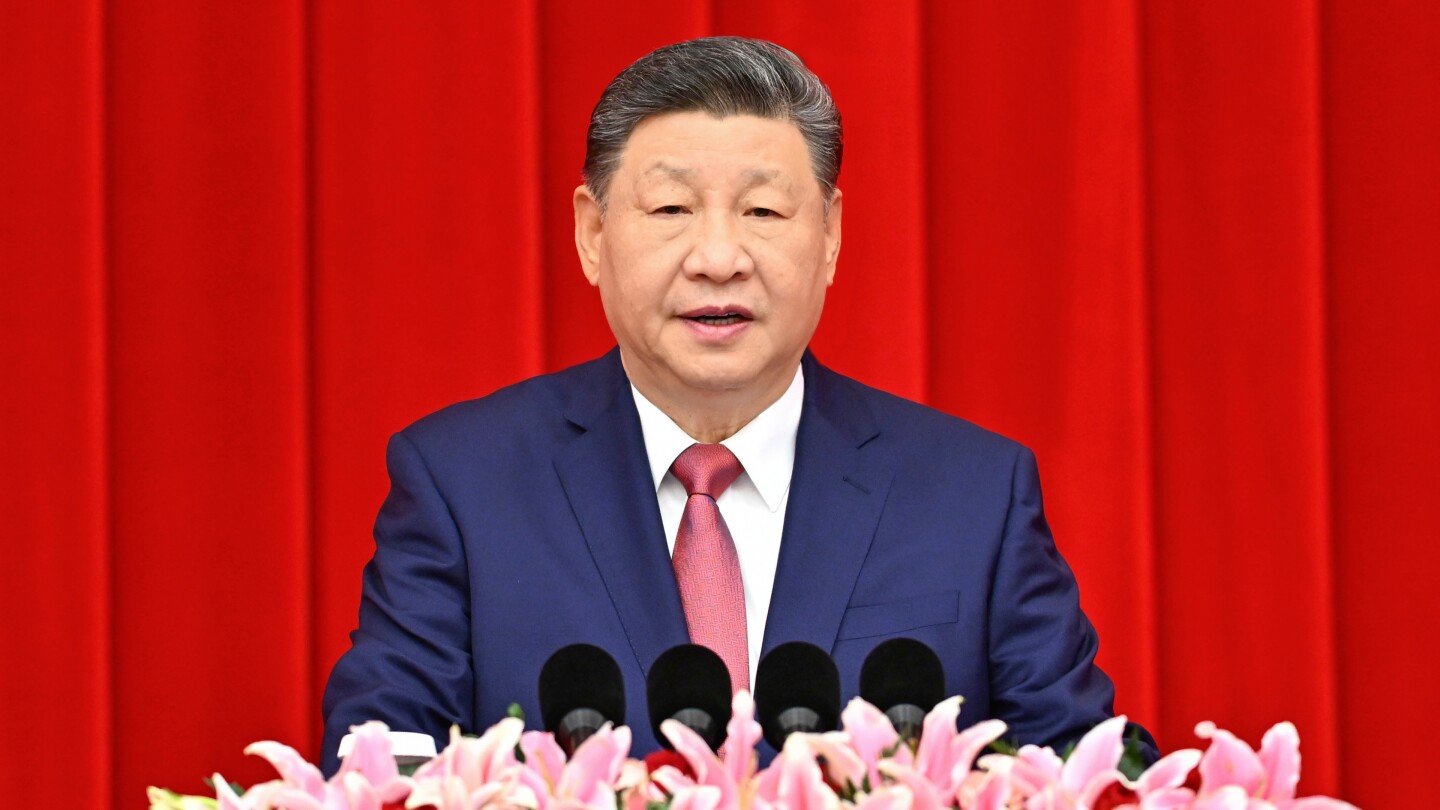
    In his nationally televised New Year’s Eve address, Chinese President Xi Jinping celebrated China’s technological breakthroughs across multiple strategic sectors while firmly reiterating Beijing’s position on Taiwan reunification. The presidential speech, broadcast through state media channels, emphasized China’s progress in artificial intelligence, semiconductor development, military technology, and space exploration.

    Visual accompaniments to the address featured humanoid robots performing martial arts demonstrations and newly operational hydropower projects, symbolizing the nation’s technological modernization. “We sought to energize high-quality development through innovation,” President Xi stated, acknowledging public contributions to China’s economic expansion throughout the previous five-year planning cycle.

    The address coincided with heightened military activity near Taiwan, where China conducted two days of exercises involving rocket launches, aircraft sorties, and naval deployments. These demonstrations responded to anticipated United States arms sales to the self-governed island.

    President Xi framed the Taiwan matter through emotional rhetoric, asserting: “We Chinese on both sides of the Taiwan Strait share a bond of blood and kinship. The reunification of our motherland, a trend of the times, is unstoppable.”

    Taiwanese President Lai Ching-te denounced the military maneuvers while committing to responsible management of cross-strait relations, pledging neither escalation nor provocation. The address also highlighted China’s growing global diplomatic presence, referencing high-level international events hosted throughout the past year.

    This speech arrives as China prepares to formulate its next five-year economic plan, scheduled for discussion at March’s legislative session, with increased emphasis on technological self-reliance amid tightening U.S. export controls on advanced semiconductors and related technologies.

  • What to know about the mystery of Malaysia Airlines Flight 370 as the search resumes

    What to know about the mystery of Malaysia Airlines Flight 370 as the search resumes

    A decade after one of aviation’s most perplexing disappearances, the search for Malaysia Airlines Flight MH370 has officially recommenced, rekindling hopes for resolution. On Wednesday, Malaysian authorities confirmed that Ocean Infinity, a U.S. marine robotics firm, has initiated a new underwater search operation utilizing advanced technology and revised data analysis.

    The Boeing 777 vanished on March 8, 2014, during its routine flight from Kuala Lumpur to Beijing with 239 passengers and crew aboard. After its final communication at 39 minutes into the flight, the aircraft’s transponder ceased transmission. Military radar tracked an unexpected reversal over the Andaman Sea, while satellite data indicated the plane continued flying for hours before presumably crashing into the remote southern Indian Ocean due to fuel exhaustion.

    Previous multinational search efforts, including the largest underwater operation in history covering 120,000 square kilometers, yielded minimal results. Only a few fragments—notably a wing flaperon discovered on Réunion Island in 2015—have been confirmed as wreckage from the missing aircraft. The absence of bodies, substantial debris, or definitive explanations has perpetuated the mystery.

    Theories regarding the disappearance range from mechanical failure and cabin depressurization to deliberate intervention. Malaysian investigators in 2018 eliminated suspicion of passengers and crew but acknowledged possible “unlawful interference” given the intentional severance of communications.

    The passenger manifest represented global diversity, with individuals from China, the United States, Indonesia, France, Russia, and other nations. Among them were technology professionals, artists, families with children, and two Iranians traveling on stolen passports.

    The current search, operating under a “no-find, no-fee” agreement worth $70 million upon success, will focus on a targeted 15,000-square-kilometer area identified through enhanced debris drift studies and technological advancements. Initially paused in April due to adverse weather conditions, the operation will resume intermittently from December 30 for 55 days in zones deemed most probable for locating wreckage.

    Ocean Infinity has collaborated with numerous experts to refine search parameters but has not disclosed whether new evidence prompted the revised approach. The immense challenges of searching the deep, volatile Indian Ocean—where depths average 4 kilometers—continue to complicate recovery efforts.

  • China announces it ‘successfully completed’ Taiwan military maneuvers

    China announces it ‘successfully completed’ Taiwan military maneuvers

    The People’s Liberation Army of China announced on New Year’s Eve the successful completion of its two-day “Justice Mission 2025” military exercises in waters surrounding Taiwan. Senior Captain Li Xi, spokesperson for the PLA’s Eastern Theater Command, stated that the operations had thoroughly evaluated the integrated joint combat capabilities of Chinese forces while demonstrating heightened alert status against perceived separatist activities.

    The drills, characterized by their substantial scale and strategic positioning, represented Beijing’s latest assertion of its territorial claims over the self-governed island. While official announcements provided minimal operational details beyond rousing promotional videos accompanied by martial music, the exercises concluded amid heightened regional tensions during the final days of 2025.

    Chinese President Xi Jinping indirectly referenced the Taiwan situation in his annual New Year’s address, emphasizing the “blood and kinship” bonds between Chinese people across the Strait and declaring national reunification as “an unstoppable trend of the times.”

    The military maneuvers drew significant international concern, with Japan’s Foreign Ministry characterizing them as tension-escalating actions and reaffirming its preference for peaceful resolution through dialogue. This response followed earlier statements by Japan’s prime minister suggesting potential military intervention should Taiwan face direct attack.

    The United States faced Chinese criticism following its December announcement of a substantial arms sales package to Taiwan, potentially representing the largest such military aid package if approved by Congress. Philippine Defense Minister Gilberto C. Teodoro Jr. expressed deep concern about China’s actions, noting their implications for regional stability in the broader Indo-Pacific community.

    Despite the heightened tensions, former U.S. President Donald Trump downplayed concerns, citing his positive relationship with Xi Jinping and noting China’s long history of conducting naval exercises in the area.

  • Pacifist Japan has slowly transformed from exclusively self-defense to a military buildup

    Pacifist Japan has slowly transformed from exclusively self-defense to a military buildup

    Japan is accelerating a historic shift in its defense posture, embarking on an ambitious military modernization program that includes doubling annual arms spending to counter perceived threats from China. This strategic pivot occurs as Prime Minister Sanae Takaichi, known for her hawkish security views, assumes leadership amid increasing pressure from the United States for greater military cooperation in Asia.

    The government maintains that Japan remains committed to peaceful principles while building a more self-reliant defense capability to deter Chinese aggression. However, Beijing and other critics argue these developments represent a fundamental departure from Japan’s postwar pacifist constitution. Tensions escalated when Takaichi suggested that Chinese military action against Taiwan could justify Japanese intervention—a significant break from previous leaders’ strategic ambiguity.

    Japan’s constitutional transformation has evolved over decades. Article 9 of the U.S.-drafted 1947 constitution originally renounced war and prohibited maintaining military forces. The creation of the Self-Defense Forces in 1954 began a gradual reinterpretation of these restrictions. A landmark change occurred in 2014 under Prime Minister Shinzo Abe, who reinterpreted Article 9 to allow collective self-defense, enabling Japan to use force if allies are attacked.

    Recent Chinese military activities have intensified Tokyo’s concerns. In December, Chinese aircraft locked targeting radars on Japanese planes during carrier drills near southwestern Japan. Two Chinese carriers were also spotted operating near Iwo Jima—the first such occurrence—demonstrating Beijing’s expanding military reach near disputed territories.

    Takaichi’s administration recently approved a record defense budget exceeding 9 trillion yen ($58 billion) for the coming year, focusing on developing strike-back capabilities with cruise missiles and unmanned systems. The government plans to further relax arms export restrictions and promote defense industry cooperation with allies like the UK, Italy, and Australia through joint projects including next-generation fighter jets.

    A government-commissioned panel has even proposed developing nuclear submarines for extended deterrence—a controversial suggestion for the only nation to suffer atomic bombings. While Japan officially maintains its three non-nuclear principles, Defense Minister Shinjiro Koizumi acknowledged considering all options for new submarines, indicating continued evolution in Japan’s security posture.

  • China sees continued improvement in women’s health in 2024: statistical report

    China sees continued improvement in women’s health in 2024: statistical report

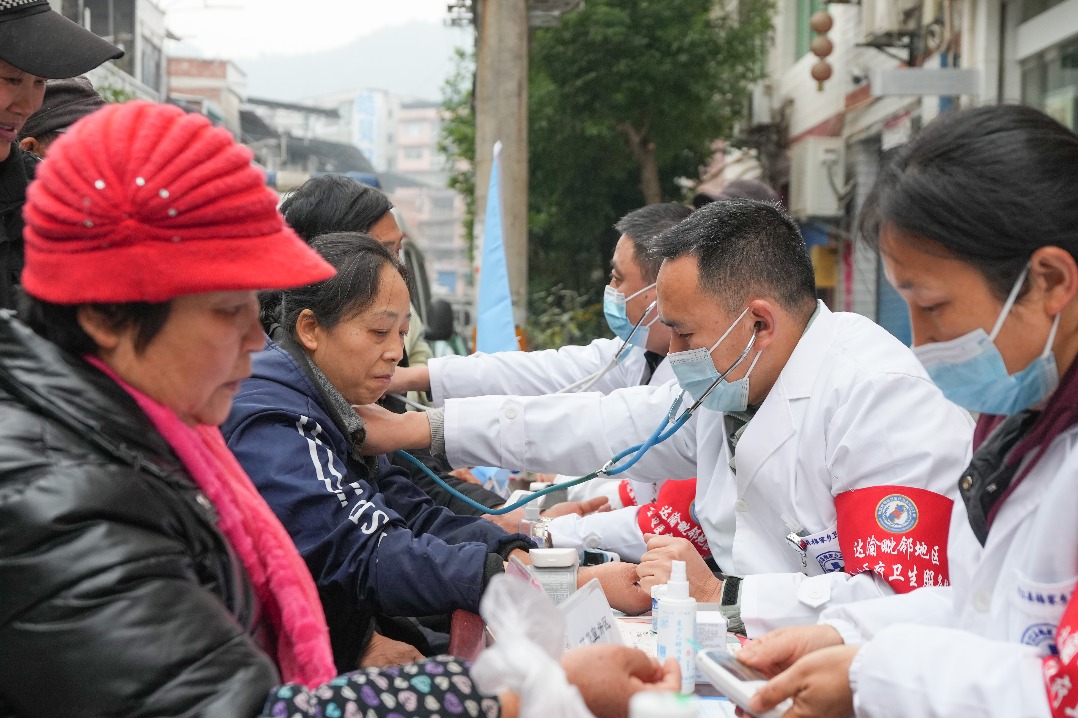
    China has demonstrated substantial progress in women’s healthcare during 2024, according to the latest statistical monitoring report released by the National Bureau of Statistics. The comprehensive data reveals notable improvements across multiple health indicators, particularly in maternal care and preventive health services.

    The maternal mortality rate has reached a record low of 14.3 per 100,000, representing a significant 5.3 percent reduction compared to 2023 figures. This achievement forms part of the ongoing implementation progress of the China National Program for Women’s Development (2021-2030), which establishes comprehensive targets for women’s welfare enhancement.

    Preventive healthcare measures have similarly shown positive trends, with the premarital health checkup rate climbing to 77.1 percent—an increase of 0.5 percentage points year-on-year. This upward trajectory indicates growing public engagement with proactive health management practices.

    A pivotal development in 2024 has been the introduction of a nationwide evaluation framework designed to optimize medical institutions’ capabilities in managing high-risk pregnancies. This initiative has facilitated the establishment of a tiered, efficiently coordinated emergency response system specifically tailored for pregnant women requiring critical care. The enhanced medical infrastructure ensures rapid intervention capabilities and comprehensive treatment protocols for obstetric emergencies, substantially strengthening safety measures for expectant mothers throughout the country.

    The systematic improvements reflect China’s continued commitment to advancing women’s healthcare standards through policy implementation, infrastructure development, and preventive health initiatives aligned with national development goals.

  • New Zealand’s Auckland kicks off 2026 celebrations with fireworks

    New Zealand’s Auckland kicks off 2026 celebrations with fireworks

    AUCKLAND, New Zealand — While Auckland became the world’s first major city to welcome 2026 with its traditional Sky Tower fireworks display, New Year’s Eve celebrations across the Asia-Pacific region unfolded under markedly subdued circumstances, with several nations scaling back festivities in response to recent tragedies.

    New Zealand’s largest city proceeded with its five-minute pyrotechnic spectacle despite rainy conditions, launching 3,500 fireworks from the 240-meter (787-foot) Sky Tower—the country’s tallest structure. The celebration positioned Auckland 18 hours ahead of New York’s Times Square ball drop. However, numerous smaller community events across New Zealand’s North Island were canceled due to forecasts predicting rain and potential thunderstorms.

    The most profound shift in celebration tone occurred in Sydney, Australia, where authorities implemented unprecedented security measures following the nation’s deadliest mass shooting in three decades. The December 14 attack at a Hanukkah celebration in Bondi Beach, which left 15 dead and 40 wounded, cast a pall over festivities. Thousands gathered at Sydney Harbor under the watch of heavily armed police—a first for the annual event—while officials projected menorah images onto bridge pylons and observed a minute of silence for victims. New South Wales Premier Chris Minns characterized the continued celebration as an act of defiance against terrorism.

    Elsewhere in the region, Indonesia significantly scaled back celebrations in solidarity with communities devastated by catastrophic floods and landslides that claimed over 1,100 lives on Sumatra island one month prior. Jakarta replaced its typical fanfare with prayer ceremonies, while Makassar officials urged residents to embrace reflection over revelry. Bali canceled concerts and fireworks in favor of traditional cultural performances.

    Hong Kong likewise abandoned its iconic Victoria Harbor fireworks display following a November factory fire that killed 161 people, opting instead for a musical performance and light projection countdown. Meanwhile, Japan and South Korea maintained their traditional bell-tolling ceremonies, providing continuity amid regional changes to New Year’s observances.

  • China puts two technology demonstration satellites into orbit

    China puts two technology demonstration satellites into orbit

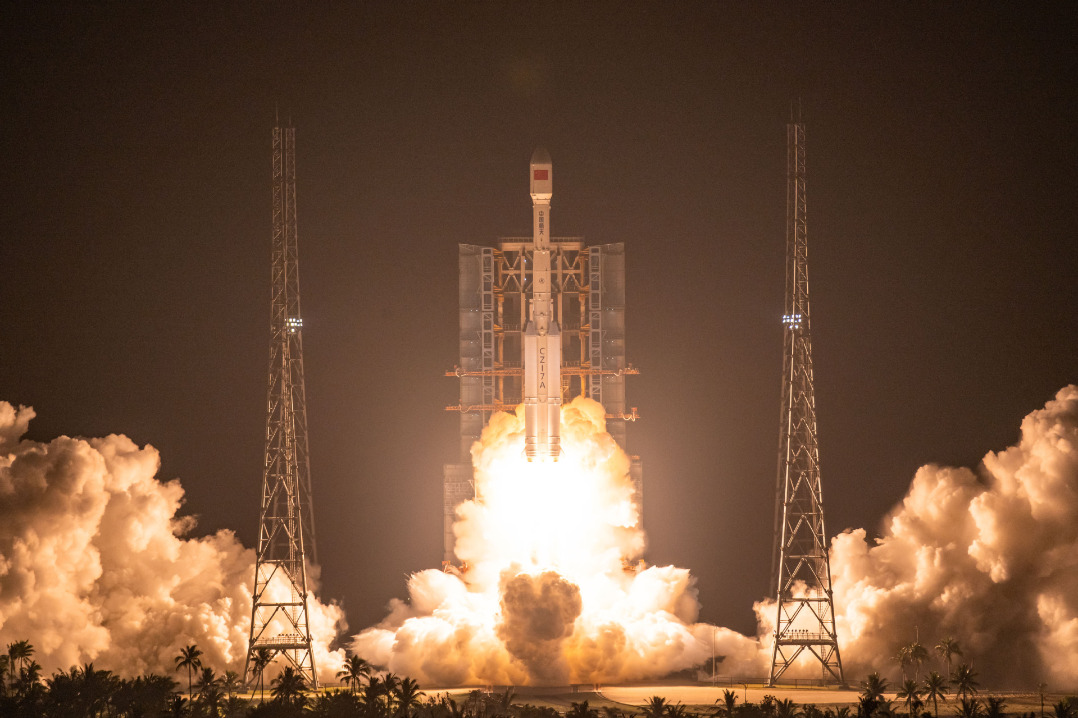
    China has marked a significant milestone in its space technology program with the successful deployment of two advanced demonstration satellites. The launch occurred at 6:40 AM on December 31, 2025, utilizing a Long March 7A carrier rocket that ascended from the Wenchang Space Launch Center in Hainan province.

    The mission, orchestrated by China Aerospace Science and Technology Corp (CASC), delivered the Shijian 29A and Shijian 29B satellites into their predetermined orbits. These sophisticated spacecraft represent cutting-edge advancements in space-based technology, with both satellites specifically designed to demonstrate innovative methodologies for space-based target detection systems.

    The Shijian 29A satellite was developed by the Shanghai Academy of Spaceflight Technology, a subsidiary of CASC, while its counterpart, Shijian 29B, was engineered by the Innovation Academy for Microsatellites, operating under the Chinese Academy of Sciences. This collaborative effort highlights China’s integrated approach to space technology development.

    The Long March 7A rocket, manufactured by the China Academy of Launch Vehicle Technology, boasts impressive technical specifications with a liftoff weight of 573 metric tons and a core-stage diameter of 3.35 meters. This launch vehicle demonstrates substantial payload capacity, capable of delivering spacecraft weighing up to 7 tons to geosynchronous transfer orbit.

    This mission represents China’s 93rd space endeavor of the year and the 623rd overall flight of the Long March rocket series, underscoring the nation’s consistent and growing presence in space technology development and orbital operations.

  • More Chinese cities add artificial hearts to medical insurance coverage

    More Chinese cities add artificial hearts to medical insurance coverage

    Tianjin has joined a growing number of Chinese cities implementing groundbreaking healthcare coverage for artificial heart implantation procedures, marking a significant advancement in cardiovascular treatment accessibility. The policy shift follows national guidelines issued by China’s National Healthcare Security Administration (NHSA) in March that established standardized pricing and coverage for ventricular assist devices.

    The transformative impact of this policy is exemplified by 69-year-old Sun Jucai, who became Tianjin’s first beneficiary after receiving an artificial heart implant in November. Diagnosed with dilated cardiomyopathy, Sun had endured severe heart failure symptoms that left him breathless during simple conversation. Following successful surgery at TEDA International Cardiovascular Hospital using a domestically developed device, Sun has experienced remarkable recovery and now describes the procedure as ‘a second chance at life.’

    Financially, the coverage represents a dramatic reduction in patient burden. Previously costing over 1 million yuan ($142,150), artificial heart implantation now costs approximately 700,000 yuan after insurance reimbursement. ‘The medical insurance covered most of the consumables and surgical expenses, greatly easing my financial burden,’ Sun confirmed after his recent discharge.

    This expansion addresses a critical healthcare challenge: China’s estimated 16 million chronic heart failure patients, with numbers continuing to rise. For advanced-stage patients, conventional treatments offer limited relief, and heart transplantation remains constrained by donor shortages. Artificial hearts have emerged as a viable alternative, though cost previously placed them beyond reach for most citizens.

    Notably, Tianjin’s policy eliminates regional barriers, allowing patients from across China to seek treatment and receive reimbursement within the city. This development follows similar implementations in other major regions including Beijing and Guangdong Province.

    Healthcare experts anticipate broader implications from this policy shift. Dr. Liu Xiaocheng, President of TEDA International Cardiovascular Hospital, notes that ‘approving reimbursement for this life-saving but costly technology will help speed up the development and wider use of artificial hearts in China.’

    The expansion reflects China’s ongoing commitment to healthcare system development, maintaining approximately 95% enrollment in basic medical insurance with some 20 billion reimbursements processed between 2021 and 2024 according to NHSA statistics.

  • China records continued improvement in child health in 2024

    China records continued improvement in child health in 2024

    China demonstrated marked progress across multiple child welfare indicators throughout 2024, according to an official statistical monitoring report released by the National Bureau of Statistics. The comprehensive assessment reveals substantial improvements in pediatric healthcare infrastructure, food safety standards, and early childhood education accessibility.

    Critical mortality metrics showed consistent decline, with the neonatal mortality rate dropping to 2.5 per thousand—a reduction of 0.3 points from 2023 figures. Similarly, infant mortality decreased to 4.0 per thousand (down 0.5 points), while the under-five mortality rate fell to 5.6 per thousand, representing a 0.6-point improvement over the previous year.

    The nation’s healthcare infrastructure expanded significantly, with 3,073 maternal and child health institutions and 162 specialized children’s hospitals operational by year’s end. Food safety achieved exceptional standards with infant formula milk powder passing safety inspections at a remarkable 99.88% rate.

    Educational access widened as preschool enrollment reached 92.0%, a 0.9 percentage point increase from 2023. Concurrently, digital protection efforts intensified with the removal of over 5.485 million instances of illegal and harmful online content that endangered young users.

    These developments reflect China’s ongoing implementation of the National Program for Child Development (2021-2030), demonstrating coordinated progress across healthcare, nutrition, education, and digital safety sectors.