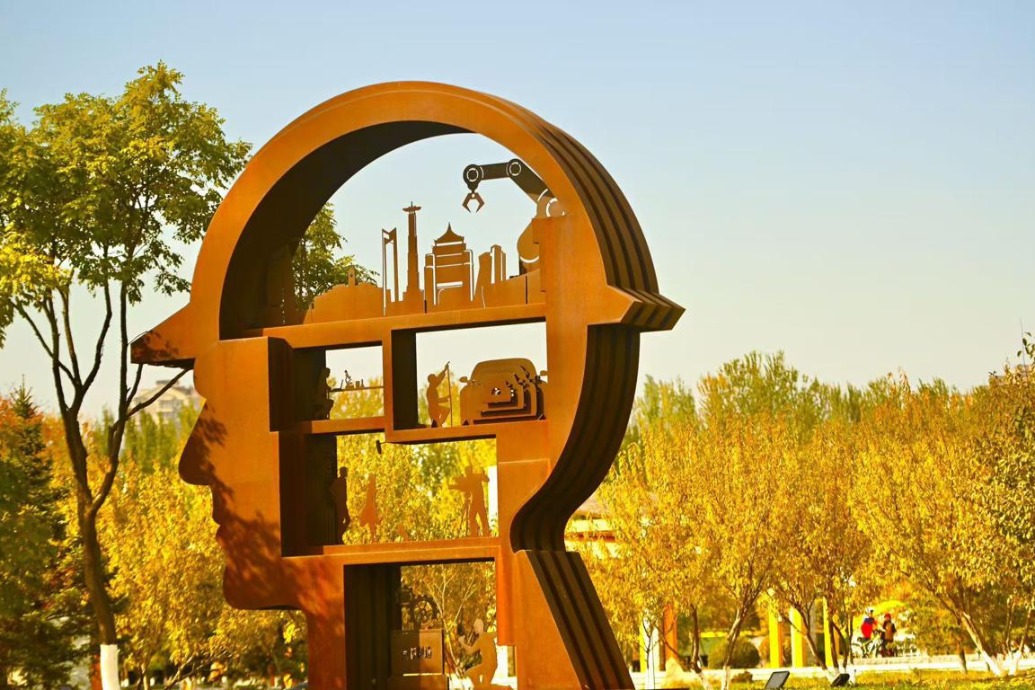
As October ushers in the golden hues of autumn, Changchun Industrial Track Park in Jilin Province transforms into a mesmerizing fusion of industrial heritage and seasonal splendor. Spanning 210,000 square meters, the park features a 1.6-kilometer path adorned with golden leaves, offering a picturesque journey through time. A retired tram, once part of the No. 54 bus line, now stands as a silent yet poignant reminder of the city’s commuting history, drawing residents to reflect on the past. Visitors can cycle along the serene riverbank, immersing themselves in the harmonious interplay of movement and tranquility as leaves gently fall. The park’s industrial sculpture group, set against the autumn backdrop, vividly recreates pivotal moments from Changchun’s automotive, film, and urban construction industries, adding depth to the park’s historical narrative. This unique blend of nature and industry not only preserves the city’s legacy but also provides a space for residents to connect with their heritage in a tranquil, reflective setting.
标签: Asia
亚洲
-

South Korean court rules against K-pop group NewJeans in label dispute over ‘mistreatment’
In a significant legal ruling, a South Korean court has dismissed claims by the popular K-pop group NewJeans, who sought to terminate their contract with their management label, ADOR, citing allegations of mistreatment. The Seoul Central District Court upheld the validity of the contract, marking the second legal victory for ADOR in this ongoing dispute. The court rejected the group’s argument that mistreatment had irreparably damaged their trust in the agency, stating that the level of trust was not sufficiently compromised to justify contract termination. NewJeans, a five-member girl group under HYBE—the parent company of ADOR and the powerhouse behind global sensation BTS—had announced their intention to leave ADOR in November, sparking a highly publicized legal battle. ADOR had previously filed for an injunction to prevent the group from engaging in independent commercial activities, which the court granted in March. The dispute intensified following allegations that HYBE forced out ADOR’s former CEO, Min Hee-jin, a key figure in NewJeans’ success. The group demanded her reinstatement, but HYBE refused, leading to public accusations of career sabotage and workplace harassment. The court clarified that the contract did not mandate Min’s leadership of ADOR. ADOR welcomed the ruling and expressed hope for reconciliation, announcing plans for a new album release.
-
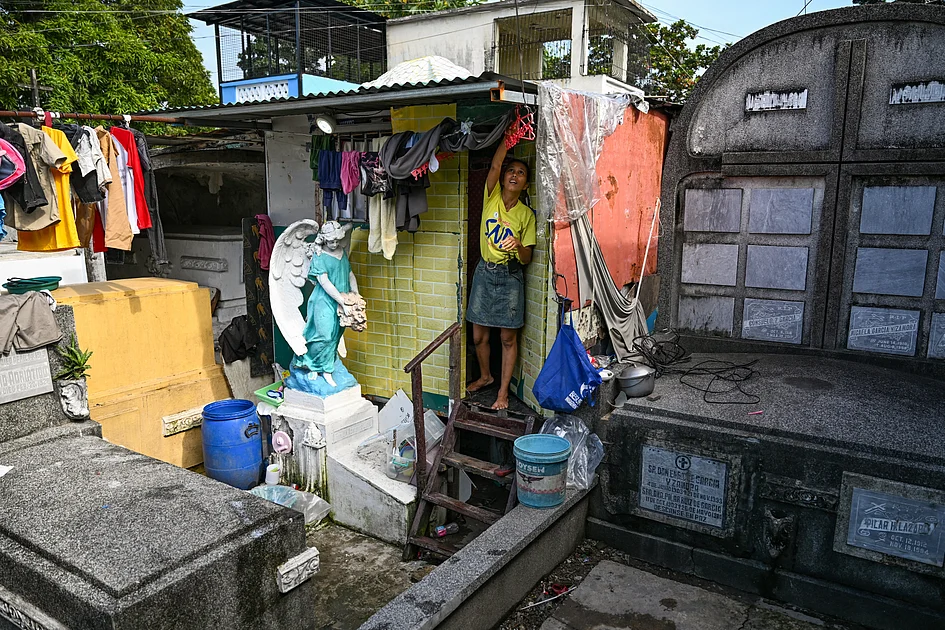
Photos: Poverty forces these Filipinos to live among the dead, become cemetery dwellers
In the heart of Manila, where poverty is pervasive and millions struggle with inadequate housing, some residents have found an unconventional refuge: cemeteries. The Manila North Cemetery, a vast 54-hectare public graveyard, is home to approximately 6,000 informal settlers who live among the tombs of over a million deceased Filipinos. These cemetery dwellers, often referred to as ‘informal settlers,’ have turned the gravesites into makeshift homes, repurposing crypts and mausoleums into living spaces. Laileah Cuetara, a 36-year-old mother of two, resides in a small wooden shanty perched atop a pair of raised tombs. Her home, furnished with a foam mattress, shelves, a television, and picture frames, is a stark reminder of the dire economic conditions faced by many in the Philippines. Cuetara earns around 3,000 pesos ($51) monthly by selling snacks and drinks to cemetery visitors. During All Saints’ Day and All Souls’ Day, she and her partner earn additional income by cleaning and tending to 30 tombs, receiving up to 1,700 pesos for each. However, their earnings are insufficient to escape the cemetery. ‘With the high prices of basic goods nowadays, it’s very difficult to improve our living conditions,’ Cuetara lamented. She moved into the cemetery in 2008 after a family conflict forced her to leave her suburban home. The plight of cemetery dwellers like Cuetara is not unique. Priscilla Buan, 51, was born in the cemetery and has raised her children among the tombs. She and her family sleep atop two crypts in a mausoleum, with the remaining space converted into a living room complete with a sofa, cabinet, and appliances. Buan sells snacks from the tomb’s grilled window but dreams of a better life. ‘Even if I wanted to, we don’t have money to buy a house,’ she said. The number of cemetery dwellers has been increasing, according to Vicente Eliver of the Kapatiran-Kaunlaran Foundation, which provides livelihood and educational programs to these residents. Eliver noted that while only grave caretakers and their families once lived in the cemetery, their descendants have continued the tradition, leading to a growing population. Most residents claim to have permission to occupy mausoleums or build shanties on graves in exchange for maintaining them. They tap into existing power lines for electricity and pay 3 pesos per gallon of water from nearby wells. However, Daniel Tan, the cemetery director, emphasized that the arrangement is not meant to be permanent. ‘This is a cemetery, it’s for the dead and not for the living,’ Tan stated. He acknowledged that the city is attempting to find permanent housing solutions but provided no specifics. For Cuetara and others, living in the cemetery is a last resort. Her 11-year-old son faces bullying at school due to their address, while her six-year-old daughter dreams of a real home, often drawing houses that adorn their makeshift dwelling. ‘All of us here dream of having a house outside, but… it’s hard, very hard,’ Cuetara said.
-
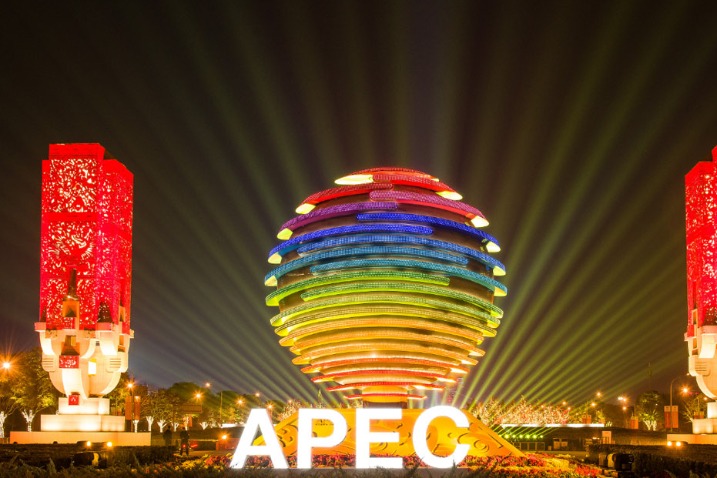
Why Xi advocates an Asia-Pacific community with a shared future
As the Asia-Pacific Economic Cooperation (APEC) marks its 30th anniversary, Chinese President Xi Jinping has reiterated his vision for a unified and prosperous Asia-Pacific community. Speaking at the 30th APEC Economic Leaders’ Meeting in San Francisco, Xi emphasized the need for continued regional cooperation to sustain the ‘Asia-Pacific Miracle,’ a period of unprecedented economic growth that has reshaped the global economy. Xi’s call for an ‘Asia-Pacific community with a shared future’ aligns with the Putrajaya Vision 2040, a long-term blueprint aiming for an open, dynamic, resilient, and peaceful region by 2040. Xi highlighted the importance of addressing diverse national conditions through consultation and collaboration, drawing on ancient Chinese wisdom to liken APEC to a family connected by the Pacific Ocean. ‘The highest good is like water; water benefits all things without contending,’ he remarked, underscoring his belief in coexistence and mutual benefit. Xi’s vision extends beyond economic integration to tackling global challenges like climate change. In February 2025, he welcomed the Sultan of Brunei, Haji Hassanal Bolkiah Mu’izzaddin Waddaulah, to China, where they discussed cooperation in emerging sectors such as the digital economy, artificial intelligence, and new energy, as well as traditional areas like agriculture and fisheries. Brunei’s role in hosting the ASEAN Center for Climate Change further symbolizes the region’s commitment to collaborative climate action. Xi envisions the Asia-Pacific as the ‘locomotive’ of globalization, driven by technological and industrial advancements that are propelling the world toward a digital, green, and smart economy. Despite global challenges, Xi remains optimistic, asserting that the forces driving integration will prevail, transforming the Pacific into a ‘thoroughfare for more prosperity and growth.’
-
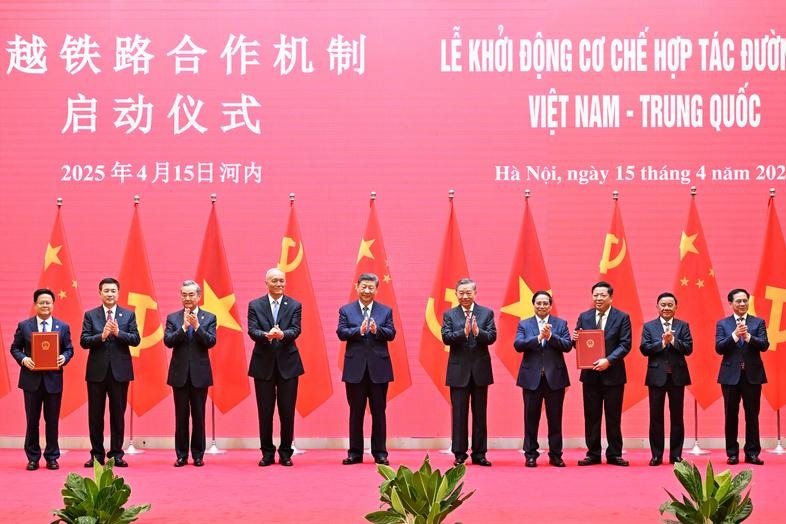
Xi Jinping — proponent of an inter-connected Asia-Pacific
President Xi Jinping, General Secretary of the Communist Party of China (CPC) Central Committee, has consistently advocated for enhanced connectivity and cooperation across the Asia-Pacific region and globally. His efforts have been instrumental in advancing the Belt and Road Initiative (BRI), a cornerstone of international economic collaboration. In April 2025, during a state visit to Vietnam, Xi and Vietnamese leader To Lam initiated discussions on a railway project linking the two nations. This initiative is set to integrate with other landmark BRI projects, such as the China-Laos railway, China-Thailand railway, Jakarta-Bandung high-speed railway, and Malaysia’s East Coast Rail Link, further strengthening regional connectivity. Beyond Asia, Xi’s vision extends to Latin America. In November 2024, he inaugurated the Chancay port in Peru, a strategic maritime gateway that reduces shipping time to China to 23 days and cuts logistics costs by 20 percent. Xi emphasized the port’s role in driving logistics, boosting trade, and spurring industrial growth. In addition to physical infrastructure, Xi has consistently highlighted the importance of stabilizing global industrial and supply chains. He has urged countries to view economic interdependence as an opportunity for mutual benefit rather than a risk. In March 2025, Xi met with over 40 global business leaders in Beijing, reaffirming China’s commitment to openness and foreign investment. Sean Stein, president of the US-China Business Council, praised Xi’s vision, stating, ‘Investing in China is investing in the future.’ Xi also underscored the significance of cultural exchanges in fostering lasting cooperation. China’s visa-free policies and cultural initiatives have significantly increased foreign visitors. This spirit of connection was evident during the 2024 APEC Leaders’ Meeting in Peru, where Chilean President Gabriel Boric presented Xi with a Spanish copy of ‘Xi Jinping: the Governance of China, Volume IV,’ highlighting the importance of cultural dialogue in strengthening bilateral ties.
-
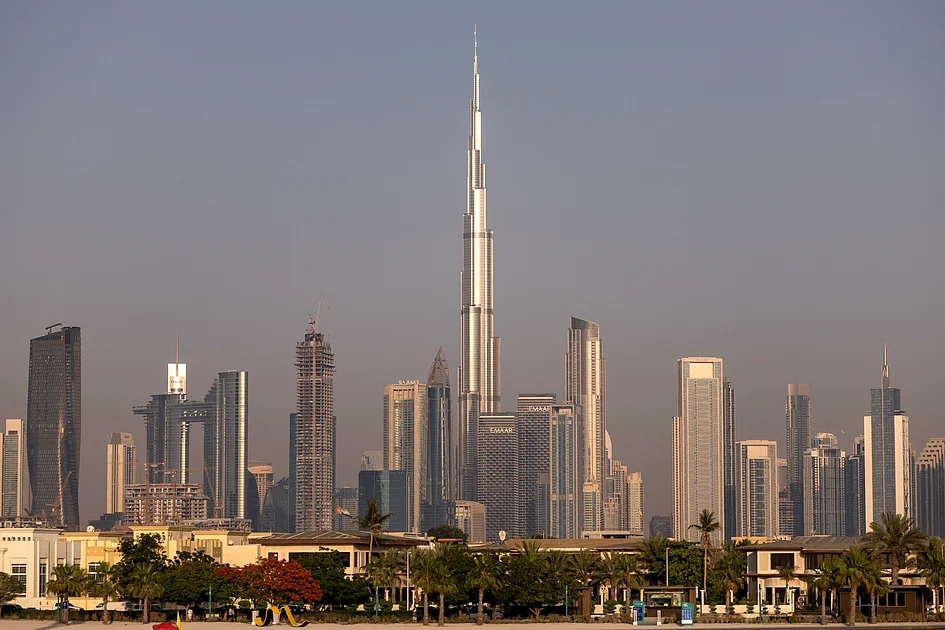
Apparel Group enters real estate with KORA Properties; first project in Dubai Maritime City
AppCorp Holding, the parent company of the renowned Apparel Group, has announced its strategic entry into Dubai’s thriving real estate market with the launch of KORA Properties. This premium real estate development firm is set to debut its first project in Dubai Maritime City on November 12, 2025. The move aligns with Dubai’s ambitious Real Estate Sector Strategy 2033, which aims to elevate the sector’s market value to Dh1 trillion. KORA Properties will focus on creating high-end residential and commercial spaces, as well as niche developments in healthcare and hospitality. Nilesh Ved, Chairman of AppCorp Holding, emphasized that KORA Properties is committed to crafting living spaces that transcend mere construction, offering ‘Timeless Living’ that nurtures dreams and fosters growth. This venture marks a significant step in AppCorp’s diversification strategy, expanding its portfolio beyond retail and lifestyle into high-value sectors. Established in 1996, Apparel Group has grown into one of the region’s largest retail conglomerates, representing over 85 global brands across 2,500 stores in 14 countries. With KORA Properties, AppCorp is poised to become a multi-sector holding company, blending its expertise in fashion with innovative real estate development.
-
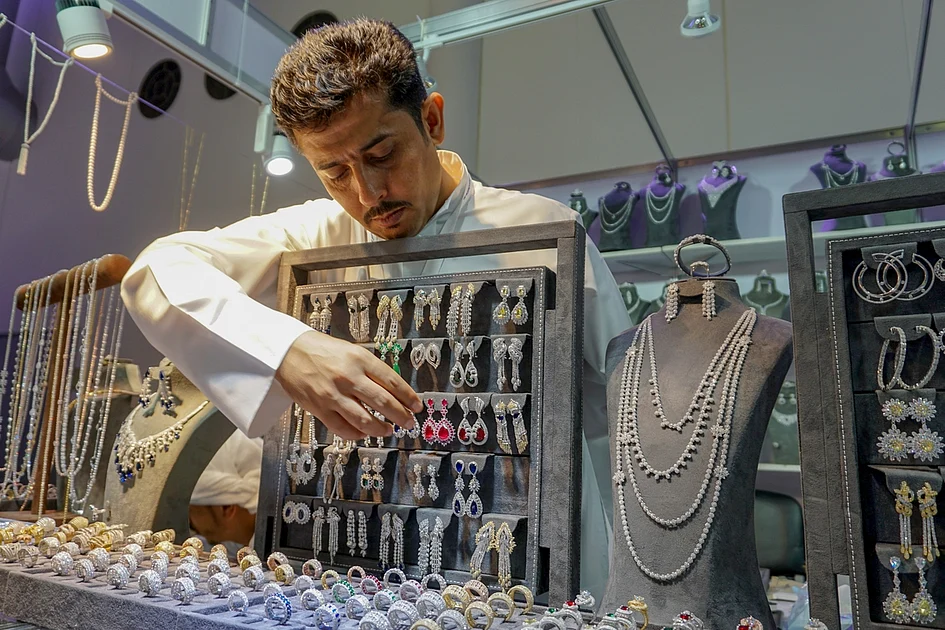
‘Dh2,700 profit in silver’: UAE investors cash in on metal cheaper than gold
In the United Arab Emirates, silver is emerging as a lucrative investment option, offering substantial returns to both small and large investors. With its lower cost compared to gold and expanding industrial applications, silver has captured the attention of the investment community. Ashraf Malik, a Dubai-based businessman, exemplifies this trend. On September 1, 2025, Malik invested Dh9,614 in two kilograms of silver, purchasing it at Dh4,807 per kilogram. By October 20, silver prices had surged to Dh6,192 per kilogram, allowing Malik to sell his holdings for Dh12,384 and secure a profit of Dh2,770—a remarkable 30% return in less than two months. Malik remarked, ‘I didn’t expect such a quick rise. The returns were good enough to show silver can really be rewarding.’ The surge in silver prices is not an isolated phenomenon. According to Khaleej Times, silver has outperformed gold in 2025, with prices jumping from $28.78 per ounce in 2024 to nearly $50, a 73% increase. In contrast, gold prices rose by 52% during the same period. This trend has been fueled by silver’s growing industrial use in sectors such as technology, solar panels, and electronics, as well as its appeal as a more affordable alternative to gold. Retailers in the UAE have reported a significant uptick in silver demand. Chintan Patni, senior manager at Jewel Trading, noted, ‘There has been a massive increase in silver buyers as prices have continued to rise.’ During Diwali, the demand was so high that temporary shortages occurred. Vivek J, retail head at Malabar Gold and Diamonds, added that silver is becoming a preferred choice for investors seeking to diversify their portfolios or start with smaller investments. Analysts predict that silver’s upward trajectory will continue in the near to medium term, making it an attractive option for investors looking to capitalize on its potential.
-

When Asian culture goes global: voices meet, bridges form
The global fascination with Asian culture is reaching unprecedented heights, as people from diverse corners of the world—ranging from Germany and France to Canada and Brazil—are increasingly engaging with it through digital platforms. A Brazilian enthusiast eloquently expressed this sentiment: ‘Watching through the screen, I can feel the culture coming alive in real time.’ This immersive experience is not only enriching their understanding but also inspiring them to add more destinations to their travel itineraries. The allure of Asian traditions, arts, and lifestyles is resonating deeply, fostering cross-cultural connections and mutual appreciation. To witness this cultural phenomenon firsthand, viewers are encouraged to explore the accompanying video, which showcases how Asian culture is captivating hearts globally.
-
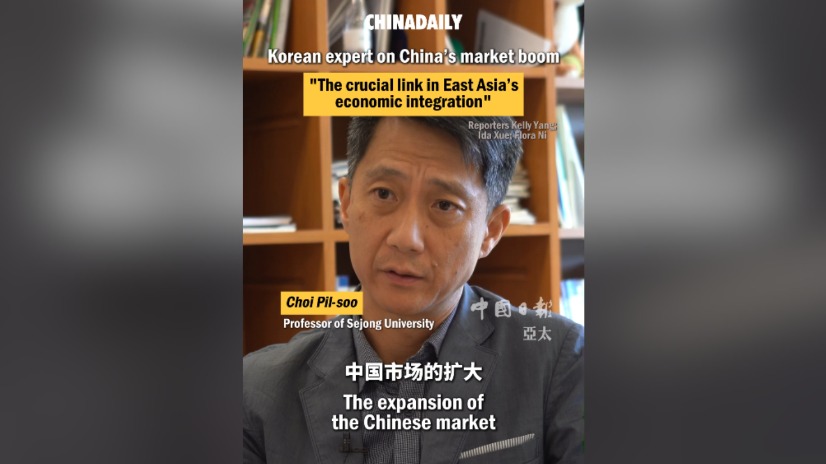
Expert: China’s market is reshaping East Asia’s economic integration
The burgeoning influence of China’s market is fundamentally transforming the economic integration of East Asia, according to Choi Pil-soo, a distinguished professor of Chinese trade and commerce at South Korea’s Sejong University. In a recent statement, Choi highlighted that the future of regional cooperation depends on the synergistic development of ideas, technology, and talent. He underscored the critical role of cross-border collaboration among industry, government, and academic sectors in driving sustainable growth. This evolving dynamic signals a shift in the economic paradigm of East Asia, with China’s market playing a pivotal role in shaping the region’s economic future.
-
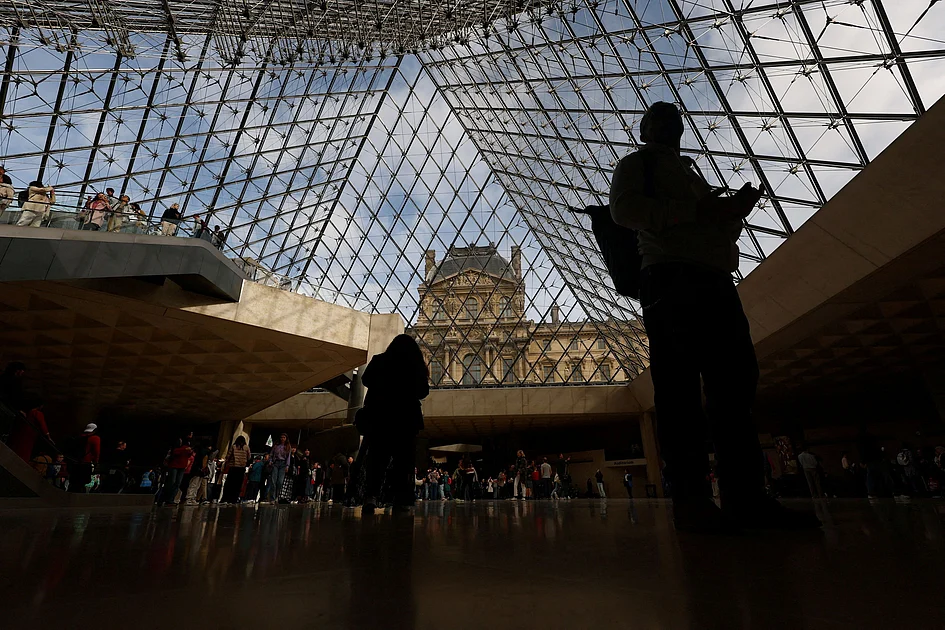
Louvre heist suspects ‘partially admit’ involvement; stolen jewels still missing
Two individuals arrested in connection with the audacious theft of jewels from the Louvre Museum have partially admitted their involvement, according to Paris prosecutor Laure Beccuau. The stolen treasures, valued at an estimated $102 million, remain unaccounted for. The heist, which occurred on October 19, saw four hooded thieves break into the museum’s Apollo Gallery during opening hours, exploiting significant security lapses. The thieves used a stolen elevator truck to access an exterior balcony, smashed a window, and made their escape on motorbikes within six to seven minutes. The museum’s surveillance system failed to detect the intrusion promptly, raising concerns about its security measures. The two suspects, aged 34 and 39, were identified through DNA evidence and are currently in custody. One was apprehended while attempting to board a flight to Algeria, and the other was already under judicial supervision for a prior theft case. Both reside in Aubervilliers, a low-income suburb of Paris. Prosecutor Beccuau emphasized that there is no evidence suggesting the heist was an inside job but indicated the possibility of a larger group, including a potential commissioner of the theft. The Louvre has since transferred some of its most valuable jewels to the Bank of France under police escort. The incident has sparked global attention and introspection in France, with many viewing it as a national embarrassment.